Feeds:
Posts
Comments

Posts Tagged ‘amp’

So you want to get a tube amp, but there are literally hundreds of manufacturers, not to mention, amps on the market. That can make for a rather harrowing experience in making a choice; especially if you’re new to tube amps. Plus, there are so many amp features to contend with as well. But have no fear. It’s not as hard as it may seem on the surface as long as you take some things into account.

1. Tone is king!

The most important thing to keep in mind in your search for a tube amp is that YOUR opinion of the tone of an amp is the most important opinion of all. By all means, listen to the input of others to help guide you, but in the end, you need to make your decision based upon how good an amp sounds to YOU. To formulate an opinion, you have to play several. And for goodness sake, don’t buy anything unless you’ve heard it in person.

2. Sound clips don’t tell the whole story…

Bear in mind that sound clips are great as an initial reference, but that’s all they should be. And make sure to listen to clips that have been recorded with the raw sound of the amp; that is, the plugged straight into the amp, and no EQ on the recording medium. Be especially wary of clips of fully arranged songs where a particular amp was used because more likely than not, even if the amp was recorded straight with no pedals in the chain, the other instruments and the EQ of the song can interfere with potentially negative aspects. Nothing beats listening to an amp live or raw.

3. Higher cost doesn’t mean better

Sometimes higher cost is well, just higher cost, and it doesn’t necessarily buy you much. I’ve played some pretty expensive amps that to me sound like crap, so don’t be lured into buying an amp by its price. Also, bear in mind that some amps simply have a higher price because a well-known guitarist actually uses one.

4. Don’t jump onto the boutique wagon right away!

In your search, you’ll come across people who’ll recommend all sorts of boutique amps. Don’t jump there immediately. I recommend this mainly because a boutique amp will fix you into a certain tone or range of tones. That’s NOT a bad thing at all. It just means that they serve up a certain flavor of tone and they’re good at that; not wanting be so versatile. For instance, my Aracom PLX18-BB Trem is a great example of a fairly focused tone with its abundance of mid-range, and smooth and creamy breakup. This amp was built based upon the classic 18-Watt Marshall Plexi, which has distinctive tone and dynamics. It’s not muscular at all, and was never meant to be. Contrast that to my Aracom VRX22 which, while based upon a Marshall Plexi design is A LOT more “ballsy” with a fatter bottom end, and slightly compressed overdrive. As a foot-switchable 2-channel amp, it is much more versatile and is my “go-to” amp for gigging.

In addition to the focused tonal characteristics, boutique amps in general cost significantly more than their mainstream counterparts; let’s face it: They’re investments. But like any investment, you should choose wisely, and go more generic starting out to get an idea of what tone you’re after. A good place to start is a low-cost tube amp, and there are several mainstream tube amps on the market that cost under $500. Some of them, like the Peavey Windsor Studio or Egnater Tweaker will allow you to change power tubes to change tone and dynamics. For instance, a 6L6-based amp will sound quite different than an EL34-based amp or even a high-gain 6V6. Amps like this let you play a bit. Here’s an example list.

VOX Night Train $499
Blackstar HT-5H  $399
333 Amp JCA20H  $333
Epiphone Valve Jr. $129
Egnater Tweaker  $399
Blackheart Little Giant  $199
Fender Blues Jr. $499
Fender Champion 600 $149
Peavey Windsor Studio $399

I started out with a Fender Hot Rod Deluxe myself. I got it before Fender did their price hike last year, so I got it for a great price. It’s a great starter tube amp, and really an unsung hero among amps. But with the right tubes and a replacement speaker, that amp can keep up with many of the boutique amps out there. It’s more pricey than what I listed here, but you can find used ones for around $500. It’s also loud as hell, which makes it viable for doing lots of different venues.

5. Don’t rush… Try learning how a tube amp operates…

The worse thing you can do in making your first tube amp purchase is rushing into it. As I mentioned above, try out several before making your decision. The best advice I ever got was from Noel over at Tone Merchants in Orange, CA. I told him I wanted to get a tube amp, but he insisted that I take my time, and in the meantime get a Fender Hot Rod Deluxe because it was tweakable. That turned out to be the absolutely best advice I had gotten from anyone, and it saved me thousands of dollars. Buying that amp gave me time to learn about how tube amps operate and form an opinion on what I’d like different.

6. Use the buddy system to evaluate an amp

By all means, play through the amps that you are evaluating, but something I’ve found very useful in evaluating amp settings is to have someone else play while I tweak. When I did the Dumble amp video series, I had the fortune of the great Doug Doppler playing so I could REALLY get how it sounded. That’s sort of rare, but even when I’m in a Guitar Center, I’ll sometimes walk up to some dude playing an amp I’d like to evaluate, and ask him if I could tweak while he plays. It’s a great way of quickly evaluating an amp’s capabilities.

So… Not rocket science by any stretch of the imagination, but useful, practical advice that you can hopefully use to your advantage.
Read Full Post »

I’ve always had an appreciation for vintage gear, though the most “vintage” that I’ve ever gone is purchasing several sets of NOS tubes over the years. And quite frankly, though I’ve appreciated vintage gear in general, I’ve never been compelled to be a vintage gear collector as I’m an active musician who uses his stuff all the time.

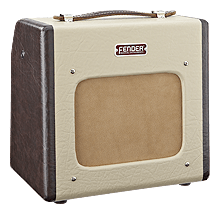
But despite that, I have wanted to get an 50’s tweed Champ for quite awhile. I love small, low-powered amps, and the tweed Champ from the 50’s has been on my list to get for quite some time. After all, that little amp has been used in studios around the world for recording hundreds, if not thousands of Rock ‘N Roll songs.

My only problem with ever getting a tweed Champ was that I didn’t want to spend upwards of $1500 for a mint-condition unit, which is what these puppies go for. And since I’d use it as a player, I’d have to make modifications to it as soon as I got it to make it safe and usable with different cabinets; thus immediately reducing its value.

But luckily there are tweed Champs out there that aren’t in pristine shape, and they’re low enough in cost to warrant consideration. My criteria was that the amp had to work. Period. As long as it did, I wouldn’t have to do too much once I got it. So I found a ’58 Tweed Champ on eBay for a decent price that was missing the back plate, but was still in great working condition, so I purchased it, knowing I’d have to do some mods to make it safe, plus add some longevity to it.

Right now, it’s on transit here, and should arrive tomorrow – I’m so excited! But I will not plug it in until I have a few things done to it, that my good friend Jeff Aragaki of Aracom Amps will be doing:

  1. First of all, it still has the original two-prong plug. Jeff will install a three-prong grounded plug in it – I’m probably going to go with medical grade on this just to be extra-safe.
  2. It was clear from the pictures that a couple of the original capacitors had leaked a little, so they will be replaced with Sprague caps.
  3. The speaker is also hard-soldered to the amp output, so I’m having Jeff install a 1/4″ female jack so I can use different cabinets with the amp.
  4. Finally, Jeff will create a simple backplate to provide some protection to the electronic components.

All of these “mods” will be reversible, so at least I can retain some value in the amp should I ever sell it. However, I probably will keep this amp forever. I don’t even have it yet, and it still holds some nostalgic value for me. Can’t wait until it arrives!

Read Full Post »

I broke the guide post on one of the 6L6 tubes in my trust Fender Hot Rod Deluxe awhile back, and even though the tube still worked just fine, I used it as an excuse to get a new set of power tubes. So after doing a search around the Internet for a new set of 6L6’s, I found myself on Brent Jesse Recording’s (audiotubes.com) site, looking for some NOS replacements for the JJ’s I had in there.

Not knowing what to purchase, I called Brent up, and asked for his recommendation. Surprisingly enough, he recommended a set of Groove Tubes. I said, “Groove Tubes? I can’t stand ’em.” But Brent explained that these particular Groove Tubes were not the imported, relabeled stuff from Russia or China. They’re re-issues of RCA and GE black plates made from NOS materials and constructed here in the US. Intriguing. I’ve purchase a few sets of tubes from Brent in the past, and he has never steered me wrong, so I decided to take a chance and get a pair.

The tubes arrived yesterday so of course, I just had to install them. What’s the verdict? They sound absolutely KILLER! The big test for me – especially with NOS tubes – is to run them full out to see how they break up. The problem I’ve had with late model power tubes in general (but especially with 6L6’s) is that they feel stiff and the breakup can be a bit harsh.

To me, NOS tubes have always felt much more smooth and dynamic. These Groove Tubes tubes are a huge exception to late model tubes. I can’t believe just how nicely these re-issues break up! The distortion is creamy smooth and slightly compressed with nice bloom and sustain without being too squishy – just how I like it! Caveat: They’re not cheap. These tubes are $80 for a matched pair, but they’re worth every penny! I just ordered a second set for spares since these tubes are limited quantity. They may not necessarily be NOS tubes, but as they’re made with NOS materials, there is definitely a limit. So if you’re looking for new production tubes that sound absolutely fantastic, you gotta check these out!

A word on the Fender Hot Rod Deluxe

It’s my contention that the Fender Hot Rod Deluxe is one of the most underrated amps on the market. Okay, I admit it: Stock it doesn’t sound all that good. But with the right tubes and the right speaker, it can sound incredible! Granted, a year or two ago, I wouldn’t have even considered buying this amp because of the huge price hike. I got mine on special for something like $550 in a blowout sale a few years ago. But the prices aren’t all that bad now. They’ve come down significantly from their nearly $900 price tag, and you can find them for around $649. Admittedly, it’ll probably cost $300-$400 more in tubes and replacement speaker, but what you get is an AWESOME amp. I’ll have clips in a few days.

Read Full Post »

Being “GoofyDawg,” it’s always cool to find gear with the “dawg” moniker. 🙂 So when I came across Li’l Dawg Amps on one of the forums, I had to check out their web site. All I can say is, “Wow!!!” The reason for that is because I was completely blown away by the prices of these handmade amps! For instance, a 5F1 Champster (based on the 5F1 circuit) in a metal lunchbox enclosure is only $399! After seeing the prices of his amps, I had to get the low-down on the low prices, so I called Jim Nickelson up.

The story of how Li’l Dawg started is actually really cool, and Jim tells the story well in his Story page. What started out as a labor of love turned into a full-on amp business. What a way to retire! This was “supposed” to be a hobby. 🙂 Well personally, I’m glad he took up the hobby because many people have benefited from it.

Jim’s approach to Li’l Dawg is no-nonsense. He can keep the price down because he does all the work himself. He doesn’t advertise, which is another cost saver, and he’s worked out a product system where he turn around an order within 2-3 weeks! That’s amazing as most single man shops typically take months to complete an order.

But what about the amps? Well, I haven’t played one – yet. But Jim specializes in classic Tweed circuit amps, like the Champ and Deluxe. The model that I’m particularly interested in is a hybrid amp that has a 5E3 preamp (replete with jumperable inputs – nice) and a 5F1 power section, called “The Mutt.”

Now, Jim could probably just stop there and produce reproductions, but he has some nice added touches with his amps, such as Mercury Magnetics or Heyboer trannys, Sprague caps, and choices of steel or aluminum chassis.

As Jim shares, he wants to create a “candy store” experience when people choose an amp, and provide a basic foundation from which options can be added. So very nice, indeed! Then when you see the prices well, how could you not consider one of these amps?!!!

In any case, here are a few clips of the Mutt to whet your whistle:

Bright Rock Style

Clean, Chords

Jumpered

I don’t know about you, but that has TONS of classic rock mojo going on! Can’t wait to try one out! Or maybe I shouldn’t – I just may leave with an amp. 🙂 Well, that’s NEVER a bad thing. 🙂

Read Full Post »

Dynamics. It’s what separates a mechanical  and boring piece from something that can move an audience to tears. In this episode, Doug talks about the incredible dynamics of the Dumble Overdrive Special.

This is the last video in the series of Doug Doppler on the Dumble Overdrive Special, but it’s not the last. I’ve got many more “Doppler on…” videos to come, so stay tuned!!!

Read Full Post »

That’s right! As I mentioned in episode 1 of the series, the Dumble can shred, and it sound unbelievable. In this part, Doug talks in-depth of the tonal capabilities of the Dumble amp and demonstrates it versatility by shredding on it!

Read Full Post »

Welcome to GuitarGear.org!

Welcome to GuitarGear.org! Established in January of 2007, we’re still going strong and growing! I want to personally thank everyone for their support! You’ve made this site what it is today, and that’s a major destination for finding out about gear. I invite you to explore the site! There are over 900 articles and discussion on gear and the number grows each day. If you want to keep up to date, please use the subscription area to your right! Cheers!

~GoofyDawg

Most Popular Articles

Useful Information

Miscellaneous Fun Stuff

Other popular posts

From my stats page…

The Hottest Attenuator: Aracom PRX150-Pro

Looking for the “Doppler on the Dumble” series?

Read Full Post »

Wow! I’m having A LOT of fun editing this series because I’m just blown away by Doug’s incredible talent! What a gift! In any case, this part of the series has Doug discussing tone shaping with the ODS pre-amp section, and talking about playing a Strat through the amp. Plus, there’s a little surprise at the end. 🙂 Cheers!

Read Full Post »

I’ve never hid from the fact that I own Aracom gear, and as I’ve said in My Rig page, I’m a faithful customer who just digs the stuff that Jeff Aragaki, Aracom’s founder, comes up with. I’ve extolled the wonders of his attenuator, the PRX150-Pro, and I’ve mentioned my Aracom amps, the VRX18, VRX22, and PLX18BB several times.

One thing I’ve learned over the years with respect to gear is that you go with what works for you, and my Aracom gear simply works for me! In fact, my Aracom equipment has had a lot to do with me using less pedals, and relying on the raw sound of my guitar and amps; especially when I’m playing straight rock and roll.

I have yet to play a bad-sounding Aracom amp. When they’re cranked to the hilt, they have such an incredible mojo that’s just too hard to describe. Of course, I couldn’t crank them without the PRX150-Pro attenuator. No matter, there’s magic in Jeff’s creations! To demonstrate this magic, I’m going to share an excerpt from a song that I’m working on. I just finished laying down the instrument parts. Give it a listen:

The rhythm part is played with my Squier CV Tele in the middle switch position, and running straight into Channel 2 of the PLX18BB, which was cranked up all the way. Talk about cranked Marshall-esque tones! It sounds even better live! The lead was recorded with my Gibson Nighthawk 2009 into my VRX22. Master was at 3pm and Volume was at 2pm. This setting gives me a sweet, singing lead voicing that sustains for days due to the awesome solid-state sag circuit! Again, the guitar was plugged straight into the amp – no frills whatsoever. I did add some reverb to both parts, but other than that, that the raw sound of the guitars/amps with no EQ. Pretty killer tones!!!

To top it off, both parts were recorded at bedroom level as both amps ran into the PRX150-Pro! We’re talking conversation level, so if you heard some transient clicks in the clip, it’s stuff that was making noise in my garage/studio!

You gotta check this stuff out. Jeff is a true wizard with amps! Both the VRX amps start at $895, while the PLX18BB combo starts at $1750 ($1350 for the head only). If you’re after vintage Marshall tone at a non-vintage price, you owe it to yourself to check out these amps!

Read Full Post »

Some people may scoff at the diminutive Fender Champ 600. After all, it’s only 5 Watts and has a tiny 6″ speaker. But those naysayers may be missing the point about the Champ or any super-low wattage speaker for that matter. It’s not meant to be a performance amp; though you can certainly hook it up to an extension cabinet, and it’ll do just fine in a small venue – hey! I do that A LOT. But the secret behind the beauty of this little $149 wonder isn’t on the stage, it’s in the studio.

I’ve heard feedback from various people that they get frustrated with this amp because it’s missing certain features. Let’s face it folks, with a single volume knob, no tone control, and not much gain on tap, it would be easy to dismiss this amp as nothing more than a toy. But it’s no mistake that its venerable sibling, the Champ, has been a mainstay in professional studios for decades. It’s all in how you make use of what it has to offer.

First off, let’s establish what I think is the most important thing when recording this amp: The Champ is really good at creating your base tone, and that’s all that it should be used for. It’s up to you to shape it. Keep that in mind, and you’ll get more than a lot of mileage out of it. So let’s look at some key factors when recording with the Champ:

  • The Champ is naturally bright because of its small speaker. So microphone placement is absolutely critical. If you want to get a bright, twangy sound with lots of treble content, place your mic head on in the center of the cone, or just off center to avoid getting those treble “pops.” If you want less treble response, move the mic off-center, nearer to the edge of the speaker cone. I’ve found that the richest sound comes from angling the mic at about the same angle as the speaker cone, placed right at the outer ring about an inch off the grille cloth. The EQ response is a lot flatter there, and makes it easy to dial in your EQ in your DAW.
  • Even cranked in the high input, and even with humbuckers, the most breakup you’ll get is about “dirty blues” overdrive. But that’s why we have overdrive and distortion pedals, right? I’ve found that Tube Screamer and TS-type overdrive pedals work great with the Champ, though my Holy Fire distortion can make the Champ serve up some whoop-ass if dialed in just right.
  • Looking for Fender cleans? The Champ does raw Fender cleans – and quite well. Again, it’s all about mic placement when recording cleans with the Champ. My favorite is angled as I described above.
  • Do yourself a favor and replace the stock tubes with NOS tubes. I’ve never been a big fan of Groove Tubes (though I know some people like them). But with a great NOS pre-amp tube (I’ve got a ’59 GE long plate), and a solid NOS 6V6 (mine is a ’53 GE 6V6), you’ll immediately tame the harshness of the amp. In fact, I’ve never seen a need to replace the power transformer or the speaker because of this $50 investment.

So with those points in mind, go and record. What you’ll get after you’ve played around a bit is a great, raw guitar tone. But your work isn’t done yet – or it could be if you’re satisfied with the raw tone. Personally, I like to add filters and effects in production to make the recording sound like it’s coming from a much bigger amp. Yes, boys and girls, you can make it sound MUCH bigger!

A Word on Amp Modeling

One thing that I have also done with the Champ is to record a purely clean rhythm tone, then run it through IK Multimedia’s Amplitube plug-in to essentially “re-amp” my guitar. You can get some amazing guitar tones with the Champ when it’s re-amped through this software.

My Champ 600 Recording Process

A couple of people have asked me how to record the amp, so I thought I’d share the process I employ:

  1. First, it starts with the guitar. Am I looking for a single-coil or humbucker tone. The cool thing about the Champ 600 is that what you hear when you play through it is your raw guitar tone. There’s no EQ so you have to establish that on your guitar. Simple enough.
  2. Then I’ll determine whether or not I want to track with effects. Usually, I’ll only track with overdrive or distortion. I leave all the modulation effects to production.
  3. Next, I place my mic head, dead-center on the speaker, then record a chord progression and perhaps some quick lead licks.
  4. Then I’ll move the mic off-center and repeat the same thing I played with the mic centered.
  5. Finally, I’ll angle the mic as described above and repeat the same progression. More likely than not, I’ll use this position because I like it the best, but different guitars actually sound better with the mic positioned dead-center.
  6. Once I decide what mic position I’ll use, then I’ll record the track.
  7. Once I’m finished, it’s time to apply EQ, filters and modulation effects. I like to use a hi-pass filter on most recordings with Champ to “tame” its natural edginess.

Here are some clips that I put together based upon the process above (I skipped recording head-on, off center):

Clean (Squier Classic Vibe Tele 50’s)

1. Mic head-on, dead-center

2. Mic angled along speaker cone, 1″ off the grille cloth.

Recording #2 with Graphic EQ, Chorus, Parametric EQ, Delay, Reverb, and Hi-pass filter applied

Overdriven with Tube Screamer for Extra Drive (Gibson Nighthawk 2009)

1. Mic head-on, dead-center

2. Mic angled along speaker cone, 1″ off the grille cloth.

Recording #2 with Graphic EQ, Flange, Delay, Reverb, and Hi-pass filter applied

It’s amazing what EQ, filters and effects can do to the recording! And it really didn’t take that much work to dial in the final version of what I wanted to ultimately print!

Finally, here’s a song I wrote and record awhile back (sorry for the over-abundance of bass). If I remember correctly, I used four guitars in six parts in that song (Epiphone Explorer, Gibson ES-335, MIM Strat, PRS SE Soapbar II), all recorded with the Champ – and with the stock speaker no less!

Rock on!!!

Read Full Post »

« Newer Posts - Older Posts »