Feeds:
Posts
Comments

Archive for January, 2011

For a long time I was – and pretty much still to this day – an overdrive pedal lover. I have several, and am waiting for my new Paul Cochrane Timmy to be completed and delivered in the next few weeks. I’ve been wanting one of these for awhile now, and finally bit the bullet and got on the waiting list. So excited! But using an attenuator  – specifically the Aracom PRX150-Pro – changed the way I use overdrive pedals.

In the “old days” before I used an attenuator, I used an overdrive pedal to get grind through a clean amp. Early on, I was using my Fender Hot Rod Deluxe that was all about loud, clean headroom, and I couldn’t get the volume above 2 or 3 before it would be just too damn loud; not to mention, the tubes weren’t working that much at all at that level. Yeah, I could crank the volume then set the Master to about 1/2 to get some dirt, but the pre-amp only distortion of that amp never really appealed to me. So I used overdrive pedals to get that soft-clipping on the front-end, and especially looked to pedals that provided a bit of color.

But once I got an attenuator, the entire game changed. I was able to crank my amps to get both the preamp and power amp sections saturated. For a long while, I actually stopped using overdrive pedals altogether because I was getting all the drive I wanted. I still sometimes just go to my gigs with only a tuner pedal and just plug directly into whatever amp I’m using, though I’m now starting to introduce overdrives to add gain stages to my chain.

But that brings me to the crux of this post… I used overdrives because I couldn’t get sufficient grind at reasonable volumes. But once I got a real transparent attenuator like the PRX150-Pro (I had an AirBrake and tested several), I could finally hear what my amps sounded like fully cranked. But here are some things I discovered once I was able to crank up my amps that I’d like to share:

  • I have 8 amps, and with the exception of two, once I cranked them up, I did not like their fully cranked up tone.
  • A common thing that I found among all the amps where I didn’t like their cranked up tone was a certain harshness or in some cases “fizz” that was not at all pleasing to me.
  • As opposed to getting rid of the amps, I swapped tubes and speakers until I was able to balance out their tone. For instance, with my Aracom PLX BB 18 combo, which is a replica of a Marshall 18 Watt Blues Breaker, the cranked tone was horrendously fizzy to me. So I replaced two preamp tubes with NOS Mullard and GE tubes, and to tame the natural brightness of the amp, replaced the stock Eminence Red Fang with a Fane Medusa 150 which really emphasizes the low-end. It’s now gorgeous, and I use that amp regularly!

The point to all the items that I shared was that once I was able to crank up my amps, most of them just didn’t sound all that good. Lots of folks who are new to attenuators complain about different artifacts being introduced by the attenuator, but based upon my experience, I think a lot of those “artifacts” have a lot to do with them never having cranked their amps all the way up. To me, it’s definitely a case of “you may not like what you hear…”

So if you ever do get a hold of an attenuator, and you crank your amp up, if you don’t like the tone, don’t immediately assume that it’s the attenuator. Especially with the latest generation of attenuators that are much more transparent than the traditional ones, the likelihood that they’re introducing artifacts is pretty low. Look to your amp first, and see what you can do to adjust it to deal with its cranked tone. Personally, I’d start with tubes first; especially replacing new production tubes with NOS pre-amps. I know, they’re getting more and more scarce, but I’ve gotten the best results in smoothing out my tone with NOS pre-amp tubes.
Read Full Post »

In my last post on cables, one of the respondents replied with a couple of great links. One of them was to Roger Russell’s site on a discussion about speaker wire. In that article, he had a very useful table on wire gauges and maximum cable lengths you should use. I grabbed the table, reformatted it for GuitarGear.org. Here’s the table:

Wire Size 2 ohm load 4 ohm load 6 ohm load 8 ohm load
22 AWG 3 feet max 6 feet max 9 feet max 12 feet max
20 AWG 5 feet max 10 feet max 15 feet max 20 feet max
18 AWG 8 feet max 16 feet max 24 feet max 32 feet max
16 AWG 12 feet max 24 feet max 36 feet max 48 feet max
14 AWG 20 feet max 40 feet max 60 feet** 80 feet**
12 AWG 30 feet max 60 feet** 90 feet** 120 feet**
10 AWG 50 feet max 100 feet** 150 feet** 200 feet**

The “**” indicate that in reality a 50 foot cable length is actually optimal.

I dig information like this because it’s a great reference for when I’m buying cables.

With speaker cables, what you’re concerned with is not capacitance, like you are with instrument cables. What you’re concerned with is resistance. You COULD use a material that has much less resistance than copper, like gold, but you’ll get much more bang for the buck by just going up a gauge (down in number). Personally, I just use 12 gauge wire for my speakers, and the lengths are only 4 feet, so I can use pretty much any load and be assured that I won’t create too much resistance between my amp and cab.

Read Full Post »

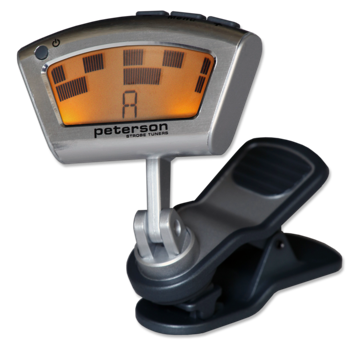
Click for larger image

I just did a review of this awhile ago, but I thought I’d go into a bit from an actual usage perspective.

As I reported in my review, I took it to my weekly solo acoustic gig, and it worked fantastically. I also took it to my Sunday church gig and used it on another guitar: My Fender Stratacoustic, which is a really tough guitar to tune. I also use it regularly in my home studio and it works flawlessly.

Okay, I know. It’s just a tuner. However, what I find so special about it is that it’s the first clip-on tuner I’ve used that is really accurate. Plus, it has Peterson’s sweeteners built in, and to me, the sweeteners make all the difference in the world. Sweetners are minute adjustments to the tuning so that chord intervals sound, well, sweeter. Guitars are generally built to even temperament; that is, they’re set up so that each string is tuned to an exact frequency.

The idea behind the Peterson tuning sweetners is that even temperament is fine until you play chords. We’ve all been there. Tune up the guitar with a standard tuner like a TU-2. The tuning sounds fine. Then you play a chord, and you have to make adjustments so the chord sounds good. The sweetners take this in to account, and instead of tuning to the exact pitch frequency, tune a little off to account for presses on the strings. The result is that when you tune with a Peterson tuner, you rarely make post tuning adjustments. Very cool.

Originally, I thought I’d simply use the StroboClip in my home studio, but I’ve found it to be an invaluable tool for gigs. For instance, as the lead guitarist in my church band, I often do solos with a lot of bending which, after awhile, will make the tuning drift a bit. With my StroboClip, it’s simply a matter of turning down my volume, then doing a quick tune. Oh that reminds me! I totally dig the LCD screen for tuning. Even for how small the unit is, the movement of the checkerboard pattern makes tuning a lot easier than trying to nail it with a bank of LED’s.

Read Full Post »

Audiophiles for years – excuse the pun – have heard cable manufacturers’ and experts’ claims of “cable break-in.” It’s a huge, ongoing debate, though most seem to believe it’s folly. In the guitar world, I haven’t heard of this from cable manufacturers; at least from the brands I buy. But I have heard it from seemingly well-informed musicians who claim they can hear the difference between a broken-in cable and a brand new cable. These people pride themselves on their “golden ears,” and often pull rank by providing their “bonafides” of degrees or what-not to add credibility to their claims. They are so convincing that lots of uninformed, unsuspecting musicians fall prey to their claims and in turn take them as scientific fact. Then in turn spend hundreds, maybe thousands of dollars on super, high-end cables that they’ll “break in,” and magically, their tone will be right. Hey! More power to ’em.

Me? I won’t mince words: I think they’re full of shit.

There is no scientific basis for cable break-in. It’s purely subjective. And with cable manufacturers who make the claim that their cables sound better after they’ve been broken in, to me it’s all just pure marketing bullshit. But some of these “pundits” and their sycophants (I love that word) will bring Einstein into the equation with the following quote:

Everything that can be counted does not necessarily count; everything that counts cannot necessarily be counted.

I dig that quote! But then it just points back to the subjectivity of cable break-in. Note that NONE of these so-called experts have ever provided numbers behind their claims. But they’ll take it further with an argument that it’s not the wire, but the insulation that breaks in; that is, the molecules of the dieletric will align to the signal over time. I _might_ buy this for a constant, uniform signal, but audio signals are random, plus the signal’s AC outside of any device in your chain. And again, they don’t have numbers to back this up. Molecules lining up to a random signal? If you buy into that, I have a couple of rental properties in Indiana I’d like to sell you (that’s actually true, and I’m trying to unload, er, sell them).

As I always advise, do your homework and find out for yourself. If you can hear those differences – though most everyone claims they’re psychological as opposed to physical – then I commend you on your auditory acuity. But my question, dear readers – especially for us regular joes – is this: If us mere mortals can’t hear that difference, does it really matter?

Read Full Post »

I’ve had this secret desire to own a Rick Turner Model 1 for a long time, though I never really shared that desire with anyone. For the past few years, my focus on gear acquisition has been on electric guitars and amps, with the occasional acoustic thrown in. But a Rick Turner guitar has always been in the back of my mind.

So what originally led me to this? Well, one guy in my church band plays one, and another is having one built for him right now. My latest conversations with them have led me to consider having one built.

If you’re not familiar with Rick Turner guitars, all you need to do is turn to Lindsey Buckingham of Fleetwood Mac. He has been playing a Model 1 (probably a customized version of it) for years. To me, this is the answer to the hybrid guitar; much more so than the Taylor Tx series. Lindsey uses it for both acoustic and electric, and having heard the guitar live, it does both fantastically well!

One of my concerns about hybrids has always been what I feel is the compromise sound, and I’ve always been a bit disappointed in the electric tones of hybrids. But as Rick’s pedigree includes a stint with Gibson development, he certainly gets the electric part. And amazingly, with the peizo pickup, the acoustic tones when plugged in are incredibly natural sounding.

My buddy’s guitar is going to cost about $2850 before tax for a custom build, if I remember correctly. I don’t have that kind of cash on hand right now, but considering the price and what he’s getting for it (he’s using some exotic woods), that’s not bad at all! My personal taste runs to the standard mahogany, so I’ll see what that’ll cost me. Either way, it looks like I’ll be saving my pennies for awhile. 🙂

Anyway, here’s a video of a Lindsey Buckingham solo as he plays his Model 1:

Update: Got a price list for the Model 1. I’ll be waiting for awhile, but I think the wait will be worth it.

Read Full Post »

My buddy, Jeff Aragaki is totally into the relic thing. and has several guitars that have been aged. He even went so far as to take a brand new R9 (’59 Les Paul Reissue) and rough out the gloss finish! Mind you, he’s a very close friend, and I don’t begrudge what he did to an absolutely fine-working guitar! And I know, I’ve brought up this subject before, asking the question: Do you get the relic thing?

I don’t get it, but there are many people who do, and there are many people who would pay top-dollar for a relic job. For instance, this morning, Jeff sent me this eBay link to a Bill Nash aged Les Paul Standard. The seller is asking $4200 for the guitar. I personally wouldn’t pay that but I’m sure that people who are into aged guitars woudn’t balk at the price, considering the work Bill Nash puts into the process of aging; and there are many who would send their guitars out to Nash or RS Guitar Works to have their guitars aged.

For me, based upon the process description that was provided by the seller, I’d send Bill one of my Les Pauls to have the pickups matched and the frets dressed. I especially like what he does with the neck tone pot, providing a coil tapping pot. After 8, the pot will tap the neck pickup coil. Very cool. But this is the extent of the work that I’d have done. Don’t mess with my finish; don’t apply acid to my hardware. Give me my nice, shiny, guitar!

Read Full Post »

« Newer Posts