Over the years that I’ve been writing this blog, I’ve spent a lot of time in shops and in forums, and I’ve heard some really stupid or uninformed opinions. I thought I’d share some of the juicy ones.
Tonewood Makes All the Difference in the World
Well… kind of…
I realize that this is a point of contention, but the only time tonewood makes a significant difference is with acoustic guitars. A spruce top on a guitar will sound different than the same model with a cedar top. A rosewood body will sound different than mahogany or walnut or koa.
But with an electric guitar? I will submit that wood has an effect on tone in that a different kind of wood resonate differently from another, thus affecting the vibration of the string. But with electric guitar, wood is just a part of a combination of things that affect a guitar’s tone. Bridge, nut, pickups, strings, amp, etc. all contribute. So whereas with an acoustic, wood plays prominently in how a guitar sounds, with an electric guitar, it is only partially responsible.
Fretboard Woods Sound Different
I know, more on the wood thing, but this is something you hear – a lot – and it deserves its own section. Fretboard wood has mostly to do with feel and very little or nothing to do with sound. My personal preferences are rosewood and ebony. I love rosewood for that “woody” feel and ebony is like playing on a smooth sheet of ice.
That said, one could argue that the feel makes you sound different because you feel comfortable. That’s actually valid, but stand two of the same model guitars side-by-side with different fretboards, and they’ll sound the same.
Cheap Guitar Cables Are Just as Good As Expensive Ones
‘This one is actually a bit of a trick. The actual factor is capacitance. It’s just that most low capacitance cables do indeed cost more than your run-of-the-mill cable because to achieve the type low capacitance that opens up the highs (which low-cap cables are known for), cable manufacturers tend to use higher quality material.
But there is also a bit of truth in the “myth” and it depends entirely on what you’re after in your sound. For me, I use regular cables – in fact, I use inexpensive cables constructed at a local music store – simply because my entire electric rig is set up to be on the bright side. These higher capacitance cords help tame the high frequencies in my signal. I have some low-cap cables, but I only use those for my acoustic guitar, and only when used with my acoustic amps. I use a regular cable when plugging into my Fishman SA220 SoloAmp PA because it’s a little on the bright side.
So “just as good” is kind of relative…
Vintage Gear Is Better Than Modern Gear
I will submit that there’s a certain “mojo” about vintage gear. Hell! I have a ’58 Fender Champ. But here’s the thing: Vintage gear is fragile, especially if it still has its original parts. My Champ still had the original oil caps when I got it. But I had to get them replaced with new ones because they leaked and I was getting shocked when I touched my strings. Yikes!
Not only is vintage gear fragile, quality varies wildly because so much of that old gear was completely handmade. The only “gear” that I can actually say is better than modern stuff is NOS tubes, especially the mil-spec tubes. Those were built during a time when almost all electronics were valve-based. Manufacturers got real good at building them.
Boutique Gear Is Better Than Mainstream Gear
Sometimes, boutique gear is just more expensive. Take, for instance, overdrive pedals. I have a few overdrive pedals that are merely hand-made reconstructions of one of the TubeScreamer versions. I got them thinking that they’d somehow be so much better than my trusty Ibanez TS-808, addressing some odd discrepancy in the original circuit. But truth be told, while these overdrives certainly sound a little different, the difference is so minuscule that it almost doesn’t matter, and at high volume in front of an audience, the ONLY person who’d be able to tell the difference is ME. 🙂
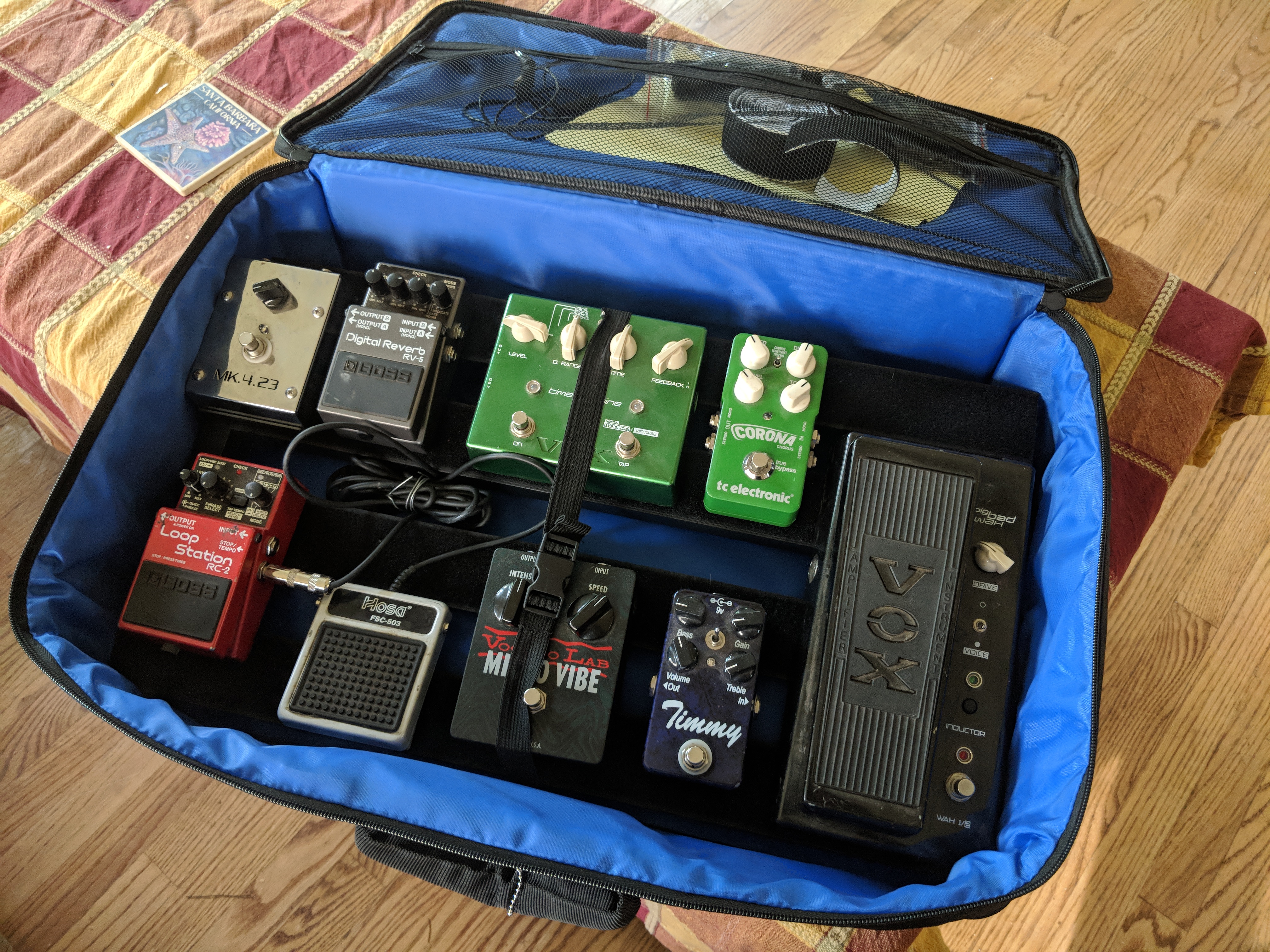
On top of that, quality control varies wildly between builders of boutique pedals, especially if the builder is just a single guy. Paul Cochrane, who makes the Tim and Timmy pedals puts out really high-quality stuff, as does Dereck Tabata of Tone Freak Effects (btw, both my Timmy and Abunai 2 have been through literally thousands of gigs and nary a problem other than tightening loosened knobs). But I’ve purchased pedals from other single-man outfits where I had to get two or three pedals before I got a decently working one.
On the other hand, what you can rely on with mainstream brands like BOSS is superior quality control. Their shit just works right out of the box.
Hand-wired Gear Is Better Than PCB-based Gear
Not necessarily. A perfect example of this is the Mad Professor Deep Blue Delay. I have an original, hand-wired version for which I paid over $300. A year later they came out with a PCB version at just over half the price I paid and guess what? I can’t tell a bit of difference in sound and dynamics! Granted, they didn’t have a PCB version available when I got mine, so if I wanted one, I’d have to get the hand-wired version – which I did. But if the PCB version was available, I would’ve just gotten that one.
All that said, in the case of amps, hand-wired amps may not necessarily be better, but there is a certain “mojo” about them. Typically, the circuits are fairly simple and uncomplicated. I look at the wiring for my ’58 Champ, and there’s just not much there. But it sure has a fantastic sound. But it’s not better, per se. It’s different. Frankly, for safety’s sake, I’d probably get a reissue had I to do it all over again (though I don’t know if I’d be willing to part with $1000 for a Fender reissue).
A Low Wattage Amp Can’t Keep Up with a Band
This is the biggest hunk of BS I ever heard! I particularly get annoyed when I hear sales guys say this. I’ve been in a number of bands over the years, and I have always used low wattage amps. While I can’t get super high-gain out of them, the classic rock and reggae I play don’t need it. It all depends on the style you play, how you position your amp, and your sound reinforcement. But if my word’s not good enough, tell that to Don Felder of the Eagles who uses a Deluxe Reverb at 20-Watt and a Tweed Deluxe at 15-Watt, or Jeff Beck who uses a Champ and has monitors on stage to hear himself.
You Should ONLY Use True Bypass Pedals
The general thinking is that true bypass pedals are somehow better-sounding. But that’s a bunch of hogwash, and it’s a lot of hype that manufacturers have used. The plain fact of the matter is that you need some sort of buffering to account for signal loss over a long cable runs. Some very popular pedal manufacturers like TC Electronic have consciously chosen to build their pedals based on buffered circuits. I have several TC Electronic pedals. No tone sucking there…
And here’s my all-time “wanker” statement:
If You’re Just Starting to Play Guitar, Buy a Cheap One
This one annoys me to no end, and seeing a similar suggestion on a forum actually inspired me to write this article. First of all, the person who says this is projecting their own values on someone else’s purchasing decision, and they have zero knowledge of that person’s financial position. Secondly, a cheap-ass guitar is usually super-hard to play and that can be discouraging. Thirdly, a more expensive guitar will typically have better action and much better sound; both of which will help inspire the beginner to build their skill. I realize the suggestions are well-intentioned, but to me, it’s just bad advice. Besides, if someone buys a more costly instrument, chances are they’ll be aware of the fact that they’re making an investment, so more likely than not, they’ll stick with it.
I know, I’ve probably opened a can of worms with these things. But no worries, I’m wearing my virtual protective cup! 🙂
Read Full Post »






 Guitar Gear