One of the things that sold me on TubeMeister 18 was the RedBox DI, that not only provides a speaker load for silent recording, but also has a built-in speaker simulator so you’ll get at the very least, a decent approximation of a miked speaker. Is it completely accurate. No. But it’s close. It’s very close.
But more importantly, the speaker simulator helps replicate the “feel” of a miked amp. An issue I’ve had with using amp models is that while they sound pretty good, they just don’t “feel” like playing an amp – you know you’re playing a model. With a tube amp, sag is a major component of the feel, and it’s missing from the models. On the other hand, the RedBox DI built into the TubeMeister 18 gives me all the feel of an amp; after all, I’m playing a real amp.
Tonally, it’s not nearly as good as a speaker pushing air, but that is easily remedied with some engineering. For me, it’s all about feel and dynamics, and the RedBox delivers that in spades. This evening when I played the amp plugged directly into my audio interface, I was amazed at the dynamics that were coming through; so much so, that I’m going to get an individual unit so I can use my other amps to do silent recording. Pretty freakin’ awesome.
I recorded a song this evening, which isn’t rock at all, but much more show tune-ish. It’s a scratch recording while I figure out all the orchestration, but I used the TubeMeister 18 to create a simple rhythm track with my Strat. The song’s called “One of Us.”
Yeah, the guitar track is pretty subtle, and way back in the mix, but the point I wanted to make is that recording even that simple track was an absolute joy.
I’ll have a full review of the amp with clips in the near future. But for now, I’m just enjoying this amp. It’s a winner!
Hmmm… I’ve got gear. Lots of it. And I’ve got plenty of amps to choose from. But a friend of mine texted me today and said he was selling his brand new Hughes and Kettner Tubemeister 18. I actually didn’t know too much about it; only what I’d heard when it originally came out.
But when I went to research its features, dammit! I texted my buddy back and told him I’d buy it off of him. I THOUGHT I was amp’d out. After all, I have been gigging and recording with my Aracom VRX18 and VRX22 amps for years, and those are kick-ass amps!
But as the title says, once a gear slut, always a gear slut.
The worst part of it is that despite all the research, all the reasoning, and all the restraint, as a gear slut, I’m subject to bouts of compulsion, no matter how much self-control I’ve exhibited in the past. It’s uncanny.
With respect to the H&K Tubemeister, truth be told, it sounds great, but it’s the built-in DI that sold me. Shit! I can do that with all my amps, using my Aracom DRX attenuator. But nooooooooo….. I had to have an amp that had it built-in. Yeah, the amp has some really nice features like it’s very useable power-soak, and it’s also a multi-channel amp, which is a HUGE plus. BUT, I still gave into my GAS, and I’m now the proud owner of another fine piece of gear.
Not that I’m complaining. I’m writing this very much tongue in cheek. I’m super-excited to be playing a new amp; especially a brand that I haven’t really played before. I’m looking forward to exploring what it can do. And hey, if it doesn’t work out, I can still turn around and sell it.
No, this isn’t a formal review like the ones I normally do, but let’s get the rating out of the way: I’m giving this strap 5 Tone Bones! Check out the strap I got here…
Since GuitarGear.org has gained widespread popularity in the guitar community, I occasionally get contacted to review all sorts of gear and accessories. But because I’m a busy software engineer by trade, I have to turn down most of the review requests, or accept review material if it isn’t too complicated; that is, it won’t take too long to review. But then again, sometimes something catches my eye, piques my curiosity, and I have to see it to believe it.
When I got contacted by the publicist for In Blue Handmade, Inc., who said they make a line of guitar straps and composer journals, I was intrigued. But when I went to their site and saw the absolutely gorgeous, handmade leather straps, I knew I had to take more than a gander at them. So I accepted the review invitation.
The package was waiting for me when I came home from work this evening. I excitedly opened the package, and was immediately greeted with the heady scent of fresh leather. It’s an aroma that – ever since my childhood – spoke of quality and durability, and more importantly, something handmade. I guess that came from all the trips my parents used to take us on throughout the Pacific Northwest, where we’d visit replica frontier towns like Columbia, CA that invariably had a shop of handmade leather goods. That smell has always evoked a sense of security. To me, something made of pure leather was going to last.
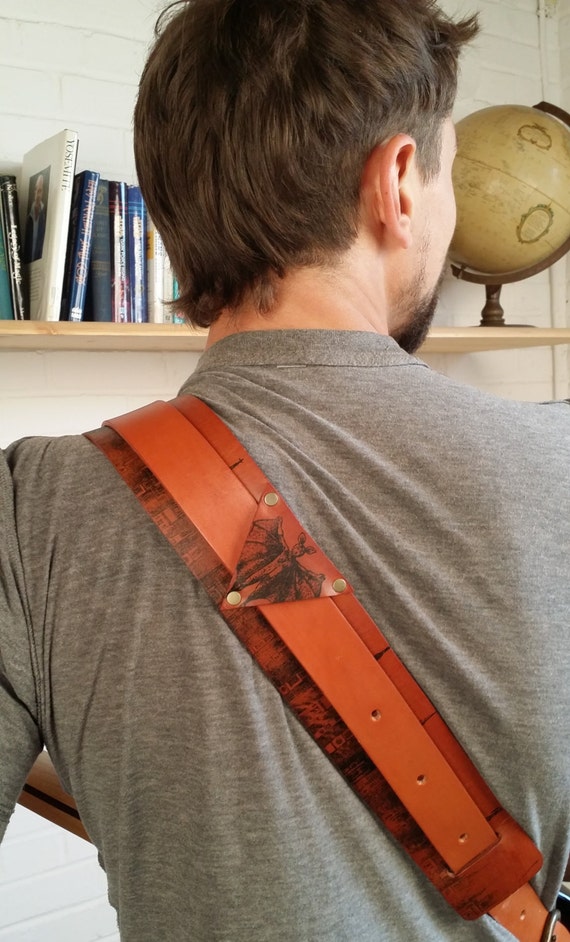
When I pulled the strap out of the shipping bag, I just smiled. My wife noticed me admiring the beautiful strap, and said, “Wow! That’s pretty good workmanship! It’s gorgeous!” My silent thought was… NO SHIT!
The leather is thick, so thick, that it’ll take a bit of time to break in. But that’s part of the allure of natural leather. It ain’t soft when it’s new, but when it’s broken in, there’s nothing like the feel of it. I’ll help the process a bit with some neatsfoot oil to help replenish the oils lost in the tanning and drying process. That should help a bit. Imagine that! Using neatsfoot oil on a strap. But it’s the kind of care that you have to take with natural leather goods. They’ll last that much longer!
But, of course the real test was to try it on a guitar, so I attached it to my trust acoustic. DAMN! It felt SO good on my shoulder. The strap is essentially in three pieces. Two skinny pieces act as a belt (yes, there’s a brass buckle, by the way), and the belt runs through a thicker padding piece, with the center “belt loop” adorned with a hand-stamped design of “bat man” (well… that’s what I got).
I know, I know… it’s JUST a strap. But it’s SO F-IN’ cool! Who doesn’t like cool? If you say you don’t, you’re a frickin’ liar. This strap exudes cool. Okay, it ain’t cheap at $75. But hell! We spend thousands on gear and don’t bat an eye. On a relative scale, $75 is a small price to pay to look this good. 🙂
In my best Leo Getz imitation… Okay, okay… You REALLY need to take a look at these straps! Here are some VERY cool things to consider:
All straps are hand cut, hand dyed, and printed by hand.
There are over 3000 images available to choose from… (I just found this out…)
In Blue can do custom text and images as well, as well different dyes (personally, I prefer the natural dye).
The design is absolutely cool… 🙂 Had to throw that in…
A few days ago, I received an update from the BeatBuddy mailing list that announced that BeatBuddy had won the prestigious “Best In Show” award at NAMM.
First off, I’m not at all surprised about this. I raved about it before it went to market, and was absolutely blown away by it when I finally received one.
And since I’ve had the BeatBuddy, it has been an absolute game-changer for me. Funny, I actually intended to use it live, but haven’t had enough time to practice with it and write down the settings I’d use for various songs that I perform in my solo gigs. Right now it’s the “cold season” at the restaurant I perform at weekly, so I’m seated behind a piano, which makes access to my pedals a bit difficult. But once I’m playing on the patio, I’ll be using the BeatBuddy fo’ sho’!
But just because I’m not gigging with it, doesn’t mean I’m not using it. I’m not even recording much these days, but I still get song ideas, and the BeatBuddy has been an invaluable tool to help me visualize and realize a song. And for just tooling around and practicing, you couldn’t ask for a better way to play to a beat when you don’t have a drummer around.
I’m so excited for the Singular Sound guys who’ve made this thing possible. It’s an incredible tool that has brought so much value to my songwriting process.
For the past 15 years, I’ve gigged between 150 to 200 times a year. I should clarify that I’ve actually been gigging for twice as long, but it was 15 years ago that I started playing venues where I had to bring my own equipment. Prior to that, I only played gigs where I could plug into a board, or more accurately, all the gigs I played just happened to have a board. But then I started getting gigs in other venues where I had to provide my own sound.
I first started out with a Soundcraft GigRac 300 powered mixer that drove two passive Yamaha monitors. Combined with my pedals, guitar, mic and music stand, that was a couple of hundred pounds of gear that took up to a few trips to lug in, depending upon where I was playing. I played with this set up for several years.
Then a few years ago, I discovered the Fishman SA220 SoloAmp PA that combined mixer and a 6-speaker array into a single unit that weighs only 25 pounds. Now I could do everything in a single trip! But being all about efficiency, I was still looking for ways to trim the weight from my rig. Enter the TC Helicon Play Electric.
Before I moved to the excellent TC Helicon Harmony G XT, for years I played with the VoiceLive Play GTX, and though the GTX had on-board effects, I just didn’t like how they sounded, so I still ran the guitar signal into a few effects boxes. But all that changed when I started using the Play Electric. With the TonePrint models for chorus, reverb and delay built into the unit, I’ve had no need to lug my pedal board.
You see, the most important thing for me when playing live acoustic through a board is to not get that flat, mid-rangy, and dead plugged-in acoustic guitar sound that seems to be so prevalent with plugged in acoustics. I’ve found that the way to avoid this is to use effects like chorus, reverb and a bit of delay to make the tone more rich and do some tone shaping. It takes away some of the natural tone of the sound, but it sounds a hell of a lot better than my guitar being directly plugged right into a board.
But until recently, I could only achieve that by lugging around my own modulation effect pedals. The Play Electric’s effects models completely solve that issue, and along with the acoustic amp simulator that I’m using, there is just no need to lug my pedal board to a solo gig. Now, all I bring along is a bag of cords that I also can use for the Play Electric, and another bag to carry a couple of songbooks and my iPad, plus my SoloAmp if needed. That’s a serious reduction in lug weight and bulk.
Crystal-clear vocals and guitar tones
As far as the unit’s performance is concerned, I couldn’t be happier with the tone from both the vocals and guitar. Granted, I spent a few hours getting the tones for both vocals and guitar dialed-in, but I would’ve done that with any unit. The point though is that it was all worth it. At the restaurant that I play at two to three times a week, a challenge is volume. I need to be loud enough to be heard, but not so loud that it’s overpowering to the diners. The compression for both vocals and guitar performs quite nicely, and allows me to get my sound out in the restaurant without turning up the gain faders on the restaurant’s board. What I noticed is that my sound gets great distribution with the compression, but also, the sound is very clear, especially with the guitar.
Harmony tracking, as expected, is awesome with the Play Electric, though the harmony voicing seems a bit clearer than with other units. That’s a good thing, but it also means that harmonies stand out more, and if I’m even slightly off, you can tell the difference. One thing that is actually kind of weird, and something that no one has figured out is harmonies when playing an F#m chord. I’m not sure why this is, but every unit I’ve ever played, be it the DigiTech VocalistLive I used to play or any of the TC Helicon units seem to act a bit quirky with the F#m chord; specifically with the Eagles’ song, “Peaceful Easy Feeling.” The transition from the A to the F#m always gives a really quirky harmony. Oh well, other than that, the harmonies are awesome.
As I mentioned in my review of the unit, the only thing that hurts this unit is the short looping time. For most of the songs I play with a loop, it works just fine, but there are some songs where I need a bit more looping time, so it looks like I’ll have to use my BOSS RC-2 for the longer loops. It’s not a big deal, but it is mildly inconvenient.
All-in-all though, for the sound Play Electric produces, it’s a winner in my book!
I played acoustic guitar almost exclusively for almost 30 years before made the switch to electric. Honestly though, I didn’t really make a “switch.” I added electric guitar as a regular tool in my inventory of tone. What drove me to add electric was the style of music that I was starting to explore at the time; plus, my church worship group was turning into a regular band, and though the contemporary Christian music we were playing worked fine with acoustic, frankly, many of them just sounded better with electric.
At that time, I actually did have a couple of electric guitars. But they were guitars that my little brother had lent to me, and they were in various states of disrepair, or when I could get them working, I wasn’t really playing music that needed an electric. And the only amp that I had was a 25 Watt Roland solid state amp that worked pretty well, but I also knew at the time, that I would have to get something with a bit more oomph (but that’s another story). In any case, suffice it to say that prevailing circumstances drove me towards the purchase of a new electric guitar, and thus began a journey into the wilderness of “TONE” that hasn’t stopped, even to this day.
Looking back on my experience, I thought I’d share some insights on what I’ve learned over the years. No, I won’t be telling you anything about a specific brand of guitar that you should purchase; rather, I’m going to simply provide some practical points you should consider when purchasing your first electric guitar.
1. You first have to come to terms with the fact that this will probably not be your last electric guitar.
Budgets notwithstanding, most people I know who have electric guitars almost invariably have more than one. There might be several reasons for this, but different brands and different guitar/amp configurations produce different sounds. For some, one is all they want or need. But for the majority of folks I know, once they got one, they eventually purchased another, then another, then another. I have my theories as to why this happens, but it certainly does happen.
2. You’ll never sound like Eddie Van Halen.
Or anyone else for that matter. You’ll sound like YOU. You can get pretty close to your idol, but understand that just because you get the same equipment as your favorite artist is not a guarantee that you’ll sound like them. Besides, being a copy cat is boring.
3. You can’t just buy an electric guitar. You will need an amp.
The most important point I can make with respect to an amp is that – again, budget notwithstanding – buy an amp that will fill the space that you will most likely play. If it’s on stage, then you’ll need a bit of horsepower; especially if you won’t be miking the amp. But if you’re going to mostly play in your living space, a smaller amp will suffice.
As far as solid state vs. tubes are concerned… That’s a tough one. My personal inclination would be to go with a solid state amp like a BOSS Katana, Roland Cube, or a hybrid like Line 6 DT series amp that runs on tubes but has modeling. These will get you “flavors” of the major tube amps, and that’s the important thing to note about tube amps. Each different major line: Fender, Marshall, Vox, and Mesa have specific tonal characteristics, and you need to test each individual kind to find which one you like. With a good modeling amp such as the ones I mentioned, you can get a feel for what you like before you lay out the cash to buy a traditional tube amp. Truth be told, I gigged with my Roland Cube 60 for a few years, even though I had already purchased Fender Hot Rod (which, I will say is a great tube amp to start out with).
What about boutique amps? Well, truth be told, most boutique amps are modeled after vintage models of most major brands. Victoria amps are based on traditional Fender designs. Aracom (which I play) are based on vintage Marshall designs. Two Rock and Ceriatone are built based on the mystical Dumble amp specs (these were originally Fender, if I remember). In many cases, the boutique amps correct certain design flaws and inefficiencies in the original specs, or perhaps outright copies, but they maintain the basic tonal characteristics of the designs upon which they’re based. So you still have to play several before you make a decision. So a modeling amp will buy you time to discover what characteristics appeal to you.
4. Buy what sounds good to YOU
Lots of folks you talk to about recommendations for guitars will make lots of recommendations on what to buy. The prevailing advice I hear is to get a Strat first. That’s not necessarily a bad idea. Strats are great guitars. Hell! I have three, and I also started out with a Strat based on a recommendation from a friend. At the time, it was a great choice because I was playing almost all clean. But if I had to do it all over again, knowing what I know now, I don’t think I’d start with a Strat. I’d probably start with a Les Paul or some other humbucker-equipped guitar. I just prefer the fatter tone of humbuckers – always have. Irrespective of that, I would take a lot more time in making my choice to discover what’s appealing to me. Sure, I’d welcome the advice of others, but I’d ultimate make a decision based on my own investigations.
5. Good tone can be achieved at any price…
Or, worded more directly. Just because you pay a higher price doesn’t guarantee that it sounds good. I’ve played lots of different guitars; some that reach into the 6-figures in cost. But that doesn’t mean the high-priced stuff sounded good to me. In fact, I have a few guitars that I paid well under $1000 that are absolute tone monsters! Case in point: My Squier Classic Vibe Telecaster that I got for $250 brand new on sale. It’s a total rocker, and one of my favorite guitars to play and gig. It has a pine body and maple neck. The prevailing wisdom would be that it shouldn’t sound that good that cheap. But it’s one of the truly great guitars in my collection. And hell, if I ever mess it up, it won’t be difficult to replace.
On the flip side, I have other guitars, like my Les Pauls, that you just can’t get cheaply. From that perspective, for that tone, I’d be willing to pay the higher price.
The point to this is that good tone is good tone. Sometimes you have to pay a high price for it, sometimes you don’t. But know this: High price doesn’t equate to good tone.
6. What about pedals?
Most likely you’ll probably want to get some pedals after you’ve purchased your guitar and amp. But if this is your first one, don’t get roped into buying pedals – yet. That said, with a modeling amp like the Line 6 or Roland Cube, you can use the on-board effects to buy yourself some time to play with pedals. But in spite of that, choosing pedals is a touchy subject because there are literally THOUSANDS of pedals out there. Again, I’m not going to recommend specific brands (though a good starter brand is BOSS), but I will recommend that you start with modulation effects first such as reverb, delay, and perhaps chorus or vibe.
Overdrive and distortion pedals are really tough to decide upon because there are tons of them out there, each providing different characteristics. And especially with overdrive pedals, you have to play lots of them. Personally, because I’ve found my fundamental tone, I tend to go with transparent overdrives like my Timmy and my new love the EHX Soul Food. But it’ll take a bit of time to find what you really like.
7. Ignore the jargon and don’t drink the Kool-Aid
This kind of points back to item 4 above about getting what sounds good to you. But it’s easy to get hot and bothered by a good sales pitch, especially if the salesperson puts on a great demonstration. Remember, you can only sound like you, so my advice when you’re testing out a guitar at a shop is to find a place to plug in and play, and forget about the demo. For all you know, the neck might not feel very good in your hands or once you start playing, the tone isn’t quite what you were expecting.
This advice extends to online demos as well. You can use the online demos as a means to get a tonal “feel” for the guitar, but in the end you will not know how a guitar performs – or any gear for that matter – until you play it yourself.
8. Build materials… er… wood
I was going to avoid talking about this, but lots of people will talk about it when you discuss guitars that I thought I should at least make some mention of it. Many people you speak to about woods will sometimes try to make you think that the woods make all the difference in the world with respect to tone. But several recent studies on this subject indicate that the type of wood has no effect whatsoever on tone, only on decay.
Personally, I’m not sure what side of the fence I fall on as each of my guitars sound different, and while my Les Pauls sound completely different from each other, they have a fairly distinct “Les Paul” tone. Same goes for all of my Strats; they all sound like Strats to me. Is this due to the wood? I don’t know. But what I do know is that I only buy what I like to play and what I like to hear, and my decision really doesn’t have much to do with woods.
For instance, when I got “Katie May” from Perry Riggs at Slash L Guitars for review, I knew wouldn’t be returning it. It felt and sounded like it was made for me! I didn’t find out what it was made of until I was ready to write a review of her, and by that time, it didn’t matter if it was made of mahogany and hard-rock maple with a rosewood fretboard. It just played and sounded incredible.
As for that research, here’s an interesting video explaining the physics behind tone:
I probably could’ve just said, “Look, if you want to get an electric guitar, go and play a bunch and figure out what you like.” But I wanted to discuss some of the “edge cases” associated with buying a guitar that could contribute to you possibly making a choice you regret later that you could avoid if you were aware of some of the gotchas.
The other day, I had about an hour to kill while I waited for my daughter to finish her appointment, and being near one of my favorite guitar shops (Guitar Showcase in San Jose, CA), I decided to swing by…
Being a Les Paul guy, I of course went to where they hung the LP historic models, and salivated over a gorgeous tea burst R8 (the burst was lighter than my own, and it had a subtle, but fantastic flame maple top). I picked it up, picked at it a bit, and smiled. What a guitar!
But then I thought about what I really “needed” – that’s a relative term, by the way – and thought that I’ve been after a bit heavier of an acoustic sound that bordered more along the lines of an electric; something that I could bring to my solo acoustic gigs in addition to my acoustic for those songs where I do a lot of chord comping (which I’ve been doing a lot of lately without really thinking about it).
So I asked myself, “Dawg, what about a Gretsch?” But I sold my last Gretsch, which was a thin body, 5120 Electromatic. Great guitar, but I just wasn’t playing it because it just didn’t have enough oomph for my solo gigs. Frankly, while I loved the guitar, it still sounded really electric, and would only work in my solo gigs at specific times.
So I figured that perhaps a thicker body Gretsch would give me a fuller tone. Now they had other hollow bodied guitars there, but for hollow bodies, I’ve always gravitated towards Gretsch. There’s a certain magic in the tone. So, perusing the Gretsch rack, I saw this orange guitar with dice knobs. I immediately knew that it was a Brian Setzer model.
Before I go on, one thing that kept me from getting a fuller sized Gretsch in the past was the weight. I almost sprung for a Country Gentleman a few years back, but it was heavier than my Les Paul, and I didn’t want a lot of weight; especially with my solo gigs. But all that changed when I picked up 6120SSLVO. It was amazingly light – apparently under 8 lbs. – and that put a smile on my face. I knew then that I had to take it out for a spin. So I asked the salesman for a strap and a cord, then hooked up to a PRS combo set to clean.
From the first chord I played, I thought to myself that I could do an entire solo gig with this guitar alone! It played like butter (the guys in the shop must’ve set it up). The neck was absolutely perfect, and the action was nice and low but not so low that there was a sting buzz.
And the sound? Wow! At first I was a bit concerned that the tone was controlled via a simple three-way switch. But I realized as I played that I didn’t need an analog sweep knob to set the tone. The three positions worked just fine, and I could get a brighter tone simply by switching pickups. Strumming the guitar with just the neck pickup produced a deep, gorgeous, natural, woody ringing tone that I felt was perfect for many of the folk-rock numbers that I do. And for the more contemporary tunes where I do a lot of chord comping, I could easily flip a couple of switches and twiddle the pickup balance in the middle selector to get that classic hollow body tone. Simply wonderful.
As for playability, I’ve seen online that there were concerns about the 9.5″ radius nut and the bridge saddles set up for 12″, which would make the outside strings a bit higher than the middle strings. Frankly, I had no idea about this issue when I played the guitar, and quite honestly, I didn’t notice any string height issues when I was playing. At least for me, there was no noticeable impediment for me to work my way up and down the fretboard.
To say I’ve got GAS is an understatement. I’ve been trying to figure out what I have to sell to get this guitar; certainly none of my Les Pauls. I probably should hold on to at least one Strat. Or… maybe I’ll just suffer the GAS and save my pennies until I have enough to buy it. But it’s definitely my next target.
I have good friend who took up playing guitar two years ago, and has even started collecting (he just bought my Gretsch Electromatic off me). He has often shared his learning journey with me and his process, which has been – for lack of a better word – academic. That’s not necessarily a bad thing because implied with an academic approach is a certain amount of discipline, and that’s extremely important in learning just about anything.
But in practically every conversation we’ve had where he’s described to me what he was learning, I’ve always interjected that in the end you just have to “Nike” and “just do it” within the specific context of making music; not composing by any means, but playing songs. After all, why does one learn to play a musical instrument? Certainly not for the mechanics. It’s to make music.
Life in general is like that. There’s a point where you have to apply what you’ve learned or what you’ve planned, or what you’ve envisioned. Several years ago, I heard the saying:
There’s a fine line between dreams and reality, and that’s willingness…
I was inspired by that saying when I first heard it, as I was attending a self-help seminar and the topic at the time was achieving your goals. This was back in the early 90’s when Tony Robbins “Personal Power” was all the rage. I remember it vividly. We spoke about the difference between decision and choice, dreams and reality, and especially the values we each espouse, and how we could apply the concepts to our daily lives to achieve our goals. It was an incredible experience that changed my life forever. And after that seminar, I actually used that saying several times over the years in working with teens and mentoring young professionals.
But a few years ago, I realized that the saying was slightly flawed because with “willingness” you’re still in your head. You’re still just thinking about it. You’re still in that phase of, “Yeah, that’s a great idea, I should do that…” But it’s not until you take action that you’ve physically committed yourself to turning a dream into reality, and experience has taught me that there’s a point where you have to get out of your head, move beyond thinking about doing something and well… DO IT. So I adjusted that saying to this:
The line between dreams and reality is execution…
The “winners” in the world don’t just think. They do.
Whether Type A or Type B, whether hard-charger and seat-of-your-pants or methodical and well-planned; no matter the approach, the people who achieve their goals in life execute. They don’t sit around thinking and talking about what they’re going to do, they do it.
…you’ve got to do it your way. -Bob Lefsetz in “The Lefsetz Letter”
Wow! What powerful words! I just read these on The Lefsetz Letter, Bob Lefsetz’ commentary on the entertainment business. I’m hooked on his blog. He comes off as a bit of a curmudgeon, but he tells it how he sees it with respect to the industry and making it in the industry, and you know what? Most of what he says is spot-on. Lots of industry folk read what he has to say because for some reason, he has the pulse on the entertainment industry; specifically, the music biz.
But circling back to the title of this article, that phrase struck me because it reminded me of a recent conversation I had with a producer I’m working with on a new project, where I was saying that no matter what guitar I pick up, I sound like me. Different guitars may have different fundamental sounds, but when I manipulate a guitar (read: play), I always sound like – me. And the funny thing is that as the title says, I don’t know how I did it! After 44 years of playing guitar, probably way earlier than that, the way I attack the strings, the way fret and bend, the phrasing that I use; it’s distinctly me, but I couldn’t tell you how I got there. It just happened…
A friend of mine was listening to an instrumental compilation I put together while we were on a road trip (yes, I’m working on an instrumental album), and one observation that he made was that even though I wasn’t singing, he could immediately identify who was playing. That was really cool to me, because though I personally knew at an abstract level that I had a sound that was my own, it was great to get that validation from someone other than myself.
So what’s the point to all this? No, I’m not trying to hand myself some sort of back-handed compliment. I’m fully aware that my technical skill pales in comparison to my guitar gods. And I’m okay with that because with what skills I do possess, I’m making music and playing it my own way, which is the only way I know how to approach music. Yes, I study other players and study their techniques, but when it comes down to execution, but I know it’s me who has to execute, and as much as I’d like to sometimes do what one of my favorite guitarists does, frankly, they probably don’t know or put much thought into how they achieved what they did in the first place. Sure, anyone can go back and analyze what they did after the fact. But at the moment of creation, I’ll venture that they hadn’t a clue as to what they were doing or how they were creating it.
As for myself, with my instrumental project, one thing that I don’t want to do too much of is compose. For instance, when I wrote “The Struggle,”
while I had an idea of what I wanted the basic melody line to be after playing around a bit, when I finally got down to recording over the chord progression, I did it in one take and just let my fingers do the talking. My idea was that I wanted as much of the music to be as spontaneous as possible, while following a general guideline, and perhaps even have one or two unexpected “gotchas” because you never know what you might produce. For instance, around 2:02 of the song, I did this climbing phrase that seems like it fits naturally within the song, but to be completely honest, at that point, I was actually in a slight panic because I wasn’t quite sure where to go, so I just played and slid up the fretboard thinking I could fix it later if I made a mistake. But as it turns out, it fit perfectly. But I couldn’t tell you exactly how I did it. I just did it.
Stevie Ray Vaughn was notorious for this. He was said to have claimed – and I believe it – that he couldn’t duplicate his solos. He listened to the backing music and just… created…
For me, this is crux of being an artist. Don’t get me wrong, if you idolize a particular player and want to get a similar sound, I totally get it. But in the end, you’re the one who has to execute, you’re the one who has to make the sound. Besides, chances are that your idol didn’t know how they did what they did.
Earlier today, a friend of mine introduced me to the music of the famous Brazilian poet, political activist and singer/songwriter, Caetano Veloso. Since then, I’ve had Latin music floating around my brain, and I needed to track something…
So this evening, while practicing with my new BeatBuddy, I set it on a Bossa Nova patch, then started playing around. Within a few minutes, I came up with a cool, jazzy chord progression in Gmaj7 that I laid down on top of the drum track. Plus, I was experimenting with the BeatBuddy’s MIDI sync, so I thought it would be perfect way to get the Latin music tracked, and properly use the BeatBuddy in a recording by synching it with Logic. Here’s the song entitled B-B-B-Bossa Nova Veloso:
The incredible thing about that track was that the drums were recorded live with the BeatBuddy while I played along. Moreover, Logic, my DAW software was keeping time, and sending timing signals to the BeatBuddy, so all the beats were in sync with the measures of the song! Furthermore, all the fills and the transitions were done WHILE I WAS RECORDING!!! I didn’t stop to add another loop segment and “build” the drum track like I normally do. It was all in the BeatBuddy pedal, where I could trigger fills, transitions, and even accents while I played along. Freakin’ incredible!
Yeah, the BeatBuddy is defintely a game-changer. Having a drummer in a box totally sparks my creativity. I don’t have to spend time assembling drum tracks any longer, which takes time, and sometimes kills my creative spark. But with the BeatBuddy, I just listen to a patch, and if it works for me, I just start playing and see where it takes me.
Even if you’re not a gigging musician or don’t record, the BeatBuddy is an incredible tool for practicing. Not only can you practice staying in time, but you can practice your expression as you trigger fills and transitions. This thing’ll help you learn to perform, not just keep you in time! Check it out at mybeatbuddy.com! (and no, I’m not affiliated with the company)
 One of the things that sold me on TubeMeister 18 was the RedBox DI, that not only provides a speaker load for silent recording, but also has a built-in speaker simulator so you’ll get at the very least, a decent approximation of a miked speaker. Is it completely accurate. No. But it’s close. It’s very close.
 Hmmm… I’ve got gear. Lots of it. And I’ve got plenty of amps to choose from. But a friend of mine texted me today and said he was selling his brand new Hughes and Kettner Tubemeister 18. I actually didn’t know too much about it; only what I’d heard when it originally came out.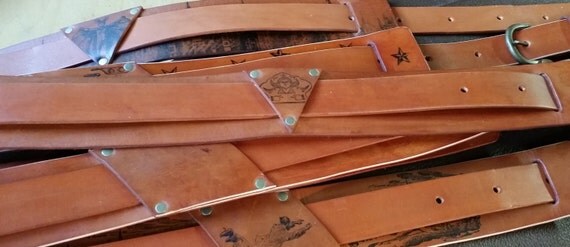

 Since GuitarGear.org has gained widespread popularity in the guitar community, I occasionally get contacted to review all sorts of gear and accessories. But because I’m a busy software engineer by trade, I have to turn down most of the review requests, or accept review material if it isn’t too complicated; that is, it won’t take too long to review. But then again, sometimes something catches my eye, piques my curiosity, and I have to see it to believe it.

 The other day, I had about an hour to kill while I waited for my daughter to finish her appointment, and being near one of my favorite guitar shops (
 Guitar Gear