Feeds:
Posts
Comments

Back in the ’70’s and ’80’s (yeah, I’m dating myself), rock and roll was rife with guitar solos. And not just the deep cuts on albums, but the songs that got actual airplay. Think “Freebird” or “Show Me the Way” or anything from Clapton. The guitar solo was an integral component of a song back then.

But today? Unless you’re listening a classic rock or alternative rock station, forget about hearing a guitar solo – or any solo for that matter.

And don’t tell me that it’s because songs have to be three-and-a-half minutes or less. You can still fit even a short solo in that amount of time. Look at “In My Life” by the Beatles. It’s just under 2:30, and even it has a solo!

Now, don’t get me wrong, I’m not saying that music today is bad. Pop music really isn’t my thing. But it just seems to me that instrument virtuosity is not really a thing any longer.

To be honest, I’m more sad about this than anything else. When I was growing up, listening to my guitar heroes like Frampton, Clapton, and Santana inspired me. There are really no groups or guitarists today that do that.

I suppose you can argue that John Mayer does it still, but I can only take him in small doses. He’s a great player; of that there’s no doubt. I’m just not into his music.

There’s one guy I got introduced to recently named Bruno Major who’s absolutely wicked on guitar. He’s much more jazz-pop, but I love his playing, and he does guitar solos in many of his songs.

But the screaming, melodic, big electric guitar solo seems to be dead.

LONG LIVE THE SOLO!

Over the years, I’ve heard many cringe-worthy horror stories of damaged guitars, from cracked tops to delaminated nitro to broken head stocks, etc., etc..

In some cases, the damage couldn’t be avoided; for instance, due to flooding. But in a majority of the cases I’ve heard about (and experienced myself as I’m not immune to my own past stupidity), the damage could’ve been avoided by just following a few simple things. And the funny thing is that they aren’t exotic suggestions like placing your instrument(s) in a temperature or humidity controlled isolation booth. No, these are slap your forehead, common sense things, where you say, “DUH!”

Extreme Cold = Bad. Extreme Heat = Very Very Bad

Any extreme temperature is bad for a guitar, but heat, especially from letting your guitar sit in direct sunlight for too long is really bad. I know a guy who was playing a gig in a park on a hot day and put his backup guitar – a Les Paul – on a stand behind him that was exposed to direct sunlight. It didn’t take long for the guitar to heat up so much that its neck warped. So avoid exposing your guitar to temperature extremes… Which bring me to the next point…

If You’re Not Using Your Guitar, Put It In Its Case – Preferably Its Hard Shell Case

I woke up one morning, padded to my kitchen to make some coffee and yelped in shock to see my acoustic guitar lying face-down on the floor. I guessed that it was my cat that knocked it over. But that was totally my bad for leaving it on its stand overnight. Lucky for me, the guitar was okay and got just a simple scratch. But it could have been much, much worse! From that point on, as soon as I finish playing a guitar, I put it back into its case. If I know I will be playing it soon, it goes into a padded gig bag, but if it’s going to sit for awhile, I put it back into its hard shell case. This goes for all my guitars, electric and acoustic.

Also, after I get home from a gig, I immediately transfer the guitars I use from their gig bags to their hard shell cases. Yeah, it’s a bit anal-retentive, but better than the alternative of having damaged instruments.

At Home, Stand Up Your Guitar(s) In Low-Traffic Areas

I had to learn this the hard way; especially when I still had little kids in the house. Now lucky for me, none of my kids ever knocked over one of my guitars, but they came close a few times; enough to make sure that when I put a guitar down on its stand – even though its temporary – it’s out of the way of traffic. If it means that I have to physically drag my ass out of my chair to place it, I will do it.

Climate Matters

I live in a fairly temperate climate in Northern California, but in areas where it’s extremely humid or extremely dry, you need to take measures to control the humidity. Here’s an excellent article from Premier Guitar that discusses this very subject. Other than Las Vegas, NV, I’ve never lived in an extreme climate. And even in Las Vegas, I always had the air conditioning on during the hot months, plus used a room humidifier to add some moisture. The tips given in that article are very useful, especially the in-case humidity control units.

Strap Locks. Hello?

After I dropped my Les Paul during a gig while I was jumping around on stage – luckily the body landed on my foot, so all I experienced was a severely bruised foot and not a dented or broken guitar – I went out the very next day and got strap locks for every one of my electric guitars. Strap locks are your friend. Get some.

There are definitely a lot of other things, but these are at the top of my list to help mitigate damage to my guitars; especially putting the guitars in their hard cases. These are difficult to follow, and in some cases are marginally inconvenient, but the safety they bring will help you avoid a lot of heartache!

In all the years I’ve been playing and collecting gear, there have been just a few things that have truly annoyed me. One was the Ultimate Attenuator that I felt threw a blanket over my tone. But lately, the pedal that has the same effect as nails scratching on a blackboard for me is the TC Electronic 3rd Dimension Chorus.

Two of the guitarists in my praise and worship band use it, and every time they switch it on, I tell them to turn it off – immediately. This past Sunday, I essentially banned it from the band forever. If my guys want to use a chorus, they’re going to have to invest in something that has much more adjustability.

I’m not sure why it gives me the creeps so much, but it really does. I hear it, and just want to pull my hair out. It actually sounds like a cheap imitation. It’s modeled after the Roland Dimension C Chorus, but to me, it does a very poor job of it. Where the Dimension C is rich and lush, the 3rd Dimension is thick and syrupy.

I realize that the pedal is part of the TC Electronic’s affordable pedal line, but the lack of sound quality in this pedal is surprising. I use a Corona Chorus and love it. But maybe that’s why the pedal is only $52.99. It’s just not meant to provide a quality sound.

It’s disappointing to see this from TC Electronic. Definitely a big thumbs down on this pedal.

What Do You Need?

I asked myself that question yesterday after I set up my rig at church. I thought about it and to be honest I have all the gear I actually need. So now, I’m at the point where most gear I buy is a want as opposed to a need; though I can technically justify my new Gibson J-45 as a business need.

I never intended my treasured Simon & Patrick PRO to be gigged with this much after I received it as a gift from my dear friend Libby. And though its monetary value isn’t as much as the J-45 and it certainly doesn’t have the projection of the J-45, it holds a lot of sentimental value for me. Plus, I have to admit that it sounds damn good on a recording, so I’ll continue to use it in the studio.

But other than that, the only things I technically need are consumables like strings and picks. But those are very periodic. And with strings, I normally only replace one string at a time, so I don’t go through sets very often. Given that, it’s really hard for me to justify getting any gear that’s not a consumable.

That doesn’t mean I don’t eschew new gear altogether. It’s just that I’m not nearly as susceptible to GAS attacks like I used to be. Add to the fact that I found my own sound, and the motivation to try and buy new gear just isn’t as strong as it used to be. Don’t get me wrong. That urge is there still but it is overpowered by my general feeling of completeness with my rig.

But here’s the cool thing about asking myself that question: I’m now at the point where I can answer, “I really don’t know what I need. I’ve got the sounds that I like that satisfy the music I play. Anything new will simply be icing on the cake.”

This morning before going into the office, I ate breakfast while watching an Elton John concert on AXS TV. I had seen this recording of his Vegas shows a few times and while I love all of EJ’s music, I’m always drawn to Davey Johnstone; especially when he straps on that custom-painted Captain Fantastic Les Paul Custom.

Two guitarists drew me to the Les Paul: Peter Frampton and Davey Johnstone. I’ve been a big fan of both Elton John’s and Frampton’s music, but looking back on the development of my own sound as a guitarist, I’ve seemed to gravitate more towards Davey Johnstone’s sound than Frampton’s. Davey’s tone has a pleasing bite that I’ve always associated with a Les Paul.

But that Captain Fantastic Les Paul; painted for Davey for Elton’s 30th Anniversary tour. So iconic and so appropriate for a guitarist who deserves so much more recognition than he has gotten through the years. For chrissake! He even played for Alice Cooper! Alice only gets the best musicians to play for him.

I suppose, if you think about this, Davey could be considered the ultimate sideman. He’s the guy who can hold everything down, which is why it’s no surprise that he’s Elton’s musical director when they perform. He is always smack-dab, center stage, and if you watch him closely, he gives EVERYONE their cues; even Elton. And having played with Elton John for over 40 years, it’s fitting that he had a Les Paul custom-painted for him that pays tribute to that lifelong relationship.

And to underscore just how involved he has been in the music industry and the sounds of other artists to whom he has contributed, check out this credits link at AllMusic.com. He even played for the maestro, Luciano Pavarotti on the maestro’s “The Duets” album as THE guitarist for the album!

To me, Davey Johnstone is truly an icon of rock and roll!

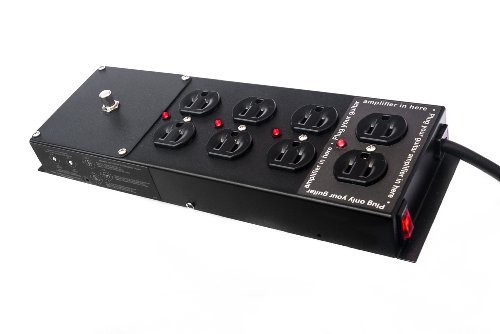
Summary: The RS-4 provides all the great sequencing and conditioning as the original and on those two features alone, it’s valuable. But this isn’t just an ordinary power strip. Like the original, it is built like a tank and incredibly reliable. Get your gear powered on in the right order, then condition your power, and you can rely on it to withstand the rigors of the road? What’s not to like?

Pros: The addition of the Port 1 Always On feature is awesome! As I mentioned it is built like a tank. My original is seven years old and shows no signs of failure. The EMI/RFI filtering and 1935 Joules of surge protection provide lots of confidence that the power going into your gear is clean and protected.

Cons: None.

Price: $299.00 ~ More features and cheaper than the original? What’s not to like?

Features:

Power Rating120VAC, 60Hz, 15A 1800W
Safety Agency ApprovalsETL Listed file 4007270 in US and Canada conforms to ANSI/ UL Std. UL 1449-4 UL 1363 and certified to CAN/CSA 22.2 NO. 8
Actuation SwitchPush button foot switch (on- off)
Dimensions13.25”L X 4.25”W X 1.50”H
Chassis ConstructionSteel Welded 20 guage
Receptacles(8) High impact thermoplastic (4) duplex receptacle Nema 5-15R
Power Rating120VAC, 60Hz, 15A 1800W
Power Cord15 foot 14 gauge SJT Nema 5-15p
Surge Suppression(9) MOV’s 1935 Joules L-N L-G N-G Network UL1449-3
Circuit Protection15 AMP main power circuit breaker extreme over voltages over current shutdown with automatic resettable circuit
EMI/EMCElectromagnetic Interference (EMI) Filters-Fourth Edition; General Instruction No 1, 2 and 3;Issue:1982/09/01 (CSA C22.2 No. 8, with T.I.L No 516) 55022
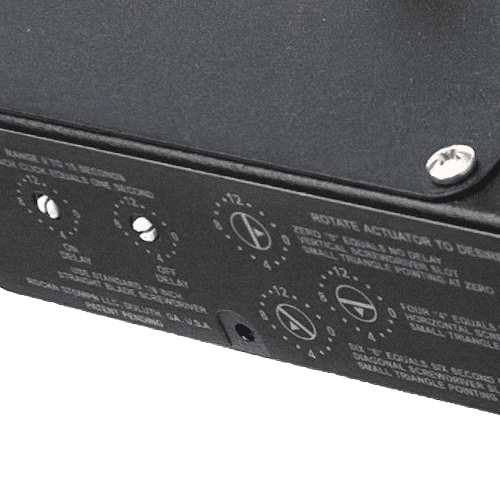
Delay Sequence4-step 0-15 second adjustable delay sequence between receptacles for both on delay and off delay for potentially 0 to 45 second delay
Diagnostic Indicators(4) LEDS one for each duplex receptacle indicating AC power to dedicated receptacle and power to controlling relay (1)LED front panel indicates electronic control module’s switching power supply and surge suppression network is functioning properly

Kimball Magee, inventor of the Rockn Stompn contacted me a few weeks ago to tell me about the RS-4. He mentioned that it had been seven years since my original review of the first version. I thought about it for a second and said to mysef, “Has it really been seven years? The Rockn Stompn is just part of my rig now. Can’t believe it has been this long.

And it’s true. I do NO gig, be it a private party in a home, to a church, to a bar or restaurant, to a hotel, and even well-equipped, modern stages without my Rockn Stompn being the power interface between my gear and the venue.

Truth be told, I’ve never plugged into a power source that experienced a power spike – they’re pretty rare in the Silicon Valley where I live. But I have plugged into dirty power sources occasionally. The filtering built into the Rockn Stompn ensures that I get clean power to my gear. Of course, nothing can be 100% without being incredibly expensive, but the Rockn Stompn provides filtering and conditioning to handle most dirty power.

And as I have used the original probably longer than most folks, I can no longer knock the product for being expensive. The peace of mind it has brought me over the years can’t be measured in dollars.

Think about it. If you’re like me, you have no problem spending much more than $299 on a single pedal. Wouldn’t you want to make a similar investment to ensure that you protect your investment? And if you’re like me, you don’t just have a single pedal that costs in excess of $300. You have a few. Peace of mind, baby. That’s where it’s at.

But what about the power sequencing? I chuckle as I write this because it’s just something has become a part of my gigging life. The last on-first off and vice-versa has become SOP for me; so much so, that I don’t even think about it. But the cool thing is that when I’m working with gear that doesn’t have power sequencing, I now am very conscious of the order in which I power them on.

As for this new version, there’s not much to say other than if you’re serious about protecting your gear, BUY IT.

But Kimball did contact me because he said it would be useful in a home studio because of the ability to set the first port to Always On. I just finished recording my latest album, and sure enough, having my computer/DAW setup connect to the Always On port was awesome. I could power down my amps and still have power to my computer to mix and master.

BUT, I also brought it to my church gig the first weekend I had it. You see, each band is responsible for projecting lyrics, and that requires a computer. So I hooked up my laptop for projecting lyrics and my pedalboard and amp to the Rockn Stompn as a test. I had no doubts it would work. But the cool thing is that my church’s power isn’t all that clean, and I have been concerned about plugging my Macbook Pro into the power receptacle. Now, with the RS-4, I’ll get the surge protection and conditioning that my guitar gear gets!

Fit and Finish

Just like the original version, the RS-4 is built with the gigging musician in mind. It is heavy and well-built, owing to the welded 20 gauge steel. Using steel as opposed to aluminum is an interesting choice. But to me, it’s the right one. Yes, you add more weight using steel, but what you lose in lightness you gain ten-fold in durability.

I’ve dropped my original unit several times over the years. It has been in bags with other crap stacked on top of it. It has been jostled and dragged and has survived over 1000 gigs in a lot of different venues. It has never let me down.

Plus, that extra heft suggests solidity and strength. In more colloquial terms: It’s made of steel, so don’t be a pussy about the weight if you’re gonna use this power strip. I say this a bit tongue in cheek, but a few years ago, someone actually complained to me about its weight when I asked them to carry it for me while setting up for a gig. That same person used a cheap-shit plastic power strip.

Overall Impression

Ever since I got the original unit seven years ago, I’ve gone on to suggest it to hundreds of people. My right-hand man in my church band bought one years ago after I brought it to church. He has a lot of very expensive gear and he immediately saw the value that the Rockn Stompn bring to the table.

Like I mentioned above, you spend lots of money on your gear. Why not spend a bit protecting your gear? Sure, a power strip can easily be perceived as a pedestrian item. But it is so much more than that. If you’re serious about protecting your gear, the Rockn Stompn should be a critical component in that protection!

Vangoa Ghost Fire Aluminum Pedal Board

Summary: The little brother of the larger and, in my opinion, more versatile board, this nonetheless provides a roomy surface to mount your pedals. It’s a basic board, really meant for using a 1-Spot, but that doesn’t take away from its quality.

Pros: Like its bigger brother, this board is lightweight. It’s roomy to accommodate several pedals. Great, basic fly rig type of bag.

Cons: Like the larger board, my main nit with this kit is the carrying bag, but this time it’s not the material, it’s the height. It is slimmer than the other bag and though it too has a large pocket, don’t count on fitting much in the bag itself. Another small thing is that – and admittedly, this could be an oversight, no patch cables were included in the kit. For me, it’s not a problem. I have patch cables – lots. But for someone who’s starting out, it would be nice to have had those included.

Features:

  • Aluminum alloy construction
  • Dimensions: 19.8″ X 11.5″ (kickstands raise front of board about 3″)
  • Includes everything you need to mount pedals.

This is built to the same quality standards as its bigger brother, but it is geared towards the 1-Spot user as kickstands fold in and the board will lay flat. So if you want to use a power unit like a Voodoo Labs power supply, you’ll have to mount it on top. But that’s not really a downer. If you want a good quality, lightweight grab-and-go board with not a lot of bells and whistles, this bag is for you! Also, if you’re just starting to use pedals, this is an ideal started board.

This is the second of the two units I received as review samples from Vangoa. And again, at least from a quality perspective, it exceeded my expectations. I was a bit disappointed that it didn’t include the patch cables as advertised, but I will chalk that up to a simple oversight by the company.

Fit and Finish

No pictures of this because it’s effectively the same board as the larger one but with a smaller footprint and has kickstands as opposed to a solid bar to elevate the front of the board. It is very well-made and as I mentioned in my other review, the build quality is a testament to the quality standards in play in China.

Overall Impression

I’m really impressed by the quality of this board and its larger brother. It’s nice and roomy, and super-lightweight.

In a nutshell, I see a few uses for this board:

  1. It’s a great started board. My first board was a Gator board made of vinyl-covered MDF board that weighed a ton, and it really didn’t have all that much room. This board is much larger and can easily accommodate an expression pedal and a few regular-size pedals.
  2. Another use I see for this – and it’s how I’d probably use it – is as a spare board with a minimal setup; in other words, it would be a great secondary fly rig. I’d place a wah, an overdrive, a digital or analog delay, chorus or vibe, and a reverb. That’s it. My main board has more stuff on it because I need to be versatile (even though I too could use it as a fly rig). But with a smaller board like this, I’d just grab-and-go.
  3. It’s actually just a great, basic board, and frankly, I could see using this board as an acoustic rig board. You don’t need many effect pedals for acoustic. But I use a looper and a preamp and a few effects like an octave (T-Rex Quint Machine), chorus, delay, and reverb. All that will fit on this board.

…It probably is.

BUT! There is a way to determine if something really is too good to be true. For that, let me share a quick story…

On my Facebook feed, I saw an ad for a cheap wireless guitar system. It was just two identical-looking units about the size of a clip-on tuner; both with 1/4″ plugs. Curious, I clicked on the add and saw that the system was just $60. But knowing that there would probably be lower priced items on Amazon, I decided to do a search there.

Lo and behold, I found the system, but I also saw three other identical units with completely different branding! All of the different brands had reasonably favorable ratings, but that got me suspicious, so I did a Google search and I discovered this site: ReviewMeta.com.

ReviewMeta analyzes millions of reviews on different products on Amazon to help buyers determine just how real the reviews are. Their tag line is:

ReviewMeta.com analyzes millions of reviews
and helps you decide which ones to trust

Just copy and paste an Amazon product link into their search box, and they will give you one of three ratings: Pass, Warn, and Fail.

So… I tried it, and that particular product got an overall “Warn” rating. But when I looked at the breakdown, the product got a “Fail” for suspicious reviewers. Looks like I won’t be buying that. Here’s the ReviewMeta link if you’re curious:

https://reviewmeta.com/amazon/B07L5B64RG

Once I saw the rating it was total thumbs-down on that. The unit is only $39.99 so it really is WAY too good to be true.

However, in my Google searches, I kept on getting results that included the XVive U2 Wireless System that seems pretty promising; so promising, in fact, that the well-known Rob “Chappers” Chapman of Andertons fame did a video demonstration and loved it! It has a much more realistic price of around $150. That’s probably going to be the unit I check out for sure!

Vangoa Ghost Fire Aluminum Pedal Board

Summary: If you’re looking for a reasonably-priced, lightweight pedal board, look no further. This is a sturdy board that should do well in any venue.

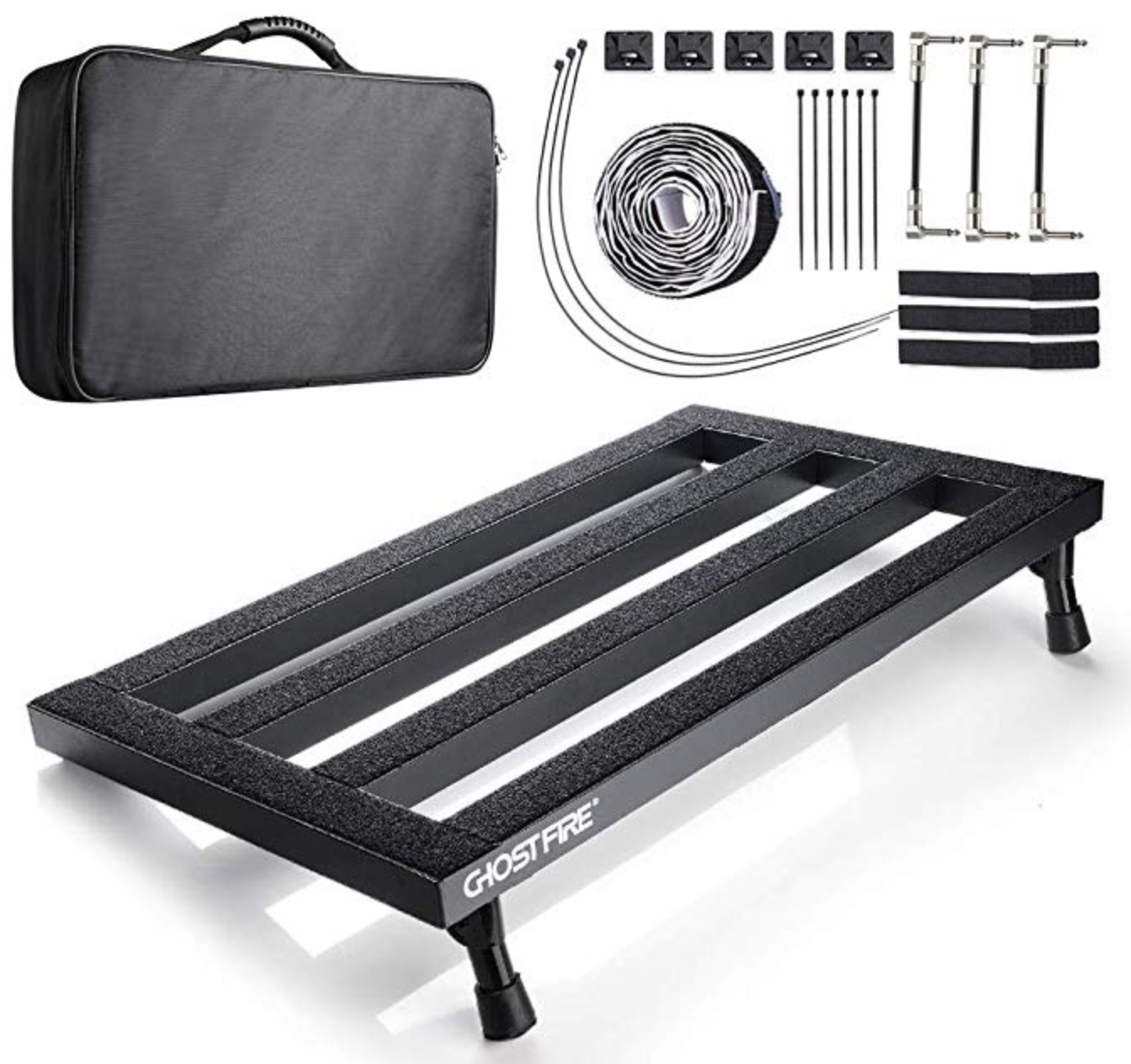
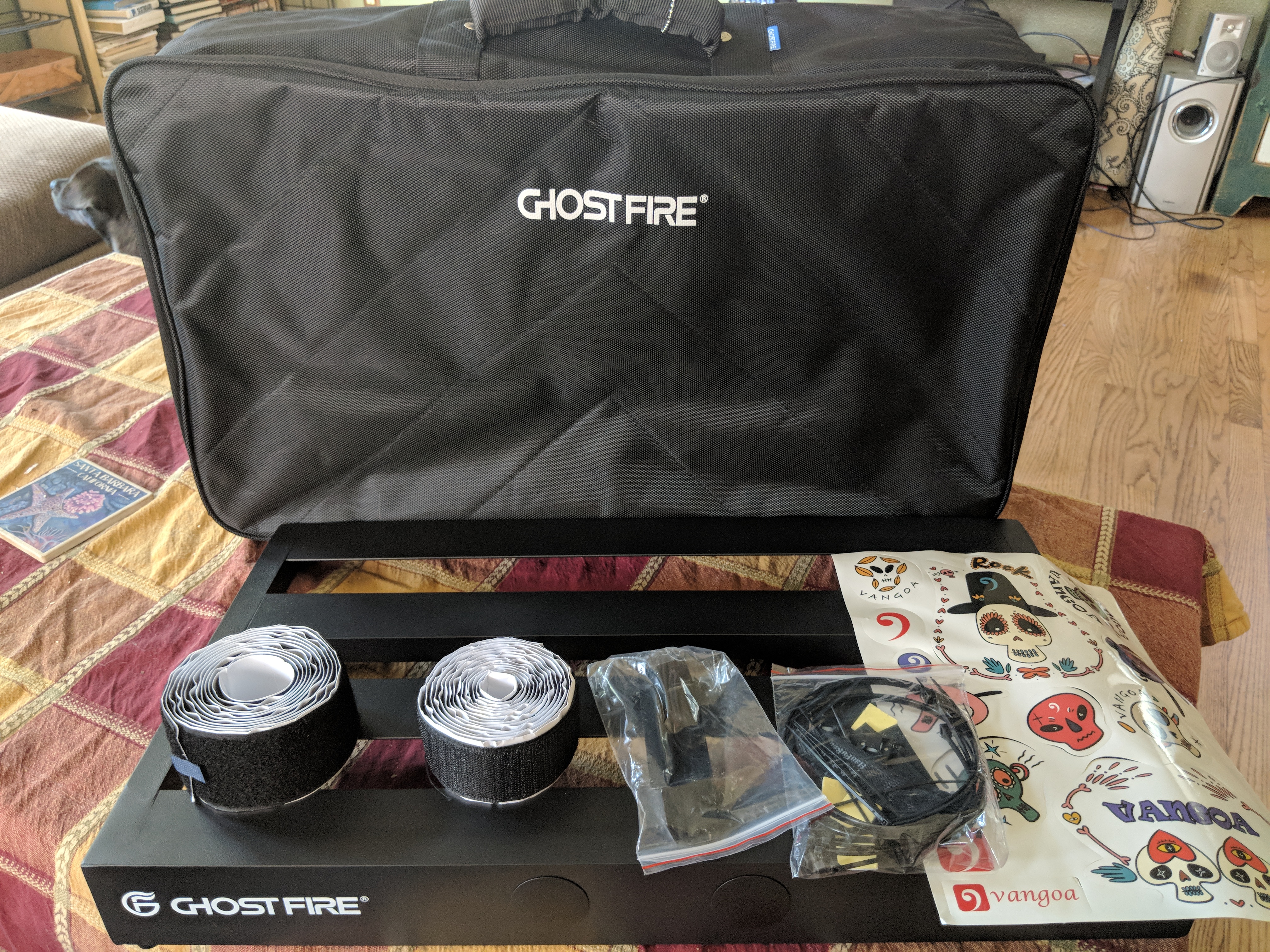
Pros: Very lightweight, yet super-sturdy. Board height seems specifically made for a Voodoo Labs power supply, but there’s plenty of room to mount one under the board (just don’t get one too wide). Included with the board are two rolls of velcro, cable ties, and stick-on cable mounts. Padded carrying bag includes backpack straps – very convenient.

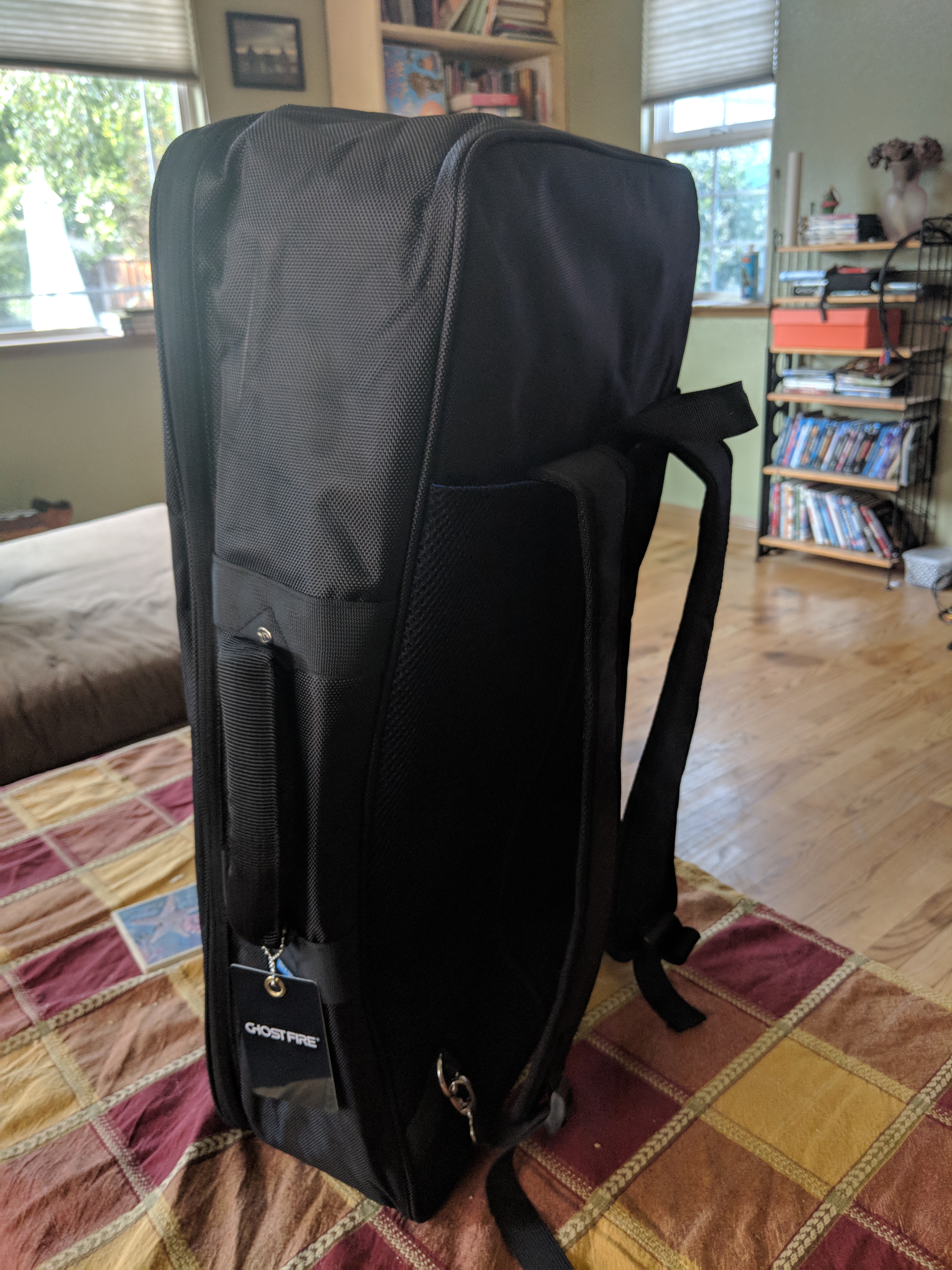
Cons: The ONLY nit I have is for the carrying bag material. Though the bag is quite roomy and has a netted pocket for cables and other paraphernalia, it’s made of fairly thin nylon, so you’d have to be careful with the bag if you’re going to gig with it often.

Features:

  • Aluminum alloy construction
  • Dimensions: 22” x 12.6” x 2.36”
  • Includes everything you need to mount pedals and a power supply underneath the board.

Price: $109.99

If the carrying case was made of more durable material, I’d give this 5 Tone Bones. It’ll be fine for the weekly performer – which I am right now – but I could see it not withstanding the rigors of more frequent gigging. Other than that, I love it and recommend checking it out.

To be completely honest, I received this as a review unit from a fairly new Chinese distributor and manufacturer of music equipment – Vangoa. They had pointed me to their products on Amazon and I agreed to review their boards with the proviso that if I didn’t like their product(s), I wouldn’t write a review, but I would give them feedback on what I found wrong. That’s the deal I make of any manufacturer who reaches out to me directly. The board I’m reviewing here is the first of two of their Ghost Fire-brand pedal boards.

That out of the way, I have to admit that I wasn’t expecting much in the way of quality or accouterments. I am SO glad that they blew my expectations away! I’ve been increasingly impressed over the years of the quality Chinese-made gear, and this pedal is really a testament to the care and quality that Chinese manufacturers put into their products.

Fit and Finish

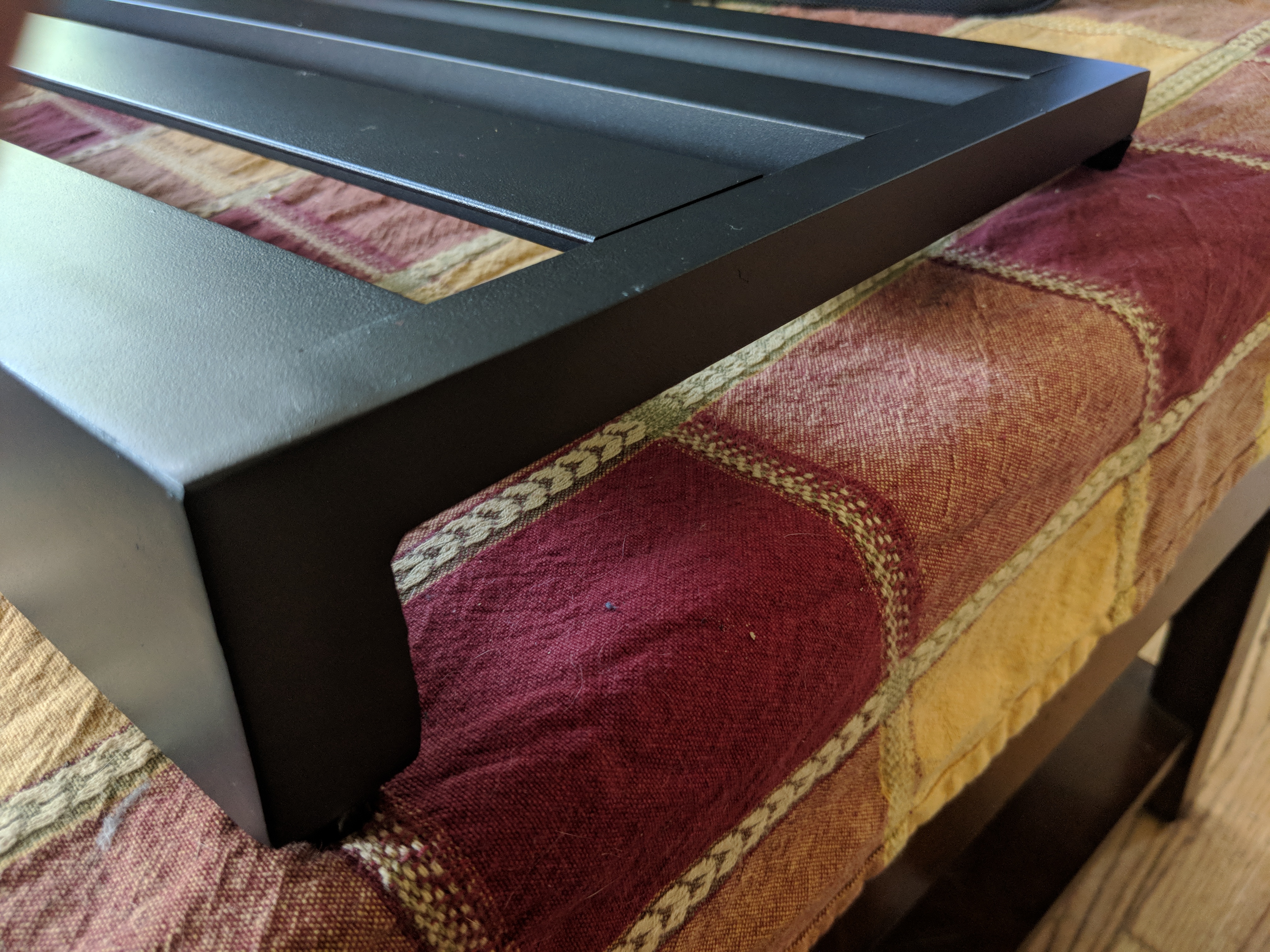
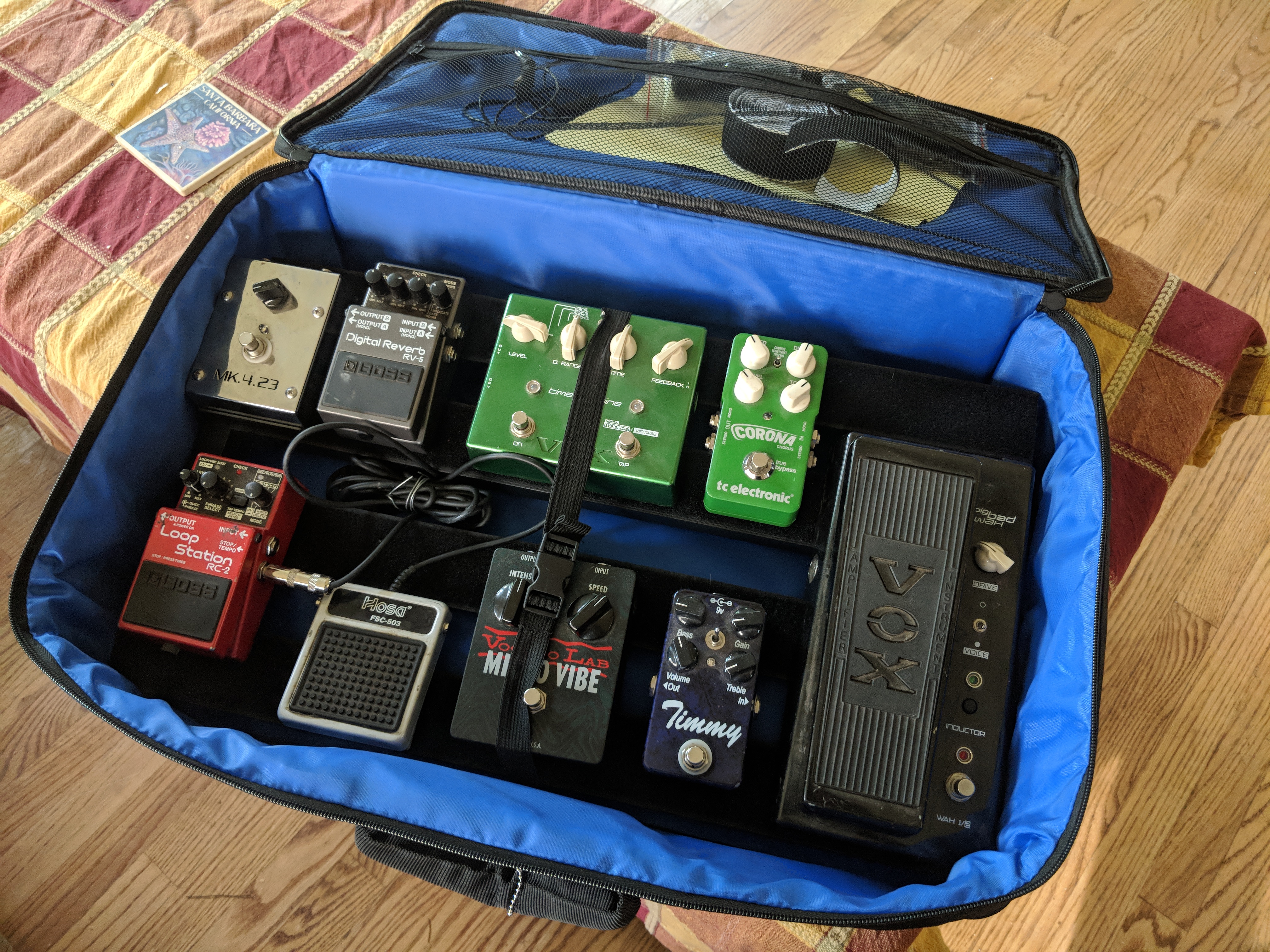
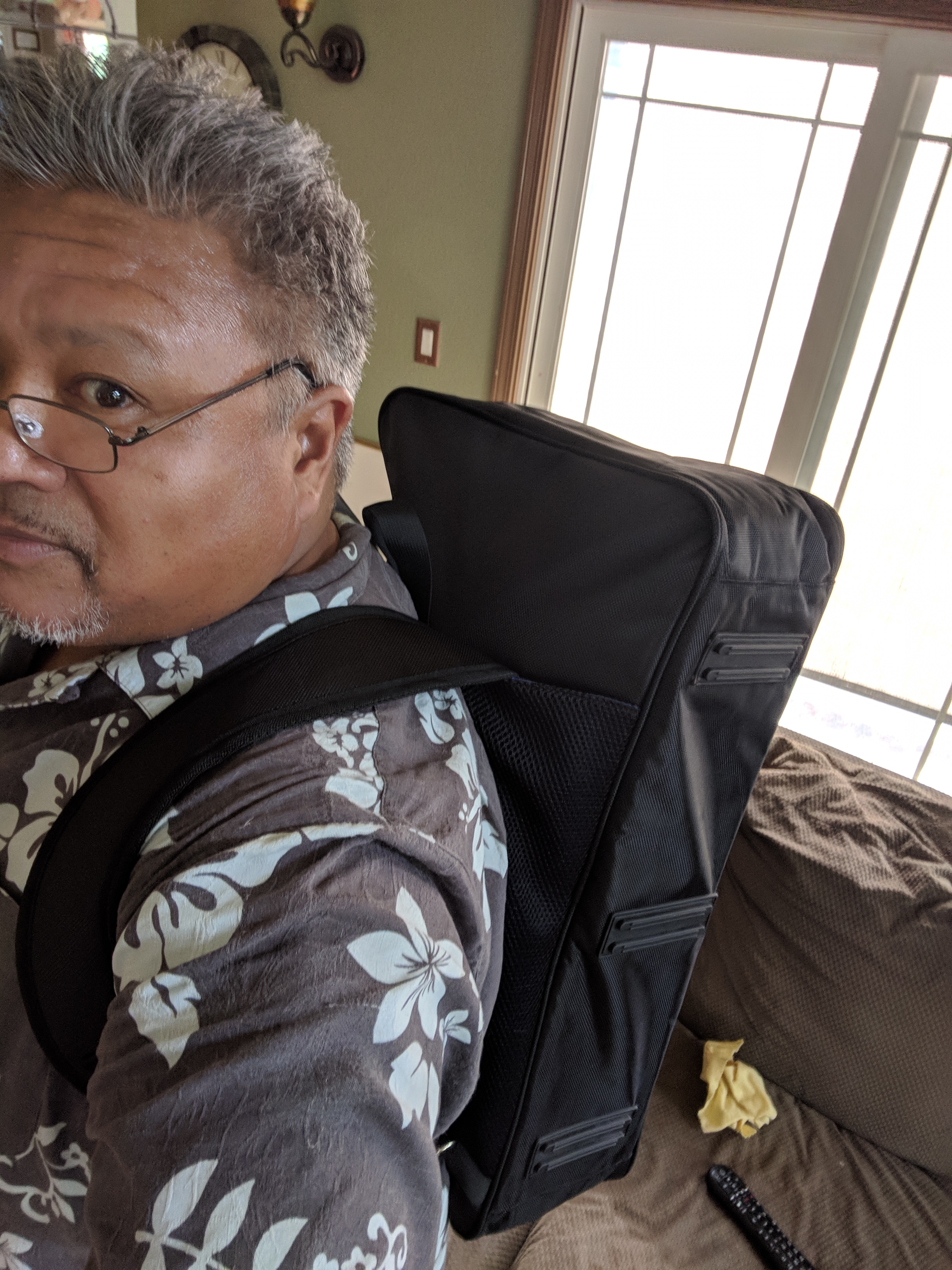
Here’s a little gallery of pictures I took of the board:

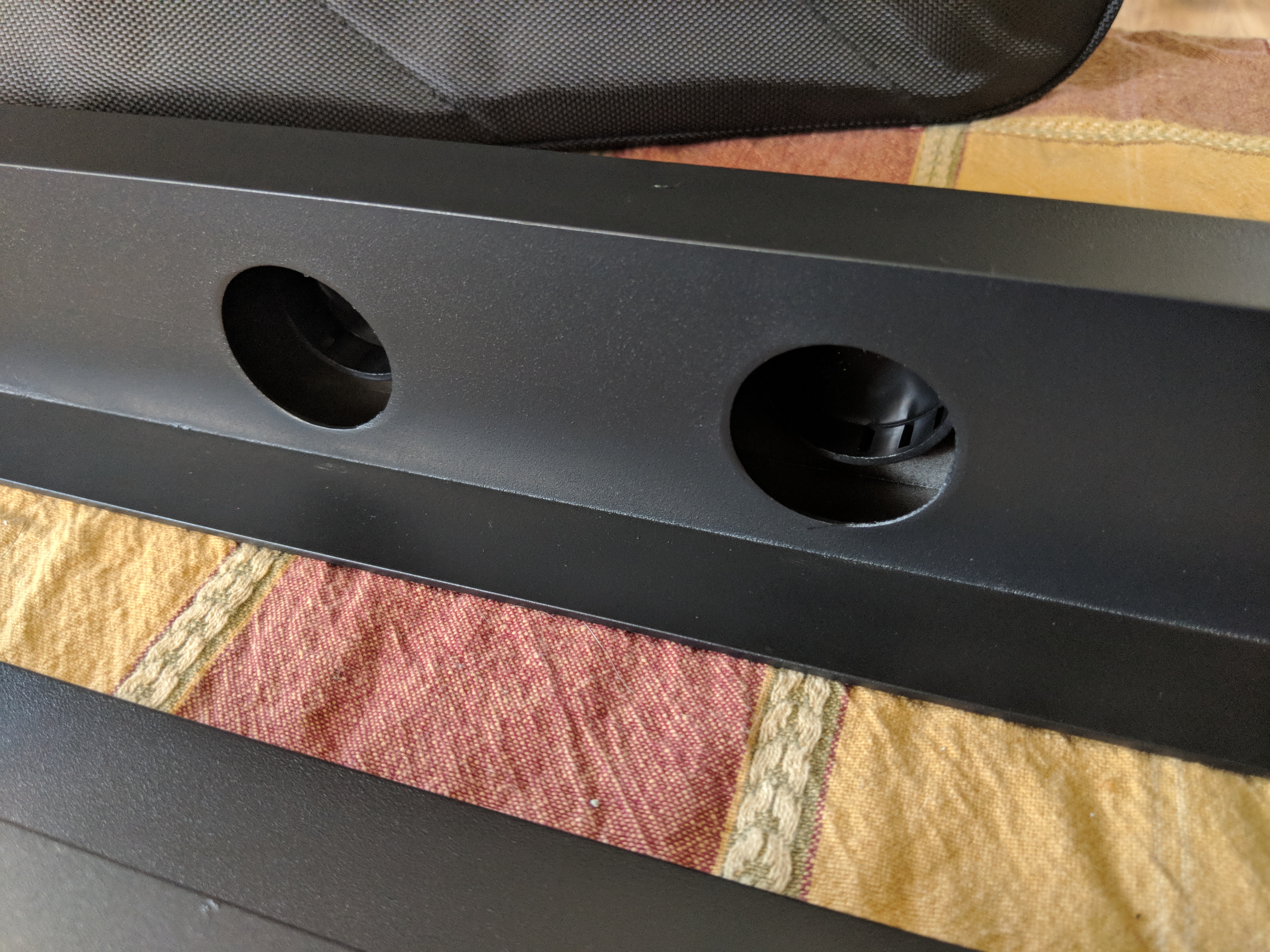
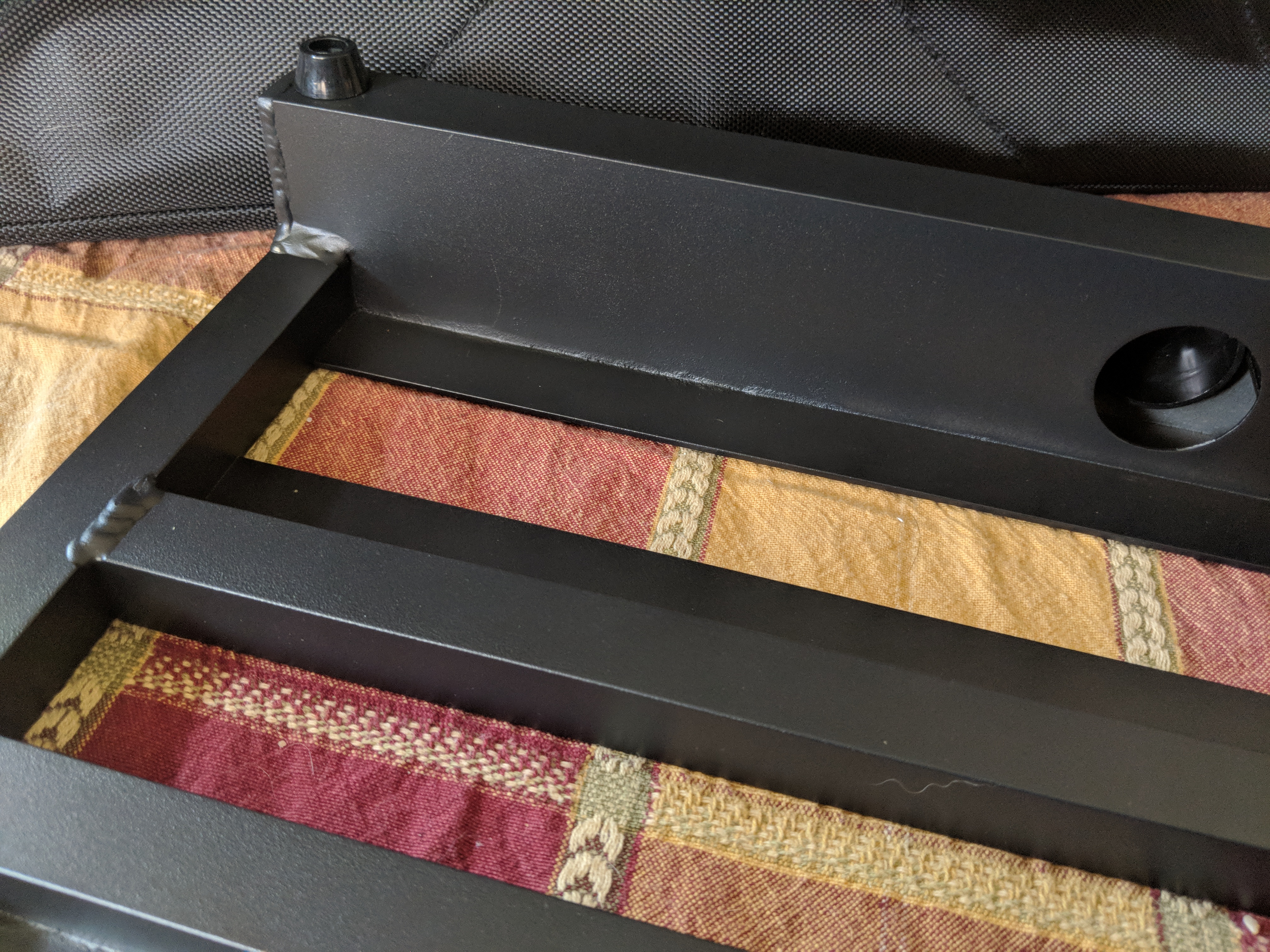
Though the welds underneath aren’t totally clean, they’re not cracked, and hold well. Besides, it’s the top of the board that matters and it’s totally clean. The crossbeams are nice and wide and the strips of velcro are cut to the perfect width. There’s enough velcro to cover the entire board! Very cool!

The pedals I mounted on the board are not ones I’m actually using right now, except for my wah-wah pedal. Those are on another board, and I didn’t feel like transferring pedals, so I pulled a few out of my pedal drawers to see how well the pedalboard accommodates different size pedals.

This pedalboard would work great as a fly rig! It’s lightweight and could easily be stowed in an overhead compartment on a plane. And the shoulder straps – which can also be stowed in a zip-up pocket – make it convenient to carry on your back.

Though probably not intended for this use, the inner pocket is big enough to hold a laptop plus my audio interface, so if I have to travel remotely and need to lay down tracks, I could load all my gear recording gear into the bag. Nice!

Overall Impression

Obviously, I can’t write about how it sounds and plays, but I will definitely use the board at my church gig this weekend (yes, I will transfer my pedals and run the wires). I use a 1-Spot, so it’s not going to be an issue making the transfer.

In a nutshell, I love this board! It’s nice and lightweight and super sturdy. The angling and the silicon feet elevate the board nicely, so if I was playing in a bar gig or a backyard party, I wouldn’t have to worry about spills near my board. It’s obvious the designer had the working musician in mind when they designed this board!

In my recent “Stupid Gear Myths” article, a reader commented, “…Work with what you have. Simplify your set-up, tailor it to your needs, your music style…”

Wiser words cannot have been spoken. If you buy into the common wisdom that your tone comes from your fingers, then do you really need to have a bunch of gear, especially pedals?

I know and play with guys who have relative big boards compared to mine. They’ve got several modulation effects, overdrive pedals, etc., etc.. They seem to get new ones every couple of weeks. I was like that too, but at some point, you have to stop and see what tones you can get out of the stuff you have.

It’s like a friend of mine who was buying guitars at an alarming rate. One day when he showed up to a gig and had a new guitar, I asked him, “Are you going to spend some time getting to know that? Sheesh! You barely spent time with the last one you bought.”

Sure… says the man with a bunch of guitars. But truth be told, I sold off most of my guitars. The ones I have left, I play regularly in gigs and in the studio. And most of them will go to my kids when I’m too old and decrepit to play. But the ones I play, I take A LOT of time to get to know all their little idiosyncrasies.

Look, don’t get me wrong. If you want to get a ton of gear, that’s entirely up to you. But you should ask yourself why you’re getting it. Is it because you feel there’s a sound you just can’t get with the gear you have? More likely than not, that sound is there. You just haven’t discovered it yet.