 Okay, yet another product review on a fairly mundane piece of gear, but hey, sometimes you have to be practical!
A few years ago, I was pretty spoiled when it came toting guitar gear around. I was using a Line 6 Flextone III as my amp, and as a modeling amp with all sorts of effects built in, the only thing I needed to hook up to my amp was my floorboard and guitar. That all changed when I moved to a tube amp for performance. All the things that I used to do to tweak my sound were no longer built into the amp! I had to get effect pedals to get the types of sounds I wanted.
At first, I only had a couple of pedals, so just putting them into my guitar’s gig bag wasn’t a problem. Then I got a couple of more pedals, so I started carrying my pedals and cables in an unused large camera bag. Still, it wasn’t a problem. Once I got to seven pedals, it became a problem. At every gig, I’d have to hook up the pedals to each other, not to mention having to hook up my 1 Spot power cable. What once was a five minute affair was now taking up to 20 minutes to get everything set up and dailed in. So I broke down and bought a pedal board.
There are lots of boards on the market. You can get them custom made, or go with fully powered units. For me, my needs were simple. I wanted a board that could carry up to 8 pedals, and I didn’t want a powered board. The reason was that most powered boards only provide 9V power for all the connections, and I have a couple of pedals that can take18V. Also, powered boards run pretty expensive (for an 8 to 10 pedal board, expect to pay close to $200). There are other powered boards that take 6 pedals, but that wasn’t a real option for me. Enter the Gator Pedal Tote.
The Pedal Tote is a non-powered, inclined pedal board made of 8-ply plywood. It’s covered in black tolex, and topped with small loop carpet. It comes with two 1-inch strips of velcro (about 2 1/2 feet all in all) to stick to the bottom of your pedals. I love the sturdiness of this board. The only beef I have with it is that Gator doesn’t come enough velcro for eight pedals. I had to go down to an arts and crafts store to buy more sticky-back velcro in order to attach all my pedals to the board. Not a big deal, just a minor inconvenience.
So how do I like it? I love it! It’s built like a tank, and has made my life a lot easier. Set up and strike are simple, five-minute affairs now.
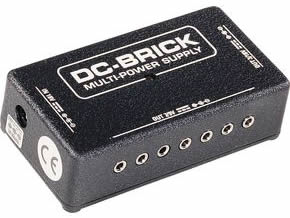 A power supply? I know, kind of mundane, but if you’re still using 9V batteries, you might want to rethink your power supply needs. Here’s a common situation: You’re in the middle of a set, and your beautifully clean tone starts getting kind of fuzzy. It’s not too bad at first, but worsens as the gig progresses. You look down at your effect pedals, and one pedal’s light seems to be a bit dimmer than it normally is. You realize the battery is going dead. So after the song, you go back to your gig bag to get another 9V. You’re shocked to find that you don’t have a spare!
 Guitar Gear