
Aracom Amps Custom 45R
So you want to buy an amp, eh? I hang out on gear forums, and if you ask, “I’m looking for an amp. What do you think I should buy within such and such price range?” You’ll get hundreds of responses: Two Rock, Divided by 13, Mesa Boogie, Marshall, Hot Rod Deluxe, Reason, Egnater, Bogner, etc., etc., etc….
That’s all well and good, but remember, these are only recommendations. Because GuitarGear.org deals with gear, to keep current, and to maintain the site’s relevancy, I have to play A LOT of gear (ooooh, twist my arm). The most important thing to know about buying an amp is this:
TRY IT OUT FOR YOURSELF FIRST!!!
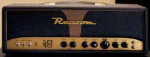
Reason SM40 Head
I suppose this goes for any type of gear you’re looking to acquire, but the thing about the amp is that it is that one piece of equipment that is going to define and showcase your tone. Of course, the guitar has a lot to do with it, but the amp is the conveyor of your tone. And sure, you could just buy something blindly based on someone’s recommendation, and if you think that person’s word is good enough, and they really know their stuff, then go right ahead, buy the amp. But don’t say I didn’t warn you if you don’t like how it sounds once you start playing with it. 🙂
That’s an obvious observation, and very sound advice, but there are a couple of things that I think are just as important as trying out an amp. The first is simply this: The application; in other words, what are you going to use the amp for? Recording? Gigging? Both? Those are serious considerations to take into account.
Lots of times, we go into a shop, try out an amp, and say, “Wow! That’s sounds awesome.” But remember, in a shop, you’re a few feet away from the amp, and you’re playing by yourself. This isn’t a good test of an amp; that is, unless you’ll be playing by yourself all the time. But I’ve come across tons of amps that sounded great in the store, but when I used them to gig with or record with, just didn’t sound right. Case in point: I bought a Line 6 Flextone III a few years back thinking that it would be really versatile, considering all the voices it could produce. It worked great in the studio, but totally stunk playing live. Cranked up, its tone was simply lackluster. I sold it after a year.
Next, once you figure out what you’ll be using the amp for, you need to listen to where it sits in the EQ mix relative to its natural tone, with the EQ knobs all set at their halfway positions. Is it naturally bright? Does it have a darker tone? If you’re a gigging musician, these are serious issues. Me, I prefer brightly voiced amps because they’ll ensure that I’ll sit in the upper-mids and highs in a mix, away from the bass and keys. It means that I won’t have to turn up my volume much to cut through the mix. For instance, I was testing an Aracom Custom 45R at a gig the other day. When I played it clean, it sounded great, and it cut right through the mix. But when I poured on the gain to saturate my power tubes, the resultant sound, while awesome, was really compressed, but the output sat in the mids to low-mids of the EQ range, overshadowed by the big body acoustics and the bass. I had to crank my volume to cut through – something my band mates certainly didn’t appreciate because I ended stepping all over them!
So to sum it up: Try the amp out and consider what you’re going to use it for…
 Guitar Gear
Good advice. Also, power is important too. Not everyone needs 100 watts and most will find what they need in an amp that is sub 45 watts (and even that’s wicked loud).
[…] Choosing an Amp & Guitar Gear Of course, the guitar has a lot to do with it, but the amp is the conveyor of your tone. […]