Feeds:
Posts
Comments

Archive for July, 2010

Well you know me, I LOVE thick picks (2mm and above), and you probably also know that it’s dangerous for me to go to a guitar store because more likely than not, I’m going to walk out with something. 🙂 Today was no different…

My good buddy, Jeff Aragaki, of Aracom Amplifiers came over to the house to drop off some gear for me to evaluate: a ’59 Les Paul replica (I’ll have a review of that guitar in a few days after I’ve played it a bit) and a new Jensen 1 X 12 speaker. In turn, I was going to give him a pair of Groove Tubes Gold Series 6L6’s (GREAT f-in’ tubes). After that, we’d go get some lunch and catch up as we haven’t hung out in awhile.

We ended up going to a great Japanese curry place in downtown Los Altos. After lunch, we got in my car and Jeff said, “It’s too bad there’s not a guitar shop around here.” I of course know where all the shops are and replied, “You know, there’s one that’s about 10 minutes away. Let’s go there.” So I took him to Gryphon Stringed Instruments in Palo Alto. It’s a high-end acoustic guitar shop that has been around for years, and in addition to having a great stock of Martin, Collings and other high-end acoustics, plus a limited selection of electric guitars and some VERY nice vintage stuff including a 1960 Telecaster for $17,500,  they have high-end picks. It’s the place where I discovered Red Bear Trading pics.

I did have a motive for going there as I needed a good stage stand for my guitar, and Gryphon carries the very awesome Hamilton guitar stands. After my guitar almost got knocked over by a gust of wind at my gig yesterday, I knew I needed to get a good stand, and it was a good excuse to go there with Jeff so we could jam for a bit as well.

So the sales guy rang up my stand, and then I made the mistake of looking into the case to see what picks they had. Mistake. I didn’t know they carried Wegen picks, and there they were: Three cases full of ’em. I couldn’t resist. I had to try them out. Now I had learned of Wegen picks from various forums, but never had the occasion to play one until today. So the verdict?

Well, I liked the material enough as I ended up getting the Trimus 350, which is 3.5mm thick. That’s just a bit thinner than my V-Picks Snake. So what’s so special about this pick that I was willing to drop $20 on it?

First of all, it has a different feel than V-Picks or the Red Bear picks. The material feels softer than either the Red Bear Tortis and the V-Picks acrylic, which makes for a nice, smooth tone. The points are beveled, so you do get a snap that brings out the highs.

Now Wegen claims that the material feels a lot like real tortoise shell. I’ve felt real tortoise shell, and this feels nothing like it. But that’s not a bad thing. What really turned me on about this pick is really the feel. It’s not as smooth in feel as either the V-Picks or the Red Bear, which have glass-like finishes. In contrast, the Wegen pick has a bit of a texture. But amazingly enough, that doesn’t translate to stickiness on the strings. Whatever Wegen I tested, it just glided over the strings.

Another nice feature of the Wegen picks I tested were the grooves cut into the body of the pick. Add to that a depression in the body, and what you’ve got is a pick that you can really hold onto!

I chose the Trimus 350 because I like the shape – it is very similar to my V-Picks Snake and my Red Bear B-Style Gypsy Jazz. It’s also thinner than both – not by much – but still just a bit thinner. But Wegen has a lot of different picks. If you get a chance, check one out!
Read Full Post »

…or reliability is more important than all the whiz-bang features you throw into a gadget.

I was driving up the San Francisco Bay Peninsula this morning, along Highway 101. As usual, I was talking to my good buddy Jeff Aragaki of Aracom Amps. It’s a great time to chat since I’m on the road. Invariably we talk about gear. This morning, the conversation revolved around Jeff’s favorite topic: Les Pauls. He’s a Les Paul nut, and has several original and re-issue LP’s and LP Jr.’s. And as I love guitars, period, this is a subject about which we never tire conversing.

One would think that down a major thoroughfare such as 101, cell coverage would be good. But NOOOOOOOOO!!! I’ve got AT&T Cellular whose motto should be “More Dropped Calls In More Places.” This morning, we set a record: FOUR dropped calls between Palo Alto and San Mateo: That’s 10 miles – generously! Usually, it’s one or two, but it shouldn’t be ANY. F%&king AT&T!!! They respond to all the complaints about dropped calls by spending millions on how widespread their service is. It’s widespread, but it’s spread thin, and cannot take the volume. So instead of fixing the damn problem, they counter with a marketing campaign. And BTW, I use a Blackberry, not an iPhone. For some iPhone users it’s even worse!

Okay, flame off… what the hell does this have to do with guitar gear?

As I stated above, in my view, reliability is much more important than how good something may sound. I’ve gotten rid of (read: literally thrown away) more gear due to reliability issues than because of bad tone. Actually, I’ve never thrown any gear away because of bad tone because I only buy it if I like it. But it’s in the electronics recycle bin if it repeatedly breaks down. Once or twice, I can live with, as long as I can fix it. But beyond that, I have no patience for it, no matter how good it may sound.

Don’t buy into it? Imagine playing a gig. You’re in the middle of a song, and it’s time for the lead break. You click on your overdrive or booster, pick your first note and your amp issues – NOTHING! Tell me you won’t first: panic, then second: get pissed! That’s exactly what happened to me with my favorite drive pedal that I use with my Tele, the GeekMacDaddy Geek Driver. Turns out that the switch was loose and a wire worked itself loose. That was an easy fix, and I’m a happy camper. Since the pedal’s a boo-teek pedal, I could call Jeff, send him the pedal and he’d fix it. But for mainstream gear where you don’t have a personal relationship with the manufacturer, there’s not much else to do other than to recycle the electronics; especially if the gear’s past its warranty period.

This is one of the reasons I read a lot of reviews before buying something; even cheap gear. If I detect that there are reliability issues, I won’t buy it. There will always be “lemon” stories; that’s to be expected. But if there is a prevalence of them, caveat emptor!

Now circling back to AT&T. I think what pisses me off the most about them is not the dropped calls, though that’s certainly annoying. What makes me furious is that instead of fixing the problem, they do a “look at how good we are” marketing campaign. And the worse thing is that they have people by the short hairs – especially iPhone users. While I don’t have an iPhone, I pay for two of them on my cellular plan. I can tell you this: As soon as the iPhone is available on another carrier, we’re leaving AT&T!!!

Read Full Post »

I was reading an editorial in the latest Premier Guitar issue, where the author talked about providing plenty of “space” in your playing; that is, part of what makes a great song is what you don’t play. The premise is that it’s so easy to play a bunch of notes to the point where your ears just stop perceiving all the content that’s being played.

With respect to soloing, space is more commonly known as letting your solos “breath.” Blues greats like the “Kings” (Albert, Freddie, BB) are masters of letting their solos breath. But breathing also extends to playing through chord progressions as well. Generous palm-muting and what I call “blank” space draws listeners in as their minds fill in the blanks.

Here’s something to think about: You ever wonder why a casino has flashing lights, bells and other sounds going off, highly patterned carpets and walls, complicated ceiling patterns, etc.? It has been proven that the human mind can only deal with at most seven things at once. All that stuff in the casinos is meant to disorient people. In that state of disorientation, they lose track of time (there are also no clocks in a casino), and they also lose their will to keep from spending more money. So what does that have to do with letting your playing breath? If you barrage your listeners with just too much to deal with, you’re likely to lose them. Of course I haven’t done a scientific test with that, but it’s certainly plausible.

Now what about time? Well, of course, tempo is absolutely important, and playing “in the pocket” is what great players do. But “time” goes a bit beyond that, in that you also play stuff at the appropriate time. I’ve been around lots of players over the years, and many have killer technique, but there have also been many that just play the wrong thing at the wrong time. Where a single note or maybe a simple two-string chord would do, they’d strum a full chord; or where a song’s feel calls for a more flowing rhythmic attack, they use a staccato rhythm. I don’t know if this can be taught, as being able to choose what’s appropriate for a particular segment of music really requires listening and “feeling” the song.

For instance, I was playing with a guy once and we started playing a real smooth, moderate tempo song that called for either light, even strumming, or finger picking. Though the guy was in tune, he opted to use a “bluesette-style,” syncopated finger picking rhythm. It completely threw off the entire flavor of the song! Of course, I asked him to stop, but he looked at me, and puzzled, “I don’t understand. It sounds just fine to me.” I replied that it would sound fine if the melodic structure supported a syncopated rhythm, but it just didn’t work. I pointed out how the drums were setting a simple four-on-the-floor kind of rhythm; the bassist was using a fretless, and sliding in between notes. I was using flatpick and playing triads up on the neck. His part called for just a simple claw-hammer style. In this case, it was the guitar that was actually holding down the rhythm. He finally relented, but that’s a perfect example of playing what’s right at the right time.

Guitarists whom I have admired over the years who are always in the pocket and always playing the right thing at that right time include: Davey Johnstone (Elton John), Steve Cropper (Otis Redding), both Matthias Jabs and Rudolf Shenker of the Scorpions (especially Rudolf), Dominic Miller (Sting), and lest I forget, John Frusciante (Chili Peppers). There are lots more, but these guys popped into my head immediately.

Read Full Post »

Yeah, I know, this is a bit of a long time in coming, but I actually got REALLY sick there for awhile, and was sidelined for a few weeks. But as I say in the video, “Better late than never.” In this particular clip, Doug shares a bit of wisdom on choosing gear that’s right for YOU. I’ve been a big proponent of that on this blog, and it was affirming to hear Doug speak along these lines. Here’s the video:

Read Full Post »

This is a song that I just wrote this evening. I’ve been wanting to write a song about my family’s obsession with Facebook for awhile, but couldn’t come up with lyrics nor the genre. So I decided to try country western, but with a bit of a twist. Then the words just kind of came. My studio isn’t up right now, which is why I recorded this on video to start out with. I’ll do a regular recording once I have my studio set up again. BTW, I used my wonderful Yamaha APX900 acoustic.

Read Full Post »

Even though I got this news via a press release, it doesn’t surprise me at all that DBZ won the Best In Show award this year. I’ve been quietly following DBZ since they hit the scene, and I’ve appreciated what Dean Zelinsky  (founder of DBZ and famous for Dean Guitars) has been trying to accomplish with his guitars from the start; that is, build great looking, great sounding, and great playing guitars at a GREAT price. Yeah, that’s a common formula, and lots of people try to do that, but Dean has accomplished that.

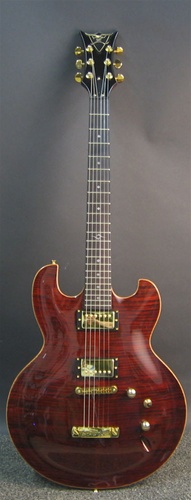
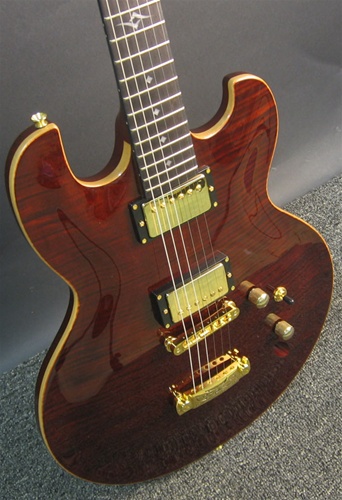
Take, for instance, the Imperial Premier model to the left. I had the chance to hold and play around with one of these exact models in Transparent Wine a couple of weeks ago (didn’t get to plug it in, though hopefully the DBZ rep will let me borrow one for a review). The Imperial has some classic styling – it’s shaped very similarly to a Gibson SG, but that’s where the similarities end. If you look at the picture to the right, you’ll see how incredibly thin the body is. That makes for a super, super, super light weight. All I could say when I first picked it up was, “Wow!”

Now you might think that that would never fly, but I have to tell you, that guitar felt absolutely wonderful, and I could feel the string vibrations resonating through the body as I played. The soft v-shape of the neck stands for Very comfortable. The fretboard is nice and smooth. DBZ calls it “ebonized” rosewood – not sure what that means, but it’s as smooth as ebony, and I just love the feel of ebony fretboards.

Unfortunately, I didn’t get a chance to plug it in because I was busy picking up my Fishman Solo Amp. But just based upon my initial inspection, and just holding it it in my hands, if I wasn’t getting the Fishman, I wouldn’t have let the rep leave the shop with the guitar. Yup, I was THAT impressed! Even the store manager was completely blown away by the guitar. He’s a jazz player, and while he said he prefers archtops, he loved that guitar.

Here are some specs:

  • Construction/Scale: Set Neck 24.75″
  • Body: Mahogany/Maple Top
  • Flamed Maple Top
  • Natural Scrape Binding
  • Fingerboard: Ebonized Rosewood
  • Neck: Mahogany Soft V Neck
  • Frets: 22
  • Inlays: Premier Series
  • Pickups: DBZB/DBZ5
  • Electronics: Vol/Tone/3-way
  • Tuners: Grover
  • Hardware: Gold
  • Bridge: DBZ Custom Stop Tail

Pretty nice features. You can see more pictures and other information on the DBZ site.

Here’s the real kicker: You can get this guitar for $649 online!!! Fat Tone Guitars outside of Chicago has these in stock. So how is the price so low? Simply put, it’s due to technology. Dean Zelinsky isn’t shy nor embarrassed by this blatant use of tech to build guitars. And why not? With computerized routers, you can ensure build consistency. Plus, I believe all the heavy work is done overseas, so that keeps the prices down. Even though I try to stick to US-made gear where I can, in the end, geographic location is far less important to me than how the gear plays and sounds.

DBZ is still trying to build its dealer base, but I encourage you to check one out if there’s a shop near you.

Read Full Post »

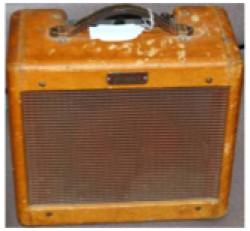
I know, not a very good picture, oh well…

In any case, I recently won this amp in an eBay auction. As soon as I got it, I turned it over to Jeff Aragaki of Aracom Amps for him to inspect it, clean it up, and make it “safe.” The amp was in excellent working condition, considering it’s 52 years old, but to be safe, I wanted to make sure there was nothing amiss.

One of the first things Jeff looked at were the capacitors. Visual inspection didn’t reveal any leaks, but they needed to be measured to ensure that they were still able to keep a charge. Amazingly enough, they were still measuring well within operational tolerances, and none had to be replaced, which Jeff said indicated that the amp was being used. With those old paper capacitors, if they sit for a long time without use, they’ll eventually leak acid. But these were in great shape!

The next thing Jeff checked was the speaker. Interestingly enough, the speaker was a replacement, and not only that, it was a 16 ohm speaker, which actually attenuated the amp a bit, so I had Jeff replace the 8″ speaker with a new ceramic speaker.

Since the amp used a two-prong electrical plug, I asked Jeff to upgrade it to a three-prong medical-grade plug. Unfortunately, the way the amp was designed, doing that would require playing with the heater voltages, and while that wouldn’t necessarily harm the amp, it may have had an effect on the tone – not a good idea. So I just had Jeff replace the cord, which was in decent physical condition, but according to him, wasn’t carrying a full load of current to the amp.

In addition to cleaning it up and making sure it was in good working order, Jeff wired up an A/B switch box to the amp, so I could flip between using the internal speaker and an external cabinet (which is how I’ll normally play this amp). Jeff did this to avoid having to install a 1/4″ jack which would alter the amp from its original condition. Being a vintage gear collector, Jeff thinks about that stuff… This amp is going to be a player, so that wasn’t much a concern to me, but he kind of insisted, just in case I decide to sell it later.

Finally, since the amp didn’t have a back plate (which accounts for the great price I got it for), Jeff cut a nice 1/2″ ply board to protect the chassis. We’ll do a proper back plate with a tweed cover later, but I wanted to start using the amp right away, so we’ll do that as a future project.

Gig Report

With the amp complete, I played it all week to get used to how it responded. Now that I have one of these, it’s no small wonder why these have been long-time residents in studios all around the world. Hooked up to my 2 X 12, loaded with a Celestion Blue and Gold, the amp’s voicing is super rich, if a little on the bright side. But no matter. The cleans are absolutely incredible! They ring with a vintage chime that at least to me, invokes a visceral response in me that’s hard to explain. It’s a classic Fender clean, and through my 2 X 12, the cleans resonate and float through the air! As far as dirty is concerned, the Champ is no high-gain amp. Overdriven, it’s a dirty grind, perfect for blues- or classic-rock tones.

The Champ is also incredibly pedal friendly. I hooked up my super-versatile Doodad Guitars Check-A-Board RED overdrive/booster up to it, and the amp just responded! The overdrive is wonderful on this pedal, adding great sustain without overly compressing the signal, but where the pedal really worked with the Champ was with the booster. Slamming the front-end of the amp, I was rewarded with a gorgeous, smooth overdrive tone. Again, I thought to myself, this is why this little monster has been on so many songs over the years!

Yesterday, I took the amp to my church gig. Being the 4th of July, we had a skeleton crew: Just one other guitar besides myself, but no matter, I wanted to play it live. For this gig, I just used my custom Aracom 1 X 12 with a Jensen P12N, and I played my “hybrid” Fender Stratacoustic Deluxe through it. Despite the fact that I was ostensibly playing an acoustic guitar through the amp, the tone was absolutely natural. I was like, “This really shouldn’t sound that good, but I’m amazed at how it sounds!” Granted, the Stratacoustic is more like a hollow-body electric than an acoustic, but the Champ just took its natural voice and amplified it beautifully.

Once I have my studio set up again (just finished construction on the house, so I lost my recording space temporarily), I’ll make some recordings!

If you live in the Silicon Valley area and need some amp work, though Jeff sells his own line of amps, three of which I own, with a fourth on the way, Jeff is one of the best amp techs I’ve ever worked with and he’ll hook you up! He thinks of things I would’ve never thought of! Check out his site at http://www.aracom-amps.com. Needless to say, he is also the creator of the best attenuator on the market, the Aracom PRX150-Pro.

Read Full Post »

I’ve mentioned in the past that I do a weekly solo acoustic gig at a local restaurant. It’s hard to believe that I’ve been with the restaurant going on 11 years! But some places just keep you engaged. But more than that, I just love the folks that work there, and they’ve become close friends. But when I first started there, I made a conscious decision to simply approach the “job” with humility. Let’s not confuse that with letting myself get pushed around, but simply put, not letting my ego or my flawed estimation of my abilities rule how I interact with the folks at the restaurant – owners, managers, workers, and of course, customers.

I’ve let my ego get in the way in the past in other areas of my life, and all that created was bad relationships. No one wanted to work with me, and quite frankly, my ego made me think I was a lot better than I actually was. I was intimidating, and made people feel bad; and when I let my ego get in the way, I wouldn’t perform at my optimal level because I didn’t think I needed to give it my all.

To me, artistic performance – no matter what kind of artistic performance, be it music, dance, or otherwise – is all about passion. To make your performance believable, you have to let go of your ego to “feel” what you’re doing, and expressing that inner passion you have for the piece you’re performing. I’ve been performing on some sort of stage for most of my life, and if I’ve learned one thing it’s this: If I want to touch my audience, I have to shed my ego and give them who I really am and be passionate about it.

I have to be uncompromising about this. That passion may turn some people off, but the last thing I want to be is a fake, or act as if it’s a privilege for my audience to be seeing me. And make no bones about it: While technique and talent are important, they’ll only take you so far. If your performance is heartless, technique won’t save you – your audience will brush you off and never remember you, but more importantly, you’ll never connect with them. If you’re a conceited asshole on top of that, no one will want to work with you.

Read Full Post »

« Newer Posts