Feeds:
Posts
Comments

Archive for May, 2012

I have admittedly been so damn busy with work that I’ve been a bit remiss about surfing around for gear. Feeling that I haven’t been keeping this blog current with gear, I went looking, and came across this guitar on the Gibson web site, the L6S, a reissue of the original 70’s L6S, which was itself a solid-body version of the venerable L6. But like the 2009 Nighthawk reissue, this new version sports some pretty cool features.

Pickups are a 490R in the neck and 498T in the bridge. Some folks don’t like these, but I’ve always liked these pickups (though I might like the 57’s a bit more). Body is solid maple with a maple neck. The guitar comes in either an Antique Natural finish with a maple fretboard (as shown to the left) or a Silver Burst and a baked maple fretboard. Kind of a basic guitar, but the kicker on this is the 6-position chicken-head pickup selector. Here’s what each position does:

Selector Position:

  1. Bridge Humbucker
  2. Bridge Single Coil
  3. Both Single
  4. Both Humbucking
  5. Neck Single
  6. Neck Humbucker

Very, very intriguing, that’s for sure, and convenient. I suppose it could be argued that push-pull pots would do the trick, but to get these different combos, you’d have to manipulate two knobs. This is a simple turn of a dial. Quite nice. I’m very intrigued by this guitar – enough so to try to find one to play. Good thing I don’t have the money right now because I’m intrigued enough that I would buy one just to try it. 🙂

For a little history, Santana played an original back in the 70’s, as did Rich Williams of Kansas. Here’s a video of Rich Williams playing an original back in 1975:

Street price for this is not bad at $1599-$1699. I bet you could find a used shop version for even less. Nice.

Read Full Post »

I’m one of those people that believe that tone is in your hands. I’ve been playing long enough now where no matter what guitar I pick up, I’ll sound like me – quirks and all. I saw Slash perform on HDNet last week and he switched between playing a Gibson Explorer and a Les Paul, and he still sounded like himself. Of course, the actual sound that he was making was different with the different guitars he played, but the style and execution were singularly Slash.

All this led me to realize that there are two types of tone: The actual mechanical sound your rig makes separate from a song, and the expressive tone that comes from making music. Some might argue that they’re one and the same thing, but I’m not so sure any longer. Along these lines, I’ll argue that the mechanical “tone” forms the foundation of your expressive tone. Get this right, and it’ll open up all sorts of creative doors, and this is where context plays a huge role.

Don’t know how many times and how much money I’ve spent on gear that sounded great on its own, when I tested it or listened to clips online, only to be a huge fail once I put it in my signal chain. That’s happened more with pedals than other gear, thank gawd, but I still have a milk crate with lots of very nice pedals that just don’t work with my overall rig. They sound great on their own, but within the context of my signal chain, they just don’t work.

And that’s why context is important. You never really know how well something works until you make a sound with it within the context of your signal chain. I say “make a sound” because you want to check the mechanical sound and see if it’s acceptable. Before I started doing simple mechanical tests on gears, I used to just try stuff out (playing licks and progressions and such), get excited by the sound of the gear on its own, buy it, then get slammed back down to earth when I put it in my chain. It’s probably a reason I have so many drive pedals that I just don’t use. But having learned that lesson, my initial test of gear involves putting it in my chain first, then doing simple, expressionless things like strumming a chord or playing a single note. If it sounds harsh or muddy with this simple stuff, then it just won’t work, and I’ll return the gear or sell it.

Admittedly, you can’t do that with everything. I took a big chance on my Timmy overdrive, but I spent many, many months listening to clips and reading posts and speaking with Paul Cochrane before I pulled the trigger to order one. But though I did take a chance, it was a fairly educated chance, so when I finally got it, I was pretty confident that it would work. Of course, there was a slim chance that it wouldn’t work with my rig, but it turned out to work fantastically well with all my pedals, amps and guitars; so much so that it’ll never leave my board.

All that said, if you just like to collect a lot of gear irrespective of its context within your signal chain, more power to you. But be forewarned that you may look upon your expanse of gear and realize, “Holy crap! I’ve got a lot of stuff that’s collecting dust.” For myself, I tend to be a lot more careful and measured about my gear purchases. I still get bad GAS, but mechanical testing helps manage that.

Didn’t Gibson just release a new Les Paul Standard? 🙂

Read Full Post »

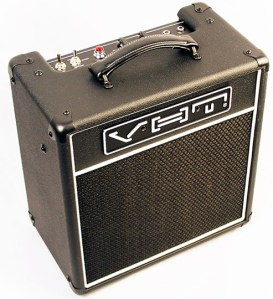
I don’t do a lot of tweaking of my gear; at least not to the extent that others do such as replacing caps and filters, unless they’re damaged, of course. But when I think some gear – especially amps – can be improved, I do some basic things. Mostly this involves swapping tubes or in the case of combos swapping out their speakers. With my VHT Special 6, which is a wonderful, hand-wired amp that’s made in China, I did both of these things, replacing the stock tubes and speaker to give it a much deeper voice than its default. The result has been marvelous!

Now, I do have to say that I used the amp for several months without doing a thing to it. I brought it to gigs and was very happy with its tone right out of the box. But when I finally brought it into my studio to record some songs, I did not like what I heard. It’s not that it was bad, it was just a bit too bright, no matter how I positioned my mics.

As luck would have it, I got contacted by Jensen’s North American rep to review the new Jensen Jet Electric Lightning. It was touted as a rock speaker made for loud applications. Since I was doing a review, I went to the Jensen site to look at the frequency response chart, and saw that it had a scooped frequency response; and very importantly, a nice, wide, and rounded bottom end, lower mid-range response, then spiking at just over 2kH for high-mid emphasis. By default, the Special 6’s stock voicing had a mid- to high-mid emphasis. Unfortunately, the tone control would make the tone a bit muddy, so I was looking to the Electric Lightning to help fix that.

Once I made the swap, the difference was like night and day! Combined with the Special 6’s cabinet, the projection of the speaker was such that it sounded WAY bigger than what its diminutive size might indicate. Even my band mates remarked on how big the amp sounded. I played it at several gigs and it was loud enough so I could monitor my tone, and just close-miked the amp to get it into the house. Very nice.

Then last summer when I started work on my latest album, on a whim, I decided to swap tubes as I had a few NOS 12AX7 and 6V6 tubes in my possession. So I put a 1959 GE 12AX7 and a 60’s RCA 6V6. As soon as I started playing, I started to smile. A cheap, sub-$200 amp was not supposed to sound this big and this good. One thing that the tubes did was really smooth out the tone, as they gave the amp a lot more clean headroom. In fact, whereas I only had to turn the volume up to about 11 o’clock to get some grind with the original, I had to dime the amp and put the booster on and really dig into my strings to get some grind. But I didn’t see this as a bad thing because it made the amp a perfect platform for drive pedals. In fact, that’s exactly how I use it. It works great with my overdrive and booster pedals, and with my Little Brute Drive distortion, fuhgettaboutit!

Now truth be told tbough, once I got my DV Mark Little 40, I hadn’t played the amp at a gig until yesterday when I took it to my weekly church gig. Most of my band was out of town for Memorial Day weekend, so it was only going to be me and another guitarist for instruments. So I decided to keep my rig simple. I moved my modulation pedals onto my 4-pedal board, got my Strat, picked up the Special 6 and went to the church for pre-service rehearsal. Not having played the amp in a couple of months, as before, once I switched the amp on, I just got a huge smile on my face. The amp just sounds killer.

I can say with confidence, that this is an amp that will never be sold or traded out of my stable. Even as I’m spending this summer thinning out my gear, I’m going to hold onto this amp. It’s validation that you don’t have to spend a lot of money to get some fantastic tone.

Read Full Post »

I’ve known about this pedal ever since it came out last year, and unlike many other overdrives out there, it uses a tube for distortion, and not a clipping diode. This pedal is like putting another gain stage in front of your amp. It comes with Master and Gain and the tone controls are all independent with no overlapping frequencies, so tone shaping is pretty incredible. And being that it’s a Maxon pedal, you’re pretty much guaranteed high-reliability and fantastic build quality.

So if I’ve known about this so long, and I love all its features and pedigree, why haven’t I written about it? Well, for one, life was pretty busy at that time last year, as time went on, I got my Timmy and Little Brute Drive, and finally, and probably most importantly, I just couldn’t see paying $385 for a pedal. Hell! My VHT Special 6 cost $199 when I got it, but you can get it now for only $179, and that’s a tube amp – and a great one at that! Same thing goes for a Fender Champ 600 at $149…

Okay, okay, I know that we’re kind of talking apples and oranges, but the point is that $385 is a rather steep price to pay. Based upon the clips I’ve heard and videos I’ve watched on this pedal, there’s no doubt in my mind that it’s killer. I guess for me, though it does sound incredible, it doesn’t move me enough to fork out that kind of cash.

Not that I wouldn’t pay a steep price for a pedal if it totally moved me. I paid $275 for my Mad Professor Deep Blue Delay. It hurt a bit, but it’s a pedal that I simply can’t live without now.

In any case, what got me thinking about the RTO700 was the Pigtronix Fat Drive. When I was watching videos of that pedal, I ran across references to the RTO700. I thought to myself at the time that I would get it over the Fat Drive; that is, until I saw the price tag. Then the Fat Drive seemed a hell of a lot more attractive to me. 🙂

In closing, having owned Maxon products in the past, I know how killer they are. Maxon isn’t a cheap proposition, but if you can swing it, you’ll be happy.

For more information on the pedal, check out the RTO700 product page!


Read Full Post »

…the problem is that I have my Timmy and Abunai 2 overdrive pedals on my board, and I haven’t found anything that’ll beat them. Believe me, I’ve tested and even purchased various overdrive pedals, like the Doodad Check-A-Board Overdrive/Booster, or the GeekMacDaddy GeekDriver. I had the GeekDriver on my board for quite awhile, but once I got the Abunai 2, that went. Then I got the Timmy and the Check-A-Board went. Since then, though I’ve tried out several other pedals, I haven’t found anything that’ll perform well with my various rig setups.

I think that’s that key to why these pedals are likely to stay on my board. Since I play a few different amps (plus three different cabs), mostly depending upon my mood, having overdrives that’ll work with all of these combinations is extremely important to me. Thus far, these two overdrives are the only ones that give me a satisfying tone with any amp I play. I loved the Check-A-Board for its TubeScreamer-like tone, but it seemed a little narrow. The GeekDriver is an interesting driver based upon the classic Range Driver overdrive. Unfortunately, it really only worked well with my Aracom VRX22. It did not sound at all good with my Aracom PLX18-BB or VRX18 plexi-style amps.

With either of those pedals, no amount of tone control tweaking would give me what I wanted. On the other hand with both the Timmy and the Abunai 2, I just make a couple of adjustments to the tone and gain knobs and I’m off to the races. With the Timmy, I rarely touch the tone controls. They remain wide open, and just get a little above unity volume and adjust for the amount of gain I want to have.

So along comes the Pigtronix FAT Drive. The recordings sound absolutely killer, and unlike other Pigtronix pedals that are rife with knobs and switches, Pigtronix has gone the more traditional route. I really want to try this one out. At $139, it’s a great price. Yikes! So tempted with GAS right now. But I’ll see where I can play one and try it out… It surely looks promising. 🙂

Read Full Post »

A friend of mine and I were having a conversation a few days ago, and one of the things he mentioned to me was that a lot of the gear that I give great ratings to seem to be very versatile and able to be used in a variety of styles. Upon thinking about that, I had to agree. As I play at my church on a weekly basis, I play lots of different styles, from all-out rock to sweet, slow ballads, and my gear has to be able to deliver the tones that I require for those types of songs. Others might look down on playing at church, but to me, there are very few – if any – venues that are harder to play and sound good than in a church, and frankly, I haven’t found a better place to test gear.

Why? Of course, playing different styles is a great way to test the stylistic range of what some gear can deliver. But there are other concerns as well; especially volume limitations. In small- to medium-size churches, it’s completely out of the question to crank it up. But my trusty Aracom PRX150-Pro has helped me deliver on that front. But more importantly, because I can totally crank up my amps (my own or amps I’m testing), and still keep the volume at a manageable level, I’m able to test the full range of an amp’s capabilities. Sure, I test gear extensively in my home studio and use the attenuator there, but I feel the real test of gear is when it’s used in a performance.

For instance, yesterday was a real validation for me that my DV Mark Little 40 is simply the best amp investment I’ve made in a LONG time. Now granted, I’m known to be an Aracom Amp nut, but for sheer versatility, the DV Mark Little 40 is in a class all by itself. Normally, I choose songs for Mass that fall stylistically close, though of course there will be differences in tempo. But because I was gigging for consecutive days, when it came time to plan which songs we’d do yesterday, I drew a blank for half of the songs, so we picked them as a group during pre-Mass rehearsal. The end result was that we really varied in style, ranging from reggae to country-blues to ballad to rock. And on all fronts, the Little 40 delivered in spades.

When you can put gear through those kinds of paces; not just playing riffs specific to a style, but actually playing a lot of different songs you can push gear to its limits. So for all you church players out there, if you can, use your service to test out new gear. You’ll be surprised at what that’ll produce!

Read Full Post »

Van Halen Tour Postponed!

According to several sources, including this article from CNN, Van Halen is postponing 31 upcoming tour dates. Of course, that has caused a bit of stir among fans who were looking forward to seeing them. Hopefully EVH is okay and not relapsing into illness (cancer) or otherwise.

I know that many fans may be pissed off about this development, but I tend to be a lot more sympathetic as a gigging musician. I’m on my fourth consecutive day of gigging this week (I’m my own roadie, by the way), and I’m exhausted, plus in lots of pain from my arthritic hip. Most folks don’t realize the toll that gigging takes after awhile. Crap! I’m only on my fourth day! It’s hard to imagine the physical, mental and emotional toll that touring puts on you.

So I wish Van Halen all the best. Hopefully, this postponement doesn’t become a cancellation – one can only hope – but I personally hope all is well with the band and especially EVH.

Read Full Post »

Maybe it’s the recording… but just watching/listening to this demo video has me GAS-ing for this pedal!!!

Yowza!!! I loved that first sequence with the Strat!

Some quick info: This is an all-analog drive pedal, folks, and I’m digging what it does! And at $139, it’s a bargain!!!

From the web site:

Pigtronix FAT Drive is an all analog tube sound overdrive. The FAT Drive’s multiple cascaded gain stages enable you to nail sounds ranging from bluesy overdrive to rich saturation, all while retaining musical dynamics and the original character of your instrument.

FAT Drive takes a futuristic analog approach to create complex crunch tones using CMOS clipping and a variable low pass filter for tone shaping. Bringing the tone control all the way clockwise takes this filter completely out of the circuit for total transparency and robust low end. Rolling the tone control back smooths out the highs, leaving ample mid-range bloom and bottom end punch.

A Hi / Lo toggle switch brings additional versatility to the FAT Drive’s wide-ranging palette of overdrive tones, altering the gain structure for enhanced crunch and soaring leads. The FAT Drive features true bypass switching and runs fine on standard 9-volt power but ships with an 18-volt adapter for superior headroom, clarity and overall output.

For more information, check out the product page!

Read Full Post »

Pictured to the left is a pick made of Dinosaur Bone from Stoneworks Picks. At $75, I probably won’t be getting one immediately, but that is totally cool! Admittedly, I want one of these for the sheer novelty, but also, I’m a firm believer in using thick, hard picks. I’ve tried glass picks in the past, and loved their feel, so a stone pick should have a similar response.

In any case, Stoneworks Picks have a huge selection of picks made from various types of stone. Some of the most colorful are made from agate, and those picks are gorgeous with multiple colors from the striations in the rock.

For the naysayers out there, ever since I started using thick picks made from different materials, I just won’t go back to standard plastic or nylon picks – ever. I’ve found that thick picks actually force you to relax your right hand, and – at least for me – I’m able to play faster. Also, thick picks slide right over the strings, whereas I always found a limiting resistance with plastic and nylon. Finally, the different materials and shapes produce different tones, which is totally cool!

At any gig, I usually bring five to six different picks, and use one appropriate to what I’m playing. For instance, when I know that I’m going to play mostly lead licks or two- or three-string comping, I use a smaller, “pointy” pick like V-Picks Diamond. For thumpy rhythm, I usually use a V-Picks Snake. For acoustic, I use a Wegen for most songs, but when I want to brighten up the tone a bit – especially for Eagles’ songs – I use a Red Bear Gypsy Jazz pick.

Now with the Stoneworks picks, once I get one, I’ll have to see how and where I could use it, but I’m sure it’ll produce a different kind of tone. Can’t wait to give one a whirl!

Read Full Post »

Great Saying Alert…

Back in 2007 when I first started writing this blog, I befriended a really great guy, Ignacio Gonzales who wrote the popular but now defunct IgBlog. I also “friended” him on Facebook, and though his blog is no more, we still keep in touch. In any case, Ig’s birthday was a couple of days ago, and in his thank you to all the well-wishers, he said something that struck a chord with me. Here it is:

“Aging is automatic, but living is a choice.”

Wiser words could not be spoken. Having turned 50 this year, I took stock of my life and came to the conclusion that I just didn’t feel any “older.” Though more restrained (meaning less impulsive) and perhaps more refined in my approach to life, I didn’t see any reason to “grow up.” I will want to rock every day, still want to make love to my wife, still want to be actively involved with my kids’ sports; in other words, I came to the conclusion that just because I’m getting older in years, that doesn’t mean my approach to life has to get older.

Granted, I’m currently physically limited while await my hip replacement in July – yeah, physical aging sucks – but I still gig at least twice a week, and am even thinking of picking up more gigs. I’ve decided to teach beginning guitar and vocal and stage performance, and once my hip is all healed, I’m going to see if I can get back into coaching hockey again.

Yeah, living is a choice, and my choice is to ROCK TILL I DROP!

So thank you Ig for the inspirational words! They’ll be something I live by!

Read Full Post »

Older Posts »