Feeds:
Posts
Comments

Archive for December, 2019

When I purchased my Gibson J-45 Avant Garde Walnut Burst earlier this year, a huge factor in my buying decision was that it was constructed of sustainable material. The body is made of walnut, the top is Sitka spruce from a sustainable source, the neck is maple and the fret board and bridge are made of Richlite.

While sustainability and socially responsible manufacturing has been in the back of my mind for years, it wasn’t until I did my research on the J-45 that it really hit home with me.

Gibson has gotten in a lot of trouble over this in years past and I’m glad that they’re finally “getting it.” Their situation is kind of like Apple who was sourcing components from Chinese manufacturers whose factory conditions and production waste were abysmal and treated their workers extremely poorly.

Apple got busted – more from bad PR than anything else – and now takes an active role in ensuring their manufacturing partners treat their workers well and that their manufacturing is more environmentally safe, however dubious the rules are in China, considering the pollution in that country.

What crossed my mind is that I’m at that stage in life where I have the means to buy pretty much any guitar I want and pretty much any time I want. But just because I have the means to do so, doesn’t mean that I can be indiscriminate about how and where the materials that go into the guitars I buy come from.

Don’t get me wrong. It’s not that I’m being a tree-hugger. But I strongly believe that I as a consumer have a responsibility to the planet and its people, and where I can and as much as I can be aware, apply my purchasing power to companies that not just believe in but actively practice socially and environmentally responsible manufacturing. I will not support a gear company who doesn’t have policies in place that respect our planet and its people.
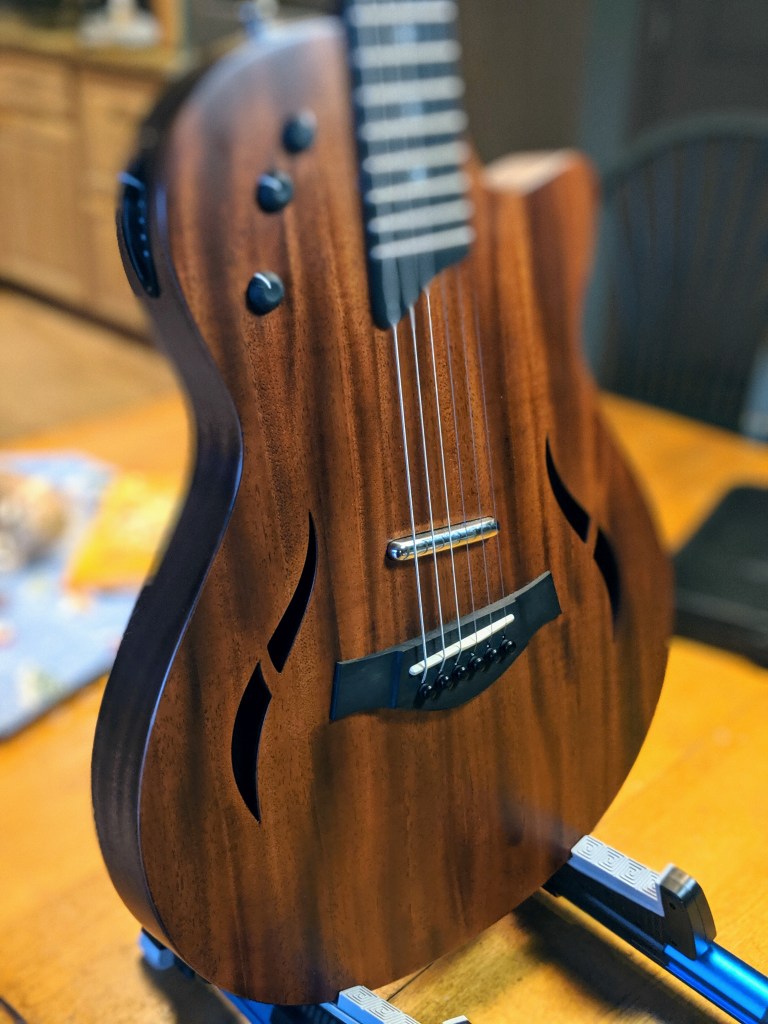
I applied that thinking to my recent purchase of my Taylor T5z. But I didn’t have to dig too deep with respect to Taylor’s sustainability practices and social responsibility because I’ve been well-aware of Bob Taylor’s practices with respect to these issues. Though I’ve never been a big fan of the Taylor sound, I nonetheless have had a deep respect for how Taylor sources its wood, ensuring that it comes from sustainable sources and is ethically and legally sourced.

More impressive with Taylor guitars is their “Ebony Project.” Taylor purchased an ebony sawmill in Cameroon in an effort to ensure that their ebony is sourced sustainably and that it is processed ethically and legally, following both Camerooninan and US laws.

Taylor has created a video series around their Ebony Project. The introductory message is below:

Check out the rest of the Ebony Project series here.

Other guitar manufacturers have also gotten into the act, and that’s a good thing.

But as far as consumers are concerned, yes, buying a guitar is like voting. Your personal vote may not count for much. But thousands of votes together have an impact. The same goes with buying gear. My refusal to buy a guitar from a company that doesn’t have environmentally and socially responsible practices in place may not have much of an impact. But maybe by sharing this can raise people’s awareness, and at least create a little bit of a ripple in the vast waters of consumerism.

Read Full Post »

Last Friday, I saw Eric Rachmany and Kyle Hearn of Rebelution playing this guitar and after doing some research on it over the next few days, and then playing one at my local Guitar Center yesterday, I just had to have it (F-in’ GAS).

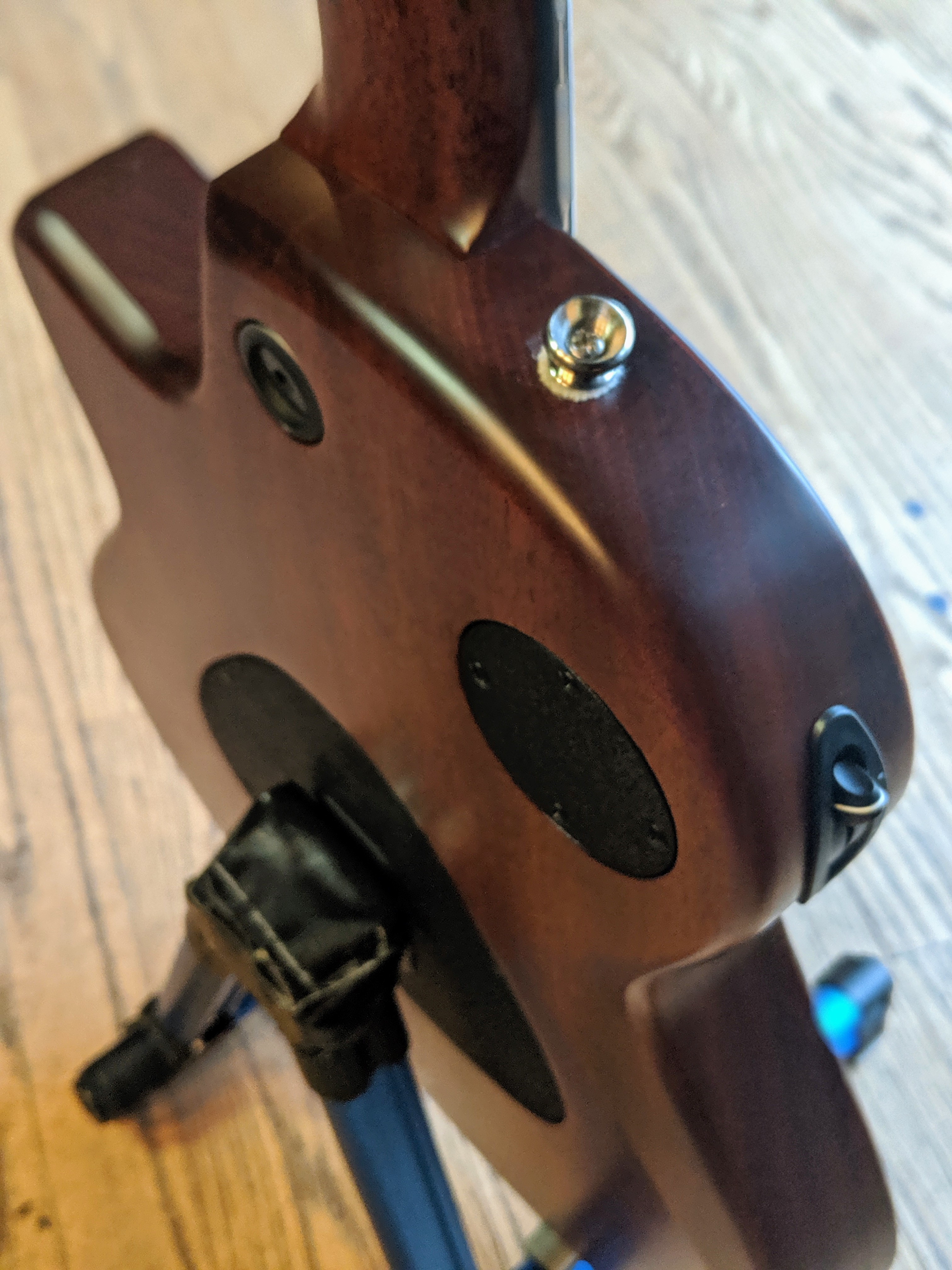
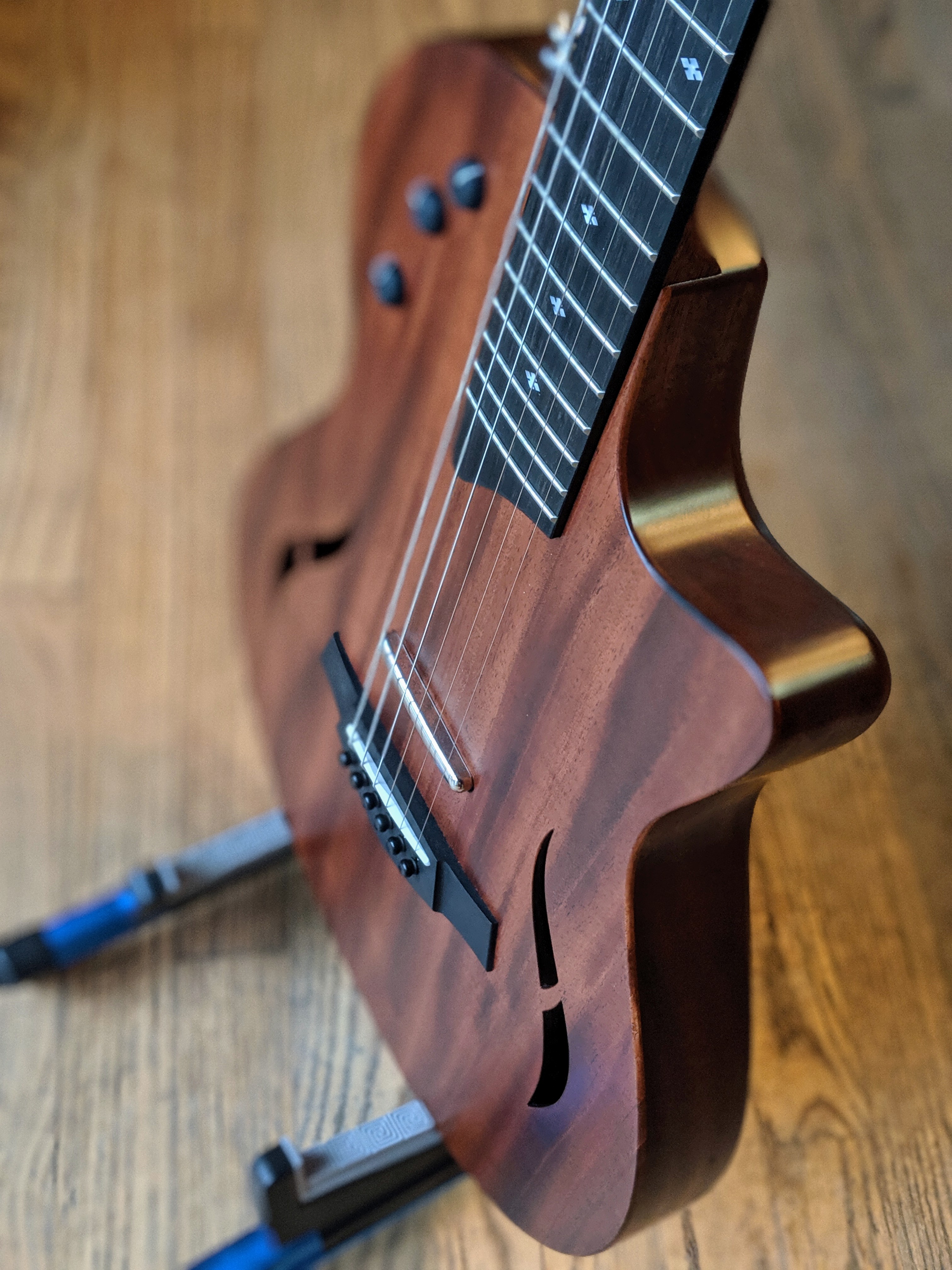
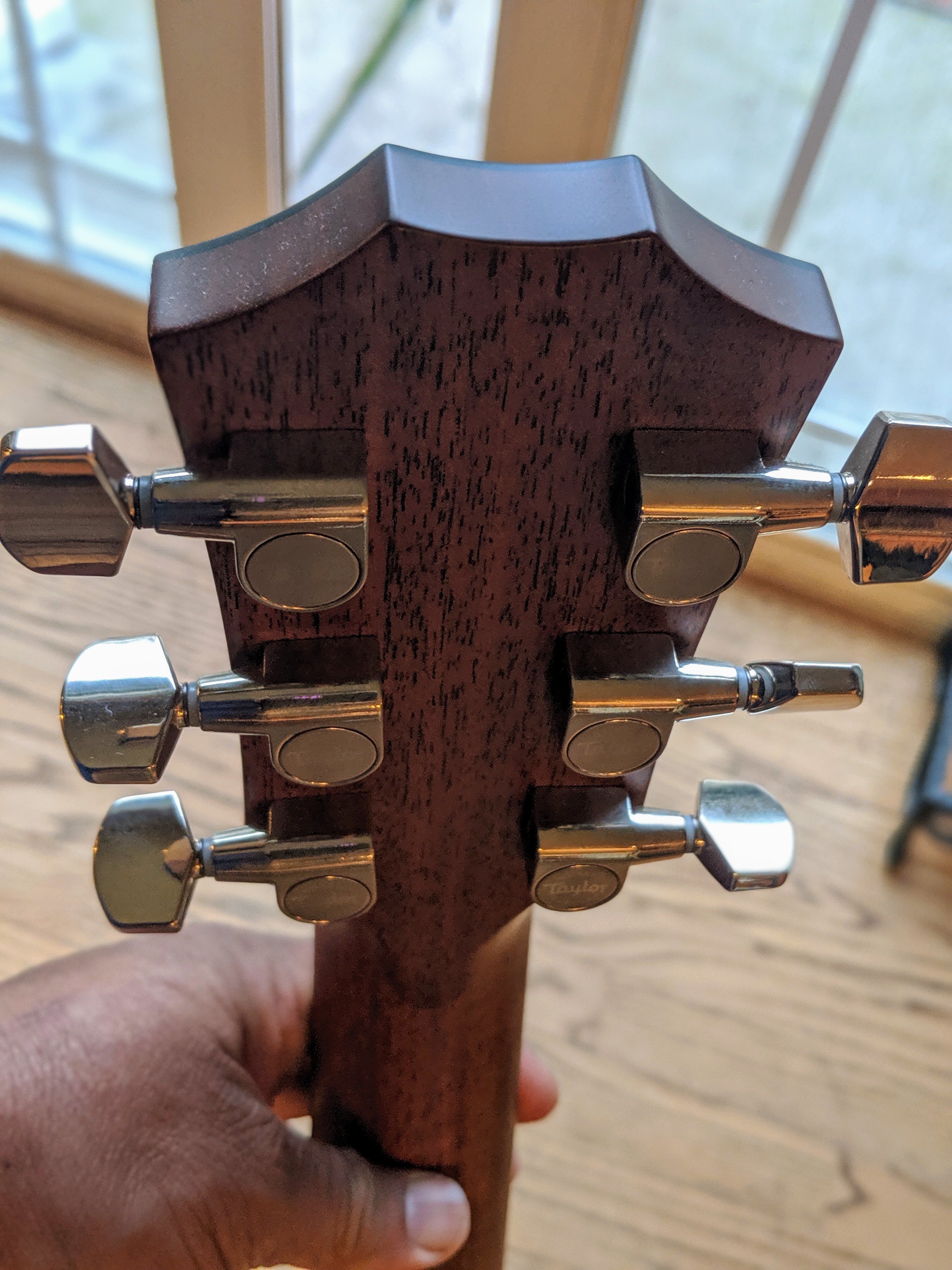
I took some pictures of it this morning. I’ll talk about it after.

Impressions

Looks

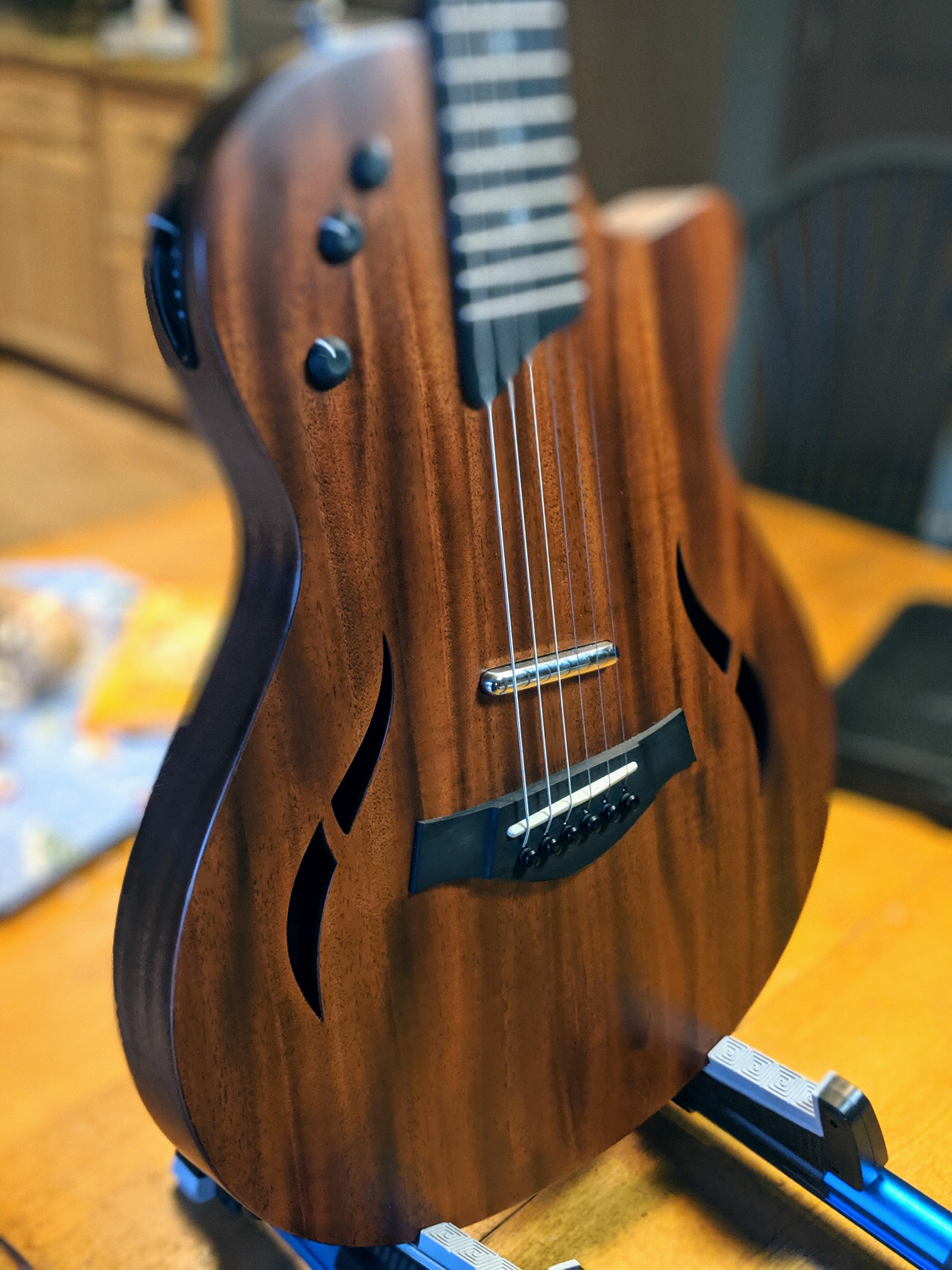
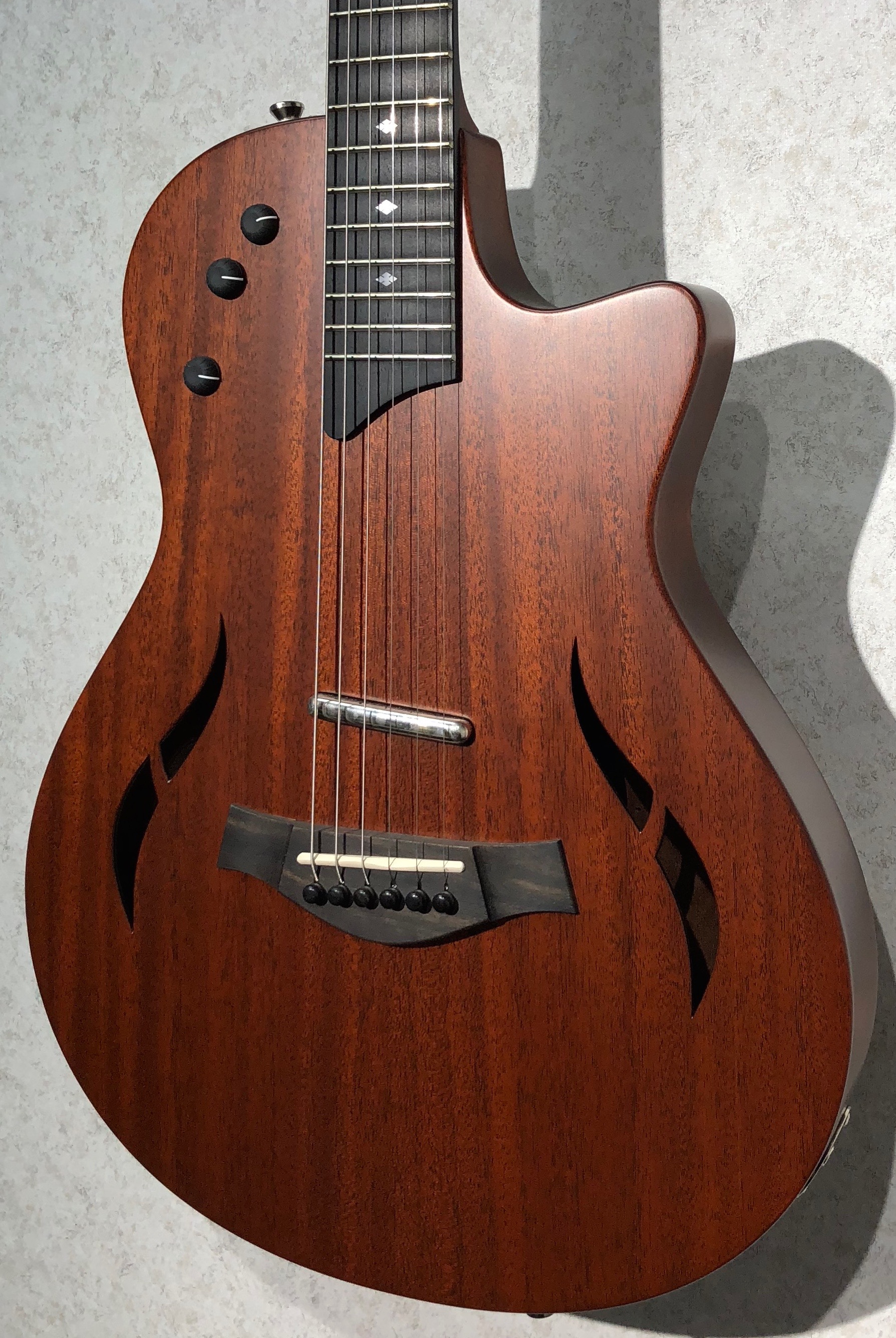
First off, the look of this guitar is spectacular. The grain on the mahogany top – even in a natural finish – is so three-dimensional. I’m glad that Taylor didn’t put a gloss clear coat on the guitar. The satin finish lets the grain of the wood speak for itself. It’s a sexy guitar. In fact, at the concert the other night, I was thinking about how awesome the guitars looked and my wife must’ve been reading my mind and commented on how gorgeous the guitar were.

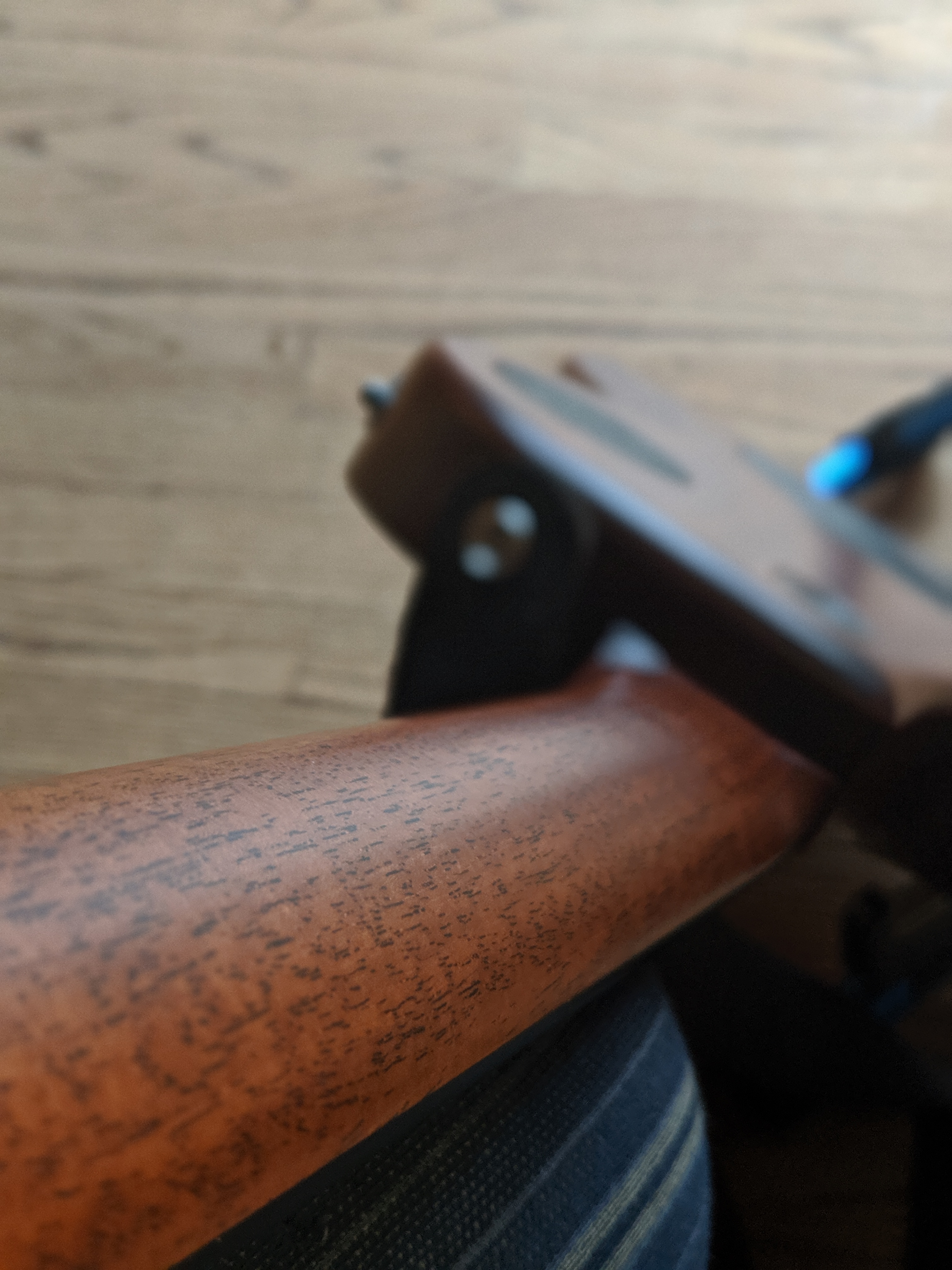
What amazes me about the grain of my guitar are the pronounced striations of dark and lighter wood. Most of the pictures I saw of the guitar and the guitars that Eric and Kyle were playing didn’t have these. I totally lucked out with this! It almost looks like walnut!

Fit and Finish

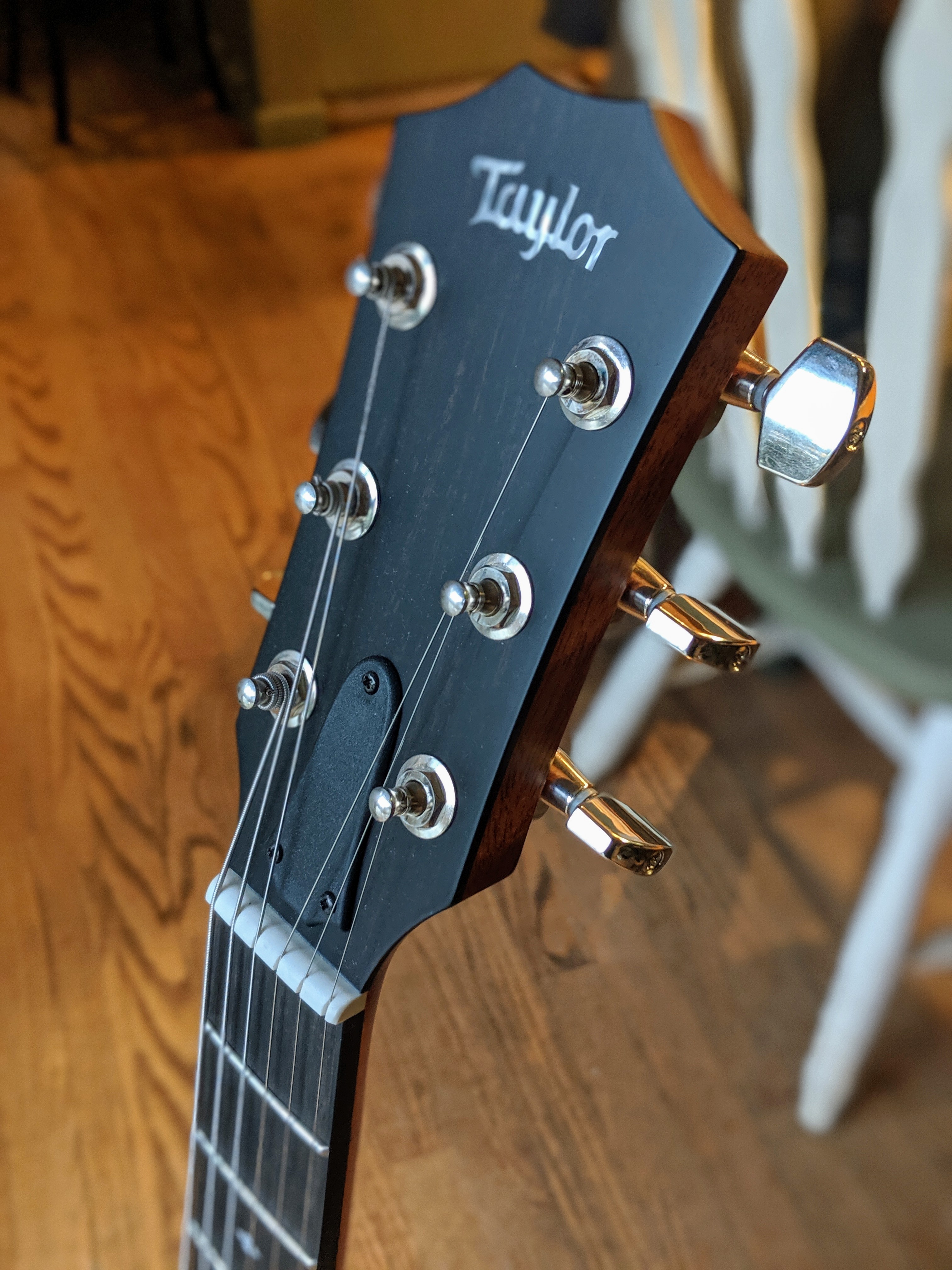
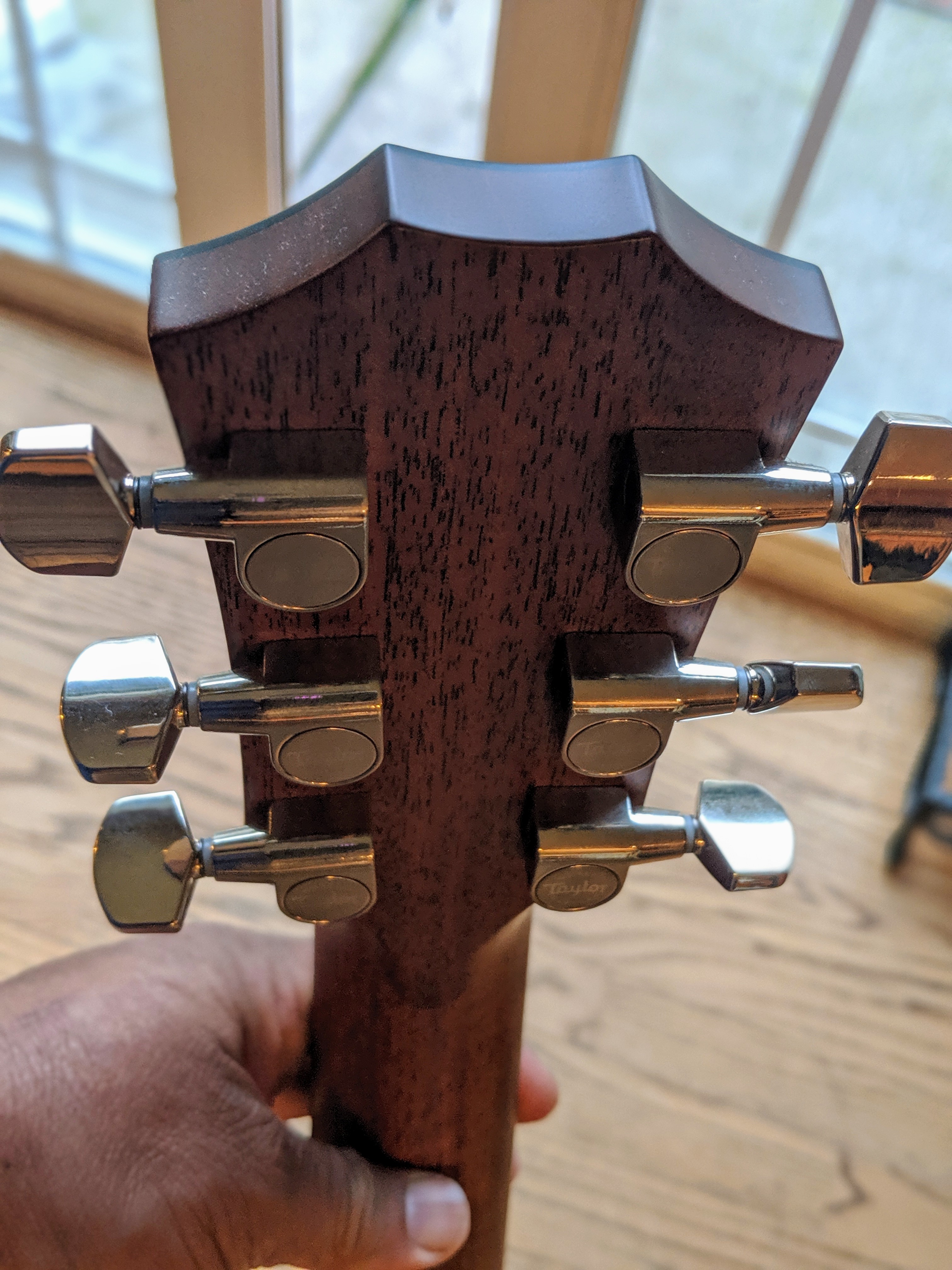
True to Taylor’s workmanship and quality, there is absolutely nothing out of place; no crooked joints, no blemishes in the finish. The machine heads are perfect and silky smooth to tune.

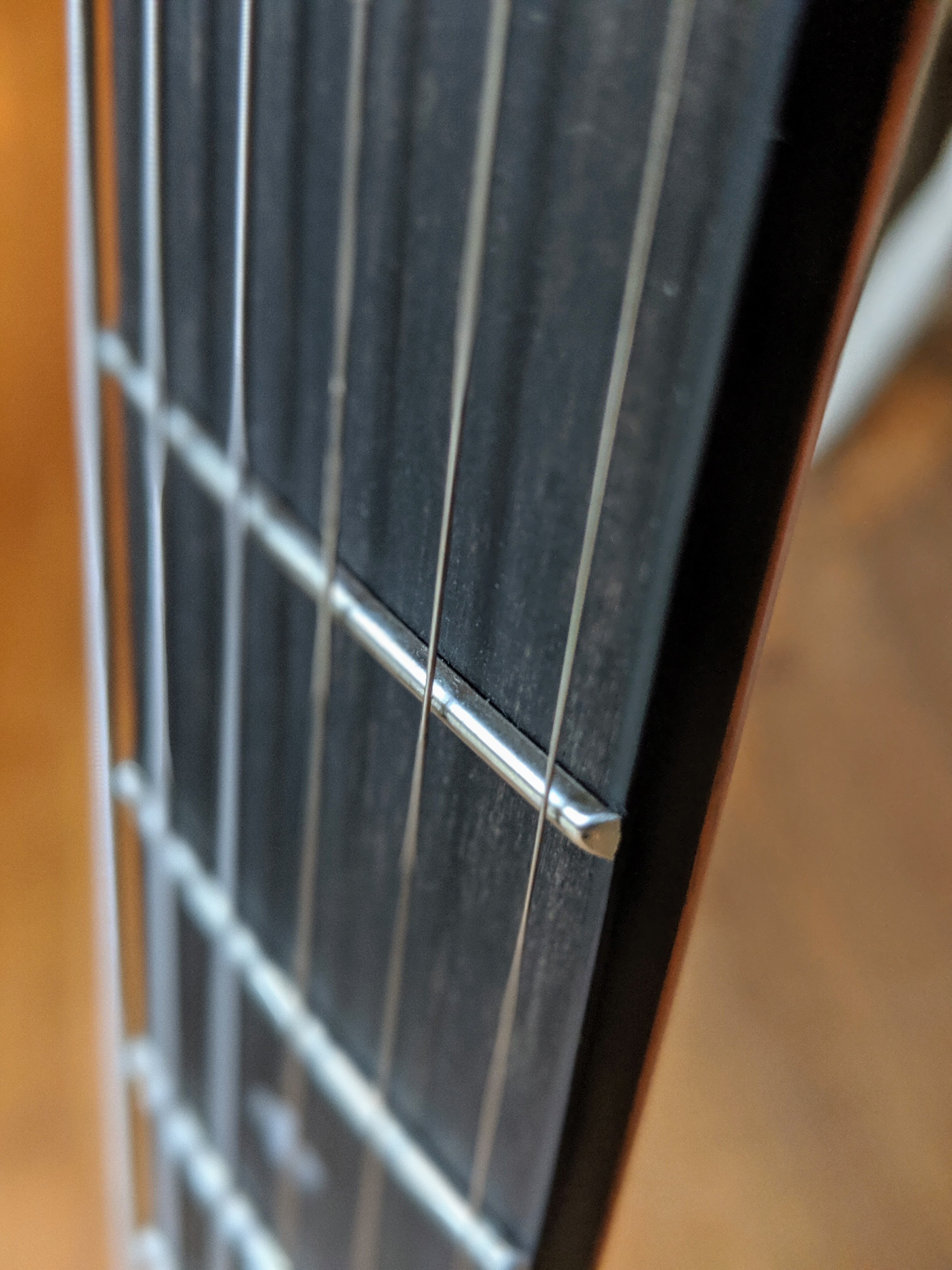
The jumbo frets – yes, jumbo frets – are clean and smooth. Some people in the past have remarked on the relatively sharp edge of the fret board, but I have to problem with it. I like that pronounced edge.

The body is perfect on this guitar. It’s a little wider than a Les Paul, but it feels like holding an electric. In fact, Taylor calls it an electric guitar (more on that later – it’s important). The body size combined with the weight which couldn’t be more than 5 lbs. make for a very comfortable guitar to play.

Playability

The scale length on the T5z is 24 7/8″. We’re getting into Les Paul territory here and all be damned if this guitar doesn’t play like an electric. It comes strung standard with Elixir Nanoweb 11’s (electric), which are perfect for this guitar. The thicker string gauge provides pop for the acoustic mode, but the Les Paul-like scale length makes bending super easy.

The neck radius, which is 12″ is down three inches from the original T5’s 15″, with a nut width of 1 11/16″. The neck profile is a shallow C; more shallow than a Les Paul, but it makes playing up and down the fret board a dream!

And reaching notes in the upper bout? FUGGETABOUTIT! The neck is attached to the body via what Taylor calls a “T Lock.” You ever assemble IKEA furniture before? You put pieces together and turn what looks like a large screw head to pull the pieces tight. It appears to be a similar principle with the T Lock mechanism. It pulls the neck in tight to the body. What this means is that there’s no heel on the neck, allowing access to the notes in the upper bout super easy. You don’t even have to change your wrist angle to reach the notes! F-in’ A!

Sound

Looks and build quality aside, it’s the sound of the T5z that pushed me over the top to buy it which, interestingly enough, kept me from buying the original T5 when I evaluated it almost 13 years ago. Back then, though I got what Taylor was going after, I felt as if it was an acoustic guitar trying to be an electric and not able to do the job of either very well. It gave me the impression at the time that Taylor couldn’t quite decide on what they wanted the guitar to be.

But with the T5z, it’s unabashedly an electric guitar that has an acoustic setting, and more importantly, it does both acoustic and electric duties incredibly well.

The guitar is meant to be plugged in. Demonstrators say that it has a nice unplugged sound. It doesn’t. It sounds like a mildly deeper acoustic sound of an electric guitar. It’s serviceable for quiet playing, but contrary to what a demonstrator said about it having a good acoustic sound for songwriting, I personally would have to plug it in if I’m writing music. But for practicing or learning songs, it works good enough.

But the plugged in sound? Wow! The acoustic tone is wonderful and a lot of that has to do – at least in my opinion – with the body sensor right behind the bridge. It provides for a very natural-sounding tone. It’s not quite acoustic, but it’s pretty damn close, and for use in a live performance, it works great. When I saw Eric Rachmany, the performance tone was crystal clear with the qualities I’d expect from a plugged-in acoustic guitar.

I will be playing it at Christmas Eve Mass today, so I tested it direct into my JBL Eon One PA. It sounds spectacular through my PA, so I’m now looking forward to playing some solo gigs with it.

As soon as I brought the guitar home yesterday, I immediately played it through my BOSS Katana Artist, going through every single setting. In the acoustic channel, it was awesome, and I only had to do some minor tweaks to dial it in for use today.

On the electric side of things, I just have to smile. I was able to Tele-like tones out of it using the neck pickup and turning up the highs. Then was able to get fatter and more driving tones with the other pickup settings.

To be honest, and I’m actually very glad about this, the T5z has its own tone. It’s not trying to be a Strat or a Les Paul or an ES335. But what it offers is the ability to shape the guitar’s tone to fit whatever genre I’m playing. That’s really the promise of this guitar and at least from my very short time playing it thus far, Taylor has fulfilled that promise, where I feel it fell short in the original version.

Granted, I still need a few more hours with the guitar. Every time I pick it up and plug it in, I find some new tone from tweaking the gain and EQ knobs which, I have to say, function incredibly well. I love that there are independent bass and treble knobs which is significantly better than having a single tone knob which, as you know, when you roll off the tone can get really muddy as the highs become muted.

Overall Initial Impression

I’m going to refrain from raving about the T5z, though I’m very tempted to do so. My gut tells me that this is truly a great guitar, and there’s no denying its versatility. But I want to save the raves for my formal review once I’ve had a few more hours on the guitar.

I am SO looking forward to playing it at Christmas Eve Mass today!

Read Full Post »

I know, I know… When I get excited about some gear, I’m like a pit bull that won’t let go. But this T5z has gotten me real excited! So excited that I test-drove it today at Guitar Center, and walked out of the store with one!

I went into the shop specifically to test-drive the guitar. I wasn’t intending to buy it, but after two hours of playing, I pulled the trigger. I wasn’t going to leave the store without one in hand. It really is that good.

The standout feature of the T5z from the beginning is its versatility. The premise of the guitar when it was first released was that it could handle both acoustic and electric duties.

Unfortunately, though I loved the prospect of a dual-solution guitar, I had a real problem with it in that I felt the acoustic setting was not acoustic enough, and the electric side wasn’t electric enough. The acoustic setting was kind of lifeless in the amps I played it through, and the electric settings, while serviceable, were a bit uninspiring, and I about said as much in my original review 12 years ago.

But 12 years later, my opinion has completely changed. The acoustic sound is very acoustic and the electric sound is electric. It’ll never replace the sound of my Les Paul or my J45 – those sounds are distinct – but it’s not meant to do that. This guitar is meant to get you into the genre that you’re playing. Even though I just got it, I can see that it is now the most versatile performance guitar I have.

And for me as a worship leader, it checks off all the boxes for what I need. My band plays a mixture of contemporary Christian and more old-school Catholic folk stuff, and having a guitar that can cover the range is important to me. The T5z fits that bill perfectly!

And that brings me to the T5z being the perfect complement for my BOSS Katana Artist.

Since I’ve gotten my Artist, when I’ve had to play a set where I need both acoustic and electric, I’ve brought two guitars. I have my Artist banks set up to accommodate both electric and acoustic. When I need to play an acoustic song, I unplug my Les Paul, switch banks, then plug in my acoustic. But with the T5z, I just need to switch banks and adjust the volume knob on the guitar.

But the even cooler thing is that I now can do that mid-song. This is going to open up all sorts of possibilities for me.

For solo gigs, I can’t wait to use the T5z through a looper. I can do the foundation track on the acoustic setting, then do solos on an electric setting. Granted, I’ll have to adjust my rig a bit and I think I’ll be getting something like a Strymon Iridium to handle those electric duties. I tell you, I can’t wait to dive into what this guitar can do!

Update 12/25/2019

As one of my regular gigs is playing at church, I used the T5z with my Katana Artist yesterday for Christmas Eve services. I had spent about an hour prior to going to the church setting up my acoustic and electric banks. I was going to have a full band, so I needed to get my sound dialed in.

To make a long story short, the T5z worked spectacularly with the Katana Artist as I was both hoping and expecting. I did the traditional Christmas hymns in Acoustic mode, but for the more contemporary stuff we did, I was able to switch between Acoustic and Electric with a little dirt then back again mid-song!

The ease of which I was able to do this – it was so natural. Just a simple button press on the GA-FC to switch banks, then move the pickup selector to an electric position. It confirms my belief that the T5z is the perfect guitar for the Katana.

Read Full Post »

Et tu, Brute? Or latin for WTF?!!!

Yeah, when the T5 first came out, I was NOT a fan. I didn’t think it was a bad guitar, but I just didn’t get it, and honestly, I wasn’t that impressed with the electronics. Though I knew it wasn’t a modeling guitar, it just kind of felt like a modeling guitar to me.

Even after I played it at a shop through several amps – and really, I did try to like it – I just couldn’t bond with it. That was over 10 years ago.

And over the years, I don’t think I ever saw a major artist using it. The people who loved the T5 loved it, and though they might have been regular players like myself, I’d never once seen a big name using one. Fast-forward to today, and I just saw one of my favorite guitarists, Eric Rachmany, playing a T5z Classic – in a concert! I was literally no more than 20 feet away from him and there was no mistaking that what he and his partner were playing were T5’s.

After the concert, I did a little research on the T5, and it looks as if Eric was playing a T5z Classic Mahogany. The T5z has a smaller body than the traditional T5, and has a scale length that is similar to a Les Paul. I was blown away by the sound. I need get one of these – or at least test drive one.

Back when I first test drove the T5, I felt the electronics were a little off. But all things evolve and I’m sure Taylor has put some work into it. Maybe they improved the body sensor. Maybe they updated the internal circuitry. But whatever they did, they definitely got it right.

So here I am. I’ve never really been that much of a Taylor fan; and especially NOT a T5 fan, and I want one of these. I really love the plain, natural look of the Classic Mahogany, and it’s at a great price of $1899. But the Custom K koa top looks great with the binding. That’s also twice as much, so I don’t know what that will get me. But the Classic has a nice, warm sound that has a bit of a high-end jangle. It’s very nice.

Yeah… it’s definitely time to check this one out…

Here’s an Anderton’s video that kind of took it over the top for me:

Read Full Post »

Taylor T5: Changing My Mind?

Eric Rachmany (left) and Kyle Hearn of Rebelution

Last night, I attended a GREAT show featuring Eric Rachmany and Kyle Hearn of Rebelution. This is an annual tour that Eric puts on where all the proceeds go to charity. But it’s special when he comes to San Francisco because that’s his home town, so there seems to be an extra intimacy and vulnerability that he displays that’s different from his normal Rebelution shows.

Both Eric and Kyle have used Taylor acoustic guitars exclusively, though for as long as I’ve followed Rebelution, Eric has played an OM-size regular acoustic. One thing that has set Rebelution apart – at least for me – has been their acoustic sound. Eric, then later Kyle, both have had incredibly natural tone with their amplified sound with none of that piezo quackiness that I have found with a lot of Taylors. And having seen Rebelution a bunch of times, I came to realize that Eric really does care about his acoustic sound. So it was a HUGE surprise last night to see the roadies place T5s on the stage.

But I have to say that once Eric and Kyle started to play, I was blown away by the sound! It was SO natural and huge! I then realized that electronics have come a LONG WAY in twelve years. Taylor certainly improved the electronics of the T5, plus, with all the great processors on the market now, dialing in a great sound is pretty easy.

When the T5 first came out twelve years ago, I didn’t have much of a warm and fuzzy about it. Moreover, I never saw any major artist playing one, so while I didn’t brush it off, I didn’t really consider it a serious contender to add to my stable.

But after last night, I’ve resolved that I have to test out a newer model. After looking at the pictures I took last night, it looks like Eric and Kyle were both playing a T5z Classic. That’s the basic mahogany version with no binding. It’s a gorgeous guitar – even my wife commented on how nice the guitars looked on stage.

But the sound! OH! The sound! It was big, thick, natural, and full of that sweet mojo that’s distinctly Taylor. I’ll know more once I can get my hands on one to test it, but suffice it to say that I’ve now changed my tune about the T5. It’s certainly a guitar that I could see myself playing.

Read Full Post »