Feeds:
Posts
Comments

Archive for the ‘Effects’ Category

Durham Electronics Crazy Horse Fuzz Distortion Pedal

Durham Electronics Crazy Horse Fuzz Distortion Pedal

If you’re not a Neil Young fan, read no further. But if you dig that big fuzz drive sound like I do, you’ll love the Crazy Horse Fuzz Distortion pedal. I haven’t personally played this one, but from what I’ve heard, it’ll serve up that “Crazy Horse” sound! But wait, there’s more!

This pedal is very cool in that it is a drive AND a fuzz pedal in one. So not only can you get the Crazy Horse sound out of this, but by varying the mix of drive and fuzz, you can achieve all sorts of different distortion characteristics. But in addition to drive and fuzz level controls, plus the standard tone and level knobs, a VERY cool feature of this pedal is the voltage knob, which will allow you to “starve” the pedal of its voltage, so you can vary the output from thin and fizzy to thick and ballsy!

Being a boutique pedal though, this kind of functionality comes at a price: $249.00. It’s not quite as steep as others in its class (think Fulltone, Mad Professor, etc.), but it’s also not cheap. View the video below for a great demo!

Read Full Post »

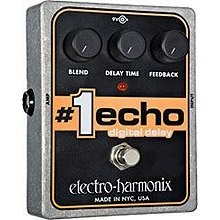
Electro-Harmonix #1 Echo

Electro-Harmonix #1 Echo

Over the years, I’ve had a love-hate relationship with delay pedals. My first taste of delay was an analog EchoPlex in the early 80’s. But focusing on acoustic guitar – actually only able to afford an acoustic guitar – at that time, I didn’t see the need for a contraption like that. Then U2 and The Edge entered my musical radar a couple of years later in the early eighties, and I of course had to get a rig where I could use a delay. So with what little money I had, I purchased a 25 Watt Roland amp, a Boss CE-2 Chorus, and a Boss DD-3 Digital Delay.

Little did I know that you had to have some technique to play like The Edge, and I quickly became disenchanted with trying to play like him. I just didn’t have the technique nor experience! So I held onto the amp, kept the CE-2, and sold the DD-3. I’m kicking myself now for getting rid of the DD-3 as it was a “Made in Japan” model that still had some hand-wired circuitry that makes it much-sought-after delay. Oh well…

Fast-forward to today, and I’ve owned several delay pedals. Again, the operative word is “owned,” because I don’t have one now. But I do have the technique, and I’m thinking that some of the stuff I’m writing could actually use some delay. Enter the Electro-Harmonix #1 Echo.

I’m normally a little leary of EH pedals, but this one seems promising, at least from the reviews I’ve read and the sound bites I’ve heard. Reviews are generally pretty good, but one thing’s for certain: All this thing does is delay. It doesn’t do any modulation or phasing. It just delays, and that’s exactly what I’m looking for! I’m going to have take one out for a spin, but it certainly seems like it will serve the purpose. And for a $99, it’s certainly not a huge investment. Let’s look at features:

  • True bypass (Yowza! that’s cool)
  • up to 2 second delay
  • Wet/Dry Blend for blending the amount of dry and wet signal – very cool
  • Feeback control – kind of like decay

Check out the videos

Read Full Post »

Jacques Overtube Vintage Pro Overdrive Effects Pedal

Jacques Overtube Vintage Pro Overdrive

The Dawg likes to sniff around for new and interesting gear all the time. Unfortunately, I don’t always have time to write or test stuff out. But I do love it when I come across some potentially awesome gear, and I take the time to share it here. The Jacques Overtube Vintage Pro Overdrive most definitely fits the bill in that department. By the way, think “Jacques Cousteau” when pronouncing the name… 🙂

The Overtube is supposedly a faithful reproduction of the original TS-808 Tube Screamer circuit. Now you might be thinking, as did I, that that is nothing special. But what is special about this pedal is that little toggle labeled “CASC” between the Tone and Drive knobs. “CASC” stands for “cascade” and it’s meant to simulate running two TS-808 pedals simultaneously ala SRV!

Check out this video on Guitar Player TV. I’ll be damned if that pedal doesn’t do a Tube Screamer exceptionally well! And with the cascade on, this pedal sounds sweet as can be with lots of thick mid-range wail!

As many of my readers know, I’m a big fan of the mid-rangy kind of drive distortion, so I’m gonna be hard-pressed not to give this pedal a whirl.

It’s a steal at $139!!! Check it out!

Read Full Post »

Ibanez Jemini Distortion Pedal

Ibanez Jemini Distortion Pedal

Does the guitar playing world need yet another distortion pedal? That’s almost like asking if your town needs another Starbucks. Hmmm… maybe that’s a bad analogy because while we could probably do without yet another coffee commodity, I for one don’t ever mind seeing another distortion pedal hit the market.

And just when I thought I’d heard all the variations of distortion around, and that not much else could be done, along comes Ibanez with yet another mind-blowing distortion box, designed by none other than one of my guitar heroes, Steve Vai. I gotta admit it: I’m really impressed with this latest offering from Ibanez – at least as much as I was impressed with the Vox Satchurator. Don’t get me wrong; it’s not because of Steve Vai, or because I’m a Vai wannabe. It’s because there’s something about a great distortion sound that evokes a visceral response inside of me. It’s hard to explain. So I’m more than pleasantly surprised about the Jemini because it produces a GREAT distortion sound; at least from what I could tell from this video starring Steve Vai and Steve Vai – you’ll get the joke once you watch it:

Leave it to Steve Vai to not only demonstrate his mastery over the guitar, but the eternal showman manages to make the video a joy to watch. I was laughing my ass off at his antics! He’s so likeable!

Okay… now for a reality check… I really would like to get this pedal, but at $199, it’s a bit out of my price range right now. But being two distortion pedals in one for that price, it’s a hundred bucks a pedal. That’s actually not bad at all. But I have to admit, I have my sights set on a Satchurator right now. I kind of go for the more mid-rangy type of distortion. But I’m not going to let that keep me from taking one out for a spin.

On a final note, what’s been really great as of late is that big-name gear manufacturers are finally producing what could be considered boutique-type pedals. Having played with the Satchurator, that thing is built like a tank, and it just kicks ass. The Jemini appears to follow suit of well-made, gig-worthy quality. That’s very pleasing to me, because I’m a big proponent of getting great sound without breaking the bank.

Read Full Post »

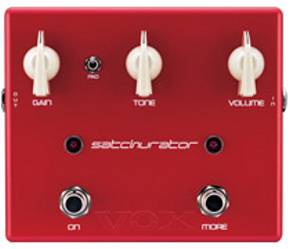
Vox Satchurator

Vox Satchurator

Summary: From grind to snarl, the Satchurator can deliver it. Built like a tank, with chicken head knobs, and a fire engine red paint job. Definitely gig-worthy! “More” switch is awesome!

Pros: Incredibly versatile, this box has the ability to deliver a wide variety of tones.

Cons: Just a nit: True character of this pedal doesn’t come out until you’re at gig levels in volume.

Price: $129 Street

Features (fr. VOX site):

  • Analog distortion pedal designed under the complete supervision of Joe Satriani
  • Controls for Gain, Tone and Volume
  • ‘More’ gain boost switch enables two footswitchable distortion sounds in one pedal. This gain boost is dramatic when gain knob is set low, and is a subtle solo boost when gain knob is set to maximum.
  • ‘Pad’ switch pads down input to allow for high gain pedals (such as modern wahs) placed before Satchurator. Up is pad ‘ON’. Down is pad ‘OFF’ for full Satchurator effect.
  • High gain, low noise design provides vintage to modern distortion sounds
  • Dynamic circuit is highly responsive to rolling off the guitar’s volume and preserves the guitar’s high end when the volume is rolled off.
  • Cream chicken-head knobs for precise positioning and high visibility on dark stages

I am not shredder; never was, never will be. It’s just not my style. But that doesn’t mean I don’t love the sound of distortion and playing with a distorted sound. In fact, to me, there’s nothing like the sweet, sustained, and compressed tone of saturated power tubes, or the dirty color that comes from a great overdrive or distortion box. Thus, I’ve had several stomps over the years from DS-1’s to MXR’s to my current line up of a Tube Screamer, Bad Monkey and an OCD. Each pedal has its own unique character, and I employ all of them either individually or by chaining a couple together. It now looks like I’m going to add to my lineup.

When I first heard about the VOX Satchurator, I got excited. I figured anything that was designed and built to Joe Satriani’s specifications had to at least be something to take a good look at, if not outright buy. Plus, with VOX being known for high-quality, I knew that whatever was produced from this partnership would not be crap. So I knew that it would be a good bet that I’d get this pedal. In fact, I’m writing this review right after my test. But luckily, I’m not THAT impulsive that I left the store with one in hand – though I have been known to buy first think later. Luckily I have my trusty GAS Calculator to keep those impulses in check. 🙂 I scored a 5, which is on the high side of still considering the gear and just one point below of getting it, but I didn’t score a 6 or above, so I held back on my purchase for now (honestly, it’s a matter of available funds 🙂 ). Now back to our regularly scheduled program….

Okay… if you read no further, please read this:

THE SATURATOR WILL NOT MAKE YOU SOUND LIKE JOE SATRIANI!!!

No one sounds like Satch, but Professor Satchifunkilus himself. You may use the exact same equipment (I used a JSX for my test, but I used a PRS SE Custom Semi-hollowbody for one of the guitars and a Strat and Epiphone Les Paul for the others). You may even have incredible technique that matches or surpasses the maestro, but you will not sound exactly like him. I’m only saying this because I don’t want you to get your hopes up. What you do get though, is the same TYPE of distortion tone that Satch gets. What you do with that is entirely up to how you play; and that is a good thing. Okay, ’nuff said.

Here’s my take on the Satchurator: Forget about how cool it looks – it looks AWESOME, by the way – the Satchurator is an incredibly versatile distortion box that can serve up mild grind to unadulterated, in-your-face, lewd, crude, with a mouth full of food snarl (got that saying from Guitar Player mag 🙂 ). It also has incredible attack and volume knob sensitivity at any volume level.

The Satchurator is also not for the faint of heart. Once you switch on the box, you get breakup, even with the gain swept to zero. In other words, once it’s on, you’re committed to having even modest amounts of distortion in your signal. To coin a phrase from a close friend, “This ain’t for pussies.” But the cool thing is that the distortion is highly controllable based upon your guitar’s volume knob and how you attack the strings. From a volume knob perspective, I just DIG how the Satchurator responds to volume knob settings. Want less distortion, just sweep your volume down. Want more bite, do the opposite.

When I test pedals, I usually start out with everything set in the 12 o’clock setting. Through my test, which was about 45 minutes, I only moved the gain knob twice: All the way down to get a gorgeous bluesy breakup, then all the way up to see how bad the pedal clipped, which surprisingly enough, it didn’t do. For the rest of the test, I just kept the gain set at the centerline, then used a combination of attack and volume knob sweeps to dial in the right amount of distortion that I wanted. From a gigging standpoint, the less you have to bend over or crouch to set pedals, the better.

It has been noted that Satch actually plugs the Satchurator into a clean amp, then sweeps the gain knob. Personally, I like the sound that power tubes produce, so I set the JSX into the first gain stage, but left it pretty clean, allowing the Satchurator to drive the tubes into breakup. I do have to say that I loved that combination of tube breakup along with the Satchurator distortion.

More really is more

There’s an interesting switch on the right side of the pedal called “More.” This switch provides even more gain when you switch it on. It’s great for cutting through a mix. The interesting thing is that the boost effect is less dramatic with higher gain settings on the pedal. With the gain knob pegged, pressing More definitely adds more, but it’s just a bit more, like going from 10 to 11 on your amp. Where I had it set at 12 o’clock, the More switch was nicely dramtic, and it’s something that I’ll definitely be using when I gig.

Will play nice with the other kids...

I didn’t get to try this feature out, but the Satchurator also includes a toggle switch called “Pad.” Apparently, this allows the pedal to play well with high output pedals like wah pedals and not change your tone. It essentially “pads” their signals so the Satchurator’s tone doesn’t fluctuate wildly. I’ve never seen a pedal that had this feature. Very, very useful. Once I put the Satchurator in my chain, I’ll definitely be using the “Pad” to help tame my vibe pedal that could potentially cause wild tonal fluctuations, which it does with my OCD, which doesn’t like to be played with the vibe.

So how did it REALLY perform

I wish I had more time to try out a couple of other amps, but alas, I just didn’t. But I did try it out with three guitars, so that’s good. Here’s my synopsis:

  1. The first guitar I played it with was PRS SE Custom. This is a semi-hollowbody guitar. I’m glad I switched to another guitar because I wouldn’t buy the pedal if I just did my review with just that guitar. It’s not that the guitar was bad, and it wasn’t that the tone that was produced was bad. It’s just that the combination of this particular guitar with the Satchurator was uninspiring. I wasn’t blown away.
  2. After the PRS, I switched to a Strat, and my inspiration meter went through the roof! The sound was FAN-FREAKIN’-TASTIC!!! I had the same result with Epi LP I plugged in. In other words, at least from my perspective, the Satchurator sound best with solid body guitars. To be fair, I probably could’ve coaxed a great sound using the PRS, but with limited time, I didn’t have the patience. And in a gigging situation, the last thing you want to do is tweak.

Wrapping it up

As I mentioned above, this pedal will not make you sound like Satch, but it will give you the same kind of distortion Satch employs. I love that kind of distortion. It’s not super-compressed, but it’s also not so open that it comes across as hollow. As with Baby Bear’s porridge in “Goldilocks and the Three Bears,” it’s just right!

Read Full Post »


A few months back, I had heard some buzz about Joe Satriani teaming with Vox to come up with some new pedals, and just recently caught wind of the first pedal from this partnership called the “Satchurator.” When I first read about it, I was thinking to myself, “Now this is cool…” I’ve known about Satch being a pedal freak for awhile, so I figured that having his input into a new pedal would be worth a look; and based on my few hours of research, and listening to samples and watching videos (I’ll insert a couple below), this pedal is worth more than just a look. It looks like I’m gonna get it!

Okay, just what I need… yet another drive/distortion pedal. But there’s something very very cool about the sound that this pedal produces, and from my perspective, it has nothing to do with trying to sound like Satch (even though people say that this is Joe’s tone in a box). For instance, I’d rarely, if ever crank the gain full. My stuff is more on the bluesy side of things, and the distortion this pedal produces can be really thick at higher gain levels from what I’ve heard. Nah, this is a different brand of distortion altogether. It’s not as mid-rangy as a Tube Screamer, but it’s also a little thicker than an OCD – it’s kind of hard to describe.

Of course, I’ll have to do a test drive before I actually buy it, but it sure looks like a winner to me. Let’s look at the features (from Vox):

  • Analog distortion pedal designed under the complete supervision of Joe Satriani
    Controls for Gain, Tone and Volume
  • ‘More’ gain boost switch enables two footswitchable distortion sounds in one pedal. This gain boost is dramatic when gain knob is set low, and is a subtle solo boost when gain knob is set to maximum.
  • ‘Pad’ switch pads down input to allow for high gain pedals (such as modern wahs) placed before Satchurator. Up is pad ‘ON’. Down is pad ‘OFF’ for full Satchurator effect.
  • High gain, low noise design provides vintage to modern distortion sounds
  • Dynamic circuit is highly responsive to rolling off the guitar’s volume and preserves the guitar’s high end when the volume is rolled off. (NOTE: This means it cleans up nicely when you lower your guitar’s volume – SLICK)
  • Cream chicken-head knobs for precise positioning and high visibility on dark stages

Now get this: THIS BOX IS STREET PRICED AT $129.00!!! Holy Simolians, Batman! That’s incredibly affordable! I am totally blown away by the price of this pedal! I’d kind of come to expect paying a steep price for something from Vox (can you say “Virage?”), but this just blows me away. Anyway, here a couple of videos I found while surfing:

Guitar World Review

Vox Demo

And from Joe himself…

Read Full Post »

BOSS CS-3 Compression/Sustainer
Summary: If you’re looking to really squeeze your signal, this box’ll do it.

Pros: 4 knobs provide great flexibility to shape your compression. For the money, it’s a pretty good deal.

Cons: Has probably some of the most severe compression I’ve ever experienced, which results in a loss of tone. Sounds okay with solid state amps, but horrible with tube amps.

Price: $89 Street

Back when I was looking for a compressor to fatten up the tone of my Strat to compensate for the really bright Tex-Mex pickups, I evaluated a bunch of compressor pedals, from the high-end (Maxon, Demeter) to the low-end, one of which was the BOSS CS-3 and MXR DynaComp.

I recently went through my review notebook and saw that I didn’t do a review of the CS-3, so here goes…

To start with, if you don’t want to read the entire article, if you’re a hard-rock/metal player, I think you’ll like this pedal. It’s real squishy, and combined with an amp that produces a tone of low-freq, it will definitely get you that super-compressed distortion. On the other hand, if you’re a jazz/blues or classic rock player, you will not like this pedal as it can really muddy your clean tone.

That said above, the CS-3 is not a bad pedal. It’s well-made, and compared with other BOSS I’ve owned in the past, it is probably just as reliable. But the CS-3 follows in pretty much the same formula as other BOSS pedals: You get decent tone for a relatively cheap price. They’re made for a mass market audience. Not that that is intrinsically bad, but if you’re a real tone freak, it won’t be up to par tonally with what you’ve come to expect. But high expectations aside, as I said, the CS-3 is not a bad pedal, and with the right amount of tweaking you can get a decent tone from this box.

One thing I really liked about this pedal is its configurability. It has four knobs for Level, Tone, Attack, and Sustain. The Tone knob really comes in handy as you increase the sustain, as I found that increased levels muddied the high-freq tones. The Tone knob helps to compensate for that to a point. But dial in too much highs and your tone becomes really “tinny” irrespective of the guitar you use. Having an Attack knob is a pretty cool feature as well, as you can adjust how fast the compression kicks in. Not bad for a $89 pedal.

The unit I tested was a little noisy when engaged, not matter how much I tweaked the knobs. It wasn’t so apparent when tested with a Roland Cube 60, but with a tube amp (tested on a Fender Twin and 65 Super Reverb Reissue), the soft hiss was a bit annoying. But with either type of amp, as I mentioned above, this thing really squeezes your signal to the point that there’s a noticeable difference in tone between the unit being engaged and not engaged. In comparison, my Maxon CP-9 Pro+ when engaged retains my tone even at higher levels of compression, but just “feels” fatter. Very transparent.

All in all, the BOSS CS-3 is a decent pedal. For someone on a budget who wants to add some compression to their signal, as I said above, this will do the job. But if you’re looking for transparency, this isn’t the pedal for you.

Read Full Post »

4 Tone Bones - Excellent gear, that exceeds expectations of its performance, value, and quality. Strongly consider purchasing this. Fulltone Mini Deja Vibe

Summary: Fulltone makes some of the best pedals in the world, hands-down. You pay for the quality, but you’ll almost never walk away disappointed for the coin you have to pay for a Fulltone pedal. The Mini Deja Vibe is a great take on the original UniVibe, and faithfully reproduces the old ‘Vibe sound.

Pros: Fulltone quality, and pure ‘Vibe sound. Chorus setting is intense and sweeping, and mixed with reverb and just a little breakup, you can easily get that Hendrix and Trower sound. Vintage/Modern switch provides great versatility.

Cons: Pricey for what you get. Vibrato is too subtle and intensity knob belies the narrow range of intensity this pedal should be capable of – at least for me.

Price: $249 Street

5 Tone Bones - Gear has stellar performance, value, and quality. This is definitely top of the class, best of breed, and it’s a no-brainer to add this to your gear lineup! Voodoo Lab Micro Vibe

Summary: The MicroVibe does one thing and one thing only, reproducing the orignal UniVibe sound quite faithfully. A bit darker in presentation than the MicroVibe (think David Gilmore).

Pros: Super simple to dial in a great tone, plus awesome value for the tone that this box produces.

Cons: None

Price: $149 Street

With some of the songs I’ve written, chorus just doesn’t seem to be enough, so I’ve been looking at going the “vibe” route to get a more psychedelic sound. Over the past few days, I’ve listened to sound clips and read reviews, and narrowed my search down to two ‘vibes that I’m considering: The Fulltone Mini Deja Vibe, and the Voodoo Lab Micro Vibe. Both pedals’ manufacturers claim to faithfully reproduce the original UniVibe circuitry. And, at least to my ears, both do a great job. I recently had the chance to A/B boxes at the same time.

img10292143013.jpegFulltone Mini Deja Vibe

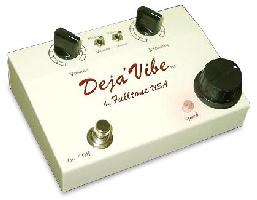
The “Mini” is a stomp box take on Fulltone Deja 2 pedal, with the same circuitry as its expression pedal counterpart. It has three knobs for Volume, Intensity, and Speed, plus two toggles: One to switch between a Modern and Vintage sound and the other to switch between Vibrato and Chorus. In general, I dig Fulltone pedals, and in general, I’ve been really blown away by the tones they can produce. So I was a bit surprised that this particular pedal just didn’t have that kind of impact on me. Mind you, the tone’s incredible, but to my ears, not spectacular – at least not enough to justify the $249 price tag. No doubt that it does psychedelic really well. On the “chorus” setting in the vintage mode, the tone was spectacular. But on the vibrato effect in either modern or vintage mode, was so subtle as to be practically undetectable. It’s there, you notice it, but there’s just not much to it.

I suppose it could be argued that you’re getting this for the chorus mode, which is what the ‘Vibe is all about. But I have a problem with expensive toys that have features that are practically insignificant. Mind you, I didn’t have the expectation that the vibrato should be more like a tremolo. But my expectation was that it would be quite a bit more profound. So combine with the high price, the Mini Deja Vibe gets 4 Tone Bones.

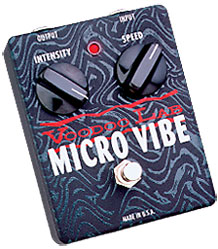
Voodoo Lab MicroVibeVoodoo Lab Micro Vibe

By comparison, the Micro Vibe is a lesson in simplicity. It does one thing and one thing only: It creates that sweet, Vibe tone. As with the Mini Deja Vibe, Voodoo Lab claims to faithfully reproduce the circuit of the original UniVibe, and like the Mini, it does it very well, though with just tad bit darker shading. But it wasn’t so dark that a little EQ adjustment couldn’t make it ring sweetly.

With just two knobs for Intensity and Speed, it’s very easy to dial in the right tone to fit your needs. I was really impressed with this pedal. It sounded great, it was very quiet, and I had a ball playing with different knob positions. I don’t know if it could’ve helped to have a volume knob like the Mini Deja Vibe, I certainly didn’t miss it. On top of all this, the pedal has true bypass switching. All these features together, plus the nice price of $149 gets the Voodoo Lab Micro Vibe 5 Tone Bones.

Now I know there are going to be some purists out there who will probably think I’m crazy for choosing the Micro over the Mini. But like I said, the Mini doesn’t sound bad at all. In fact, tone-wise in Chorus mode, the sound was spectacular. But if I could get what I was looking for in a smaller and less expensive pedal, and all I have to do is EQ a bit to make it sound a little brighter, the Micro Vibe makes so much more sense to me.

Read Full Post »

After I wrote my last review on the DigiTech Bad Monkey, I realized that I needed to change the format of my reviews, so readers could get an at-a-glance impression of the review, and choose to read the full review. As a professional web developer, “stickiness” is always a big issue, and especially with reviews, some people just don’t want to take time to read a full review. But studies have shown that if they’re intrigued by some quick summary information, they’ll read on. So, starting now, all the reviews on GuitarGear.org will start out with a 1-5 rating called “Tone Bones,” plus a quick summary of the review. Here are the descriptions for each rating:

5 Tone Bones Gear has stellar performance, value, and quality. This is definitely top of the class, best of breed, and it’s a no-brainer to add this to your gear lineup!
4 Tone Bones Excellent gear, that exceeds expectations of its performance, value, and quality. Strongly consider purchasing this.
3 Tone Bones Satisfactory performance, value, and quality, and meets most expectations, but doesn’t have many standout features or qualities.
2 Tone Bones Sub-par performance, value, or quality. Gear may have some standout features, but they’re outweighed by negative qualities, or the application of this gear is so narrow that you’d only use it in very rare circumstances. Take a lot of time to evaluate whether or not you want this gear! Caveat emptor!
1 Tone Bone Poor performance, value, and/or quality. Don’t even consider getting this!

Mind you, any rating system is going to be subjective, but I try to be as fair as possible, and for the most part, a lot of the gear I review I test in real-life situations. As I said above, what I want to accomplish with the rating system is to provide an at-a-glance summary of what I think of the gear in question!

Now on to reviewing!

GoofyDawg

Read Full Post »

Digitech Vocalist Live 4

I know what you’re thinking… this isn’t really guitar gear… BUT it only works by analyzing guitar chords, so it falls squarely in the guitarist’s tool bag. So… what is it? Put simply, the Vocalist Live is a vocal harmonizer. It’s unique in that the processor doesn’t analyze only the notes you sing, it analyzes the chords you play. This makes for much more accurate harmonization. For instance, harmonizing to a Bb in F major, is going to be a lot different from Bb when sung with a G minor.

I do a lot of solo gigs with just me and my guitar. I sing a wide range of songs from all sorts of genres, and a lot of the songs (like songs from the Beatles) sound a lot better with harmony. Now, with a press of switch, I can insert harmonies – live – without backup singers!

The Vocalist Live comes in two versions: Vocalist Live 2 and Vocalist Live 4. I picked the Vocalist Live 4 because it can do 3- and 4-part harmonies, whereas the Vocalist Live 2 does two-part harmonies. In addition, the Vocalist Live 4 can act as a mixer, which eliminates a piece of equipment, which is also a good thing for a solo musician. Not that the 2 isn’t good; it is, and would be appropriate in a band situation. But I myself prefer the more full-featured Vocalist Live 4. Plus, you can interactively activate more or less harmony parts on the fly. Oh so cool..

The vocalist live also has built-in vocal and guitar effects, plus a tuner. The guitar effects will never replace dedicated boxes, but they’re adequate for what they do, and hey, you can always output the guitar dry and still hook up your pedal board (which is what I do).

So if you’re a gigging musician in search of good harmonies, and whether or not you’re solo, the Vocalist Live 4 could be a solution for you!

View the demo!

Read Full Post »

« Newer Posts - Older Posts »