Feeds:
Posts
Comments

Archive for the ‘guitar gear’ Category

After I wrote my last review on the DigiTech Bad Monkey, I realized that I needed to change the format of my reviews, so readers could get an at-a-glance impression of the review, and choose to read the full review. As a professional web developer, “stickiness” is always a big issue, and especially with reviews, some people just don’t want to take time to read a full review. But studies have shown that if they’re intrigued by some quick summary information, they’ll read on. So, starting now, all the reviews on GuitarGear.org will start out with a 1-5 rating called “Tone Bones,” plus a quick summary of the review. Here are the descriptions for each rating:

5 Tone Bones Gear has stellar performance, value, and quality. This is definitely top of the class, best of breed, and it’s a no-brainer to add this to your gear lineup!
4 Tone Bones Excellent gear, that exceeds expectations of its performance, value, and quality. Strongly consider purchasing this.
3 Tone Bones Satisfactory performance, value, and quality, and meets most expectations, but doesn’t have many standout features or qualities.
2 Tone Bones Sub-par performance, value, or quality. Gear may have some standout features, but they’re outweighed by negative qualities, or the application of this gear is so narrow that you’d only use it in very rare circumstances. Take a lot of time to evaluate whether or not you want this gear! Caveat emptor!
1 Tone Bone Poor performance, value, and/or quality. Don’t even consider getting this!

Mind you, any rating system is going to be subjective, but I try to be as fair as possible, and for the most part, a lot of the gear I review I test in real-life situations. As I said above, what I want to accomplish with the rating system is to provide an at-a-glance summary of what I think of the gear in question!

Now on to reviewing!

GoofyDawg

Read Full Post »

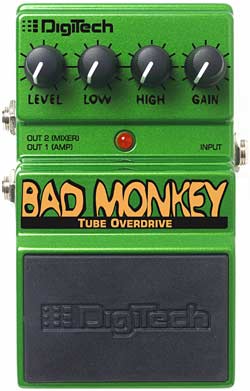
DigiTech Bad MonkeyI’m at once sad and amazed right now. Sad because I’m retiring my TS-808 Tube Screamer (sort of – I’ll get into that later), but amazed that I actually replaced it with a $50 pedal, the Bad Monkey from DigiTech. This pedal was originally touted as a Tube Screamer-like pedal, but as I’ve found, it’s way, way more than that. I tested this with three different amps: A Roland Keyboard Amp for dry output to establish a baseline, a Fender VibroVerb, and of course, my Fender Hot Rod. For guitars, I used Pearl, my blizzard Strat with ’57 TexMex pickups, and my Epiphone ’58 Korina Explorer Reissue. Here are my impressions:

  • The very first thing I noticed was that the distortion that the Bad Monkey produces is very smooth. In fact, it’s A LOT smoother than the Tube Screamer.
  • The distortion is also a bit more subtle in the Bad Monkey than the Tube Screamer. With the TS, even at lower gain and drive levels, it has a lot of obvious grit and grind, and I think a lot of that has to do with the huge mid-range hump that the TS is known for. I think what helps balance that in the Bad Monkey is the fact that you can dial in a bit more lows to fill out the bottom end – something you can’t do with the TS.
  • Speaking of the lows, where many overdrive pedals have one tone control knob, the Bad Monkey has a low and high EQ; that’s right, EQ. This is the feature that really turns me on about this pedal because I can dial in just the right amount of tonal balance to suit my needs for a particular tune. It makes for a very versatile pedal. Mind you, you won’t get that real fat sound if you crank the lows. That has a lot to do with the amp as well.
  • Surprisingly, the Bad Monkey is built like a tank! I’ve had DigiTech pedals in the past, and they just did not measure up to the build quality of Monkey.
But… DigiTech?
 
I know, that’s EXACTLY what I said! I’ve had DigiTech pedals in the past,  and their sounds were mediocre at best and their build quality wasn’t quite there. But the Bad Monkey really blows me away in both areas. Not only does it sound tres excellente, like I said above, it’s built like a tank! Kudos to DigiTech!  
 
Field Test
 
I actually started writing this blog post a couple of days ago, when I first started playing with the Bad Monkey. But I decided to wait because I knew I was going to be doing three gigs this weekend (it’s now Sunday, 2/10), and I knew I’d get a chance to really work with this pedal.  All I can say is that I’m very tickled after playing it this weekend. I used it in all three gigs, and came away smiling from how nice it sounded. What really impresses me the most about this pedal is it’s sensitivity to attack and volume and tone knobs.  With my Tube Screamer, there was always growl, no matter how far you turned the drive knob down. That’s useful for a lot of situations, but it’s not quite as versatile. With the Bad Monkey, you can go from clean to raging simply by rolling your volume knob and adjusting your pick attack. To take full advantage of this, I simply set the Gain knob at 12 o’clock. Set my volume knob at about 5 or 6, then adjusted my amp’s volume for the room I was playing. Doing nothing else, all I had to do was play little lighter to get nice ringing clean tones, then dig in to get some growl. If I need more distortion, it was a simple matter of dialing in more gain from my guitar.
 
Another thing that I noted about the Bad Monkey is that it adds a nice touch of sustain, even at lower gain levels, which was very pleasing to my ears as that helped to thicken up my tone; especially with my single-coil Strat. 
 
 
Okay, what about the Tube Screamer?
 
Well, I don’t think I’m quite done with it, so it really hasn’t left my board just yet. For grinding blues, the Tube Screamer/OCD combo just can’t be beat, and the midrange hump is what sold me on the TS-808 in the first place. I just love it, so it’ll always have a place on my board. But I’ll have to admit that I’m going to be relegating a lot more of the general “drive” duties to the Bad Monkey simply because of how versatile it is.  
 
Where can you buy one?
 
The major online retailers are all selling it for $49.95. But I looked on eBay and found a couple for under $40.00. I got mine at a local gear consignment shop for $30.00! I really lucked out there. In any case, the price point is such that there’s no excuse to NOT check this pedal out. Like me, you’ll be pleasantly surprised!
 
Finally, the DigiTech Bad Monkey is yet another example of getting good tone without paying a hefty price. Granted, in the bargain arena, you have to dig pretty deep to find the gems, but if you’re patient and, of course, willing to dig a bit, you’ll find some gems among the waff and chattle. 


Read Full Post »

GAS Comic

CHECK OUT THE AUTOMATED G.A.S. EVALUATOR I BUILT AFTER YOU READ THE ARTICLE!!!Every tone freak goes through phases of GAS; that is, Guitar (or Gear) Acquisition Syndrome. You hear a sound or lick, or you have a sonic vision of a tone you want to produce, and you’re suddenly overcome with an urge to go and buy that piece of gear that will satisfy your craving. If you’ve been playing for a number of years like I have, you probably have a garage full of gear that you don’t use any longer. You see, the worst thing about GAS is that it never goes away because over time, your playing style and gear needs change. It’s unavoidable. Another fallout of GAS, is that it’s a very impulsive behavior. You might be completely satisfied with your current rig, but something sparks in your brain, and BAM! You’re ordering new gear online or going down to your local music equipment store.So the question is: Is there away to control GAS? Sure. The obvious “controllers” are easy to identify:

  • You don’t have the money – that’s a great control.
  • Your partner won’t let you – I get this all the time, but I have my own “gig-money” bank account that she’s not allowed to touch, and since it gets depleted, I usually end up at point 1 anyway. 🙂

Those are certainly practical ways for controlling GAS, but they operate only on the physical plane. What about the psychological plane? After all, GAS is an impulsive behavior. For that, I’ve developed a series of questions that I ask myself before I press the “Order Now” button, or bid on an eBay item. They’re tough questions that require a lot of thought, but they definitely help to bring me back to earth, as it were; and I’ve avoided a lot of what turned out to be unnecessary purchases. Here they are:

  1. Does this gear solve a real issue right now, or is this something I just want to try out? Solution = +1, Experiment = -1
  2. Am I playing anything right now that requires this piece of gear? If yes give yourself a +1. If no, give yourself a -1
  3. Have I really taken the time to research and evaluate this product and make comparisons to competing products to determine if it’s a right fit for me to integrate into my overall tone? If yes, give yourself a +1; otherwise a -1.
  4. Now be honest: Do I really have the skill to use this gear effectively? Yes = +1, No = -1
  5. If I don’t have the skill, but have answered positively to the previous questions, do I really have the time to put into getting to a level of expertise with this where I can perform in front of people? Yes = +1, No = -1
  6. Am I trying to sound like somebody else with this? No = +1, Yes = -1
  7. Again, be honest: Will this gear truly expand my tonal palette? Yes =+1, No = -1
  8. Will this purchase have a significant impact on my available funds? No = +1, Yes = -1
  9. Finally, do I want pay for this with credit or cash? Cash = +1, Credit = -1, I can afford the monthly payment = 0

Now add up the pluses and minuses. You’ll either get a positive or negative value because there are an odd number of questions. With anything on the minus side, even if it’s a -1, I don’t buy the gear. But that’s just the discipline I’ve placed on myself. For positive values, I will only buy the gear if I score a 6 or 7, and it usually has to be a 7 because I have limited funds. Again, that’s just personal discipline. With respect to the last question, it doesn’t factor (gets a 0) if I’m willing to afford the monthly payment. But my personal philosophy is to only pay for my gear if I have the cash to pay for it.Ultimately, controlling GAS is about personal discipline; having the discipline to not react to our natural proclivity to be impulsive. With this series of questions, I’m not trying to cure GAS at all. In fact, I embrace the fact that we all get GAS. But after purchasing thousand of dollars worth of gear over the years, I’ve come to realize that I’ve got to have some discipline, and take some time to give my purchases a thought, so I can take action based on information, not emotion. That action can either be purchasing the gear or passing on it. I’ve passed on a lot of gear using these questions.Now here’s a sample evaluation for my latest purchase of a pair of THD Yellow Jacket tube adapters:

  1. Yes, this solves a real problem for me in that I need to get into breakup at a lower volume. As it stands, I’ve got to crank up my gain to get a smooth overdrive from my amp, which means a huge jump in volume. Reducing my output to 5W will allow me to do this at a much lower volume.
  2. Absolutely, at all my gigs.
  3. It doesn’t necessarily add to my overall tone as it helps me achieve the tone I want, but at a lower volume.
  4. n/a in this case
  5. n/a in this case
  6. Nope – just a quieter ME. 🙂
  7. This will expand my tonal palette because I can do the hard-driving stuff without having the rafters crash down from the ceiling. This is especially applicable at Church and in my home studio. With recording, I have to wait until the weekend to drive my amp hard.
  8. Little impact. At $100 bucks, we’re good.
  9. Cash for sure. I’ll pay for it with my debit card.

Admittedly, you can probably reason anything away, and I used a fairly simple purchase. But I’ve applied this “reasoning” to my desire to purchase a Les Paul Double Cutaway or a PRS DGT (as of late). In both cases, I scored a -6! No way am I going to buy either of these any time soon.So there you have it: Not a cure for GAS, but definitely a sane and reasonable way to control it.

Read Full Post »

PRS DGT

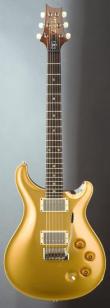
When I think of PRS guitars, there are certain words that pop into my head: Distinctive, gorgeous, player’s dream. Generally, PRS guitars come at a price, but from the guitars I’ve had the chance to play in the past, I know they’re well worth the money.

So here I was perusing through my new issue of Premier Guitar, and came across a great article about the two new PRS models: The Mira (pr. “mee-ruh”), and the DGT (David Grissom Trem). After reading through the interview with David Grissom about how he helped design the DGT, I just had to go to the PRS web site to see a demo. I wasn’t disappointed. Check out the video of J Hayes from PRS giving a demo:

For those of you familiar with David Grissom, you know he’s played a PRS McCarty for some time. At first blush, you might think that the DGT is just a modded McCarty. It’s not. While it has the classic lines of the McCarty, I think it has an even richer sound. It’s kind of a different animal altogether. PRS has used a glossy nitro-cellulose finish on the body, and according to David Grissom, this has a huge effect on the tone.

I have yet to play this guitar, though I will be remedying this quite soon. In any case, here are some standout features that really turn me on about this guitar:

  • The neck length lies between a Strat and a Les Paul. This is actually really cool because the DGT is strung with higher gauge strings (.010 to .049), but with neck length plus the larger frets, bending is apparently very easy on this guitar.
  • Several PRS guitars employ coil taps, but I think PRS has definitely hit a home run with the DGT. I’ve played with guitars that use coil taps in the past, and I’ve typically stayed away from them because the single coil mode sounds way too bright. But with the DGT, you get a thinner tone that has incredible balance and expressiveness without being too bright. This is what appeals to me the most about this guitar. It’s incredibly versatile!
  • I love the narrow, C-shaped neck. That’s always been my preference, and this has it.
  • The DGT also comes with independent volume controls for each pickup. This makes it possible to dial in a variety of sounds by altering the balance of signal coming from each pickup. Yowza!

I want this guitar. Period. But at $2500, it’ll be a difficult proposition to convince my wife that I want yet another axe… Oh well, time to save my gig money!

BTW, here’s DG doing a demo at NAMM 2008. I just love the way he plays – simple, straight-forward, in your face blues.

Read Full Post »

Epiphone 58 Korina ExplorerThis past week, I was paging through an old issue of Guitar Player mag, and noticed a picture of Nancy Wilson [who wouldn’t notice that absolutely beautiful angel of rock] playing an Epiphone Les Paul in an Epiphone ad. Epiphone is a brand that guitarists know, and is considered to be the “bargain” line of Gibson. But I was curious to find out more, so I did a search to see if I could find a history of the brand. It’s an amazing story!

After I read the article, I remembered that I have an Epiphone 58 Korina Explorer collecting dust in my garage. I originally purchased it for my son as a Christmas present a few years ago, but sadly, he’s given up playing for awhile (he’s devoted pretty much all his time to ice hockey, and that’s okay with me). So I reclaimed it for myself. Unfortunately the Explorer has not been touched for quite some time.I think part of my not playing this guitar so much is that I had this bias about Epiphone being a “cheap” brand. But after seeing that ad in GP, and then seeing that a lot of other great guitarists play Epi’s, plus after reading the Epiphone history, I decided to take my Korina out, and give it a whirl. Also, I’ve had this view that the Explorer is more of a pure rocker’s guitar (think Matthias Jabs of the Scorpions), and I was admittedly very intimidated by the legacy of great players who play the Explorer. So it was with a bit of reluctance that I took it out to play it.

As the guitar had been sitting for a long time, it was obviously very out of tune. Luckily it was dust-free as it sat in a great hard case that I purchased for it all these months; and luckier still that before I put it in the garage, I restrung it with my favorite Fender nickel plated steel strings (Fender Super 250s – actually pretty cheap strings, but I love their tone), so I didn’t have to worry about re-stringing the instrument. After a quick check, and re-adjusting the low E-string’s intonation ever so slightly, I plugged the guitar into my rig, and tuned her up. Once I got her tuned, I strummed a chord, and was completely surprised by the “OH MY F^&KIN’ GAWD!” response that came over me.

The sound that this supposedly “cheap imitation” produced was absolutely gorgeous! Oodles and oodles of sustain, a real natural, overdriven tone, and a beautiful punch from the dual humbuckers. I gotta tell ya, I’m absolutely giddy from the sound that this produces! No wonder Michael Schenker has played an Explorer all these years! So let’s go into a bit more detail, shall we?

Sound

First off, this is a very mid-rangy guitar, when you’re using both humbuckers. Setting the switch to the neck position deepens the tone ever so slightly, and turning the volume knob down produces a beautifully clear clean tone. As one might expect, the bridge pickup picks up more of the high-freq tones, but it’s not “tinny” as many bridge position pickups tend to be. Mind you, this is a guitar that is not for the faint of heart with respect to overdriven tone. The Explorer wants to growl, and any volume position higher than 3 will produce breakup. That may be just this particular guitar, but it’s something I totally appreciate in it. As a side note, another reason why I didn’t play this guitar was at the time, I was a bit intimidated by playing with an overdriven tone. I didn’t know how to control it. But now that I do, I have a renewed appreciation for what this guitar delivers.

Did I mention sustain? The Explorer just loves to sing, and I was totally amazed at the natural sustain that this thing has. Adding my OCD to the signal, just enhanced that sustain with beautiful overtones and harmonics. Then punching in my TS-808 beefed up the midrange. While you might think this was overkill, the sound didn’t get muddy at all! It’s pure ear-candy!

Now even though this guitar wants to growl, it responds well to the volume knob. Increasing levels of volume add more drive and chunk, but the cool thing is that it’s very gradual. Some guitars I’ve played have a threshold where drive comes on suddenly at a certain point. That’s tough to control – especially if you’re in the middle of a song. With the Explorer, it’s easy to dial in just the right amount of break-up that you want. What I’ve done is set the volume knobs to about 4 or 5 to get a nice rumble, then let my TS-808 and OCD pedals add more texture. It’s a nice combo.

Finally, a very pleasing feature that I played around with is feedback. It’s even easier to get this puppy to feedback than with my ES-335, which is known for the nice feedback it produces. The feedback from the Korina is higher in pitch than my 335, and is much more subtle. The 335, on the other hand produces a feedback that’s very robust – a bit too much. But the Korina seems to just make the feedback part of its delivery, and it comes across almost like an overtone – nice!

Playability

The neck is narrow with a shallow, C-shaped back. In other words, it’s a very fast neck. I had my Korina set up with a pretty low action, and had the frets ground down a bit for my son. That was a good call on my part because that’s how I like my necks anyway. I don’t like to dig in too much, and rely on bending and rocking to produce vibrato.The rosewood fretboard (which is something I absolutely love), has a real nice feel to it, and begs you to dig in and apply all sorts of vibrato. Like other Gibson-esque guitars, the neck’s position in relation to the body really draws you to play in the upper registers. Contrast this to a Strat, where I have to move the guitar a bit left to get to the upper registers. It’s not bad, it’s just different.Frankly, even though the Explorer has a space-age shape, it’s a very balanced guitar. The pickups are perfectly positioned, so you can rest your forearm on the body a tad bit, and really articulate the strings with your picking hand. Also, I found that because of the position of the pickups, I could get pinch harmonics without moving around much to find the nodes. On the Korina, the strongest-sounding nodes are just in front of the bridge pickup.

Surprisingly enough, the Explorer feels even lighter than my Strat! The size of the body might suggest a heavy guitar, but it’s quite light, and will be very easy to move around with on stage.

Summing it up…

I should really kick myself for my “cheap” bias surrounding this guitar. After all, I chose a $500 Made in Mexico Stratocaster over a $2400 American Standard. Why? Simply because its sound kicked ass over the American Strat. Here’s the kicker with my Korina Explorer: I paid $200 for it, then spent another $100 getting it cleaned and set up. The guy I bought it from said it was a sweet-sound guitar that played much better than what I was paying for it. He wasn’t wrong. I’ve had a hidden gem in my collection of guitars for all this time, and I didn’t even know it!

Read Full Post »

I already wrote a quick review on this cool little box, but I thought I’d provide an update on the DigiTech Vocalist Live 4. Wow! What a tool! I’ve been playing around with it since I got it, and let me tell you, what it does is nothing short of amazing. Throw pretty much any chord at it – this includes “jazz” chords like half-dims, and it’ll create a harmony – ON THE FLY. What I didn’t go into with the last review were some of the features of the Vocalist. I’ll cover some highlights here.First off, it comes with 50 factory presets, but you can also save up to 50 user presets to customize harmony voicing (and several other parameters – 45 to be exact) to your liking. Editing is very easy. Select a preset number that you want, make your edits with a couple of button presses and knob turns, press “Store” and voila! You’ve got your own customized harmony!As far as it sounds, I created a quick recording of the Eagles’ “Peaceful Easy Feeling.” Mind you, it’s not mastered, and I kind of screwed up the solo, but you’ll get an idea of the great harmony that this box creates.The Vocalist comes in two flavors: the 2 or the 4. The 2 can provide up to two harmony vocals, whereas the 4 can provide up to 4 harmony vocals (hence the numeric designations). In addition, the 4 can also act as a mixer, so if you’re a solo player with just a guitar and your voice, you can use the 4 as your mixer. It comes with line-outs so you can hook up a pair of speakers. Myself, I route the guitar signal to my pedal board so I can use my effects then into the mixing board, then output processed vocals directly to the mixing board. Any way you choose to do it, configuration is a snap.Here are some other highlights:

  • Automatic pitch correction
  • Built-in guitar tuner (I prefer my TU-2)
  • Built-in mic pre-amp (so you can use a ribbon mic that needs a pre-amp)
  • +48V phantom power
  • Guitar ground-lift to eliminate hum
  • 24-bit/44.1 kHz audio (very nice)

Whether you play solo or in a band, the DigiTech Vocalist Live (either the 2 or the 4) is in my opinion a must-have box that will add a lot of vocal texture to your sound.

Read Full Post »

Digitech Vocalist Live 4

I know what you’re thinking… this isn’t really guitar gear… BUT it only works by analyzing guitar chords, so it falls squarely in the guitarist’s tool bag. So… what is it? Put simply, the Vocalist Live is a vocal harmonizer. It’s unique in that the processor doesn’t analyze only the notes you sing, it analyzes the chords you play. This makes for much more accurate harmonization. For instance, harmonizing to a Bb in F major, is going to be a lot different from Bb when sung with a G minor.

I do a lot of solo gigs with just me and my guitar. I sing a wide range of songs from all sorts of genres, and a lot of the songs (like songs from the Beatles) sound a lot better with harmony. Now, with a press of switch, I can insert harmonies – live – without backup singers!

The Vocalist Live comes in two versions: Vocalist Live 2 and Vocalist Live 4. I picked the Vocalist Live 4 because it can do 3- and 4-part harmonies, whereas the Vocalist Live 2 does two-part harmonies. In addition, the Vocalist Live 4 can act as a mixer, which eliminates a piece of equipment, which is also a good thing for a solo musician. Not that the 2 isn’t good; it is, and would be appropriate in a band situation. But I myself prefer the more full-featured Vocalist Live 4. Plus, you can interactively activate more or less harmony parts on the fly. Oh so cool..

The vocalist live also has built-in vocal and guitar effects, plus a tuner. The guitar effects will never replace dedicated boxes, but they’re adequate for what they do, and hey, you can always output the guitar dry and still hook up your pedal board (which is what I do).

So if you’re a gigging musician in search of good harmonies, and whether or not you’re solo, the Vocalist Live 4 could be a solution for you!

View the demo!

Read Full Post »

pedal_tote.jpgOkay, yet another product review on a fairly mundane piece of gear, but hey, sometimes you have to be practical!
A few years ago, I was pretty spoiled when it came toting guitar gear around. I was using a Line 6 Flextone III as my amp, and as a modeling amp with all sorts of effects built in, the only thing I needed to hook up to my amp was my floorboard and guitar. That all changed when I moved to a tube amp for performance. All the things that I used to do to tweak my sound were no longer built into the amp! I had to get effect pedals to get the types of sounds I wanted.

At first, I only had a couple of pedals, so just putting them into my guitar’s gig bag wasn’t a problem. Then I got a couple of more pedals, so I started carrying my pedals and cables in an unused large camera bag. Still, it wasn’t a problem. Once I got to seven pedals, it became a problem. At every gig, I’d have to hook up the pedals to each other, not to mention having to hook up my 1 Spot power cable. What once was a five minute affair was now taking up to 20 minutes to get everything set up and dailed in. So I broke down and bought a pedal board.

There are lots of boards on the market. You can get them custom made, or go with fully powered units. For me, my needs were simple. I wanted a board that could carry up to 8 pedals, and I didn’t want a powered board. The reason was that most powered boards only provide 9V power for all the connections, and I have a couple of pedals that can take18V. Also, powered boards run pretty expensive (for an 8 to 10 pedal board, expect to pay close to $200). There are other powered boards that take 6 pedals, but that wasn’t a real option for me. Enter the Gator Pedal Tote.

The Pedal Tote is a non-powered, inclined pedal board made of 8-ply plywood. It’s covered in black tolex, and topped with small loop carpet. It comes with two 1-inch strips of velcro (about 2 1/2 feet all in all) to stick to the bottom of your pedals. I love the sturdiness of this board. The only beef I have with it is that Gator doesn’t come enough velcro for eight pedals. I had to go down to an arts and crafts store to buy more sticky-back velcro in order to attach all my pedals to the board. Not a big deal, just a minor inconvenience.

So how do I like it? I love it! It’s built like a tank, and has made my life a lot easier. Set up and strike are simple, five-minute affairs now.

Read Full Post »

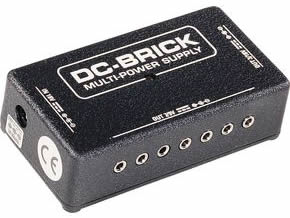
Dunlop DCB10 Brick A power supply? I know, kind of mundane, but if you’re still using 9V batteries, you might want to rethink your power supply needs. Here’s a common situation: You’re in the middle of a set, and your beautifully clean tone starts getting kind of fuzzy. It’s not too bad at first, but worsens as the gig progresses. You look down at your effect pedals, and one pedal’s light seems to be a bit dimmer than it normally is. You realize the battery is going dead. So after the song, you go back to your gig bag to get another 9V. You’re shocked to find that you don’t have a spare!

That situation happened to me this past weekend. I recently added a couple of pedals to my chain, but because my 1-Spot only had 5 connectors, I had to use batteries in my new pedals. The batteries were only a couple of weeks old, so I thought I was safe. Was I ever wrong. I had to rewire my signal chain to bypass those pedals. It wasn’t so bad, but it was a pain in the ass because I was in the middle of a set. After this experience, I decided to look into getting a more robust power supply that could power all my pedals.

So why the DCB10? Simply because as far as power supplies are concerned, I think it’s the best one I’ve ever had! It has 7 9V connections, and 3 18V connections – plenty to power up most boards. What really excites me about this pedal are the 18V connections. I have a Fulltone OCD that can take 9V or 18V power. At 18V, the headroom on the pedal just soars! But I digress… In addition to all the connections, the unit doesn’t introduce any hum. My 1 Spot could get a little noisy, and was a bit of frustration point for me. But the brick makes my chain as quiet as can be. A lot of this has to do with the fact that in addition to being a power supply, the Brick is also a power regulator/conditioner, so you get a consistent current going to your pedals at all times. This also means that you have built-in surge protection, which could be fatal to your pedals.

The Brick is also built like a tank, with a heavy-duty metal casing, so it is definitely a road-worthy power supply. Finally, the Brick can be used with any power source, from 110 to 240 (you’ll have to get an adapter for 240), which means you could gig anywhere in the world and not have to worry about swapping out your pedal board’s power supply.

Price: $190 retail / $99 – $109 street

A note about pricing: If you look for this on EBay, make sure you figure the shipping costs into the total price you pay. A lot of EBay vendors list the Brick for $99, but charge $19.95 for shipping. I bought mine from a local shop for $109 flat. Caveat Emptor!

Read Full Post »

For several years I’ve had a love/hate relationship with E-Bay. I’d gotten burned a few times by dishonest people, so I stayed away from buying really expensive things, save some trinkets that I’d get for the wife. But being a tone freak, and a gigging musician, I’m always in need of gear, either to replace worn out stuff, or add to my tone. As you know, gear ain’t cheap if you buy it retail. But there are some great deals to be had if you look for them, and you have a bit of trust. The trust part was tough for me, especially with EBay, as I’ve had some really bad experiences. But the need for gear has outweighed my reluctance of late, so I’ve decided to go back to using EBay as a way to get new gear.

This year, I’ve bought three things off of E-Bay sellers:

  1. Dr. Z AirBrake Power Attenuator. Retail: $329. I got it for $150
  2. Maxon CP9 Pro+ Compressor/Limiter. Retail: $230-$250. I got it for $150
  3. BOSS TU-2 Tuner. Retail $139/Street $99-$129. I got it for $70.

All in all, I’ve saved around $300 bucks on gear by going this route! I’ve been totally satisfied. But I was also pretty careful about how I went about the purchases. Here are some tips to make sure your purchases are safe.

  • Research the seller as much as you can – don’t make the mistake of ignoring the ratings other people give, especially the negatives. Sellers may have a 98-99% positive rating, but read through the negatives, because some negatives are REALLY bad. If a seller has even a couple of these, and especially if they have not responded to the negative feedback, I don’t even bother dealing with them.
  • Buy only “mint” and “excellent” condition products.
  • I’m reluctant to buy things that don’t have a picture of them taken by the seller – especially guitar equipment. Buyer beware!
  • Don’t be afraid to contact the seller and ask questions about the product they’re selling, and pay close attention to how quickly they respond. I usually give sellers a full day to respond. But if they take more time than that, and don’t have an explanation, then I’m usually reluctant to deal with them. Here, I’m thinking ahead. If I win the sale, how long will it take them to process the order? If they don’t keep on top of their messages, then how will they keep on top of their sales?
  • Power Sellers are usually the safest, but they’re not necessarily the cheapest. Again, look at the ratings and reviews.
  • If you’ve won an auction, don’t hesitate to give the seller a call to settle up and confirm the payment and shipping terms. I’ve saved a lot of time by doing this, and it also puts a voice to the name. It also sends a subtle signal – “I know who you are, and I know how to contact you.” I know that that may sound a little devious, but the way I figure it, I’m spending money, and I want my investment protected.
  • Don’t get caught up on the bidding process! Set a maximum that you will spend, and don’t go over it. Period. With the BOSS TU-2 I won, my limit was $75, and I got it for $70. That’s almost 50% off retail, and not as good as a deal with mail-order, but it still beats the mail-order price with shipping. To set my limits, I check prices on the item my local retailers, then set my limit at 40% off of the lowest local price. This usually means I’ll save 25%+ off mail-order. If my winning bid comes in even lower, then I’ve really gotten a deal. With my CP9 Pro+, the cheapest I could find it locally was $225, and mail-order was even higher at $232. My winning bid of $150 made it a steal! Plus I got free shipping because I won the TU-2 from the same seller, and he shipped both of them in the same box!
  • Finally, be mindful of shipping costs. Some sellers of sub-$50 stuff tack on outrageous shipping costs. For instance, I want to buy a small powered pedal board. Several list the item at $38.99, but add $15-$19 worth of shipping! Another seller is selling it for $49.50 with free shipping. It’s a much better deal!

So, be smart, be safe, and you’ll get great deals on gear on EBay.

Craigslist is another place I look, but I’m even more wary there because there’s no way to research the sellers. So I tend to look at local people where I can just pick up the gear directly from them, and save on shipping – and time.

Read Full Post »

« Newer Posts - Older Posts »