Feeds:
Posts
Comments

I got mildly chided the other day by a friend of mine while we were discussing gear. He said it in a fairly facetious way to mess with me because I’ve always been a proponent of “if it sounds good, then it is good” mentality. We happened to be talking about analog delays and I went off on a tangent about bucket-brigade devices and a bit of the history of the circuit.

“Dude…” my friend interrupted, “Does that really matter if you like the sound?” he asked with a smirk.

I laughed and replied, “In the end, maybe not. But you know me. I like to geek out. Besides, it drives my wife crazy!” We both laughed at that!

Mind you, when I’m talking about specs here, it’s not necessarily about the normal features that you see in the marketing literature, but much more about the minute technical details. For instance, the winds of a pickup magnet or the makeup of an amp’s circuitry, or how the bucket-brigade device came into being.

I’m naturally curious to see how stuff works, so I often take some time to research technical things I wonder about. For instance, I was wondering about the microprocessor or DSP used in the BOSS Katana line that gives the amps their voices. The information I came across in forums and articles is pretty fascinating.

One interesting tidbit was the “sneaky amps” models that apparently are in all Katana amps. These apparently are part of some old code in the firmware that’s based on the GT-100 models that BOSS hasn’t cleaned up yet, and with the right SysEx command, you can expose them in the Tone Studio. Pretty neat.

But in the end, none of that matters. I suppose with a deeper understanding of the technical details it may help in eeking out subtleties while I’m playing, but let’s face it. Only I will know. 🙂

Mind you, I’m saying all this tongue in cheek, mainly because I laugh at myself sometimes when I start geeking out. And perhaps it’s my way of reminding myself where my focus should be and that’s on making music.

Ever since I got my BOSS Katana 50, my world has been turned upside down with respect to what a “good” amp is. For years, like many, I was of the mind that good could only come from a tube amp with just a few exceptions. No way could a solid state amp match the tone, feel, and dynamics of a tube amp. Oh, solid state amps could definitely keep up with tube amps with respect to clean tones, but when you’d get into overdrive territory, the sound would be brittle with very little in dynamics on offer.

But when I first auditioned the Katana 50 in my local Guitar Center, I was blown away. On that fateful day, I was expecting to just get a clean platform to put pedals in front of, but even with the short amount of time I played with the higher gain models – and at low volume, mind you – I knew this amp was something special. I bought it on the spot.

I have since given my Katana 50 to my youngest child and am awaiting delivery of a Katana 100 Artist. And as I wait, it really hit me: No way would I ever had thought to even consider a solid state amp – even just two or three years ago!

Yes, there were Axe FX, Kemper, and the Helix amps/modelers out there, and have been there for several years. But all those were out of my price range, so I just stuck with what I could afford; or to put a finer point on it, stuck with my tube amps. Plus, after my experience with my old Line 6 Flextone III, the thought of spending hours twiddling with software or doing amp profiling just didn’t appeal to me.

But with the Katana 50, the default sounds worked for me. Oh yes, I did do some tweaking in the Tone Studio like unlinking the delay from the reverb, but that was all I did. I’ve been using BOSS pedals for years – not really my primary pedals – so I was familiar with them, and the default settings were just fine with me. And that really was the kicker for me. Roland made it easy for me to just plug in and go.

I really have been faced with a quandary since then: I literally have thousands of dollars invested in tube amps, and now I have an amp that costs a fraction of the price that I’d rather play over my tube amps. And with that thought, I asked myself: What makes this so special?

Compared to solid state amps of old, new solid state amps are also digital; that is, circuitry is controlled by software, or more precisely, embedded firmware on a chip. Old solid state amps had limited firmware, so the sounds they produced were basically a function of the physical electronics. But with the much more sophisticated software of today, the ability to tweak and tune the chips has increased dramatically, producing these great-sounding and great-feeling amps. Definitely not your daddy’s solid state amp!

And the fact that they can be produced much cheaper than a tube amp while providing comparable sound quality and feel and dynamics is a testament to how far technology has come. Digital amp technology has come so far now that I no longer think about the components, when evaluating amps. I just want to know if the amp has a good sound and the feel and dynamics I’ve come to expect from a good amp, damn the technology. And the Katana 50 has just continued to perform for me on all fronts, save recording, which is why I’m moving up to the 100 Artist.

But the first time I did a full show with my Katana 50 where it was really pushing air, I about fell over in shock. Up until that point, I had only used the amp at church. I knew it sounded great at lower volumes (< 90 dB), but hadn’t played it in a real live situation where I could really open up the amp. The big sound that the 50 produced was just incredible! It was full and rich and punched right through the mix when I did a solo. Plus it had sag, or at least the digital equivalent to sag. That was completely unexpected. Right then and there, I was forever sold on it! It just reinforced the idea that the playing field in the amp world is becoming quite level.

Roland is a pioneer in this field (think the Cube line). Yes, there were competitors like Line 6 when digital amps started making inroads to the industry. But Roland was really the first to make the technology accessible, and they did this by limiting options. As I mentioned above, I had a Line 6 Flextone III. Great amp, but I spent more time tweaking it than I did playing it, and that just frustrated me. The Cube 60 that I had, on the other hand, was straight-forward: Twiddle a few knobs and I was off to the races.

And now with the Katana 100 Artist that I have coming to my doorstep this morning, I will have what could be considered the pinnacle of Roland’s digital amp prowess.

But why the Artist as opposed to the 100 which is much less in price? I have a couple of reasons. First, based on what I’ve heard in A/B demos online, the larger cabinet and Waza speaker provide a much richer sound than the smaller cabinet of the KTN-100. Also – and it might be a minor thing to some – the controls are located on the front of the amp. I put my amps on a stand that leans them back when I’m gigging, and making adjustments is a pain when they’re located on the backside of the top of the amp.

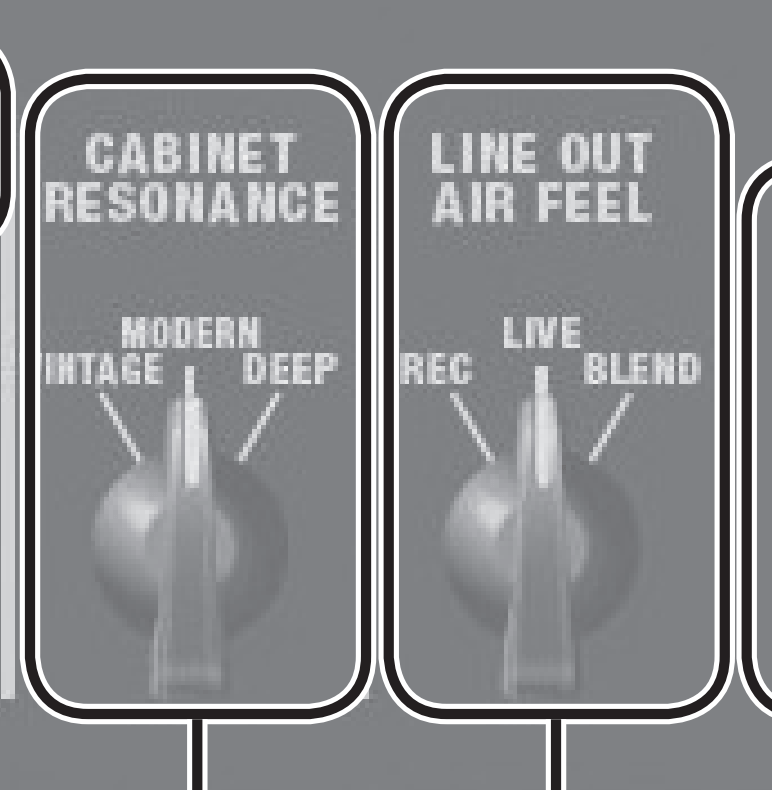
But even more important than those two things above are two controls that are exposed on the Artist that are not present on the KTN-100: Cabinet Resonance and Line Out Air Feel knobs (shown below).

These settings are only available in the software with the KTN-100. And they’re HUGE features for me because especially when I play at church, I will be using the Line Out to go into the board. On one demo of the Line Out feature that I watched, the Line Out Air Feel made a big difference in the sound produced by the line out. And being able to dynamically set the cabinet resonance on the fly is so awesome. If I’m playing a brooding song with deep cleans, I can set to deep. As I said, these had to be set from within Tone Studio, but if I can set them at a venue without having a computer, that’s huge! And it’s what took it over the top for me.

Truth be told, I will not get rid of my tube amps, but I seriously doubt that I will buy more in the future. The amps I do have will be used mainly in the studio when I want a specific sound. I have to admit that I’m a little sad about this because they’ve become such great companions over the years. But there’s no denying that the versatility that the Katana brings to the table just can’t be ignored.

Am I Done with Tube Amps?

I’ve struggled with this question ever since I got my BOSS Katana 50 (BTW… it’s properly pronounced KAH-tah-nah, not kah-TAHN-nah – had a student who sings with me at church who speaks Japanese correct me). With the Katana 50, I got all the sound and dynamics that I needed; all in a super-lightweight amp. It took to pedals incredibly well but had it’s own very good built-in effects as well. And it was plenty loud. Now I say “was” because I technically no longer have the Katana 50. Oh, it’s in my house, but I gave it to my son for his birthday.

Which leads me back to the title of this article…

Last weekend, I played my Aracom VRX22 tube amp at church. All that Plexi mojo was there that I expected. But I have to say that I really missed my old Katana 50, especially with respect to setting up my rig. With my Katana, I had everything dialed in before I got to the church so it was simply a matter of setting the amp on my stand and plugging it into power and plugging in my guitar – all of a minute or so. With my tube amp, I had a lot more setup; not just with the physical connections. I then had to set up the tone and volume and make adjustments to both channels. Not really a big deal, but it did take considerably more time.

The convenience that my Katana 50 brought to the table was huge; enough to make me look for a new Katana, but I’m now looking at getting Katana 100 Artist this time ’round because of the extra versatility – especially the line out that I can plug directly into a board for playing live or an audio interface for recording. At least for a recording, I’ll still use IRs because nothing beats the specific character of a tube amp. But for general stuff, especially cleans, going all-digital is fine.

Back to gigging though, I don’t think I’ll ever go back to a tube amp for gigging. The versatility of the Katana is just too hard to beat; not to mention the simplicity of setup. Plus, it has all the feel and dynamics of a tube amp, but gives me everything I need to gig with in a single unit. And with the Katana 100 Artist (which I’ve just ordered while taking a break writing this article and isnow on the way), I will spend the time to dial in the effects, so my aim is to do away with my pedalboard altogether.

That’s a sobering thought because I literally have thousands of dollars invested in tube amps and accessories like attenuators and pedals; not to mention software like IRs. Part of me feels really bad about relegating my tube amp gear to the studio. But a larger part of me is SUPER-excited about taking advantage of new technology.

People have asked me if I can tell if the amp is digital. The answer is yes. The attack of a solid-state amp is much more sudden than a tube amp, especially with a purely dry signal, so it takes a little getting used to at first. But it’s possible to tame that with some modulation effects, and irrespective of the type of amp I play, I always grease the sound with a little reverb and a touch of delay anyway. But that said, the attack is very similar to the attack of my ’58 Fender Champ. With that amp, there is NO room for error.

Sound-wise though, it’s hard to tell but that really doesn’t matter because it just sounds good. And no one from a congregation or an audience has ever come up and asked me, “Is that a solid-state amp you’re playing?” 🙂

So… great sound? Check. Versatility? Check. Ease of use? Check. I’m in!

Last night, I watched a Dan Rather “Big Interview” episode from 2015 with guest, Carlos Santana. Santana’s music has always held a special place in my heart as I grew up listening to it. The riff from “Oye Como Va” has haunted my consciousness for close to 50 years now, since it came out in 1970.

In fact, “Abraxas,” on which “Oye Como Va” was on was my very first rock and roll cassette! I played that cassette till the text was well worn off and until the tape finally broke. It became one of my chores tapes, blasting out of my boom box while I did chores, especially yard work. And though I’ve had several guitar influences over the course of my playing career, Santana’s guitar playing will always hold a special place in my heart because his sound represents a sound of my youth that has been indelibly etched into my memory.

But more than his sound, it is the man himself who has provided me with so much inspiration. Santana is a very spiritual man. His approach to playing is incredibly spiritual. I connect with that because I’m exactly the same way with how I approach the instrument. I daresay that Santana’s influence though perhaps not overt, has been there implicitly.

Circling back to the interview with Dan Rather, Dan asked Carlos what he would say to someone who wanted to pick up guitar. Carlos simply replied, “I tell them, ‘Look at that guitar. Can hear it playing? When you look at it, does it give you the chills? If it doesn’t, maybe you should think about doing something else.”

When I heard that, I first thought, Damn! That’s harsh. But when I gave it a little thought, I have the same reaction with my own guitars. When I look at my guitars, I get the chills. I can hear their sound in my head and heart without playing them. The way I play each guitar is a little different as I adjust to each one’s personality. I know, that might sound a little weird. But guitar playing is an extremely spiritual thing for me. I connect with the soul of the instrument. It gives me the chills.

So I get what Santana is saying.

Lately, my wife and I have been getting into watching Dan Rather’s “The Big Interview,” not just the new ones, but catching up with past episodes as well. A few weeks ago, we watched the Pat Benetar and Neil Giraldo interview. Wow! What a pair! Great parents and of course, super-solid and successful musicians.

At the start of the show, I shared with my wife that Neil was one of my favorite musicians. She asked me if it was because of his guitar technique. But I told her it was partially that (I love his tone and stage presence), but mostly because he was the type of guitarist who played for the song, not for the tricks and flash; something that I’ve always strived to do with my own playing.

At one point in the interview, he mentioned exactly that; that he played for the song, and he wasn’t all that interested in playing screaming solos. Back in the 80’s, I saw Pat Benetar live a few times. Neil was the rock of the band. Just a solid presence. Oh, he could rock, but he was just absolutely solid and always in the pocket. And to hear him share his ethos about guitar playing totally affirmed why I like him so much.

Even playing acoustic guitar, Neil is just solid. Here’s a video of Pat and Neil doing an NPR Tiny Desk session:

I’ve always had an immense admiration for pocket players like Neil Giraldo. Steve Cropper also comes to mind. My thought is that if you play for the song, it just makes that song much better as a whole.

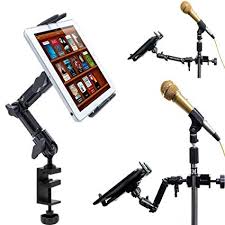
Summary: If you’re a gigging musician that needs to mount a tablet on their mic stand, at least in my mind, there’s no equal to this. With the 4-way joints, you’ll be hard-pressed to find a position you can’t get your table into. This is a very well-engineered accessory!

Pros: When they say heavy-duty, they mean it! The articulating arms are all made of metal and though the mount itself is plastic, it’s made of that high-velocity plastic that is pretty rugged as are all the plastic knobs. The unit even includes a tripod mounting plate!

Cons: None.

Price: $48.95 on Amazon.

Tone Bones: 5 Tone Bones! Tablet mounts just don’t get better than this!

Features:

  • Compatible with ALL 7″ to 12″ tablets (I got it specifically for my Surface Pro 6)
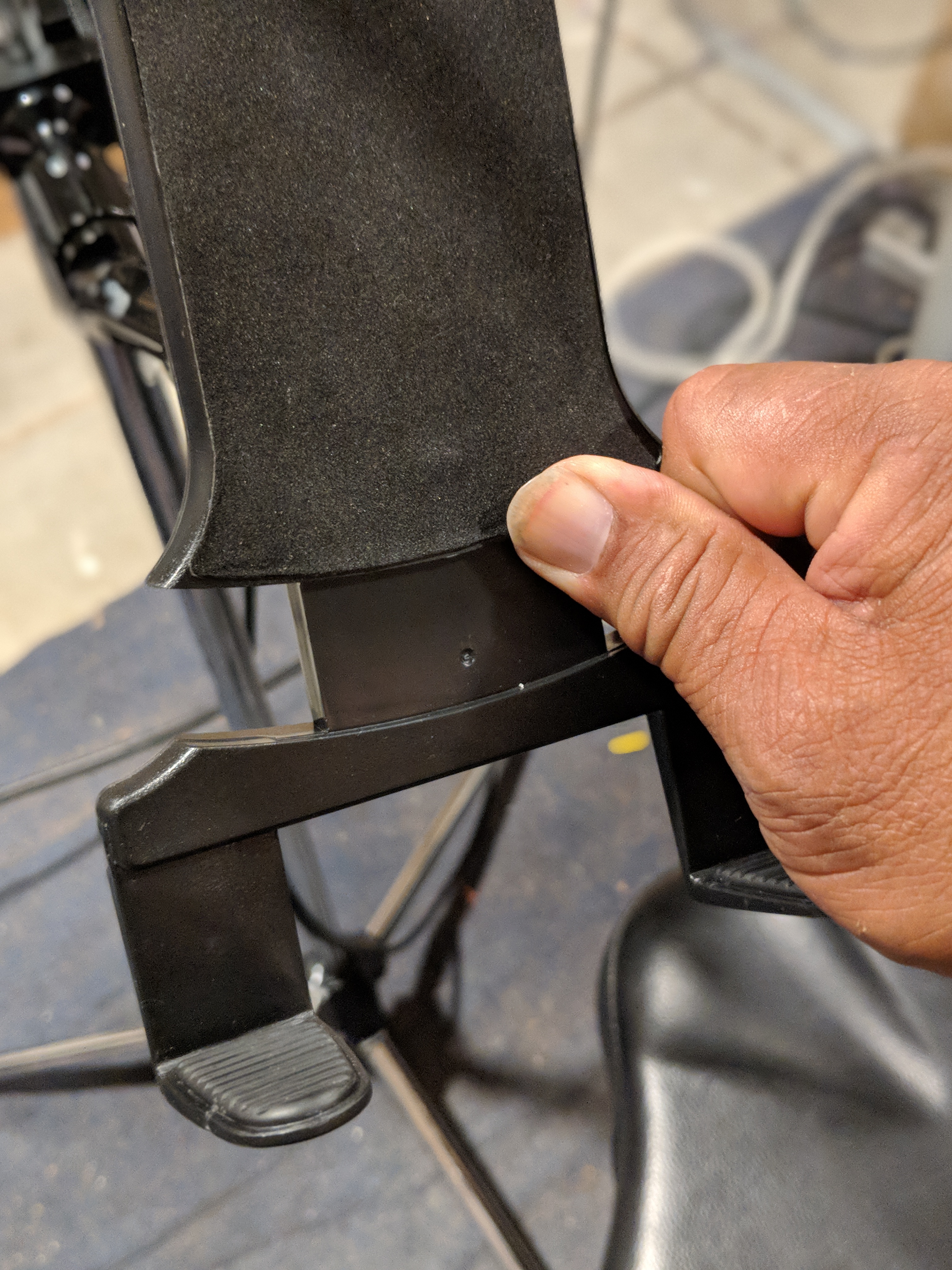
  • Spring-loaded lock design – The internal spring is pretty heavy-duty as well and is very high tension.
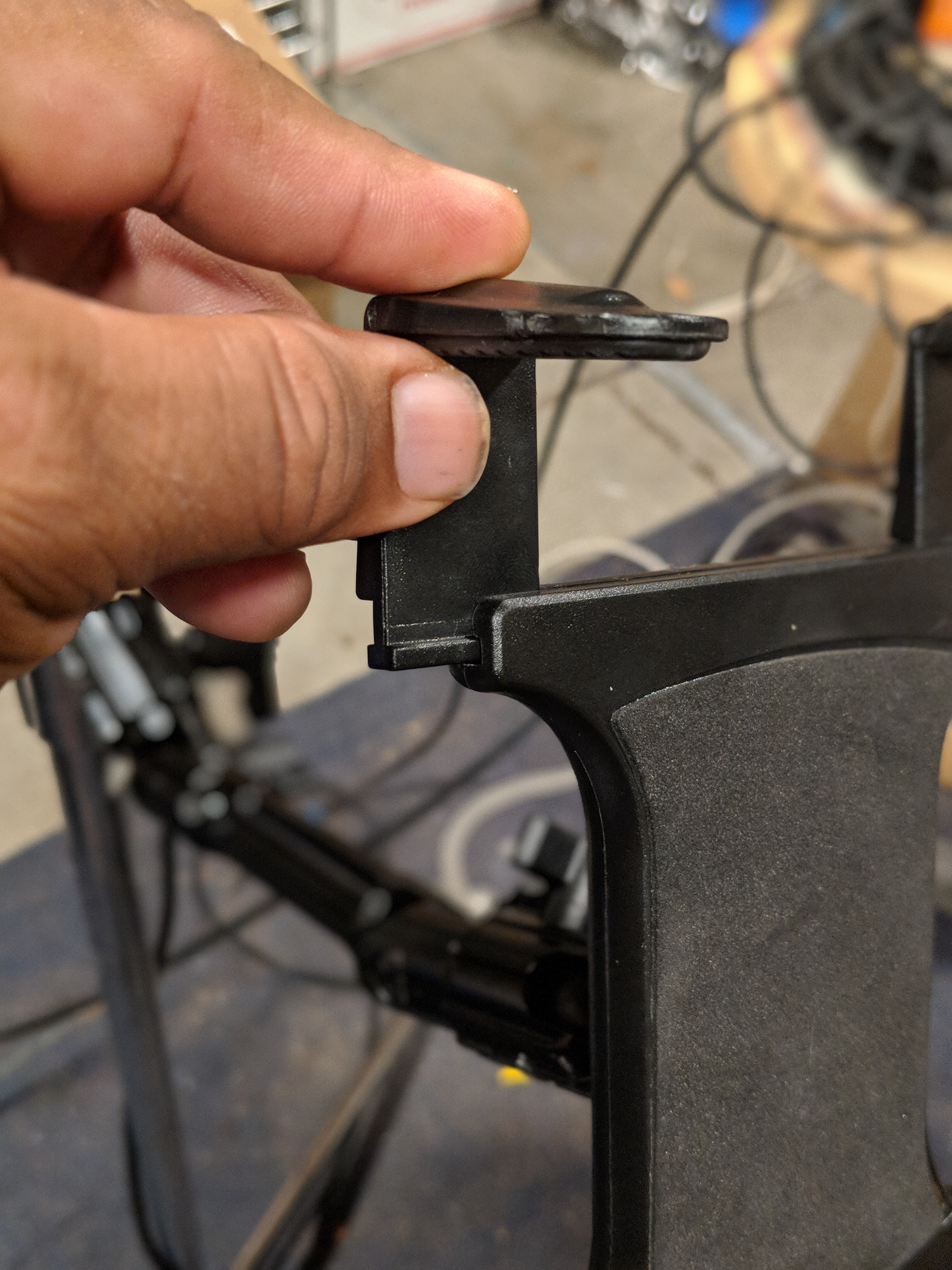
  • Exchangeable slide-in hooks to accommodate all tables. The hooks themselves have ridges to prevent the tablet from slipping.

I’ve spoken about digitizing my charts and sheets in the past, so I won’t belabor that here. The benefits are incredible! But you have to have a way to mount it or use a music stand.

Years ago, when I was using my iPad for my music, I used the IK Multimedia iKlip. But when I switched all my tablet usage to my Microsoft Surface Pro recently, I needed a new mount. IK Multimedia has the “Expand” model that would work, and I was just going to get that. But when I went to Amazon to buy it, I saw the ChargerCity mount in the alternatives. That immediately intrigued me!

So I did a bit of research to see what this tablet mount was all about. A 4-way fully-articulating arm? Holy crap! I thought it was too good to be true, but the reviews on Amazon were incredibly positive. But being naturally skeptical, I checked the product link on ReviewMeta.com to see if the reviews were actually genuine. The rating it got was “WARN” because there seemed to be a lot of fake reviews. BUT that only accounted for 9% of all reviews, which meant that most reviews were genuine. So I pulled the trigger.

Fit and Finish

The first thing that struck me when I opened the package was the weight. All the arm pieces are solid metal. This thing is built like a tank! It arrives in pieces, so you have to assemble it. I took a picture of the assemly that you can see below. But the cool thing is that I realized that I don’t have to use the extension arm, which provides me with tons of flexibility in the setup!

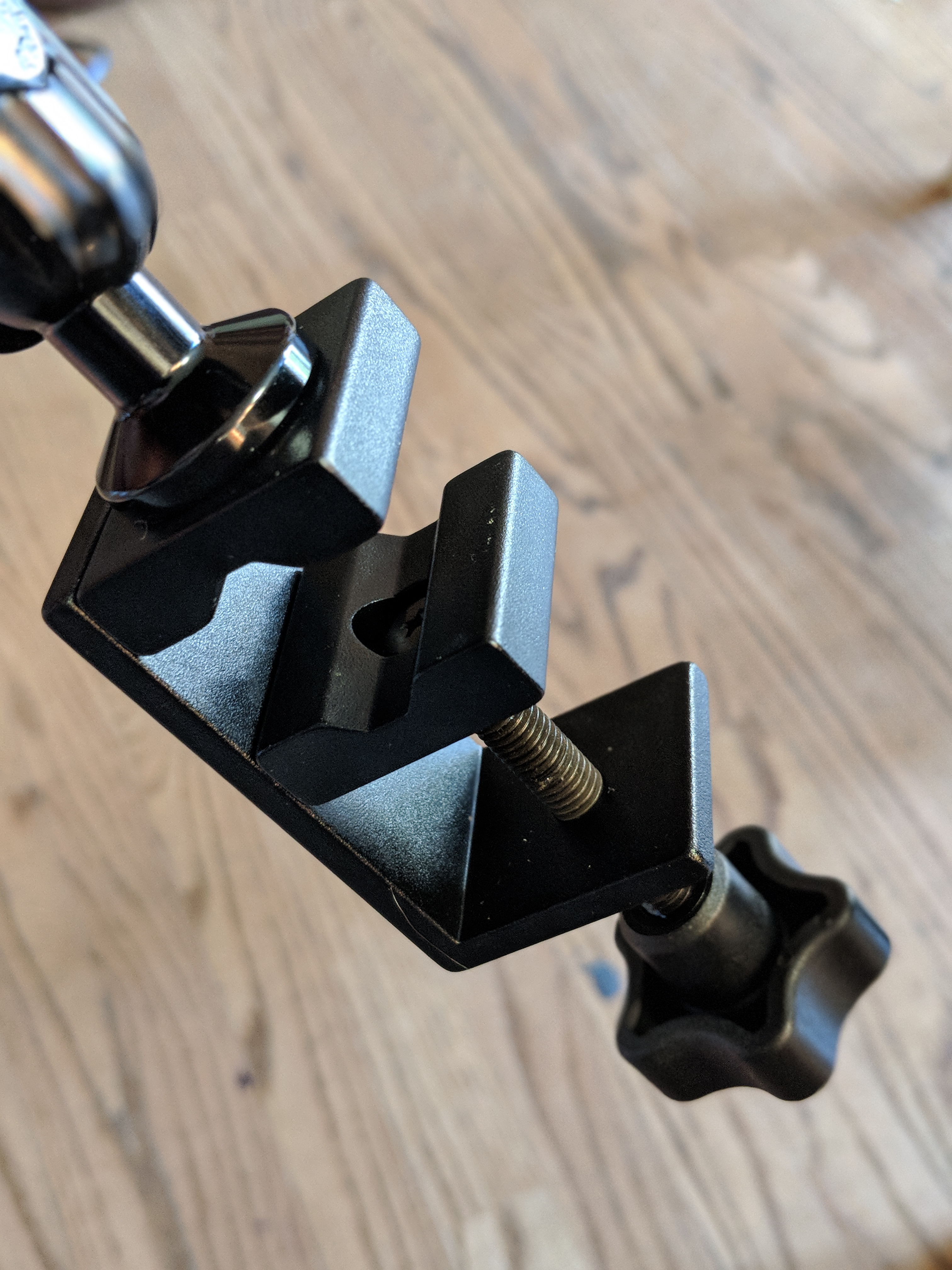
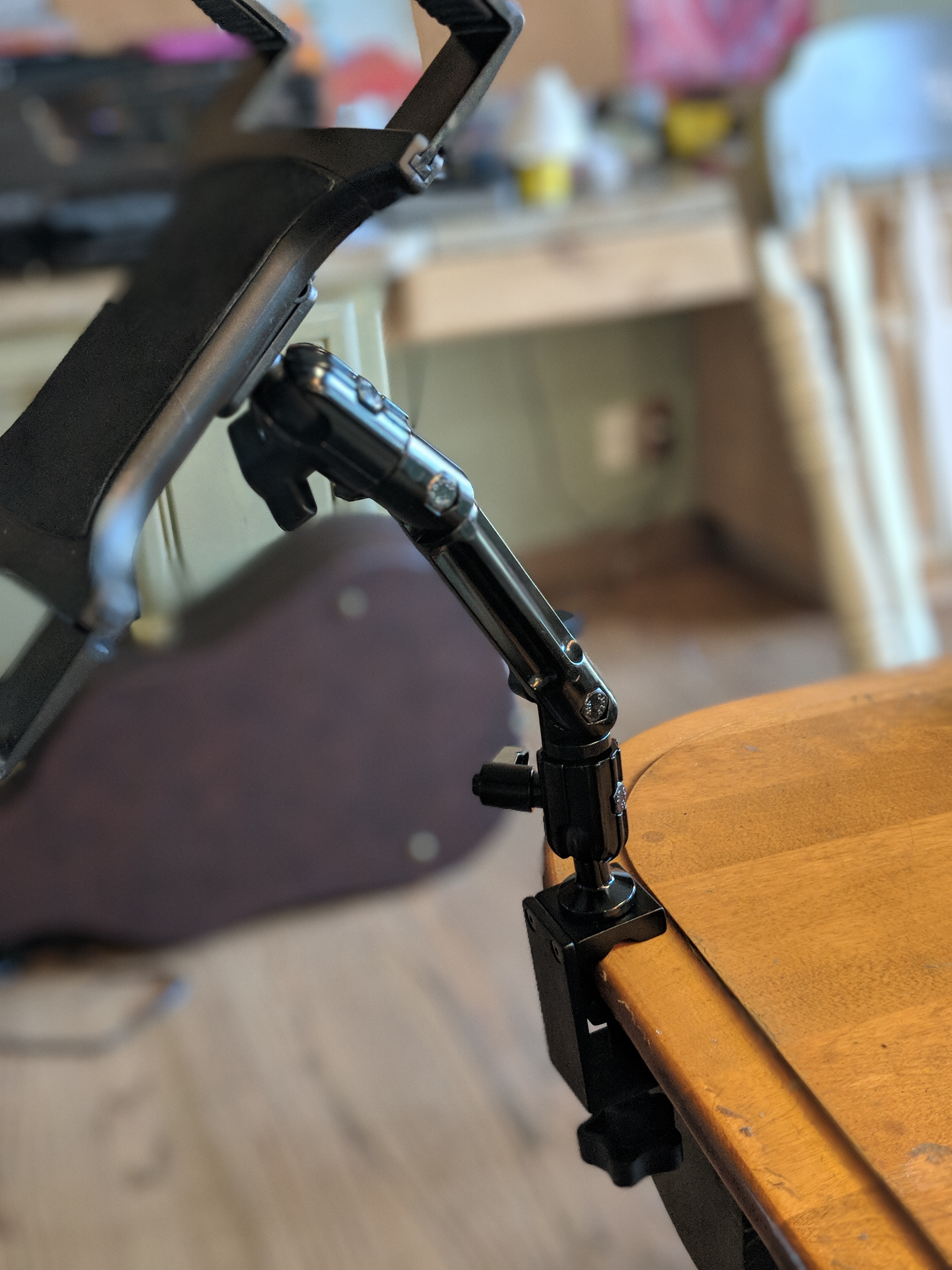
The full arm assembly and the tablet tray are both attached via a ball joint. This allows for easy rotation and tilting. And as far as the clamp is concerned, it was designed to mount not only to a mic stand but to a table as well! How useful is that?

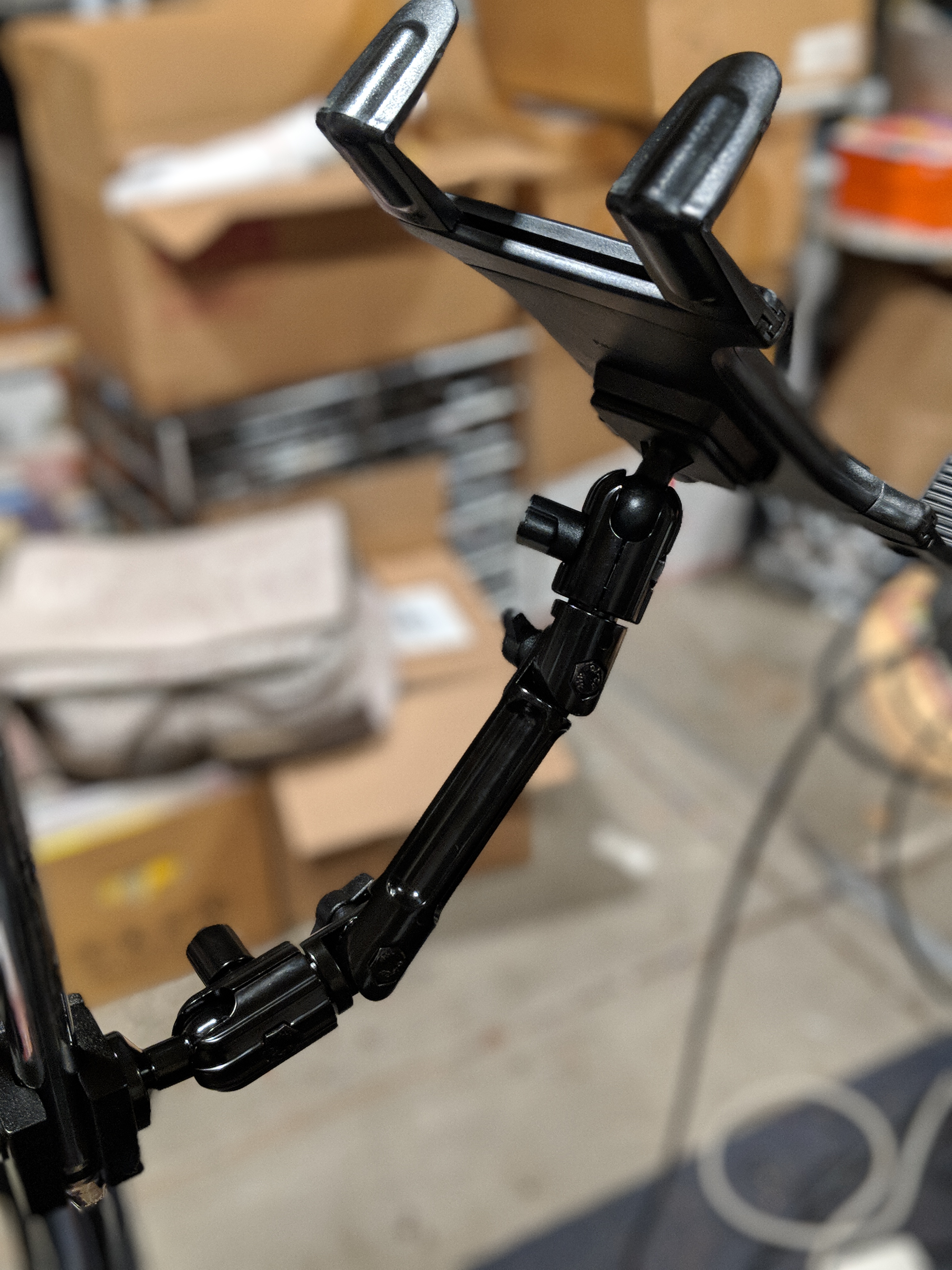
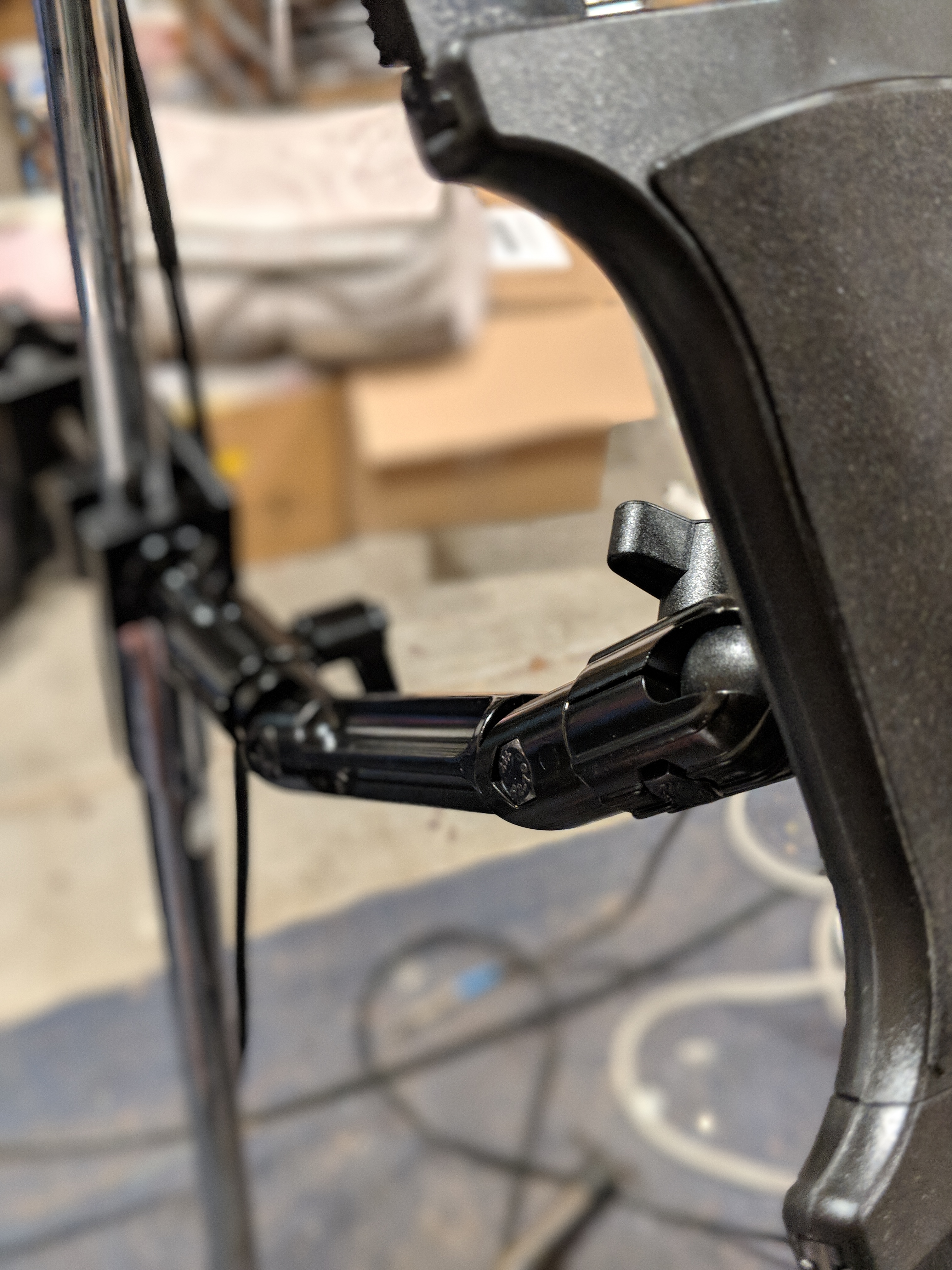
Here are some close-ups I took of the assembled unit:

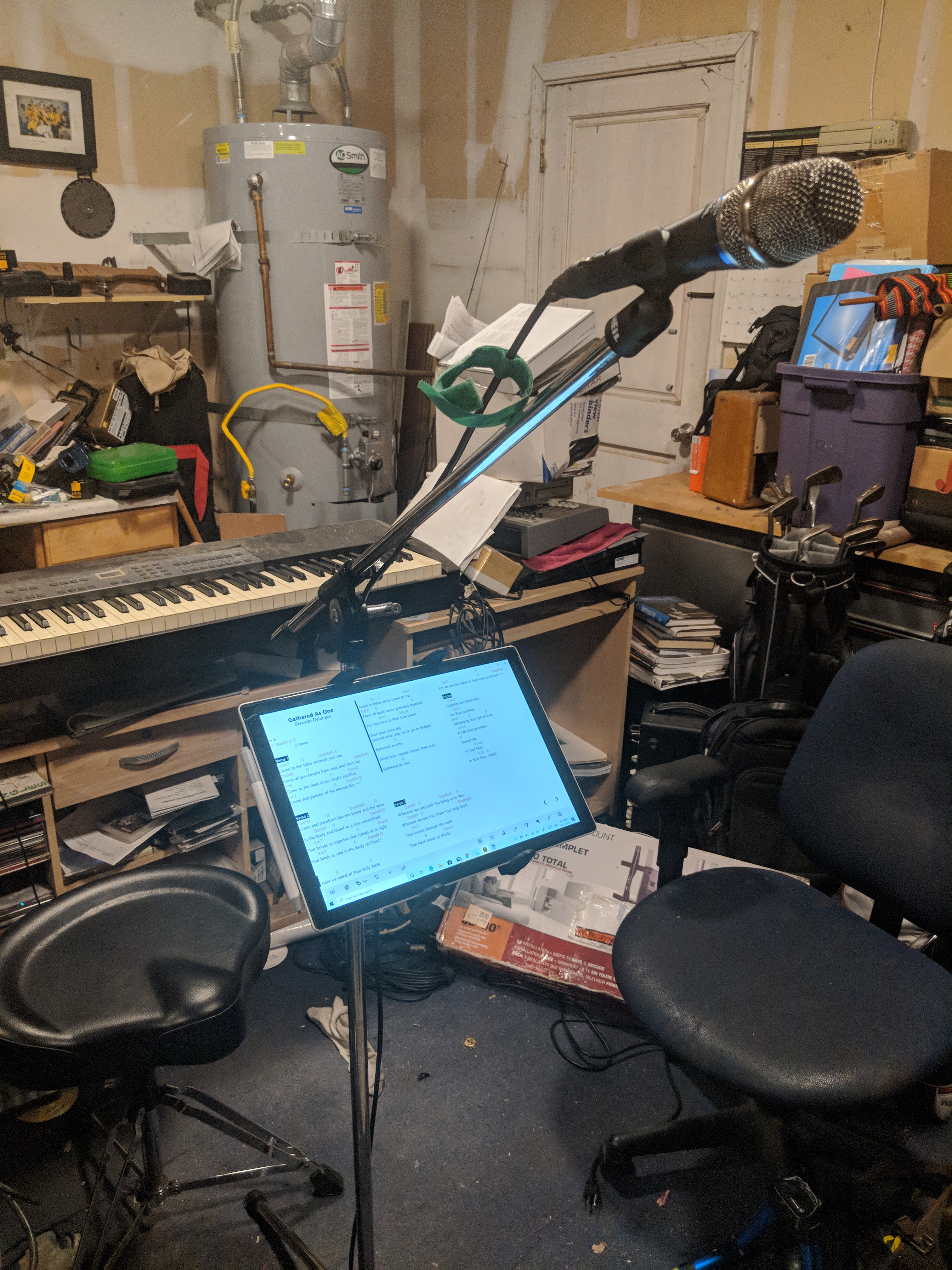
Sorry about my messy garage… But as you can see in the picture with my Surface Pro mounted, I’ve got it set up for my next gig tomorrow. That clamp holds the tablet very well in place. I was a little concerned that it would do a good job, but as I said, that spring is heavy duty and it takes a bit of effort to place the tablet in the mount. In the picture where I’m holding clamp open, it snapped shut a couple of times and pinched my index finger. Ouch!

Overall Impression

Is a tablet mount rather pedestrian and utilitarian? Sure it is. But compared to other mounts, this beats them all hands-down! Being able to mount it to a mic stand or a table and being able to position it exactly where I want it are simply massive for me! With the ability to mount to a table or even a podium will make this really useful for doing presentations as well. I’m excited!

Paying It Forward

When I was 8 years old, my school offered a folk guitar class, run by one of the Jesuit priests. I remember him being a pretty cool guy, playing guitar at our weekly school Mass. It was then that I aspired to be a worship and liturgical musician. Unfortunately at the time, my parents really didn’t have the means to get me a new instrument – and now as a parent I understand – I’m pretty sure they didn’t want to make an investment like that since I was so young and could easily lose interest.

So they asked friends and family if anyone had an extra guitar they’d be willing to lend me, and my cousin Willie just happened to have one. It was a project guitar that he had sanded down so he could re-stain and lacquer, but he never got around to it. So he strung it up and gave it to me. Little did anyone at the time know that I would play it – all the time.

In fact, I played that guitar for 10 years before my dad gifted me with “Betsy,” my Yamaha FG-335 acoustic on my 18th birthday. I played that guitar for almost 20 years, performing on stage and in recording sessions. It wasn’t until it fell over one evening and the neck broke away from the body that I got another guitar, and then an amp, and then another acoustic, and then a better PA, and then an electric guitar, an amp, a few effects, then another electric, then a tube amp, and another tube amp, and more electric guitars and more effects, then recording equipment, blah, blah, blah… Aiiiiyeeee!

But I never forgot about that first guitar and how the kindness of my cousin transformed my life. And even in the midst of my buying frenzy, I always made it a point that I would pay gear forward.

And over the past couple of decades, one of the ways I’ve thinned my herd has been to give gear away. And not crappy gear at all. My thought is that if I give someone decent gear, they’ll more likely play it. Plus, I don’t want them to feel as if they’re getting my discarded items. And if the gear is good, they’ll take care of it.

About 12 years ago, my wife and I used to hire a sweet Mexican woman name Maria to clean our house. She would often bring her teenage children with her to help her. Her eldest child, Eric, used to hang out with me in my garage and listen to me play after he got his stuff done.

One day, he commented, “Man, I’d love to play guitar. My friend has one and I’ve learned some chords. My mom is saving to get me one for my birthday.” He wasn’t fishing for a handout. But I could feel the passion in his voice as he anticipated getting his first guitar.

Not wanting to make his mom feel bad, I just nodded, excused myself, then got up and found her. I told her that Eric told me that she was going to get him a guitar for his birthday. She said told me that yes she was, and Eric was so excited. At that, I asked her if it would be okay for me to give Eric one of mine, along with an amp. I told her that I didn’t want her to look at it as a handout. I could see how much he wanted to play, and as I already had a bunch of guitars, I’d be honored to help him get on his way to being a guitar player.

She wanted to pay me, but I refused and said that it was a gift, and shared how my cousin had changed my life by gifting me with a guitar long ago. The tears welled up in her eyes and she gave me hug in thanks.

When I returned to my garage, Eric was plucking the Fernandes Strat I had been playing. It was a Chinese model, but I had it set up and it played and sounded like a dream.

“You like that guitar?” I asked.

“Oh man! This is great! It plays so easy!” replied Eric.

I smiled then said, “I talked to your mom and asked her if it was okay to give you a guitar. If you like that one, it’s yours along with the amp it’s plugged into.”

The kid almost fainted from the shock. I followed that up with, “But here’s my deal: Later on in life, if and when you have the means, do what I did for you for someone else. I got my first guitar from my cousin, and it changed my life forever.”

A few months after that, we ran into a bit of financial difficulty and had to let Maria go as we couldn’t afford a house cleaner. But several years later, we hired her to help prep our house for a party and I asked about Eric. She told me that after he got that guitar, he practiced all the time and had since joined a couple of bands and was playing regularly. He also still had the guitar I gave him, but was thinking about giving it away to one of his cousins. Hearing that made me smile from ear to ear.

It’s amazing how our lives are changed when we receive certain gifts and it’s even more amazing what we can do to change others’ lives by paying it forward.

Khan Audio Pak Amp

Khan Audio Pak Amp 2-Channel

In the early days of this blog and up until a couple of years ago, I spent a lot of time scouring the Web and trade rags in search of cool gear. I don’t do that nearly as much anymore, due to life and paying college tuitions, so when I do get the chance to explore, I’m amazed at some of the totally cool stuff I encounter, like the Pak Amp from Khan Audio.

Truth be told, the Pak Amp builder, Obeid Khan is someone I’ve known about for a long time. He was the lead designer for the now-defunct Reason Amps company, but he also designed the Ampeg Jet as well as the Crate Vintage Club. So this dude has some serious engineering chops.

I completely stumbled onto this amp; that is, Google stumbled on for me. 🙂 I was on YouTube, watching and Anderton’s video comparing the new Fender ToneMaster DRRI and Twins against the real thing, and on the suggested next videos column to the right, there was a video for the Pak Amp! Google’s algorithms must’ve dug really deep to put my association with Obeid together. I literally hadn’t even thought of the Reason guys in years. Kind of creepy…

Oh well, creeped out or not, I’m glad that I discovered this amp just the same, and I have to tell you, I’m VERY excited about this amp because I’m probably going to get one! No, not just because it’s cool-looking (it is) but I’m actually in the market for another amp as I gave my Katana 50 to my son.

Gave away the Katana? Amazing, right? I LOVE that amp. But my youngest son needed an amp for the acoustic-electric ukelele I got for him, and he’s also picked up the electric guitar, so he needed an amp. Besides, I was pretty much only using the Katana as a clean platform and for that, it has worked marvelously. But this is a perfect amp for my son to start with, and I know he’ll get a lot of mileage out of it.

Honestly, I actually was going to get another Katana, but when I saw the Pak Amp and watched videos and scoured the forums, I really started thinking about what I wanted sound-wise. The Pak Amp ticks off a LOT of boxes for me.

What’s so special about it? Well, for one thing, I’m familiar with the builder and the high-quality stuff he’s made in the past. He’s also a vintage Marshall freak and tuned the amp’s sound and feel to be like a vintage Marshall; something that appeals to me because the vintage Marshall sound is what I love. And finally, and most importantly, he packed some very cool shit into a 9″ X 7″ X 2 1/2″ box! In my older age, rig size and weight matter. At 6 1/2 lbs., and that form factor. I literally could put this in my gig backpack along with my cords and mics and get to my gig.

And though deeper, at 9″ X 7″, that freakin’ box has a smaller footprint than a laptop! Talk about the perfect fly rig amp! You could even mount this sucker on a board! But before I go too crazy, I should probably get into features. The amp comes in two flavors: A single- and a dual-channel. Technical specs are as follows:

SINGLE CHANNEL ($899):

  • Gain and Master Controls
  • (2) 12AX7 and (2) 6AQ5 tubes
  • Bright and Boost Switches
  • Boost foot-switchable

DUAL CHANNEL ($1199):

  • Dual Concentric Gain and Master Controls
  • (3) 12AX7 and (2) 6AQ5 tubes
  • Bright, Channel, Presence and Boost Switches
  • Channel and Boost foot-switchable

SHARED FEATURES:

  • Switchable 9 or 18 watts @ 5% THD
  • Treble, Middle, Bass tone stack
  • Buffered FX Loop Send and Return
  • Speaker response simulated balanced line out
  • Silent operation with an internal 8-ohm load resistor
  • Speaker Impedance selector – 8 and 16 ohm
  • Built-in cooling fan with on/off switch
  • Fully CNC front plate for striking visual aesthetic
  • Made in USA custom Heyboer transformers
  • Compact size: 9″ x 7″ x 2 1/2″ (including knobs and feet)
  • 6.5 lbs. total weight
  • Export voltages of 100V 220V 240V available

If you’re not familiar with the 6AQ5 power tube, it’s actually a fairly plentiful NOS tube that has been around since the late ’50s. It is the power tube that was used for the Reason Bambino and it produces a very nice sound. Obeid discovered it in an old LA2A compressor.

Standard features in the amp are pretty incredible. Having a buffered effects loop is very cool, and I can see how the line out can be incredibly useful for recording (though I have yet to hear any clips on this feature). Obeid also mentioned that because it already uses speaker simulation, you probably can’t use IRs with it. That’s not too much of a problem because I have a solution for that if I want to use an IR for recording the amp.

Dual-Channel Model: More to it than meets the eye?

Now at first blush, based on the online specs, one might be led to believe that the Dual-Channel model just adds a second channel and Presence control. But I just discovered – from downloading the user manual – that the Dual-Channel has an incredibly useful feature that really should be called out. In fact, it is this feature alone that will make me lean towards the Dual-Channel model rather than the Single.

One of the challenges of 2-channel amp, especially when there’s only a single master volume is setting the volume balance between the channels. In my experience, the way this is typically solved is to only use the Master Volume on the second channel. It works. It’s not very flexible, but it works. But with the Pak Amp, Obeid took a different approach. Here’s the tip that is in the user manual:

TIP #2: Start by setting the gain and master levels for Ch 1 (clean). Switch to Ch 2 (dirty) and set the gain and master levels with the outer controls. Switch back and forth and adjust the outer (dirty) master to balance the two channels. At this point the volume balance between channels has been set. You are now able to control the overall volume with the inner master (clean), while maintaining the channel balance.

Yes, that’s right. The Dual Channel model has both dual volume and master knobs. I know that this may seem a bit pedestrian to some, but think about it: If all you have to do is click a footswitch to go from clean to dirty with minimal to no volume change, just how useful is that? This is EXACTLY how I set up my overdrive pedals. When I want a dirty sound, I add just a touch of volume boost.

This, to me, is HUGE: The mere fact that I can raise the Master levels for both channels at the same time means that I don’t have to screw around with my guitar volume knobs. I can use those simply for adding or subtracting input gain. Pretty f-in’ cool and to me, it’s a MAJOR feature that could easily be overlooked. Obeid’s a pretty humble dude, so he probably didn’t think to showcase this feature. But when I get this amp, you can be sure that I will do a video about this feature. It’s the feature that sold me completely on the Dual Channel amp.

Here’s a video of Obeid talking about the development behind the Pak:

And here’s the Pak amp in action:

For more information, check out the Khan Audio website!

I realize that I’m becoming one of those grouchy old men, but you can never accuse me of being an oldster. Though I look fondly back to the old days of rock and roll, and though I really don’t dig the new pop music, I don’t sit there pining away for a return to the old.

But I have to admit that I’ve become increasingly annoyed at some obvious things that I observe on a regular basis. Actually, let me rephrase that. My annoyance hasn’t increased at all. But I’ve definitely become more direct about my feedback. I think it happens to all older people. We’ve been around the block several times and we lose our patience when people just don’t get it.

I admit that I do my best to try to check myself. After all, you attract more bees with honey, but there are just some things, some things that I just won’t hesitate to snap at.

One of those things comes from several guitarists I’ve played with over the years who complain they can’t hear their amps, even in a quiet setting, so they crank up their volume and step all over the rest the band. My usual retort is the title of this post: “Then get a freakin’ amp stand,” or “Lean the amp back so the speaker’s pointing at you.”

Sheesh! I don’t know how many times I’ve heard someone complain they can’t hear themselves. Sometimes yes, it is due to having their volume being low. But most of the time, it’s just due to bad positioning. What… you set up next to the drums? Then move your damn amp! You brought your vintage Fender Champ with the 6″ speaker to the gig? Well, there’s not much I can do for you there… But you could put it on a music stand and we’ll mic it up so you can be heard in the house.

Even with a small amp, there are always solutions. So I guess I’m ranting about the complainers and I’ll say what I say to my teams at work: Work the problem, people! There’s always a solution.

This evening, I was watching “The Big Interview with Dan Rather” (one my latest favorite shows) and none other than Paul Stanley was the guest. I have to admit that I have always admired KISS, not just for their music which I’ve loved since I was a teen, but for their business acumen in creating a brand that has persisted for over 40 years.

I’ve seen interviews with or specials about the band in the past and they were your typical mix of short clips and questions and discussion that really only scratched the surface. But with Dan Rather, the interviews get deep. Dan asks pointed questions and he has this way of getting people comfortable enough to open up and spill their guts. It’s rather amazing, and I love watching the show.

In one particular segment, Dan commented that many people would consider Paul Stanley to be lucky. But Paul replied with something VERY profound:

The harder you work, the luckier you get.

Whoa! Mind blown! Not because it was some revelation, but because it is something by which I live every day of my life! To have heard that from Paul Stanley is an incredible affirmation.

Just recently, I was speaking with a fairly junior software engineer about the things I’ve done and been involved with over the course of my career. At one point, he remarked that I was lucky to be able to do all I’ve done. But I immediately responded that it wasn’t luck. I worked hard to develop my talent and skills to where I created opportunities to do those things.

And the same thing goes with playing guitar – or just about anything in life – the harder you work, the more opportunities open up.

But let’s be clear: Hard work doesn’t mean toiling and grinding; though admittedly, it can seem like that at times. Hard work is the willingness to make an investment in time to develop your craft. Hard work is putting yourself out there. Hard work involves being open to opportunities that might even seem beneath you. It’s all part of the learning experience. It’s what creates luck.

I did a weekly, two-night gig at a local restaurant for almost 18 years up until the restaurant closed down recently. My fellow musician friends would say I was lucky to have that gig. I was grateful for sure, but they also knew that if I wasn’t gigging, I was playing at home for at least an hour every single day. I was putting in the time.

I also play and lead music for one of the services at my church. People have remarked in the past at how it all seems to be easy for me. What they don’t realize is that I spend most of the day leading up to rehearsal going over all the music and coming up with all the arrangements and writing songs when appropriate. Again, it’s an investment in time. It’s effortless because by the time I get to the church, I’ve got everything down cold.

You see, I’m firm believer in making my own luck. When I decide to pursue something, I don’t even give it a second thought about putting in the time it will take to get me to where I’d like to be. And even when I achieve a goal, I keep on developing my skills to get to the next plateau and so on and so forth. And in the process, better and better opportunities present themselves.

Especially for you young folks, if you want to become a professional musician or a rock star. Go for it! There’s nothing holding you back, and though others will say it’s impossible, just keep at it. They can’t make your luck for you. You make your own luck!