Feeds:
Posts
Comments

Got this press release this morning:

GIBSON INTRODUCED three new guitar collections at an event in Nashville on April 29: the Original Series, the Modern Series, and the Custom Shop Original Collection.

Gibson’s Original Collection evokes the guitar maker’s “golden age” in the ’50s and early ’60s. Gibson Chief Merchant Officer Cesar Gueikian explained, “With this classic line we are paying tribute to our iconic past, bringing back the guitars which shaped the sounds across all generations and genres of music.” The collection includes faithful reproductions of the Les Paul Standard ’50s; Les Paul Standard ’60s; Les Paul Special in TV Yellow; Les Paul Junior in Tobacco Burst; SG 61 Standard with factory stop-tail; Maestro and Sideways vibrolas; SG Special and Junior; classic ES-335 Figured and DOT; Firebird; Flying V; and Explorer. For the acoustic market, the collection also includes J-45, Hummingbird, and J-200 models.

The new Gibson Modern Collection builds on Gibson’s tradition of innovation, incorporating in-demand features such as lighter-weight bodies, push-pull systems to switch between pickup configurations, innovative slim-taper necks with asymmetrical profiles, and shaved heels for easier access to higher frets, as well as improved sustain and stability. The Modern Collection includes the Les Paul and SG Modern; Les Paul Studio and Tribute models; new ES-235 and modern versions of the ES-335; Flying V and Explorer B-2; and modern Hummingbird, J-45, and J-15, as well as the Parlor acoustic models.

With the Gibson Custom Shop Original Collection, the company “offers the pinnacle of craftsmanship, quality, and sound excellence. Each instrument celebrates Gibson’s legacy through accuracy, authenticity, and attention to detail,” said Gueikian. “This year we celebrate the 60th anniversary of the 1959 Les Paul Standard, the holy grail, with our most historically accurate re-creation of the most iconic guitar in history.”

What’s great about this is that for years, Gibson didn’t clearly segregate the different products into specific groups. They just called certain product lines “Traditional” or “Tribute,” and being absolutely unclear as to what the product lines actually represented; leaving it up to the consumer to do their research as to what was the most appropriate guitar. It confused, and frankly, pissed off a lot of people. Being a longtime Gibson fanboy, I could only shake my head and sigh, wishing the company would get their shit together and help players in their decision-making process.

I realize that there will be some people that will say that nothing has really changed. The guitars are still all the same. But you have to realize that by creating groups in their merchandising, it makes it so much easier to separate the guitars in their catalog, be it online or hard copy. It used to be so daunting to go to the Gibson site because they lumped everything together. Now it’s so easy to see the guitars in the collections – it’s much more mentally manageable.

Kudos to Gibson for finally wising up!

I had a little chuckle this morning. I went into my garage, looking for my Ibanez TS-808 overdrive in one of my pedal drawers. I went to my overdrive drawer and looked at all the different ones I have. That’s when I chuckled. I looked at some of them and had a WTF moment. I had no idea why I got some of them in the first place.

One for sure I bought on pure impulse based on forum discussions. Another was because I heard a dude using it live and loved his sound. But I never could bond with it (goes to show it’s the whole signal chain and not just a component). But some of the others? I just scratched my head and asked myself, WTF was I thinking at the time? I seriously had NO idea why I bought them.

And maybe that’s the point. The fact that I don’t know why I bought some gear is kind of an indicator that I probably didn’t put too much thought into the purchase of that gear. But for all my really major purchases, I literally took months and sometimes years before I pulled the trigger. I put a lot of thought into those purchases. I did a lot of research. I talked to a lot of people.

But that gear that I don’t remember? Not so much. It most probably was a compulsive buy. And that’s the danger of being a gear slut. We are extremely prone to compulsive spending. I’m so much better at it now and don’t give in to my whims, however strong. But I know of guys who’ve literally accumulated truckloads of gear. One, in particular, wasn’t even in a band! He just hoarded all sorts of guitars amps and pedals!

He passed away tragically, and my buddy purchased all his gear. It took two full-size car transport trailers and the bed of an F-350 pickup to haul all his gear away. When I saw all the gear, my jaw dropped. There were dozens of amps, hundreds of pedals, an insane amount of guitars. It was like the dude had a shop all his own!

Obviously, the dude had hoarding issues. Once I saw all that gear, I resolved to never get to that point. I thought I had a lot of gear at the time, but despite filling up half my garage, it didn’t even come close to what this guy had amassed.

Still though, looking at those pedals was a great reminder. I need to keep my impulses in check. I don’t want to have that “WTF” moment again!

Stupid Gear Myths

Over the years that I’ve been writing this blog, I’ve spent a lot of time in shops and in forums, and I’ve heard some really stupid or uninformed opinions. I thought I’d share some of the juicy ones.

Tonewood Makes All the Difference in the World

Well… kind of…

I realize that this is a point of contention, but the only time tonewood makes a significant difference is with acoustic guitars. A spruce top on a guitar will sound different than the same model with a cedar top. A rosewood body will sound different than mahogany or walnut or koa.

But with an electric guitar? I will submit that wood has an effect on tone in that a different kind of wood resonate differently from another, thus affecting the vibration of the string. But with electric guitar, wood is just a part of a combination of things that affect a guitar’s tone. Bridge, nut, pickups, strings, amp, etc. all contribute. So whereas with an acoustic, wood plays prominently in how a guitar sounds, with an electric guitar, it is only partially responsible.

Fretboard Woods Sound Different

I know, more on the wood thing, but this is something you hear – a lot – and it deserves its own section. Fretboard wood has mostly to do with feel and very little or nothing to do with sound. My personal preferences are rosewood and ebony. I love rosewood for that “woody” feel and ebony is like playing on a smooth sheet of ice.

That said, one could argue that the feel makes you sound different because you feel comfortable. That’s actually valid, but stand two of the same model guitars side-by-side with different fretboards, and they’ll sound the same.

Cheap Guitar Cables Are Just as Good As Expensive Ones

‘This one is actually a bit of a trick. The actual factor is capacitance. It’s just that most low capacitance cables do indeed cost more than your run-of-the-mill cable because to achieve the type low capacitance that opens up the highs (which low-cap cables are known for), cable manufacturers tend to use higher quality material.

But there is also a bit of truth in the “myth” and it depends entirely on what you’re after in your sound. For me, I use regular cables – in fact, I use inexpensive cables constructed at a local music store – simply because my entire electric rig is set up to be on the bright side. These higher capacitance cords help tame the high frequencies in my signal. I have some low-cap cables, but I only use those for my acoustic guitar, and only when used with my acoustic amps. I use a regular cable when plugging into my Fishman SA220 SoloAmp PA because it’s a little on the bright side.

So “just as good” is kind of relative…

Vintage Gear Is Better Than Modern Gear

I will submit that there’s a certain “mojo” about vintage gear. Hell! I have a ’58 Fender Champ. But here’s the thing: Vintage gear is fragile, especially if it still has its original parts. My Champ still had the original oil caps when I got it. But I had to get them replaced with new ones because they leaked and I was getting shocked when I touched my strings. Yikes!

Not only is vintage gear fragile, quality varies wildly because so much of that old gear was completely handmade. The only “gear” that I can actually say is better than modern stuff is NOS tubes, especially the mil-spec tubes. Those were built during a time when almost all electronics were valve-based. Manufacturers got real good at building them.

Boutique Gear Is Better Than Mainstream Gear

Sometimes, boutique gear is just more expensive. Take, for instance, overdrive pedals. I have a few overdrive pedals that are merely hand-made reconstructions of one of the TubeScreamer versions. I got them thinking that they’d somehow be so much better than my trusty Ibanez TS-808, addressing some odd discrepancy in the original circuit. But truth be told, while these overdrives certainly sound a little different, the difference is so minuscule that it almost doesn’t matter, and at high volume in front of an audience, the ONLY person who’d be able to tell the difference is ME. 🙂

On top of that, quality control varies wildly between builders of boutique pedals, especially if the builder is just a single guy. Paul Cochrane, who makes the Tim and Timmy pedals puts out really high-quality stuff, as does Dereck Tabata of Tone Freak Effects (btw, both my Timmy and Abunai 2 have been through literally thousands of gigs and nary a problem other than tightening loosened knobs). But I’ve purchased pedals from other single-man outfits where I had to get two or three pedals before I got a decently working one.

On the other hand, what you can rely on with mainstream brands like BOSS is superior quality control. Their shit just works right out of the box.

Hand-wired Gear Is Better Than PCB-based Gear

Not necessarily. A perfect example of this is the Mad Professor Deep Blue Delay. I have an original, hand-wired version for which I paid over $300. A year later they came out with a PCB version at just over half the price I paid and guess what? I can’t tell a bit of difference in sound and dynamics! Granted, they didn’t have a PCB version available when I got mine, so if I wanted one, I’d have to get the hand-wired version – which I did. But if the PCB version was available, I would’ve just gotten that one.

All that said, in the case of amps, hand-wired amps may not necessarily be better, but there is a certain “mojo” about them. Typically, the circuits are fairly simple and uncomplicated. I look at the wiring for my ’58 Champ, and there’s just not much there. But it sure has a fantastic sound. But it’s not better, per se. It’s different. Frankly, for safety’s sake, I’d probably get a reissue had I to do it all over again (though I don’t know if I’d be willing to part with $1000 for a Fender reissue).

A Low Wattage Amp Can’t Keep Up with a Band

This is the biggest hunk of BS I ever heard! I particularly get annoyed when I hear sales guys say this. I’ve been in a number of bands over the years, and I have always used low wattage amps. While I can’t get super high-gain out of them, the classic rock and reggae I play don’t need it. It all depends on the style you play, how you position your amp, and your sound reinforcement. But if my word’s not good enough, tell that to Don Felder of the Eagles who uses a Deluxe Reverb at 20-Watt and a Tweed Deluxe at 15-Watt, or Jeff Beck who uses a Champ and has monitors on stage to hear himself.

You Should ONLY Use True Bypass Pedals

The general thinking is that true bypass pedals are somehow better-sounding. But that’s a bunch of hogwash, and it’s a lot of hype that manufacturers have used. The plain fact of the matter is that you need some sort of buffering to account for signal loss over a long cable runs. Some very popular pedal manufacturers like TC Electronic have consciously chosen to build their pedals based on buffered circuits. I have several TC Electronic pedals. No tone sucking there…

And here’s my all-time “wanker” statement:

If You’re Just Starting to Play Guitar, Buy a Cheap One

This one annoys me to no end, and seeing a similar suggestion on a forum actually inspired me to write this article. First of all, the person who says this is projecting their own values on someone else’s purchasing decision, and they have zero knowledge of that person’s financial position. Secondly, a cheap-ass guitar is usually super-hard to play and that can be discouraging. Thirdly, a more expensive guitar will typically have better action and much better sound; both of which will help inspire the beginner to build their skill. I realize the suggestions are well-intentioned, but to me, it’s just bad advice. Besides, if someone buys a more costly instrument, chances are they’ll be aware of the fact that they’re making an investment, so more likely than not, they’ll stick with it.

I know, I’ve probably opened a can of worms with these things. But no worries, I’m wearing my virtual protective cup! 🙂

Truth be told, I’m a huge reverb fan. I’ve been using my trusty TC Electronic Hall of Fame for a few years now, and it has never let me down. But that said, I only dial in enough reverb to help grease the wheels and smooth out potential harshness. And I always use a relatively short decay because I don’t want the reverb effect to take over my sound. Like I said, just enough to grease the wheels.

But I’ve played with other folks who slather on the reverb; to the point that there’s so much reverb in their signal that the only way they can be heard in the mix is if they turn up their volume. In some cases their tone is okay, but most of the time their tone is muffled and muddy and ick! When I hear that, I stop the music and tell them to dial back their reverb because they sound horrible. I don’t mince words. Too much reverb has the equivalent effect on me of nails scratching a blackboard.

Admittedly, I used to be the same way. Reverb adds a bit of a sustaining effect, and it can help hide your mistakes. Back in the days when I was just beginning, reverb helped me cover up a lot of the shit. But that’s really the problem. Whether or not you’re conscious of it, reverb can become a serious crutch.

I think that part of the issue for people using too much reverb is that they use the same setup live that they use at home. To their ears and without the context of other instruments, it probably sounds just fine. But when you play live, it’s a different story. There are other instruments with which to contend. There’s also the room in which you’re playing.

Another thing, and probably more important than setup is that those players who use too much reverb don’t fully trust their fingers. Decades ago, when I realized that 99% of my expressiveness comes from my fingers, I stopped dialing in so much reverb. I had all the sustain I needed in my fingers. The reverb was added to provide some smoothness. That’s it.

Trust your fingers. They’ll give you all the sustain you need.

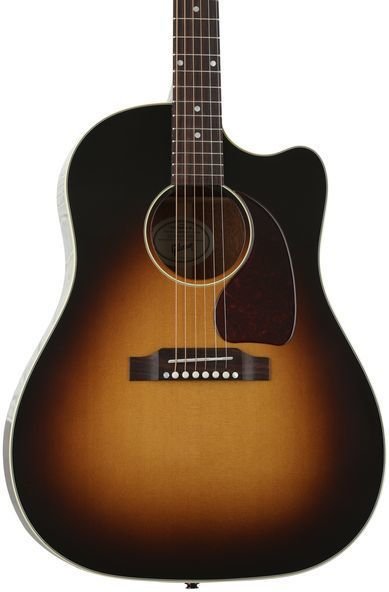
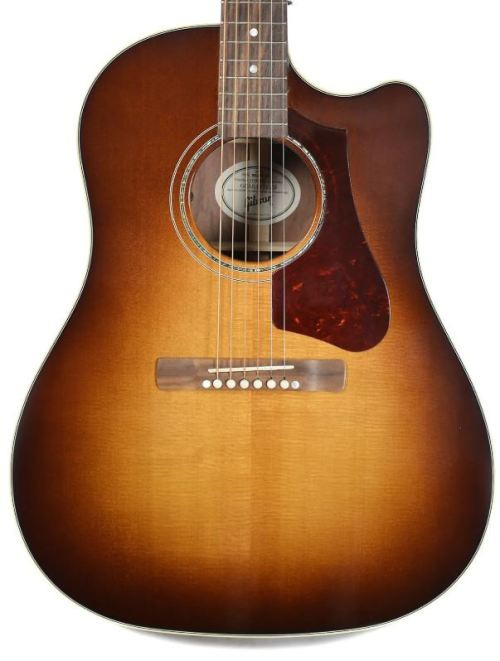
Summary: This has all the classic, balanced mojo of a J-45, but in a thinner, “jumbo” body. And though some might consider it heresy that it’s a cutaway, having reasonably easy access to the upper frets makes it so nice for playing solos.

Pros: Fantastic, classic J-45 tone that’s expectedly just a little brighter than the original Dreadnought – more midrange. This guitar has a full, articulate voice that the Sitka Spruce top projects in a BIG way.

Cons: The ONLY con I have is for the LR Baggs Element piezo pickup that comes installed in the guitar. But I would give negative marks to any guitar that has just a piezo. But that said, the guitar sounds okay plugged into an amp. But as with any piezo, plugged directly into a board or into an interface, the sound is lifeless.

Features:

  • Body Style: J-45
  • Back: Walnut
  • Top: Sitka Spruce
  • Bracing: Traditional Hand-Scalloped X-Bracing
  • Binding: Multi-Ply Top, Single-Ply Back
  • Neck: Two-Piece Maple
  • Neck Profile: Advanced Response
  • Nut Width: 1.725”
  • Neckjoint: Compound Dovetail Neck-To-Body Joint
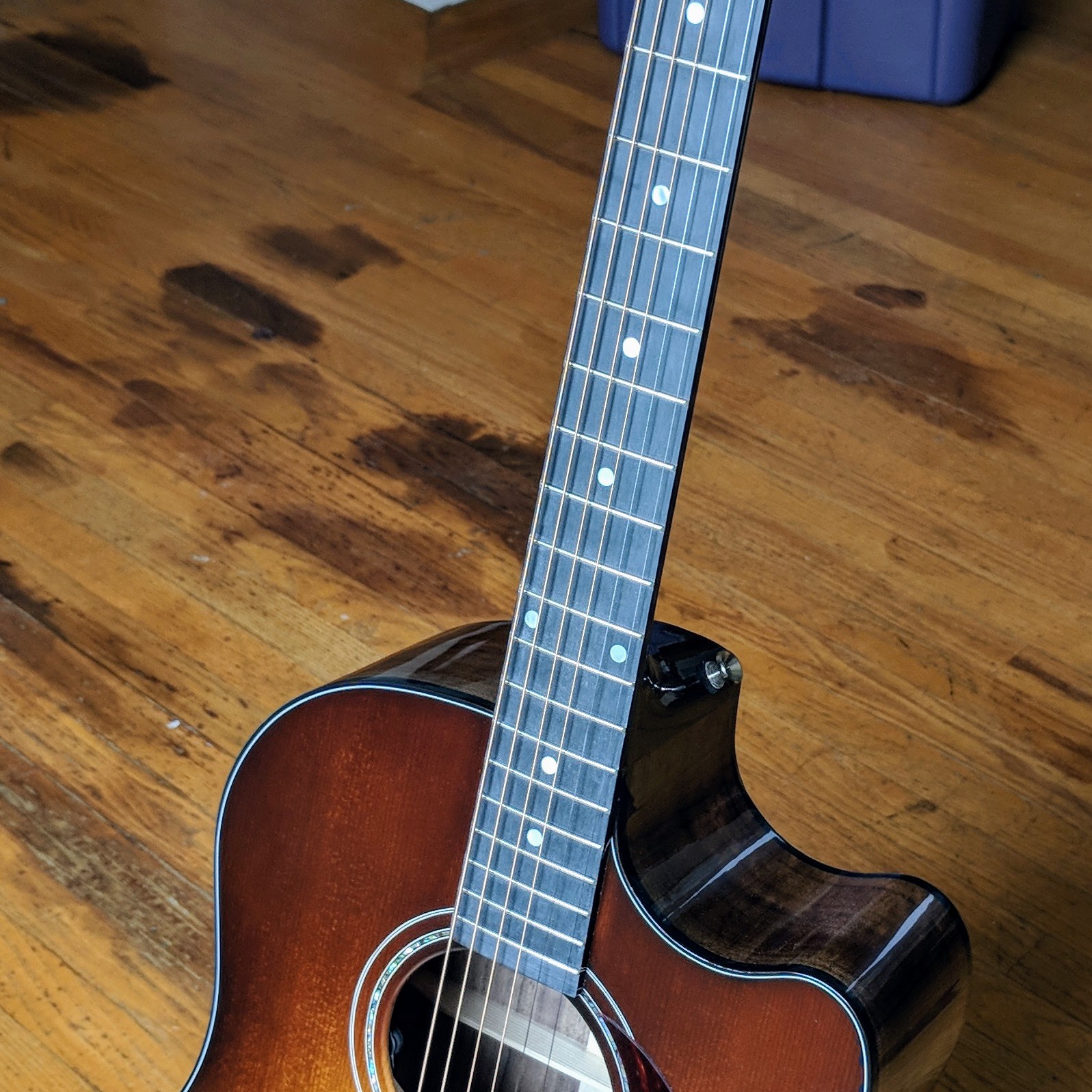
  • Fingerboard: Richlite
  • Scale Length: 24.75”
  • Number of Frets: 20
  • Nut: Tusq
  • Inlay: Mother-Of-Pearl Dots
  • Bridge: Traditional Belly Up, Richlite
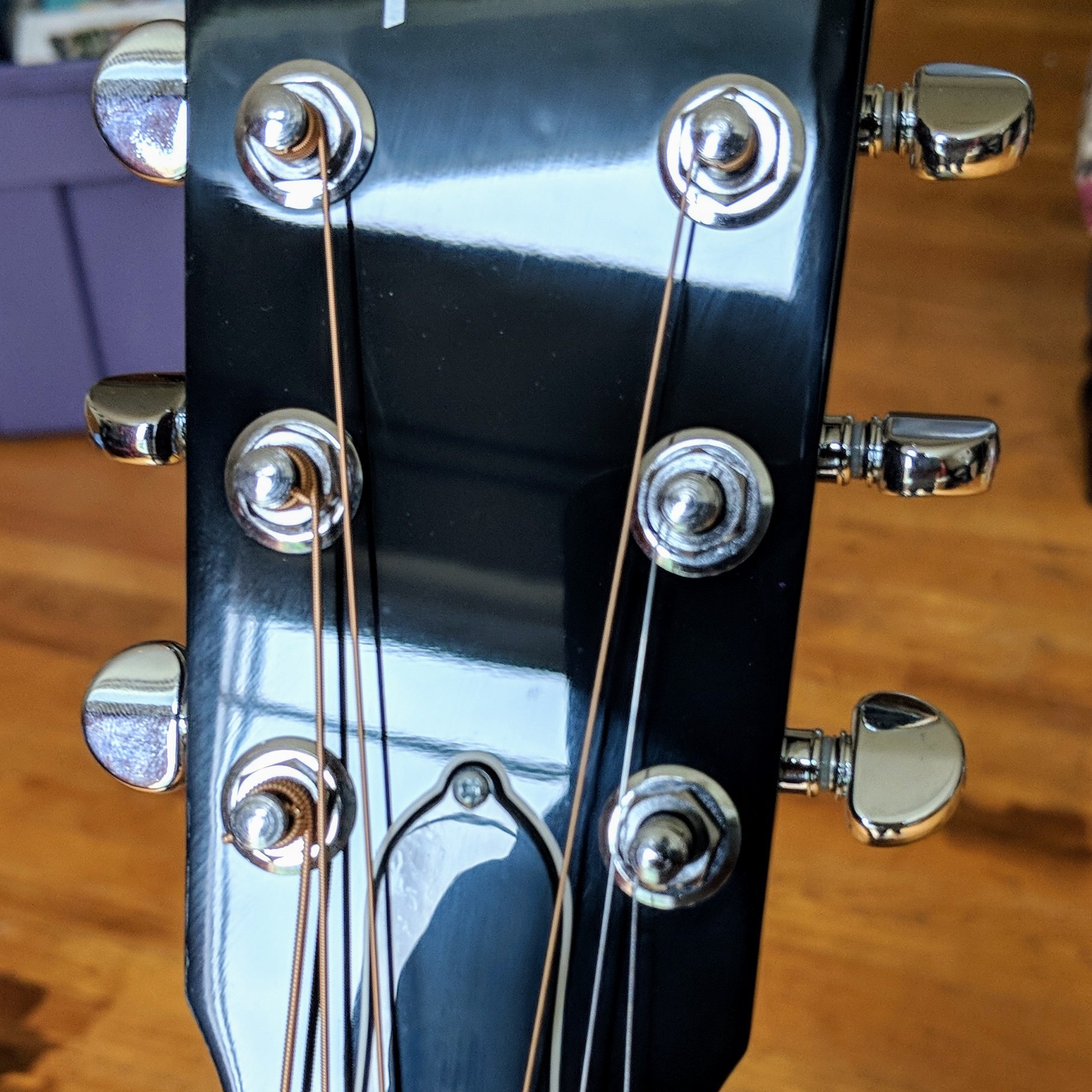
  • Tuners: Mini Grover Rotomatics
  • Plating: Nickel
  • Pickup: LR Baggs Element
  • Controls: 1 Volume  
  • Case: Gibson Hardshell

I have to be completely honest here. If this guitar had no pickup, I’d give it a 5 on its natural voice alone. But I have to be fair and take down marks for the pickup. It’s serviceable in a live situation and plugged into an amp, but directly into a board or interface, you know you’re using a piezo.

Getting a J-45 has literally been a dream come true. Ever since I played one a few years ago, I have had a goal of someday owning a J-45. As I mentioned in a previous post, the J-45 represents the archetype of acoustic tone for me. And to finally have one and play it, well, it’s rather awe-inspiring.

So to address the purists, no, it’s not a traditional J-45. It has a cutaway. The body is made of walnut, not rosewood. The fretboard is Richlite (which feels like ebony). The nut is Tusq, not bone. I DON’T CARE. This is a great guitar regardless of its build materials. Others have brought up that it couldn’t really be a J-45, but I beg to differ. It has the same profile as the J-45. But more importantly, all the tonal balance that I expect out of the J-45 is there, and how it sounds is incredible!

Fit and Finish

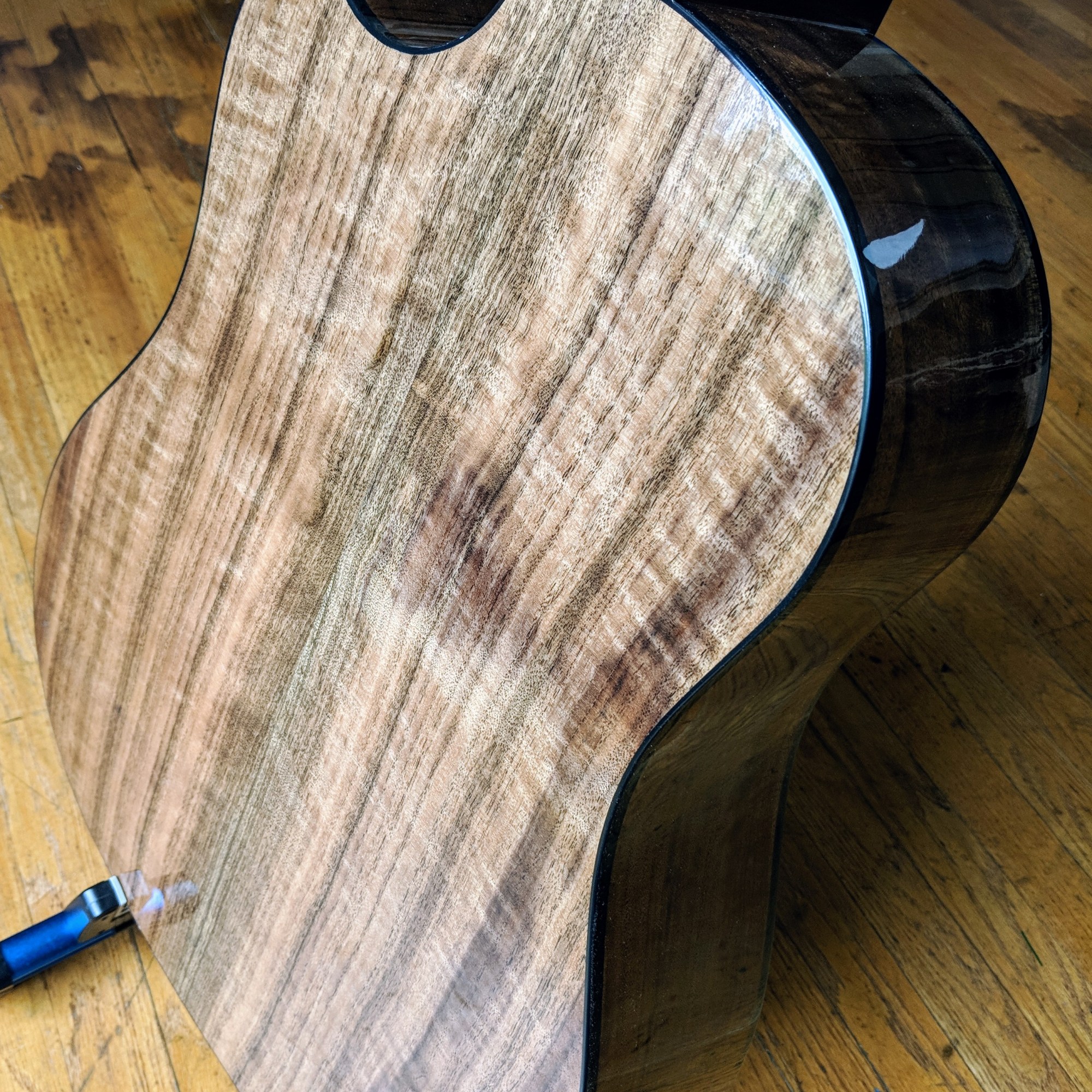
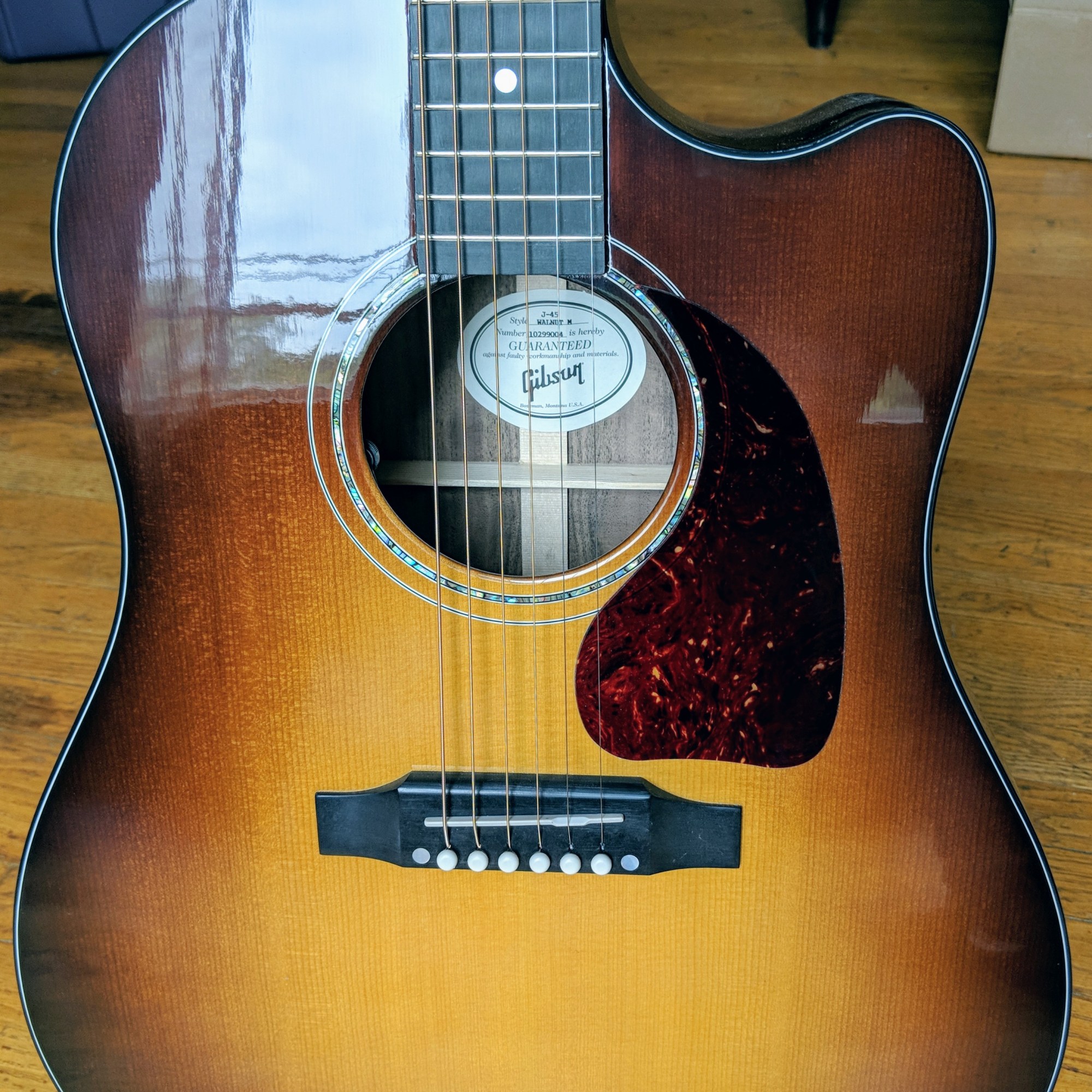
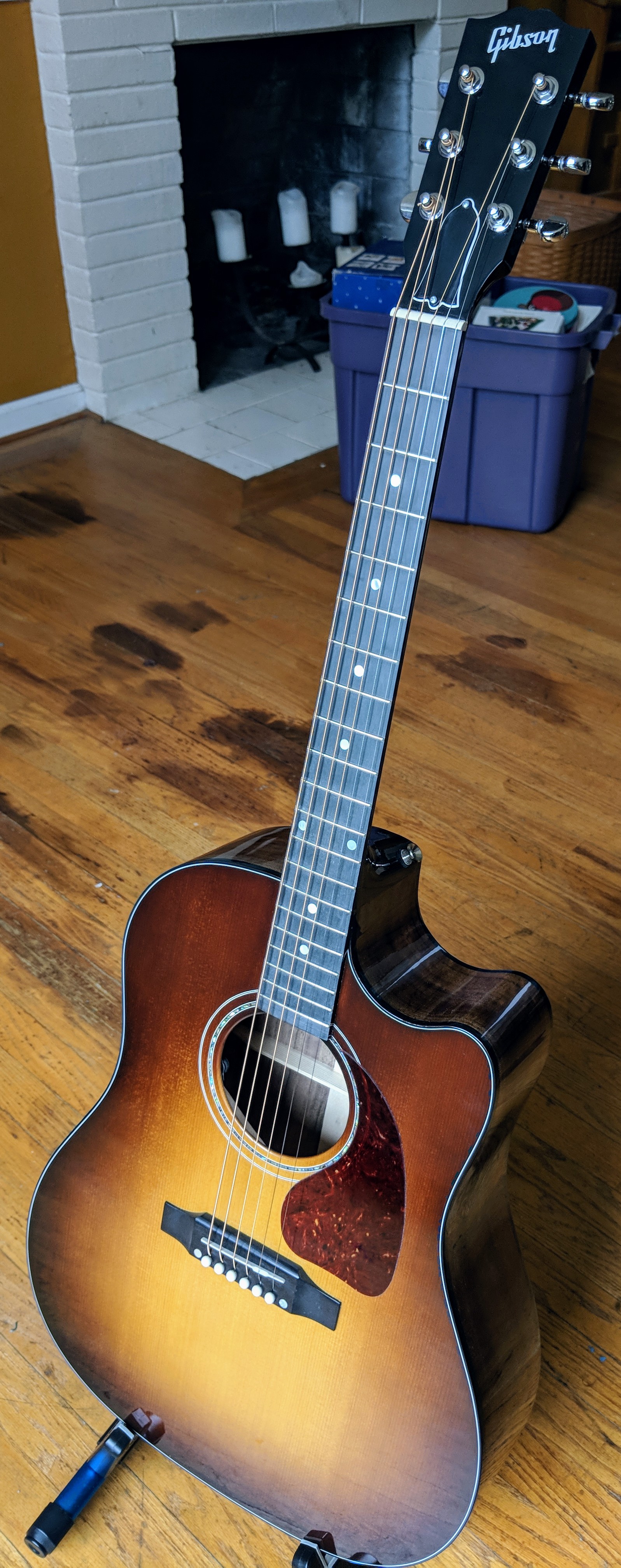
I posted these pictures previously, but I’ll post them again:

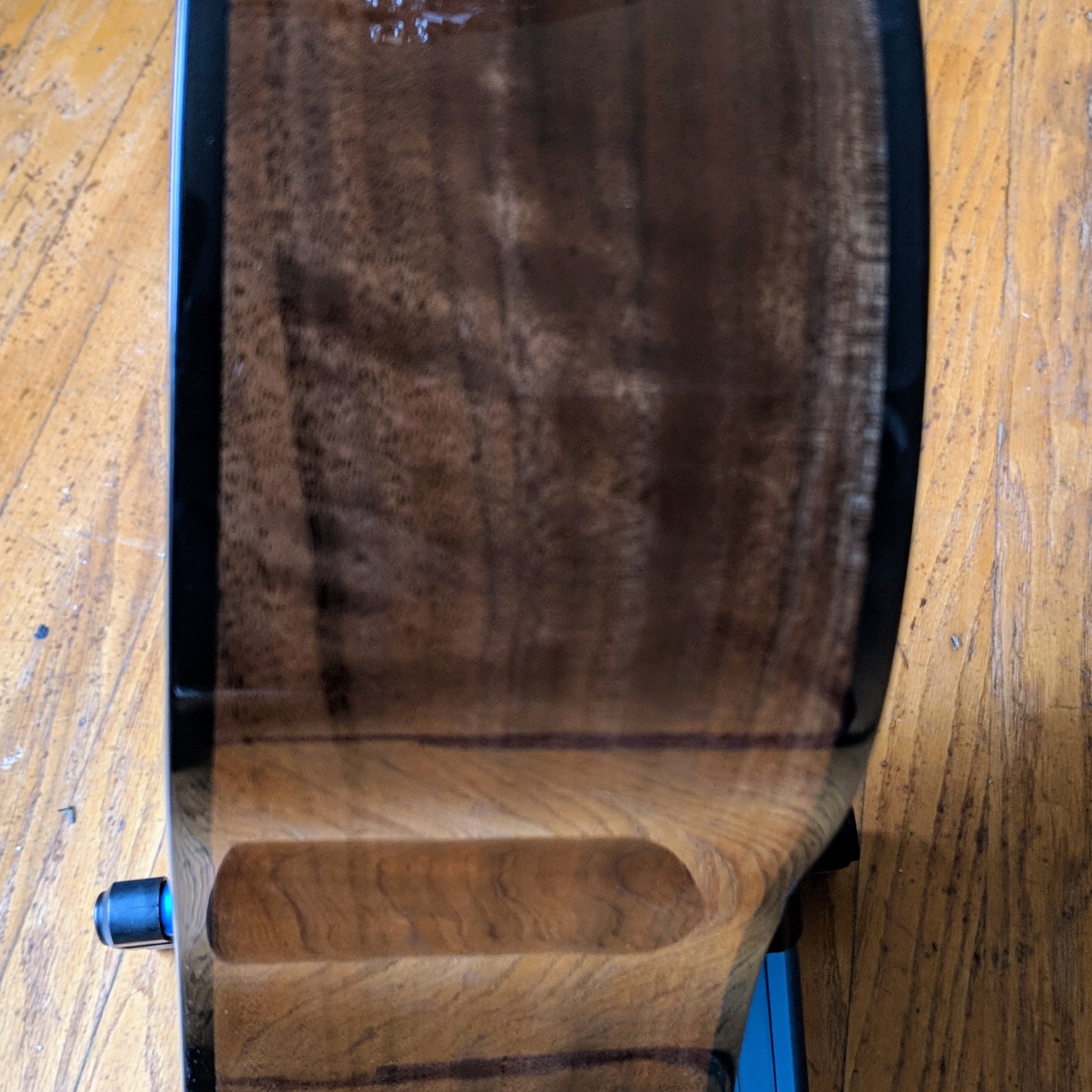
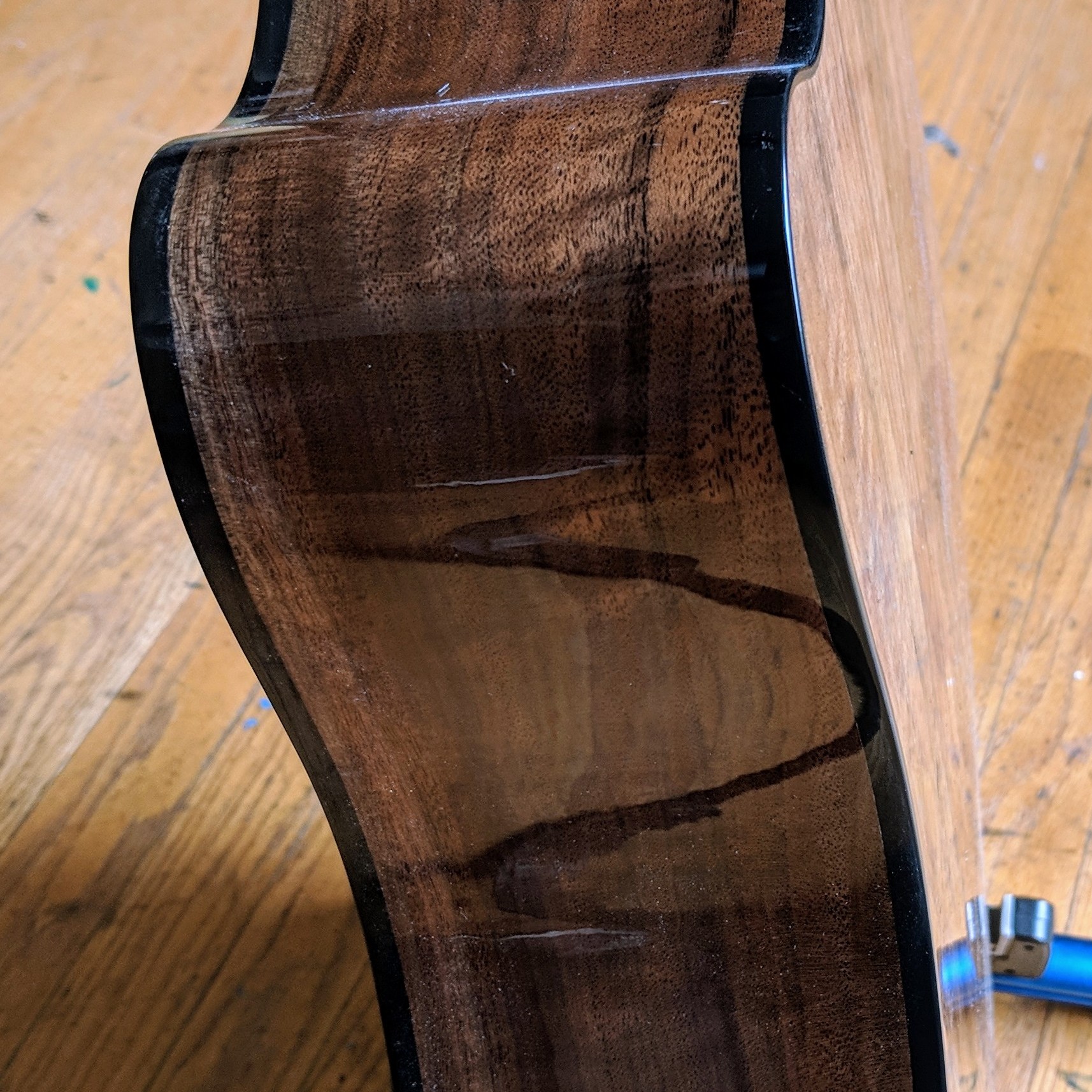
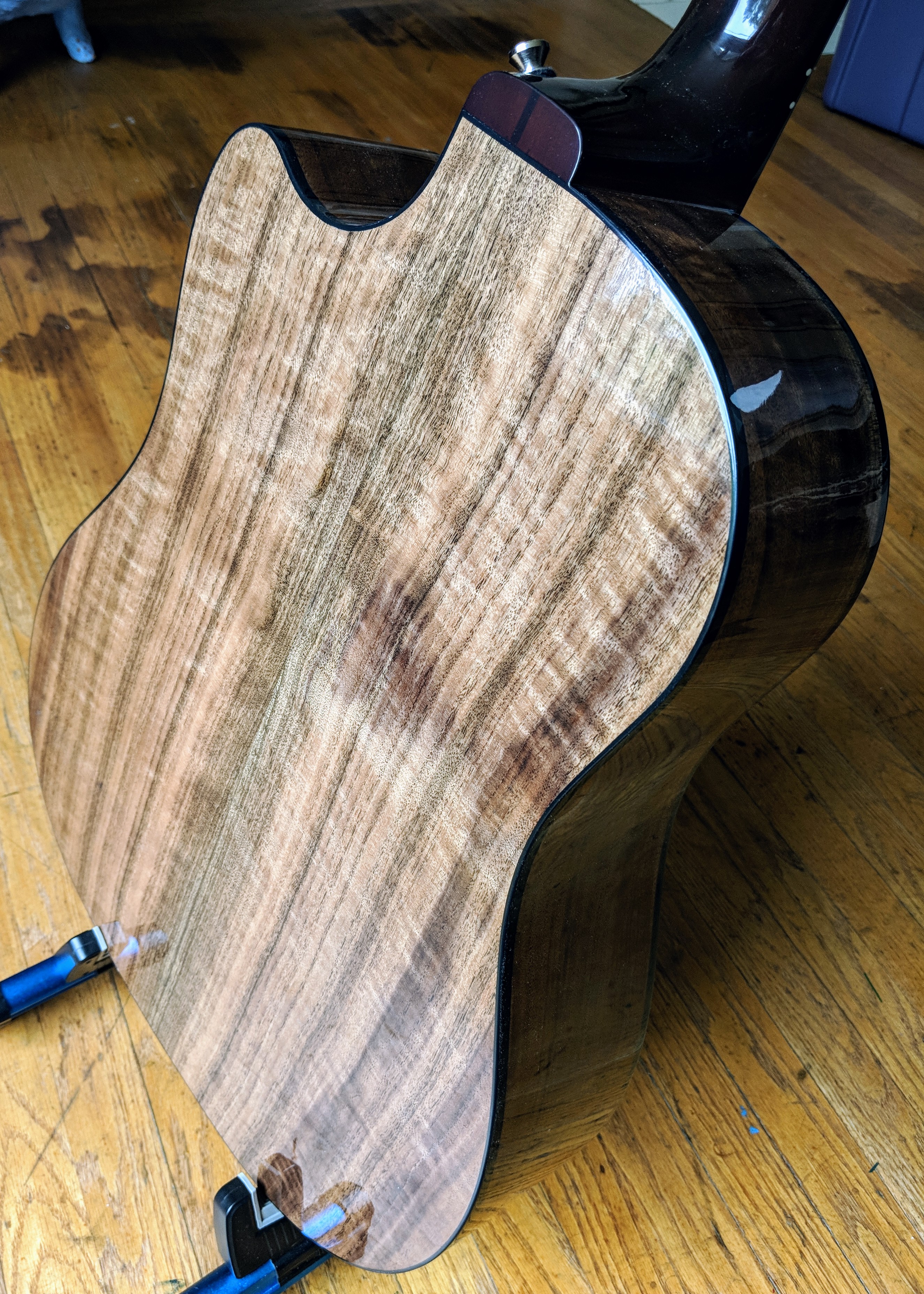
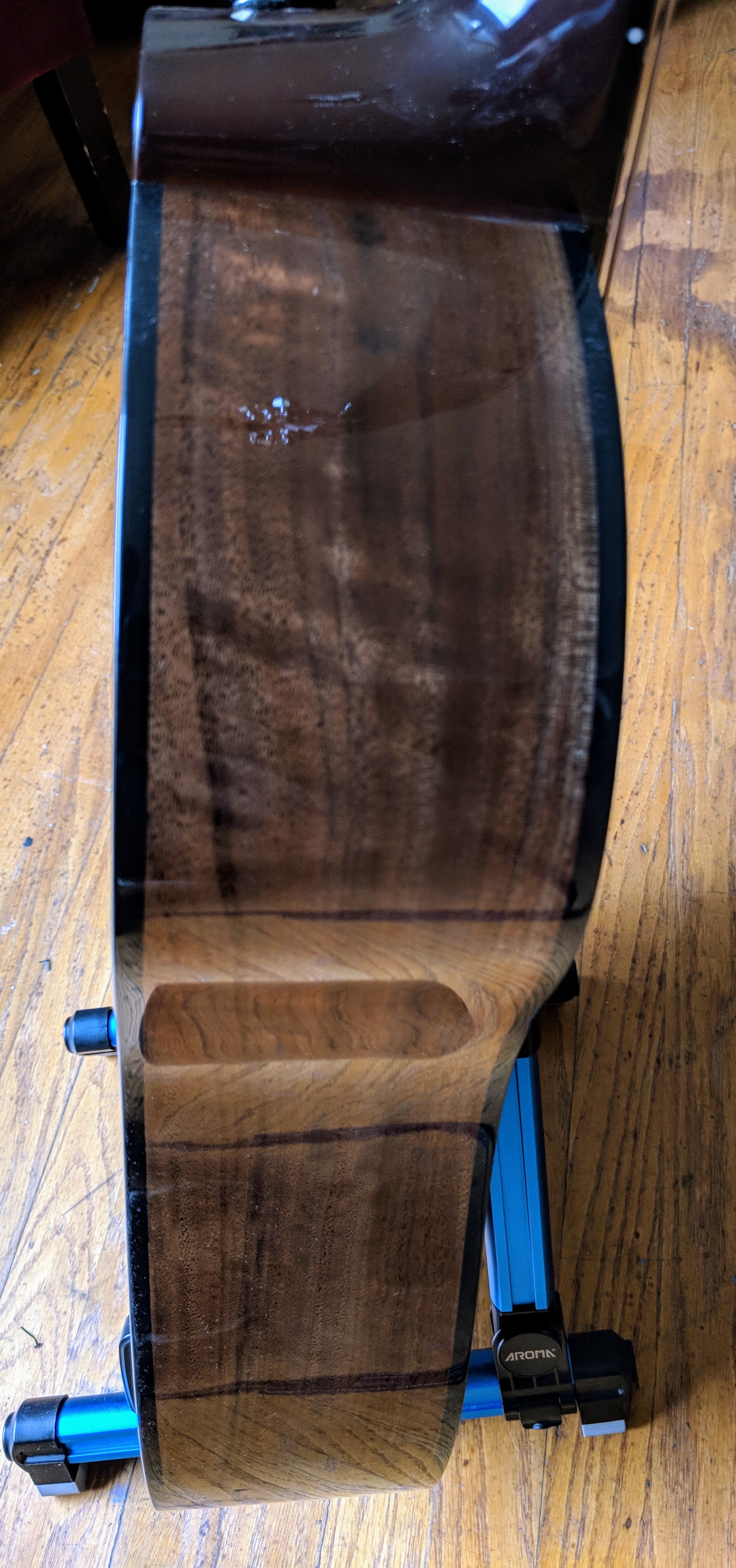
I snapped those pictures right after I unboxed the guitar. There were no flaws or scratches. No gaps. The walnut back is freaking incredible! It looks like a piece of ultra-fine furniture.

How It Sounds

Again, I posted these previously, but I’ll post them again:

I had to back off the mic for the percussive strumming, so it turned out a little thin on the recording. But in a live situation, this guitar is LOUD! I played it at church over the weekend, and in that volume challenging environment, when I was really strumming hard, I could barely hear my amp! That’s how well the guitar projects. How naturally loud it is is a bit mind-blowing.

And compared to my Simon & Patrick PRO, which is a dreadnought, to my ears at least, it’s easily twice as loud when comparing them both with a light strum.

How It Plays and Feels

It actually took me a few days of regular playing to get used to the neck. The “Advanced Response” neck is both thicker and a touch wider than all my other acoustics. And with my small hands, wrapping my hand around the neck to use my thumb took a little while to figure out. But to be honest, in order for me to do that, I have to put my arm in the correct playing position with my elbow out away from my body. Once I’m in the correct position, I have zero issues playing the guitar.

As for the Richlite fretboard, this is the first time I’ve played a guitar with a fretboard made of this material. I once thought that it would take away from the guitar. But truth be told, it’s as smooth as ebony and makes the guitar an absolute dream to play. I played several solos yesterday and the fretboard felt like butter. Combine that with the absolutely perfect action and I was in solo heaven!

Overall Impression

What can I say? I love this guitar! And because I didn’t dig the piezo pickup, I just installed my Seymour Duncan MagMic into the guitar. Now I have no issues. With that pickup, the Tone Bone score automatically goes to 5.

A Word on Sustainability

No, I’m not a tree-hugger, but one thing that Gibson bills about this guitar is that it’s made from sustainable material. Walnut is absolutely plentiful and Richlite is made from resin-infused paper. The Sitka Spruce is started to get a little less plentiful, but from what I understand, Gibson is part of a coalition to help harvest Sitka in a sustainable way. So while I’m not a tree-hugger, I do appreciate Gibson’s efforts.

Five years ago, I walked into a guitar shop in Waikiki, near the Alamoana Mall. Browsing through the shop, I saw that they had an HK Audio Elements PA system setup. I asked one of the guys that worked if I could check it out and he said, just get a guitar off the wall. My eyes were immediately drawn to the Gibson acoustics and I asked if I could pull a J-45 off the rack. I had recently gotten into Passenger and Mike plays a J-45. The guy came over and took it off since it was one of those that required “sales assistance.” Once he handed it to me, I plugged the guitar into the PA and was immediately transported to my happy place; that creative zone full of musical possibilities.

A couple of hours later, I resolved much like Wayne in Wayne’s World: You Will Be Mine!

Today that resolution came to pass. I just received a 2019 J-45 Avant Garde Walnut Burst. It is SO cool that I’m close to speechless, so I’ll just share some photos I took before I even tuned it up and played it.

When I finally did play it, I was again transported to my happy place. Though in the five years that I first played a J-45, I ordered this walnut version without ever playing one. I had just listened to recordings and watched videos with good quality sound, and merely had an idea of how it would sound. This definitely was a gut call, but I really felt in my heart of hearts that it would be a great choice. I wasn’t wrong.

Initial Impressions

After just playing it for about a half hour, here are my initial impressions:

  1. First off, the guitar is absolutely gorgeous. The grain of the walnut is purely amazing. When I first looked at the back, I had to check myself. I haven’t seen a guitar back that looked like this except for a friend’s sapele acoustic (though sapele’s lines are more even). The striations on this walnut back and sides are incredible! It looks like a piece of frickin’ furniture!
  2. The neck is perfect. At 24.75″ scale, it plays like a Les Paul neck, but it has a modern taper to it, so it plays even easier.
  3. As for the action, it’s low without any buzz. It’s perfect!
  4. The tuners are nice and snug and very smooth, making tuning a breeze.
  5. As far as the sound is concerned, what it produces is the archetype of acoustic guitar sound for me. It has nice, round, well-behaved lows, and crisp mids and highs. While not bright at all, there’s a high-end overtone sparkle that really makes itself apparent when strumming.

I can confidently say that though I’ve only spent a little time with the guitar, it is everything I’ve ever wanted in an acoustic.

Some Quick Sound Samples

Fingerstyle

This guitar sustains notes like nobody’s business! I’m looking forward to playing it regularly because it really needs a while to settle in. But right out of the box. Wow!

It’s a Gibson J-45 Avant Garde Walnut Burst and it’s also the first brand-new guitar I’ve purchased in a few years. It arrives tomorrow, and I can barely contain the giddy feeling I have in anticipation of unboxing it and playing it the first time.

For me, the J-45 is the acoustic I’ve wanted for a long, long time. I fell in love with one in Hawaii while visiting my daughter a few years ago, and the memory of playing that wonderful guitar left an indelible mark.

After I completed the purchase, I was a little surprised that I bought this guitar without that old feeling of GAS. In fact, my purchase was the result of literally months of research, playing various J-45’s. The one I got was actually at the lower end of the price range for J-45’s, but that wasn’t a driver. Since it’s made of walnut rather than rosewood or mahogany, the price was significantly less for the same features.

I actually did some careful planning on this purchase. I knew that I was going to spend in the $2k range. I wanted a dreadnought with a cutaway. But specifically, I wanted a J-45 body shape with a cutaway. All it took was time.

That’s not how it has been in the past with my guitar purchases. I’d see something, and I’d just buy it. Admittedly, at the time, I didn’t have multiple college tuitions to pay so it was a lot easier. But all these years later, I’ve had to take a much more measured approach to major gear purchases.

Admittedly, once I make a major purchase, it’s a little anti-climactic because I would have spent a lot of time researching leading up to the purchase. But that sense goes away quickly when I realize that I’m finally getting what I spent so much time getting educated.

To Each Their Own

Even before I received my trusty Simon & Patrick PRO as a gift from a friend, I’ve been looking to get a Gibson J-45 acoustic. Ever since I played one in Hawaii a few years ago, that guitar has been at the top of my list as my next guitar (I also want to get another Les Paul, but that’s another story).

Unfortunately, my financial obligations (read: college tuitions) have made it such that I’ve had to defer that purchase. Truth be told, my S&P PRO has been a great interim guitar while I’ve been deferring getting the J-45. But I’ve recently been able to free up some funds, and it’s time to get the J-45.

So, as is my custom, I started doing research on the best pricing, etc.. Damn Gibson! (I say this tongue in cheek) Give them credit for trying to address different players’ needs, but just as with the Les Paul, they’ve got several models of the J-45, forcing me to do even more research than what I originally anticipated.

One of the features that I wanted was a cutaway model, so that narrowed it down a bit. I did some searches and came across several forum discussions; one in particular that gave me a laugh. In that discussion, someone had asked what others thought of the J-45 cutaway. 99% of the responses were on the level of “heresy” or “sacrilege.” The puritanical response was what made me laugh.

One person even claimed that most people who get a J-45 probably won’t play above the 7th fret except for using a capo, so why have a cutaway? I was amazed at how many people agreed with this. While that claim might be true given the overall population of guitar players, almost every demo I’ve seen have demonstrators regularly playing above the 7th fret. Yes, it was a stupid claim.

For me though, ever since I started focusing on reggae and reggae-inspired music, I make regular trips to the high frets; furthermore, playing lead guitar, having a cutaway gives me much easier access to the high frets, and makes fretting above the 12th fret so much easier. But even before my reggae bent, I’ve mostly used cutaway acoustics precisely for high fret access.

So, to each their own. Buy what you need and buy what pleases you. If you want the pure, traditional stuff, no problem. If you want more modern features, go for it.

For those who are curious, I’ve decided to go with a J-45 Avant Garde Walnut Burst. Sacrilege indeed! A thinner body cutaway made of sustainable wood. 🙂

Several months ago, I got a bit frustrated with the sound of my custom Slash L Apache “Katie May” (shown to the left). To me, the bridge pickup, while it sounded fine, didn’t seem to have the volume of the neck pickup, and it also sounded a bit thin and reedy.

So I raised the pickup to be closer to the strings, thinking that it would give me more volume. It didn’t really improve the situation. And that’s what I get for making adjustments and pulling the solutions out of my ass!

But still, I persisted to play around with the pickup heights, not really understanding what I was doing until I felt I dialed it in with the amp I was playing at the time, which was a DV Mark Little 40. Then I got my BOSS Katana 50 and got an absolutely rude awakening. That was yesterday.

I hadn’t played Katie May in awhile, so I decided to pack her up for my weekly church gig, along with my Katana. I figured that I had made the tweaks to the pickups so she’d sound just fine. Man! Was I wrong! Once I had everything set up, my tone sounded like SHIT! I spent most of the time during rehearsal and even during service tweaking my EQ. In the end, I had to pump up the bass and really roll off the treble and mids to get a useable sound. Pissed me off!

Granted, Katie May has a naturally bright sound. The neck-through design combined with the mahogany strip sandwiched by hard rock maple is bright; like Telecaster bright. That’s okay. I expect that. Plus the Lollar Imperials generate a fairly strong magnetic field, so putting them closer only brightened up the sound because of the Gauss effect (basically, the stronger the magnetic field, the brighter the sound).

As far as Gauss is concerned, I only found that out by doing a little research this morning. So I lowered the pickups back to where they were first installed. Luckily, I had put pencil mark on each side of the pickup those many months ago. And the guitar got its voice back.

Okay… so silly me for messing around with my gear in a completely brainless way, and being way too cute for my own good! Lesson learned.

Letting Go

I was listening to a radio talk show and the guest mentioned Toni Morrison, the great African-American novelist and Princeton professor. I’ve known of Dr. Morrison for years, as she won the Nobel Prize for Literature in the early ’90’s, but I needed to refresh my memory, so I googled her name and came across this wonderful quote:

You wanna fly, you got to give up the shit that weighs you down!

Toni Morrison, Nobel Prize Winner for Literature 1993

What a GREAT quote! Gear slut that I am, when I read the quote, I immediately thought of playing guitar and my own journey with this instrument these past 50 years. And looking back, I realized that my most accelerated growth periods came from giving up my shit; that is, letting go of my preconceptions and old habits to allow me to explore new and different approaches to playing.

For instance, a few years ago I really got into playing reggae. At first blush, reggae’s predominant “um-chuk um-chuk” rhythm seemed so easy. And I figured that since I had be playing guitar so long, I could easily make the transition; after all, how hard could it be? But what I realized was that the “um-chuk” was merely a rhythmic foundation that belied a musical and melodic complexity that requires immense study to master. And singing and performing reggae can be incredibly difficult because many of the melody lines are sung against the beat. This forced me to overcome my rock-and-roll, four-on-the-floor approach to guitar. Once I let go my notions and approach to playing music was I able to play reggae with any sense of proficiency.

As you can tell, this article isn’t an instructional “how-to” article, but if you want to improve your playing or expand your musical palate, you have to let go of your preconceptions. We’re human. Humans love habit. But whether it’s a habit of action or thinking, with habit, we run the risk of letting habit metastasize throughout our entire being and fixing us into set ways, ultimately limiting our ability to grow and expand. To improve – in anything, not just guitar – we have to break free of our fixed notions.

Especially if you visit online guitar discussion forums, you’ll encounter and interact with many people who are fixed in their thinking. Look at the tube amp vs. solid state amp debate, for instance; or the preponderance of jazz and metal heads spouting all their shit about modes and major scales and dismissing any other forms of music. I was “that guy” with tube amps. But when I first played my BOSS Katana 50, all those old notions were completely obliterated! It’s now my main gigging amp.

This is not to say that we all become centrist in our thinking. There is absolutely nothing wrong with passion for something. But if we want to expand our experience, as Toni Morrison says, if we want to fly, we have to give up the shit that weighs us down!