Feeds:
Posts
Comments

Amazing. I’ve posted more in the last two days than in past several months… Oh well, being sick and at home allows me to do some catching up… πŸ™‚

As you know, I just purchased the BOSS Katana 50 amp, and yes, I’m very excited about it. Despite feeling like crap, I played the amp late into the night. And no, I wasn’t tweaking it. I was just playing whatever came into my head for the pure enjoyment of playing and hearing – to me, at least – great sound. And for those of you who lurk the online forums, no, I actually didn’t read the forums for others’ opinions before I went and made my purchase. In fact, it didn’t even occur to me to look there.

But I did peruse the forums this morning and ran across several threads about the Katana. As expected, opinions on the amp were a split-decision. But one comment made me think:

I’ve been a weekend warrior gigger of tube amps for 50 years too and have tried every solid state amp that crossed my path hoping one would come along to make guitar amp ownership better without sacrificing that tube tone & feel we all love. And, after trying many solid state amps along the way, the Katana 100w combo finally crossed my threshold of acceptance. No, I can’t say it’s perfect or better than my tube amps but, all things considered, I can now justify moving out my tube amps. The Katana’s tone & feel under the fingers are very good and there are no reliability and tube maintenance issues. Gigging has enough headaches and taking fragile, unpredictable tubes out of the picture is one less headache.

–courtesy of The Gear Page
https://www.thegearpage.net/board/index.php?threads/boss-katana-50-unbelievable.1820274/

Unlike this guy, I won’t be moving out my tube amps. They’ve become trusted, lifelong friends whom I’ll keep around till I die. But the salient point that he made was the phrase “finally crossed my threshold of acceptance.” To me, in other words, he was saying the amp worked for his needs.

And that’s the point with getting ANY gear. A for me, after literally spending tens of thousands of dollars on gear and selling off a bunch of stuff, I’ve learned one important lesson about gear purchases: Whatever I consider buying has to work for ME.

I used to get all hyped up about this or that new thing that people were buzzing about. I’d get so excited that I’d place an order, get the gear, only to find out when I played it that it just didn’t work for me. And that could be – and actually was – a fairly expensive endeavor.

Now with my much more limited budget, I’ve had to control those urges and first form a very good picture in my mind of how I’d use the gear in question; and be completely honest with myself and take the time to evaluate just how I’d use it, and perhaps more importantly, just HOW MUCH I would use it.

Take, for example, a flanger pedal. I love that sound. I even have an old BOSS flanger. But it has never had a permanent, much less a regular slot on my board. I’ve run across some very nice boutique flangers, but I won’t get one any time soon because for what I play on a regular basis, it would never get used.

Back to the Katana 50, I could’ve easily walked away without the amp if the sound and dynamics didn’t fit my tastes. And no, I didn’t really get into the higher gain modes of the amp because what I’ve been looking for specifically is a clean headroom platform in a combo for my pedals. So I made my decision to buy it based on what I could achieve clean. So the eval was quick.Β When I got home, I plugged my pedal board into the amp, tweaked the EQ and voila! It worked perfectly for my intended application!

So cheap or not, this was a great purchase for me and I couldn’t be happier. But I also have several drawers full of pedals that serve as a reminder of what doesn’t work. πŸ™‚

Summary: The littlest brother of the BOSS Katana line of amps, this amp packs heaps of tone and dynamics comparable to a valve amp. But instead of trying to cop the sound and feel of a tube amp platform, the Katana has a sound all its own, providing the characteristics one would expect from a tube amp.

Pros: Lots of praise to pile on. Use it as a clean platform – it takes pedals incredibly well. There’s access to over 50 built-in BOSS effects. The EQ is super-usable as well. Though listed as a 2-channel amp, with a second bank on each channel to set sounds, it’s effectively a 4-channel amp. The built-in acoustic preamp is not just usable, it sounds killer. Finally, with power attenuation of 50W, 25W, and all the way down to 0.5W, this amp will perform in any kind of venue. And though the smallest of the Katana line, this comes equipped with a more than capable 1 X 12. 

Cons: The ONLY disappointment I have with the amp is that it doesn’t have a line out which is included with the 100 Watt models. But this is simply my nitpicking. I figured that BOSS included some really cool stuff, why not a line out? But no matter, this is still a great amp.

Tone Bone Score: 5 
Maybe it’s my initial infatuation talking with this amp, but I’m loving it! Yes, I just got it, but I’ve played countless combinations of gear over the years, and I know what I like, and I absolutely love this amp!

Street Price: $219.99 ~ Yes, you read that correctly… 

Swallowing my pride…

If you’ve been reading this blog for awhile, you know that I am of the mind that if it sounds good, it is good. But when it has come to amps, I have – up until recently – been of the mind that no solid state amp could even come close to the sound and performance of a tube amp. Even when I reviewed the Fender Ultra Chorus, while I loved the absolutely inspirational clean tones that amp produced, it was still fairly one-dimensional in what it could offer. But all that has changed with the Katana 50.

I’m still scratching my head, thinking how could a literally inexpensive, solid state amplifier perform on par with a tube amp with similar tonal charm and dynamic response. It’s uncanny, but it’s true. Of course, I realize that this is my own truth speaking. Someone else might think it’s crap. But I’ve spent the last 5 or so hours playing a variety of guitars through the amp – both electric and acoustic – and after dialing in the EQ for each guitar, I just haven’t found a bad sound yet.

And get this: I haven’t even begun to use the onboard effects to any extent other than just experimenting because I wanted to use this as a clean platform for my pedals. The only effect I’ve used with any regularity thus far is the very nice reverb, of which you can use three different kinds. But admittedly, I’ve only used this sparingly because for some reason, the reverb is tied into the delay, so you always get a bit of delay. It’s actually not that bad, but if you just want pure reverb, by default you won’t get it. You’ll have to go into the software to program it out. Not a big deal.

This is a real pride-swallower for me. When I got the amp, I did something that I never do when I evaluate gear. I actually tried to make it suck. Granted, you can make anything sound like crap by adjusting to the extremes. I’m more fair than that. But I threw every guitar in my usable arsenal at it, threw several kinds of pedals in front of it, but with only a few simple tweaks of the EQ, I not only got usable tones from the amp, but most were also damn good!

Not to mention the dynamics of the amp. BOSS somehow figured out how to effectively cop a voltage sag in the amp, so there’s lots of sustain which is very apparent when playing clean. With the acoustic preamp channel, this “sag” has a very nice overtone effect. My acoustic sounds gorgeous through the amp. So… hat in hand, I just can’t find anything bad about the performance of this amp.

Did I also say it’s LOUD? Typically when you’re talking tube amps, 50 Watts is searingly hot. Traditionally with solid state amps, those wattage numbers mean practically nothing. But this amp is capable of being very, very, very loud. Luckily though, the amp has built-in ouput power attenuation. You can set it to 50W for maximum clean headroom – and volume – switch it down to 25W to get some great gain at a lower volume, or 0.5W to use for bedroom practice.

Now some have commented that the attenuator is a little redundant and doesn’t make much sense since the amp has a Master volume. It’s a solid state/digital amp after all. But the Master volume acts as a variable regulator relative to the power setting, so you can’t exceed the output at that setting. This makes it very useful, at least to me.

My Original Introduction to the Amp

My first exposure to the amp was in a local Guitar Center the other day. I was checking out a Roland JC-40 and another guy was playing a Katana 100. The dude was freaking incredible, having set up the amp tone to sound like Eric Johnson. It was amazing, and the dude could play! As a test, I started playing some riffs and chord progressions to give the guy a canvas to play over, and we did an impromptu jam session. I have to say that I was quite impressed with the Katana. And to be perfectly honest, up until I played it in the shop, I knew very little about it, having dismissed it as a simple practice amp. Boy, was I wrong!

Fit and Finish

Some people have complained about the black on black color scheme. Me? I actually kind of dig it. It’s very understated. The amp also has a little kickstand underneath to tilt it back. Very nice touch. The cabinet is made of MDM board, not solid wood, but it’s thick and sturdy. But the kicker is that the amp only weighs 25 lbs. Very luggable. 

How It Sounds

I’ve heaped on the praise of how the amp sounds, and I will provide a sound test entry in the next few days. But the notable thing that really stands out for me is the voicing of the amp. The open back really helps the lows resonate without dampening the tone into mush. My past experience with solid state amps is that the lows are flabby and if you turn them up to any degree, it’s like throwing a blanket over the cabinet. Not so with this amp.

And speaking of EQ, this is yet another impressive feature of the amp. The EQ is highly responsive with what seems like a very wide range for each of the three sections. Want a scooped tone? No problem! Want a midrange hump? Very easy to dial in, which makes it super-easy to get a great tone for whatever guitar you place in front of it.

And make no mistake. This amp isn’t trying to be a Fender or Marshall, and this is what endears it to me so much. It sings in its own voice, and that voice is very pleasing to me. Like I said, others may find that it’s crap, but I’m never going to be one of those people. This is a solid amp that I will be using with regularity going forward.

When I finally had a chance to play this amp where it generated lots of SPL, I was BLOWN AWAY! I played this amp on a weekend youth retreat with a full band consisting of two guitars, a keyboard, bass and drums. And I have to say that when this amp is putting out sound, it’s big and three-dimensional. Hey! It sounds fantastic at low volume, but I think it shines best when it’s pushed hard!

How It Plays

This is definitely where I fell in love with the Katana. The dynamics are absolutely incredible, responding to attack and volume changes with ease. And as far as the dirt that the amp produces. Damn! I didn’t think solid-state breakup could sound this good. But then again, dirt pedals are solid-state and they achieve their clipping with chips. BOSS definitely got it right with this!

Is the Katana a Modeling Amp?

Several reviews out there have called the Katana a modeling amp, probably because of the built-in effects and gain settings which seem to mimic a modeler. But even with my limited experience with this amp, those gain settings seem more like voicing rather than models trying to copy an amp. Unfortunately, they call their highest gain setting “Brown Sound.” But to me, it mimics the amp and power settings EVH used rather than a model of his original Marshall.  Like I said, the amp has a sound all its own, so at least to me, it’s more an amp with different voicings rather than a modeling amp.

Yes, the amp uses COS-M models that – if you ever played a Roland Cube – have been at the heart of Roland’s amps for years. But it seems that these have been done in such a way that they’re not trying to mimic a particular platform. But then the question really is: Does it really matter if it’s a modeling amp or not if it sounds and performs this well? I’m convinced it doesn’t matter, but I’d encourage you to check it out for yourself.

Real World Performance (2/6/2019)

I normally save this discussion for a Gig Report article, but I thought it would be helpful since this review gets a lot of traffic. I’ve now been playing the Katana regularly for the past 4 months. The speaker is nicely broken in, and as with any new speaker, the brittleness of the speaker cone has been completely smoothed out.

My regular usage has been at weekly church services, and it has performed remarkably well in that venue. The great thing about playing at church is that the musical styles vary – a lot. My particular band doesn’t just stick to the country-infused Contemporary Christian stuff. We play reggae-inspired music as well as guitar-centric classic rock style music and, of course, soft, inspirational music thrown into the mix. No matter what style I’ve played through the Katana, I’ve not yet been left thinking that this amp isn’t enough.

I’ve also played a few larger (as in louder) venues as well, and I do have to say that when the Katana’s speaker is pushing some serious SPL, the sound is absolutely magical. I played a weekend retreat a month ago where I was able to set the amp to its full 50 Watts. At that venue, I was all about maximum clean headroom. I hit the front-end of the amp hard with an overdrive pedal (specifically, the Tone Freak Abunai 2) and the amp just SCREAMED! The cabinet is extremely resonant, and the sound that issued from the amp was lush and rich. At several points over the weekend, I just closed my eyes and let my fingers do the talking through the amp!

Overall Impression

What more is there to say? I love this amp! And no, it’s not because it was cheap. That’s definitely something to giggle about. But even if it wasn’t this cheap, the tone and dynamics alone make this an incredible amp irrespective of the price.


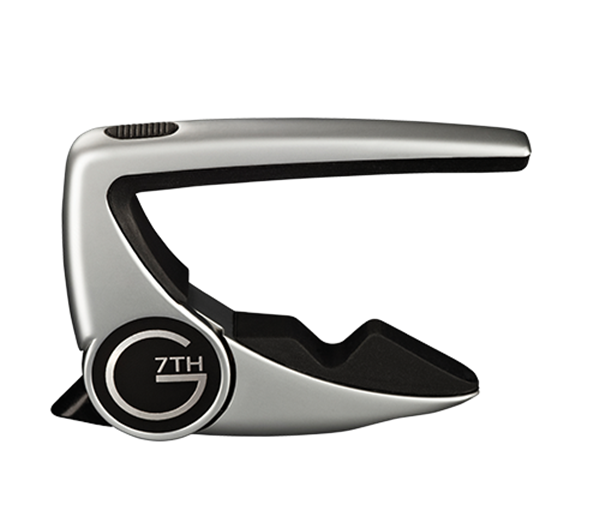
0000935_performance-2-steel-string-silver_600Conceivably, all capos operate pretty much the same way: Place the capo at a fret position and go. I’ve played with many capos over the years, starting out with the traditional folk guitar, elastic strap capo, then moving to Shubb then most recently, Kyser capos, of which I have several.
But recently, and especially since I got my Simon and Patrick acoustic, I’ve been less than enthusiastic with the Kyser, especially when using the capo above the 5th fret. I’d have to spend some time positioning it so it wouldn’t put my strings out of tune and, more importantly, wouldn’t buzz if I hit the strings too hard.

So I went on a quest to find a new one. I could go back to Shubb, but I didn’t really like the lever action, and though adjustable, I’d get frustrated when moving the capo up and down the neck and having to readjust the tension. There are other spring-loaded types, but having tried those, and especially the ones with the levers on the back of the neck, meh, they got in the way. So I wanted a low-profile design that wouldn’t get in the way of my fretting hand.

The two that I considered were the Thalia and the G7th. They both seemed to operate similarly, though I was really leaning towards the ratchet design of the G7th. As for the Thalia, while it seemed to have the characteristics that I liked, the extra “form” with the inlays – which are totally cool, by the way – kind of red-flagged it as a fashion statement for me, though no doubt based on the reviews I read it was probably more than functional.

But in the end, I decided to go with the G7th. This is a great capo! Squeezing it on was a little unsettling at first because I didn’t know whether or not it would work. But it works great! I’ve thus far put it on all my electric guitars and my acoustic and it works pretty much flawlessly with no string buzz or bending my strings out of tune on all of them.

For my acoustic, I had to find just the right place to get the best performance, but I was expecting that because the action on my acoustic is just a tad high. But once I found the spot, it has worked great.

Now the question is: Do I have buyer’s remorse for spending $50 on it? And for those who are considering getting one of these, a good question would be: Do I think it’s worth it?

That’s complicated. No, I don’t have buyer’s remorse because it just works incredibly well and it’s obvious a lot of time and effort has gone into designing this capo. But on the other hand, it is rather expensive for such a utilitarian, pedestrian accessory. At least for me, it solved the string buzz issue I was having with my Kysers, so from that perspective, yes, for me, it was a good purchase. But for those considering getting one, the question you have to ask yourself is are you getting this because it’s cool, or does it really solve a problem?

“Cool” is certainly a reason to go get something like this. For us gear sluts, that’s a given. But I also have a very practical side so I tend to ignore the cool factor and try to focus on function. As I mentioned above, this capo has solved a real problem for me, so I’m happy with the purchase. And yes, I’d recommend getting it. The design is great and really unobtrusive.

But I will say this: If you’re happy with what you’re using now and it works for you, this isn’t something I’d rush to the store to get. It’s certainly a nice-to-have, that’s for sure.


IMG_20181001_112403Or… this could be called Confessions of a Tube Amp Snob…

For the past decade or so, I’ve been a complete devotee of the tube amp. I’ve literally got 10 of them, and believe it or not, I still use most of them. In my mind, there has really been nothing like the feel and dynamics of a tube amp. And solid state amps? No way could that feel be duplicated.

Ten years ago, that might have been true – though admittedly, it was probably also drinking quite a bit of Koolaid – now though, that line between what separates tube amps and solid state amps is so narrow as to be almost imperceptible. WTF? Part of me is beside myself scratching my head and asking, “How could this be?”

Technology, of course, progresses. And luckily, amp manufacturers – specifically, solid state amp manufacturers – have listened to their customers over the years to create amps that have similar dynamics to valve amps.

I just bought a BOSS Katana 50 and I can describe it in two words: IT ROCKS! I can’t even begin to tell you how good it is. It not only sounds great with the deep, 3-dimensional sound I’ve come to love about tube amps, but the feel and dynamics of the amp are right on par with my tube amps. And I only paid $219.99 for the freakin’ thing!

Most solid state amps of old were fairly flat sounding and uninspiring hunks of junk (though I need to leave the Roland JC series out of that). But today? It’s a completely different story. Within the first few notes of playing with the Katana in the shop, I knew I was playing something special. I was expecting kind of a “toy” sound out of it. But what issued from the amp was simply magic. #blownaway

Even when I played the amp completely dry, the deep quality of the sound still remained. It didn’t become flat and lifeless. The sound still resonated and I was playing in a carpeted room with a low f-in’ ceiling!Β Look, I’ve been around gear for years and have literally reviewed thousands of guitars, amps, effects, and accessories in all sorts of different combinations. I’m not easily blown away because frankly, I’ve become quite jaded. But this amp completely changes my mind about solid state amps being inferior in both sound and dynamics compared to tube amps.

Am I going to scrap my tube amps? Absolutely not. Each amp has a particular voice that I may need when I record. So they will still be set up and still be used. I’ll even still gig with them.

But as far as voicing is concerned, what I like about the Katana is that at least to me, it seems that it isn’t an amp that was designed to emulate a tube amp platform like a Marshall or Fender. It has a sound all its own. What’s most important to me is that it possesses the tonal and dynamic characteristics I’ve come to expect out of a “good” amp. And I will just say it: This amp isn’t just “good enough;” it’s not a compromise. It’s just plain good.

Over the years, I’ve mellowed my perspective about gear. In my mind, if it sounds good and feels good, it is good, and the Katana fits that perfectly.

Here’s a Chappers demo of the amp:

I will be gigging with the amp in the coming week, and will follow this up with a full review!

James Taylor: Unsung Hero?

I’ve tended to focus on electric guitar in this blog over the years as it started out as a diary for my move into tube amps. But truth be told, I play acoustic guitar at least 75% of the gigs I play. And through the years, James Taylor has been a major influence on how I approach acoustic guitar playing.

I’ve written about JT in the past, but last night, I watched an episode of Austin City Limits with JT as the guest artist and I was reminded of why he has been such an influence over my playing. For instance, if you watch the video above, listen closely to the guitar playing. There’s A LOT going on!

Which brings me to the title of this article. I think many people – even my contemporaries – view JT as a great songwriter. And I believe that his incredible songwriting has always overshadowed his guitar playing.Β But his technique is absolutely incredible.Β Last night, as I watched Austin City Limits, I was literally transfixed by how JT played and approached his instrument. It wasn’t just what he played, but what he didn’t play that I found so amazing. And that’s mark of a true master; that is, a master is one who can express their message in a just a few notes that others may take many more to accomplish.

There’s an economy to JT’s playing that I think very few have mastered. I’ve seen it with jazz musicians like Miles Davis, but very few guitarists. To me, JT is that rare guitarist that can say so much with just a minimum amount of notes.Β 

Could be I’m way off with respect to JT being an unsung hero, but to me, he’s once of the best guitarists in the history of the instrument.

A friend of mine forwarded me an article published in the Wall Street Journal this morning, stating that “Gibson Brands” filed for Chapter 11 as it’s Gibson Innovations division, which operates under the Philips moniker, seeks protection to reorganize “in the face of $500 Million in debt.” The company at large is set to default on some of its debt as soon as JulyΒ and is actively liquidating its consumer electronics businesses. Sheesh!

According to the article, KKR, a private equity company, will take over Gibson. Hopefully KKR will install leadership that will continue to build up the musical instrument business. Amazingly, it was that side of the house that was cashflow positive, with sales up 11% over the same time last year.

We guitarists have seen the improvement over the last few years; especially since the failed attempt at the robot guitar. Gibson learned from that and went back to its classic, roots styling and configurations, and also created a mid-range level line to fill in sales for people who didn’t want the cheap-oΒ stuff but didn’t want to shell out for the high-end guitars. It was a smart move, and they realized good financial results.Β Hopefully, by shedding the consumer electronics arm and re-focusing their energies on their core competency, they’ll realize success again.

But all that said, the article did state that all these proceedings shouldn’t affect consumers. That’s a good thing. And it makes sense as the musical instrument business is profitable. So don’t expect them to close their doors. πŸ™‚

Personally, following the saga of Gibson over the years has been amusing at best and head-scratching at worse. I’m a Les Paul guy, so I surely don’t want to see them struggle. But I have to say they’ve made some pretty stupid moves in the past that have hurt the company and affected their customers. The acquisition by CBS was a huge stumble, but luckily Slash came to the rescue – even though he played a custom copy, but it looked like a Les Paul. The whole advanced materials and robot tuners were a joke (IMO). And for a while, build quality suffered immensely. But what I’ve been seen over the last few years is a seeming return to much higher build quality standards.

Hopefully, KKR can get it right this time…

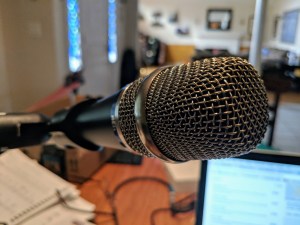
I’ve now been gigging and recording with this mic for a couple of weeks straight and I just couldn’t be happier. I have to admit that it has taken me a little while to work out positioning in front of the capsule, as I’ve spent years practically swallowing other mics just to get a good sound. But with this mic, it requires a bit of space; about an inch for regular singing, and if I need to really lay into a vocal, I’ve got to be about eight to twelve inches away.
Also, while the mic is great forΒ lower volume singing, where I find it really shines is when I’m in a band situation where I’m singing with a full voice. And in a band situation, the rear noise rejection is second to none, and this helps quite a bit with mitigating feedback, as I can position my mic near monitors and not worry about feedback.

As far as how it sounds, the tone is just a tad scooped, and the midrange mid-point seems to be on the higher side. But I love that because it picks up higher frequency characteristics. It also means that with this mic, I can punch through a mix. I have to admit that it was a little unsettling at first because that little higher frequency bump makes my vocals sound so clear. That’s not to say the lows aren’t there. They absolutely are. But compared to an SM-58 or even an e835, the richness of the sound is so much better.

Other than how good it sounds, the mic is very well-built. I see no problem with it enduring the rigors of regular gigging. As far as recording is concerned, it works fantastic! But I think I’m still going to save my pennies to get the PR-35 for recording. I’ve gigged with that mic in the past, and the sound quality is even better than the PR-22. However, it is not nearly as durable as it is coated with a silicon layer, and according to the sound guy who provided me with the mic, with a lot of use, the silicon wears off.

Circling back to the PR-22, this to me is the perfect all-around stage mic.

I just read this excellent article on SonicScoopΒ on the importance pre-production work and how many artists/bands haven’t done their homework prior to going into the studio or finding a producer. Then the author finishes up with two approaches to cutting an album: The “insane” way and the “smart” way. Of course, he advocates for the smart way, but more importantly, the underlying message of the post is simply this: Before you even think about going into the studio, know what you want to accomplish and also rehearse, play shows, rehearse, play shows, and repeat.

The point is to hone your skills at playing your music. Especially if you’re in a band, make sure the parts that each member plays are completely worked out. What you don’t want to do is spend studio time (read: MONEY) figuring stuff out. You want to know what you’re going to do going in; know how you’re going to sound. If you have any doubts, just don’t do it.

I’ve been wanting to cut another album after having done it myself over a decade ago. Friends have encouraged me to do this. But I’ve actually been reluctant because this time, I want to use different musicians other than myself. In order for me to do this, I need to get the musicians I ask to learn my music, and before we all head into the studio, I want everyone to practice together – a lot. Make sure the bass is playing where I want them. Make sure the drums are funky enough, etc.

And even before I go into the studio, I’ve got to find a studio and engineer that I can work with and who “gets” my music. I went back into the studio a few years ago and worked with an engineer who kept on making “suggestions” that were almost always contrary to the vision I had for my songs. That got annoying pretty quickly, and I had to shut him down pretty hard by telling him I knew what I wanted and I didn’t want his suggestions unless they had to do with the mix and production.

Then, as a drummer, he would “volunteer” his drumming on my songs as I recorded the drums in my demos with MIDI hits and loops.Β  Moreover, he just didn’t get the style I was after. Luckily, I didn’t have to pay for his work unless I used his drum tracks, and his drumming was just not that inspiring, so I never used them except for clicks.

But it just wasn’t the engineer. I also wasn’t fully prepared. I hadn’t done all the pre-production work. For instance, my songs were brand new, and I hadn’t performed them enough to really figure out how I wanted them recorded. I also didn’t go into the studio with enough material. That’s a huge mistake. You need to have enough to throw away. Even if you’re just doing an EP, which was what I was intending to do, you should have more material than what would fit on the album. Oh well… live and learn…

The point to all this is that before you go into the studio, there’s so much that you have to do to be prepared. Your performance needs to be a foregone conclusion long before you get into a sound booth, and you need to have lots of material. Nothing beats preparations. It’ll save you time and money in the long run. For those of us on a budget, that’s critical.

Here’s the link to the article again. I highly recommend you read it!

5 Tone Bones - Gear has stellar performance, value, and quality. This is definitely top of the class, best of breed, and it's a no-brainer to add this to your gear lineup!

Heil Sound PR-22 UT (Utility) Dynamic Microphone

Summary: The “utility” version of the PR-22, this is the same mic, but with a single mesh (the regular PR-22 comes with three), and comes with a leatherette bag instead of a nice box; hence, the “utility.” Heil cut down on the packaging to provide an affordable tier for their popular PR-22 stage mic.

Pros: Wide frequency response, incredible rear rejection, and tons of overload protection make this an ideal stage mic. Plus, using this mic is much like removing a blanket over other mics. It’s not that the mic is tuned to higher frequencies; there’s just so much more sonic content that this mic picks up! Other mics may claim to have as wide a frequency response, but you actually hear the highs that you normally wouldn’t with mics in this price range and a little higher.

Cons: It is a nit, but not an issue for me as I always have my mic mounted on a stand, but as with other Heil mics, this is pretty sensitive to handling. But this is such a minor issue, I’m reluctant to mention it.

Price: $99.00 – $117.00 Street

Features:

  • Output Connection:Β 3-pin XLR
  • Element Type: Dynamic
  • Frequency Response: 50 Hz – 18 kHz
  • Polar Pattern: Cardiod
  • Rear Rejection @ 180 deg off-axis: -30 dB
  • Impedance: 600 ohms balanced
  • Output Level: -55 dB @ 1kHz
  • Weight: 14 oz.
  • Max SPL:Β  145 dB

Tone Bone Rating: 5.00 ~ I’ve been wanting this particular microphone for a long time, but already had a decent stage mic, so the will to get a new one just wasn’t there. But after my trusty Sennheiser e835 that has probably seen at least a thousand gigs and started to easily overload, it was time to replace it. I’m never going back to Sennheiser or Shure again!

As an active, gigging musician that relies on vocals, having a good mic is crucial to me. For more than a decade, I’ve relied on Sennheiser mics; specifically, the e835 as my main stage mic. It has served me well. But a couple of years ago, I did a gig where the sound guy asked if I wanted to try out a Heil PR-35. Being game for anything, I let him set it up. I didn’t know myΒ voice actually sounded like it did.

From that point on, I resolved to get one. But it didn’t come cheap, as the PR-35 costs $265. However, I did a bit of research on other Heil mics and came across the PR-20, which has since been updated to the PR-22. And after listening to lots of comparisons, I decided to pull the trigger on the PR-22.

Wow! What a difference a mic makes! When I first plugged the mic in, the first thing I noticed was the much fuller sound of the PR-22. At the time, I had nothing to compare it to, but based on experience, there just seemed to be a lot more sonic content present in the Heil compared to my Sennheiser. And from what I could tell with the frequency analyzer in GarageBand, there really was a lot of stuff coming through.

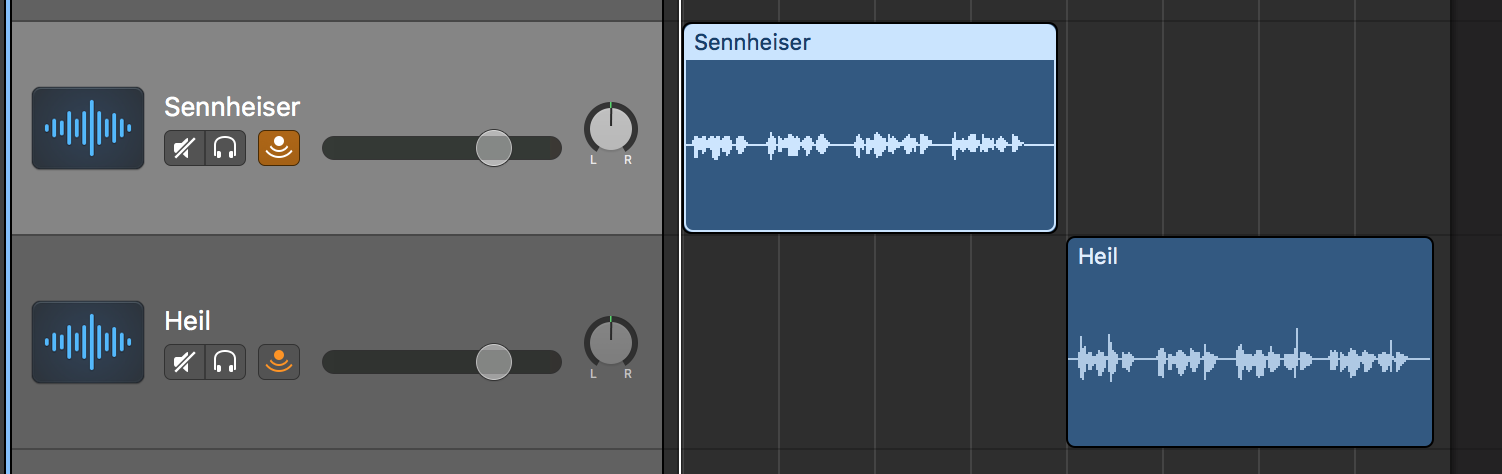
But the proof is in the pudding, so I did a direct comparison between the two. In the following clip, I speak the same testing sequence with both mics. You’ll first hear the Sennheiser, then followed by the Heil, then back to the Sennheiser, then ending with the Heil. I positioned both about an inch from my mouth.


Both mics actually sound pretty good. But there’s definitely more going on with the Heil, especially in the lower frequency ranges. It sounds much fuller than the Sennheiser, though the Sennheiser sounds pretty good as well.

As you can see, from the picture of the tracks, while both are generally being picked up at the same level, there are more defined peaks in the Heil, plus some sharp peaks not present on the Sennheiser track. What this amounts to sonically is a lot more content.

The problem with the clip I provided is that GarageBand does a bit of compression despite the fact that I exported it to SoundCloud uncompressed. But irrespective of that, there is definitely more going on with the Heil than with the Sennheiser. The difference between the two mics with my headphones on through my audio interface is marked. The Sennheiser sounds thin, while the Heil sounds rich and full.

Frequency ResponseΒ 

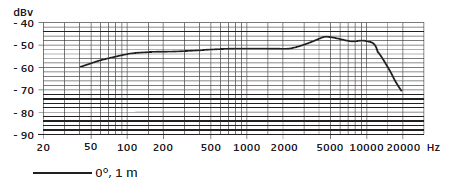
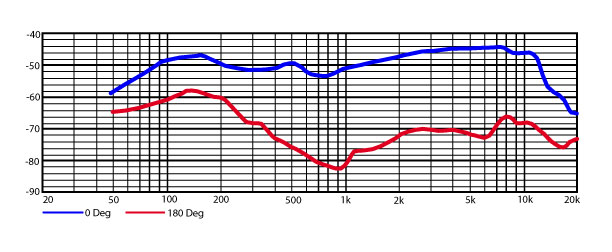
Take a look at the frequency response chart for each mic:

Heil PR-22

heil_pr22_frequency

Sennheiser e835

e-835-frequency-response

Just looking at the graph, it’s clear to see that overall sensitivity of the PR-22 is slightly higher than the e835. It’s not a significant difference as far as the numbers are concerned; however, especially when comparing the 1 kHz to 10 kHz range of both mics, this is where the PR-22 picks up much more content.

What first attracted me to the e835 years ago was its presence boost: That humpΒ around 4 kHz. Sennheiser specifically called that out in its marketing. To me in actual usage, it made the mic sound so much clearer than the Shure SM-58, which sounded muddy in comparison. But with the Heil, the upper-mid to high-frequency sensitivity provide even more presence. And looking at the overall chart, there’s a lot more being picked up by the Heil in the same conditions.

In the Studio

What this means for recording is that I do a lot less EQ manipulation with the Heil than I do with the Sennheiser. In fact, re-recording a song with the Heil, the only EQ adjustments I made were to roll off the extreme highs (sizzle) and lows (muffles) and reduce a peak at around 220 Hz (it’s a trick I learned to make my vocals sound clearer). Contrast that with the Sennheiser where I actually have to roll off the extreme highs and lows, add a few dB of both lows (around 100Hz) and upper-mids and highs especially highs above 7 kHz because the mic records a bit muddy.

The net result is that I can produce a good vocal track with either mic. It just takes a lot more twiddling and tweaking when doing the EQ for the e835.

On Stage

But because there’s so much content that the Heil picks up, I have to adjust my mic technique and pull back just a bit. Proximity effect with the Heil is actually not as pronounced as I’ve experienced with other mics – especially the Shure SM-58 – but though Heil claims it’s not prone to proximity effect, all mics are prone to it. By pulling back ever so slightly, I allow the mic to pick up more mids, without sacrificing the lows.

Rear Rejection

Probably the best selling point of the mic is its rear sound rejection. While I was recording a test clip earlier, my daughter asked me a question. I had to stop recording, but after listening to what I recorded, I could hardly hear her voice, which means that the sound I was actually hearing from her voice was what bounced off the wall behind me. This makes the mic excellent for stage workΒ and will be much less prone to feedback issues when placed close to a monitor.

Off-Axis

This is a very directional mic. While off-axis pickup is not bad, it’s not advised to stray over an inch from the capsule in any direction. I’ve been playing with the mic for the last couple of days, and for stage positioning. I found that pointing the mic a few degrees up, and placing the top edge the capsule level with my lower lip is the optimal position for me. And though I have good technique controlling my plosives (“b” and “p” sounds), positioning the mic there helps even more, and I don’t sacrifice any content.

But that said, the mic comes with a very nice foam capsule screen. I could sing straight on into the capsule with the screen on, and it protects quite a bit from plosives. It doesn’t eliminate them – nor should any screen do that – but it does help quite a bit.

Overall Impression

All that said, this mic is not for everyone. Because it picks up a lot more, it may not please everyone when they hear their voice through the mic the first time. I remember when I tried out the PR-35. I was blown away! I really didn’t know there was so much more in my voice. The PR-22 is not nearly as sensitive as the PR-35, but it’s pretty sensitive in its own right.

As far as I’m concerned, I’ve just had a defining moment with this mic. Mind you, it’s not really a super, high-end mic. But the sound quality rivals much more expensive mics. I’m a happy camper!

5 Tone Bones - Gear has stellar performance, value, and quality. This is definitely top of the class, best of breed, and it's a no-brainer to add this to your gear lineup!

Maker:0x4c,Date:2017-12-19,Ver:4,Lens:Kan03,Act:Lar01,E-Y

Aroma AGS8 Instrument Stand

Summary: For me, this is a gigging musician’s wet dream as far as guitar stands go. Not only is it sturdy, well-designed and well-built, it is light AF!

Pros: Did I mention that this stand is light? It doesn’t seem to weigh much more than a pound if that. But don’t be fooled by the lightweight. The aircraft-grade aluminum is tough!

Cons: None.

Price: $16.99 – $17.99 (Amazon, depending on color)

Features (from Amazon, and I assume Aroma):

  • THE MOST BEAUTIFUL FOLDING STAND LASTS LONG. Top aircraft grade aluminum tubes used, with high strength ABS joints, ensure a long lifetime usage. A frame structure, when unfolded, is the most stable design to support your instruments.
  • THE MOST PRACTICAL STAND FOR FRET AND STRING INSTRUMENTS. The ladder designed base arms, length adjustable, let the stand suitable for different thickness instruments. The vertical arms opening degrees adjustable for different sizes of instruments. The rotatable contact surface on the stand top for different instruments leaning angles. (NOT for V-shape or other special shapes instruments)
  • ALL THE WAY ROUND PROTECTING YOUR INSTRUMENT. All contact points where touching your instruments are covered with soft silicone material, which is dull to any chemical reaction with your instrument surface. The 4 landing points are also covered with slip-resistance silicone material.
  • USE YOUR STAND ANYTIME ANYWHERE. The smart adjustable and collapsible design is to fold your stand into one piece. Lightweight. Easy to carry along with your instrument anywhere anytime.
  • SHARE YOUR CREATIVITY. Join Aroma Facebook account, post your using tips, your fun with this stand. Jam your thoughts with others.

Tone Bone Rating: 5.00 ~ Sometimes, even the mundane can get me excited, especially when that mundane thing makes my life so much easier.

It’s a guitar stand for goodness sake! Who the hell cares?

I do, for one. With the number of gigs I do per year, gear weight is a factor, so is compactness when you don’t have the luxury of a road crew. And when I can get those two things plus a great design that’ll protect my investment, well, I flip out!

One of my bandmates purchased one a couple of weeks ago. I thought it was cool with its compact design and adjustable base arms. But I was most impressed with how light it was. I resolved then that I’d get one. I am not disappointed in the slightest!

Fit and Finish

The days of “Made in China” being associated with poor quality are long gone. This stand is absolutely well-built. The aircraft-grade aluminum tubing is super-strong, and the plastic ABS joints should withstand a lot of wear and tear.Β I got mine in blue, but you can get the stand in black, rose gold, gold, and silver. The latter three will cost you a buck more for some reason. I guess black and blue sell the best. πŸ™‚

The design of this stand is great. It folds up nice and compact. You can see in the pictures above where I placed a quarter next to the folded stand. Nice and small.

As for its sturdiness, I have no issues with it. But if you notice how I’ve set up my acoustic guitar, I have it so it stands fairly upright. This is to make sure that the bottom edge of the guitar abuts against the end stoppers of the base arms. Plus, it will put minimal pressure on the apex pad. With a stand this short, you don’t want a lot of weight at the top of the stand. You’re just asking for trouble.

Either the weight of the guitar willΒ make the stand tip back (not too likely – I put my Les Paul on this stand and set it up to lean back and it stayed in place), or as someone reported on Amazon, the top pad put a slight depression into the back of his ES-335. To me, it’s just common sense to let physics work for you. When you place the guitar in a more upright position, more of the body surface will contact the pads. So stand the freakin’ guitar up! πŸ™‚ Sheesh!

Finally, I dig the bottom footpads. They elevate the entire structure of the frame, so the chance of spilled liquid contacting my guitar is pretty much nullified.

Overall Impression

I love this stand! I’m probably going to get a couple more of these. Well-made, well-designed and lightweight. A perfect combination, even it’s just a lowly stand.