Several people made some negative comments on how they wanted to hear the mic or the humbucker isolated, or others just posted rude comments on the guy’s playing (which is actually quite good). Others commented on how they got lost in the great music and forgot that it was a demo for the pickup. I too got lost in the great music the demonstrator was making and to me at least, that was the whole point of the demo: To show off how the pickup helps you make music.
I get it. Getting an idea of how the independent components function has its uses. But for this video, I think it was more important to show what kind of sound you could get within the context of making music.
But here’s the downside of isolating the components or hearing the raw sound: Your mileage may vary. Think about it. How many times have you purchased gear based on a video or audio demo and it sounds completely different from what you heard online?
Especially with pickups, you’ll never know how it truly sounds until you’ve installed it. And make no mistake: Once you get a pickup – or any gear for that matter – you’re going to have to balance out the EQ to make it fit in your rig.
One guy commented that the video was completely useless. I totally disagree. For me, I wanted to hear certain things; actually one thing in particular: Does the pickup make a “quack.” I certainly couldn’t detect it. And that alone made the video totally useful for me because no matter what style the demonstrator played, there was no quack at all. The thing about acoustic pickups is that you have look for that because – and I don’t care what anyone says about this – pickup quack cannot be EQ’d out.
So the next time you evaluate gear, keep in mind that your mileage will vary. Your gear is most likely completely different from the person demonstrating. So look for other things like dynamics and voicing and attack. Those are things that will translate over to your rig. Also, you have to take a bit of a leap of faith with a lot of gear with respect to voicing. You should ask, “The dynamics are wonderful on this, but it’s voiced a little high, so can I EQ it?” You’ll never know until you get the gear…
I have this thing about gear and that is that it has to “speak” to me, and it’s probably why I’ve taken so long to get gear the last couple of years. I’ve pretty much found my sound, so I’ve become incredibly discerning. It used to be that if I thought something was cool, I’d just get it. As a result, I ended up with a lot of stuff that I just didn’t use and ended up selling usually for less than I paid just so I could move it.
But the universe works in mysterious ways, and it brought me a 1994 Simon & Patrick Luthier “Pro.” It was a gift from a friend whose uncle passed away 15 years ago, and it had been sitting in storage for all that time. As opposed to giving it away to charity, she asked if I’d like it, and if not, find a home for it. Well, it wasn’t an “either-or” thing for me. I fell in love with the guitar from the moment I first sat down and played it; 15-year-old strings and all!
When I love an instrument, I write music with it or do sound tests. Here’s something I recorded right before writing this article:
This was recorded pretty much raw with no EQ. I laid down the backing track yesterday when no one was home, but this morning, I recorded the solo – there were kids and dogs moving around in the background. I recorded both tracks using a Nady RSM-2 Ribbon Mic. Pretty cheap, but it does a great job. I just have to be careful about proximity as this mic is really prone to proximity effects.
For this next one, I was actually re-working a reggae song I wrote several years ago. My third son heard me laying down the tracks and asked if I could put a hip-hop beat underneath it. He’s an aspiring rapper. So I played around with some beats, laid down a big sub bass line with my trusty Squier “P” bass, and mixed it down. I don’t even know what to call it, but it’s cool
Here’s a new song I wrote last weekend, using just this guitar for all the guitar parts. It’s called “Shine Your Love.”
Funny thing is that I haven’t changed strings on the guitar yet. I know, I know… I’ve just been extremely busy this past week with work. Plus, I’m going to have an LR Baggs Anthem SL pickup system installed in it and have a full setup done on the guitar. I don’t want to put on a new set of strings, only to have them replaced when I get the setup done. So… I’ll live with the strings on it for now.
All in all, every time I pick up this guitar it’s like magic. There’s a great spirit in this guitar and this is something that I will lovingly care for in the years to come!
So I did a little digging on my “new” guitar and contacted Godin directly to see if I could get some provenance information. By the way, the folks at Godin are awesome! Michel, the support person who answered my query originally, was so very helpful. If you have any Godin product, rest assured that you will get support! But I digress…
The guitar I’ve got was built in 1994. It was called a “Pro” model and replaced with the “Showcase” in 2002. It originally sold for $1200, though as a “Demo” model, I doubt it sold at full retail even back then. They’re worth about half as much now, but who cares? This guitar plays and sounds incredible!
For specs, here’s what Michel shared with me:
“That’s an S&P Pro Rosewood. It actually has a solid spruce top, but the nitro finish has yellowed over the years so it looks darker than a spruce top. It also features a solid rosewood back, laminated rosewood sides, a mahogany neck and an ebony fingerboard and bridge.”
So my thought that the top was cedar was wrong, but that’s totally cool that this was finished with nitrocellulose!
Here’s a gallery of some of the shots that I sent to Godin.
It is hard to explain the feeling I get when I play this guitar. It’s not because this was a gift or it was one of those fabled “closet gems.” This is just a damn good guitar, and to find out its provenance makes it even more special. I’m looking to get an LR Baggs Anthem system installed in it within the next week or so. So excited!
Sorry, no official pictures yet. But I will follow up…
Out of the closet…
Wow! It has been a LONG time since I announced an NGD! (New Guitar Day) Part of it has been due to the fact that since I found my sound, I haven’t been that compelled to get any new guitars. But a rather big part of it has been due to a lack of funds. But that’s another story…
In any case, I didn’t pay a cent for this guitar. A very close friend gave this and two other guitars – which I’ll talk about in later articles – to me yesterday. The story behind them is that they were her uncle’s guitars. He passed away in 2002, and they had been sitting in storage since then. Her mother had been hanging onto them for nostalgia, but recently decided to give them away. She was going to give them to Goodwill, but my friend stopped her and said that she should give them to me because if I don’t keep them, I will find a home for them. I’m probably going to keep all three.
As to the guitars inherited, here they are:
1991 Godin Artisan ST
Hiroshi Tamura P40 Classical Guitar
1994 Simon & Patrick Showcase Rosewood
The Godin needs a bit of work. But I think a thorough setup will set it right. The Tamura, well, I’m not too sure about. It’s by no means an expensive guitar, but it does sound pretty nice. Always good to have a classical guitar around just in case… As for the Simon & Patrick, well, that’s what this article is about.
This guitar totally caught my eye when I opened the hard shell case. I took it out, gave it a relative tuning and started playing some chords and picking notes. The neck was PERFECT! Totally straight, and even with 15+-year-old strings, the sound was amazing! I wish it had electronics because I would’ve tried to gig with it last night. Oh well…
When I got home after my gig, I set out to do a bit of research on the guitar. I found a serial number lookup and found that it was constructed in 1994. I’m actually not exactly sure that it’s a Showcase model because the model space on the label was stamped with “DEMO.” Obviously, my friend’s uncle got this for cheap. I’m assuming it came from Gryphon Stringed Instruments in Palo Alto, CA as a Gryphon tag was in the case that said, “This guitar was strung with D’Addario strings.” That actually impressed me even more because if it indeed came from Gryphon, it meant that it was a quality instrument as Gryphon only sells high-quality gear, even with there economy pieces.
Build… well kind of…
As for the guitar itself, as I mentioned, the sound was absolutely amazing! I had done a bit of research on my smartphone before my gig and found that it was made by Godin under the Simon & Patrick Luthier brand. I’ve known about Godin for awhile and knew that they started out as a parts manufacturer then went into selling high-quality, affordable guitars under different brand names. S&P is one of those brands.
But this “Showcase,” even if it started out life as a more budget guitar (it is actually the top-of-the-line in the S&P family), doesn’t sound, feel, or play like a cheap guitar. It has a warm, deep, and woody tone that simply speaks to me. Here’s what I have been able to glean from close inspection thus far:
Solid Rosewood Sides
2-piece rosewood back
Mahogany neck with a slightly flattened “C” profile
Mahogany headstock with no laminate. Very nice.
Solid Cedar soundboard
Bone nut (?). Looks and feels natural.
It appears to have spruce bracing on the back and sides
Spruce X-bracing to support the top. Super cool!
The reason why I’m not completely sure about this being a Showcase model is that it has a cedar soundboard. All Showcase models now come with Adirondack spruce soundboards. BUT I absolutely love Cedar soundboards! My first Yamaha FG-335 had a cedar soundboard, and though it too was a budget guitar, it had an incredible sound. Cedar produces a warm, deep and resonant tone. It’s the kind of tone that penetrates your body and just resonates. I can’t wait to perform with it!
Another thing that I noticed that differs from the spec sheet on the S&P site is that the neck finish is actually semi-gloss as opposed to high-gloss. I need to confirm, but it appears to have a 25 1/2″ scale length. This seems to be in line with the spec sheet as well.
The fit and finish on this guitar are amazing. Other than a little pick wear on the soundboard, there wasn’t a scratch on this guitar when I opened the case. It’s obvious that original owner loved this guitar and took very good care of it.
This particular guitar coming to me comes at a very fortuitous time. My trusty Yamaha AP900 is finally showing its weariness of the road. After a couple of thousand gigs, it’s ready to be retired. I’m going to get it set up, then give it to one of my kids. And I was thinking a couple of months ago that instead of getting another OM, I’d like to go back to a Dreadnaught. I like the scooped tone of a dreadnaught, and for how my playing has evolved over time, a dreadnaught’s sound really appeals to me.
How It Sounds
I made a couple of quick recordings of the guitar this morning to demonstrate just how good it sounds. The guitar was recorded with a Nady RSM-2 Ribbon mic positioned about 4 feet away from me. I did a tiny bit of EQ by adding a little low cut to compensate for the mic that seems to boost lows way too much. Other than that, I kept the EQ flat. The ambiance that you may detect is not reverb, but room ambiance from my hardwood floors and walls that the back of the ribbon mic picked up.
Fingerstyle
Funky Strum
What’s so amazing about the sound of this guitar is that while the tone is deep and woody, there is clear note separation. This guitar is actually quite loud. But it doesn’t have a mushy tone at all. All the notes ring well together.
Moving Forward
I’m going to get the guitar set up and will have a pickup system installed. I’m probably going to go with an LR Baggs Anthem system. Yeah, it’s a bit on the pricey side, but I’ve listened to several independent demos and this system seems to provide the most natural sound when plugged in. I like the fact that it has a pre-amp built into it. I’d go with a more minimalist pickup setup, but the thought of having to run through a dedicated pre-amp means that I have to lug more gear to gigs; plus, it’s yet another thing that I have to plug in. So the Anthem is it for me.
Overall Impression
This is definitely a keeper and has given me a newfound respect for Godin. I went on some forums and most people talking about them loved theirs. I think I’m a new convert to this brand. But then again, I also think I got very lucky. With all commercially-available gear, no matter how expensive, you have to play a lot of them. I’ve played some Martins and Taylors that sounded like shit compared to this.Update
Update 12/18/2017
I reached out to Godin to get some provenance on the guitar, and it turns out that the guitar is actually a “PRO” Rosewood. This line has been replaced with the “Showcase” line.
When my boys were playing roller and ice hockey, I coached their teams, head coaching for roller hockey and doing dry land training for ice hockey. Over the years, I had several players who would have a habit of getting down on themselves when they made a mistake, and it would throw their entire game off. Opposing players would see this, and use that to force them to make even more mistakes to mess with their minds and make them play even worse.
When I first started coaching, I didn’t quite know how to deal with this, other than pulling the player out of the game. But a good friend and fellow hockey player told me an important thing when I discussed my predicament with him: “You can’t get down on these kids when they make a mistake. You have to teach them how to play through it.”
I, of course, asked him how he dealt with it, and he said, “I explain to them that a mistake is 10 seconds. You’ve got the whole rest of the game to make up for it. And if you know what the mistake is, do your best not to make the same mistake twice.” Wise words for sure.
And I used these words over and over again throughout my coaching career. I didn’t ever want to be a coach that berated his players for making mistakes. I called the mistake out, and more importantly, ask them what they could’ve done differently. More often than not, they’d have an answer, and if they didn’t, I’d show them or draw on my dry-erase board what they could do.
But this isn’t just a sports lesson. It can be applied to pretty much anything…
At a recent gig, I was doing a lead, and go so wrapped up in what I was playing that I completely missed a change. It only lasted a few notes, but remembering what I had coached years ago, I simply bent up to a note that worked with that key, and lo and behold, I was back in the pocket! 🙂 After the song, we all just laughed. The only thing I said to the band was, “Oops…”
There’s no such thing as absolute perfection. But that’s the beauty of performing. Those spontaneous mishaps or misadventures can be easily overcome. You just have to not let it get to you…
Summary: Part of the Fender Classic Design series, this lower-end model is a real surprise; especially in the sound department. Nice, low action, and a great feel. If you’re looking for a starter guitar or getting your child his or her very first guitar, you can’t go wrong with the FA 135 CE.
Pros: Some reviews have questioned the build quality of this guitar, but I’m very impressed with how solid this guitar is built. The guitar stays in tune and playing it is so, so easy. And for a smaller concert size guitar, this has a very rich sound; it’s quite unexpected.
Cons: The only nit that I have – and it’s really just a nit – is that the tuners are bit fast for my tastes. Fine tuning is a little challenging at first, but it’s easy to get used to.
Price: $179 street
Features:
Laminated bass wood sides and back
Laminated spruce top with X-bracing reinforcement
Nato wood neck
Rosewood fretboard
Compensated rosewood saddle
Single cutaway
Fishman Ion-T Preamp with built-in tuner
Tone Bone Rating: 4.75 ~ For what it is, I can’t help but give this guitar a great rating. Fender really surprised me with this guitar!
My 12-year-old son has been taking Ukelele lessons for a couple of years, and after he finished his last lesson, he came out and told me that he wanted to start playing guitar. His teacher, Michael, had accompanied him out of the lesson room and told me that he was ready. And since his birthday was coming up, I thought I’d get him a new one, as opposed to fixing up one of my old ones. My thought is that just like my dad did for me, I’d give my son a brand new guitar for his first one.
So today I went to Guitar Center and spent a couple of hours in their acoustic room evaluating all sorts of acoustic guitars. I didn’t want to spend over $200 for this guitar, but luckily, as a big-box retailer, Guitar Center has a pretty wide selection of “value” guitars. I tried guitars from Mitchell, a used “Little Martin,” several Yamaha guitars, and even a Gretsch.
The Little Martin was impressive and solidly built and was at a great price of $189, but it wouldn’t be available until Wednesday due to some city ordinance about a waiting period for used guitars. I needed a guitar today. So I sat in the acoustic room, and my gaze fell upon the Fender. I immediately thought to myself that it looked really nice. But, the thought also occurred that it was a Fender acoustic, and my previous experiences with those haven’t been all that good.
But in spite of my preconceptions, I decided to give it a try and was immediately surprised by the tone of the guitar. For a smaller-body guitar, I wasn’t expecting much sound-wise. But this had a sweet, gorgeous, rich tone. It completely took me by surprise. Then I started playing it, and thought, This couldn’t be a Fender acoustic! It sounds and plays way too nice – especially at $179!
Folks, this guitar is a sleeper, and it reminds me of the experience I had with my Squier Classic Vibe Tele. Great sound, great playability at a SUPER-affordable price!
Fit and Finish
The build quality of this guitar is awesome, just like my CV Tele. There are no uneven paint lines, and all the seams are clean and straight. The neck is straight, and the action is set up low, though it does raise just a little bit in the higher registers; but it’s not so bad that it’s not playable. This is a great guitar for fingerstyle playing, but even strummed, there’s no buzz. But more importantly, the setup is perfect for a beginning guitarist like my little boy.
Playability
Quite frankly, the main criterium for choosing a guitar for my son was playability. I could live with a guitar that had only okay sound just as long as it was easy to play. The frets are medium wire. Not great for bending and vibrato, but hey! This is a beginner’s guitar, so that’s not a big issue. The spacing is great between the frets as this is a shorter-scale guitar. For a seasoned player, this guitar plays with ease. For a beginner and a young player at that, the short scale will help them build up confidence.
How It Sounds
For a low-priced guitar, the FA 135 CE is amazingly articulate. As expected, it has a bit brighter voice as compared to a larger body guitar. But it has some nice sustain, and the spruce soundboard resonates with a surprisingly rich tone. Projection is great with this guitar due to the X-bracing under the top to provide stability and to help with projection. What also surprised me about this guitar is that it’s louder than I expected.
Tone-wise, as for me, I prefer a brighter-sounding guitar. While I liked the Little Martin, doing an A/B with that vs. the FA 135, it was as if a blanket was put over the Martin. The sound was much warmer and a bit too subdued for my tastes. That guitar projected very loud, but it would get lost in the mix when played with other guitars. This shouldn’t happen with the FA 135 CE.
Quick Demo
Here’s a quick demo I recorded just before posting this review. Sorry for the sound quality – and background noises – as this was recorded using my MacBook’s built in microphone, my new puppy was being a little playful across the room… 🙂
Preamp Test
As mentioned above, the guitar comes equipped with a Fishman Ion-T preamp. It’s a pretty simple preamp, so I thought I would give it a whirl. It’s not a bad preamp as preamps go, but it’s nothing special. In fact, its output is only okay. In order to record, I had to peg the guitar’s volume and add a lot of gain on my audio interface. Not a big deal. What was important to me was if I could get a good enough guitar signal to use the guitar in a song.
I have to say that I was pretty impressed with the result. I didn’t have to tweak the EQ at all. Of course, I did some production processing, but that was the point of the exercise, which was to see if I could get a good, mixable acoustic guitar sound from a plugged in guitar.
Overall Impression
I love this guitar! Who cares if it was manufactured in China. I have to commend Fender for finding an overseas manufacturer that does a great job at building guitars. The build, play and sound quality of this guitar have far exceeded my expectations. I think this is a guitar that my son will enjoy for years to come!
Try this: No effects. Not even reverb. Just you, your guitar, and your amp. No cheating. Plug your guitar directly into your amp, and if it has built-in reverb, turn it off. Another thing: No cranking up your gain to get into full overdrive. Set your amp such that you have to hit it hard to break it up.
Play.
So what’s the point? The point is that you will see just how much you depend on your effects. But even after this “test.” Try playing and doing leads without any effects. For some, this isn’t an issue, as they normally play plugged straight in. But for others like me, we use effects and doing leads without them might just surface issues with technique.
Mind you, I’m not advocating for doing away with effects altogether. That would just be silly; especially if what you hear as your “sound” is from effects. But if you can be expressive without effects, imagine how much more expressive you will be when you have effects.
—–
At my last band rehearsal, I totally flaked and forgot to bring my pedal board, and it was too far to go back home to fetch it. So I said oh well, wtf… I’ll just deal with it. What the hell was I going to do? Call off practice? No way. That rehearsal turned out to be one of – if not – the best rehearsals we’ve had as a band since I joined. Our frontman came to the restaurant where I solo last night and we talked about how great that rehearsal was. So organic, and every song – even ones we were learning – felt tight.
For me, playing without effects forced me to work my guitar and get all my sustain with my fingers; not pressing hard and digging in, but making sure I fully sound out notes.
Might seem obvious to some players, but what I realized right away was that I was depending a lot on my effects to give me sustain and frankly, I got lazy. The net effect was that I slowed down my solos, and made sure that I was really taking my time expressing whatever message I had in a song.
Mind you, it wasn’t necessarily a conscious thing. I could hear that I was cutting off my notes a bit so I simply slowed down just a tad and let my guitar sing in its natural voice.
At the end of practice, I was so satisfied. Combine that with just having a great time with my bandmates, and that was simply an inspirational rehearsal.
Update
Some guy on Facebook accused me of pulling the “guitar machismo” card with this post. I guess he responded to me using the word “cheating” above within the context of turning your reverb off. Oh well, I actually found that to be quite amusing. But he did have a point just the same.
I guess we’ve all come across players who look down on others for using effects. They plug straight into the amp and that’s it and they look upon others using effects as somehow less of a player. Let’s just call it what it is: Bullshit.
It’s the same thing as people calling a capo a “cheater.” My feeling is that however you need to get your sound, use it. There are no rules. Just as I responded to someone saying I was cheating by using a capo that he should tell that to James Taylor, anyone who looks down on people using effect pedals should tell that to Satch, or Eric Johnson, or The Edge.
In any case, my post was about how my effects were masking deficiencies in my technique. Not having my effects on hand made me go back to basics and use my fingers to get my tone and sustain. It was a great exercise that will just enhance my sound when I have effects.
For instance, at my solo acoustic gigs this weekend, I took what I learned to heart, and though I played using my effects, I felt my sound was so much better because I was eeking out as much tone and sustain with my fingers and NOT relying on my effects.
So I apologize to the person who read this who may have been offended. Hopefully, with this explanation, he can see what I was getting at… Or not. 🙂
I was browsing YouTube this afternoon for Peter Frampton videos from his days with Humble Pie; specifically, the 70’s version of “I Don’t Need No Doctor,” and comparing it to what he’s doing now. Amazing how he can still rock. While I watched one of the videos, I saw a related video of Mark Knopfler talking guitars.
Intrigued, I clicked on the link and was immediately drawn into his discussion. The video isn’t so much of him doing any teaching, but describing the various techniques that he employs. It is a bit instructional in that he says things like, “You can do this, or this…” But really, this video is a revelation, a view into the mind of a master, and how he approaches music and playing.
Though I don’t post nearly as much as I used to, I still check my admin dashboard to see what articles have been the most active in the recent past. When I looked this morning, I saw that an article I wrote about Wyres strings and how they’re the best I’ve ever played. That was back in 2009 and I still use them for acoustic. They provide a certain brightness that livens up the natural warmth of my APX900. BUT, I no longer use them for electric because I love the sound of Ernie Ball Slinky Cobalt strings. That’s not to say that Wyres electric strings aren’t great. They are, and the coated strings last a LONG time. But they’re just a bit too smooth-sounding for my tastes.
BUT, I no longer use them for electric because I love the sound of Ernie Ball Slinky Cobalt strings. That’s not to say that Wyres electric strings aren’t great. They are, and the coated strings last a LONG time. But they’re just a bit too smooth-sounding for my tastes.
But the point to this post is that in our search for that “Tone Unicorn,” what we might find as the do-all, be-all gear one day, may just go into our archives down the road. We will rave about gear that we come across or acquire, then a little bit down the road, we’ll rave about a similar product. As the title of the article suggests, it makes us look a bit fickle.
I laughed out loud when I read the headline to that Wyres article. My blog was only a couple of years old then, and to be completely honest, I have to admit that I was in the midst of GASsing out, wide-eyed with wonder over all the new gear I was evaluating. I was getting amps, guitars, effects, accessories. Each one was the latest and greatest at the time.
But now that I’ve calmed down – and now that I don’t have the “budget” for all that new stuff, I look back on all the gear that I got, and how 90% of is just sitting. For instance, I have a lot of overdrive pedals. A lot. Some are these awesome boutique pedals that I spent hundreds of dollars on. But I now just rotate between three that serve my purposes. And truth be told, I’ve mostly been using my $65 EHX Soul Food exclusively as of late.
Part of it is that I’ve found my sound and though different gear might color my tone in different ways, I still sound like me.
But I ask myself this: Were I again to have the means to acquire even more gear, would I go on another GAS binge? I’m not sure, but chances are I probably won’t. Part of not having the budget for new gear meant that I had to learn to play with the stuff I already had. Turns out that I already had some pretty awesome gear, and other than replacing worn out stuff, I don’t think I’d get worked up into a frenzy.
Over the years, I’ve listened to countless people and have read article after article about good tone. I’ve joined in or lurked on message boards discussing tone and who knows or who has good tone. It’s all bullshit, and let me tell you why.
First, by even saying the word “good,” we automatically get into the subjective. What might sound good to one person might sound horrible to another. For instance, lots of people rave about Jeff Beck’s tone. Personally, I’m not a fan. Without a doubt, he’s a great player with incredible technique, but I could take it or leave it as far as how he sounds. On the other hand, I love Santana’s tone. But a friend of mine can’t stand it. See what I mean?
Secondly, if we want to take it closer to home and talk about our own tone, even there, we’re standing on thin ice. The reason is that over time our perceptions and tastes change as we evolve as players. I went from playing clean amps with an overdrive and/or distortion pedal in front which was perfectly fine to my ears, to discovering the complex distortion provided by overdriving my amp and using an overdrive or a booster which is now the overdrive sound I prefer.
To this day, I hate my recorded tone. Part of that has a lot to do with the microphones I use and part of it has a lot to do with my cheap DAW software. I’ve gotten better at processing my recorded tone, but I’m still in search of good tone on my recordings – at least for overdriven amps. I’m fine with my clean and acoustic tones.
I shared my own displeasure because I found that my displeasure has often times led to extreme cases of GAS where I’d buy gear that I think will improve things. At one point, I was running two interconnected pedal boards in my studio with 25+ pedals between the two. It started out with just a few, then grew as I added overdrives, and modulation pedals and a few different expression pedals. In the end, I have a single board with 6 pedals for my live sound, and just plug straight into my amp and record the natural signal. That was a lesson that literally cost me thousands of dollars.
So is there really anything such as “good” tone upon which everyone can agree? Technically no, because as I said above, what might sound good to one person might sound uninspiring or even horrible to another. However, that said, it’s probably a good bet that a player has good tone if there is a general consensus that their tone’s good. Take Robben Ford, for instance. It’s generally accepted that he has great tone. Same with Eric Johnson. Sure, there may be outliers who don’t like their tone, but if they’re few and far between, chances are if someone mentions that these guys have great tone, it’s safe to accept that.
That said, I would caution you against just taking anyone’s word on what’s good tone and be especially wary of those people who say another person “knows tone.” I’ve seen a lot of that on forums; someone saying to listen to someone else’s opinion about tone because they “know good tone.” Usually, that stems from a newbie asking about how some gear sounds and others might pipe in and say, “Take this dude’s word on it. He knows tone.”
I think that’s the biggest crock of shit perpetrated on people who just want to get people’s collective perspective on how some gear sounds. That person who “knows tone” is usually a “forum bully.” But as they say, opinions are like assholes: Everyone has one.
Yeah, I know… it’s rare that I rant. I’m a generally “glass half full” kind of guy. But I got to thinking about this subject over the weekend, and some memories of previous conversations on this subject kind of pissed me off, so I decided to write about it. So… Flame off!
 So I did a little digging on my “new” guitar and contacted Godin directly to see if I could get some provenance information. By the way, the folks at Godin are awesome! Michel, the support person who answered my query originally, was so very helpful. If you have any Godin product, rest assured that you will get support! But I digress…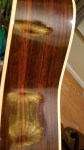
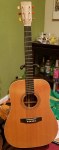


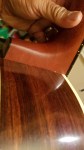
 Sorry, no official pictures yet. But I will follow up…

 Guitar Gear