Feeds:
Posts
Comments

My choice of strings has evolved over time. I’ve played with everything from pure nickel to nickel-plated steel to pure steel, to most recently cobalt-wound steel. I loved the warmth of pure nickel for clean to mildly gritty tunes, but they just didn’t seem to cut it when I started getting into more straight-up rock. I wanted more bite and aggressive attack that nickel strings just couldn’t give me.

So within the past year, I moved to Ernie Ball Cobalt and RPS Super Slinky strings. Talk about an awakening! The “pop” and “snap” that I had envisioned in my head was suddenly… there. I’ve been an Ernie Ball convert since!

Recently, Ernie Ball came out with a new line of strings, the “M-Steel” line which they claimed to be their highest-output strings to date. I of course had to try them, so I contacted the company – which is something I don’t do very often – to see if I could get a review set. They sent me set of .11-.48 which is a heavier gauge than the 10’s I normally play. But no matter, I strung up my guitar, made mild adjustments to my neck and intonation, and played for a little while to break them in.

I didn’t actually play with them for very long because I wanted the strings to settle for a day, but I gave them some earnest time this evening. I was a little nervous about the heavier gauge of the strings; they certainly had a heavier feel to them. But as I played, I realized that I wasn’t really pressing any harder than I normally press, and then just went about the business of playing. After about two hours straight of noodling, jamming, and riffing (I’ll have some clips later), I have to say that I’m pretty impressed with these strings! I’m looking forward to using them this weekend!

How they feel…

When I first strung up my guitar, the strings felt coated with some sort of powder, much like Wyres strings have that plastic polymer coating on them. But that feeling goes away after playing for awhile. In any case, once that coating wears into the strings, they’re certainly slinky. Moving around the fretboard with these strings is like butter. Even for 11’s, they bend nicely – really nicely. I could’ve played all night, but I had to be conscientious of my neighbors. 🙂 I love how they feel!

How they sound…

As they say, the proof is in the pudding, and once these strings got broken in a bit, they sounded freakin’ awesome! The higher gauge really brings out the low end, but you don’t lose that top-end sparkle. One thing I immediately noticed with these strings was the SUSTAIN!!! It’s insane. I did the “woman tone” thing on my neck pickup (crank the volume, turn the tone all the way down), and my guitar seemed to howl with this haunting, hollow tone. Quite lovely!

As I mentioned above, I’ll have some clips pretty soon. They’re actually finished, but I was too tired to bounce them.

Anyway, here’s the product description from the Ernie Ball site:

The loudest, most expressive strings ever created. Provides increased output, frequency response, and strength.

M-Steel, short for Maraging Steel, is a superalloy used in high stress applications for the aerospace and defense industries.  The wound strings are comprised of a patented Super Cobalt alloy wrapped around a Maraging steel hex core wire, producing a richer and fuller tone with powerful low end response.  M-Steel plain strings are comprised of a specially tempered steel for maximum fatigue resistance.  A patented winding of steel around the ball end of the plain strings reduces slippage, breakage and stays in tune better than conventional plain strings.

Check ’em out!

Update

I played my R8 once again this morning before going to work, trying to find a better description of how the strings sound with my guitar. After a bit of playing, I realized that my guitar didn’t sound different, but the tone was markedly more beefy; not to be mistaken with warmer. There just seemed to be MORE of it. My R8 naturally has a deeper, more woody tone than my 59 Replica, so hearing it sing like that in sort of a lower register is pretty awesome. 🙂 And funny thing, I’m going to stick with 11’s on that guitar from now on. I love the feel of ’em.

Based upon my playing this morning, I’m going to get a set of 10’s for my 59 Replica. These are simply awesome strings.
So I got this email from the Fender PR department telling me about their new guitar configurator called “Design Your Own.” So I went down to the Fender site and designed my dream Strat. Pretty cool stuff! I guess Fender figured if car manufacturers could do this (I designed my 2014 C7 Corvette), they could do it too. And why not? It’s totally cool to be able to spec out and also see what you’re going to buy (or at least plan or dream about buying).

You know me, I’m not too much into gimmicks, and on the surface, this might seem like one, but it’s actually pretty cool. Check it out!

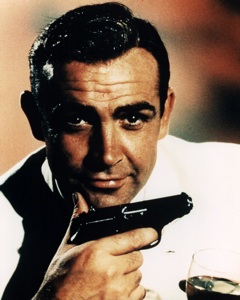
sean_connery_goldfinger_3It’s funny how my song writing has taken lots of twists and turns in the recent past. For years, I did nothing but religious music (I’m still writing those kinds of songs). Then I went through a phase where I was exploring my emotions and relationships in my life. But lately, I’ve taken to writing stories; letting the music dictate the subject matter to me.

This latest song actually started out as a rework of another I wrote several years ago about a young hottie I happened to dance with at a bar. Musically, the song was pretty good, but structurally, it just didn’t work. But as I worked on this song, even though there was a sense of “sexy” in it, it just didn’t feel like a “hottie” song. In fact, I started thinking about “007” films.

Then suddenly I found myself writing about a Bond on a “hit” and what he actually felt about it; what he felt about his job in general. The lyrics sort of took on a life of their own. Admittedly, the lyrics you’ll see below aren’t the original lyrics. The first set of lyrics didn’t seem to hold together well, so I swapped out some stuff and re-ordered a couple of the verses.

Anyway, give it a listen…

Note that this is the completed song after I tracked the instruments a couple of days ago. Didn’t change anything with respect to gear:

  • Amp: DV Mark Little 40 Head into an open-back Avatar 1 X 12 with a Jensen P12N speaker
  • Rhythm Guitar: Slash L Katie May into a Voodoo Labs Micro Vibe
  • Lead Guitar: ’59 Les Paul Replica into a Vox Big Bad Wah
  • Bass: Squier “P” Bass

I have to admit that I’m particularly pleased with the lead I played. I’ve never used a wah in any of my recordings up to now, and frankly, I was a bit nervous using it. But once I started playing, I forgot about my trepidation and just let my fingers do the talking. And to be completely honest, that was my first take of the lead after practicing over that section of the music trying different things for a few minutes. I figured I’d just throw the dice and see where the lead took me.

That was one of the few times that I felt truly “connected” when I was playing. Connection is a totally different state then concentration. It’s hard to explain. Let’s just say I was hyper-aware of everything around me when I was playing, and inherently “knew” what I needed to play when I played it. Normally when I’m recording a lead break, I’m pretty focused and admittedly I’ve got my solo worked out ahead of time. But this time, I only knew where I wanted to start with that double-stop bend; after that, all bets were off. I just felt my way through the solo. I guess that comes with trusting myself and my ability. It was very refreshing!

I know, I’m being a little long-winded, but I suddenly got on a philosophical bent somehow – maybe it’s the great wine that I’m drinking (Picchetti Winery Red Pavone Table Wine – 50% Cab Franc/50% Merlot). In any case, circling back to what I’m writing nowadays, for the first time in a long time I’ve been enjoying what I’ve been writing. I think it comes from not really caring where my music takes me. Like playing, I got better once I got over trying to play to a specific style. Once I realized that I liked to play and sing all sorts of stuff from rock to opera, my musical abilities progressed at a fast clip.

So it is with my music writing. I used to think that certain subjects were off-limits, or rather, I would limit myself to writing about just certain things. Then when I told myself to just be a storyteller, I just started writing about what came into my head. It didn’t matter what it was about. With this latest song, it’s actually pretty dark. Though the focus of the 007 movies is on the action, the guy’s a killer. He’s given various assignments, and they usually involve knocking someone off; and at times with a fairly glib attitude. And that’s what I wanted to portray in the song. In the end, his targets are just names on a list. Yeah, kind of dark…

Anyway, here are the lyrics to the song:

The Hit: James Bond’s Lament

Searching for the right moment
to cross the room
I’m drawn to the heat
of your smile
like a moth flying
into its doom.

I feel the weight of this metal
it’s smooth and it’s warm
a dark legacy that I leave
and I know that
I’ll never be mourned

No warning it’s the end of the line.
Your world is shattered in the blink of an eye.
no words of comfort that I think I could say.
it’s just another day…

You may not think you deserve this
but you know very well
there aren’t any angels in this game
and it’s likely
we’ll end up in hell.

It’s not a question of duty
to some majesty
The next name on the list
is all that matters to me

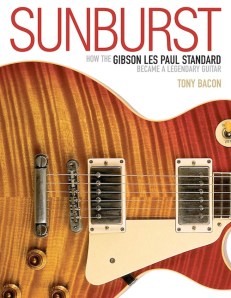
sunburstLike many Les Paul vintage and vintage-style “Burst” owners, I’ve acquired a fascination not only with the guitar itself, but with the history of the Les Paul; from the various guitars’ provenance to the stories of how people have gained ownership of them. Could be new, could be old, doesn’t much matter to me. There’s a magic about a Burst that seems to force owners to search beyond the wonderful tone they produce.

So when “Sunburst…” by Tony Bacon was released, I knew that I had to get a copy to review it. I was intrigued by the sub-title because it seemed to be the first book that I can recall that dared broach this subject. Oh, people have documented some interesting historical tidbits about various Les Pauls, and I’ve read and heard many accounts.

Admittedly, I was expecting sort of a scholarly treatise on the subject of how the Les Paul gained legendary status. In that fashion, the author/researcher will “put a stake in the ground” then build his or her argument around it to prove their point. In this case though, Tony Bacon doesn’t do that. Instead he uses a chronology of events – specifically the acquisition of Les Pauls by famous and influential guitarists from the early 60’s to the present day – to infer that the guitar gained legendary status because of these events. In other words, instead of directly answering the “why” he describes the “how,” all the while assuming the Les Paul is a legendary instrument.

That’s actually a clever approach as it allows him to avoid the inevitable debates and challenges that invariably accompany a “why” argument. Here, Tony Bacon assumes the reader already knows the Les Paul is legendary and he uses historical and allegorical commentary to enforce the guitar’s legendary status. Frankly, it’s great storytelling, going back to the 60’s, starting with Clapton’s first Les Paul, and closing out with today’s Les Paul giants such as Joe Bonamassa.

But intermixed with the storytelling is also a bit of analysis from a collector’s point of view. Again, Mr. Bacon doesn’t necessarily take a stand, but it’s clear he sharing tidbits he has gleaned from conversations with collectors. Let’s face it, Bursts are highly coveted guitars, so having a discussion not just from the point of view of great players but also collectors is valuable as it lends further insight into the Les Paul’s legendary status.

A thing that I noticed is that the author doesn’t really go into monetary value of the various guitars all that much. For goodness’ sake, we know how much some of these guitars – especially the ’59’s – have gone for at auction. Instead, his focus is on what has turned players on to the Les Paul all these years. The end result for me is that in reading this book, I feel a whole lot better about owning a couple of Les Pauls. I even got some ammunition on justifying to my wife my expenditures to get mine. It’s all good! 🙂

So… do I recommend the book? Absolutely! It’s a quick read, but I daresay I spent a lot of time salivating over the pictures.

You can find the book on Amazon: http://www.amazon.com/Sunburst-Gibson-Standard-Became-Legendary/dp/161713466X

There are also a number of listings on EBay: http://www.ebay.com/itm/like/310911669126?lpid=82

5 Tone Bones - Gear has stellar performance, value, and quality. This is definitely top of the class, best of breed, and it's a no-brainer to add this to your gear lineup!I thoroughly enjoyed reading this book! The writing style is familiar but also knowledgeable, and I’ve actually been carrying in my backpack since I got it to pull it out when I’ve got free time.

Yesterday, I started working on a sketch of a song. I knew I wanted the main rhythm part to be clean, but I wanted a fairly heavy tremolo sound. I didn’t have a tremolo pedal nor an amp that had it, so I used a software plugin. That worked to a degree but I kind of wanted to get a bit of a swirly, leslie effect. Then it dawned on me that I had a Voodoo Labs Micro Vibe that has been collecting dust in my unused pedals crate.

So I dug through the crate, and quite literally dusted off the pedal and hooked it up. Damn! I forgot how much I like that sound! And then it also occurred to me that perhaps the reason I put it away in the first place was because I didn’t have the right combination of gear to do the pedal justice. But since I got that pedal a few years ago, my rig and my playing has evolved to where I could make use of the pedal once again. In any case, here’s the sketch I put together:

I’ve got an idea of what I want the song to be about, but this time I asked my son to do the lyrics because I wanted a younger, fresher take on the subject. We’ll see how it goes.

This is the gear I used:

  • Amp: DV Mark Little 40 Head into an open-back Avatar 1 X 12 with a Jensen P12N speaker
  • Rhythm Guitar: Slash L Katie May into the Voodoo Labs Micro Vibe
  • Lead Guitar: ’59 Les Paul Replica into a Vox Big Bad Wah
  • Bass: Squier “P” Bass

To me, this is an example of using the right combo of gear. Though this is a sketch, I’m loving the guitar sounds, es. pecially Katie May into the Micro Vibe. What a sexy sound!

ROCK ON!

A few days ago, Aaron over at GuitarGearFinder.com contacted and me and asked for my opinion on what my top three pedals would be for someone starting out. I actually think there are four, so I shared them. He posted my thoughts, and other top bloggers’ thoughts on the subject on his blog. Go and give it a read!

It was interesting to see the overlap of recommendations. Every single one of us recommended a dirt pedal and delay, though my top recommendation was a reverb pedal. Were the results surprising? Actually not. I figured that overdrive would probably be on everyone’s list, but admittedly, after that, it would be anyone’s guess.

Anyway, check it out!

mlb-strat-sfNot sure how I feel about this one. But here’s a press release I got from Fender yesterday.

——-

FENDER® MUSICAL INSTRUMENTS CREATES UNIQUE MLB-THEMED STRATOCASTER®
GUITARS FOR MUSICIANS AND BASEBALL ENTHUSIASTS

SCOTTSDALE, Ariz.  (March 20, 2014) – Fender is proud to announce it will offer fans collectible MLB-themed electric guitars that sound as great as they look. Each Fender Stratocaster® guitar will feature official team logos along with custom designed landmark imagery unique to the team’s market, as well as a “MLB” logo adorning the neck plate.

The initial group of team guitars available in 2014 includes the Arizona Diamondbacks, Boston Red Sox, Chicago Cubs, Detroit Tigers, Los Angeles Angels of Anaheim, Los Angeles Dodgers, Milwaukee Brewers, New York Mets, New York Yankees, Philadelphia Phillies, St. Louis Cardinals and San Francisco Giants. Also available is a Minnesota Twins All-Star Game guitar that features unique Minnesota imagery in honor of the team hosting the Midsummer Classic in 2014.

In addition, each guitar features an alder body, maple neck with a modern “C”-shape and 21 medium jumbo frets, three standard single-coil Strat®pickups, six-saddle vintage-style synchronized tremolo, five-position switch, master volume and tone knobs, and standard gig bag.

“Fender and Major League Baseball are all-American originals,” said Justin Norvell, Fender marketing vice president. “Through this relationship, we’re excited to ‘team up’ to provide one-of-a-kind collectibles for musicians and baseball fans alike. The connections are intrinsic — baseball bats and guitars are both made from maple and ash, and tons of ballplayers are guitar players. We’ve had more casual or informal connections with players and teams for years, so this further solidifies a relationship we’ve long valued and enjoyed.”

Fender and MLB officially launched their relationship during the 2013 MLB All-Star Game at the New York Mets Citi Field by selling limited edition MLB All-Star Game Stratocaster guitars. Now, baseball fans throughout the United States can craft their own rock ‘n’ roll classics while representing their favorite MLB teams.

These instruments will be available to U.S. consumers only beginning March 31 exclusively at http://www.fender.com/mlb and http://www.shop.mlb.com, as well as in team shops at select MLB ballparks.

——-

Don’t know what price point these will come in at. I guess we’ll see when they get released on March 31. Definitely not something for me. Even though it’s a Strat, to me it’s akin to that leg lamp from the movie “A Christmas Story.” I suppose if you’re a big fan of particular team and a guitar player, you’d want one of these. But for me, as much of a Giants’ fan I am, I don’t ever see myself toting this one on my shoulder.

replicaWhen I bought “Ox” from my good buddy Jeff Aragaki, it had already changed hands a few times. I bought it with the intent to make it an investment guitar, and though I actually did have it sold awhile back, the deal fell through, much to the chagrin of the buyer who then tried to buy it again with a trade and cash. I turned it down for a couple of reasons: 1) I was admittedly sour on dealing with that person a second time after they reneged on the original deal – not that they weren’t nice, but I felt they were a bit wishy-washy, and didn’t want to go through the hassle of dealing with their indecisiveness; 2) After I got Ox back, I set it up with different guitar strings. I had been using pure nickel, and decided to use steel strings for more bite. So I strung the guitar with Ernie Ball RPS-10 strings, and it was if a veil was lifted off the tone of the guitar!

Point 1) above is actually a trivial contributor to my decision to keep the guitar. It was changing the strings to Ernie Ball RPS-10’s (10-46) that brought out the true nature of the guitar’s tone. I’ve since switched to Ernie Ball Cobalts, which sound just a tad bit smoother than the RPS-10’s, but they have all the attack and bite on tap that I need. And once I heard the tones issuing from my amps from just that little change, there was no way I was going to part with this fabulous guitar.

Circling back around to my original purchase of the guitar, a little research revealed that the guitar had changed hands at least a few times before it landed on my doorstep. But perhaps in the case of this guitar, they didn’t have the right combination of gear and accessories to truly experience the tones this guitar can deliver. Who knows? But I have it, and I love it! 🙂

In any case, even though I found out who the luthier was who made the guitar, I had never made contact with him. As I said in my original review of the guitar, I also didn’t want to “out” him publicly to spare him from Gibson’s litigious wrath. But finally, after four years of owning this guitar, the luthier contacted me after reading my review, which was forwarded to him via a prospective customer. We had a great email exchange where he shared some details about the neck and body of the guitar.

I always wondered how he achieved the tone he achieved with Ox. For the longest time, I felt all that juicy tone came from the types of wood that were used. Ox’s body and neck are made from old-growth mahogany, the top is hard-rock maple, and the fretboard is Brazilian rosewood. I thought that just the wood combination accounted for how good the guitar sounds, but after he explained how the wood was cut, and how the pieces interact with each other, I realized it was way more than just the combination of woods, and believe me, considering what this guy’s day job is, he knows what he’s talking about!

I can’t share all the details of what we spoke about because again, I just don’t want to out him. But suffice it to say that the more I find out about Ox, the more I’m convinced that it was the smart thing to do to keep it.

For the past couple of months, I’ve been gigging with it fairly regularly. In fact, I’ve been gigging with Ox almost to the exclusion of all my other electrics. I haven’t played “Amber” my R8 for quite awhile. And my Slash L Katie May is now my main composing tool. I’ve gigged with her a bit, but she’s such a nice guitar that I like to keep her close to home.

In any case, here are a couple of clips of the 59 Replica.

This first one is a song that I’m currently working on. There’s no lead in it, but Ox has a very distinctive neck pickup sound that I can’t quite get with any of my other guitars. It’s very evident when I start finger-picking.

This next is my song “Strutter” but played with the 59 in the lead. I love the rock sounds this guitar makes!

I originally wrote this about four years ago, and always meant to finish it. It remained in sketch form until I happened to listen to it for the first time in a couple of years. So I resolved to re-record it and give it the justice it deserved.

“Down Highway 29” is about driving down Highway 29 in the heart of California. I was in a bit of a pensive mood, just enjoying the drive down a lonely stretch of road, when the melody line of the song popped in my head, and luckily stayed with me until we got to our destination and I could record it (I always have a IK Multimedia StealthPlug with me so I track ideas). Anyway here it is:

Acoustic Guitar: Yamaha APX900
Lead Guitar: Slash L Guitars “Katie May”
Amp: Aracom VRX18 into a closed-back 1 X 12 with a Jensen P12N Alnico speaker.

As with most of my recordings, the lead part is not EQ’d. I let the guitar and amp do all the EQ work, then just add effects. In this case, I used a matrix reverb to get that large room sound and a sample delay to add a bit more ambiance. There’s nothing else done to the guitar tone. Even without the modulation effects, the tone is very rich, which is why I do my best to not do too much with it in production.

This morning I got a notification on my WordPress dashboard that today is When I first started this blog, I started it with the express intention of using the blog as an online diary documenting my purchases of new gear; specifically, I wanted to use GuitarGear.org as a way to record my transition to valve amps and all the cool stuff that I was going to buy.

And buy I did… 🙂

Back in 2009, GuitarGear.org suddenly boomed. I was writing pretty religiously, adding at least 5 articles a week, and I was active on several gear forums. Then manufacturers started come to me to review their gear, and GearGear.org kind of took on a life of its own. And though to date, the blog has had about 1.25 Million unique visitors – which is peanuts compared to big, commercial sites that get more than that in hour – I’m honored that that many people over the course of its existence have found GuitarGear.org valuable enough to visit.

I never meant GuitarGear.org to be a “go-to” resource for gear, but that’s kind of what it has become; at least in some capacity. But because I’m just a single guy working on it, I’ve had to be rather selective about the gear that I’d review, and so I’ve kept my focus on either things that I would use myself, or the “little guys.” That probably accounts for why I’ve got a fairly focused set of visitors. I just don’t cover much of the mainstream. That would be a full time job!

In any case, I’d like to thank everyone who visits this blog for making GuitarGear.org what it is today!