Feeds:
Posts
Comments

I have to admit that I have a guilty pleasure: I love SPAM; no, not the e-mail kind, but the kind that comes in a can; the SPAM most folks who’ve never had it shun with disgust and disdain. Actually, who gives a flying f$%k about what they think? They don’t know what they’re missing. I call my love of spam a guilty pleasure, not because of the people who don’t like it, but because of health reasons, I’m not really supposed to be eating it. But once or twice a year, I get a hankering for it, and I have a couple of slices.

Who knows what actually goes into SPAM? I’m sure there’s a nutrition expert out there who can answer that, but for millions the world over, including myself, SPAM has been literally a part of their lives. Introduced in 1937 by the Hormel company, SPAM gained its original notoriety as a meat staple for US Troops fighting in World War II. It is probably from that where we get the terms “mystery meat” and the general hating of SPAM in America.

I don’t necessarily blame the troops for complaining about it. If SPAM is the only meat I’d get day in and day out, I’d probably hate it after awhile. But for many civilians at the time – especially in the Pacific Islands – SPAM became a staple that has been carried forward through the years even up to today. Ask any Filipino or Hawaiian how they cook with  SPAM, and they’ll give you tons of ways they use it in their cooking. Notice I didn’t say, ask “if” they eat it… Hey! In Hawaii you can go to Macdonald’s and get Two-eggs-two-scoop-rice-and-spam! Tell me that it’s not part of their culture!

However, there are always haters who have snide and vicious things to say about it, and many of those same folks I’ve been around who call it disgusting have never even tried it! I think that irks me the most. I really have a hard time with people who have diarrhea of the mouth about something of which they have little or knowledge. Yet in many cases, these same people speak with a certain authority and conviction that compel others to take them at their word.

I see it all the time on the many and various guitar- and music-related forums to which I belong. There’s always someone who speaks as if they know something about some gear or subject, but have little to no experience with it. They come on real strong in the threads in which they participate, and thus are able to convince the hapless who haven’t had the benefit of doing their own research that something is true or not.

In one particular forum, Dumble amp discussions are rife with folks who appear to know a thing or two about the amps. But what I’ve discovered is that a lot of them have never even played or heard one in person and that their only experience with a Dumble amp is through an amp manufactured by one of the Dumble clone builders out there. Not to say that those amps don’t sound killer, but no matter how close a builder followed one of the various blueprints circulating around the ‘Net, that amp ain’t a Dumble. People may argue that those clones have similar response and dynamics to an actual Dumble, but I’ll say it again: They are NOT a Dumble.

Personally, I’ve seen, heard, and briefly played a Dumble in person. But despite that experience, I still don’t feel that my minuscule experience warrants knowing that amp and completely understand what makes it so special. What I do know, is that there is definitely a vibe going on with it, but for me to actually articulate that “vibe” is difficult. So the best I can do is say that based upon my experience, it’s not the actual sound that the amp makes (to me, the one I heard and played sounds like a vintage Fender Twin), it’s the dynamics and sensitivity of the amp that make it so special. I’ve played amps that have a similar response, like my Aracom PLX18BB, but that amp is in an entirely different ballpark, being much more of a classic rock crunch box, so the two really aren’t comparable.

In any case, that’s as far as I’ll go with sharing what I know about that amp. I know it has a “vibe” but my actual knowledge of its overall performance isn’t enough to warrant any kind of expertise on the amp. Unfortunately, as I mentioned above, there are folks with even less experience with a Dumble than I have that participate in threads and spout off all sorts of seemingly “knowledgeable” rubbish.

So what’s the point to all this? Forums are great places to get information, but make sure you put on your bullshit filter because there’s A LOT of it out there! And just like with SPAM, if someone’s a hater of a particular thing, make sure they actually have experience with what they’re talking about; in other words, they need to justify their hate…

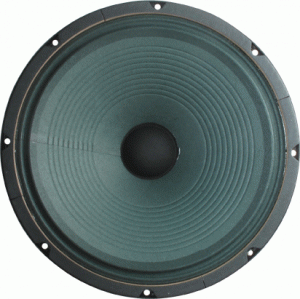
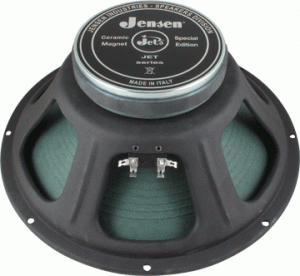
Jensen Jet Falcon JC12-50F

Summary: The newest member, lowest-powered, and lowest-cost speaker in Jensen’s newest “Jet” line at 50 Watts, this speaker produces tons of happening tones right out of the box!

Pros: Even before reading Jensen’s description of the Falcon, I found it to be a speaker that was built upon the substantial foundation of a rich bottom end. But make no mistake, the Falcon is not boomy in any sense, and that makes this speaker versatile. I can see using this in a bunch of different styles. I love it!

Cons: None.

Features (as tested):

  • 50 Watts / 16 ohm
  • 12″ Overall Diameter
  • 1.5″ Voice Coil
  • Ferrite Magnet
  • Steel Frame
  • Paper Cone
  • 98.7 dB Sensitivity
  • 7.2 lbs

Frequency Response Graph

Click for larger view

Price: ~$85-$90 street

Tone Bone Score: 5.0 ~ If you’re looking for a versatile speaker that can handle a bunch of different styles of music with ease, look no further. This is a keeper!

There are tons of advantages of being close friends with an amp builder; not the least of which is I often get to test everything in his shop, including components he gets from manufacturers to possibly include with his amps. The builder I’m speaking of in particular is my good friend Jeff Aragaki of Aracom Amps. A couple of weeks ago, during one of our numerous conversations, he mentioned that he got a new speaker from the Jensen distributor to try out, and asked if I would like to test it. Of course, as I have a very low resistance to trying out new gear, I immediately agreed. I think he asked me to test it out because he’s been so busy with building his AWESOME PRX150 attenuators and working on a couple of new amp designs that he didn’t have much time to do an evaluation himself. That’s a great problem to have!

In any case, we met a couple of days later and he handed the speaker over to me. I was excited to do a test on it! But unfortunately, life happens and I didn’t get the chance to test the speaker until just a couple of days ago. I wish I could have tested it earlier, because bottom line – and if you don’t want to read any further – I’m not giving the speaker back to Jeff. 🙂 Read on if you want to know why…

I could say a bunch of stuff about the Jensen Jet Falcon, but I’ll just say this: The Falcon sounds freakin’ fantastic right out of the box. My experience with speakers has been that you have to play them for several hours before they start breaking in to remove their harshness. The only thing Jeff did once he got the speaker was open the box. I installed the speaker in its brand-new, pristine state so I was anticipating having to play if for a few hours; not necessarily a bad thing, mind you. But that’s what I was expecting.

Much to my very pleasant surprise, once I had it installed in my closed-back 1 X 12, I was immediately taken by its tone. There was absolutely ZERO harshness! And I immediately thought that if it sounds this killer right out of the box, it’s going to sound even better once I’ve gigged and recorded with it. The cleans were sparkly with a nice, substantial bottom end, and the overdrive tones with my ’59 Les Paul replica got me quickly into Rock and Roll nirvana.

I could go on with technical details, but I’d rather not bore you with those. You can read about them on the Jensen product page. But as I said, bottom line, this speaker isn’t going back to Jeff. Hopefully he uses my enthusiasm to offer this speaker in his line. I recorded some clips to show what I mean. Both clips were recorded with my Aracom VRX22 and my ’59 Les Paul replica plugged straight into the amp. I only added a touch of small room reverb in my DAW to give the tone a bit of grease:

Clean with a Dirty Lead

Dirty Lead

I also downloaded the clips from Falcon page. Frankly, I didn’t like how these were recorded, but they are just reference clips:

Clean

Overdriven

As a final note, I’ve been playing this in my studio for the past few days, and the more I play it, the more I love it, especially for the songs I’m working on that need a great overdrive tone. I can’t wait to gig with it!

Dusty BrownLast night’s solo gig at the restaurant was really special for me. For one thing, I was REALLY feeling it, and had a great vibe going on all night. The diners were quite responsive and the entire atmosphere was festive. One our singing servers even commented on how the energy of the place was really charged. All in all, it was just a great gig, and I couldn’t ask for a better one; not to mention the great tips I got. 🙂
During my last break before I’d finish out the evening. One of the servers asked me if it was alright if one of her customers could sing. I initially declined because from past experience, there are lots of people who come into the restaurant who want to sing, and every time I’ve let them, it turns out they have a serious case of what I call “American Idol Syndrome;” that is, they think they’re A LOT better than they actually are. In fact, they’ve mostly been horrid, despite their claims to the contrary. So I stopped letting people sing.

However, in this case, I changed my mind, and allowed her customer to sing. Partly because it was late and at the end of my gig, which was particularly long last night because I started out in the patio for a couple of hours, then did a three-hour stint inside, so I was a bit tired. But mostly it was because I was in great spirits, and I figured, why the hell not?

So after my break, I did a couple of numbers, then called out to the server to bring her customer to the stage area (it’s not a true stage, but the area’s dedicated to it). It turns out that it wasn’t the guy who wanted to perform, it was the request of his friends, so I guess it took a bit of coaxing from the server. But in the end he agreed, and walked to the stage.

When he got there, he asked if he could play my guitar. Normally, I wouldn’t allow it, but the dude was just the unassuming type, and very humble and respectful of playing another musician’s instrument when he asked. That clued me in that he was the real deal. Only another guitarist would act that way. I can spot posers a mile away, and this guy was genuine. It didn’t matter to me how good he was – turns out he was quite good – I could tell he had a good heart and that was all that mattered to me.

So he played a song he wrote. It was a slow county-like ballad. Don’t know the name of the tune, but I loved the song! After he finished, we introduced ourselves. His name is Dusty Brown. What a cool guy! If you want to hear some of his music, check out his MySpace site at http://dustybrownmusic.com. It was great to hear a musician who was playing his own stuff, because it all came from his heart. Much appreciated!

I love encountering fellow musicians; especially singer/songwriters like myself. It’s not that they’re necessarily better musicians, but they’re all heart when they play their stuff. What you see with them is really what you get, and Dusty was no exception. I wish him the best of luck in his musical career!

As I listened to the song, I couldn’t help but notice how damn good my Yamaha APX-900 sounded! In fact, Dusty mentioned that he popped up his head from his booth a couple of times because he thought it was a CD when I started playing Cat Stevens’ Wild World. While he played his song, the clarity of the guitar was incredible! I owe it all to the Acoustic Resonance Technology of the APX-900.

Click for larger image

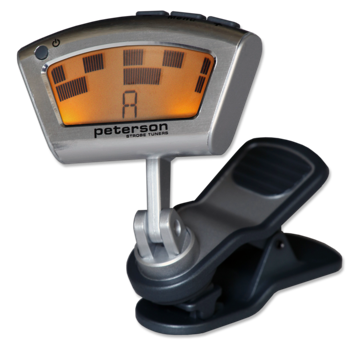
Peterson StroboClipTM Clip-On Tuner

Summary: A high-accuracy (0.1 cent) clip-on tuner! But it’s a Peterson Strobe tuner and that means tuning sweeteners. The StroboClip has several of Peterson’s sweeteners for different instruments, and these sweeteners ensure that your instrument(s) will sound great.

Pros: To me, the Sweeteners are what set apart Peterson tuners from the pack. But as far as the StroboClip is concerned, the clip-on is great for use in both the shop and on stage, and the fact that it is a clip-on makes it versatile enough to use on a variety of instruments. And with a metal enclosure, you can be assured of its durability.

Cons: None.

Features (from the Peterson site):

  • Smallest Multi-Temperament Tuner
  • 1/10 Cent Accurate
  • Smooth, Real-Time Display
  • Alternate Temperament Presets (Including Buzz Feiten Tuning System®)
  • Includes Eastern Temperament Presets
  • Drop/Capo Setting
  • Adjustable Key
  • 28 Exclusive Peterson Sweeteners™/Temperaments
  • Adjustable Concert A Reference: 400Hz to 490Hz
  • Auto Sleep And Power Off For Battery Saving
  • Low Power Consumption
  • Virtual Strobe™ Patented Technology

Price: ~$70 street

Tone Bone Score: 5.0 ~ I received this as a test unit from Peterson the other day, and used it to intonate one of my guitars, which I then used for a recording, and used it on-stage this evening. In all applications, it worked incredibly well. I have absolutely no complaints about this unit! So for studio, shop, or stage, this is a winner!

I dig Peterson tuners, and the fact that this comes in a clip-on makes it super-versatile; add 0.1 cent accuracy, and this is an absolutely fantastic tuner. I’m not really one to use a clip-on on-stage for guitar, even though I used it tonight to test it out, but for the studio, and especially for intonating guitars, I can see how the StroboClip will be an indispensable tool for me! That said, I am getting a ukulele pretty soon, so I’ll probably be using the StroboClip for that.

As I mentioned above, the thing that has always stood out for me about Peterson tuners in general are the sweeteners. I don’t know any of the mathematics behind the technology, but the best explanation I can give is that the Peterson tuners don’t just tune the string to the exact correct pitch. When set to a particular type of sweetener (for guitar and other instruments), certain calculations are made in the tuning algorithm to compensate for the type of instrument. The net result is that once you tune, your chords and note runs sound great!

Many tuners that just tune a string to the exact correct pitch, require some adjustment to get them completely dialed in. But with a Peterson strobe tuner, those minute adjustments are already done for you, so when you tune, you tune to the compensated pitch. That’s about the best explanation I can give without the technical knowledge. Just let it be said that once I’ve tuned with a Peterson tuner, my guitars sound so much better because they’ve been tuned with the guitar in mind. But the StroboClip also includes several other sweeteners for other instruments such as mandolin and ukulele, so it can be used to great effect with different instruments.

With respect to the physical act of tuning, it takes awhile to get used to tuning with a strobe tuner. Unlike other tuners where you either center a needle or LED, all Peterson strobe tuners use a moving checkerboard that speeds up or slows down depending upon how far off your tuning is. Right to left movement means you’re flat, and the converse for sharp. As a strobe tuner is super-sensitive, you have to get used to picking very lightly (I just use my thumb) to tune. But once you’ve gotten the feel for it, it’s very easy.

Tonight, I used it in my weekly solo acoustic gig. Amazingly enough, my Yamaha APX-900 stays in tune so well – never had an acoustic that did that – so the adjustments I made were minute to each string. But I do have to say that after tuning with the StroboClip, unlike other tuners like my venerable TU-2, I didn’t have to do any post-tuning tweaking.

As for the price of $70, it’s not cheap. But believe me, if you want a great tuner for studio or shop use, you could do a lot worse. I found it extremely useful for intonating my guitar last night. I have an old Seiko analog-style tuner that I’ve used for years for that purpose, but it has always required running a cable from my guitar. With the StroboClip, I just clipped it to the headstock. This also meant that I could keep my guitar plugged into my amp so I could hear what I was doing as well as see what the StroboClip was doing. So very cool!

All in all, this is a great little unit that I will most assuredly be keeping around for a long time!

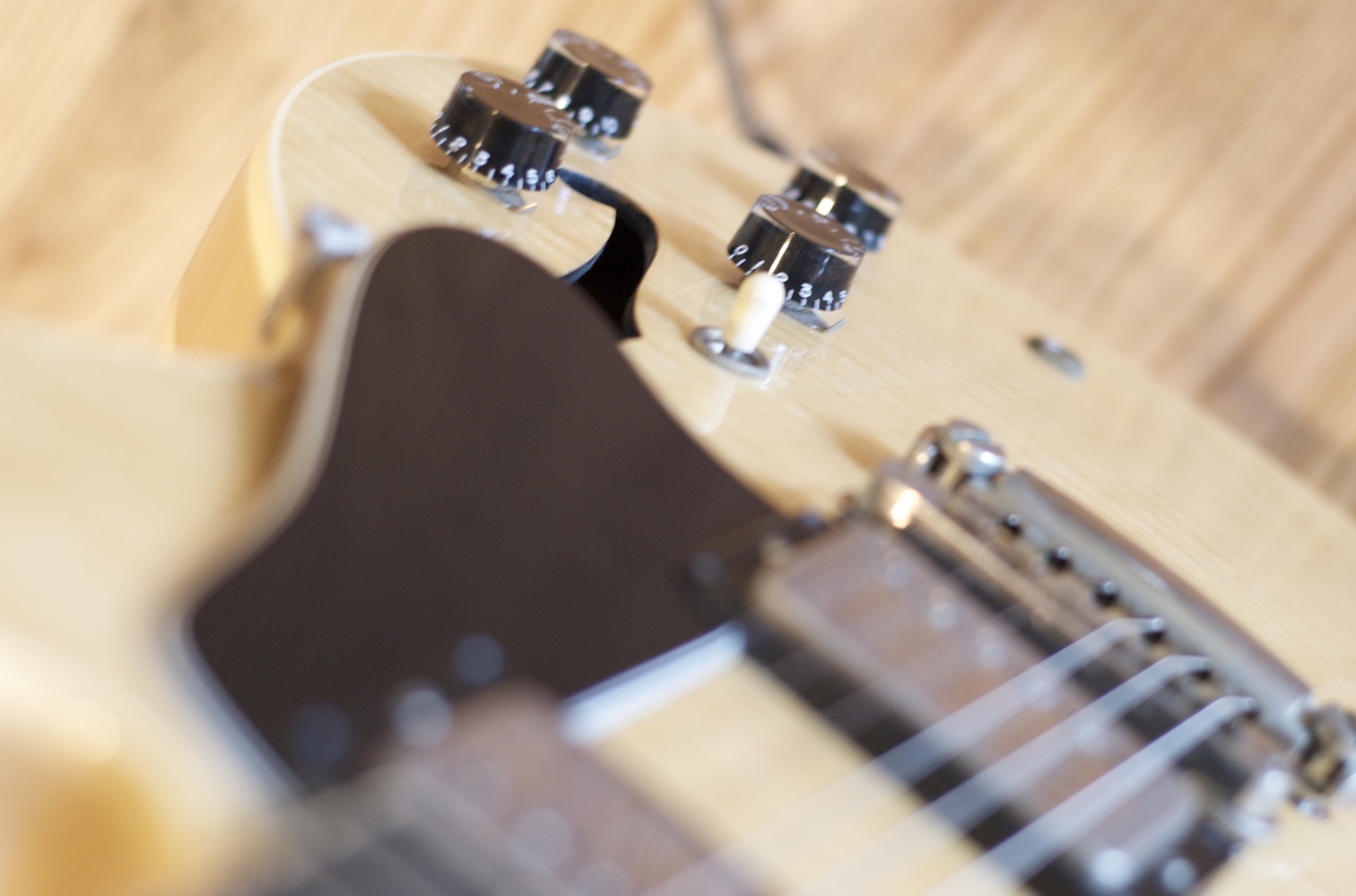
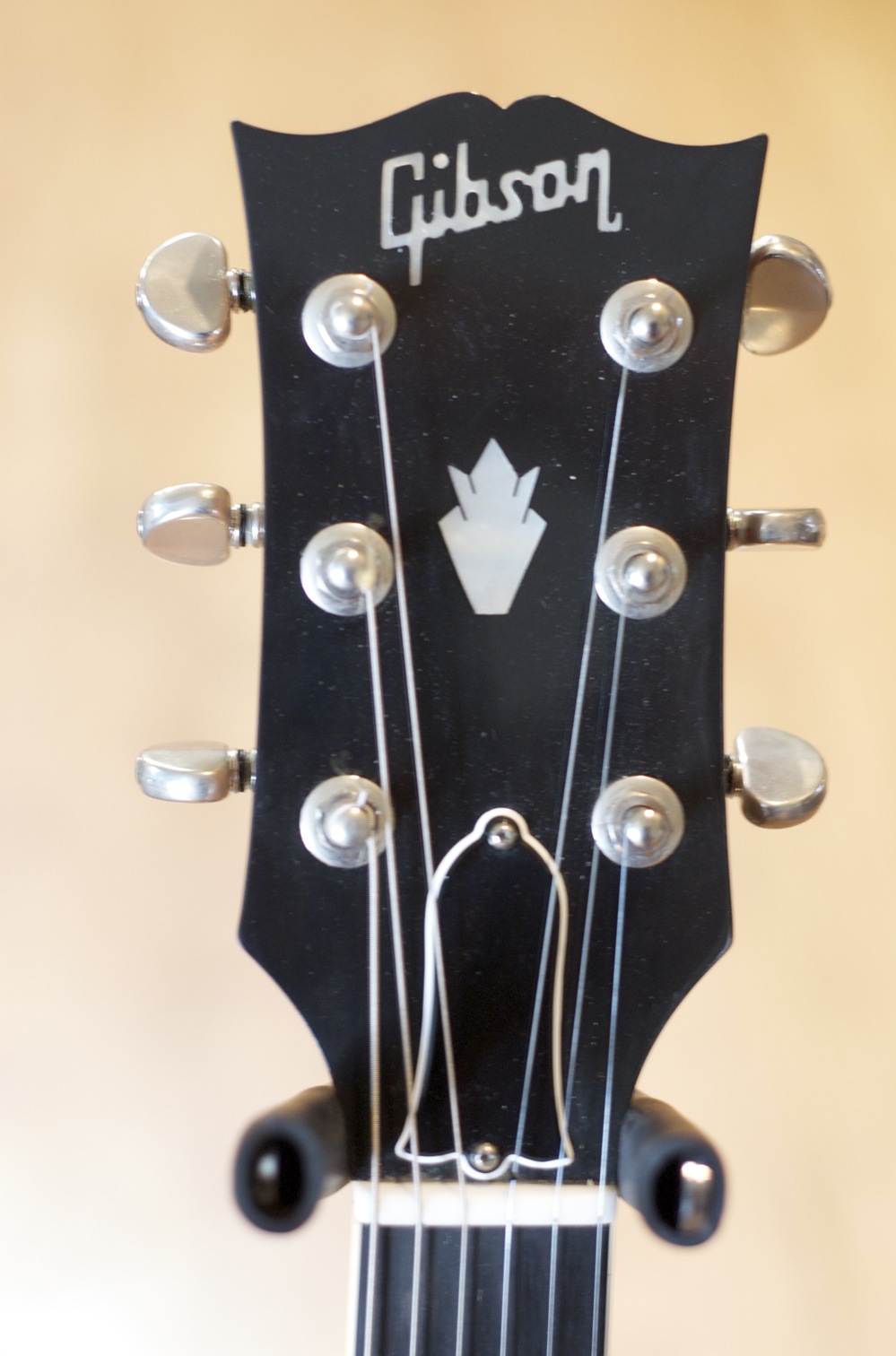
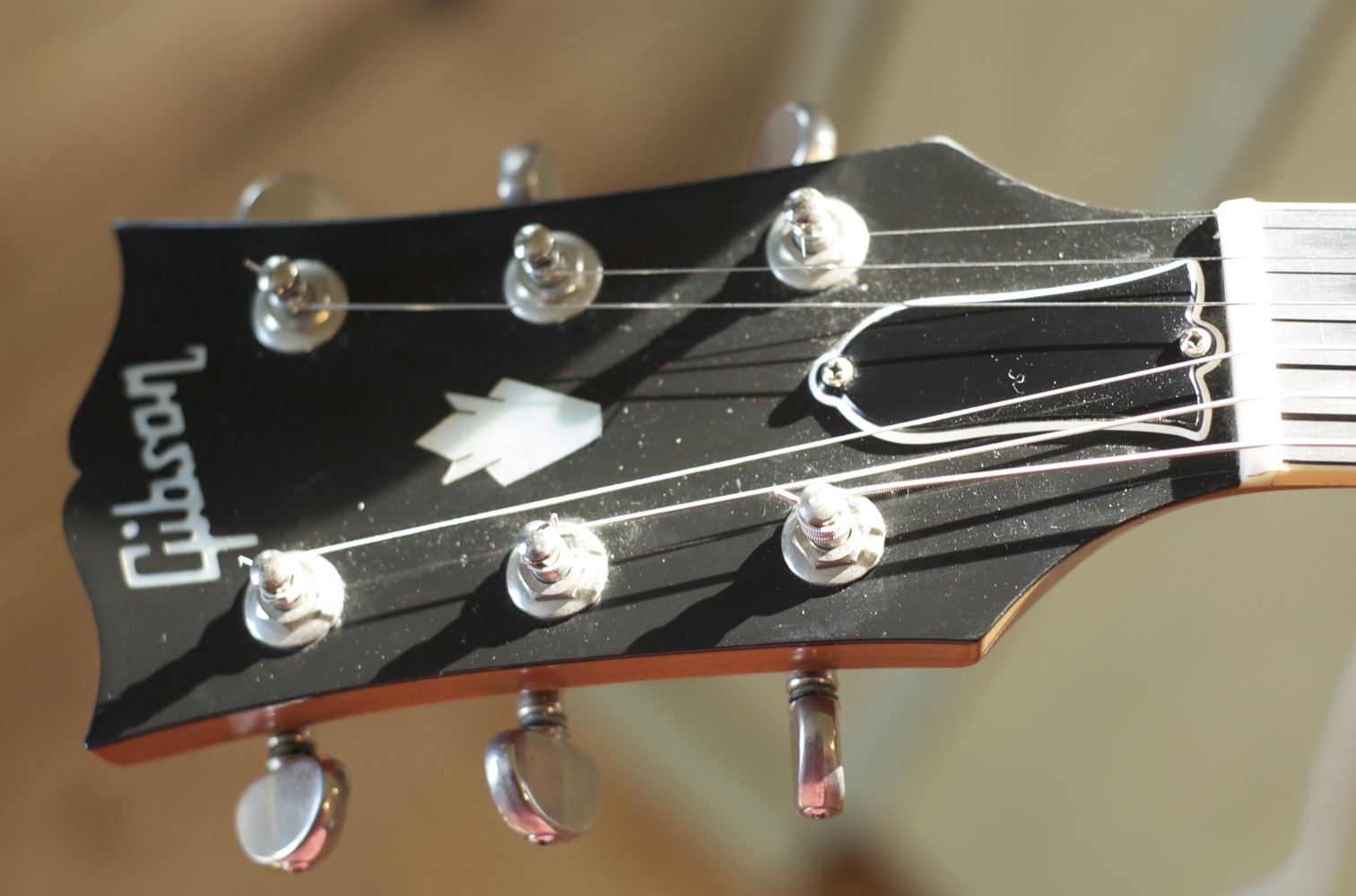
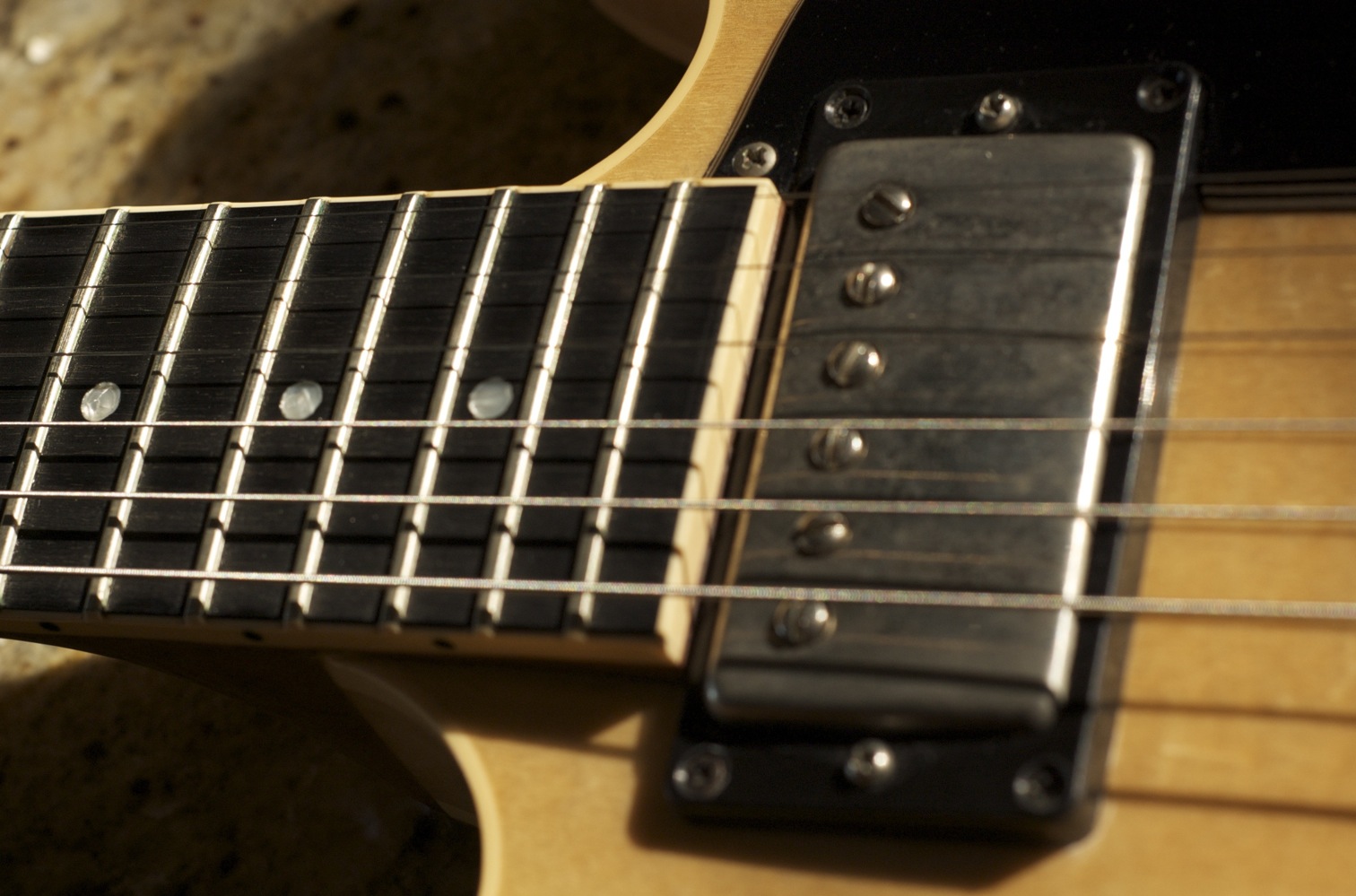
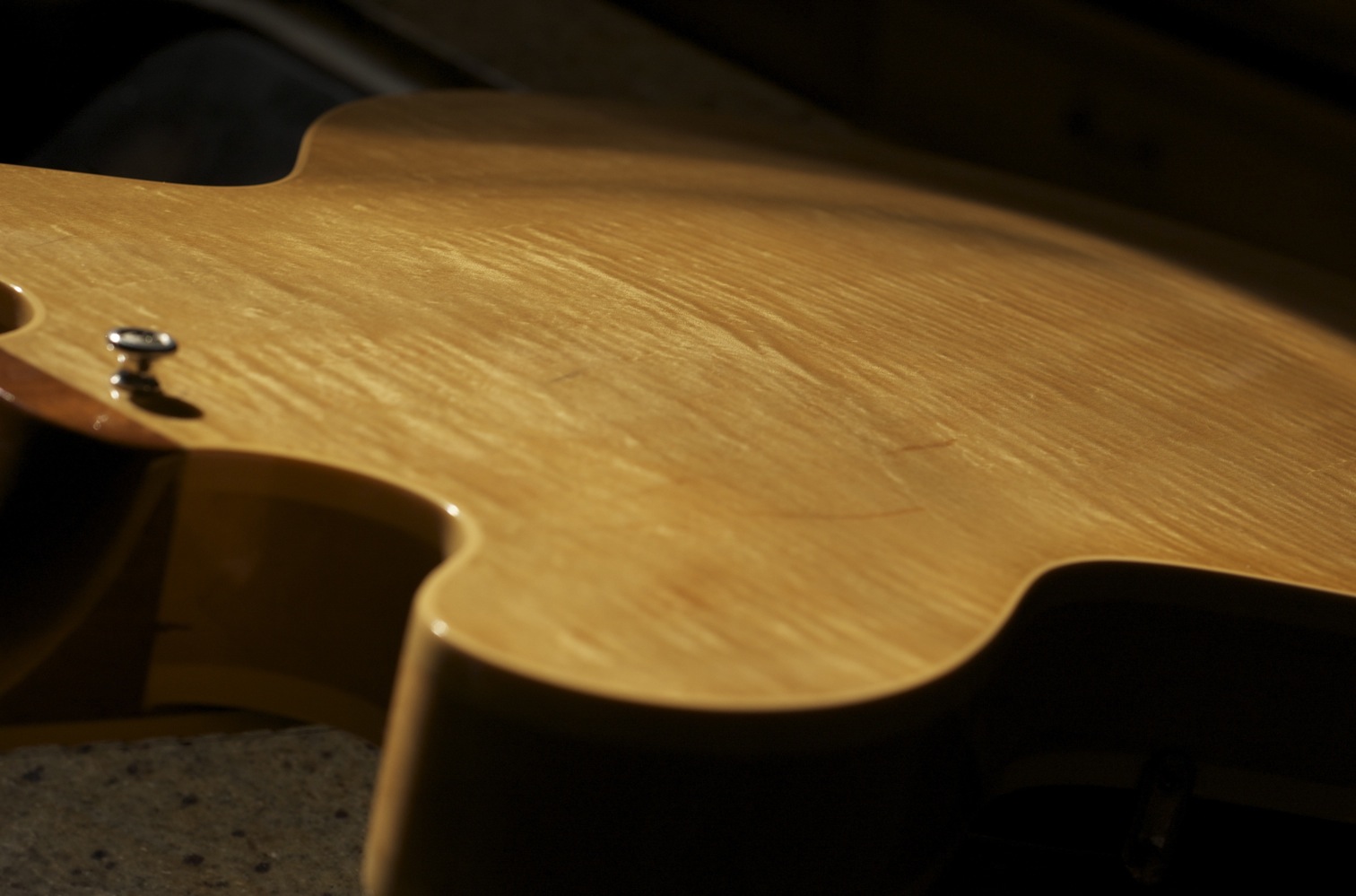
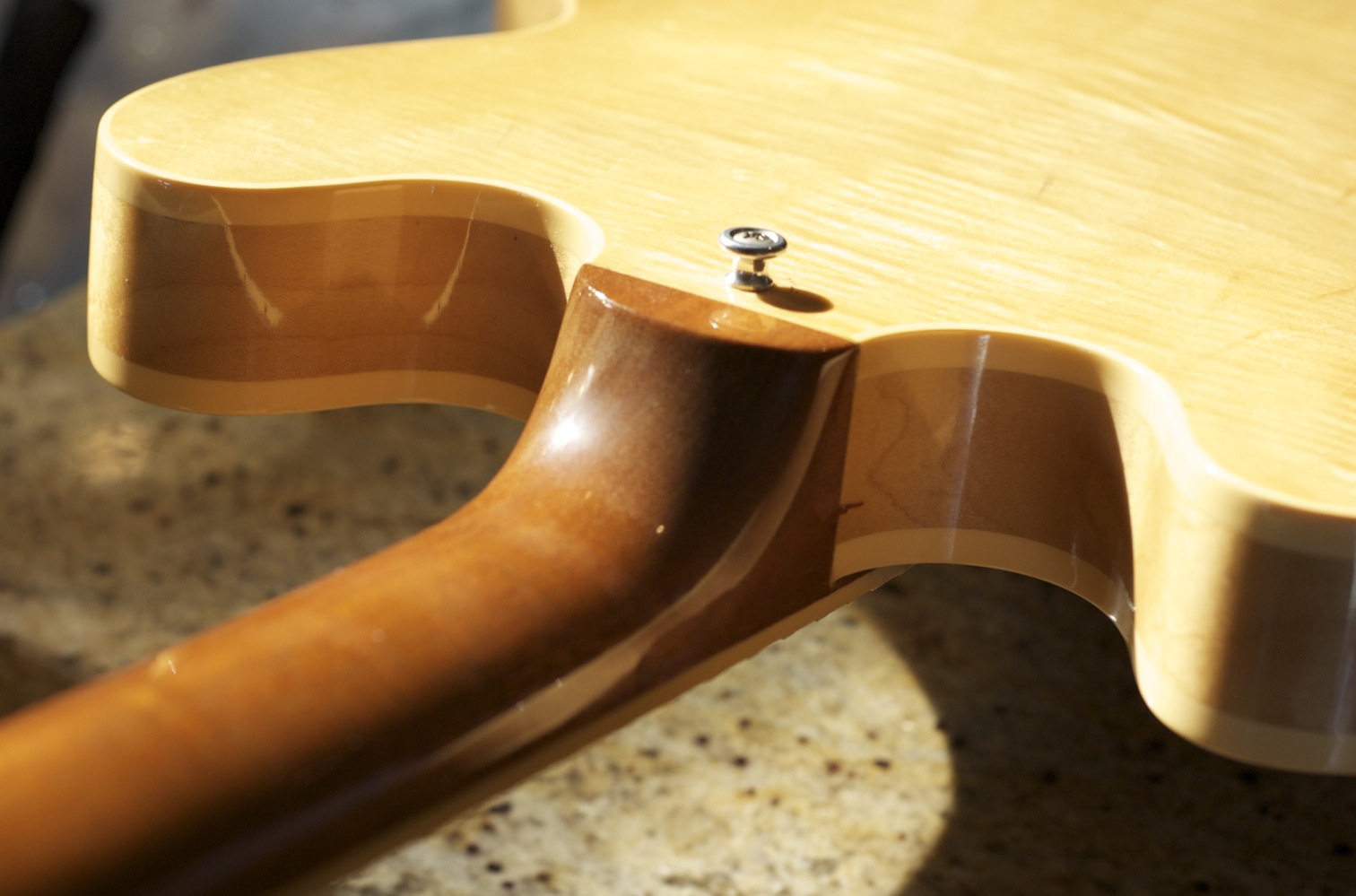
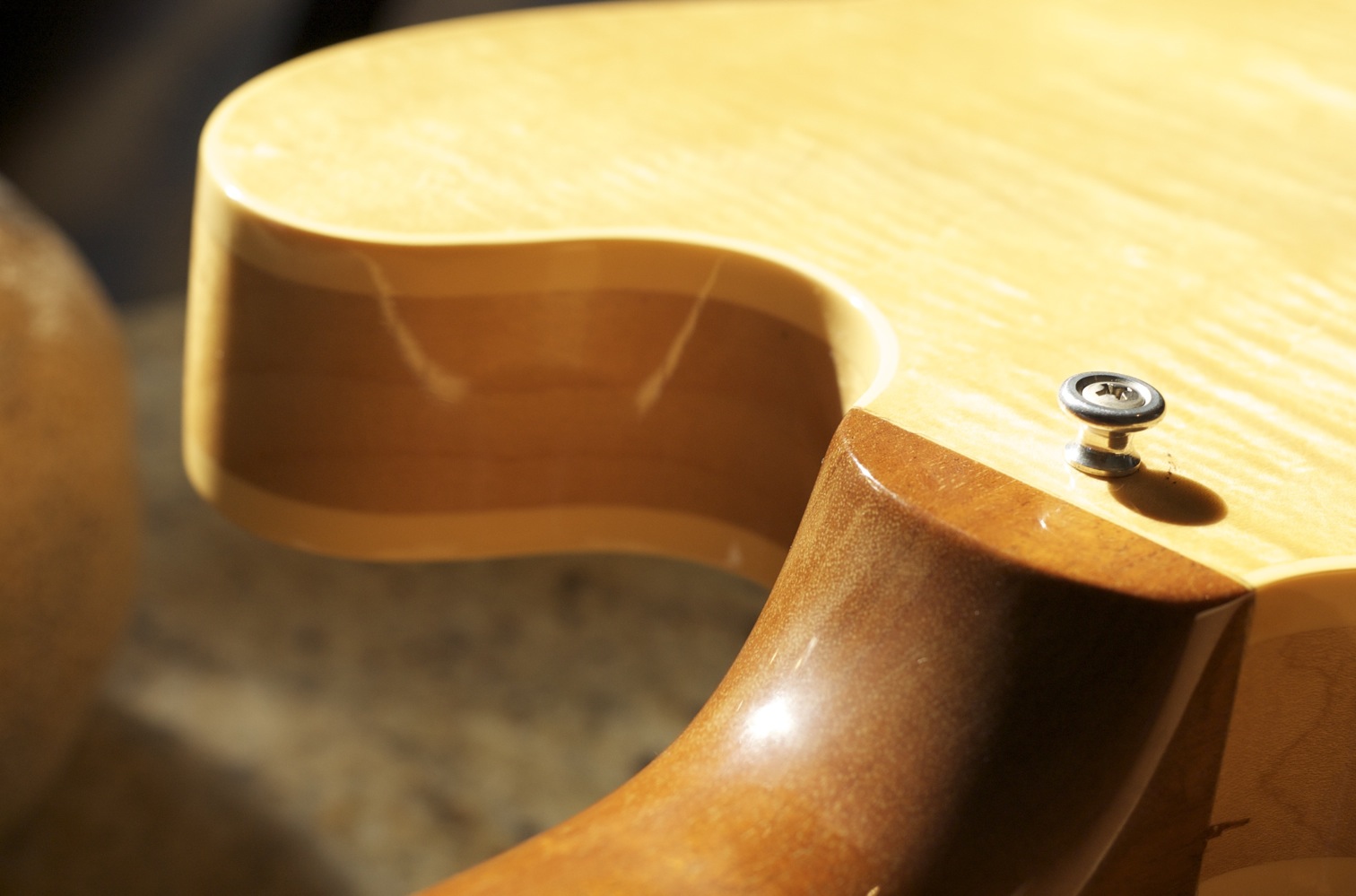
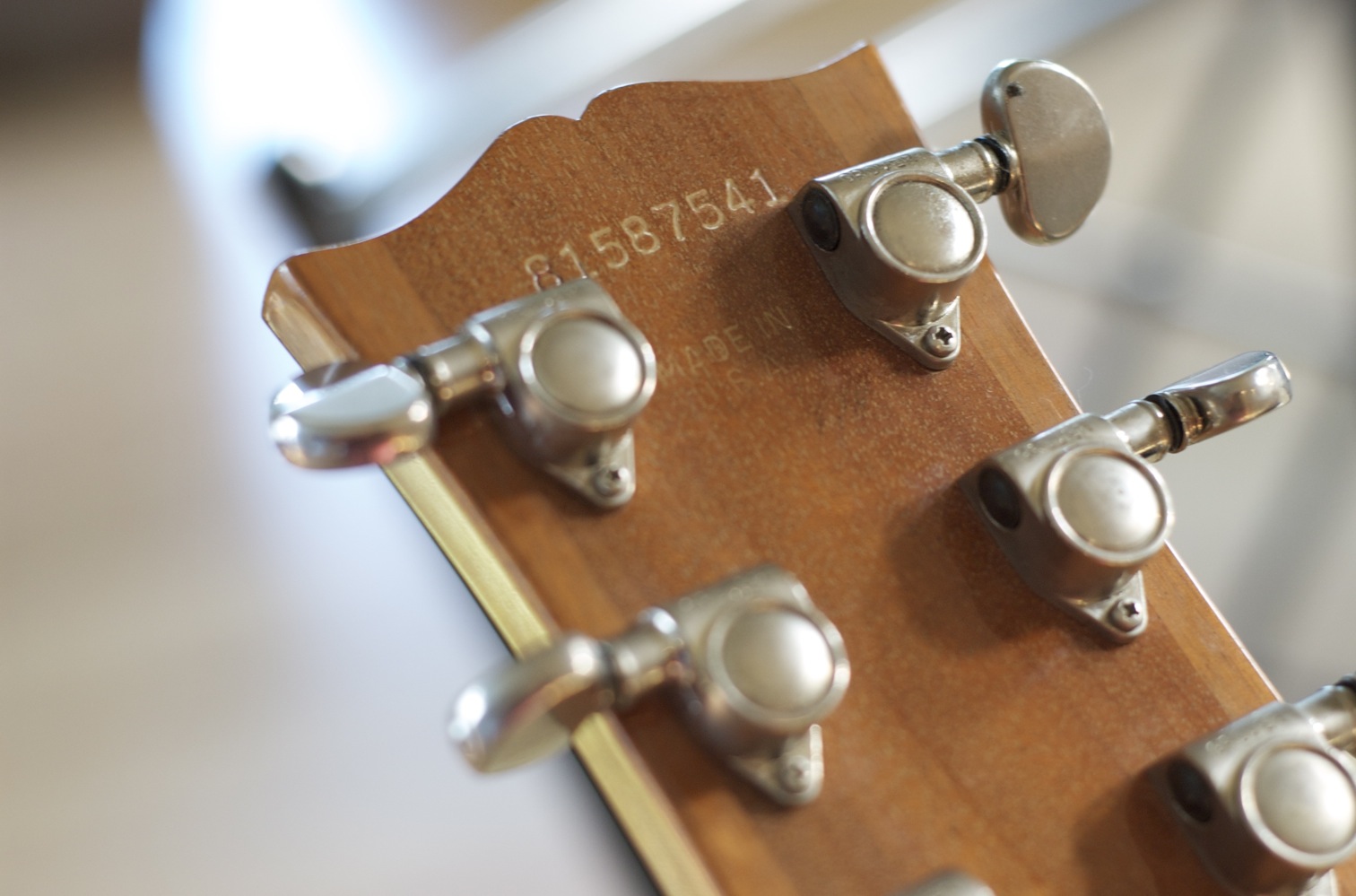
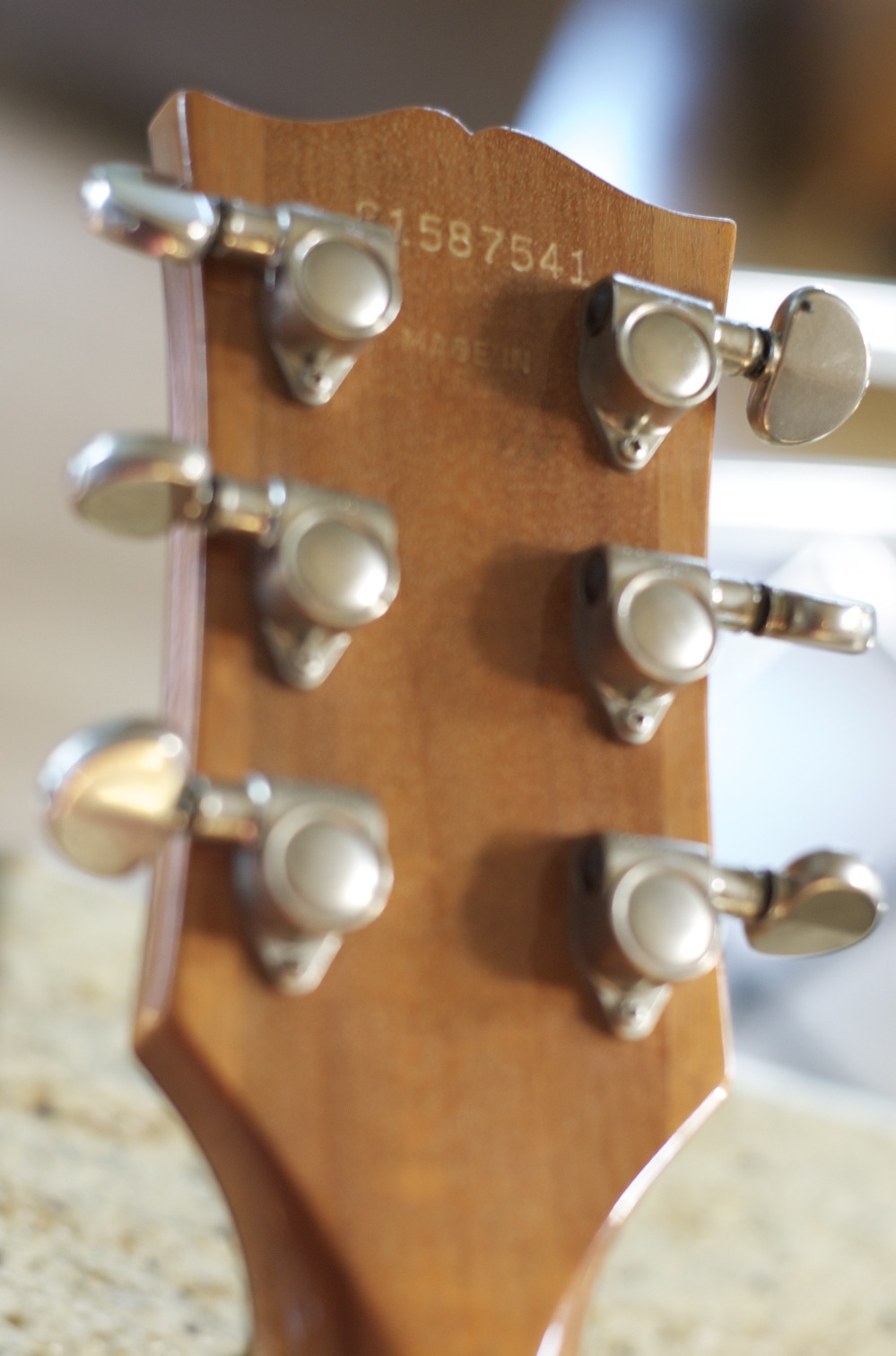
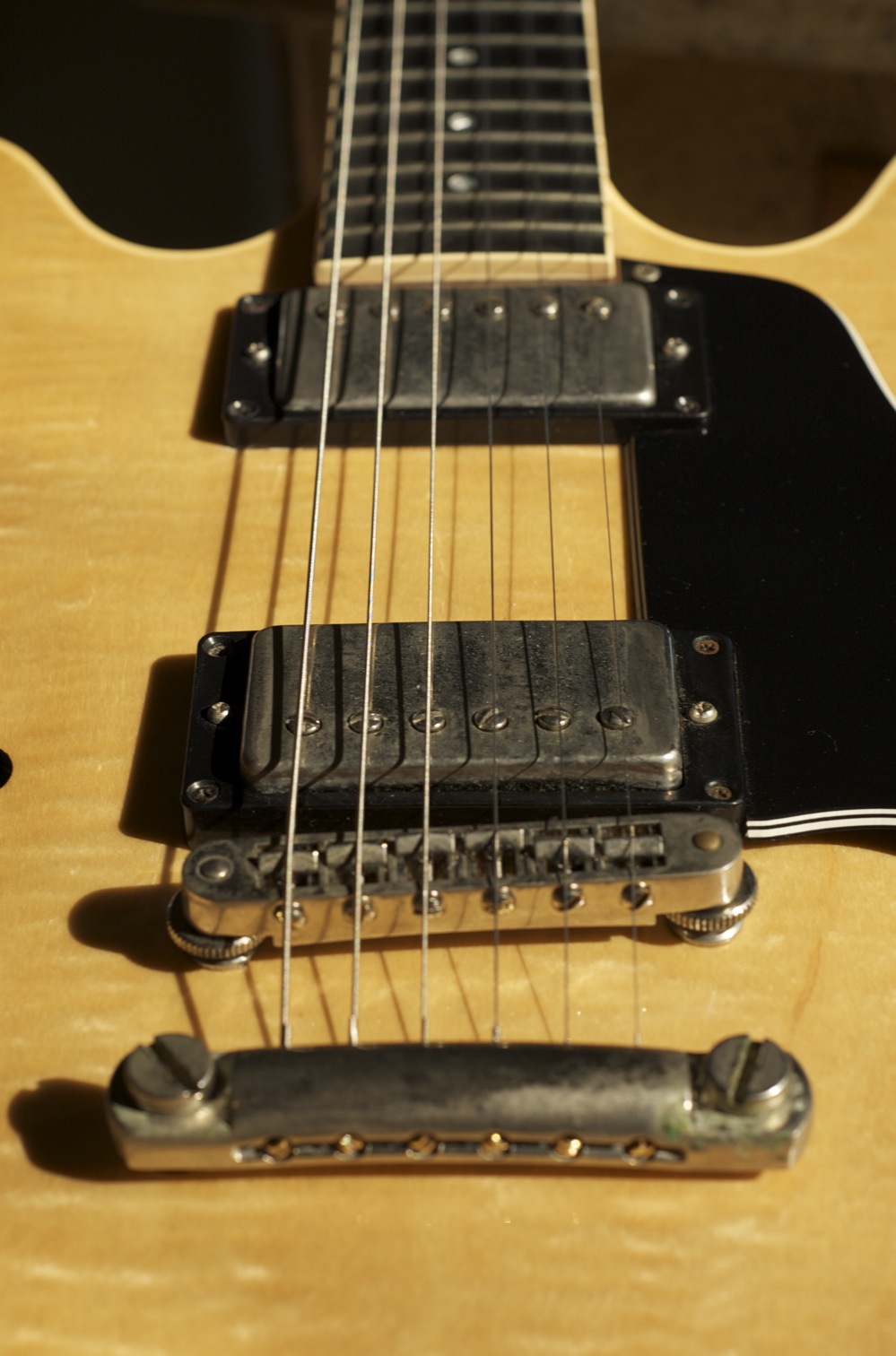
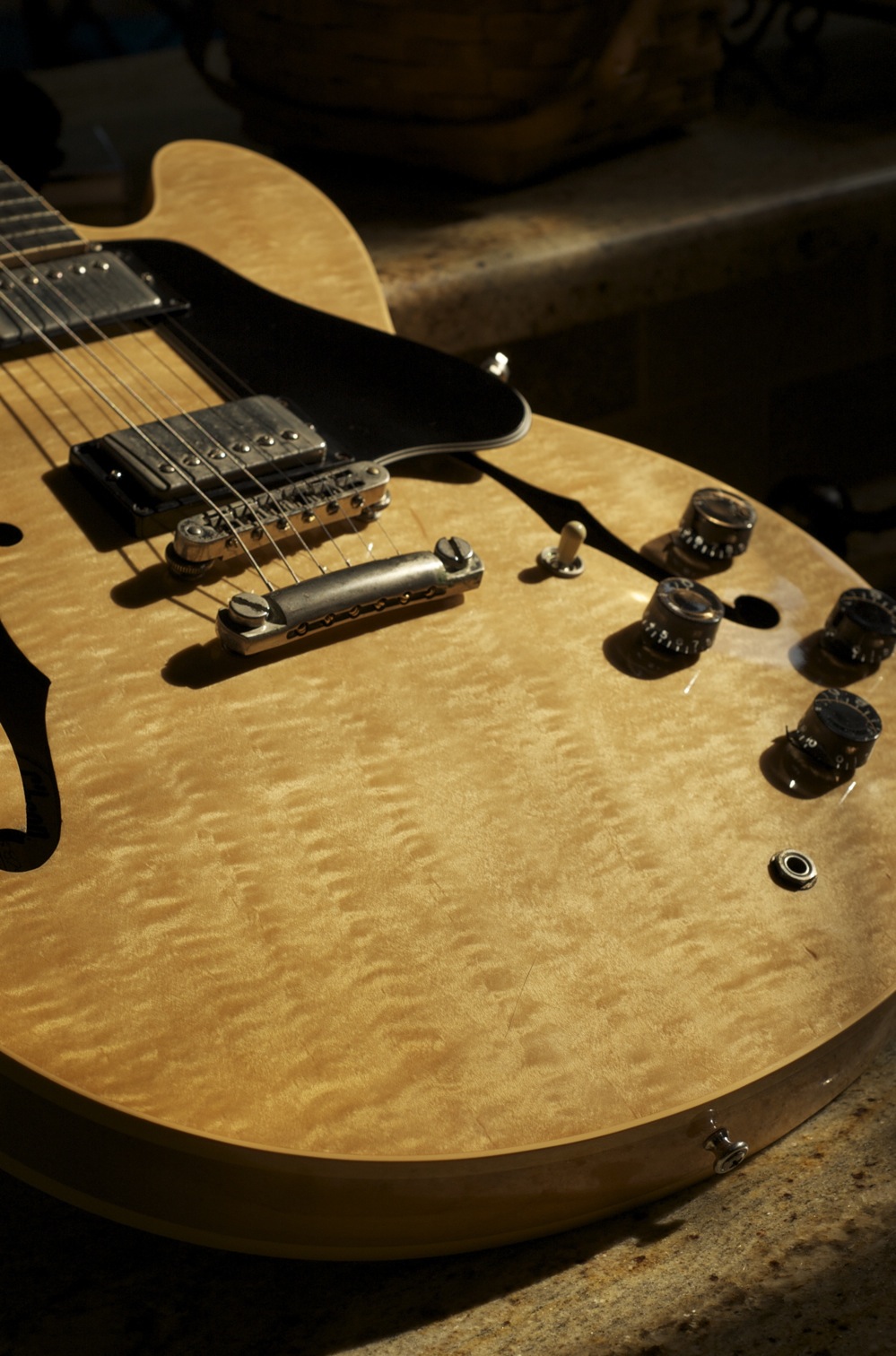
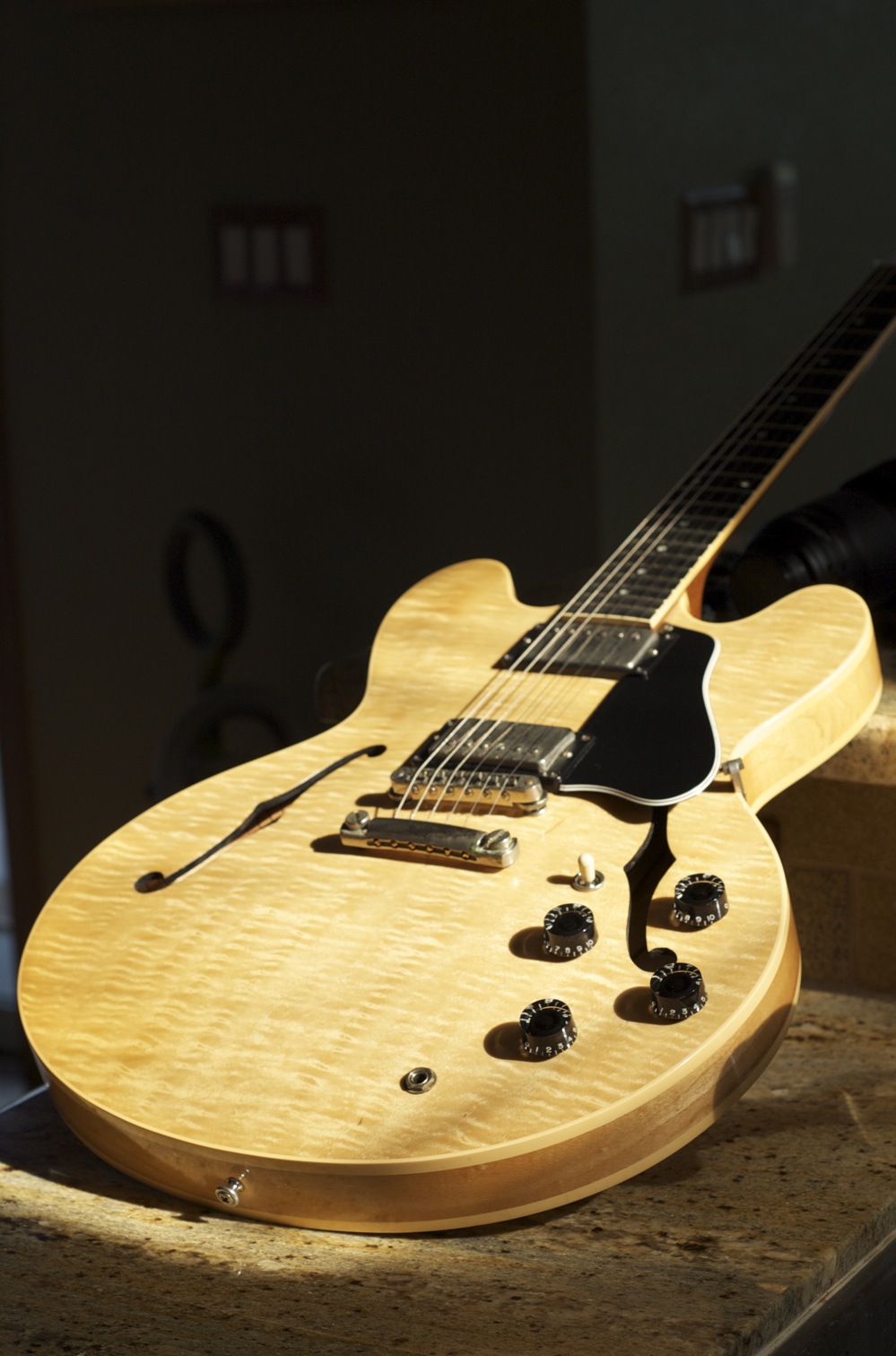
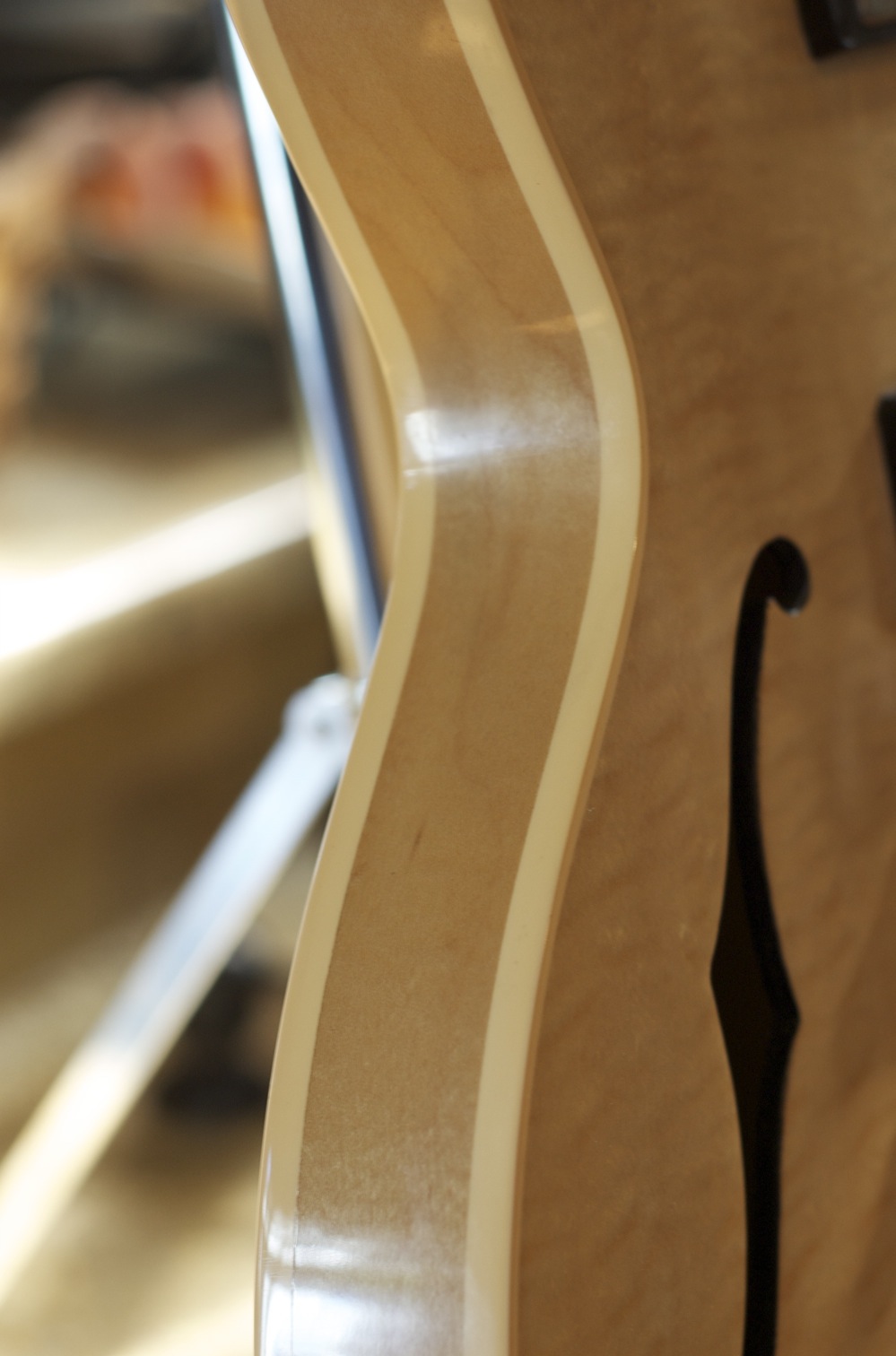
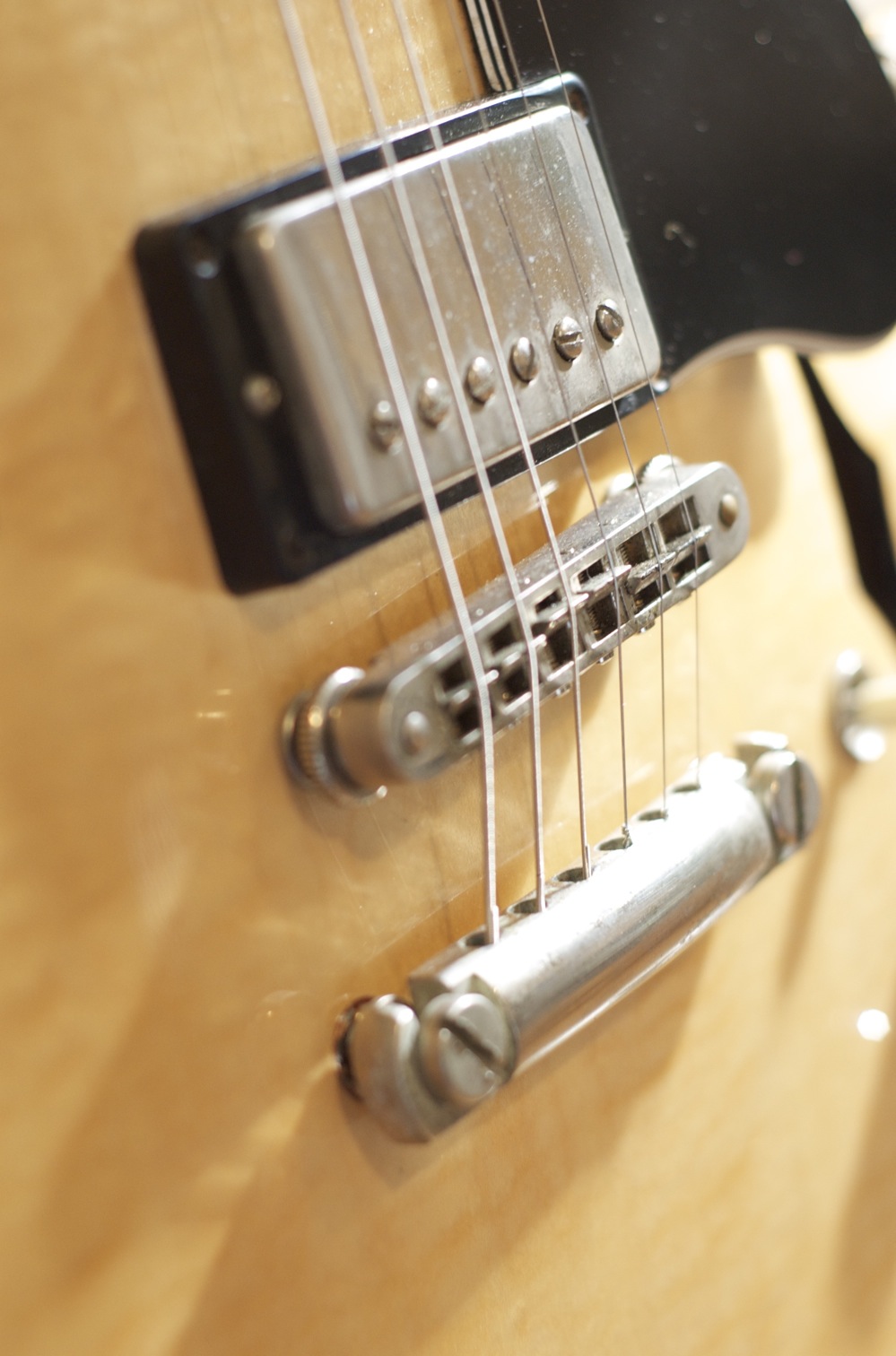
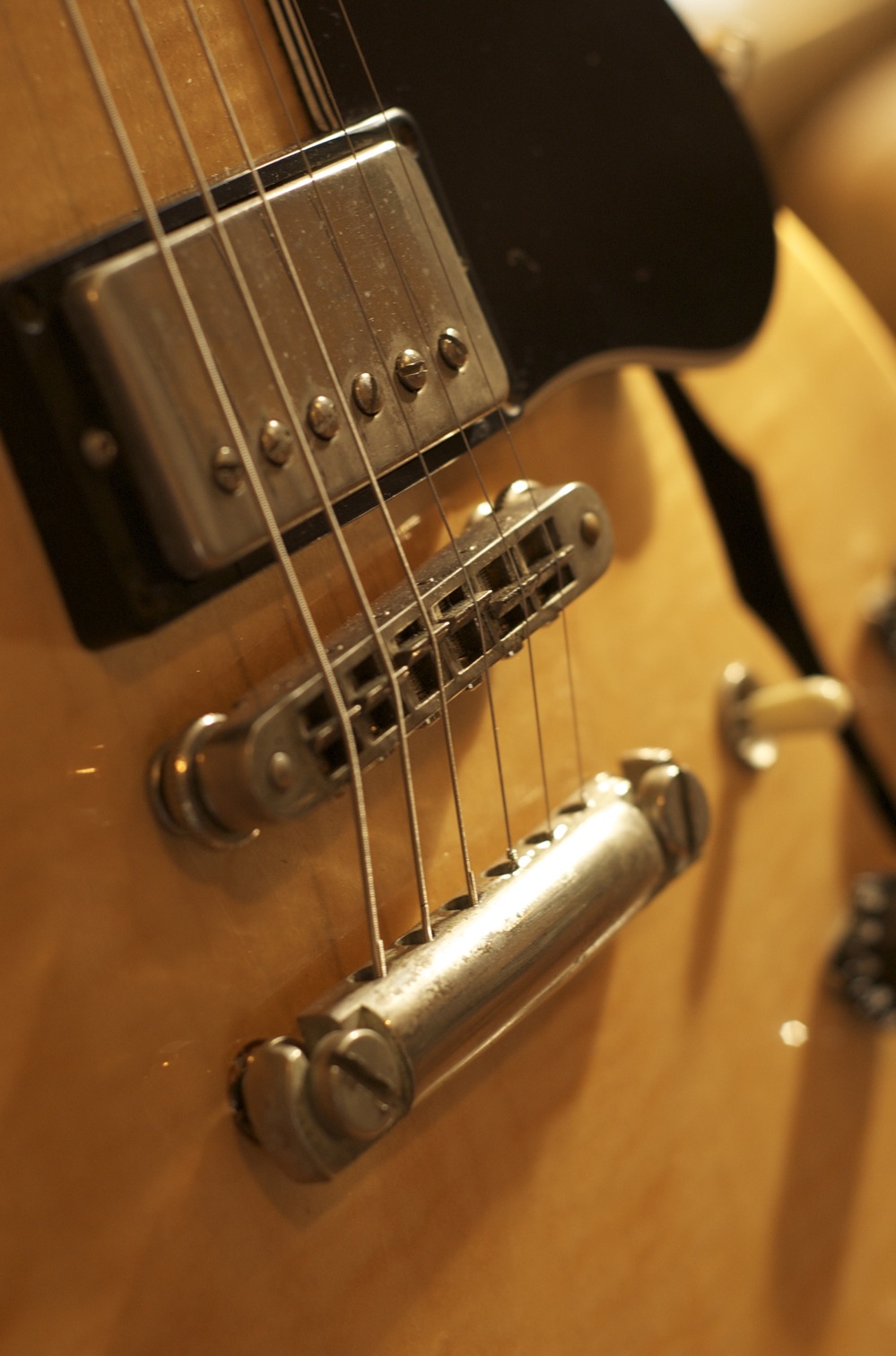
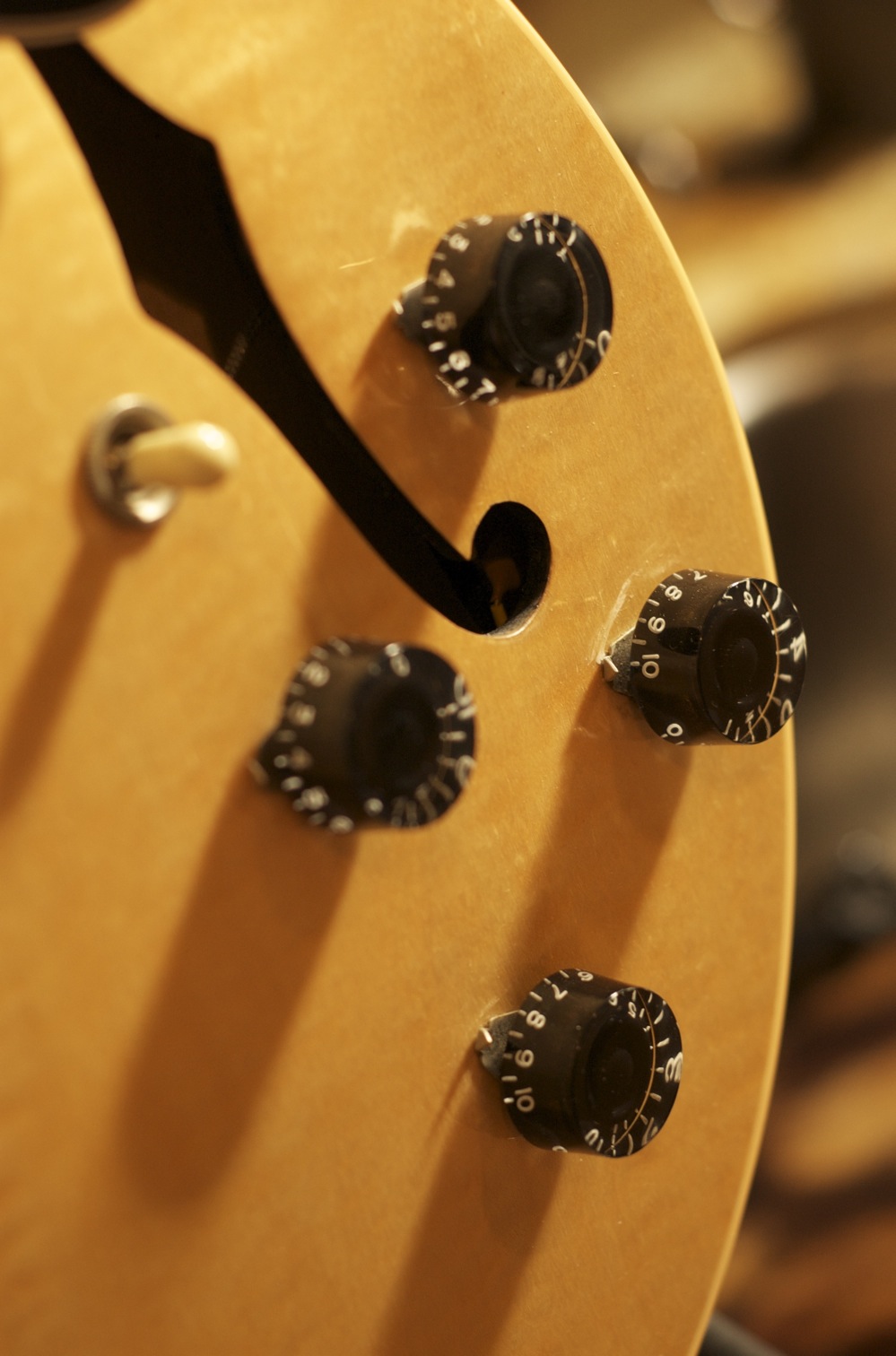
Several months ago, while looking for a Les Paul, I once again got sidetracked by another guitar which I bought in its stead; the Gibson 2009 Limited Run Nighthawk. Back in 2009 Gibson release several guitars with limited production runs. The Nighthawk, which had a run of 350, was a revival of sorts of the VERY quirky original Nighthawk that saw a very short life of six years back in the 90’s. The 2009 is not a duplicate of the original; rather, it is more of a hybridization of three guitars. It has the body shape of the original Nighthawk; has a mahogany body and neck, and a maple top like a Les Paul; and it sports the P-90/Humbucker configuration of the Les Paul BFG. It has a very thin, yet highly resonant body, which gives the guitar a very light weight (~6 lbs), but has tons of sustain; it’s a just a little less than the sustain of a Les Paul, but a lot more sustain than a 335 to give you an idea the range of its sustain.

Tone-wise, the Nighthawk 2009 has a much fatter sound than a Les Paul. The P-90 is super-hot and produces a thick, rich clean tone, and ballsy overdrive, and the bridge pickup has lots of gain on tap, and is just a bit darker than the bridge pickup of a Les Paul.

  • Grade A two-piece mahogany body
  • Grade AAA “bookmatched” solid figured maple top
  • solid piece of Grade-A mahogany neck
  • Gibson’s traditional ’50s neck profile
  • Grade-A rosewood fingerboard
  • 12-inch radius
  • 22 frets
  • Figured, swirl acrylic dot inlays
  • P-90 Neck Pickup
  • Gibson’s 498T “Hot Alnico” Bridge Pickup
  • Two Gibson Gold Top Hat volume controls
  • 50’s-style pickup wiring (tone doesn’t bleed off highs as much & volume knobs both act as master volume)
  • Gibson Gold Top Hat master tone knob
  • Three-way toggle switch
  • 1/4” output jack made by Switchcraft
  • Pearloid tuning keys
  • Tune-o-matic bridge
  • Nitrocellulose Translucent Amber finish
  • Approximately 6 lbs

Pictures

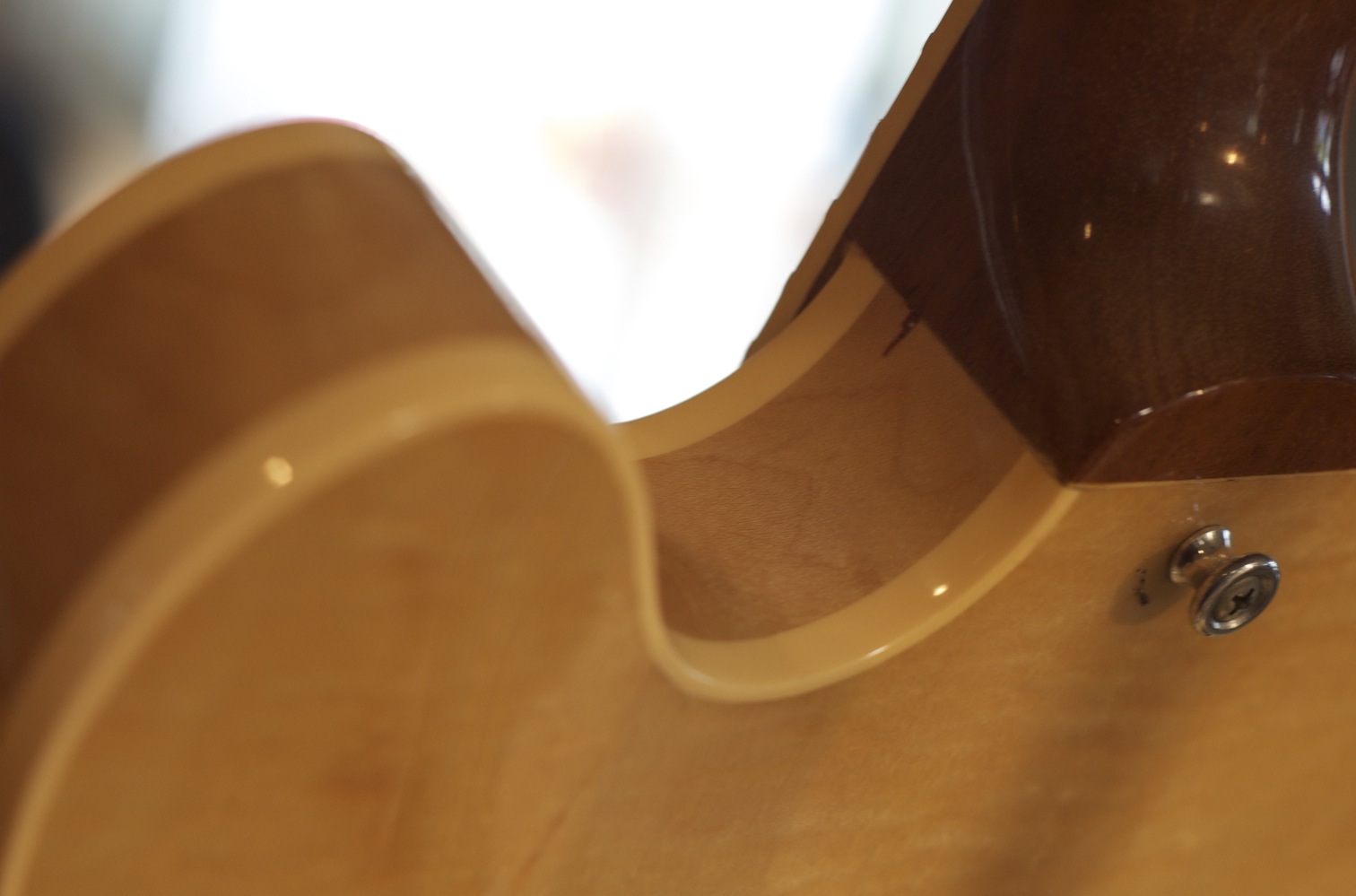
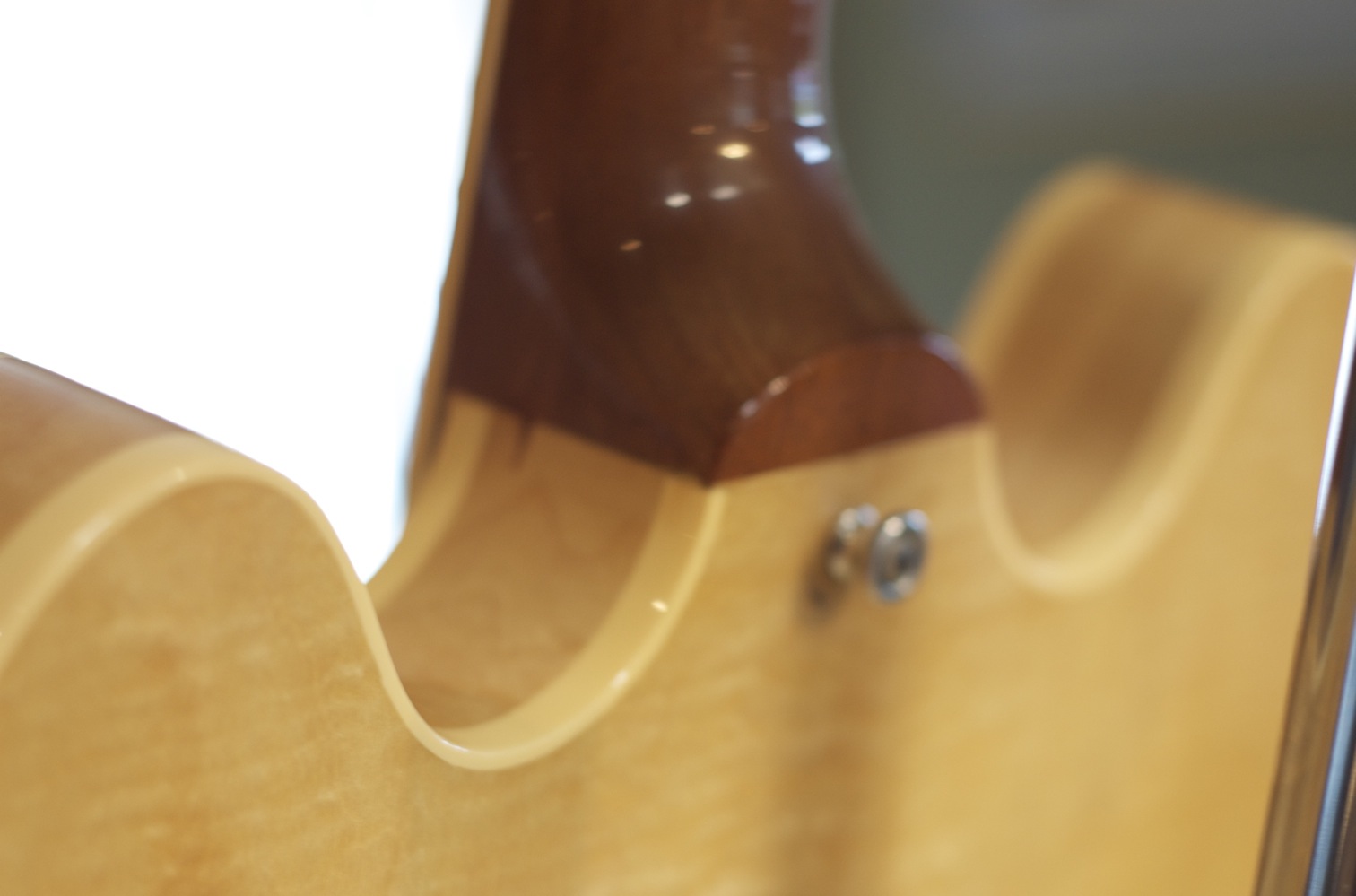
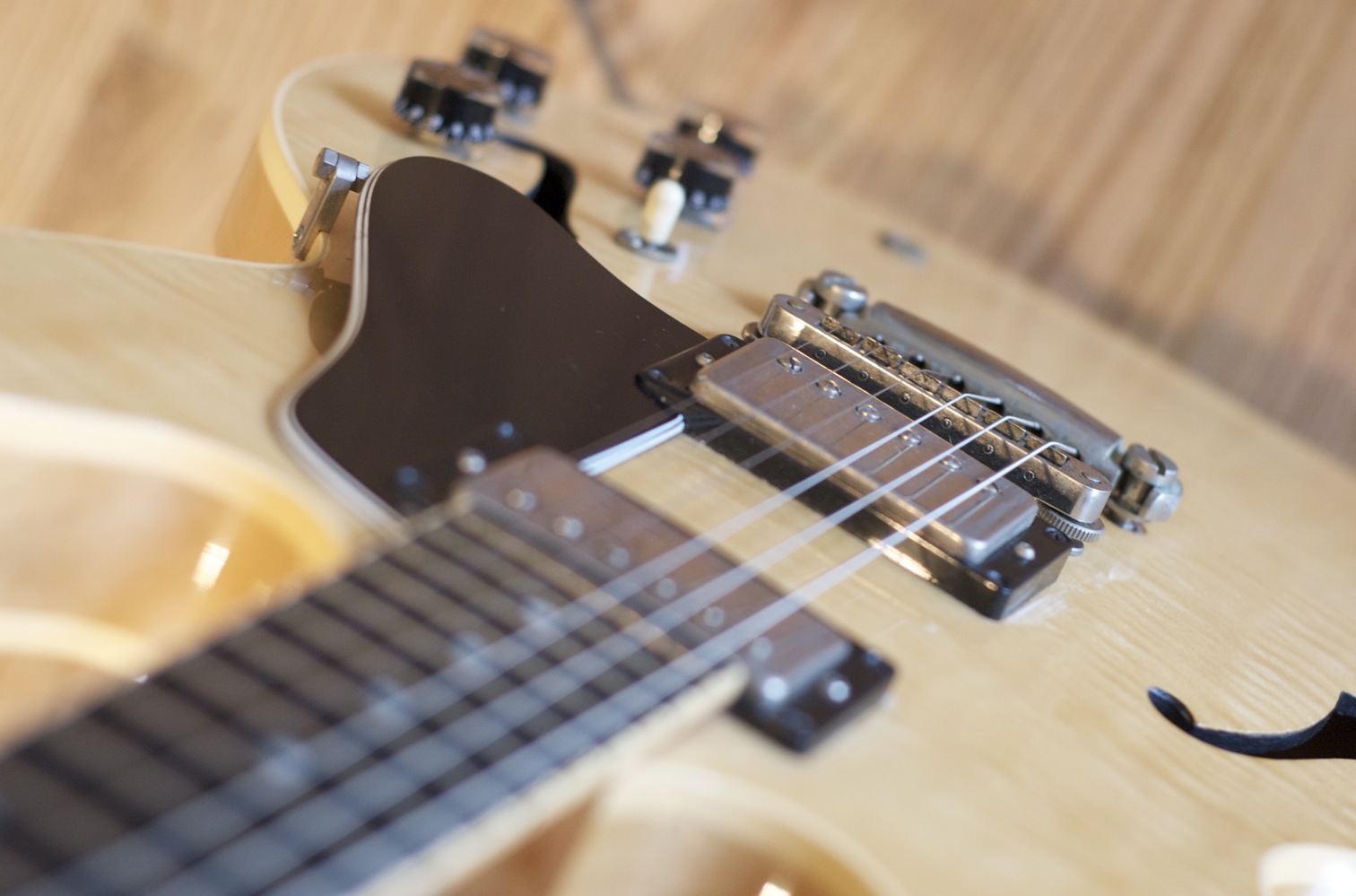
Took these with my Nikon D40 and a f1.8/35mm lens, using available light to warm up the photos (though a couple were taken with a flash).

This slideshow requires JavaScript.

Sounds

I provided these in my original review of the Nighthawk, but rather than have you go back to the review, here they are:

Neck Pickup

Clean

Dirty Lead

Rock Rhythm

Both Pickups

Clean

Dirty Lead

Rock Rhythm

Treble Pickup

Clean

Dirty Lead

Rock Rhythm

As you may know, I recently purchased the Mad Professor Deep Blue Delay, and wrote about how much I absolutely LOVE this pedal! While I can’t say enough about it, I anguished over getting it for a long time because of the price. At $335, it was so difficult to justify buying the pedal. But though I’m very budget-conscious, and a lot of this blog is about getting great tone without spending a lot of money, sometimes great tone just costs what it costs.  I’m glad I finally did break down and get it because it is by far the best delay pedal I’ve ever used!

So what’s the big news? Well, one of the biggest complaints about Mad Professor pedals is that they’re super-expensive. People who have purchased them, like myself, are very happy with them, but their price still smarts a bit. So in response to that complaint, MP made a great move: They added a line of less expensive pedals that mirror their current line. But instead of being hand-wired, these pedals are built using PC boards. Also the case they’re using is much less expensive. The net result is that you can get into Mad Professor pedals in the $200 price point range as opposed to the $300+ price point. Nice.

In any case, here’s what Mad Professor has to say about their new offerings:

Mad Professor was at Summer NAMM 2010 in Nashville 18-20 June 2010. We did show there the first redesigned pedal, a new Little Green Wonder.

Same tone, same look, but we did design a new pcb that helps us build these lot faster and for better price. The quality is the same, same parts but now pcb mounted pots, jacks and switch.

The box is also not the same Made In Sweden Elfa box that is made for heavy industry but a high quality pedal box that is bit lighter but very durable. That helps us to save a lot of money.

The only complain we have heard about the pedals have been the price, this is our answer to that.

We still make the handwired pedals for those who prefer them. Coming soon new Deep Blue Delay and Sweet Honey Overdrive.

Conceivably, if the circuit is the same, the tone should still be the same, but based upon experience, different build materials create different tones. They may be slight, but there’s always a difference. My only concern with the less expensive line would be response. As long as the response and dynamics remain the same or as close to the same as the original hand-wired pedals, these pedals should

While I did a “mini review” of the Mad Professor Deep Blue Delay a couple of months ago, that was in a shop in a controlled environment, and though I played it for almost an hour, there’s no better test of gear than using it at a gig where nothing is predictable.

After I originally auditioned the pedal, I anguished for the last couple of months about getting it. Why? Simply because of its price: It is NOT a cheap pedal by any means (I got it for $335), and it was always easy for me to reason why not to get the pedal. However, I’ve been a bit disappointed with my VOX Time Machine when using it with my acoustic rig. I thought that since it performed so well with my electric rig, that it would translate well to my acoustic rig. That couldn’t be further from the truth. Truth be told, while the Time Machine simply kicks ass with my electric rig, my tone feels and sounds “processed” with my acoustic rig. The net result is that I stopped using it for my acoustic gigs.

I knew I had to get a good delay that would work well with my acoustic rig, and I also knew that after auditioning quite a few digital and analog delays at the shop, it was the Deep Blue Delay that spoke to me. But the price of the pedal made me shudder, so I put off the purchase for the last couple of months.

Then yesterday, in a moment of weakness, I purchased the pedal on my lunch break at work. Jordan, the sales guy I’ve been buying gear from at Gelb Music for years, swears by this pedal, and he just said, “Dude, I know the price is steep, but there’s none better than the the Deep Blue Delay. It’s always on my board, and it’s almost always on. The VOX Time Machine is a killer pedal (he sold me that one as well), but you know how the Deep Blue sounded with the APX900 (Yamaha – I bought that one from him too – though he didn’t make a recommendation that time 🙂 ) when you tested it a couple of months ago. Believe me, you won’t be disappointed.” Mind you, I trust Jordan’s advice implicitly. I’ve been buying gear from him for years, and have learned that when he raves about some gear, it’s not bullshit because he owns it or has gigged with it. And with the Deep Blue Delay, I’ve never witnessed him rave so much about a pedal!

So I am now the proud owner of the Mad Professor Deep Blue Delay, and like Jordan, I can’t rave enough about it! What about my Time Machine? It goes back on my electric rig board. I love that pedal because it has such a great sound with whatever electric guitar I use on it. But for acoustic, it’ll be the Deep Blue from now on.

Fit and Finish

With a gorgeous, shiny, blue powder coat finish, this is simply the most gorgeous pedal I have. I’m partial to blue, but the gloss is like a mirror, as the photos below show. If I have one nit, the blue LED is a bit difficult to see in bright lighting conditions, but that’s just small nit. Other than that, the pedal is solidly built. The knobs have good resistance without being tight, and the toggle switch is heavy duty. I’m not sure what kind of jacks were used but connectors snap into place nicely, so I’m assuming they’re fairly high-quality jacks.

Taking the back off the pedal, there are LOTS of wires connected to a foam-wrapped circuit board (that I didn’t want remove), so it’s clear that the Deep Blue Delay is completely hand-wired, save for the circuit board. The wires are all fairly heavy-gauge with thick shielding, which speaks to the quality of components used in the pedal. I didn’t want to lift the foam pad because the wires were so heavy and I didn’t want to have to deal with putting them back into place. 🙂 Mad Professor could’ve easily used thin-gauge wires for this pedal, but I like the fact that they opted for the heavier gauge.

This slideshow requires JavaScript.

How It Sounds

I know that I use the words “awesome” and “incredible” on this blog. After all, this is a “best of breed” type of site. So let’s just assume that the pedal can be described with those words, and I’ll take a different tack and describe what that sound does to me.

I know a piece of gear is incredible when it just makes me close my eyes and soak up the sound it produces. That’s the effect the Deep Blue Delay has on me. The delay effect, even at high levels is always smooth, and amazingly enough sounds so natural. There is nothing processed about this sound. And unlike other analog pedals I’ve played, the Deep Blue Delay doesn’t get dark, which is what has kept me from getting analog delays in the past.

At last night’s gig, I turned a disaster into a way to fully evaluate the Deep Blue Delay. With my acoustic rig, since I don’t have too many pedals, I use my BOSS TU-2 to power up the rest of my pedals. But last night, I had forgotten that I removed the TU-2 to use at a gig last week, so when I opened up my pedal bag, I was shocked to see my TU-2 missing. Luckily, I had left my 9V plug in the bag, so I figured that it was a great way to use the Deep Blue. So I plugged my guitar into the pedal, and it went straight into my Fishman SoloAmp.

I set up the pedal with the Delay and Repeat knobs at about 2pm, and the Level at 9am so I could get a nice, ambient sound that didn’t dominate. That created a hall-like effect that was simply delicious. I kept it at that setting for several songs. Then just as an experiment, I upped the level to 11, and then the skies parted and a voice rang from the heavens, “You have found s a sacred tone!” 🙂 Seriously though, I was completely blown away by what the pedal produced. The repeats were on the speedy side and the decay was a nice tail without being overbearing, and at that level, the wet/dry mix was just perfect!

The wonderful thing about the Deep Blue is that it seems like there’s a pre-delay built into the pedal. The one thing that sets this apart from other delays I’ve used is that at anything greater than low level settings, you get delay going right away. But even at 11am, whatever I was playing, whether finger picked or strummed, didn’t start repeating until there was space – or at least that was what it seemed like. Of course, at higher levels, the delay kicks in right away, but despite that, what you’re playing is invariably clear and doesn’t get washed out by the repeats.

Overall Impression

In other words, this truly is an incredible pedal. I’m still smarting just a little from the price, but as I haven’t played a delay for my acoustic as good as this – ever – it is well worth the price! I originally gave the Deep Blue pedal a 4.75 Tone Bones rating because of its cost. But my thinking now is that if that’s what it costs to get this kind of delay, then that’s what it costs, and I’m so much happier playing with this pedal in my signal chain. I’ve re-rated it as a 5 Tone Bones pedal. If you can afford it, this pedal will not disappoint; in fact, I’ll wager that it’ll make you practically squeal with joy!

About the Photos

Another hobby of mine – and no, I don’t sleep all that much – is photography. With this hobby, I don’t aspire to be a professional photographer, but I do like to take good photos. These photos were taken with a Nikon D40 with a f1.8 35mm fixed-length lens. All shots were taken in manual mode. I don’t remember the settings, but I shot about 60 photos and picked what I felt were the best shots. Then I used Adobe PhotoShop Elements to crop the photos and did a minimal amount of color correction on a couple of them. I believe that unless you’re going to make artistic enhancements to photos, you should set up your shots so you can “print” them immediately without color manipulation; that is, set up your camera so you don’t have to compensate later.

I know, this is a guitar gear blog, but going forward, I will be doing my own photos of gear. What I love about this particular set is that my camera caught the wonderful reflections off the shiny powder coating of the Deep Blue Delay. I find that marketing photos tend to be a bit too sterile. This is the best-looking pedal in my collection, and I wanted to do its look justice.

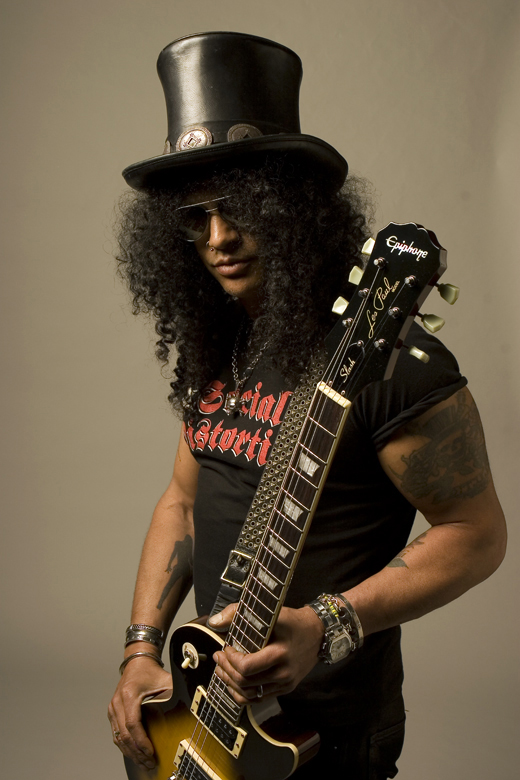
Slash: Underrated?

Even though I dug GN’R music back in the day, I wasn’t a huge fan, mainly because of Axl Rose who really annoyed me with his well-known and well-publicized antics. While I appreciated Slash’s playing at the time, that annoyance with Axl unfortunately made me write him off. My bad.

But lately, I’ve been revisiting GN’R. Just the other day, while driving to work, I was greeted to “Welcome to the Jungle” playing on my favorite classic rock radio station, 98.5 KFOX. I’ve always dug that song, and it has been a mainstay in my iTunes collection for years. In any case, Slash gets a couple of lead breaks during the song, and this time, I really listened to what he was playing.

No, he’s not particularly fast, he doesn’t do two-handed tapped arpeggios. But what he did in that song was so melodic and fit so well, and his tone was so definitive of Marshall “mojo” that I gained a completely new appreciation for his playing.

So I spent lots of time during work listening to the GN’R tunes I have in my library and playing GN’R and Velvet Revolver videos on YouTube; not for the bands, but to listen to Slash play.

And after that, I came to a conclusion: Of all the hard rock guitarists out there, I believe Slash is underrated. He doesn’t do anything flashy, but what he does, without fail or variance, is play exactly what fits with the song; nothing more, nothing less. To me, that’s the mark of a truly great musician. There’s so much attention paid to the great shredders out there nowadays, but I believe that Slash’s tone represents the model and epitome of a Les Paul played through a cranked up Marshall. Admittedly, that’s a tone that I’ve been really getting into lately. I love the bite and sustain of that combination of guitar and amp, and Slash simply nails the tone!

But in addition to his awesome tone, one thing that I really “got” yesterday was what a great rhythm guitarist he is. Again, he plays solely what is appropriate, but it provides a foundation for the songs he plays that are as definitive as his leads. Again, that’s musicality, and musicality at its finest.

If you’ve ever written Slash off in the past, give him a listen, and you’ll realize like me what a truly great guitarist he is!

Click for larger image

Peterson is at it again. I did a review on the Peterson StroboRack awhile back, and loved the unit, though as a pedal guy, the rack didn’t make much sense in a gig situation. I’ve seen the StroboStomp in operation, and that’s a cool unit. Now, Peterson has just released the new StroboClip, which combines the strobe technology Peterson is known for along with several “Sweeteners” for specific types of musical instruments, and provides 0.1 cent accuracy; all in a clip-on tuner! How cool is THAT!

True to Peterson build quality, the StroboClip isn’t made of cheap plastic. It is housed in a metal casing, so it should be quite durable, and the backlit LCD display should help a lot in making the tuning bars readable.

If you’re new to Peterson tuners, they use a pattern of left-right moving bars to indicate tuning. Movement left is flat, movement to the right is sharp. Once the bars stop moving, then the instrument is in tune. It takes a little while to get used to, but once you get the hang of tuning with a strobe tuner, it’ll be hard to go back to another type. I had trouble parting with the StroboRack when I had it, but also didn’t want to pay the price of a rackmount unit.

With the StroboClip, I might just be enticed to get one – especially for my solo acoustic gigs. My onboard tuner works okay, but it’s not as accurate as I’d like, and I oftentimes have to do some post-tuning tweaks to get it dialed in. But with a super-accurate tuner like the StroboClip, that might solve that problem.

I’ll hopefully be getting one of these units in for review, and I’ll do a full write-up on it. For now, here’s the press release from Peterson:

——–

PETERSON IS NOW SHIPPING THE WORLD’S FIRST CLIP-ON STROBE TUNER

Unrivaled accuracy in a small package strobe tuner

Alsip, Illinois, USA – 8-6-2010 – Peterson Strobe Tuners has added a clip-on style strobe tuner to their Virtual Strobe™ series line-up. The StroboClip™ is designed for acoustic instruments and contains many new features not found in traditional clip-on tuners. The large strobe display maximizes the StroboClip’s screen area by moving the strobe bands horizontally, rather than vertically as in previous strobe tuner models, to guarantee easy viewing in various lighting conditions.

New and exclusive Sweetened Tuning® presets for banjo, mandolin, and ukulele offer dedicated settings for players of these instruments to facilitate tuning. A variety of other presets including Dobro®, lap steel, and settings for the violin family come standard in the StroboClip. Settings for eclectic instruments such as lute, bagpipes, and oud are also covered along with additional Eastern Temperament settings for instruments of the like.

The StroboClip also features an exclusive Sustain mode™. In Sustain mode, the StroboClip can be set to hold the tuning pattern for a short time after the note has decayed so that instruments with short voices, such as banjo and mandolin, can be tuned quickly and easily. For regular tuning, the Sustain mode feature can be turned off.

“Musicians have been asking for the convenience of a clip-on tuner that has the accuracy and real-time tuning of a strobe tuner for a long time,” says John Norris, Peterson Sales Manager.  “Many features with a low price point is what the target was and we feel we hit the mark with this product.”

The StroboClip is encased in a brushed aluminum shell to help it withstand the rigors of the road and the included cushioned, metal carrying case will keep it safe when not in use. Soft, rubber pads in the jaws of the StroboClip protect the instrument’s finish while providing a firm grip for maximum signal conductivity.

The MSRP of the StroboClip is $89.99 and it is now shipping. Visit www.petersontuners.com or www.stroboclip.com for more information.

***

About Peterson:

Peterson Electro-Musical Products, Inc. has been manufacturing strobe tuners since 1948. The Virtual Strobe™ series was introduced in 2003 followed by the first ever True Bypass tuner of any kind, the Peterson StroboStomp™ in 2004. The StroboSoft software tuner was released in June 2005.

I finally got a decent digital SLR camera – a Nikon D40 – last night. Surprised my son who’s studying digital media with a Nikon D90 and traded him cameras. What a difference a great camera a lens makes with respect to picture quality. For all these pictures, I used a special f1.8 50mm lens that has no zoom, and with the D40 at least, requires manual focus. But the pictures that lens produces are incredible. And even though I was indoors, I didn’t use a flash, as the lens uses the available light. So nice. In any case, enjoy! Click on any picture to get an enlarged view.