Feeds:
Posts
Comments

Gig Report: BOSS RV-5

What? No formal review? Well, being that the pedal is less than 24 hours old, and I gigged with it before doing a full review, I thought that I’d share how it performed first before giving it a rating.

First the back story…

I do a solo acoustic gig at  local restaurant every Friday. Rig-wise, my rig has been very simple: An acoustic/electric and a DigiTech Vocalist Live 4. I’ve brought amps in the past, but usually err on the side of convenience to keep things as simple as possible. The Vocalist Live has worked fine for several years, and it’s easy to hook up to the PA and go. Unfortunately, it’s showing its age and wear and tear from using it so much (I do at least two gigs a week where I use it). Lately, the guitar input has been crackling a little, so I’ve had to use the “Thru” jack to go out to the PA. That’s not a problem, but typically a raw signal into a PA can be a bit muddy and harshly so.

So yesterday, knowing that I would have to go direct to the PA, I went down to my local music store and got a great passive DI box from Radial Engineering called the “ProDI.” I’ll have a review of that in a bit. But since the PA at the restaurant doesn’t have any effect inserts or a loop, I decided to get a reverb pedal specifically for this gig. Enter the RV-5

BOSS may be considered a bit too mainstream for most people’s tastes, but I have to hand it to them. They’ve created some wonderful pedals in the past that have served to define certain tonal genres; for instance, the CE-2 Chorus. Now, I’m not saying the RV-5 is a standard by any stretch of the imagination. But considering how long BOSS (Roland) has been around, they do know how to get some great sounds. And the fact that almost everything they make is pretty affordable, that’s not a bad thing at all!

Add to the fact that BOSS pedals seem to last forever, and that is a testament to their build quality. My thought is that BOSS has always been able to produce “giggable” tones at a great price that may not be absolutely perfect or the ideal I may be after with a particular tone, but they’re well-built, reliable, and I can get my tones “close enough” so that most folks would never notice. Hell! I had my all-digital CE-5 on my board for years, and no one was the wiser (though, of course, it’s no match to the liquid, smooth tones of the CE-2).

I wasn’t expecting much out of the RV-5. After all, despite BOSS’s longevity in the marketplace, most of their new stuff is simply okay. But when I auditioned the pedal at the shop, going through a PA system, I was really impressed with its tone – especially with the “Plate” setting, which provides a nice, warm and snappy reverb that’s ideal for acoustic guitar. I didn’t play too much with the other reverb settings at the time, but I was really pleased with the Plate just the same. On that voicing alone, I knew I had a winner for my gig yesterday.

The other thing that REALLY stuck out for me was that the RV-5 is dead quiet. No errant hiss or artifacts at all, and that is a real delight, not having to deal with line noise.

So last night, I ran my guitar into the Vocalist Live, went out the “Thru” jack, into the RV-5, into the Radial ProDI, then straight into the board. I was crossing my fingers that it would work, and it work it did! I was pleasantly surprised about how transparent the pedal was! My Stratacoustic Deluxe has this quirky, but pleasing jangle from the Tele lipstick pickup in the neck that I absolutely love, and I was actually concerned that I’d lose that with the RV-5. But my concerns were all waylaid as that jangle was retained.

What I discovered through tweaking the pedal last night was that I actually like the “Hall” setting quite a bit, and switched back and forth between “Plate” and “Hall” all night. I really didn’t get into the “Spring” setting that much, and frankly, I’ve never really liked digitally modeled spring reverbs – even the Lexicon spring that’s on my Hardwire RV-7. But that’s just a nit. It’s not bad, but it’s not really my cup of tea. I tend to like a more spacious-sounding reverb.

So all in all, I really dig the Boss RV-5. I’ll do a full review in the next couple of days!
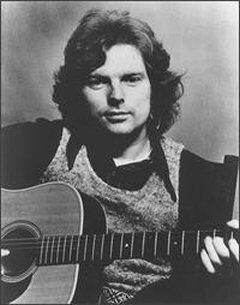
Wow! Just got finished playing a little gig with me mates at the church for Saint Paddy’s Day. Lots of fun drinking Guinness, playing tunes, and watching my daughters do some jigs and reels (they’re Irish dancers via their Irish mama). 🙂 So, I got to thinking, who were some influential Irish rockers through the decades. So I want to celebrate Irish Rockers on Saint Paddy’s Day! Here’s a quick list:

Van Morrison
Rory Gallagher
Thin Lizzy
The Boomtown Rats
Sinead O’Connor
Gary Moore
U2
The Pogues
The Cranberries
Ash
Snow Patrol

I love the derivation of The Pogues’ name which is short for the Irish “pogue mahone” which in Gaelic is: póg mo thóin which means “kiss my arse.” 🙂 From what I heard from an Irish friend, they had to shorten their name for the record company so as not offend the public. Too bad. It’s a great friggin’ name!

Anyway, let’s raise a pint to those great Irish Rockers!

If you’ve read this blog with any regularity, you’d know that I’ve lamented trading away my original BOSS CE-2 Chorus for a Multi-function DigiTech pedal. Hey! I didn’t know better at the time. The CE-2 was cheap when I got it new back in the early 80’s, and so I figured, what would be the harm in trading a cheap pedal for another cheap pedal, especially if the new cheap pedal was all-digital! Oh well, I’ve redeemed myself. I finally got a CE-2, and for a GREAT deal on EBay!

To me, THIS chorus sound is the chorus sound that defines the entire gamut of chorus pedals. Say what you want about the others. While they’re all good – and I’ve heard and played many – the CE-2 chorus is the sound I grew up with as a young guitarist. To me, nothing matches its warmth and the liquidity of its tones. This is pure analog Chorus goodness.

I did some really quick demos about fifteen minutes ago. All clips were played clean with my Squier CV Tele 50’s running into my pedal board and into my Aracom VRX22. Excuse the 60Hz hum from my Tele and the ambient background noise of my fridge. 🙂 Each clip starts with a dry version then the CE-2 is engaged.

First up is a little clean blues groove. The chorus, when engaged is set to 3pm on both Rate and Depth to get a sort of vibey effect:

Next up is a simple chord progression done finger style. The CE-2 has both Rate and Depth set to noon:

Finally, the last clip demonstrates how well the CE-2 plays with other modulation effects. It first starts out with my VOX Time Machine and Hardwire RV-7 Reverb. When I play it over with the CE-2, the CE-2 is set to my favorite setting, with Rate at noon, and depth at 2pm (some things are just etched in your memory):

Of course I realize that appreciation of tone is an entirely subjective matter. But even after all these years, I just can’t get over how much I love this chorus sound and thick and liquid it can get, but still be crystal clear and articulate. My CE-5 did a great job for real subtle chorus, but cranked up, it was unusable. But with the CE-2, there are usable tones, no matter where you set it!

I have to admit that I am absolutely emotional right now. I’ve got all these memories flooding through my head from almost 30 years ago when I first bought it: Memories of watching a young Michael Hedges work his magic on his acoustic; trying to cop Andy Summer’s tone; late nights in my parents’ house plucking away at my guitar; lots of memories, both good and bad. Wow!

This pedal will NEVER leave my board again!

Just Mark It Up!

…your lead sheets, that is…

I’ve been writing music for a very long time, and I’ve used a variety of methods to get my songs written down, from notating on staff sheets to using full-blown music notation software. The notation software I’ve used extensively in the past is called “Mozart,” and it provides a full range of staff-based and even guitar tab notation features. I’ve used it for orchestral work and songwriting, and it has been a real life-saver. But as guitar is my primary instrument, Mozart is a little overkill, especially when all I want to do is put a lead sheet with chords together for my band. Furthermore, nothing can shake me out of my creativity when I have to focus on the minutiae of notes. So having a quick way of putting lead sheets together so I don’t lose my creative spark is critical.

Enter ChordPro

This is where a text-based notation system called “ChordPro” has been so instrumental for me in quickly assembling lead sheets. ChordPro is a very simple markup “language” similar to wiki markup, but far more limited. All it does is provide formatting directives to programs that can parse the ChordPro markup for easy output, either to print or PDF (depending upon your system setup). If you look at the ChordPro format, you can see that there just aren’t that many formatting commands. But that’s its power. Why be inundated with a bunch of features? That’s just more to learn, and the point is to get a lead sheet together quickly.

The most sophisticated feature of the ChordPro format is the ability to define chord shapes. Not all ChordPro parsers are created equal, but one thing they all do is optionally print chord shape grids, and if you use alternate or altered chords, having the ability to notate them is vital – especially if you’re sharing your songs. In my latest song, “The Breakup,” I needed to get a lead sheet together to send to people to look over. In that song, I used both alternate and altered chords, and needed a way to show them.

For instance, I have a B7b9 in the song. People who know altered chords could easily figure it out, but it’s so much easier to see a grid. In that case, I notated the following {define:B7b9 base-fret 1 frets x 2 1 2 1 0} to tell the parser to draw out the chord. The syntax is very simple:  define:<chord name> base-fret <fret of the lowest fretted note> frets S6 S5 S4… <position of fretted notes relative to the base fret. The base-fret is one (1), not zero. So for the B7b9, the base fret is the first fret, or 1, then I set the fret positions of each string relative to that position. Zero (0) denotes an open string, while x denotes a muted string.

Here’s the whole song notated in ChordPro format:

{t:The Breakup}
{st:Brendan Delumpa}
#Chord definitions
{define:B7b9 base-fret 1 frets x 2 1 2 1 0}
{define:F#7#9 base-fret 8 frets x 2 1 2 3 x}
{define:C#m7b5 base-fret 4 frets x 1 2 1 2 0}
{define:Em7 base-fret 7 frets 0 1 3 1 2 1}
{define:Cmaj7 base-fret 3 frets x 1 3 2 3 1}
{define:Am7 base-fret 5 frets x 1 1 1 1 1}
{c:VERSE 1}
[Em7]Why don't you say just what's 	[Bm7]on your mind
[Em7]instead of leaving clues for [Bm7]me to find
Been on the [Cmaj7]trail to your [Bm7]heart but I'm [Am7]lost from no [B7b9]direction
[Em7]you've been turnin' me a[B7b9]round[F#7#9]

{c:VERSE 2}
[Em7]The way to your heart used to [Bm7]be so clear
[Em7]Now I can't see past this fog of [Bm7]doubt and fear
I'd like to [Cmaj7]reach out to [Bm7]you but you've [Am7]left me in iso[B7b9]lation
[Em7]I don't know where to turn... 

{c:CHORUS}
{soc}
We've taken our [Cmaj7]hearts as [Bm7]far they will [Em]go
our summer of [Cmaj7]love has turned to [Bm7]rain and snow[Em]
no more [Cmaj7]rays of hope to guide us
there's [C#m7b5]nothing left to hide [B7b9]behind[B7] (let it ring)
{eoc}
{c:Chorus Endings}
1st: You take yours and I'll take mine...
2nd: We wasted all this time...

{c:VERSE 3}
[Em7]Expectation was our [Bm7]deadly sin
[Em7]It's a game that we could [Bm7]never win
"You can [Cmaj7]do what you [Bm7]want, just make [Am7]sure you do it [B7b9]my way."
[Em7]You know I'm always [B7b9]right...[F#7#9]

{c:VERSE 4}
[Em7]We see the world from our [Bm7]point of view
[Em7]Where nothing changes, nothing's [Bm7]ever new
We hold [Cmaj7]on to a [Bm7]vision and [Am7]never seek a [B7b9]better way
[Em7]and we never see the light...

{c:CHORUS}

{c:VERSE 3}
[Em7]Here's to the end, here's to [Bm7]being free
[Em7]No more blame for each other's [Bm7]misery.
I will be [Cmaj7]strong and sur[Bm7]vive and I [Am7]won't be shedding [B7b9]any tears[Em]
I will be [Cmaj7]strong and sur[Bm7]vive and I'll [Am7]fly from all these [B7b9]wasted years.[Em]

{c:Brendan Delumpa}
{c:(c)2010 Brendan Delumpa}

Pretty simple, right?  When I’m first constructing a lead sheet with chords, I normally insert the chords first into the lyrics, then do the chord definitions, then add the rest of the formatting. It keeps the process fairly simple.

Another advantage of having a standard notation method is that band members can quickly put together lead sheets to share with their bandmates. If everyone has a ChordPro parser, they can easily print out stuff someone else in the band has sent them. Now that’s really powerful!

Songsheet Generator by Ten By Ten Software

There are number of ChordPro parsers on the market right now, but the one I like to use is called “Songsheet Generator” by TenByTen Software that runs on both Mac and Windows. Click here to see the PDF of the output that Songsheet Generator produces. As I said, parsers are not all created equal, but Songsheet Generator has some good formatting options that make customizing your output a breeze; not to mention that it’s donation-ware, so you have the option of paying for it. It’s only $18.00, so I recommend supporting the creator. I sure am. It makes the printing and managing of songbooks so easy.

I realize that some people might be turned off by doing things so manually, but believe me, using ChordPro notation is MUCH faster than pointing and clicking.

No, I’m not talking about a resonator guitar. This is an effect. It essentially adds tons of sustain and feedback kind of like one of those Moog guitars, but in a pedal connected to a gooseneck stand that appears to have an optical scanning device attached to the end that “reads” your strings, then processes the vibrations. It’s interesting to say the least, and Uli Jon Roth apparently uses it.

That said, I like the idea of having something like this to get super-sustain and feedback, and totally get that you don’t have to spend an arm and a leg to get at least part of what the Moog guitar does, but it’s another piece of equipment to lug around. Don’t know how I feel about that.

Don’t know how practical it is, but I’ve seen worse things.

Check out the Vibesware site for more information!

When Inspiration Hits…

…I gotta go with it! I just got home from playing a three hour solo acoustic gig. I’m physically tired from playing and singing, but I’m going to go out to my garage and play some more after I write this entry! I’m on a real high from getting a great evaluation back from my latest song, “The Breakup,” and my gig tonight was really magical because I had breakthrough with letting my emotions pour out while I was performing. I’ve been doing this gig now for almost 8 years, week in and week out (except for vacations), and even after all this time, all I want to do is sling my axe!

Call it an obsession, but I could think of a lot of worse things to be obsessed with…

I’ve been trying to develop an idea for a new song. It’s a softer one, but I don’t necessarily want it to turn into a ballad…. oh well… Like I said, I’ll just go with the flow for now and see where this latest burst of creativity takes me. I guess that’s the point of this entry, just going with it. Tonight at my gig, I was feeling really passionate about playing. Normally I restrain myself from letting it all hang out emotionally, but tonight I just said, “Screw it. I’m feeling this way, so I’m going for it. I’m going to put everything I’ve got into my performance.” What that produced was magic. Normally, diners at the restaurant don’t seem to be paying attention – I get pretty good tips so I know they’re hearing it – but tonight, they really listened, and I think they connected with what I was feeling because the room was unusually much quieter than it normally is when I stick to the background, and I observed people just watching me play. That was so over-the-top cool!

I learned a great lesson tonight, and that is if you play with sincerity and with all your heart, great things can happen!

I’ve been sort of operating in a vacuum for the last few years working on new material. I released a Christian album that really didn’t go anywhere, but that really didn’t matter to me because I’ve always felt funny about profiting monetarily from spirituality. The album’s still up on iTunes (if you search on “Brendan Delumpa”, you’ll find it), but I don’t really pay attention to it. That was something that I simply had to get out of my system.

After I did that album, I went on a bit of hiatus in writing, then got the bug again. But this time (it was late 2008), I didn’t want to do another religious album. I wanted to do something with a bit more of a classic rock feel. So I put together a few songs, laid down some tracks, and “kind of” liked what I produced. But I wanted to get some professional feedback. So I entered a few songs into an annual songwriting contest put up by a company called SongDoor.com. The deal was for $10 per song, you could enter your song into the contest, and also get a professional critique.

I actually didn’t care about winning the contest. I knew that the winners would be the ones that write mainstream stuff. While some of my material crosses into the realm of pop, most of it is just stuff that I like to listen to myself, and that’s not really modern mainstream music. My true aim was to get some critique on my songs, and that’s exactly what I got, and that feedback helped guide me in my later writing.

That was back in 2008. Unfortunately, SongDoor got so popular that they couldn’t afford to pay the judges for all the evaluations. I didn’t know that when I submitted a song this round. Oh well… But they recently released a new song evaluation service. For $25 they’ll do a much more in-depth evaluation of a song you submit. That was the answer to my prayers!

The bummer about entering my songs into the contest was that I’d have to wait several months before I got feedback. But with the new service, I could get an evaluation within three to five business days! How cool is that! So I paid for the service and uploaded a song with a lyric sheet yesterday… and got my evaluation back this morning!

Apparently, I was the first person to use the service, so I got mine quick. I have to tell you that the evaluation I got with this service was 100 times better than the feedback I previously got from the contest. It’s honest, and the evaluator doesn’t pull any punches, though they’re pretty nice when hitting you with their honesty. 🙂

The song I submitted was actually a work in progress. I knew going in that my lyrics were bad. They were just filler lyrics. What I really wanted was an evaluation of the music to see if my musical direction was sound. As expected, the evaluator said the genre I wrote the song wasn’t that popular (it’s a jazz/funk piece), and that the lyrics needed work but that musically, it was a good song with a catchy beat. That’s exactly what I needed to move forward with the song.

So this evening, I totally re-worked the lyrics except for the chorus that I thought was good enough to keep. Here’s the new version of the song:

Frankly, I’m not looking to create the next big hit. But it’s great to get validation and critique on something I love doing, and more importantly, get feedback on how I can improve my song writing. I really dig the service that SongDoor is providing, and if you’re a songwriter, I highly recommend submitting a song or two, and get an evaluation!

Man, I love it when gear manufacturers build stuff for a cause! Wampler has just re-released their limited run Underdog Overdrive (only 100 were originally made) to help out a friend who has breast cancer, as she can’t pay her doctor bills and apparently can’t get any insurance. All the profits from this re-release are going to help this woman out. It’s great to see this type of generosity!

Here’s a transcript of the press release:


Wampler Pedals has recently re-released their popular “Underdog Overdrive” pedal. Only 100 of the pedals were built originally.

According to Brian Wampler, owner of Wampler Pedals, “A close friend of mine has breast cancer and has no insurance, no family, and the government will not pay any medical costs for her to get the treatment she needs. Now, I’m not rich by any means, but I had to do something to help her. My wife and I came up with the idea of creating a pink pedal that is rich, dynamic, and very tweakable, and donate ALL the profits to her. Out of that limited run, famed country artist Brad Paisley bought one and loved it. A number of guitarists saw the pedal on Brad’s pedalboard and asked me to build one more for them, so I decided to start building more to keep up with demand. We are still donating all the profits to my friend, Ivy East, who is struggling to pay the doctor bills to combat this terrible disease.”

And here’s a video demo of the pedal. Apparently this is one of Brad Paisley’s favorite overdrive pedals:

For more information, visit the Wampler Pedals site!

Got a little ambitious tonight and recorded some clips of the VOX Time Machine this evening. All clips were recorded with my trusty Aracom VRX22 amp.

The first is a short song featuring my CV Tele in the rhythm and my Gibson Nighthawk 2009 doing the lead. This was close-miked to a 1 X 12.

With the next four clips, I wanted to a chorus kind of vibe going by hooking up two 1 X 12’s to my Aracom PRX150-Pro’s speaker outs. I didn’t record in stereo. I just used my Sennheiser e609 placed about a foot away from both speakers that were about 75 degrees turned toward each other. Sorry for the background noise that’s the ambient noise in my garage – I had to turn up the input gain a lot to get a decent recording signal.

The first clip is just a simple chord progression done finger style. The pedal is set to about 11am level and 2pm feedback. I tapped in about a 72 bpm tempo.

The next clip has the both level and feedback at about 2pm with a 60 bpm tempo. This is sort of a “space echo” type of thing ala Steve Miller.

With this next clip I wanted sort of a heavy slap-back type of vibe doing a rhythm part on the 5th and 6th strings. At the end I play an Em chord very lightly to demonstrate how the pedal reacts to pick attack. The Time Machine is set to about noon on the level and 11 am on the feedback. I’ve got about a 90 bpm tempo.

Finally, I did another short song to demonstrate how the Time Machine works well to get a gorgeous, spacious tone for clean leads. Here I set the level at 10am and feedback at 2pm, and also engaged the vintage mode, which produces a bit thicker of a tone. The rhythm was just recorded with a reverb.

This is a fairly good representation of how the pedal sounds with a clean tone. Again, sorry for the background ambient noise. Maybe if I had a “proper” studio… 🙂

NTO: Never Too Old

Keith Richards
Late in the game, I’m tired as hell
Got a mortgage, three cars and a dog.
I ride a desk in the light
Then sling an axe at night
And I’ll rock through the dark to the dawn.

Laugh all you want, call names at my face
I refuse to come into your fold
But when it’s time to get down
you better stick around
coz I’ll prove that you’re NEVER TOO OLD!

Someone jokingly/seriously asked me, “Don’t you think you’re a little old to be doing that?” when I mentioned that I’m trying to start a band. Luckily I didn’t know this person too well, otherwise I probably would have seriously ripped on them. I just calmly replied, “No,” and smiled. That pretty much ended the conversation (though I had some VERY choice words that I held back out of politeness).

I guess the point to all this is that at least to me, being too old to do something is really a state of mind. My thought is if you have the desire and the skills. Why the f$%k not go for it?

Look at Keith Richards! That dude still rocks after all these years…. and transfusions and drug abuse and alcohol abuse… He’s still standing, he can still play. So he does. I’m not too big of a fan of his lifestyle, but I am a fan of his never-ending desire to play. To me, that’s what rockin’s all about.

Don’t ever let anyone tell you you’re too old to rock. You’re NEVER too old to rock and roll!