Feeds:
Posts
Comments

Posts Tagged ‘Effects’

Oo-la-la! T-Rex will soon be releasing a new distortion pedal called the Tonebug Distortion. Not much info on it yet, but it is supposed to lay on tons of gain. I was fortunate enough to see a video from the folks at GearWire that quickly demonstrates what this pedal can do.

Admittedly, I’ve preferred overdrives over distortion boxes, but I’m really liking the tone from this puppy! Don’t know if I’d shell out $399 for it, though. But T-Rex pedals are premium pedals, so that’s not a surprising price.

For more information, check out the T-Rex site!

Read Full Post »

Toadworks AjaxBeing sick sometimes has its advantages because even though I’m half brain-dead with a head cold, I can take some time to surf the web in search of gear. This morning, I read a press release on Harmony Central about the new Toadworks Fat City Dual Overdrive. Being a big fan of overdrive pedals, I went to the Toadworks site to read about this new pedal.

I had tried a Mr. Ed distortion awhile back – it was okay – but I wasn’t thrilled – but I’ve always dug dual overdrives and stacking, so this looked promising. I read about the pedal, and it sounds really cool. All hand-wired with high-quality components. Also, a little out of my price range at around $300. Still, it looks like it’s worth checking out just to see how it sounds.

While I was on the site, I started looking at all the other pedals Toadworks offers, and the one that REALLY caught my eye was the Toadworks Ajax. Rather than try to explain it (since I’ve never even used one), here’s the product summary from the Toadworks site

Ajax is essentially a 2-channel line mixer, combined with a buffered Y-splitter, with the ability to invert (180Β°) the phase of one input signal, as well as one of the output signals.

Ajax has a wide range of uses, including:

– Two-channel mixer – With independent input level controls, Ajax can act as a simple 2-channel mixer.
– Multi-guitar interface – Ajax has two buffered inputs, allowing you to connect (and play) two different instruments at the same time.
– Input phase correction – When combining two signals, there is always the possibility that the signals may be out of phase with each other. Ajax can invert the phase of one input to eliminate unwanted frequency cancellation.
– Multi-amp interface – Ajax has two output jacks, allowing you to send the signal to two different amplifiers simultaneously.
– Output phase correction – When connecting the two output jacks to two separate amplifiers, you may find that the amplifier outputs are out of phase with each other. Ajax can invert the phase of one output to eliminate unwanted frequency cancellation.
– Stereo expander – when using two amplifiers (or recording direct to a stereo interface), it can be desirable to invert the phase of one of the amplifiers, creating an ‘expanded’ sound – this is especially useful with modulation effects such as chorus, flanger, etc. The output phase inversion is performed using the stomp switch, so this can be done on the fly.
– Effect Combination – If you are lucky enough to have two Ajax devices, you can split the output signal of the first unit, applying varying amounts of effects to each signal indepentently, and recombining the signal using the second Ajax. Using this method, you will have access to new sounds and effect combinations that are otherwise impossible.
– Simple buffer – Putting Ajax first in your signal chain will provide a simple buffer, eliminating concerns about signal loss in true-bypass effect chains.
– Clean boost – Both the input and output Level controls are capable of linear boost, making Ajax a simple clean boost with no frequency attenuation.

This pedal is very intriguing to me, as I’ve recently been experimenting with playing two amps simultaneously. I know, you can do that with an ABY pedal, and I do that, but I really like the phase inversion and the input and output boost. This has lots of possibilities. Funny though, this pedal has been out for a year, and there is very little information or reviews on it.

Read Full Post »

I announced the Skull Crusher back in September when it first came out. Based upon the KASHA overdrive (but with some upgraded wiring and electronics), it has since gotten the attention of several prominent guitarists. Now George Lynch is playing through it, and HE LOVES IT! Check out this video:

How’s that for an endorsement. I’ve said all along that the KASHA overdrive is just about the best overdrive I’ve ever played, and I’m not alone in saying that. With guys like George Lynch touting how good the Skull Crusher is, you owe it to yourself to check it out! I know, some people don’t go for the look, but it’s the tone that matters.

For more information, go to The Tone Box site!

Read Full Post »

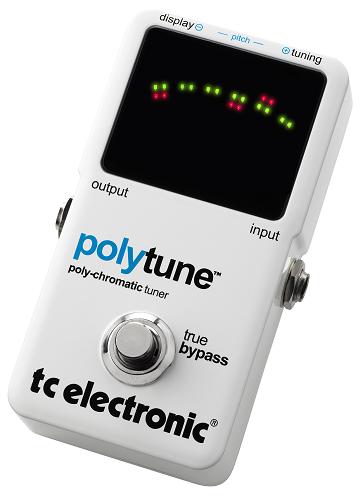
Could this be the last tuner pedal you’ll ever need?

I don’t see how I missed this! I scour the ‘net daily for new stuff, especially from companies that are known to create really high-quality stuff – like TC Electronic. These Scandinavians are incredible inventors, and I haven’t seen or played one one thing of theirs that I didn’t like – though I could rarely afford it. But they’ve come out with a new tuner – yes, a tuner, of all things – that is completely different from any other tuner on the market. It’s called the “Polytune.” As its name implies, it is a polyphonic tuner; that is, the tuner can detect all your strings at once, and you can see which ones aren’t in tune at the click of a foot switch. Unlike traditional tuners that require you to check each string individually, with the Polytune, you strum your open strings. The LED’s will show you which strings are in tune and which aren’t.

In my experience, more likely than not, at any given time only one or two will be out of tune. So imagine the time you save by NOT having to check and tune each string – only the ones that need it! Check out this video to see how it works!

And at $99 bucks… SOLD!!!

Here are some features:

  • 0.5 cent accuracy
  • Standard size box
  • Tune by strumming
  • Can automatically switch between chromatic and polyphonic tuning (it will detect if you’re hitting a single string)
  • Customizable preference settings
  • Has a 9V output jack for powering other pedals
  • True bypass
  • Adjustable reference pitch from 435Hz to 445Hz
  • Supports drop tuning all the way down to B!
  • Works with 4 and 5 string basses as well

It may not have the accuracy of a TurboTuner, but who the hell gives a flying f$%k! .5 cent accuracy is nothing to shake a stick at, and the fact that you can see the tuning of all your strings at once is incredible! CanΒ  you say KICK ASS!!! I’ve never even seen this thing and I want to give it 5 Tone Bones! Check out the TC Electronic web site for some detailed information!

Could this be the last tuner I’ll ever want? Until someone comes out with something better – and at a better price, for that matter, probably not. I want to get one right now. Unfortunately, they’re only available for pre-order. Hmm… oh well, I supposed I can wait. πŸ™‚

Read Full Post »

I'm running a poll to find out how much gear GuitarGear.org visitors have.
I'll keep this post up for awhile so we can get some stats.

Read Full Post »

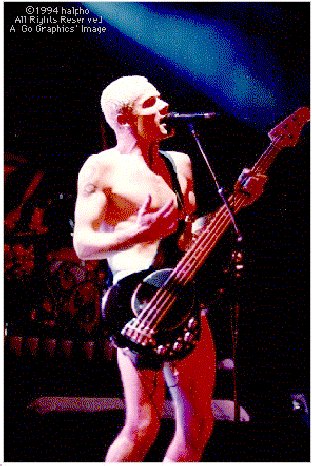
O thou with such dirty little minds! I’m not talking about some Red Hot Chili Peppers-style playing with a tube sock around my member. I’m talking about playing with zero effects! So there!

For the past few weeks, I’ve recorded and gigged several times with no effects at all, and the only pedal I use is my trusty BOSS TU-2. The first time I did it, I was being lazy and didn’t want to break down my rig from my studio – especially since I was in the middle of laying down some tracks and didn’t want to lose my settings. But that first time turned into a second, then a third, and so on.

I’ve found it to be refreshing on a number of fronts; not the least of which is the much lighter load I have to lug around. But more importantly, I think it has really helped my playing as I can’t rely on pedals to fill in the gaps. For instance, I’m a lot more aware of how I’m sustaining notes, and trying to hold them as long as possible before I have to move on.

I know of lots of players who don’t use pedals at all, and for quite awhile, I couldn’t imagine life without pedals. But “playing naked” has really helped me to not rely on them. I used to always use overdrive pedals as my main source of drive, but I now use them as accents. I used to slather on the reverb but now, I rarely use it, except in the studio and even there, I use it sparingly.

Don’t get me wrong, I’m not going to put my board away. There are times when I need a pedal for a particular song, but for the most part, I can do without them, or just use them to provide tonal accents. In a way, I feel liberated…

Read Full Post »

Click for full size view

What do you get when you have a group of product development consultants who are avid guitar players who want to find a way to stop “workin’ for the man,” but not create a bunch of “me too” products? You get StageTrix Products. These guys are brand-new, and from what I can gather, their approach to creating guitar gear centers around what you might call convenience products for guitar players.

Take, for instance, their pedal risers that I reviewed back in October. These gadgets that raise the back row of your pedal board may not make music, but they sure make the making of music a helluva lot easier. Here’s proof: The solo part of my latest song, Strutter, was recorded in a single take, with one punch-in at the very end of the song after I was done. In between sections, I was activating/deactivating effect pedals on the fly – something I’ve never done in a recording. I usually stop the recording, activate the pedals, then continue on. Granted, I had enough time between sections to do the switch on the fly, but I will submit that I couldn’t have done without the back row of my board being raised; in other words, how my board used to be. The point here is that that little convenience made a world of difference for me in my recording.

Enter the Pedal Fasteners. For $9.99, you get a pack of three, pre-cut hook-and-loop strips that are dimensioned to fit standard-size pedals. You might say, “So what? I can just get some Velcro from my local crafts store and be done with it.” You certainly can, but my experience with that stuff is that the glue used with these cannot withstand higher temperatures. They get all gooey, and once the glue has melted, the glue must change chemically, because its sticking power is lost. You ever get that stuff on your hands? I rest my case… πŸ™‚ Pedal Fasteners, on the other hand, have a glue that can withstand up to 200 degrees Fahrenheit; more than enough for even a hot car interior, and the mere fact that you don’t have to cut them to size is killer!

I recently replaced the velcro strips on all the pedals on the front-row on my board with Pedal Fasteners. No cutting, (except for the center section (which you could conceivably push out, but I wanted clean edges and didn’t want to risk tearing, so I used a sharp utility knife). They work great, and even stick to rubber! I’d recommend removing the rubber though… I’ve had mixed results with that, but I did it to test it out – it’s sticking just fine so far.

So if you’re tired of having to cut fasteners to size, and even more tired of that messy goo once the glue has melted, you owe it to yourself to get a couple of pack of these!

For more information, please visit the StageTrix Products site!

Read Full Post »


For the last couple of years, there has seemingly been a glut of new overdrives that enter the market on a weekly basis. I’ve been like a kid in a candy store as overdrive pedals are my favorite pedals. Though I’ve played through tons of ’em, I haven’t written about many mainly because there’s just so much gear out there, and I’ve got a limited amount of time I can spend reviewing and writing.

But I’ve noticed that in the past few weeks, there have been just a couple of new overdrives to enter the market; one of which I purchased (the KASHA Overdrive), and the Skull Crusher overdrive, both made by the same company. Since then, I haven’t seen anything new come out – at least no one is putting out press releases…

Are we at a saturation point now? Has all the overdrive territory been covered? Perhaps it is, or perhaps people are just waiting to release their pedals. One thing’s for sure, the overdrive tap has dried up.

Read Full Post »

A friend of mine asked me to recommend a pedal that would push his amp into overdrive so it would just be his amp distorting. Naturally, I recommended a transparent clean boost that would slam the front-end of his amp and make his pre-amp tubes clip. So I lent him my Creation Audio Labs Mk.4.23 clean boost (best I’ve ever used, btw). He hooked it up, turned on his amp, slung his axe, strummed a chord, immediately muted and turned to me saying, “Dude, this doesn’t sound right.”

“What do you mean?” I replied,Β  “It sounds fine to me.”

“It’s too bright!” he exclaimed.

“Dude,” I replied, “That’s how your amp sounds when you overdrive the tubes. Actually, that sounds killer. Lemme try…”

So I took his guitar, and did a couple of riffs, and bent and held a note to get some feedback. The tone was rockin’!

“That was cool, dude, but it’s still really bright,” he said.

“Oh brother, bleed off some highs from your tone knob, for chrissake,” I said, obviously getting a little exasperated.

He did, I played a bit more, then gave the guitar back to him.

“That was better,” he said, “but it doesn’t sound quite right.”

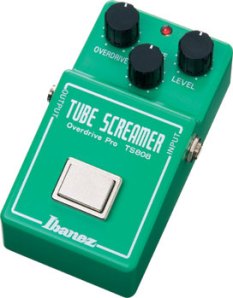
“Ha! That’s because you’ve been using a Tube Screamer for so f$&kin’ long for your overdrive sound, that you’ve never really known what your amp really sounds like when it’s overdriving without any help,” I quipped.

“You know, you’re probably right,” he said, “but it’s what I like, so I think I’ll stick with it. Sorry dude…”

“Hey! Not a problem, you just gave me the material for my next article! Thanks!” I exclaimed.

The point of that story is that for some, transparency isn’t pleasing to them at all. With my friend above, he was used to the Tube Screamer’s mid-range hump, and when he heard his amp overdriving with the full spectrum of the EQ, he didn’t like it all. I also met a dude who uses a compressor that’s always on to fatten his tone and punch through the crowd noise when he’s playing (he plays a lot of open, public spaces). In either of these cases, it’s all good because as the old saying goes, beauty is in the eyes of the beholder.

The reason why I brought this is up is because there’s a lot of talk among gear freaks about transparency; that is, the natural sound of our guitar(s) and amp(s) without any coloration. By convention, transparent tone sets the baseline for our sound, which we then color with effect pedals. That seems to be the convention. For some however, that baseline includes some coloration; like my friend who always has his Tube Screamer on. Again, beauty is in the eyes of the beholder.

Admittedly, for myself, before I started using attenuators to get the natural cranked tone of my amps, I was someone who used a Tube Screamer or OCD to get my grind. Once I started using attenuators, it actually took me awhile to get used to not only the transparent, natural, cranked sound of my amp but also the dynamics as the pedals I used added sustain and compression. But now, and for the last few years, transparency is where it’s at for me, and it has really opened up a whole world of tone for me. More importantly, it has helped me understand how different types of amps, especially tube amps, sound in their natural states.

Please don’t get me wrong, there is absolutely nothing wrong with using pedals to form your baseline at all! But if you do turn on a dime, as it were, and decide to go for transparency, be prepared for a little surprise. When you suddenly experience the full spectrum of EQ from your gear – especially with the case of a great attenuator like the Aracom PRX150-Pro that enables you to get the cranked tone of your amp at reasonable volume levels, you may not like it as your ears are used to the altered tone from your pedals or other devices you’ve had in your signal chain to achieve your baseline tone.

But I will say this: I do argue for creating your baseline tone as transparent as possible. As celebrity chef Emeril Legacie says about cooking, “It’s very easy to add ingredients, but it’s a lot more difficult to take them away.” With respect to your rig, if you build on a good base of transparent tone, it’ll have some very good effects on how you approach your tone. I’ll share with you a few points of what I discovered:

  • I’ve come to appreciate the natural character of my amps. I use four amps (though I normally gig with only two of them). These are all based on different power tubes: 6L6, 6V6, EL84, and 6AQ5. These all have different characters when cranked. When I’m recording, I can pick an amp that fits the type of response I’m after.
  • A fallout of the the first point is that I’ve found that I’m using effect pedals a lot less; especially overdrives, which I still love, but I use only to provide a different character. For instance, while I totally dig the sound of my main gigging amps, Aracom VRX22 and VRX18, the drive channels are on theΒ  bright side when pushed. But if I want a little low-end oomph for some rhythms, I switch to the rich clean channels of these amps, and get my grind from one of my overdrives, like my Tone Freak Effects Abunai2, that has a clipping circuit, plus adds both compression and sustain (this pedal rocks, by the way).
  • Going more barebones in my approach has also made me a better player – especially with respect to sustain and vibrato. Where I used lean on my pedals as a bit of crutch to get sustain, I’ve had to learn how to eek out as much sustain from my guitar using just my fingers. Once I started getting that down, it was a whole new ballgame for me.

Whew! I didn’t mean to write an entire treatise! πŸ™‚ But to close this out, if you’ve never really experienced the natural tone of your gear, I encourage you to do so. It might just blow you away. Then again, you might not like what you hear, and that may give you pause to research getting another amp – that’s never a bad thing…

Read Full Post »

I love my Strat. It’s a cheapo MIM version, but it has a great sound. But ever since I started using it with the KASHA Overdrive pedal, it sounds even more like a Strat to me! I know, that sounds a little cuckoo, but that Classic channel on the KASHA Overdrive really brings out that jangly tone that defines the Strat tone; that’s to my ears, at least…

The other day, I was messing around with a dominant seventh ditty in A as I was trying to pick up some improv techniques from Chuck D’Aloia’s Blues with Brains video. I originally just recorded my Strat running through a reverb, then into my amp. It sounded pretty good, but I wanted to get a bit more top-end bite, but not a lot of drive. So I switched my KASHA Overdrive on and my jaw dropped! Here’s what I came up with…

That pedal just brings out the best in a Strat. I swear, now that I’ve been using it with my Strat for the last couple of days, I think it’ll always be on when I perform with my Strat. It really sounds great!

BTW, both rhythm and lead parts were played with the Kasha overdrive pedal. For the rhythm part, I was in the Classic channel to get that jangly Strat sound from position 2, while I was in the Hot channel for the lead in the neck pickup. So sweet sounding!

Read Full Post »

« Newer Posts - Older Posts »