Feeds:
Posts
Comments

Posts Tagged ‘guitar effects’

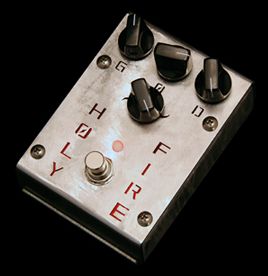
Creation Audio Labs Holy Fire Overdrive/Distortion Pedal

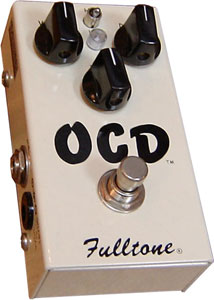
Fulltone OCD Drive Pedal

What do you do when you have two kick-ass overdrive/distortion pedals and don’t know which one to choose because both pedals bring so much to the table? The obvious answer is to use both. But my problem in choosing is exacerbated by limited pedal real estate, so I have to make a choice.

Actually, the choice wasn’t too hard to make once I started playing with the Creation Audio Labs Holy Fire. While I love the OCD, the Holy Fire wins hands-down for its versatility and total transparency. While the OCD is somewhat transparent, it can get kind of muddy and a little choppy at high drive settings, whereas the Holy Fire’s distortion section reacts a lot like a power tube at high gain settings producing a compressed effect that just rocks the house!

I still love the sound that the OCD produces. It really brings out harmonics and overtones, and set in a “sweet spot” produces a nice sparkly distortion that really sounds great. But as of late I’ve been gravitating towards retaining the natural sound of my guitar and amp, so the added artifacts that the OCD adds aren’t really what I want right now.

On the other hand, the overdrive on the Holy Fire is totally unique, and nothing like I’ve ever witnessed in all my tests of overdrive pedals (and believe me, I’ve tested a lot). The overdrive has what Creation Audio Labs calls a “wave shaping” circuit that evenly distorts the entire bandwidth of the incoming signal as opposed to creating a mid-range hump, or scooping the EQ. It really is completely even. You don’t lose any lows or highs, which is common in overdrive pedals. And the circuit reacts to both volume and pick attack, providing more wave shaping as you hit the front-end of the pedal harder. Simply put, you retain all the natural tone of your guitar! It’s insane! And it’s so special, Creation Audio Labs is trying to patent it!

I gigged with the Holy Fire for the first time this evening at my weekly Church gig. Make no mistake, this may be a church service, but we regularly hit above 100db in our sets, so there is plenty of room to let our amps breath, and take advantage of the higher gain settings on our equipment. Tonight, I made sure to pick music that would allow me to use the Holy Fire throughout my set. Talk about being inspired! I used it with my Strat and a Reason SM25 amp. What a combo! I set the gain to just above unity with the clean channel (about 10am), the overdrive at about 2pm, and distortion at about 3pm (so the distortion section would compress – it does this at around 2pm). The breakup was so smooth and delicious, I wanted to keep it on all the time! Unfortunately, I couldn’t do that with some songs, but where I had the entire band playing all out, the Holy Fire just made my heart sing!

The Holy Fire also plays well with other pedals. My mainstay overdrive pedal is my trusty green machine, an Ibanez TS-808 Tube Screamer. That’s one pedal that will NEVER leave my board! But here’s the cool thing: Running the Tube Screamer in front of the Holy First was like nothing I’ve heard before. I did this with my OCD as well, essentially getting a combined tonal effect that the TS and OCD produce. But the Holy Fire maintained the tone the Tube Screamer produces! On the other hand, it smoothed out and thickened the distortion. The result was the expected mid-range hump from the Tube Screamer, but with super-creamy distortion, plus the TS tone, that was like candy to my ears. No extra coloration that I came to expect by running my TS into the OCD. It was like playing a fatter Tube Screamer!

Believe me, despite playing in a worship service, the way I was feeling with both those pedals running together made it seem I like I was flying with the angels! I’m not exaggerating! There is absolutely nothing compared to the feeling you get when you’re playing with wonderful tone. It inspires and emboldens you, and you take your playing to places you didn’t think possible.

That was the feeling I got when I first started playing with the OCD, and frankly, I didn’t think it could get much better. But the Holy Fire has changed everything.

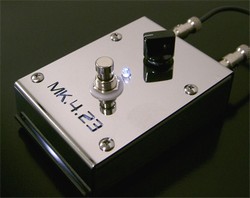
On top of that, I was using another Creation Audio Labs pedal, the Mk.4.23 clean boost, yet another amazing product from those electronics wizards. I used the booster to give me just a slight gain boost for when I was doing solos, or was in the refrain section of a song when I needed just a bit more volume. It too is a totally transparent boost, adding ZERO artifacts to your signal, so all the time I spent dialing in my settings wouldn’t be lost when the Mk.4.23 was engaged.

I swear, I must sound like a twitterpated, googly-eyed schoolgirl! 🙂 But it’s been a long time that I’ve felt truly inspired, like everything was totally right with my world of tone. I’ve finally (at least for now), found total balance in my tone. The circle is complete…

At least until I get a bad case of GAS!!!
Read Full Post »

Plush Verbrator

Plush Verbrator

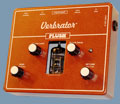
I dig interesting pedals. in my search for a decent reverb, I came across the Plush Verberator that is a tube-driven effects loop and a 24-bit reverb in one pedal. I’m not too sure about the effects loop bit, but the reverb sounds really awesome. Here’s the product description from the Plush site:

The Verbrator® is a new multipurpose pedal which combines an all-tube effects loop with a studio grade reverb featuring a 32-Khz clock speed for full 16-K audio bandwidth. The Verbrator® is our most innovative pedal offering to date. It’s an effects loop, it’s a reverb, it’s both!

Unlike other “tube pedals,” the Verbrator® power supply features a unique regulated switching technology that takes the incoming 9 volts and converts it up to the optimal high voltage a tube really needs to operate best. In addition, a 6-volt DC regulator provides consistent clean DC power for the tube filament assuring lowest noise and consistent performance despite any changes to incoming line voltage.

The Verbrator® can be used as a pedal on a pedal board as a reverb pedal. It features a level control and decay control allowing you to have a short medium or long decay reverb algorithm. It can also be used as a tube buffer to convert an incoming high impedance signal to a low impedance for long cable runs or driving a pedal board. The recovery (gain) stage can be used to boost the level of a guitar or pedal board with a true tube audio stage. It provides a warm sweet utility gain stage with a multitude of uses.

The effects loop portion of the pedal features a unity gain cathode follower to work with any amp that has passive preamp output – power amp input patch jacks, and not a true active effects loop like Ceriatone, Dumble, Bludotone, Brown Note, some Marshall models and others. It has a send level control and high headroom. The return portion of the loop features a high impedance input (250-K) and a low output impedance with its own level control as well. The loop can be run in series or parallel modes, and features a level adjust switch for rack or pedal style effects.

9-volt DC adaptor provided, the Verbrator® features a unique “window” showing the tube. Like all Fuchs pedals, the Verbrator® features solid cast aluminum powder coated enclosure with heat cured silk screening, dual sided heavy circuit boards, premium switches and controls, and premium electronic parts throughout.

Like I said, I’m not too sure about the effects loop part of it, but the reverb really sounds good. Check out the video below:

Read Full Post »

5 Tone Bones - Gear has stellar performance, value, and quality. This is definitely top of the class, best of breed, and it's a no-brainer to add this to your gear lineup!

Creation Audio Labs Holy Fire Overdrive/Distortion Pedal

Creation Audio Labs Holy Fire Overdrive/Distortion Pedal

Creation Audio Labs Holy Fire Overdrive/Distortion


Summary: Overdrive and Distortion and tons of gain in one box that will NOT alter your tone. Has built-in wave shaping that responds to attack and input gain that simulates overdriving the front end of an amp.

Pros: Possible to achieve all sorts of clipping from swampy grind to searing distortion rife with harmonics, overtones and feedback, and it can do all this at ANY volume – freakin’ amazing!

Cons: Operationally, none. But its circuitry is so special that it requires a special 48V DC adapter – it will not run from a standard 9V or 18V power supply like Dunlop DC Brick. But for what it brings to the table, that’s a small price to pay.

Price: $195 direct

Knobs:

– “G” Gain
– “O” Overdrive – Soft clipping circuit – has built-in wave-shaping to react to input gain much like the front-end of a tube amp. Higher levels evoke increased wave-shaping ensuring even distortion throughout the EQ spectrum.
– “D” Distortion – Square wave form distortion
– Hi-cut (variable sweep hi-cut, fully open gives you all the tone, dialed back scales back the hi-freqs)

Tone Bone Rating: 5 This stuff is magic.

The guys at Creation Audio Labs must be wizards – or at least half wizard – because they’ve created what I consider to be the only overdrive/distortion pedal that does what it’s supposed to do, and doesn’t alter the tone of your amp! Mind you, there are times when you want that. For instance, to me, the classic overdriven mid-range hump of a Tube Screamer is an incomparable sound, and something I will always have on my board because I like the way it changes my tone. But in a lot of other circumstances, all I want is grind or all out distortion, and I don’t want my tone changed. That’s where the Holy Fire overdrive/distortion comes into play.

This is truly a magical pedal. Not only does it look awesome with that brushed metal exterior, and glowing red “Holy Fire” letters, it kicks the freakin’ pants off pretty much anything that’s out there that claims tone transparency in my opinion. And I don’t say this lightly. Remember, if you’re a regular reader of this column, I’ve got a real penchant for overdrive and distortion boxes – especially overdrive boxes. So when I say a pedal totally kicks ass, I mean it! You might not see too many reviews on them here, only because I only take the time to write about gear I love and would put in my chain. This is a pedal that will be taking up space on my board! And at $195 direct from Creation Audio Labs, this is a must-have box!

What’s so special about it? Actually, the question should be: What’s not to like? You get the best of both worlds here: Completely transparent overdrive or beautifully compressed distortion. Playing just with the overdrive and the distortion completely rolled off, you can get that classic, mildly crunchy, gritty grind to rip-roaring rattle that’ll make you think your amp’s bottles will shake off. Conversely with the overdrive turned all the way down and sweeping the Distortion knob, you can go from sweet and mild distortion, to heavily compressed gut-wrenching distortion replete with harmonics and overtones that’ll make you feel you’re getting scalped! But the best settings combine certain amounts of both. When you find your sweet spot, it’s epiphany time!

Imagine all this in one little stomp box! And the kicker is that your amp will still sound like your amp! Mind you, I didn’t read any reviews of this pedal before I got one for review. I didn’t want to taint my assessment of the pedal. The VERY first thing I noticed as I twiddled with the knobs is that my test amps never lost their voicing (I used three amps: An Aracom RoxBox combo, a Reason SM25, and my trusty Fender Hot Rod Deluxe). In all cases, the amp I was playing still sounded like my amp except it had grind and/or distortion. And no matter what output volume I had, the pedal operated the SAME WAY!!! So imagine the versatility this pedal brings to the table! I’m going to do a test later on with my Fender Champ 600, and see what wonders the Holy Fire will conjure when I lay down some tracks. It should be interesting as well as rewarding. So whether you’re on stage or in the studio. If you need breakup in your sound, this pedal will do it.

But wait there’s more!

On top of all I discussed, the pedal is sensitive to input gain, and has what’s called “wave shaping” that responds to higher input gain and acts like you’re overdriving the front-end of a tube amp. When you hit the pedal hard with either a booster or diming your guitar’s volume, or just picking hard, the pedal’s LED changes to a yellow color indicating that you’re overdriving the pedal. The magic behind this is that wave shaping evenly distorts the input signal across the EQ spectrum, so all your input tone is completely retained. The damn thing works too! It ain’t no marketing gimmick! So just as you’d expect when you do the same things with an amp, the Holy Fire will do it as well. Like I said, it’s magic.

I should make mention to a very cool effect that happens when you turn the distortion knob past 2 o’clock. The circuit actually starts compressing the signal, so you lose a little volume, but you get a very fat signal. In my opinion, that’s where the magic occurs with the distortion. After playing around with lots of combinations, I ended up just diming the distortion knob altogether, then just layering in varying amounts of overdrive and gain. Truly candy for the ears here, folks. With that, I’m going to post a couple of YouTube vids here so you can see and hear for yourself.

January 12, 2009

I’ve written a follow-up on this pedal. In a nutshell, I got my first chance gig with the Holy Fire this past weekend, and it was a true revelation. Talk about being on cloud nine while playing the guitar! Read the follow-up here.

Read Full Post »

Fuzz pedal? Me? GoofyDawg? I know, I know… I’m an overdrive and overdrive/distortion pedal kind of guy. I usually prefer soft clipping pedals that throw just a hint of clipping and lot of input gain at an amp to make the amp’s tubes saturate and overdrive. And up until this point, I haven’t even discussed any fuzz pedals. But after hearing some of the sound clips from the new Algal Bloom from FH(fx), I have to say that I’m now rethinking my predeliction for overdrive pedals only. But don’t let me do the talking. Check out the clips on the Fuzzhugger.com site!

This pedal looks awesome! And from what I could tell from the sound clips, it’s capable of producing some gnarly fuzz and, as the guys at Fuzzhugger.com say, “[the Algal Bloom’s] name is inspired by its tone – thick and destructive – but very alive.” From the sound clips, I’d say that’s a pretty accurate description of the Algal Bloom.

It’s weird isn’t it? I’m normally not into that kind of sound, but it’s so ugly, it’s lovable! I had a little dog like that when I was growing up. It was a mix of Chihuahua, Toy Poodle, and Wire-haired Fox Terrier. Ugliest freakin’ dog you ever saw – like a little rat. But I loved that dog! He was smart and playful and so loving! Sorry, reminiscing… not that I could say that about the Algal Bloom, but there’s something about how it sounds that I just dig! Check it out!

Read Full Post »

Fairfield Circuitry Barbershop Overdrive Pedal

Fairfield Circuitry Barbershop Overdrive Pedal

I don’t know why I love overdrive pedals so much, despite my recent discovery of the beauty of using a clean boost. I just do. I can’t help myself. So when I hear about new drive pedals appearing on the market, I’m keen to check ’em out and better yet, see if I can play ’em; but that’s besides the point of this entry… 🙂

Anyway, I just found out about a brand-spankin’-new company called Fairfield Circuitry, who’s just come out with a new overdrive pedal called “The Barbershop.” In their own words,

Have you ever sat in a barber’s chair wishing your tone was as slick as your freshly shaved upper lip? With the Barbershop Overdrive on your pedalboard, you could keep your moustache and sound good doing it.

That’s pretty amusing! But the sound of this pedal, at least from the samples provided on the product page, is absolutely serious. According to the Fairfield Circuitry spec sheet, this is an original design and completely handmade from JFET’s. It has three controls: Drive for driving the gain, Sag (which I find very cool) to control voltage into the internal amplifiers, and Volume to control output volume without changing the effect. The Volume control is a very cool feature – it’s like a Master Volume on an amp. I dig it!

The Barbershop is the first of three pedals to be produced by Fairfield Circuitry. Two more will be coming out in the near future, but there’s very little information on these right now. In any case, check out the site for yourself!

And by the way, this pedal, though handmade is actually quite affordable: $175 CAN. That converts to $141.68 US! Not bad at all!

Read Full Post »

Creation Audio Labs Mk.4.23 Boost

Creation Audio Labs Mk.4.23 Boost

Creation Audio Labs Mk 4.23 Clean Boost

Summary: Truly flat EQ response, zero coloration, clean boost pedal that takes your tone and gives you more, much more of it. Can be used as a simple clean booster, or can slam the front of your amp with up to 24dB of gain.

Pros: Does only one thing: It boosts your signal, giving you more cleans, or slamming your preamp tubes into sweet, singing, sustaining distortion. No bells and whistles, just a single volume knob. Super cool stainless steel finish, with backlit lettering.

Cons: None.

Price: $149 direct

Specs:

  • From zero to +24 dB of transparent boost
  • No tone coloration
  • No signal distortion
  • No phase reversal
  • True bypass with quiet switching
  • Ultra quiet 9v power supply included

Want a pure boost pedal? One that just does what it’s supposed to do? Simple to use? Doesn’t add its own “character” and just gives you more of your own tone? Look no further. I don’t say these words lightly either. All those things are true!

When Anthony Bonadio of Reason Amps first told me about the Creation Audio Labs Mk 4.23, I was really taken by the emotion in his voice when he described the pedal, and his claim that it was the best boost pedal he’d ever used. That’s saying a lot coming from a man who rarely uses pedals. And when he offered to send his to me to try with the Reason SM25 amp I recently reviewed, I just couldn’t wait until it arrived. It arrived today, and now I understand why he feels the way he does about the Mk 4.23.

Playing it through the Normal (clean) channel of the SM25, it does what it’s supposed to do: It boosts your clean channel. It was what I expected, so it was a bit boring, though I was impressed by the fact that there was no snap, crackle, pop when I kicked it in, and it just simply gave me more of my clean tone. But where this pedal really shined was when I kicked in the Bright and StackMode channels of the amp.

Talk about a visceral response! I can’t even describe the feelings I experienced as the pedal slammed the preamp tubes, and made the amp produce sweet, singing sustain that lasted for days! I always knew that the amp could produce incredible distorted tones, but with the boost engaged, I could hear additional harmonics and overtones issuing from the amp that up until that point I had never heard! On top of that, I never lost a bit of tonal clarity, even when I had the volume knob dimed and was creating that scooped, snarling dog buzz. That’s certainly a testament to the quality of the amplifier and complex and sophisticated sounds it can produce, but it’s also a huge testament to Mk 4.23 that can push the amp into that organic, high-gain overdrive. OH MY FREAKIN’ GOD!!!

I tested the pedal with humbuckers and single coils, and it was interesting to hear the difference in how the pedal performs with both. With humbuckers, the volume boost is less dramatic, as humbuckers send a lot of gain by default. But the effect was by no means displeasing. Where I didn’t get a significant volume boost, I got a lot more gain, driving the preamp tubes even harder. The sound was absolutely delicious! In fact, it drove the amp into feeding back, even a lower volumes! How cool is that?!! The guitar I used has tons and tons of sustain, but with the amp slammed, the sustain went on and on and on. And with that much gain, the compression from the power tubes just gave the signal balls of steel. But wait! There’s more!

With my Strat, the volume boost effect was dramatic; perfect for pushing your volume into great lead levels to get over the top of a mix. I didn’t get as much drive into the preamp tubes, but I wasn’t expecting that in any case. And yet again, the booster just took my tone, and simply gave me more of it.

So as you can tell, I REALLY like this pedal. I love what it does in a big way. But here’s another thing to love about this pedal: Its price. Creation Audio Labs got tired of using middle men and retailers that would price the pedals out of many players’ budgets, so they decided to only go direct. So what used to be a $260 pedal is now only $149. Buy it direct from Creation Audio labs!

In closing, after I return this pedal to Anthony, I’m going to buy this pedal. After just using it for just a short time, I’m confident in saying that this is a pedal that will always be on my board.

Read Full Post »

Valve Train Spring Thing

Valve Train Spring Thing

In my search for a new reverb unit, I ran across this interesting unit by Valve Train. I know, it looks like an amp, but it’s a tube-driven reverb unit with a dedicated reverb tank – very cool. There’s really nothing like a good spring reverb unit, especially ones done the old school way. I’d love to try one of these. However, one issue I might raise is where to put it in my chain. Ideally, I’d run it through an effects loop, so I reverb the amplified signal. But what about using with an amp that doesn’t have an effects loop? I’ve had mixed results with reverb unit in the past that I’ve run before my amp. Maybe because they were digital units – who knows? But that’s definitely a concern, though I suppose I could run it from the amp output, into the unit, then into the speaker, though that might be bad idea considering what kind of impedance the unit can handle.

This just in:

Rick from Valve Train Amps sent me a message. Here’s his answer to my question:

Brendan,

my favorite place to put the ST is actually in a effects loop if the amp has one…

otherwise, put it anywhere in the effects chain that you like the sound… (some folks like it before overdrive pedal, some after)
because it is an active tube circuit, placing in front of a high gain amp may cause some unwanted hiss, etc…
I have a lot customers that use it in between the guitar and a tweed style amp with no other toys in the chain…

hope that helps…

Rick Gessner

Sure does! Thanks, Rick! I probably could’ve answered my own question – You have to experiment! 🙂

In any case, check out this video I found on YouTube about this unit.

Read Full Post »

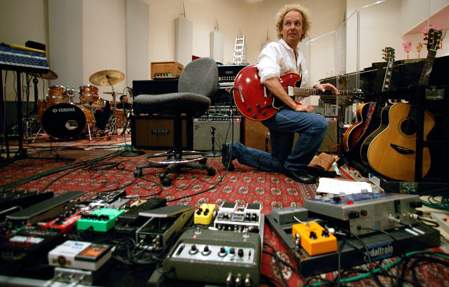
Pedal Board - Lee Rittenauer

Just read a great article on setting up your pedal board on Guitar Jam Daily. It has great information on planning out your board size and layout – something I wish I had done before I got my board, which is now too small for all my pedals, especially since I’ve gotten a wah pedal! Eek! In any case, check it out!

But the article also raised a question that I get from time to time: In what order should I place my pedals? There is a general model that most people follow, and instead of re-inventing the wheel, I’ll point you to another great article on Harmony Central that covers this very topic.

Photo courtesy of andybrauer.com

Read Full Post »

GIG-FX Mega Wah

GIG-FX Mega Wah

I never thought that I’d say this, but I’m now looking for a wah pedal. I was working on a song recently and was using my MicroVibe to add a pulse to my signal, but it just wasn’t happening for me. The tone was kind of okay, and as a demo, would’ve been okay. But I realized that I really wanted a wah sound. So I started researching wah pedals.

I tried out a few and really liked the Fender Fuzz wah, dug the sound of the Dunlop GCB-95F Fasel Cry Baby, and liked the Morley Vai Bad Horsie Wah (didn’t know if I wanted to wait for Vox and Satch to come out with the Big Bad Wah). I was just about to pull the trigger on the Cry Baby, when I ran across the GIG-FX Mega Wah. GIG-FX claims that the Mega Wah is six wah pedals in one. That sounds promising, but the problem I’ve had with multi-function pedals in the past is that their voicings have sounded like a collection of compromises, resulting in mediocre tone at best.

But the Mega Wah seems interesting enough, and the reviews on Harmony Central have generally been favorable, for as few of them as there are. From my point of view, having a variety of wah sounds is quite useful. Sometimes you want that big Fasel wah, then sometimes you want the wider sweep of a more modern type of wah, or anything in between. The Mega Wah may just deliver. Of course, I have to try it out to really be sure, but that’s what I love about this hobby of mine!

The only thing that would probably hold me back from buying it, if it indeed sounds great is the price. At $199, it’s not cheap, whereas at $99, the Cry Baby is very well positioned for my budget. But it’s all about bang for the buck with me, and I’m willing to pay a bit more for much more capability. We’ll see…

Read Full Post »

Ibanez Jemini Distortion Pedal

Ibanez Jemini Distortion Pedal

Does the guitar playing world need yet another distortion pedal? That’s almost like asking if your town needs another Starbucks. Hmmm… maybe that’s a bad analogy because while we could probably do without yet another coffee commodity, I for one don’t ever mind seeing another distortion pedal hit the market.

And just when I thought I’d heard all the variations of distortion around, and that not much else could be done, along comes Ibanez with yet another mind-blowing distortion box, designed by none other than one of my guitar heroes, Steve Vai. I gotta admit it: I’m really impressed with this latest offering from Ibanez – at least as much as I was impressed with the Vox Satchurator. Don’t get me wrong; it’s not because of Steve Vai, or because I’m a Vai wannabe. It’s because there’s something about a great distortion sound that evokes a visceral response inside of me. It’s hard to explain. So I’m more than pleasantly surprised about the Jemini because it produces a GREAT distortion sound; at least from what I could tell from this video starring Steve Vai and Steve Vai – you’ll get the joke once you watch it:

Leave it to Steve Vai to not only demonstrate his mastery over the guitar, but the eternal showman manages to make the video a joy to watch. I was laughing my ass off at his antics! He’s so likeable!

Okay… now for a reality check… I really would like to get this pedal, but at $199, it’s a bit out of my price range right now. But being two distortion pedals in one for that price, it’s a hundred bucks a pedal. That’s actually not bad at all. But I have to admit, I have my sights set on a Satchurator right now. I kind of go for the more mid-rangy type of distortion. But I’m not going to let that keep me from taking one out for a spin.

On a final note, what’s been really great as of late is that big-name gear manufacturers are finally producing what could be considered boutique-type pedals. Having played with the Satchurator, that thing is built like a tank, and it just kicks ass. The Jemini appears to follow suit of well-made, gig-worthy quality. That’s very pleasing to me, because I’m a big proponent of getting great sound without breaking the bank.

Read Full Post »

« Newer Posts - Older Posts »