Feeds:
Posts
Comments

Posts Tagged ‘guitar effects’

Click on each picture to see larger views

Pedaltrain NANO Pedal Board

Summary: Super-convenient and super-portable, the NANO is a great board for those that only need to use a few pedals.

Pros: Included gig bag has straps that make it easy to attach to a guitar gig bag or case. Includes enough fuzz to cover both rails. Nice.

Cons: None.

Features:

  • Durable metal frame with rubber feet on bottom
  • Light weight at 2lbs including gig bag

Price: $49.95 Street

Tone Bone Score: 5.0 ~I recently decided to just use time-based effects (chorus, delay, and reverb) for my acoustic rig, and wanted a mini board that I could easily lug. The NANO totally comes through in this regard!

I’ve got lots of pedals. Truthfully, I’ve got a LOT of gear. 🙂 And for a long time, I used just a single board and swapped out pedals depending upon the type of gig I was performing. But then there were times when I played both electric AND acoustic during the same gig, and so I’d have to compromise on what pedals to put on my board. Then I got one of those Wicked Woody pedal boards which supplanted my old Gator board, and that meant I could put my acoustic pedals on the Gator board.

That Gator board has served me well for years, but I found myself using only three time-based effects for my acoustic rig, and that board, which can fit 8 full-size pedals, was way too big, and actually kind of heavy. But it’s what I used this past summer during my outdoor gigs, mainly because by the time I’d think about replacing it with something smaller, I was setting up for my gig. 🙂

So last week when I purchased my Homebrew Electronics THC chorus pedal, I asked my trusty sales rep, Jordan, over at Gelb Music in Redwood City, CA if he had a small board in stock. He first directed me to the Pedaltrain Mini. That was a cool board, but I remarked that I didn’t need all that space. Then he remembered that he had just gotten a NANO in stock. I picked up the box, looked at the picture and said, “Sold. This is EXACTLY what I’ve been looking for since I’m only using three pedals for my acoustic rig.” So that’s how I ended up with the NANO.

After having taken it to couple of gigs, I have to say that I just dig the convenience of this board! As you can see in the picture above, you can attach it to your guitar gig bag. The straps are actually long enough to wrap around the entire bag. This makes it so easy to lug around!

Now for some particulars…

  • There’s plenty of space underneath the board to run wires and do a neat job of it, as you can see in the picture I took of my board this morning.
  • The rubber feet are a god-send! This board will not slip, which is yet another convenient feature.
  • With the board itself weighing only 1 lb. it’s easy to lug.
  • I recommend using a 1-spot with this board – this is what I use, and it keeps things neat while giving you plenty of cord to run to an outlet.

Overall Impression

At $49.95, you just can’t go wrong with this board. I love it! Now a real cool thing would be to have a powered version of this, but I’m not complaining at all. Besides that would just add some weight, and it’s great that this is nice, lean board. So if you only use a few pedals at most, this is definitely a board you should consider!

Read Full Post »


Homebrew Electronics Three Hound Chorus

Summary: All-analog, thick and rich chorus capable of produce subtle to dripping wet chorus to organ-like leslie tones.

Pros: Warm, rich chorus tones – never gets bright, so it might not be for everyone, but I LOVE IT! Width knob is the “secret sauce” of the pedal that physically alters the width between the wave forms.

Cons: None.

Features:

  • Depth – Controls the depth or wetness of the signal
  • Speed – Connected to the LED indicator light which flashes with the rate of the chorus – very helpful.
  • Width – As mentioned above, controls the width between the wave forms. The effect is subtle, but provides another dimension for tweaking.
  • All Homebrew pedals feature true-bypass switching, heavy duty metal enclosures, chassis-mounted switches and pots.
  • All pedals are hand-built. Even the enclosures are drilled by an actual person, not a machine.
  • Lifetime warranty

Price: ~$189 – $200 Street

Tone Bone Score: 5.0 ~ I’m blown away by this chorus! It has such a beautiful tone! I was looking for a chorus to use with my acoustic rig, but this pedal has so much versatility, that I will be using it for a variety of settings (though it’ll mainly be used for my acoustic rig).

I Love Surprises…

Actually, saying I was surprised by the THC is actually an understatement. I needed a chorus pedal to go with my acoustic rig yesterday, because I was tired of using my BOSS CE-2 on both my electric and acoustic boards. Plus, the CE-2, at least for me, has always sounded better with electric because of the gain boost which I dig with my electric rig. But for acoustic, I just want something that turns on, doesn’t give me a jump in volume, and doesn’t add any brightness. So when I auditioned a couple of chorus pedals yesterday – the other was an MXR Micro Chorus – I could not believe how absolutely SWEET the THC sounded!

Mind you, the Micro Chorus sounded killer to me, but it was much closer in character to the CE-2 as it is a fairly bright chorus. For acoustic, I needed a much thicker tone, and I found that in the THC. I will mention that I was going to also audition the Red Witch Empress Chorus, which is hailed as just about the best chorus on the market today. But at $400, there was absolutely no way I was going to get it, so I didn’t bother auditioning it. Also, the Red Witch has 4 knobs and two toggles. I didn’t need that kind of tweak-ability. I know, it’s also a Vibrato, but I just wanted a chorus.

Fit and Finish

All Homebrew Electronics (HBE) pedals are hand-built: And this means all the components, drilling and even the painting are done at the Homebrew shop. But the cool thing is that HBE. My experience with them has been that they’re built like tanks, and the THC is no exception. The pedal feels solid. There’s nothing loose. I also absolutely dig the bright green paint job. Reminds me of a Granny Smith apple! 🙂

Ease of Use (read: How easy is it to dial in great tone)

This is where the THC really shines. What’s very helpful in this regard is the LED, which flashes with the according to how the Rate knob is set. I found myself setting this knob first, then setting the Depth knob for the wetness, then setting the width, which I mentioned is a very subtle feature, but it changes the character of the chorus, which is really cool. Note that it’s not something that I can’t really explain because at least to me, the change is more felt than heard.

How It Sounds

As with all gear that I give 5 Tone Bones, the THC sounds AMAZING! With a high rating like this, the tone really has to move me emotionally. Other gear that gets a lower rating, even gear with a 4.75 sounds great, but there’s something that “bugs” me. Not so with the THC. It’s one of those pedals where I can close my eyes, put a smile on my face, and just let my fingers do the talking. It’s that good!

I recorded a few clips of the pedal to demonstrate how it sounds. All clips were recorded with my trusty Squier CV Tele 50’s (middle pickup position) into my Aracom VRX22 and a 1 X 12 with a Jensen Jet Falcon:

All controls dead-center

Subtle: Depth at about 10am, Rate at 12pm, Width at 10am (added a touch of reverb)

Leslie: Depth at 2pm, Rate cranked, Width about 2pm

Heavy: Depth at 4pm, Rate at 1pm, Width 11am

With this clip I wanted to see how well it played with both delay and reverb, and it plays quite nicely. 🙂

Overall Impression

This is one of those pedals that I actually had never seen before. I’d heard of it, but went into the audition completely cold. If you have a dealer near you that carries these pedals, I encourage you to check it out. You won’t be disappointed.

Read Full Post »

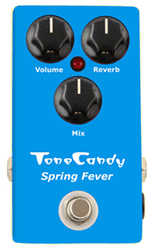
No, not the sexual kind – though we do like that – but the spring reverb kind. 🙂 Specifically, I’m talking about the Tone Candy Spring Fever. I reviewed the Spring Fever back in May, and gave it a 4.5 Tone Bones. But now that I’ve got it and after spending a few hours with it last night, I’m now giving it 5.0 Tone Bones! Here’s why:

  1. As I said in my original review, the Spring Fever is just about the best spring reverb pedal I’ve ever played. It sounds incredibly realistic, and unlike many of the digital varieties I’ve played, while it’s jangly with some top-end, it also doesn’t lose bottom end, so your tone stays nice and rich. That’s a little disconcerting to some folks because they’re used to a brighter tone, but for me, the retention of the bottom end is really what sold me on its tone, plus with the Spring Fever, you can go from subtle spring ‘verb, to rich, spacious, swirling surf tones, so there’s lots of variety on tap.
  2. What I didn’t get to test out in my original audition of the Spring Fever was its Volume knob which also acts as a clean boost if you turn the Reverb and Mix knobs all the way down. I’m not sure how much boost the pedal adds, but there’s enough boost on tap to slam the front end of your amp with loads of gain.

I particularly like the Volume knob because it solves a real problem for me when I play my acoustic gigs at venues where I have to plug directly into a PA board. My acoustics’ pickups don’t have much gain, and I usually have to crank up the volume faders on the board, which can be problematic as it makes it difficult to balance out the guitars’ volume with my vocals. I’ve solved this in the past by lugging my Presonus TUBEPre preamp with me, but that’s a bit of a pain to lug (read: extra gear, not because it’s heavy), and requires a separate 12V power supply. The Volume knob on the Spring Fever eliminates the need for me to bring a preamp with me. Nice.

If I have one complaint of the pedal, it has to be its finicky nature with power supplies, and will add some noise to the signal. Mike Marino explains this on the Spring Fever product page, and recommends some power supplies to use, such as the 1-Spot. I used the 1-Spot in my clips, and when the Spring Fever was activated, there was a slight, but noticeable hiss. This has to do with the power supply, and not the pedal. This also happens when I use my MXR Carbon Copy with the 1-Spot. When I hook it up to a regulated power supply like a Dunlop DC Brick, the pedal is as quiet as can be. So despite Mike’s recommendation about the 1-Spot, don’t use it. Get a regulated power supply like the DC Brick. Luckily, I have an extra DC Brick, so that will be powering my mini board.

How It Sounds

As I said, the Spring Fever is about the best spring reverb pedal I’ve ever played! Capable of producing a wide range of reverb, this pedal will be a permanent fixture on my board! I’ve still got to play around with it some more, but I recorded a few clips to give you an idea of what it can do. The clips below were all recorded using my 1958 Fender Champ output to a Jensen Jet Falcon 1 X 12. I start out each clip with a dry signal, then play it again with some “grease.” What that pedal adds with respect to spaciousness is amazing! All the clean clips were recorded at unity volume, while the dirty clips were played with the amp turned up to about 2pm, and the boost at 1pm with Mix and Reverb completely off. I wanted to demonstrate the clean boost and its effect on an overdriven amp.

Les Paul, Middle Pickup, Fingerstyle. Reverb: 11am, Mix:10 am

Left Channel: Les Paul Middle Pickup, Reverb and Mix same settings as above
Right Channel: Les Paul Neck Pickup, Reverb: Dimed, Mix: 8pm

I love the right channel track on this clip. Turned up all the way, you get this cavernous room sound, but with the Mix set real low, it becomes a much more subtle effect, providing almost a delay-like ambience without the echos.

Squier CV Tele Middle Pickup. Reverb: 10am, Mix 10am
MXR Carbon Copy with long delay time, Mix at about 10am

Les Paul Middle Pickup (biased toward bridge), Volume: 2pm, Mix/Reverb Off

Squier CV Tele Bridge Pickup (biased toward bridge), Volume: 2pm, Mix/Reverb Off

Overall Impression

Yeah, it’s pricey at $275, though you can find it at a lower price if you look. But I haven’t heard as a good a spring reverb pedal like this – ever. And the fact that it has a booster in it just rocks! For me, and especially for my acoustic gigs, this is a game changer!

Read Full Post »

I wrote an article called “Gear That Has Changed My Life” last year where I talked about various types of gear that have had a huge impact on who I am as a guitarist. But today, I realize that there have been several pedals that completely changed my approach to playing, and I thought that I’d focus on them here.

BOSS CE-2 Chorus – This was the very first pedal I ever purchased, and I also sold it after a few years because I didn’t know any better. Kicked myself frequently until I finally got another one earlier this year. To me, this pedal produces the chorus sound that means “chorus” to me. There are some great ones out there, but this to me is the original and definitive chorus sound. And despite its little quirks, like adding a slight gain boost when activated, I can’t think of a chorus pedal that does it better.

Mad Professor Deep Blue Delay – I’ve had a love/hate relationship with delay pedals over the years. Digital delays always seemed so “processed” and analog delays were always way too dark-sounding to me. I got close to what I wanted with the VOX Time Machine, and I actually still use that pedal for some specific songs. But then I auditioned the Mad Professor Deep Blue Delay, and my prayers to find a delay that I could love all the time were answered! From adding just a touch of ambience to drowning in heavy, pulsating, analog echo, the Deep Blue Delay delivers, all without turning mushy or going dark in character. I got mine before the PCB version came out, so I paid a premium for the hand-wired version at $325. The PCB version is a more reasonable $199 and apparently sounds great (though a touch different according to a well-trusted source). But hand-wired or PCB, there’s nothing like this delay.

Creation Audio Labs Mk.4.23 – I mentioned this pedal in my previous article, but it truly has had a HUGE impact on me as I use it a lot in place of an overdrive pedal to push my amp into distortion. When I want to retain the natural overdrive tone of my amp, the Mk.4.23 is where it’s at for me.

Fulltone OCD – Though I sold this pedal long ago, it was my first “boutique” pedal. Up to then, I’d stuck with the mainstream. It really demonstrated to me that there were sounds beyond the mainstream. Unfortunately – or fortunately depending upon how you look at it – it also was responsible for me to go on a quest to test out other boutique gear. Now I have a lot of it. 🙂

DigiTech Bad Monkey – This pedal reinforced the notion that great tone can come cheap. A Tube Screamer clone for sure, the one thing that this has got over the the TS is adjustable bass and treble knobs. It sounds great to boot! I no longer have this pedal as I gave it to a kid in my church band, but whenever I get the inking to spend big bucks on gear, I look back to the Bad Monkey and tell myself that there is great gear out there that doesn’t have to come at a premium in price.

Dunlop Original Cry Baby – This was my very first wah pedal, and up to that point, I had NEVER even considered playing wah. But curiosity got the best of me, and I got a second-hand one at a used gear shop. I still love playing with it now and then, though my main wah is a VOX Big Bad Wah. But the Cry Baby opened a whole new realm of expression; and even though I’m not playing it much, I don’t think I’ll ever get rid of it.

I’ve gone through so many pedals in my lifetime, and something tells me I’ve missed something. But these are the pedals that come to mind. Care to share and pedals that have changed your life?

Read Full Post »

Since I’ve gotten it, I’ve been absolutely digging the VHT Special 6. It’s such a versatile little amp, with bright cleans and capable of creating some gorgeous, sustaining overdrive. And while I do certainly appreciate its clean tone, this amp totally shines when it’s cranked to hilt.

To demonstrate, here’s a clip I recorded this evening with the VHT Special 6:

Now here’s the thing about recording with a low-wattage amp. I’ve found that almost invariably, it’s difficult to get a big sound out of the stock speaker, no matter where I place the microphone. People recommend recording from an angle lined up along the outside of the speaker cone. I’ve never had much success with that, considering I’m not using any high-end mics. So my solution is to use larger speakers to get that bigger sound.

For this clip, I used two different 1 X 12 speaker cabinets: The rhythm track was recorded using a Fane Medusa 150 speaker to get a bigger bottom end. The lead was recorded with a Jensen Jet Falcon – that’s my favorite speaker at the moment. And of course, because even 6 Watts cranked is very loud, I ran the amp through my Aracom PRX150-Pro and recorded each track at about loud conversation level. It’s just loud enough to move the speaker cone a bit, but not so loud that I’d wake up the neighbors. 🙂

For both parts, I used my Les Paul R8. For the rhythm, I recorded in the middle selector switch biased towards the bridge, and for the lead, I recorded with the bridge pickup only. To make the guitar tone sound even bigger, I added just a tiny bit of compression to each track and added a touch of small room reverb to add some dimension. I didn’t EQ the guitar parts at all. That’s the natural sound of the amp through the speakers I used. The compression keeps the sound focused. At least to my ears, the guitar parts sound like they’re coming from a much bigger amp.

As far as the amp setting were concerned, I was plugged into the hi input with the amp set to high-power mode. Tone and volume were at 3pm, and I engaged the Boost. Even at these cranked settings, the amp will clean up very nicely! That’s how responsive this amp is!

Admittedly, if I were to rewind and go back to when I bought the amp, I’d probably go with the head. The stock speaker is great for practicing, but for gigging and recording, it just sounds much better with at least a 1 X 12. But hey! A handwired amp for $199? Geez! I can live with its shortcomings as what it brings to the table tonally is fabulous!

Read Full Post »

Before I got my Aracom PRX150-Pro, to get grind, I used a variety of overdrive pedals. But now that I have a great attenuator that allows me to get my amps in their sweet spots without stepping all over my band, I’ve been making lots of use of clean boost – namely, the Creation Audio Labs Mk.4.23 – to push my amp into overdrive, plus get a bit of a volume boost. I use overdrive pedals far less now, but I do use them when I want a different color to my overdrive tone. But I’m curious – especially after seeing Peter Frampton’s small board – what people prefer. So here’s a poll…

Read Full Post »

I’m not one to buy into hype; especially all the hype that you hear in the forums. There’s A LOT of hype associated with Paul Cochrane’s Tim and Timmy pedals. But after reading tons of posts over the last couple of years on how much people love these, and also after hearing one live in action, I decided to get on the waiting list.

As Paul puts it, the pedal was designed for a Strat played through a Plexi or Vox; in other words, amps with lots of midrange. He says his pedals don’t sound so good with “Black Face” amps. But since I don’t have any amps like that, well, it’s all good.

As for the waiting list, my position doesn’t come up until February. But that’s cool. I’m willing to wait. From what I’ve heard, this is a pedal that should fit right into my style of playing!

BTW, if you’ve got one, I’d love to hear about your experience with it!

Read Full Post »

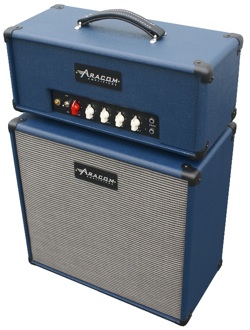
Aracom Amps VRX22 - First in the series

The Aracom VRX22 has been my primary amp for quite some time now – almost 2 years – and I’m still discovering the beauty of this wonder 22 Watt amp. It’s no small wonder that it has been my “Go-To” amp since I’ve gotten it. It sounds so killer both clean and dirty, and tonight, I realized just how great it is with pedals!

Since I’ve had the VRX22, I haven’t been using my overdrive pedals as much. I know, I used to be a real nut about overdrive pedals, and I have several. But this afternoon, I reconfigured my board, and placed my favorite drive pedals on it with the intention of using them. This included my Doodad Guitars Overdrive/Booster, Tone Freak Abunai 2, and my KASHA overdrive.

For my gig, I set the amp up in the clean channel, with the volume at a level where I’d have to dig in a bit with my Les Paul to get some grind. This would leave me with lots of headroom to work with, and not break into overdrive so early that all I get is more overdrive, and not volume.

Then I tweaked the overdrive pedals so I’d get different characters of overdrive, depending upon what I was after. I set the Doodad up for Tube Screamer like overdrive, at just over unity gain, but with the drive knocked up a bit so I’d get lots of sustain. I set the Kasha on “Classic” at just above unity gain for a more biting, trebly tone. Then I set up the Abunai 2 for a more thick, compressed overdrive.

The one thing I love about overdrive pedals is that as opposed to providing all the distortion as with a distortion pedal, they are meant to interact with the amp so what you get is a combination of distortion characteristics from both the pedal and the amp. This combination doesn’t always work so well. I’ve played many amps and some just want to overdrive by themselves. Using an overdrive pedal with those amps just muddies the tone. It’s not pretty.

Not so with the VRX22. I’ve thrown all sorts of pedals at it, and it handles them all without a hitch. It’s especially good with overdrive pedals, and in my gig, I just kept smiling because it sounded so damn great with them! And with second channel on the VRX22 that has another gain stage that acts as a built-in overdrive, I had yet another overdrive voicing to use, and I used all four either individually, or in many cases, I’d stack two or more together. And that’s a key thing with the VRX22. It can deal very well with stacked overdrives, retaining its touch sensitivity and note separation. Other amps I’ve used when stacking just can’t deal with the stacked overdrives very well.

In any case, this kick-ass amp is something you should consider. At $895, it’s simply tough to beat for a true hand-wired, boutique amp. And for those of you who already have Jeff’s PRX150-Pro or -DAG attenuator, you already know the build quality that goes into Aracom gear. It’s simply killer!

For more information on this wonderful amp, check out the VRX22 product page at Aracom’s web site!

Read Full Post »

As you may know, I recently purchased the Mad Professor Deep Blue Delay, and wrote about how much I absolutely LOVE this pedal! While I can’t say enough about it, I anguished over getting it for a long time because of the price. At $335, it was so difficult to justify buying the pedal. But though I’m very budget-conscious, and a lot of this blog is about getting great tone without spending a lot of money, sometimes great tone just costs what it costs.  I’m glad I finally did break down and get it because it is by far the best delay pedal I’ve ever used!

So what’s the big news? Well, one of the biggest complaints about Mad Professor pedals is that they’re super-expensive. People who have purchased them, like myself, are very happy with them, but their price still smarts a bit. So in response to that complaint, MP made a great move: They added a line of less expensive pedals that mirror their current line. But instead of being hand-wired, these pedals are built using PC boards. Also the case they’re using is much less expensive. The net result is that you can get into Mad Professor pedals in the $200 price point range as opposed to the $300+ price point. Nice.

In any case, here’s what Mad Professor has to say about their new offerings:

Mad Professor was at Summer NAMM 2010 in Nashville 18-20 June 2010. We did show there the first redesigned pedal, a new Little Green Wonder.

Same tone, same look, but we did design a new pcb that helps us build these lot faster and for better price. The quality is the same, same parts but now pcb mounted pots, jacks and switch.

The box is also not the same Made In Sweden Elfa box that is made for heavy industry but a high quality pedal box that is bit lighter but very durable. That helps us to save a lot of money.

The only complain we have heard about the pedals have been the price, this is our answer to that.

We still make the handwired pedals for those who prefer them. Coming soon new Deep Blue Delay and Sweet Honey Overdrive.

Conceivably, if the circuit is the same, the tone should still be the same, but based upon experience, different build materials create different tones. They may be slight, but there’s always a difference. My only concern with the less expensive line would be response. As long as the response and dynamics remain the same or as close to the same as the original hand-wired pedals, these pedals should

Read Full Post »

While I did a “mini review” of the Mad Professor Deep Blue Delay a couple of months ago, that was in a shop in a controlled environment, and though I played it for almost an hour, there’s no better test of gear than using it at a gig where nothing is predictable.

After I originally auditioned the pedal, I anguished for the last couple of months about getting it. Why? Simply because of its price: It is NOT a cheap pedal by any means (I got it for $335), and it was always easy for me to reason why not to get the pedal. However, I’ve been a bit disappointed with my VOX Time Machine when using it with my acoustic rig. I thought that since it performed so well with my electric rig, that it would translate well to my acoustic rig. That couldn’t be further from the truth. Truth be told, while the Time Machine simply kicks ass with my electric rig, my tone feels and sounds “processed” with my acoustic rig. The net result is that I stopped using it for my acoustic gigs.

I knew I had to get a good delay that would work well with my acoustic rig, and I also knew that after auditioning quite a few digital and analog delays at the shop, it was the Deep Blue Delay that spoke to me. But the price of the pedal made me shudder, so I put off the purchase for the last couple of months.

Then yesterday, in a moment of weakness, I purchased the pedal on my lunch break at work. Jordan, the sales guy I’ve been buying gear from at Gelb Music for years, swears by this pedal, and he just said, “Dude, I know the price is steep, but there’s none better than the the Deep Blue Delay. It’s always on my board, and it’s almost always on. The VOX Time Machine is a killer pedal (he sold me that one as well), but you know how the Deep Blue sounded with the APX900 (Yamaha – I bought that one from him too – though he didn’t make a recommendation that time 🙂 ) when you tested it a couple of months ago. Believe me, you won’t be disappointed.” Mind you, I trust Jordan’s advice implicitly. I’ve been buying gear from him for years, and have learned that when he raves about some gear, it’s not bullshit because he owns it or has gigged with it. And with the Deep Blue Delay, I’ve never witnessed him rave so much about a pedal!

So I am now the proud owner of the Mad Professor Deep Blue Delay, and like Jordan, I can’t rave enough about it! What about my Time Machine? It goes back on my electric rig board. I love that pedal because it has such a great sound with whatever electric guitar I use on it. But for acoustic, it’ll be the Deep Blue from now on.

Fit and Finish

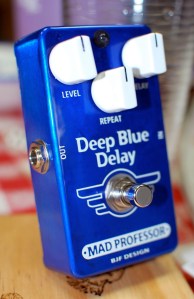
With a gorgeous, shiny, blue powder coat finish, this is simply the most gorgeous pedal I have. I’m partial to blue, but the gloss is like a mirror, as the photos below show. If I have one nit, the blue LED is a bit difficult to see in bright lighting conditions, but that’s just small nit. Other than that, the pedal is solidly built. The knobs have good resistance without being tight, and the toggle switch is heavy duty. I’m not sure what kind of jacks were used but connectors snap into place nicely, so I’m assuming they’re fairly high-quality jacks.

Taking the back off the pedal, there are LOTS of wires connected to a foam-wrapped circuit board (that I didn’t want remove), so it’s clear that the Deep Blue Delay is completely hand-wired, save for the circuit board. The wires are all fairly heavy-gauge with thick shielding, which speaks to the quality of components used in the pedal. I didn’t want to lift the foam pad because the wires were so heavy and I didn’t want to have to deal with putting them back into place. 🙂 Mad Professor could’ve easily used thin-gauge wires for this pedal, but I like the fact that they opted for the heavier gauge.

This slideshow requires JavaScript.

How It Sounds

I know that I use the words “awesome” and “incredible” on this blog. After all, this is a “best of breed” type of site. So let’s just assume that the pedal can be described with those words, and I’ll take a different tack and describe what that sound does to me.

I know a piece of gear is incredible when it just makes me close my eyes and soak up the sound it produces. That’s the effect the Deep Blue Delay has on me. The delay effect, even at high levels is always smooth, and amazingly enough sounds so natural. There is nothing processed about this sound. And unlike other analog pedals I’ve played, the Deep Blue Delay doesn’t get dark, which is what has kept me from getting analog delays in the past.

At last night’s gig, I turned a disaster into a way to fully evaluate the Deep Blue Delay. With my acoustic rig, since I don’t have too many pedals, I use my BOSS TU-2 to power up the rest of my pedals. But last night, I had forgotten that I removed the TU-2 to use at a gig last week, so when I opened up my pedal bag, I was shocked to see my TU-2 missing. Luckily, I had left my 9V plug in the bag, so I figured that it was a great way to use the Deep Blue. So I plugged my guitar into the pedal, and it went straight into my Fishman SoloAmp.

I set up the pedal with the Delay and Repeat knobs at about 2pm, and the Level at 9am so I could get a nice, ambient sound that didn’t dominate. That created a hall-like effect that was simply delicious. I kept it at that setting for several songs. Then just as an experiment, I upped the level to 11, and then the skies parted and a voice rang from the heavens, “You have found s a sacred tone!” 🙂 Seriously though, I was completely blown away by what the pedal produced. The repeats were on the speedy side and the decay was a nice tail without being overbearing, and at that level, the wet/dry mix was just perfect!

The wonderful thing about the Deep Blue is that it seems like there’s a pre-delay built into the pedal. The one thing that sets this apart from other delays I’ve used is that at anything greater than low level settings, you get delay going right away. But even at 11am, whatever I was playing, whether finger picked or strummed, didn’t start repeating until there was space – or at least that was what it seemed like. Of course, at higher levels, the delay kicks in right away, but despite that, what you’re playing is invariably clear and doesn’t get washed out by the repeats.

Overall Impression

In other words, this truly is an incredible pedal. I’m still smarting just a little from the price, but as I haven’t played a delay for my acoustic as good as this – ever – it is well worth the price! I originally gave the Deep Blue pedal a 4.75 Tone Bones rating because of its cost. But my thinking now is that if that’s what it costs to get this kind of delay, then that’s what it costs, and I’m so much happier playing with this pedal in my signal chain. I’ve re-rated it as a 5 Tone Bones pedal. If you can afford it, this pedal will not disappoint; in fact, I’ll wager that it’ll make you practically squeal with joy!

About the Photos

Another hobby of mine – and no, I don’t sleep all that much – is photography. With this hobby, I don’t aspire to be a professional photographer, but I do like to take good photos. These photos were taken with a Nikon D40 with a f1.8 35mm fixed-length lens. All shots were taken in manual mode. I don’t remember the settings, but I shot about 60 photos and picked what I felt were the best shots. Then I used Adobe PhotoShop Elements to crop the photos and did a minimal amount of color correction on a couple of them. I believe that unless you’re going to make artistic enhancements to photos, you should set up your shots so you can “print” them immediately without color manipulation; that is, set up your camera so you don’t have to compensate later.

I know, this is a guitar gear blog, but going forward, I will be doing my own photos of gear. What I love about this particular set is that my camera caught the wonderful reflections off the shiny powder coating of the Deep Blue Delay. I find that marketing photos tend to be a bit too sterile. This is the best-looking pedal in my collection, and I wanted to do its look justice.

Read Full Post »

« Newer Posts - Older Posts »