I’ve known about Handwired-Effects for a few weeks now, but didn’t really talk about it too much because their site didn’t have much on it, and they only had a single pedal. But now that they’ve got a few, I felt it was time to talk about them. Handwired-Effects has pretty much come out of nowhere with their pedals. Their initial offering is pretty straight-forward: a chorus, an overdrive, and a limited run “preamp overdrive” custom made for Dario Lorina.
I know… New pedal companies are started all the time so what has piqued my interest in Handwire-Effects? It’s actually not their products but their location that made me raise my eyebrows. Most new pedals seem to come primarily out of the US and Japan. Handwired-Effects is based in Switzerland. In all my years of buying gear, I’ve never used a guitar product made in Switzerland. No, I’m not thinking that these pedals may be better because of the “Swiss watch” thing. 🙂 But it sure is interesting that it’s located there…
Unfortunately, they don’t have any clips of their products, save a poor-quality video of Dario Lorina playing the Dario Lorina custom box at NAMM. We’ll just have to wait and see…
I dig the folks over at Catalinbread, and even though I haven’t gotten any of their gear – yet – I do like what they produce. Earlier this month, they released a second version of their WIIO overdrive pedal. Admittedly, I didn’t even know they had a first version, but it’s here.
From what I could gather about the WIIO, it’s supposed to be a Hiwatt in a box – very cool – and apparently, it is designed to be super-responsive to pick attack and volume knob levels; much like an amp. Here’s a demo video I found:
How gear performs in the studio is one thing, how it performs in a public venue is an entirely different matter. Unless it’s just not practical, I almost always take gear I’m testing to a gig because to me at least, that’s the best test of gear as gigs are so unpredictable – you never know what might happen, and good gear will almost always be adaptable to the changing environment of a gig.
So how did the Nighthawk perform? In a word, spectacular!
In my recent review of the Nighthawk, the word that came to mind for me to describe the guitar was “comfortable,” and that was completely evident when I played it at my church gig this evening. The Nighthawk is comfortable in every way imaginable; from its light weight to its playability, and its ability to fit into any genre of music.
Now before you poo-poo that a church gig is not a “real” gig, guess again. I’ve played in a variety of venues over they years, and playing at church is one of the most challenging venues to play.
The reason for this is that the music at a church service isn’t the same style from song to song. Since I do kind of a “rock” service, we usually start and end with rockin’ songs with copious amounts of overdrive. But in the middle or meat of the service, we have to back it off a bit. Sometimes it’s bluesy, softer, classic rock with a bit of overdrive, but a lot of the songs are much softer: ballads and slower tunes that require playing clean. So versatility is absolutely crucial with the gear that I use for the service, and the Nighthawk delivers the versatility I require in spades.
For this particular service, I kept my rig very simple. For my amp, I used my trusty Aracom VRX22 hooked up to my Aracom PRX150-Pro attenuator, then out to my custom Aracom 1 X 12 cab with a Jensen P12N. In front of the amp, I used just one pedal: my Boss TU-2. 🙂 I normally bring my entire board that has a variety of drives and modulation effects, but this time I wanted to capture the raw tone of the guitar, and all I could say after the service was, “WOW!”
The Nighthawk can produce some very nice grind with the P-90 and Burstbucker 3, but it can also produce rich and pristine cleans; cleans that’ll just make you close your eyes and soak up all the tonal goodness. The P-90 produces lush, fat cleans, while the BB 3 – as expected – produces bright cleans. But engaging the middle selector position allows you mix the two in varying quantities and this lets you dial in all sorts of clean tones, from super fat to ringing. The thin body of the Nighthawk is exceptionally resonant, providing great sustain and tonal complexity, producing an almost reverb-like effect. I was absolutely floored by the gorgeous clean tones I was able to dial in. It was purely inspiring!
For more overdriven tones, the middle pickup again makes this guitar so versatile. In fact, I played most of the service in this position, and simply varied the amount of neck and bridge pickup volumes to get the overdrive tones I wanted. For our more rockin’ tunes, I switched the amp to the drive channel. On the Nighthawk, I dimed the treble pickup, and when I wanted more heavy crunch, would just dial in more P-90. It was so cool! Dialing in more P-90 didn’t result in significantly more volume; a slight amount, but nothing significant. When I got to a lead break, it was a simple flick of the toggle to the treble pickup, and I could get that classic Les Paul treble pickup tone! F$%kin-A!
Interestingly enough, the Nighthawk isn’t a bright guitar. In fact, its tone is the deepest of any guitar I’ve gigged with, save my old ES-333, which was both darker and boomy. But that darker tone isn’t a bad thing at all because the Nighthawk has BIG HAIRY BALLS. There is nothing subtle about its tone. It’s incredibly expressive and in your face, whether you’re playing clean or dirty, and it forces you to engage in a never-ending musical conversation while you play it. You can’t be timid with this guitar. It won’t let you. There were times when I was playing where I would normally hold back, but with the Nighthawk in my hands, it seemed to coax me to go outside my comfort zone and do things I wouldn’t normally do. Damn! If I were single and the Nighthawk was a woman… no, I better not go there. 🙂
As you can tell, I quite simply dig this guitar. I know, I say that about a lot of gear, and it’s genuine. But there’s gear that I dig and there’s gear that I REALLY DIG, like Blondie, my Squier CV Tele, and all my Aracom equipment. The Nighthawk definitely falls into that REALLY DIG camp!
By the way, not that it really matters a lot to me because I didn’t even think about what number guitar I got in the limited run of 350, but to my very pleasant surprise, I discovered that I have #29 in the lot. Like I said, I didn’t even think to check this, but a member on the My Les Paul forum asked me what number I got – it was first time I looked. Not sure if this really means anything because I’m not really a collector – I’ll never sell this guitar. But it’s still kind of cool to get a low number.
There’s a certain magic about the Nighthawk that harkens me back to the first Harry Potter movie when he went to the wand shop. The shopkeeper told Harry (paraphrasing), “The wizard doesn’t choose the wand. The wand chooses the wizard.” And in the case of this guitar, despite the fact that I was going to pull the trigger on an R9 Les Paul, this guitar reached out and chose me. I have absolutely no regrets about passing over the LP in this case, and I’m looking forward to the magic the Nighthawk and I can create!
Summary: After a 10 year hiatus, Gibson returns the Nighthawk to market, with a slightly different look and electronics. Make no bones about it; this guitar is SWEET!
Pros:Looking for a super-light but versatile guitar? Look no further. The Nighthawk has it all, and can do it all from swampy blues to all out RAWK! Its thinline body makes it absolutely comfortable to play, and the neck is perfect!
Tone Bone Score: 5.0 ~ Talk about love at first strum! The Nighthawk is like a cross between an SG and a Les Paul, and I can’t say enough about how great this guitar plays and sounds!
When I have enough time to go to my favorite shop near work, like any gear freak, I’m like a kid in a candy store; especially this little place in Redwood City, CA called Gelb Music. I’ve known the guys there for a number of years, and they’ve always steered me in the right direction. Unfortunately for me, they also know that I have a HUGE weak spot for non-mainstream gear. Such was the case when I walked into the shop today to ogle some Les Pauls. They’ve known that I’ve been jonesing for one for awhile, but they must have a sense about what appeals to me, because one of ’em will say, “Dude, those Pauls are nice, but you gotta check out this…” And in “checking it out,” I’ve since ended up with a MIM Strat, a Roland Cube 60, a Squire Classic Vibe Tele, an Ibanez GSR200 Bass and numerous pedals.
So here I was, minding my own business, admiring the Les Pauls hanging from the ceiling, when Tommy did the “dude you gotta check this out,” I told him, “Tommy, don’t do this to me. You know what happens when you do that.”
“I know, man,” he replied, “And I know you’ve been looking at the Pauls, but you gotta check this out [pulling down this gorgeous honey-colored Gibby from the hanger]. It’s the most playable f-in guitar in the shop, and dude! The tone this thing produces is incredible. Here. Check out the neck!” Handing me the guitar in the process.
I was immediately overtaken by the light weight of the guitar. If that axe weighed 6 lbs, I’d be surprised (a look at the Gibson Nighthawk site lists the average weight at 4.6 lbs). Then as I moved the guitar into a playing position, I noticed how absolutely perfect the neck is. I love that 60’s thin neck! It’s a shallow “C” with a slightly wider profile. It’s faster than all get-out, and oh so comfortable to play! But I’m getting a bit ahead of myself…
Fit and Finish
This is one beautiful guitar! The bookmatched figured maple top is absolutely stunning, and the transparent amber lacquer brings out the three-dimensionality of the wood grain. The high gloss of the lacquer further enhances the effect – it’s like liquid sunshine. To provide definition both body and neck are bound with a white binding.
Speaking of wood, the light mahogany is flawless and all the joints and seams are perfect.
The Nighthawk 2009 is quite a bit different from the original that came out in 1993, even though it retains the same body shape. The original seemed to be Gibson’s answer to the HSS Strat, and had a 5-way pickup selector. With this version, Gibson has gone with a BFG setup with a P-90 in the neck and an awesome BurstBucker 3 in the bridge. The pickup selector switch is now a 3-way toggle and has been moved to the upper bout like a Les Paul (which I love). The neck sports a solid mahogany base with a rosewood fretboard and medium-jumbo frets with a scale length of 24 3/4 inches – just like a Les Paul.
The hardware provides an added touch of vintage feel to the look of the guitar, from the Kluson tuners and chrome Tune-o-matic bridge and stop tail piece, to the gold top hat volume and tone knobs. Even though the Nighthawk 2009 is a limited run guitar, it’s clear that Gibson didn’t just want this to be novelty guitar where they could get away with using cheap materials. Everything about this guitar screams high-quality down to the little details. I’m impressed!
In fact, at a distance, you might easily mistake this guitar for a different Les Paul model. I certainly did when I saw Billy Joel in concert. His guitarist was slinging this gorgeous Gibson that looked like a Les Paul. But it kind of confused me with its body shape and three knob setup. I kept on wondering, “Did Gibson create a new model Les Paul?” I’ve since been corrected.
Playability
There’s one word that comes to mind when I play this guitar: Comfortable. My favorite guitars have always been those that sound, play, and feel comfortable, and the Nighthawk is all about comfort. The 60’s thinline neck with wide profile is so easy to play. I found myself not worrying at all about where my fingers were and just playing. The action is low and fretting notes is so easy. But with the medium-jumbo frets, wiggling your fingers creates some very nice vibrato without even bending the strings! The pickups are in the perfect place for where I strum, which is right between them, so no chance of banging my finger on a pickup in a hard strum as well.
To me, this is a player’s guitar. I know that some people have complained that it doesn’t faithfully reproduce the original. But I believe that the original was just too quirky and didn’t really have player ergonomics in mind. For instance, the pickup selector switch. I dig that it’s in the classic Gibson position. It is so much more accessible – I don’t even have to look to switch pickups.
The Les Paul scale length on the Nighthawk makes bending – even the slightly brittle shop strings which I will replace today – a breeze. The setup is perfect and there’s nary a string that frets out or dulls. Like I said, this is a player’s guitar.
How It Sounds
Gibson states, “Today’s version is still all about a guitarist keeping his options open. With two volume controls, a master tone knob and two heavy-duty pickups, guitarists can experiment with endless sounds.” In other words, the Nighthawk is all about tonal diversity, capable of producing super-smooth and sexy cleans to all out snarling dog drive. I’ve played the guitar a little less than a couple of hours, and I’m absolutely blown away by the tones this guitar produces.
The big surprise is the P-90 in the neck. I was expecting it to be bright, but it’s thick and ballsy, with a real emphasis on the lower mids. It might get lost in the mix when played dirty, but the cleans is where this pickup really stands out. The voicing is creamy smooth, and very acoustic sounding.
The treble pickup is classic Les Paul, but just a tad darker which I absolutely love! The Burstbucker 3 produces a rich tone that’s full of harmonics and overtones, without being overly bright.
But the real magic comes in mixing the two pickups in the middle position. Holy crap!!! Talk about tonal complexity! The guys at the shop said that the middle position was their favorite, and I now see why. I immediately fell in love using this setting.
As far as volume balance is concerned, both pickups put out about the same volume, so there’s not this big gain boost when you switch to the treble pickup like you’d get from a Les Paul. I’m thinking Gibson did this to emphasize using the middle position, and blending the pickups together. Nice.
In any case, I got ambitious and put some sound clips together:
Neck Pickup
Clean
Dirty Lead
Rock Rhythm
Both Pickups
Clean
Dirty Lead
Rock Rhythm
Treble Pickup
Clean
Dirty Lead
Rock Rhythm
All clips were played with the Nighthawk (with both volume knobs set at about 7 and tone at 10) plugged straight into my Aracom VRX22 which then ran into my Aracom PRX150-Pro attenuator then out to a 1 X 12 cab with a Jensen P12N. I used a Sennheiser e609 instrument mic, and recorded directly into GarageBand with no volume leveling.
Overall Impressions
I’m still getting acquainted with this axe, but with all the tones that it can produce, I can easily see it becoming my go-to axe, and it isn’t just initial infatuation speaking. This guitar – at least to me – is so sexy from its looks to its sounds! If you get a chance to play one, you’ll see what I mean.
As a limited run, there are not many out there. In fact, some online stores no longer carry them. But you can still find some at online retailers, and if you’re lucky, your local shop will have one. Give it a try!
As you may know, I own a Prestige Guitars axe – actually one they no longer have in their current model lineup (though they list it in their models area) – the Heritage Elite, which I call “Sugar” because she actually smells sweet in addition to sounding sweet. The Heritage Elite is a very ornate take on a Les Paul copy; a lot of people actually don’t like how busy all the decorations are, which might account for why it’s not on their current model lineup. But the tone and sustain are wonderful, so that guitar is a keeper for sure. But I suppose in an effort to be a bit more “true to form,” Prestige has come out with a new axe, called the “Classic,” that I am sure will turn heads.
The Classic is a very nice take on a classic Les Paul design. It features a AAA flame maple top, on a super-light, carved, mahogany body and mahogany neck with a rosewood fretboard. As with the Heritage, it sports the classic Seymour Duncan 59/JB Neck/Bridge pickup combination, independent volume and tone knobs, and a 3-way selector switch. Not sure what the bridge is, but when I last spoke with Prestige, they were moving away from Gotoh Tone-o-matic to GraphTech. Sure looks like a Gotoh to me, but I’d have to see it up close to tell.
When I look at the picture, if it weren’t for the lower horn, I’d swear this was a Les Paul! I dig the mother of pearl inlays on the fretboard, and the graceful lines of the body; speaking of which, the back is contoured, so in addition to being light, it is apparently incredibly comfortable as well. Great combination!
And to top it of, here’s a Guitar World video demo of the Classic:
Even with the low quality video, you can hear how that guitar just sings. It has a sweet sound, but can also get really aggressive. That’s one of the reasons I love playing my Sugar, which is a great guitar. But I might just have to get me one of these classics to gig with… OMG! More GAS!!!!
Guitar Scale Magnets – Major Scale Strips Summary: Great “cheat sheet” for learning where the various major scale modes start on the fretboard. Very convenient, and very easy to install!
Pros: Magnetic base strip attaches easily to the side of your fretboard. The strips provide a superb way to visualize the starting point of the major scale boxes.
Cons: Just a nit, but only available for 25.5″ scale guitars. Not a really big deal as that’s pretty much a standard. Of course, I have different scale lengths, but they fit my Tele perfectly!
Features:
Base strip has a very weak adhesive that sticks to the side of the neck, but will not peel varnish.
Magnetic strips are made of the same material as those “refrigerator stickers.” They’re pliable and very easy to use.
Major scale strips include all keys from C to B.
Includes scale charts for all modes. Very handy.
Comes with a convenient storage tube for storing the strips when you’re not using them.
Great way to visualize the modal starting points in any key.
Price: ~$19.99 plus $5.00 S&H
Tone Bone Score: 5.0 ~ I’m a very visual learner, and having visual cues helps me learn much more effectively.
I’m not much of a guitar theoretician, not because of not wanting to be, but simply because with my busy lifestyle, having the time for academic pursuits is limited. So for my learning, I rely on tools and videos that will help me learn concepts quickly as opposed to traditional step-by-step methods that dissect the concepts into chunks. It may not be the best method of learning, but it’s all I have. But besides that, I’m also a very visual learner, and definitely a learn-by-doing type of guy. So if I can get my hands on something that will give me visual cues, my learning experience is much more valuable to me.
Enter Guitar Scale Magnets. One of the things I’ve been wanting to learn for awhile is modal theory. It has always interested me, but I’ve never seemed to have the time to really sit down to learn it – nor did I have the funds to take lessons (I spend it all on gear). So when I found out about Guitar Scale Magnets, I was immediately intrigued, and asked Jason Ellestad, the inventor of the guitar scale magnets to send me a set of major scale magnets to review.
In a word, these things are awesome! Made of the same magnetic material as those flexible “fridge” magnets – but not at thick – the magnets provide a very convenient way to learn the major scale modes by giving you visual cues of the starting points. Of course, you still have to learn the patterns, but you get the patterns on a couple of 8.5 X 11 sheets that you can tape to your wall for reference. Not bad for $19.99.
To attach magnets to the side of your fretboard, Jason provides step-by-step instructions. But you don’t even need the instructions. The base strip, of course, has no markings on it, so it’s easy figure out that it’s the base. It also has a weak adhesive that’s tacky enough to stick to your fretboard, and stay in place as you play, but not strong enough that it’ll peel your varnish. Once you have it in place, it’s just a simple matter of finding the key you want to practice, and laying it on top of the base strip. Each key is color-coded to show you the starting points for each mode. Click on the picture above to see an enlarged version of what they look like.
I won’t belabor how useful I’ve found these to be. I’m just going to recommend that you try them out. Jason has three types of strips available: Major Scale, Pentatonic Scale, and Learn the Fretboard/Tab strips. So if you need some visual cues for learning your scales, Magnetic Scale Strips are a great tool! For you teachers out there, I think these would be invaluable to give to your students to help them learn and practice in conjunction with your curricula.
Oo-la-la! T-Rex will soon be releasing a new distortion pedal called the Tonebug Distortion. Not much info on it yet, but it is supposed to lay on tons of gain. I was fortunate enough to see a video from the folks at GearWire that quickly demonstrates what this pedal can do.
Admittedly, I’ve preferred overdrives over distortion boxes, but I’m really liking the tone from this puppy! Don’t know if I’d shell out $399 for it, though. But T-Rex pedals are premium pedals, so that’s not a surprising price.
or… Doc Brown in Back to the Future saying, “I finally invented something that works!” Speaking in reference to the Flux Capacitor. Nah, it’s nothing of the sort, but it is by no means less cool. The Flux Density Modulation Speakers are a new approach to attenuation where the attenuation happens right at the speaker! Giving you up to -9 dB attenuation, while keeping your tone, that is what I call cool, and something I must check out! You know me, I’m an attenuator fan, and something like this has me absolutely GAS-ing! From what I could tell from the videos below, the tone is really preserved. Now, mind you that -9 dB of attenuation won’t get you down to conversation levels, but it’ll sure provide enough attenuation to take the bite off the volume. If you need to go lower, hell! Get an Aracom attenuator, and get it down REAL LOW! Check out the NAMM vids!
I was persuing YouTube today to check out some cool stuff from NAMM, so I got a few vids that I thought were worth sharing.
The first if from Fender (yeah, I know, it’s mainstream, but Fender has been doing some interesting stuff). This is Acoustasonic Tele, which is a half acoustic / half Tele. As you know, I have the Acoustasonic Strat, but this looks like it’s even better! Check it out:
Here’s a really cool thing for acoustic guitars – no more string pegs!
Ever wanted a Tube Screamer in an amp? Well Ibanez has come out with a 15 Watt amp they appropriately call “The Tube Screamer.” It features an authentic Tube Screamer circuit in the front end, and has a half-power switch (pentode-triode) switching. It will only cost $299. Probably mostly solid state, but it has 2 X 12AX7’s in the pre-amp stage and a pair of 6V6’s to power it up. Interesting. Here’s a demo… At least the amp sounds decent (read: I don’t necessarily like how it’s being played): 🙂
And here’s a new overdrive… the HAO OD-16, handmade in Japan. The NAMM vid I found on this was private, so I did a search for another. Apparently it has a street price of $300… yikes! I’ll do a bit more research on this one. Sounds very nice!
That’s it for now. If I find more stuff, I’ll post it here. There are lots of videos to wade through….
Could this be the last tuner pedal you’ll ever need?
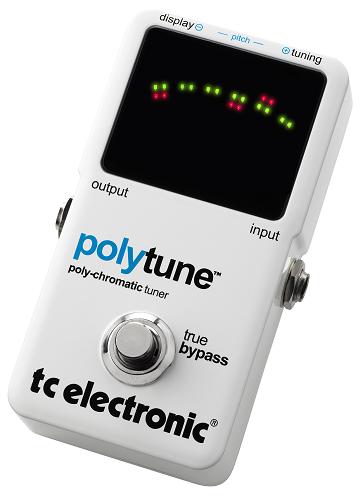
I don’t see how I missed this! I scour the ‘net daily for new stuff, especially from companies that are known to create really high-quality stuff – like TC Electronic. These Scandinavians are incredible inventors, and I haven’t seen or played one one thing of theirs that I didn’t like – though I could rarely afford it. But they’ve come out with a new tuner – yes, a tuner, of all things – that is completely different from any other tuner on the market. It’s called the “Polytune.” As its name implies, it is a polyphonic tuner; that is, the tuner can detect all your strings at once, and you can see which ones aren’t in tune at the click of a foot switch. Unlike traditional tuners that require you to check each string individually, with the Polytune, you strum your open strings. The LED’s will show you which strings are in tune and which aren’t.
In my experience, more likely than not, at any given time only one or two will be out of tune. So imagine the time you save by NOT having to check and tune each string – only the ones that need it! Check out this video to see how it works!
And at $99 bucks… SOLD!!!
Here are some features:
0.5 cent accuracy
Standard size box
Tune by strumming
Can automatically switch between chromatic and polyphonic tuning (it will detect if you’re hitting a single string)
Customizable preference settings
Has a 9V output jack for powering other pedals
True bypass
Adjustable reference pitch from 435Hz to 445Hz
Supports drop tuning all the way down to B!
Works with 4 and 5 string basses as well
It may not have the accuracy of a TurboTuner, but who the hell gives a flying f$%k! .5 cent accuracy is nothing to shake a stick at, and the fact that you can see the tuning of all your strings at once is incredible! Can you say KICK ASS!!! I’ve never even seen this thing and I want to give it 5 Tone Bones! Check out the TC Electronic web site for some detailed information!
Could this be the last tuner I’ll ever want? Until someone comes out with something better – and at a better price, for that matter, probably not. I want to get one right now. Unfortunately, they’re only available for pre-order. Hmm… oh well, I supposed I can wait. 🙂




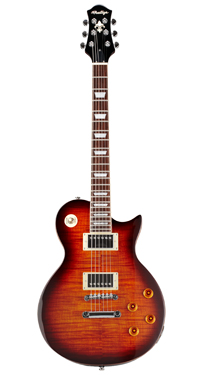 As you may know, I own a Prestige Guitars axe – actually one they no longer have in their current model lineup (though they list it in their models area) – the Heritage Elite, which I call “Sugar” because she actually smells sweet in addition to sounding sweet. The Heritage Elite is a very ornate take on a Les Paul copy; a lot of people actually don’t like how busy all the decorations are, which might account for why it’s not on their current model lineup. But the tone and sustain are wonderful, so that guitar is a keeper for sure. But I suppose in an effort to be a bit more “true to form,” Prestige has come out with a new axe, called the “Classic,” that I am sure will turn heads.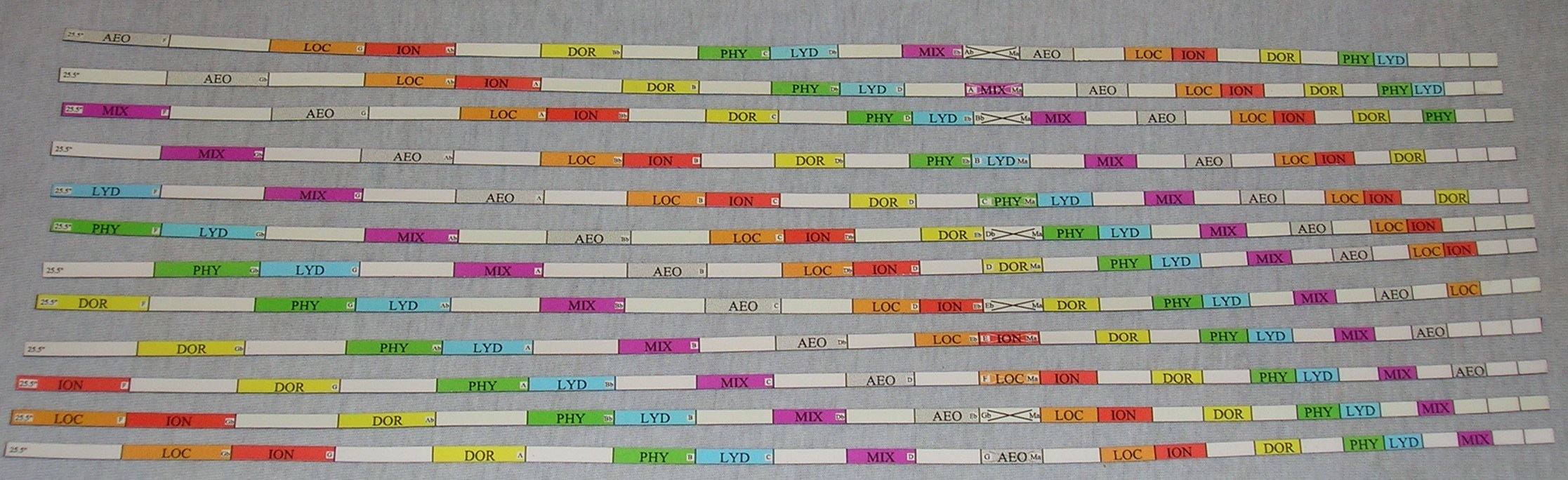

 Guitar Gear