Feeds:
Posts
Comments

Archive for April, 2012

I dig what Electro-Harmonix has been doing the last couple of years. They’ve really thought outside of the box to either introduce completely new innovations or re-invented some established norms. With these two new pedals: The Superego Synth and the Crying Tone Wah, they’ve done both, respectively. But rather than talk about them, let’s first view a video from our friends at PremierGuitar:

The synth is cool, though I’m not sure I’d ever want one. The wah on the other hand is VERY cool, and I definitely will want to try one out once it gets released to the market in May. Imagine a wah with no moving parts! They’ve probably got some sort of accelerometer inside, but it’s pretty responsive, based upon the demo. My only concern with it is that I can’t attach it to my pedal board, as it was made to just sit on a surface. But once I test it out, I’ll see how I could make it work.

Read Full Post »

Before I go any further, watch the following video of Tupac Shakur:

This footage was taken from the 2012 Coachella Hip-Hop Festival. WTF? 2012? Yup, they somehow found a way to resurrect Tupac. For sure, the technology used to do this is nothing short of amazing. The digital wizards even had Tupac saying stuff he’d never said before! So it’s entirely possible for them to resurrect any artist, like Jimi Hendrix. It wouldn’t be too hard for a great axe-slinger who can cop Jimi Hendrix to lay down tracks.

But there is a darker side to this: Can you see record labels and music execs salivating over the potential revenue this could generate if they used it for other artists? This article seems to think that’s so…

Hate to rain on people’s parades, but I’m not sure how I feel about this technology. It would be cool to see Jimi once again, but… <loss for words> But no question, with today’s technology, an artist need never die.

Read Full Post »

Just read this interview that Esquire did with Eddie Van Halen. What an eye-opener! It’s a great interview, and guess what? He finally reveals the secret behind the “brown sound,” and it’s nothing like all the speculation that has circulated through the guitar world for years. It actually had me laughing at what he did. πŸ™‚ Once you’re done with the interview, there are two more articles following. I haven’t gotten through them yet, but I’ll probably read them tonight.

Read Full Post »

Wow! A pickup that does it all!

That’s one of the more humorous ads I’ve seen for guitar gear. πŸ™‚

Read Full Post »

Peter Frampton.

Like a great wine, Peter Frampton has just gotten better with age. He was my favorite guitarist as a kid and he remains my favorite guitarist today. Frampton proves that making great rock and roll isn’t about speed. It’s about feel and conveying a message. I had never seen the following video until today, and the solo at 3:46 literally made me weep. Among dredging up fond memories from 1976, Lines On My Face is my absolute favorite Frampton tune. Yeah, he’s best known for being the first to really rock the talk box, but Lines On My Face always showed to me the depth of his passion, and even 40 years later, his playing still moves me.

Read Full Post »

Overcoming Stage Fright

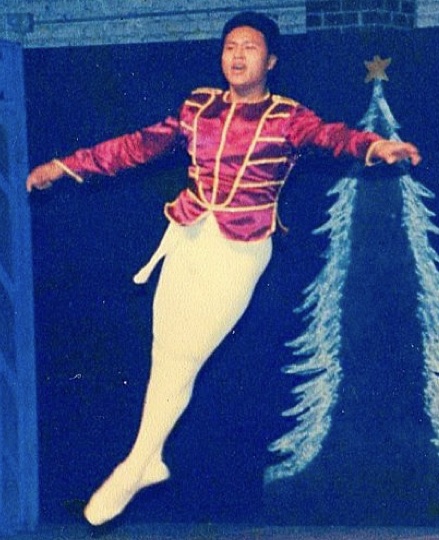
That is moi about 27 years ago, flying through the air as the Nutcracker Prince. Yes, the fat man was actually in great shape once upon a time. πŸ™‚ But that’s not what this article is about; at least entirely…

That picture was taken from my very first public performance – actually the second performance of the day, but on the first day of my first public performance. As a dancer, especially a male dancer, you have to get over your stage fright and self-consciousness and fast. Look, you’re prancing around on stage in tights with the shape of your genitals clearly visible to the world. Once on stage, it’s too late to be thinking about your balls hanging out…

Admittedly though, I had a serious case of stage fright the first show of the day; so much so that I forgot the final steps to my solo, something that I had practiced for 3 months leading up to the show! I recovered by doing a standard sequence of steps that made it look as if I knew what I was doing. But I was PISSED after that show for losing it!

So during the few hours between the matinee and grand opening night show, I practiced for about an hour and a half before the show, and went over and over my blocking and steps till I could literally do the solo with my eyes closed (which I also practiced). I had it down so well, that I even worked out more complicated maneuvers that I added into the solo (without the artistic director’s knowledge πŸ™‚ ), so confident was I with what I had worked out.

When it came time for my solo in the grand opening, though I was a tad nervous at the start, I was confident and focused enough to nail the solo. I mean nail it. I know the picture is a little grainy, but if you can see my face, what I was doing was playing to the audience; not self-absorbed at all, not giving any thought to how I looked. I was running on pure instinct, trusting in my memory of the steps I needed to execute, which allowed me to interact with my audience, or as my beloved dance teacher and mentor put it, “Make love to my audience.” And I got a standing ovation and yells of “bravo” at the end of my solo. And I in turn walked to the front of the stage, bowed to the audience and applauded them for going on the journey with me.

So how did I get over the stage fright?

People talk about using your nervousness or fear or turning it into some other feeling like anger. Still others say to imagine the audience in their underwear or some other visualization, and there are professional coaches who make tons of money teaching people how to get over their stage fright. The coaches probably work, but why pay when you can teach yourself?

So circling back to how I overcame my stage fright, there are a few things I’ve learned in all my years of performance that I’ll share here:

  1. First, be mechanically prepared; that is, know your shit. This doesn’t necessarily get you over the stage fright in the moment, but it certainly helps to give you confidence.
  2. Be mentally prepared. The best way to describe this is that before you perform, visualize yourself doing it so that once on stage, it’s not a surprise. Racers such as ski, bobsled, and even race car drivers do a lot of visualization to make sure they’ve visualized the right line to take through their course.
  3. Once you hit the stage,Β JUST DO IT! You know your stuff, you’ve visualized it, so execute. You might feel nervousness, you might feel anxiety, that’s okay. After almost 40 years of performing in public, I still get nervous before all my performances. But I don’t try to compensate for it. I simply execute. My performance may not be sexy; it may not be sophisticated. But I’m just doing it. Once I get comfortable, I get confident, and once confident, I can truly put on a performance.

Another thing that really helps me is simply being in the moment and realizing that “it is what it is.” There’s nothing I can do about it – even if I make a mistake. Can’t stop a song if I mess up, so I just have go on. Being in the moment is simply being present. Not dredging up the past and not looking into the future, but purely focusing on where you are and what you’re doing (gawd that sounds like Yoda). After all, where you’re at is no accident. You chose to be there; likewise, your audience chose to be where they’re at – where you are. Nothing can change that, so be in the moment and show up.

Notice that I haven’t once mentioned anything about analyzing your situation. I think analyzing and trying to figure out why you have stage fright just makes you have it more. Instead, I offer suggestions that put you in action, for to me, it’s action, not thought that breaks the stage fright.

Read Full Post »

There’s no guitar like a Les Paul that will distract me from considering other guitars. Just when I thought my next axe would be a Strat HSH, I think I have to get this new Les Paul with the Premium Plus finish. Last updated in 2008, this new Les Paul sports some freaking awesome features. But the thing that has me buzzing is that all four control knobs are push-pull knobs. The volume knobs split their respective pickup’s coils, but the neck tone’s push-pull is a phase switch to put the neck pickup out of phase with the bridge. Nice! And finally, the bridge tone’s push-pull routes the bridge pickup’s signal directly to the output jack, bypassing both the volume and tone knobs to deliver full volume and tone to the output jack for a lead tone. SO AWESOME!!!

The guitar has other accoutrements such as locking Grover tuners, but I DIG the tone shaping possibilities with this guitar. Plus, it’s actually coming out at a reasonable price for a new LP at around $2500, which is less than the 2008 model, but sports more features. Go figure.

So… the Strat HSH will just have to wait….

Read Full Post »

How to Pick a Speaker

Unless you’re a dealer or a distributor of speakers, there are only a couple of ways to pick out a speaker:

  1. Go down to a dealer or distributor of speakers and listen to a bunch, then go and buy the one you like -or-
  2. Buy some speakers, listen to them, and pick the one you like. Oh wait! There’s a third way of choosing a speaker!
  3. Go on the forums, ask people what speaker they’d recommend, buy all the recommendations, listen to them, then pick the one you like.

I know, I know… It all sounds flip. But think about it. How the hell do you choose a speaker? The plain fact of the matter is that you have to listen to it to determine if it works for you. Descriptions, conversations, and recommendations are helpful indeed, but in the end, it’s the sound that the speaker produces that vibrates your eardrums that will be the ultimate deciding factor.

Of all the parts of the signal chain, I’ve found that in comparison with other parts of my signal chain, I’ve probably spent the most research time on speakers; much of it anguishing over having purchased a speaker I thought might work, only to find that it sucked! Let’s face it: A speaker is the endpoint of your signal chain, and produces the sound from everything in the chain before it. If it doesn’t sound good to you, it doesn’t matter how good everything else is in front of it.

There’s no “pat” advice I can give. You just have to listen to a lot of speakers, or take a chance on buying one and hope you get lucky. I’ve been lucky so far with my Fane Medusa 150 and with an evaluation Jensen Jet Electric Lightning that I got from Jensen that I decided to buy because it sounded so good. But there are lots of speakers that I’ve tried that I’ve never written about because they just didn’t work with my rig.

There is sort of a fourth way, and that is to listen to the recommendations from someone who knows your tone. My friend and amp builder Jeff Aragaki of Aracom Amps is that guy for me. Since he personally built and customized to my specs most of the amps I play, he knows what I like, so when he has recommends speakers, I listen. It was that way with the Jensen Jet Falcon 12″ speakers I have in three of my cabinets. He got one to try out from a distributor, and called me up, asking if I’d test it since he didn’t time. We met a few days later for me to get the speaker from him, and once I installed it in my cab, I loved it so much, I kept it, then bought two more since then to go into other cabinets. Mind you, this replaced a Celestion Blue – which is a GREAT speaker – that costs three times as much!

Oops… got a bit side-tracked. So while it ultimately takes listening to speakers to see if they will work, there are some preparatory things you can do to at least narrow your search:

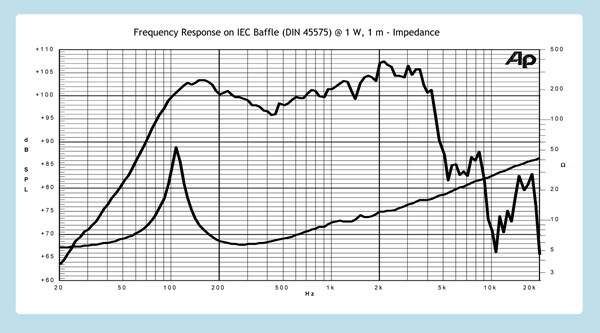
  1. Go to the manufacturer’s site and look at the frequency response charts. For instance, check out this chart for the Jensen Jet Falcon 12″:
    This told me to expect a bit of a scooped tone as the lows and mids had peaks. Or check out this one for the Celestion Gold:

    This shows a more moderate low- and midrange response, with slight emphasis on higher freqs.
  2. Once you see a pattern that you’d like to explore, start listening to clips, taking note of the gear used.
  3. Finally, see how you can try one out or hear one in person.

As I mentioned, there is no “pat” way of deciding on what speaker to buy. But with a bit of research, you can narrow the field down significantly.

Read Full Post »

I got an email today from Online Guitar Books asking me to post a link or an article. I’m pretty wary of spam, so I put my browser in stealth mode, and went to the site to check it out. It’s legit. Not only is it legit, I came away pretty impressed with the wealth of information on learning and playing guitar. Of course, being curious about modes, I dove into the modes article, which is VERY long and involved. If you’re really after the theory behind modes and practical application of them, then this article covers pretty much all the bases. Be forewarned though, because while the author has a non-formal tone in explaining modes, he takes a very academic approach to them, and it’s A LOT of material. He even admits at the beginning of the article that he went “overboard.” My advice if you use this article is to read it in chunks; practice what you learn in each chunk, then continue on to the next. As with any academic subject, learning is iterative.

So you might be saying, “Oh no! Not another guitar book marketing site!” Yeah, that’s exactly what I was thinking when I first read the email. But this site is different in that instead of giving you a little information, then saying something to the effect of: For more information on this subject, click here to buy the book! The articles they provide are complete lessons. They don’t even have their storefront up yet, but the information they are providing is complete and thorough! So yeah, I’m kind of endorsing it as a good source for guitar lessons.

Anyway, don’t just take me at my word, check it out for yourself!

Read Full Post »

I read a very sad article on SF Gate today that reported that Ronnie’s actual cause of death wasn’t due to complications from cancer, but rather, from suicide. Apparently Ronnie suffered from life-long depression, and it finally just got the better of him.

I’ve had my own battles with depression throughout my life, but nothing so bad that I couldn’t bring myself back from the edge. But that type of deep depression Ronnie suffered from is something I couldn’t even fathom.

But cheers to you anyway, Ronnie! You touched a lot of people in your lifetime, and even though you couldn’t fully appreciate it due to your depression, you will always be remembered with kindness.

Read Full Post »

Older Posts »