I announced the Skull Crusher back in September when it first came out. Based upon the KASHA overdrive (but with some upgraded wiring and electronics), it has since gotten the attention of several prominent guitarists. Now George Lynch is playing through it, and HE LOVES IT! Check out this video:
How’s that for an endorsement. I’ve said all along that the KASHA overdrive is just about the best overdrive I’ve ever played, and I’m not alone in saying that. With guys like George Lynch touting how good the Skull Crusher is, you owe it to yourself to check it out! I know, some people don’t go for the look, but it’s the tone that matters.
Could this be the last tuner pedal you’ll ever need?
I don’t see how I missed this! I scour the ‘net daily for new stuff, especially from companies that are known to create really high-quality stuff – like TC Electronic. These Scandinavians are incredible inventors, and I haven’t seen or played one one thing of theirs that I didn’t like – though I could rarely afford it. But they’ve come out with a new tuner – yes, a tuner, of all things – that is completely different from any other tuner on the market. It’s called the “Polytune.” As its name implies, it is a polyphonic tuner; that is, the tuner can detect all your strings at once, and you can see which ones aren’t in tune at the click of a foot switch. Unlike traditional tuners that require you to check each string individually, with the Polytune, you strum your open strings. The LED’s will show you which strings are in tune and which aren’t.
In my experience, more likely than not, at any given time only one or two will be out of tune. So imagine the time you save by NOT having to check and tune each string – only the ones that need it! Check out this video to see how it works!
And at $99 bucks… SOLD!!!
Here are some features:
0.5 cent accuracy
Standard size box
Tune by strumming
Can automatically switch between chromatic and polyphonic tuning (it will detect if you’re hitting a single string)
Customizable preference settings
Has a 9V output jack for powering other pedals
True bypass
Adjustable reference pitch from 435Hz to 445Hz
Supports drop tuning all the way down to B!
Works with 4 and 5 string basses as well
It may not have the accuracy of a TurboTuner, but who the hell gives a flying f$%k! .5 cent accuracy is nothing to shake a stick at, and the fact that you can see the tuning of all your strings at once is incredible! Can you say KICK ASS!!! I’ve never even seen this thing and I want to give it 5 Tone Bones! Check out the TC Electronic web site for some detailed information!
Could this be the last tuner I’ll ever want? Until someone comes out with something better – and at a better price, for that matter, probably not. I want to get one right now. Unfortunately, they’re only available for pre-order. Hmm… oh well, I supposed I can wait. 🙂
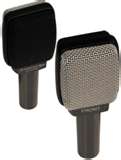
Summary: Need a great mic to close-mic your amp? Look no further! The e609 delivers on all fronts, able to withstand high SPL’s, and still accurately reproduce your tone.
Pros: Flat-face design makes placing the mic a breeze, but more importantly, placed correctly (as you should with any mic), it’ll capture your tone beautifully!
Cons: None
Features (from the web site):
Hum compensating coil reduces electrical interference (I can attest to this – it’s super quiet)
Neodynum ferrous magnet with boron keeps mic stable regardless of climate
Metal construction—rugged and reliable
Super-cardioid pick-up pattern provides isolation from other on-stage signals
Price: ~$95 streetTone Bone Score: 5.0 ~ Going back to my “using the right tool for the job,” I don’t know why I didn’t pick up one of these earlier. I have some good mics, but now that I’ve got the e609 that was made explicitly for micking instruments, I kicking myself a bit. Lesson learned yet again!
I told myself that all I would get was a speaker cable for my cab when I walked into my local Guitar Center today. Unfortunately for me, the cables were located in the Pro Audio area where GC has a big case of very nice mics. And, gear slut that I am, I couldn’t resist a look. Granted, most of those mics were completely out of the ballpark for me, costing several hundreds of dollars. But it did get me thinking that I really should be using a dedicated instrument mic for my home studio when recording my clips and songs.
Fortunately, they didn’t have any instrument mics in the case, but silly me, I just had to ask the guy behind the counter if he had an e609 (I had researched this and other instrument mics several months ago). “Oh yeah,” said another sales clerk, “We got those. They rock, and they’re cheap.” Damn! Words that a gear slut should never hear in one sentence: ROCK and CHEAP! That will instantly elicit a fidgety, twitchy response as the pragmatic half of the psyche wrestles with the GAS half. And usually the GAS half wins, as it did today.
So now I am the very proud owner of a Sennheiser e609. And I do have to say that it does rock, and it costs far less than what one would normally expect to pay for a great mic. At less than $100, how can you argue with that?
How It Sounds
I recorded a little blues solo over a standard GarageBand backing track to demonstrate. Give it a listen:
For the solo, I used “Blondie” my Squier Classic Vibe Tele, the insane-sounding Aracom VRX18 amp (it’s customized with an EZ81 rectifier), and my custom Aracom 1 X 12 cab with a Jensen P12N speaker. The e609 was placed about halfway between the dome and the speaker edge about an inch away from the grille cloth.
I added a touch of reverb to the dry clip in GarageBand, but that’s it. No EQ (I don’t like to EQ my guitar parts anyway). What you hear on the clip is what I heard in my studio. Freakin’ amazing! Like I mentioned above, after recording this clip, I should’ve gotten one of these a long time ago. It’s a great mic!
Mixed Reviews
I re-read some reviews today, and interestingly enough, they come back mixed. Harmony Central user reviews rate it at about 7.5 on average. People other love it or hate it. But in reply to the negative experiences, I have to call into question mic placement. If it’s one thing I’ve learned from years of home studio recording, placing your mic correctly is critical to getting a good tone. Maybe they weren’t experimenting enough with mic placement. Who knows?
With the e609, I first went with the recommended placement in the user manual (yes, I am one of those anal people who do indeed RTFM), then moved it maybe half an inch more towards the speaker edge to reduce the highs just a tad. That made all the difference in the world because my amp is pretty bright micked up close, and I didn’t want that to dominate the recording, especially since the mic was only an inch away from the grille cloth.
Overall Impressions
The Tone Bones score says it all. I’m hooked! Frankly, it didn’t take me long at all to dial this puppy in. It’s a truly great mic!
Summary: It’s sharp alright; nice and pointy, and it feels great in your hand!
Pros: Like any sharp pick, this pick is accurate. It’s super lightweight, and made of a material takes a lot of pressure to even slightly bend. The pointy end makes pick harmonics a breeze!
Cons: It’s a small nit, but I wish the butt-end were just a bit wider.
Features (from the web site):
Based off of a coveted vintage tortoiseshell pick in our collection, the Ultex Sharp delivers a pick with a rigid body tapering into a thinner and sculpted tip for intense control and speed. The seamless contoured edge surrounds the pick for more playing surfaces and tones. Engineered of Ultex—the Ultex Sharp is virtually indestructible and delivers a crisp tone and quick release attack. Available in .73, .90, 1.0, 1.14, 1.40, and 2.0mm gauges.Price: 50 cents street
Tone Bone Score: 4.75 – Real nice-sounding and nice-playing pick. If you want to step up to a thicker, more rigid pick, but don’t want to shell out for high-end picks, this is a winner!
Okay, I’ll admit it: I’m a bit of pick snob. Ever since I started playing with V-Picks and Red Bear picks, I’ve mildly eschewed mainstream picks in favor of the insanely awesome picks those two companies produce. But I have to tell you that I was taken by complete surprise by the Dunlop Ultex Sharp pick! I wasn’t really looking to explore new picks, but a buddy of mine was looking for some Ultex picks at a local store, and offered to buy me a couple. Hell! They were only 50 cents apiece! I carried them around for a couple of days before I actually got to try them; not because I was dubious of them, I just couldn’t find time until this evening to sit down with an axe. Life happens, you know?
Anyway, I slung “Blondie” my trusty Squier Classic Vibe Tele, dug an Ultex out of my pocket, and started to play. Admittedly, I had a bit of trouble playing with the pick at first. Even though it’s slightly thicker than the thinnest pick I play – a Red Bear Tuff-Tone – it’s decidedly narrower in shape; something to which I’m no longer accustomed. But being the hard-headed type, and because I wanted to give the pick a fair shake, as it were, I kept at it, playing scales and riffs to get used to it.
I have to say that I’m really impressed by this pick! First of all, the material feels great in your hand, and like any real good pick, you forget about it. I love the rigidity of the material as well. Contrary to what you might think, a rigid pick actually makes you relax your hand. I know, it’s counterinuitive, but any player that plays a rigid pick will attest to this.
I spent quite a bit of time playing with this pick, and it’s a fast pick, though what I really missed was how my high-end picks really glide over the strings, like they’re lubricated. The Ultex material is pretty smooth, but there is a difference. Mind you, I’m not saying it’s bad in the slightest; it just has a different feel on the strings.
Most importantly though, the Ultex Sharp produces a nice, bright tone. That’s what I really dig about this pick! Part of it is due to it being rigid, but the other part is because of the pointy end. It really makes the strings snap in a very nice way!
Will the Ultex supplant my V-Picks and Red Bear picks? Probably not, but I will be using it for sure. It’s not even a small wonder why these picks are so popular among guitarists. They’re great playing and sounding picks at an insanely cheap price. I’m sold! Buy a few, and you’ll see for yourself!
I wrote about StageTrix Pedal Risers awhile ago, and how they elevate the back row of your board to make your pedals more accessible. I’ve been using them since, and they really are a godsend! I did mention that they already came with the fastener already installed, so all you have to do is place the riser.
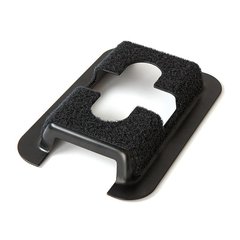
I really like the fastener they’re using. For one, the material is thinner than most kinds you buy at a store, which means it shapes well to contours. Another thing – and more importantly, in fact – is that the glue StageTrix uses on the fastener can withstand up to 200 degrees Fahrenheit. That’s the best thing. We’ve all had the experience of getting velcro glue on our fingers. It’s a gooey mess! Well, that’s solved with the Pedal Fasteners.
For $9.95, you get a pack of three (click on the picture to get a full size view). You can install a fastener with the middle, or you can remove the middle part, and only use the fastener on the edge of your pedal. Very cool stuff!
Just put in a re-labeled 1960’s-era Mullard ECC83 into my Aracom VRX22 this afternoon. I had a JJ 12AX7 in there, and make no bones about it; that’s a great pre-amp tube. But the difference in tone between the two is immense. Where my JJ had a great tone, one thing that I noticed was that the highs tended to be rather harsh when the tube was overdrive, and I found myself turning my Tone knob left of center – a lot – to bleed off some of the highs.
But after I installed the Mullard, I was absolutely blown away! The overdrive seemed so much more focused, with zero high-end harshness. It was some of the smoothest overdrive I’ve heard, and definitely the smoothest the VRX22 has sounded since I got it. That’s saying quite a bit because I love the tone of this amp immensely, even without the NOS Mullard. Which brings me to the crux of this entry…
As a tube amp aficionado, I’ve gone through lots of pre-amp tubes, and almost invariably, I’ve gravitated towards NOS tubes to get the tone I like. Some people I’ve spoken to say it’s all hype but, at least to me, it’s not. I suppose for some types of tubes, there’s not much of a difference. For instance, I almost invariably use JJ’s for power tubes because they just sound great to me. They’re well-made, and run pretty hot, and they break up nicely.
But with respect to pre-amp tubes, I’ve found a marked difference between NOS and new tubes. I love Mullard and JAN Phillips tubes for pre-amp tubes. They’re just so smooth sounding, smoother than all the new make tubes I’ve played. Plus, they were made during a time when most electronic devices were run with tubes, so the build expertise, equipment and materials for making tubes was abundant. According to my friend Jeff Aragaki of Aracom Amps, the alloys used in NOS tubes are not as readily available nowadays, and that could account for the difference in tone. Not sure if this is true, but it certainly makes sense. The only drawback is the price. That Mullard sells for $129 retail, and that is by no means inexpensive.
But I look at buying NOS tubes very much like buying a great pair of shoes. For instance, I spend almost $200 a pair for my everyday shoes. These are absolutely comfortable, and not only that they last a long time because they’re constructed so well. In fact, it takes me about 4-5 years to really wear them out. This in contrast to lower priced shoes that I’ve worn out within a few months. After a long period of time, I’ll spend more on the cheap shoes. A better case is my father. His shoes cost at least $500. But they last almost 20 years! He just gets them resoled every few years until the shoe repair guy says that it’s not worth it.
NOS tubes are similar. I’ve had the same NOS tubes in my Hot Rod Deluxe for almost five years, and they still sound great! I play that amp a lot. On the other hand, the new Tung-Sol tubes I put in another amp lasted all of two months before they started to lose their character, with one becoming microphonic. Granted, they’re fairly inexpensive tubes and they sound great, but if I have to shell out $25 every couple of months, that starts to add up. NOS tubes, especially the mil-spec tubes that I prefer were made for military usage, which means they had to be well-built and durable. That’s a huge advantage NOS tubes have over newer tubes.
Jeff also shared a story with me today about a friend of his who used to be stationed on an aircraft carrier. He was telling Jeff that when the ship replaced electronic components, they’d dump boxes of tubes – good ones, mind you – over the side of the ship. So the ocean has NOS tubes littering its bottom.
In any case, please do not just take me at my word! 🙂 This is simply my perception based upon my experience. In the end, as I am often apt to mention, you’re judge of what sounds pleasing to you. So only buy what makes sense to you!
Summary: An extremely pleasant surprise from Fender with both electric and acoustic properties. Shaped like a Strat and a sporting a Strat neck, for any Strat player, it’s immediately familiar!
Pros: Amazing tones. First electric acoustic I’ve played through an amp that didn’t sound like an acoustic guitar plugged into an amp. Very natural acoustic tones, and Strat-like electric tones.
Cons: This guitar was obviously designed to be plugged in. Unplugged, it really doesn’t sound all that good. But that’s okay, because my particular application of this guitar is always plugged in.
Features:
Body Style: Stratocaster
Top: Spruce
Back: Solid Mahogany
Sides: Laminated mahogany
Neck: Maple
Fingerboard: Rosewood
No. of frets: 21
Scale Length: 25-1/2″ (647.7 mm)
Bridge: Rosewood
Inlays:
Finish: Gloss
Electronics: Fishman Classic IV MT (with tuner and blend controls) and Fender Mexico Telecaster pickup
Tone Bone Score: 4.75 – Talk about versatility! If the Stratacoustic sounded good unplugged, it would get a 5.0.
Sometimes It Takes an Accident…
As I shared in a previous article, my Ovation Celebrity had a bit of an accident that made me look for a new acoustic in a hurry. What I ended up with was a guitar that simply blew me away! The moment I plugged it in, I was completely sold. I couldn’t believe what I was hearing. It sounded like a miked acoustic! Now granted, I was playing through an acoustic amplifier when I was evaluating the guitar. But nothing would prepare me for the same, natural tone through a regular tube amp! I’ll have a clip in a little bit, but let me tell you, it’s nothing short of amazing. First I’ll talk about the guitar.
Fit and Finish
For Strat players, this guitar will be instantly familiar. The Stratacoustic has a bolt-on maple Strat neck with rosewood fretboard. The body is shaped like a Strat, though of course, with a wider body for the resonance chamber. I’ve got the black model as shown in the picture above. This is a gorgeous guitar! One would think that as it is made in China, the build quality might not be very good. But amazingly enough, this is a really well-made and well-constructed guitar. If I only had one complaint, it would be the 2nd string’s saddle peg, which turned out to be a little loose on my guitar, and required really pressing it in. That could be problematic later on, but I could probably rectify, so it’s just a little nit.
The neck on this guitar is absolutely perfect – at least to me. It’s a classic Strat C-shaped neck in all its maple glory. I love it! And the cool thing is that even though this guitar is technically an acoustic guitar, it takes electric strings, so not only is the neck a Strat neck, with the electric strings, it plays EXACTLY like a Strat, with a nice, low action.
The tuners are totally cool! They’re vintage-style Fender tuners, where you measure and cut the string first, then insert the tip into a hole on the top of the tuner. You bend the string down into the slot then start winding. The result is a nice, smooth finish, with no string stubs that can poke you. They also look cool with their slightly relicked, tarnished chrome finish. It’s a nice retro touch!
Did I mention that this guitar is light? I haven’t weighed the guitar, but it can’t weight much more than seven pounds! I gigged with it twice over the weekend, and it is absolutely comfortable to play! It’s a winner!
How It Sounds
This is the really special part of the guitar. It features a Fishman Classic IV MT acoustic pickup under the saddle and a Fender Mexico Tele single coil at the base of the neck. The Fishman comes with a tuner with individual controls for bass, mids, and treble, and a blend control to blend the Tele and Fishman. In full acoustic, the guitar sounds just like a miked acoustic guitar. With the Tele pickup isolated, the guitar sounds just like a Strat, but with a slightly hollow, acoustic tone. It’s gorgeous! When I play it for acoustic voicing, I’ve actually never gone fully acoustic. In fact, I lean more towards the Tele pickup. The reason is that the Tele pickup adds a nice chime and top-end shimmer to the tone with subtle harmonics and overtones. But don’t take my word for it, here’s a short song that demonstrates what this guitar is capable of:
The song was recorded with three overlayed parts. The base rhythm track is played fingerstyle with the guitar set dead center in the blend, and the tone controls centered as well. The strummed rhythm leans just a bit towards the Tele side, and I bled off a little of the base. The result was that strummed chords sounded like a piano! Very cool! The lead track was recorded with the blend at about 90% Tele, and just a tad bit of the Fishman. For the lead, I also ran it through my wonderful KASHA Overdrive pedal. The result was a gorgeous, dirty Strat tone!
I almost forgot to mention. All the parts were played through my trusty Aracom VRX22! It’s an electric guitar amp, for goodness’ sake! Acoustic amp? We don’t need no stinkin’ acoustic amp.
Overall Impressions
As you can tell, I love this guitar! It is so incredibly versatile, giving me acoustic and electric tones with a touch of a slider. Interestingly enough, I wouldn’t call this a hybrid guitar, though it is technically a hybrid. I’ve played several hybrids, and this guitar really has a voice all its own. It really is an electric acoustic, and for the most part, it sounds like an acoustic. But it’s easy to configure it to sound just like an electric as the song above proves out.
But despite being able to configure it as an electric guitar, the most amazing thing about the Stratacoustic is how natural and organic – acoustic – it sounds when plugged in! Unlike a lot of acoustic guitars I’ve played and heard plugged into an amp, which isn’t at all very pleasing, the Stratacoustic sounds like it’s supposed to; like an acoustic guitar. I have a feeling that the body has a lot to do with this. Yeah, it doesn’t sound all that good unplugged, but it’s evident that the designer had this guitar pegged for being plugged in and was willing to sacrifice its unplugged tone for simply gorgeous plugged in tone.
Before I got it, I had actually never heard of the Stratacoustic. I just saw it on the rack, thought it was cool, and picked it out as one of the guitars I was evaluating. As soon as I plugged it in, I was sold. It’s quite simply a great guitar. It’s funny that the unplugged tone is really uninspiring, and it might turn away lots of players. But once you plug it in, it’s a completely different story. I thought I was done with buying Fender equipment, especially after they upped their prices significantly a few months ago – I just didn’t see the value. But this guitar sells at a great price. I got it for a deal, but at $629, it’s still a great value. I highly recommend this guitar!
It is totally weird not having a case of GAS right now. Since 2007, when I first started this blog, I’ve been GAS-ing. Not a week would go by without me getting some kind of gear. But since I purchased my KASHA Overdrive a couple of weeks ago, and finally started using it, I haven’t had any serious case of GAS.
Mind you, that doesn’t mean that there’s not gear that I don’t want to get. For instance, I’m still going to get a TC Electronic Nova Repeater, and I’m working on the design of a new amp that I would like to have built for me. But I don’t have that uncontrollable urge to reach into my pocket and pull out my bank card to get some gear. I’m much more calm, and for the first time in a long time, I’m not in a rush to get that other gear.
But I think that’s the disturbing thing. I’ve had this GASeous urge for so long that I’m in kind of unfamiliar territory. F&$k!!! It’s like having nicotine withdrawal symptoms! I’m not used to this. But I can tell you, my bank account is thanking me right now…
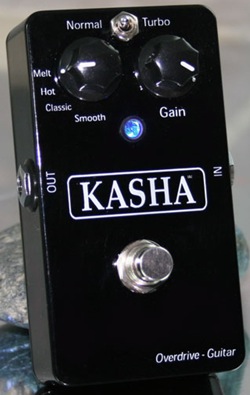
OMG!!! Just gigged with my brand-new KASHA Overdrive last night, and I was in tonal heaven! Even though I’d done a pretty good test on it in my original review, there’s nothing like using gear in a live situation. So here are my observations:
Incredible Dynamics – The one thing that is readily apparent is how this pedal responds to pick attack and volume knob changes. It is so amp-like, it’s uncanny! I set the pedal up in unity gain with just normal strums on my guitar. But if I dug in a bit more, the pedal responded just like an amp with a bit more punch and volume. Frankly, the volume swell surprised the hell out of me. It’s not huge, mind you, but the response is so amp-like, it really does take you by surprise. I totally dug that while gigging last night!
Plays Well With Other Overdrive Pedals – I love stacking overdrives, and the KASHA OD performs beautifully in this role. I set it up as a based OD pedal, then stack it with my Tone Freak Effects Abunai 2. Those two together are an awesome combination!
Lots of Tonal Variety – While my favorite channel on this is the Classic channel that adds a chimey mote to your tone, I also played in the Hot channel as well, and the grit and grind was super-sweet. But add to that the dynamic response of the pedal, and what you’ve got is a pedal that has a lot of inherent tonal variety. Last night, I ran it mostly through the clean channel of my amp. But later, I screwed around with it a bit more in my studio, with my amp set at the very edge of breakup. This is where the pedal just warms my heart! With its touch sensitivity, when my amp is set up at the edge of breakup, I can take my tone from gritty and grimy to sweet and chimey with just a touch of dirt simply by modifying my attack or adjusting my volume knob.
Open Distortion Characteristics – No matter what channel you use with the KASHA Overdrive, the overdrive never gets compressed. It just gets dirtier. The cool thing about that is that any kind of compression will then come from your power tubes. I’ve rarely liked that compression in pedals, save for my Abunai 2, which compresses in a very pleasing way, but for most overdrive pedals, I don’t want that at all, and thankfully, the KASHA Overdrive remains very open, no matter how hot you go on the channels.
Simple Design – Probably one of the best features of this pedal that I appreciate is its straight-forward design. Notice that it doesn’t have an EQ control. It doesn’t need it. It takes your signal, adds a voice to it, and that’s it! Set your EQ on your guitar and/or amp to where you want it, then set the gain knob on the pedal, and just play. What could be more simple?
All in all, I’m pretty much done with my search for an overdrive pedal. I knew it from the first time I played this; and combined with my other OD’s, I can pretty much say – at least for quite awhile – I’m set in the overdrive department!
I’m an overdrive pedal freak, and I can safely say that this is the best overdrive pedal that I have ever played! It’s hard to believe that this little black monster does what it does. I’m totally blown away by it, and I’ve only gigged with it once! I can’t wait to really start using it in all its modes!
Summary: Definitely one of those “why didn’t I think of that” kinds of products. Elevates pedals 1 inch and makes reaching your back row easy. Routing allows you to keep your wires out of the way!
Pros: Very well made, with convenient fuzz to attach your Velcro’d pedals.
Cons: None.
Features:
Raises the second row of pedals to the perfect height.
Front, back and side openings enable effective cable routing.
Premium 18-gauge steel.
Attaches to board via heavy duty hook-and-loop fastener on base, which holds firm up to 200°F.
Designed to withstand temperatures of up to 200F without melting, so leaving your pedal board in your vehicle on a summer day won’t result in a gooey mess with all the Velcro peeling off.
Works with most pedalboards. To be sure, check that you have an extra 1″ of clearance when case is closed. The vast majority do.
Price: $16.99
Tone Bone Score: 5.0 – I dig these things. No, they don’t improve my tone nor technique, but they sure make it easier to tap dance on my pedal board!
This will most likely be a short review because this product doesn’t do much at all – that’s not a bad thing, either… It simply elevates your pedals. But as an accessory, since I’ve installed a set of four on my board, it has proven invaluable to me! In one fell swoop, the StageTrix Pedal Risers made the back row of my board instantly accessible AND cleaned up my cable runs! Where I used to have to run my cables along the sides if my pedals, I now run them underneath the risers because of their built-in routing. My board hasn’t looked this good – EVER!
Admittedly, I was a bit dubious about their ruggedness when I first discovered them. But once I got them, that opinion changed quickly. These risers are heavy and it’s obvious a lot of attention was paid to the details in their construction. They won’t bend, and that’s a testament to their construction. I even stood on one (I’m not a small man), and the pedal riser didn’t budge!
On top of that, the Pedal Risers are set up for immediate and easy use. The entire base is covered with velcro out of the box, and the top is covered with a thin fuzz for attaching your pedals. No assembly required! I hate to attach velcro tape to stuff. It’s a pain in the ass!
Once I got my board set up, I hooked it up to my amp and started tap-dancing. I immediately started smiling because for the first time, I didn’t have to put my foot in an awkward position to engage one of my pedals in my back row for fear of messing up the settings of a pedal on my front line – or heaven forbid, engaging a pedal that I didn’t want to engage. Nothing like doing a clean solo, clicking on my vibe and simultaneously engaging an overdrive. No doubt, it’s a little unsettling. But that won’t happen any longer. The StageTrix Pedal Risers completely eliminate that possibility!
 I announced the Skull Crusher back in September when it first came out. Based upon the KASHA overdrive (but with some upgraded wiring and electronics), it has since gotten the attention of several prominent guitarists. Now George Lynch is playing through it, and HE LOVES IT! Check out this video: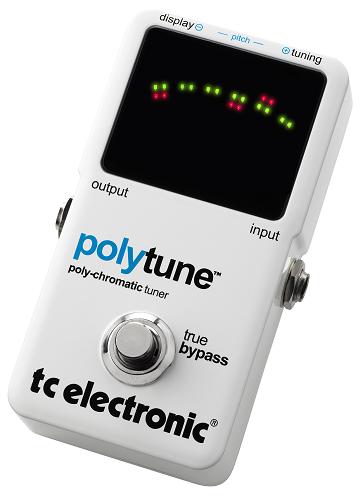





 Guitar Gear