Feeds:
Posts
Comments

Archive for the ‘distortion’ Category

4.75 Tone Bones - Almost perfect but not quite

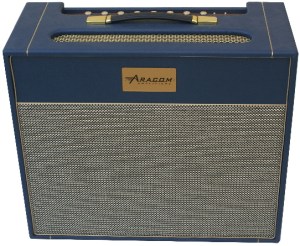
Aracom Amps Custom 45R

Aracom Amps Custom 45R

Aracom Amps Custom 45R

Summary: A great take on the classic Marshall JTM45, with some extra goodies like tube-driven spring reverb, a fantastic master volume (post phase inverter), half power switch (40 to 20 Watts), and bright and bite switches to add hi and hi-mid EQ bumps for more tonal contouring.

Pros: Very versatile amp with a tonal palette that can serve up gorgeous clean tones to thick, super-compressed power tube distortion.

Cons: Heavy – weighs in at 60lbs.

Price: $2195 street (as tested with 1 X 12 Combo)

Specs:

  • Pre-amp tubes: (3) 12AX7, (1) 6BM8
  • Power Amp Tubes: (2) 6L6GC or KT66 (as tested)
  • Rectifier: (1) GZ34 (5AR4)
  • Reverb Tank: Accutronics Long TankHi/Low B+ voltage switch (40/20 watts)
  • On/Off Switch
  • Standby Switch
  • Indicator Lamp
  • Custom Heavy Duty Aluminum Chassis
  • Custom Wound Transformers
  • Impedance Switch:  4, 8, 16 ohm
  • (2) Speaker Jacks
  • Custom Handcrafted Turret Board
  • Handwired

Tone Bone Rating: 4.75 – Sweet amp with lots of tonal variety, but very heavy at 60 lbs. in a 1 X 12 combo! I would definitely get casters for this amp.

One thing I’ve learned about reviewing gear is to never have preconceptions about what something might sound like, especially with guitars and amps, regardless of what the manufacturer might say. When Jeff Aragaki of Aracom Amps dropped his latest amp off at my house, then explained that it was modeled off a Marshall JTM45, but with a few enhancements, despite my normal resistance to those suggestions, I still made a few assumptions about what the amp would sound like. Mistake. I was expecting a Marshall tone; it’s there, but it’s also different. But let’s get into some detail, shall we?

Fit and Finish

All Aracom amps are very well built and constructed. The amp I tested uses the cabinet shown above, but is covered in green tolex, and the same acoutrements as the cabinet above. The cabinet itself is very sturdy and very resonant. The metal grille at the top of the amp is a nice touch, as you can see into the chassis and see the tubes all lit up. I dig that kind of stuff. Jeff uses all high-quality material from the chassis to the knobs, and everything is well laid out.

How It Sounds

This is one awesome-sounding amp! I was actually expecting a real scooped tone, but was very surprised that the amp is actually voiced quite evenly through the EQ range, with just a tad bit of lower-mid range. This gives the tone a darker, almost fatter feel. But still, the cleans are rich and crisp, not chimey like an EL-84 would sound. The huge KT-66’s this amp packs probably account for that.

The reverb is subtle – very subtle – but I really like the effect it has. It definitely won’t do surf. It was as if Jeff wanted to add the reverb as a nice decoration for the amp’s tone. If you’re looking for a deep ‘verb, this won’t do it, but the reverb it does give you, for lack of a better word, just “fits.” Here’s a sound sample that I recorded with my Strat playing the amp clean in the Normal channel with all the EQ’s set to their midpoints:

By the way, the clip is the raw recording, with no EQ or mastering or level adjustments (which accounts for a bit of the distortion as I didn’t apply a limiter). As you can tell, the clean tone is sweet and well, clean. And it has TONS of clean headroom in the Normal channel.

As far as distortion is concerned, before this, I had never played with a KT-66-based amp, so I didn’t quite know what to expect, but this amp can produce some serious distortion. When saturated, the KT-66’s really compress the tone, and the compression comes on with even just a bit of breakup. It’s a great sound, but it’s difficult to cut through a mix with that amount of compression. But hitting the bite switch adds a bit of high-mid-frequency gain, so that compensates for the compression by sort of shifting the EQ up a bit.

The bite switch works with both channels, but the bright switch only works on the Normal Channel. This switch boosts the upper-mids and highs. Don’t expect a ringy sound out of this – it’s more like an instance presence control, though the amp sports a sweepable presence knob as well.

I wish I had a sound sample for my test with a Saint Guitars Baritone Messenger. Even though it’s a baritone, the walnut gives it a fairly bright tone, and that is really complimented by the Custom 45R. I was enjoying myself so much with the baritone, I totally forgot to record a clip! Maybe later… In any case, this amp just LOVED the Baritone! The Messenger also sports two Duncan active ‘buckers, and the drive they produce really made the amp growl with a real savage tone. It was very heavy, and I was just diggin’ it! Yowza!

Overall Impressions

While I really like the tone of this amp, and am having a lot of fun playing with it, admittedly I still lean towards that chimey EL-84 tone or that “Fender” tone that 6L6’s produce. The Marshall-esque tone never has been for me, but if I were to be on the lookout for an amp with that type of tone, I’d definitely give this amp some serious consideration.
Read Full Post »

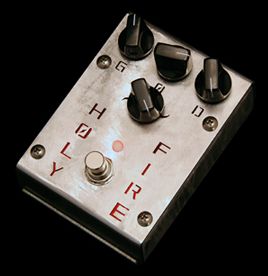
Creation Audio Labs Holy Fire Overdrive/Distortion Pedal

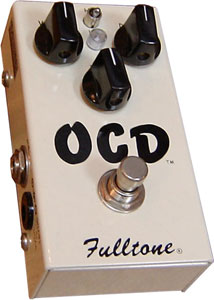
Fulltone OCD Drive Pedal

What do you do when you have two kick-ass overdrive/distortion pedals and don’t know which one to choose because both pedals bring so much to the table? The obvious answer is to use both. But my problem in choosing is exacerbated by limited pedal real estate, so I have to make a choice.

Actually, the choice wasn’t too hard to make once I started playing with the Creation Audio Labs Holy Fire. While I love the OCD, the Holy Fire wins hands-down for its versatility and total transparency. While the OCD is somewhat transparent, it can get kind of muddy and a little choppy at high drive settings, whereas the Holy Fire’s distortion section reacts a lot like a power tube at high gain settings producing a compressed effect that just rocks the house!

I still love the sound that the OCD produces. It really brings out harmonics and overtones, and set in a “sweet spot” produces a nice sparkly distortion that really sounds great. But as of late I’ve been gravitating towards retaining the natural sound of my guitar and amp, so the added artifacts that the OCD adds aren’t really what I want right now.

On the other hand, the overdrive on the Holy Fire is totally unique, and nothing like I’ve ever witnessed in all my tests of overdrive pedals (and believe me, I’ve tested a lot). The overdrive has what Creation Audio Labs calls a “wave shaping” circuit that evenly distorts the entire bandwidth of the incoming signal as opposed to creating a mid-range hump, or scooping the EQ. It really is completely even. You don’t lose any lows or highs, which is common in overdrive pedals. And the circuit reacts to both volume and pick attack, providing more wave shaping as you hit the front-end of the pedal harder. Simply put, you retain all the natural tone of your guitar! It’s insane! And it’s so special, Creation Audio Labs is trying to patent it!

I gigged with the Holy Fire for the first time this evening at my weekly Church gig. Make no mistake, this may be a church service, but we regularly hit above 100db in our sets, so there is plenty of room to let our amps breath, and take advantage of the higher gain settings on our equipment. Tonight, I made sure to pick music that would allow me to use the Holy Fire throughout my set. Talk about being inspired! I used it with my Strat and a Reason SM25 amp. What a combo! I set the gain to just above unity with the clean channel (about 10am), the overdrive at about 2pm, and distortion at about 3pm (so the distortion section would compress – it does this at around 2pm). The breakup was so smooth and delicious, I wanted to keep it on all the time! Unfortunately, I couldn’t do that with some songs, but where I had the entire band playing all out, the Holy Fire just made my heart sing!

The Holy Fire also plays well with other pedals. My mainstay overdrive pedal is my trusty green machine, an Ibanez TS-808 Tube Screamer. That’s one pedal that will NEVER leave my board! But here’s the cool thing: Running the Tube Screamer in front of the Holy First was like nothing I’ve heard before. I did this with my OCD as well, essentially getting a combined tonal effect that the TS and OCD produce. But the Holy Fire maintained the tone the Tube Screamer produces! On the other hand, it smoothed out and thickened the distortion. The result was the expected mid-range hump from the Tube Screamer, but with super-creamy distortion, plus the TS tone, that was like candy to my ears. No extra coloration that I came to expect by running my TS into the OCD. It was like playing a fatter Tube Screamer!

Believe me, despite playing in a worship service, the way I was feeling with both those pedals running together made it seem I like I was flying with the angels! I’m not exaggerating! There is absolutely nothing compared to the feeling you get when you’re playing with wonderful tone. It inspires and emboldens you, and you take your playing to places you didn’t think possible.

That was the feeling I got when I first started playing with the OCD, and frankly, I didn’t think it could get much better. But the Holy Fire has changed everything.

On top of that, I was using another Creation Audio Labs pedal, the Mk.4.23 clean boost, yet another amazing product from those electronics wizards. I used the booster to give me just a slight gain boost for when I was doing solos, or was in the refrain section of a song when I needed just a bit more volume. It too is a totally transparent boost, adding ZERO artifacts to your signal, so all the time I spent dialing in my settings wouldn’t be lost when the Mk.4.23 was engaged.

I swear, I must sound like a twitterpated, googly-eyed schoolgirl! 🙂 But it’s been a long time that I’ve felt truly inspired, like everything was totally right with my world of tone. I’ve finally (at least for now), found total balance in my tone. The circle is complete…

At least until I get a bad case of GAS!!!

Read Full Post »

5 Tone Bones - Gear has stellar performance, value, and quality. This is definitely top of the class, best of breed, and it's a no-brainer to add this to your gear lineup!

Creation Audio Labs Holy Fire Overdrive/Distortion Pedal

Creation Audio Labs Holy Fire Overdrive/Distortion Pedal

Creation Audio Labs Holy Fire Overdrive/Distortion


Summary: Overdrive and Distortion and tons of gain in one box that will NOT alter your tone. Has built-in wave shaping that responds to attack and input gain that simulates overdriving the front end of an amp.

Pros: Possible to achieve all sorts of clipping from swampy grind to searing distortion rife with harmonics, overtones and feedback, and it can do all this at ANY volume – freakin’ amazing!

Cons: Operationally, none. But its circuitry is so special that it requires a special 48V DC adapter – it will not run from a standard 9V or 18V power supply like Dunlop DC Brick. But for what it brings to the table, that’s a small price to pay.

Price: $195 direct

Knobs:

– “G” Gain
– “O” Overdrive – Soft clipping circuit – has built-in wave-shaping to react to input gain much like the front-end of a tube amp. Higher levels evoke increased wave-shaping ensuring even distortion throughout the EQ spectrum.
– “D” Distortion – Square wave form distortion
– Hi-cut (variable sweep hi-cut, fully open gives you all the tone, dialed back scales back the hi-freqs)

Tone Bone Rating: 5 This stuff is magic.

The guys at Creation Audio Labs must be wizards – or at least half wizard – because they’ve created what I consider to be the only overdrive/distortion pedal that does what it’s supposed to do, and doesn’t alter the tone of your amp! Mind you, there are times when you want that. For instance, to me, the classic overdriven mid-range hump of a Tube Screamer is an incomparable sound, and something I will always have on my board because I like the way it changes my tone. But in a lot of other circumstances, all I want is grind or all out distortion, and I don’t want my tone changed. That’s where the Holy Fire overdrive/distortion comes into play.

This is truly a magical pedal. Not only does it look awesome with that brushed metal exterior, and glowing red “Holy Fire” letters, it kicks the freakin’ pants off pretty much anything that’s out there that claims tone transparency in my opinion. And I don’t say this lightly. Remember, if you’re a regular reader of this column, I’ve got a real penchant for overdrive and distortion boxes – especially overdrive boxes. So when I say a pedal totally kicks ass, I mean it! You might not see too many reviews on them here, only because I only take the time to write about gear I love and would put in my chain. This is a pedal that will be taking up space on my board! And at $195 direct from Creation Audio Labs, this is a must-have box!

What’s so special about it? Actually, the question should be: What’s not to like? You get the best of both worlds here: Completely transparent overdrive or beautifully compressed distortion. Playing just with the overdrive and the distortion completely rolled off, you can get that classic, mildly crunchy, gritty grind to rip-roaring rattle that’ll make you think your amp’s bottles will shake off. Conversely with the overdrive turned all the way down and sweeping the Distortion knob, you can go from sweet and mild distortion, to heavily compressed gut-wrenching distortion replete with harmonics and overtones that’ll make you feel you’re getting scalped! But the best settings combine certain amounts of both. When you find your sweet spot, it’s epiphany time!

Imagine all this in one little stomp box! And the kicker is that your amp will still sound like your amp! Mind you, I didn’t read any reviews of this pedal before I got one for review. I didn’t want to taint my assessment of the pedal. The VERY first thing I noticed as I twiddled with the knobs is that my test amps never lost their voicing (I used three amps: An Aracom RoxBox combo, a Reason SM25, and my trusty Fender Hot Rod Deluxe). In all cases, the amp I was playing still sounded like my amp except it had grind and/or distortion. And no matter what output volume I had, the pedal operated the SAME WAY!!! So imagine the versatility this pedal brings to the table! I’m going to do a test later on with my Fender Champ 600, and see what wonders the Holy Fire will conjure when I lay down some tracks. It should be interesting as well as rewarding. So whether you’re on stage or in the studio. If you need breakup in your sound, this pedal will do it.

But wait there’s more!

On top of all I discussed, the pedal is sensitive to input gain, and has what’s called “wave shaping” that responds to higher input gain and acts like you’re overdriving the front-end of a tube amp. When you hit the pedal hard with either a booster or diming your guitar’s volume, or just picking hard, the pedal’s LED changes to a yellow color indicating that you’re overdriving the pedal. The magic behind this is that wave shaping evenly distorts the input signal across the EQ spectrum, so all your input tone is completely retained. The damn thing works too! It ain’t no marketing gimmick! So just as you’d expect when you do the same things with an amp, the Holy Fire will do it as well. Like I said, it’s magic.

I should make mention to a very cool effect that happens when you turn the distortion knob past 2 o’clock. The circuit actually starts compressing the signal, so you lose a little volume, but you get a very fat signal. In my opinion, that’s where the magic occurs with the distortion. After playing around with lots of combinations, I ended up just diming the distortion knob altogether, then just layering in varying amounts of overdrive and gain. Truly candy for the ears here, folks. With that, I’m going to post a couple of YouTube vids here so you can see and hear for yourself.

January 12, 2009

I’ve written a follow-up on this pedal. In a nutshell, I got my first chance gig with the Holy Fire this past weekend, and it was a true revelation. Talk about being on cloud nine while playing the guitar! Read the follow-up here.

Read Full Post »

« Newer Posts