Feeds:
Posts
Comments

Archive for the ‘GAS’ Category

collection

This is a bit of a continuation of my previous article about not getting fooled by pedigree. While I was singing the praises of a Saint Guitar Goldtop Benchmark that I was testing, my buddy commented to me, “You sure about wanting to get one of these? It’s gorgeous, and it plays and sounds amazing, but the problem I have with most boutique guitars is I’m not sure how well they retain their value. What if I wanted to sell it later on? Would I get what I paid for it? Will it appreciate in value?”

All valid concerns, but I simply replied that it’s all about your perspective: Are you a collector or a trader?

If you’re a collector, chances are you obtain gear to keep it and use it for a lifetime, or even just hang it on a wall (I know of someone who has 300+ guitars, most of which he never plays). I consider myself a collector. And from that standpoint, I’m what’s called “brand blind.” All I care about is if the gear looks good, plays good, and sounds good, no matter what the brand.

On the other hand, there are those whom I call “traders.” They get gear, but are always open to trading for another type of gear that might be better from their point of view. From that standpoint, brand awareness is important as people will tend gravitate toward known entities, and the brand-names definitely attract more traffic.

Mind you, I’m not saying one is better than the other. It’s just a matter of perspective in making a purchasing decision. I used to be pretty brand-centric, but ever since I started writing this blog, I’ve come across some awesome gear that I don’t think I would’ve even considered evaluating had I focused on the brand-name stuff.

And let me say that it’s not that you’re either one or the other. It also depends on the gear. For instance, I swear by V-Picks and Red Bear Picks. I won’t use any others. But I’ll buy off-brand pedals and guitars and amps.

So are you a “collector” or a “trader?”

Read Full Post »

I admit it: I’m an incurable GEAR SLUT! I jones for vintage and vintage style gear, as the music I play leans toward the blues and classic rock. And to satisfy that never-ending craving, I pore over the Internet and various magazines in search of all sorts of gear; hence, the existence of GuitarGear.org where I share with you, dear reader, the things that I come across.

Now in my search for gear, I occasionally buy things. They tend to be vintage-style modern gear because I just don’t have the money to buy real vintage gear; and that usually means I gravitate towards boutique gear; but not just any boutique gear. Remember, I don’t usually have all that much money to afford the real high-end stuff, so I spend a lot of my scouring my information resources to find boutique gear that I can afford. That’s what gravitated me towards Aracom Amps.

When I saw the price of a VRX series amp, my jaw dropped! Here was a hand-wired, vintage-style tube amp for $895!!! When I finally hooked up with Jeff Aragaki (founder of Aracom), and got a chance to play the VRX18, he shared that one of the ways he was able to keep the cost down was by using a solid-state sag simulating rectifier circuit. When I heard the words “solid-state,” the purist in me started reeling a bit. But then that amp sounded so freakin’ good that I didn’t give a flying you-know-what about the rectifier!

And that’s the point of this article. When you’re looking for and buying gear, don’t let yourself be swayed by an instrument’s or equipment’s pedigree or “all-tubeness” or lack thereof. LISTEN to the fuckin’ thing, and see if it turns you on! If it sounds good, and it works for YOU, then that’s all that matters, in my not so humble opinion on the subject. 🙂 If I had let the purist in me take over, I would’ve never ended up with my VRX22! And for the record, I’ve listened to many, many, many amps, with and without tube rectifiers, and the circuit that Jeff Aragaki employs in the VRX series simulates the sag of a rectifier tube so well, I can’t tell the difference. And if there is one, it’s probably so minute that it doesn’t matter anyway. I’ll put that amp up against any other boutique amp in the same wattage range, and it’ll sound just as good, if not better. And I paid less than half the price of a similarly configured amp!

Give the following clip a listen. I’m playing my Strat plugged straight into the clean channel of the VRX22. In some sections you could swear that the amp has a reverb, but that’s the solid-state rectifier simulating the sag of a tube rectifier. Also, this is the raw recording of the amp: No EQ, no filtering. The master volume was flat out, with the gain control around midway. My mic was about about 10″ away pointed directly at the center of the speaker cone.

I originally recorded that clip with my Prestige Heritage Elite. But that guitar has so much inherent sustain, it would’ve been cheating. 🙂 A Strat on the other hand doesn’t have that much sustain, so it brings out the sustaining quality of the amp much better. The result is just amazing.

And as to the tube vs. solid state rectifier issue, at least in the Aracom VRX series, it doesn’t make one whit of difference, especially when you’re playing live at gig levels. When I’m gigging, I almost never use reverb unless it’s a song where I can really isolate my guitar. Sag gives the effect of reverb, but at loud gig levels, you’ll never hear it.

Another great example of buying what sounds good to you is my friend Vinni Smith of V-Picks. That dude is one of the best guitarists I’ve ever known, and he gigs all the time! You know what he plays through? A freakin’ Roland Cube 30 cranked all the way up and miked into the PA. When he told me that, I almost flipped. Here was a true pro guitarist,  playing through a $200 amp!

So don’t be taken in by pedigree. Buy what sounds good to you, and what you can make sound good. After all, 90% of your tone is in your hands.

Read Full Post »

VOX Time MachineCan’t believe I missed the announcement of its release – I’m usually good about keeping on top of new gear – especially since VOX has been coming out with some pretty awesome stuff as of late. But here it is, the VOX Time Machine Delay. As with the other pedals of this VOX line, this pedal is the result of a very close collaboration between VOX and Professor Satchfunkilus (Joe Satriani). This pedal completes the three pedal line.

The Time Machine Delay features two delay modes (Modern and Vintage) and two EQ modes (Hi-Fi and Lo-Fi). The Modern delay mode provides a transparent delay to retain your orginal tone, while the vintage mode mimicks a vintage analog tape delay. The Hi-Fi/Lo-Fi switch does something similar to the delay modes. Hi-Fi retains your tonal color, while the Lo-Fi mode delivers a “distinctive EQ, combining both high-pass and low-pass filters” to blend better in a mix.

But the thing that I think is pretty incredible is that the pedal has up to 5600 milliseconds of delay – that’s almost 6 seconds! With that you could really do a nice lead loop that you can play over! Damn! Six seconds is a LOT of time. There are lots of layering possibilities with that! That length of delay alone compels me to try the pedal out!

While there are several demos, there aren’t a lot of reviews. Reviews on Harmony Central are mixed. Sound-wise it gets high marks, but one user did point out that the switches seemed a little “rattly,” with no click. Hmmm…. that could be a potential problem. But so far, I haven’t seen any quality issues – but the pedal’s new, so that remains to be seen.

The pedal ain’t cheap, coming it a $199 street, but it has some really great features that definitely worth consideration. Me? I’m really leaning towards the TC Electronic Nova Repeater, mainly because it’s no frills and the tap tempo function using the strum of your guitar is friggin’ awesome – it’s also only $150 street. And based upon the venerable, Nova Delay, it’s a known quantity. However, to be fair, I’m going to have to an A/B to see how the two pedals stack up.

For more information, go to the VOX Time Machine web page.

Read Full Post »

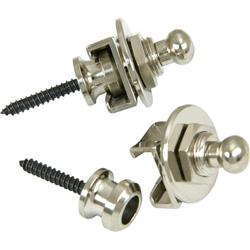
Schaller Strap Locks

The title kind of sounds like a spam ad, doesn’t it? But it’s totally serious!

We’ve all heard of or even personally experienced guitars straps coming off their strap buttons, potentially causing serious harm to them. I’ve played for years without mishap without using strap locks. I’ve had some close calls, but no catastrophic accidents. My buddy Phil warned me awhile back that I was just asking for trouble by not having them on my guitars. I just said, “Yeah, I know I should do it, but hey, I’ve been lucky so far…”

Well, my luck almost ran out because I almost had a terrible mishap the other day. If you follow my blog, you know that I’ve just gotten my new Prestige Heritage Elite. I was in my studio jamming, and at the end of the song I was jamming to, I did a harmless thing: I reached over to my amp to turn it down; at which point, my body must’ve been at the right angle, and the strap came off the bottom strap button. My guitar quickly swung toward my amp, aimed straight at the grille cloth! Luckily for me, I was able to catch the guitar and press it against my leg to prevent it from doing any serious damage to either itself or the amp!

Soon after, I put the guitar down, turned off my amp, walked back into the house, told my wife I was going down to the local music store, got in my car and got a set of strap locks. I will NEVER be without strap locks again! Once I got them, it literally took five minutes to install them, and I thought that this would be good forum to share my experience, and to share how I installed them.

Installing the Strap Locks

I got Schaller strap locks because I could also use the locks on my Strat that came stock with Schaller butttons (Fender owns Schaller), so it was a no brainer to decide. So here’s how I did it:

  1. First, remove the original buttons with a screwdriver.
  2. When they come out, you’ll probably notice that the screws are a bit thicker with wider threads than the Schallers. This is not a problem.
  3. To be safe, as opposed to using pure wood filler (I used Plastic Wood because it dries evenly), I happened to have really thin dowel material that I could use as a shim in addition the wood filler. I placed the dowel in the screw hole, and marked where it would be flush with the surface of the guitar, then simply cut that length.
  4. Once the dowel was cut, I put some Plastic Wood into the screw hole, and with a toothpick, spread it up and down the hole. Take your time with this, and be as neat as possible. Then I wiped off the excess from the hole, then inserted my dowel. This made some Plastic Wood ooze a bit, so I cleaned that up as well.
  5. Then with my little power drill, I screwed in the new Schaller button.
  6. Repeat steps 3 – 5 for the next hole.
  7. Let it dry for a couple of days.
  8. Install the locks on your strap. That’s it!

That process took literally ten minutes! My strap ain’t coming off any time soon!

Read Full Post »

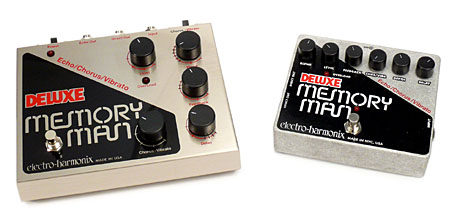
Electro-Harmonix Deluxe Memory Man Old and New

When I first saw the pictures of the new Deluxe Memory Man, I wasn’t too impressed only because I didn’t see the actual size difference between the old and the new version. But Electro-Harmonix has done it: They’ve made a DMM with a smaller footprint. I’ve played the DMM before, and really dug it. There is a certain mojo about this analog delay. But I never considered it because of the real estate it would require on my already space-starved board (though admittedly, it’s time to get a bigger board if I want all my pedals on a single board). Now, with it’s smaller size, this is definitely a pedal I’m going to consider – especially since I’m in the market for a good delay pedal. In any case, here’s the press release from EH:

The original Deluxe Memory Man is considered to be the finest analog delay ever designed. Organic and musical, it has been used by rock and Roll legends and countless musicians since its introduction in 1978. With the desire to make a flawless and smooth transition, Electro-Harmonix proudly announces the “new” Deluxe Memory Man in our rugged and pedal board friendly die-cast enclosure.

Exactly the same components are used in order to maintain the superior analog sound with exactly the same performance qualities. In this case, downsizing to a more rugged chassis was important and only second to maintaining the legendary sound. The exact same sound!

The original Deluxe Memory Man will still be available for a limited time. Musicians in the US and UK can now choose to get the new Deluxe Memory Man, or opt to get the classic. Musicians in the EU can now choose to get the classic original (as right now they only get the die-cast)

Read Full Post »

For the last couple of years, I’ve had a serious case of GAS – not that I pulled the trigger and bought a bunch of stuff during that time – I did get a couple of pedals here and there to slake my appetite, but no major purchases until recently. Now I can say I’m gassed out – at least for now. If you’ve followed my blog for any amount of time, you’ll know what I’ve purchased, but I’ll recap the major purchases I’ve made in the last couple of months.

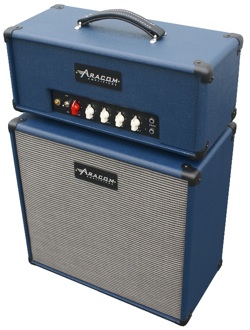
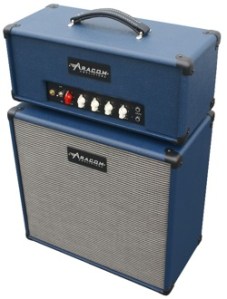
Aracom VRX22 Head with a custom Aracom 1 X 12 cabinet with a Jensen P12N

What an amp! I’ve shared with Jeff Aragaki, founder and designer of Aracom Amps, that the VRX22 is the perfect amp – at least to me. It’s a low power amp that packs a HUGE punch; both in tone and volume. It’s something I can use either in my home studio, or gigging. No matter what volume level I’m playing at, the VRX22 simply sounds awesome, never getting flabby in the low-end, and sporting what I consider to be the best Master Volume in the business.

For more information, check out the Aracom Amps web site.

Prestige Guitars Heritage Elite

The more I play this guitar, the more I fall in love with it. When I first got the guitar to evaluate it, I felt that all the adornments were a bit over the top. I’m a fairly uncomplicated guy, and I appreciate beauty in simplicity. But as time wore on, and I got to know this beauty queen better, the more she grew on me. So I decided to keep the guitar. Her new name is “Sugar” because amazingly enough, not only does she sound and play sweet, she actually smells like bubbling brown sugar! Could be because of the maple, but when I opened up the case for the first time, I was overtaken by the sweet smell of this guitar! So that’s how she got her name. She’s an incredibly expressive guitar, capable of producing gorgeous, ringing cleans to heavy grit. Brightly voiced, her tone just cuts through a mix like butter. I am really enjoying this guitar! Here’s a clip of both the VRX22 and the Heritage Elite:

For more information, go to the Prestige Guitars web site.

Saint Guitars Goldtop Messenger

In answer to my wife’s latest question, “Honey, how many guitars do you need?” I use the standard answer, “Just one more…” This was the exchange we had when I told her I was having Adam Hernandez, a close friend and founder of Saint Guitar Company, build me a guitar. It’s a Goldtop with a twist: Instead of the classic single cut body, I’m having the goldtop done on a double-cut. The body back is solid walnut with a maple top, and rock maple neck topped with an ebony fretboard. I wanted to go for a totally non-standard mix of woods that would produce a very bright tone. The bright tone, combined with the super sustain of Saint guitars in general, promises to be one sweet sounding tone machine. Of course, time will only tell, but I have high hopes for this guitar!

This isn’t even mentioning the smaller things I’ve purchased, but at least for now, I’m GASSED out – I’m also broke – again. 🙂

Read Full Post »

Roland Cube 80x

This is actually kind of exciting news: Roland has just released its most powerful Cube amp, the Cube 80x. Sporting 80 Watts of power through a 12″ speaker, this amp is poised to pack a serious punch. The Cube 60 has been quite successful since its inception a few years ago. Hell! Even I have a Cube 60 and I love it! The Cube 80x while being more powerful, also has some new features that are sure to turn heads (taken from the Roland web site):

* Powerful 80-watt output into a high performance 12″ speaker
* 10 COSM® amp models including new DLX Combo model
* Two channels: Clean and Lead plus new SOLO memory function
* New Spring Reverb modeling for vintage reverb sounds
* Easy to use Looper for unique live performance
* Convenient built in chromatic tuner
* Aux input for connecting MP-3 players or other audio sources

The Cube series amps have been known for their versatility. They sound great a pretty much any volume level, and they have enough features packed into them to make it easy to just pack the amp, a guitar and go. I have a couple of friends who use Cubes for club gigs!

There are a few of standout features that really pique my interest: 1. The ability to hook up an MP3 player to the amp to practice with; 2) The looper function, and finally; 3) The built-in chromatic tuner. This amp is made for gigging, and with the line out, you can go right into a board – which I’ve done many times with my Cube 60.

If you’re looking for a great, versatile amp, you can’t go wrong with a Cube. Just pick the one that suits the volume level you need (or the features you want), and you’re good to go!

For more information, visit the Roland Web Site!

Read Full Post »

5 Tone Bones - Gear has stellar performance, value, and quality. This is definitely top of the class, best of breed, and it's a no-brainer to add this to your gear lineup!

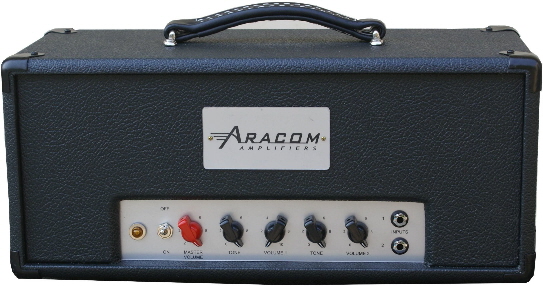
Aracom Amps VRX18 18 Watt Head

Aracom Amps VRX18 18 Watt Head

Aracom Amps VRX18 Watt Head

Summary: Based on the original “RoxBox” (no longer available), the VRX18 sports an improved master volume inherited from the VRX22, and a reworked, smoother overdrive profile.

Pros: As dynamic and expressive as its 22 Watt sibling, the VRX22, but oozing that bright, chimey EL84 goodness. When driven, produces a nice, tight overdrive.

Cons: None.

Price: $895 direct

Specs:

– (2) EL84 Power Tubes
– (2) 12AX7 & (1) 12AT7 Preamp Tubes
– S.S. Rectifier with “sag” circuit
– Hi/Low B+ voltage switch (18/9 watts)
– On/Off Switch
– Indicator Lamp
– Custom Heavy Duty Aluminum Chassis
– Custom Wound Transformers
– 4, 8, 16 ohm Speaker Jacks
– Custom Handcrafted
Turret Board
– Handwired
– Weight: ~35 lbs

Head Cabinet
Standard Tolex: Black Levant. See options below for other colors.
– Dimensions: 19″w x 8″h x 8.25″d
– Weight: 23 lbs

Also available in 1 X12 and 1 X 10 combos (or Jeff can custom build one to your liking)

Tone Bone Score: 5.0. When I can swing it, I’ll be getting this amp to complete the VRX Series!

Jeff Aragaki, founder and builder of Aracom Amps, always chuckles when I tell him that he’s onto something with his VRX (short for Vintage Rox) series amps. With the VRX22, he seemed to have stumbled onto a sweet spot that produced an amp that has an incredible and beautfully balanced tone that bring out the best tonal aspects of the 6V6 tube. He’s done it yet again with the updated RoxBox 18, now renamed the VRX18, but incorporating many of the same features he built into the VRX22.

I just purchased the VRX22, having fallen in love with the tone that it produces, and I’ve fallen love yet again, but now with the VRX18. I’m like a hopeless romantic that loves two women for their individual virtues, but in this case, the women don’t mind – they can co-exist with each other. Okay, bad analogy… 🙂

I originally reviewed the RoxBox 18 back in December. At the time, I totally dug its tone, but took marks off because of the mildly harsh breakup at lower volumes. There’s nothing harsh about the tone of this amp now – at any volume! It’s a great amp to play, and as expected, it’s pedal friendly, and responds really well to overdrive pedals. Also, I played four guitars through it, and it sounded incredible with all of them!

I won’t go into a lot of detail, since I already covered pretty much all the descriptive information I needed to in the original review, so I’m going to cover some important things I’ve learned about the VRX 18 and the VRX series in general. But first, as opposed to doing this last, here’s a short clip featuring the VRX18 to show you how kick-ass it sounds:

For this clip, I used a Strat with just the middle pickup, plugged directly into the VRX18. I just dig that EL84 grind! I had the Channel 2 volume dimed, and the master volume at halfway in full-power mode. It was very loud, much to the chagrin of my wife. 🙂 But I needed to capture at least some of that EL84 compression.

What’s cool about the EL84 is that it compresses nicely when pushed, but still seems to retain a certain openness in its overdrive. This is unlike something like a KT-66 that compresses so much when pushed you lose volume.

The Best Master Volume in the Business

I don’t say this lightly when I say Jeff has the best master volume in the business. I’ve played many amps. But when Jeff created the VRX22, he did something with the master volume that is pure magic. It has a nice, even volume sweep that seems to act independently of the channel volume. This means you can crank the channel volume to get some serious grind, but control the output via the master, and it won’t suck your tone! I’ve found this to be a real problem with other amps. That master volume is incorporated into the VRX18.

The Best Half-Power Switch in the Business

A lot of manufacturers use a pentode/triode switch to achieve half-power settings in their amps. I’ve played several amps with this feature. But in half power mode with the pentode/triode configuration, I’ve noticed a distinct tonal difference between the two modes in amps configured this way. It’s not that the tone is bad. In fact, many I’ve played around with sound great in half-power mode. But it’s like two different amps.

Jeff Aragaki takes a different approach and instead adjusts the B+ voltage to maintain the usage of all pins in the power tubes. I’m not an electrician, and can’t even begin to explain this technically, so I’ll just say it this way: When you switch to half-power mode in any Aracom Amp, the amp doesn’t change its tonal characteristics. It sounds and plays the same!

The Difference Between Old and New

In addition to the great master volume Jeff incorporated into the VRX18, the first thing I noticed was that it was nowhere near as easy to get this amp to overdrive in channel 2 as it was with the original RoxBox 18. This is not a negative thing at all because as I mentioned in my original review, the overdrive was pretty harsh at lower volume levels. I spoke to Jeff about this, and he said that based upon my original tests and review, he decided to mellow out the extra gain stage in the VRX18 so you could get a nice overdrive tone at any volume level.

You won’t get over-the-top gain with the VRX18. But for that, I have a simple fix-all: Get a great booster pedal like a Creation Audio Labs Mk.4.23 (again, the best booster on the planet), and SLAM the front-end of the amp. 🙂

But all that said, if you’re in a venue where you can dime both master and channel volumes, you will be rewarded with gorgeous harmonics and overtones and luscious feedback!

Overall Impressions

Like I said, this is my next amp… It just rocks the house! And at $895 for the head, you could get both the VRX22 and VRX18 for under the price of a single boutique amp! This isn’t a sales pitch. The value proposition of the VRX series is something that should be seriously considered. You’re not getting a production line amp that’s built overseas. With the VRX series of amps, you’re getting a US-made, handwired amp for under a grand!!!

Admittedly, I was a little skeptical when I first ran across Aracom Amps. But I’m now a believer, and a faithful customer!

Read Full Post »

Fender Hot Rod DeluxeAfter having my Fender Hot Rod Deluxe for a few years now, I finally decided to swap the stock speaker for an Eminence Red Coat “The Governor,” which is a moderately-priced ceramic speaker. What’s difference now? The Hot Rod Deluxe is a very mid-rangy amp in the first place, but at higher gain, the tone became a little flabby. In fact, when I knew I was going to play at gig volumes I had to dial down the bass to about 9 or 10 o’clock, and set the mid and high around 3pm to get a more crisp sound. I was able to alleviate a bit of that flabbiness with better tubes than the stock Groove Tubes, but I always suspected that the speaker had a lot to do with the flabby bottom end. I don’t know why I waited to do this simple, simple modification. It literally took 10 minutes to swap it out.

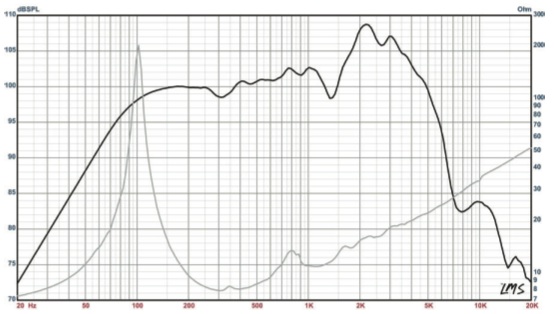
So why the Eminence Governor? Mainly because I wanted a nice mid-range focused speaker that had a smooth bottom end, and slightly sparkly highs. I had also played the Governor in a couple of different amps, and was really impressed with its brighter voicing. Here’s a frequency response chart for the Governor:

The Governor Frequency Response Chart

As you can see from the chart, the bottom end portion of the curve is a nice, smooth line. In the mid-range, the frequency response is fairly complex, then in the highs, you get some nice peaks in the 2-3 kHz range, finished off with some subtle motes above 10 kHz. The tone in the amp reflects this well. The bottom end is there, and very tame, and the mid- and high-freq response creates a gorgeous, and spacious tone. I’ll probably have some clips in the next few days, but here are clips directly off the Eminence site:

Clean

Heavy Distortion

Overdriven

All in all, this has got to be the most significant improvement to my Hot Rod’s tone!

Read Full Post »

Aracom Amps VRX22 - First in the series

Aracom Amps VRX22 - First in the series

You ever play some gear that from the moment you start playing, you feel like you’ve died and gone to tone heaven? In the last few years, and especially in the last couple since I started writing this blog, I’ve literally played hundreds of different types of gear, covering the spectrum of all things guitar, from guitars to effects to amps. I don’t have enough time to write about all the things I’ve played, but to keep my content fresh, and to satisfy my overwhelming curiosity about different types of gear, I’m constantly trying stuff out.

And in all that time, and through all that gear, I’ve only had some gear totally slay me once: That was when I played the very first prototype of the Aracom VRX22. The back story is pretty cool, so I’ll share it with you…

Several months back, Jeff Aragaki contacted me on my blog asking if he could buy ad space. I replied that I didn’t want to commercialize my site, but if he’d be willing to send me an amp to review I’d put his logo on my “The Dawg Digs” area if I really loved his product. Fortunately for both him and me, he only lives about 40 minutes away, so he delivered what was once called the “RoxBox,” an 18 Watt, EL84-based amp. I had this thing about EL84-based amps for awhile, and was really excited to try a non-brand-name amp; not to mention that I was entirely intrigued by the fact that that hand-wired head cost only $895! That evaluation turned into testing and reviewing several of Jeff’s amps over the next few months from heads to combos with different configurations. Talk about feeling lucky to have so much gear to play with!

Jeff and I have become fast friends. We’re contemporaries not only from our obsession with vintage gear (or any kind of gear for that matter), but we’re almost the same age, and are both local boys from the Silicon Valley. Jeff’s a great guy, and someone I really enjoy spending time with; plus he’s super smart, and I like to be around smart people. 🙂

Anyway, a couple of months ago, Jeff called me up and said, “Hey Brendan, I’ve been working on an experiment with the RoxBox, and popped a couple of 6V6’s in the amp to see what it would sound like.”

“Oh?” I replied, “That sounds quite interesting. I dig 6V6’s a lot. They have a sweet, open distortion when they’re saturated.”

“Yeah, they do,” said Jeff, “Anyway, I was wondering if you’d like to test it out.”

I immediately replied, “Need you ask? Bring it on over!”

A couple of days later, Jeff brought the amp over to the messy garage I call my home studio. We plugged it in, I hooked up my Strat, and Jeff switched on the amp. I took one test strum in the clean channel, stopped and asked, “What did you do? This f-in thing sounds incredible! Let me play a few licks…”

Jeff didn’t say anything. He just smiled, and let me play for awhile. After a few minutes he said, “Okay, try out channel 2, so you can hear the overdrive,” at which point he plugged me into the second channel, then cranked the volume.

The amp literally sang with this beautifully smooth overdrive tone, chock full of overtones and harmonics. The tone was on the bright side, similar to the Reason SM25 that I was testing, but was rich and thick, and ballsy. I just closed my eyes and smiled, luxuriating in pure tonal heaven!

When I came out of my trance, I looked at Jeff and said, “Dude, I think you’re onto something really special here. You know I’ve played tons of different amps, but this one’s special. It’s the best-sounding amp I’ve played of yours to date; and ranks very high on my overall list. Are you thinking of putting it into production?”

“Maybe. I wanted to get your feedback. I still have some stuff to do on it, but I’m really liking the tone of this amp,” Jeff replied.

“Yeah… You’ve just piqued my curiosity.”

Fast-forward a week and I get another call from Jeff. “Hey Brendan! I worked out the power handling of the amp. The one you tested wasn’t outputting at the full 22 Watts, so I made some adjustments and now it’s running at full power. To me, it sounds even better. Anyway, I’m going away on a business trip for a couple of weeks, and I’ll leave it with you to test.”

So Jeff dropped it off a couple of days later, and test it I did. I took it to gigs, recorded some clips with it, and fell in love with it even more. Jeff was right, the power handling adjustments he made turned that amp into a pure tone machine.

When Jeff got back from his trip, we met for lunch, so I could give the amp back, and give him feedback. He asked, “So how did you like the amp?”

I replied, “Uh… the word is love. I’ll keep on testing your other amps, but this is the amp I want to buy. Everything about it is perfect. The clean channel has oodles of clean headroom, and the sag you’ve built into the simulator makes it sound like the amp has a reverb. The drive channel is like nothing I’ve played before. Quite simply, Jeff, this is the perfect amp!”

Jeff just chuckled, and said a very understated, “Glad you like it.”

Since then, I’ve purchased the amp – I got the very first in the series! And while I realize that my excitement about this amp is purely subjective, other people who’ve played this amp – WAY, WAY better guitar players than me – have been just as blown away by its tone. The other day, Jeff asked me to meet him over at Gelb Music in Redwood City to show Jordan, the guitar department manager, my VRX22 (Gelb carries Aracom Amps on consignment – for now 🙂 ). I just chuckled when he plugged a guitar into the drive channel, cranked it up, and let it rip. He didn’t play more than 30 seconds before he said, “This amp rocks! It’s real ballsy and has tons of harmonics. Wow!”

Jordan had to help customers on the floor, so he gave the guitar over to another customer named Chris with whom Jeff and I had been chatting while waiting for Jordan. Chris sat down, and started to rip it up! He played with this hybrid picking technique that was just amazing to observe, and he made the VRX22 absolutely sing! I knew it sounded good, but in the hands of a truly gifted player like Chris, it was other-worldly!

Jordan returned a few minutes later to listen to Chris play. Mind you, it was loud. Chris was plugged into a 65 Amps 2 X12 cabinet and had the amp cranked. Jordan turned to me, and with a quizzical look on his face asked, “This is YOUR amp?”

I just laughed because I knew what he was thinking – he was hoping that it was an inventory amp so he could buy it himself. I said, “Yup. You thinking about getting one for yourself?”

Jordan just smiled and nodded his affirmative. We finally had to turn down the amp, and Jeff and I had to go, and as we were leaving, Jordan asked Jeff, “So what’s the turnaround time for when we order?”

Jeff said, “Between two to four weeks.”

“Cool. That’s just about right. Hey! Thanks for bringing the amp over, guys! Man that thing has f$ckin balls…” with a huge grin on his face, “That’s all we ask…” and he laughed.

I laughed with him. Jordan is a real bad-ass player himself, and when he has this type of reaction, I know he thinks it’s special. I told Jeff he better build two: One for the store, and one for Jordan.

Folks, I realize you might think I’m full of it when I say that the VRX22 is the perfect amp. But Jeff is really onto something with this amp. I’d put it head to head against a Dr. Z MAZ or a Buddha any day. I actually played a Dr. MAZ the other day. It’s a great amp. But guess what? The VRX22 is only $895 for the head! That’s almost half of what other hand-wired, boutique amps cost! Yeah, it doesn’t have a tube rectifier – the VRX22 is designed with a solid state rectifier for extra punch and it has a sag circuit to provide the vintage vibe. And in case you’re concerned that a solid-state rectifier means lower quality, I just have one thing to say: So what? Lots of vintage amps such as classic Marshall Plexi’s and many Fender amps use solid-state rectifiers. Besides, it’s the tone that matters, and compared to the MAZ, which is really nice, expressive amp, the VRX22 has a much bigger sound.

Fantastic sound for an unbelievable price? SOLD!

Disclaimer: I want to make it absolutely clear. Jeff doesn’t pay me to do reviews or pay me to give nothing but positive feedback. He calls me up to say he’s got some gear for me to test, and I test it, then write a review. To date, I haven’t received any bad gear from him, so I haven’t given his gear a less than stellar review. You might think this from the rave reviews I’m giving the VRX22, but just to alleviate any concerns about me having an affiliation with Jeff other than being a friend, remember that I clearly stated that I bought the amp. What I’m sharing is my excitement. And showing it to the folks at Gelb? That was purely a favor. I simply had the fortune of being able to play with the prototypes. It is truly a magical amp!

Click here for more information on the VRX22 and other excellent Aracom amps!

Share your slayer experience!

Read Full Post »
« Newer Posts - Older Posts »