Feeds:
Posts
Comments

Archive for the ‘gear reviews’ Category

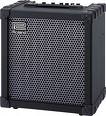
Roland Cube 60 Amplifier

Roland Cube 60 Amplifier

Roland Cube 60 Amplifier
Summary: Built like a tank, great-sounding and versatile, the Roland Cube 60 is at home on the road and in the studio.

Pros: Built-in Roland COSM modeling technology to mimic 9 British, Vintage and Modern amps, plus an added Acoustic mode. The Cube 60 also sports Recording Out, Line Out and Speaker Outs, plus a Tuner Out that can feed a Tuner independent from Volume control. Very loud for a small amp!

Cons: Reverb sounds hollow and a muddy at higher settings, with a definite loss of clarity.

Price: New $300-$359 Street ($250-$275 used)

When I bought my Cube 60 a three years ago, I wasn’t even looking for an amp. At the time, I was using a Line 6 Flextone III that served my purposes beautifully. But when you’re a gear freak and you just happen to have a bit of coin to spend well, some things just can’t be passed up.

Such was the case when I was perusing my favorite local gear store. I sauntered into the cramped guitar area, and saw this tiny black cube amp sitting against the wall. Intrigued, I picked it up by its handle and marveled at not only its diminutive size, but also its light weight (it weighs only 25 lbs.). Then Jordan, the guitar guy walked up and said, “I just got me one of these. It sounds awesome, and you can use it anywhere.” Normally, when I hear stuff like this coming from a salesperson’s mouth, I just nod, smile and say, “Cool.” But I’ve known Jordan for awhile, and I’ve learned to trust him. After all, he’s a gigging guitarist who knows his gear. When I hear him even slightly rave about something, I know it has got to be something cool (not that I can always afford the stuff he says is cool, but that’s another story).

So instead of my usual reaction, I silently pulled a Strat down from one of the hangers while Jordan went to fetch a cord. Big mistake! 🙂 It took me no longer than 10 minutes to know that I had to have this amp. Plus it was on sale for the Christmas season, so I got it for $50 less than normal retail!

I won’t go into the technical details of this amp because you can google for them. Let me just say this: This amp kicks ass! While I use my Fender Hot Rod for my electrics on stage, I use this with my acoustic, and it’s a dream. There’s something about the Acoustic channel on this amp that makes my Ovation sound like a Martin dreadnought! It’s that sweet

But in the studio, I use this amp a lot for recording backing rhythm parts. Even though it’s a modeling amp, which I normally don’t really get too wild about, this amp produces really nice tones in all of its amp modeling settings. And with its recording out jack, which shuts off the speaker, I can safely record deep into the wee hours of the morn without worrying about waking the neighbors. Surprisingly enough, it sounds great going direct into my DAW. In fact, I recorded this song using nothing but my Roland Cube 60. Of course, there’s nothing like the sound that a cranked tube amp produces, but late in the night, when you’ve got the inspiration, having the convenience of an amp that sounds great going direct is very nice!

Finally, did I say this amp is LOUD? You’d never expect the kind of volume that this amp is able to produce. At home, I rarely take the amp above 9am on both the Gain and Volume knobs. Any louder, and I’d start getting calls from the neighbors and complaints from my wife! 🙂 One of my close friends uses this amp for gigging, and he loves its versatility. Mind you, this is a guy who has tons of gear. His amps include a Marshall JCM half stack, and a gorgeous ’71 Fender Twin. But he likes to gig with the Cube because it’s so versatile AND it’s incredibly light! Weight matters when you’re hauling gear.

This amp is definitely worth a look.

Rock on!

Read Full Post »

Yesterday, I received the following comment on my rating system page:

Hey , I just purchased a SAINT GUITAR COMPANY “bechmark” model From MESA/Boogie  Hollywood. It is  by far the nicest custom instument I’ve ever Played . Y’all should  check them out. The only reveiws I’ve seen for these is on harmony central.Any who . .  check em out .

At first, I thought it was spam, but wanted to be fair and do some research first before I marked the comment as spam. So I called the Mesa Boogie store in Hollywood to see if they carried the guitars, and they confirmed that they did, but only sold them on consignment. The sales guy did say the guitars both played and sounded awesome, so that was encouraging and piqued my interest even more. Then I read the reviews on Harmony Central. Every review just raved about how playable and sweet sound the guitars play, which made me a little leary because it’s entirely possible that they could’ve been planted. I did find the company’s web site, but it’s so new that a lot of stuff doesn’t work on it. I also left a message for what appears to be the founder of the Saint Guitar Company – hopefully he’ll call me back.

It has been a long time since I’ve heard of any truly new guitar brand; I mean, this brand came out of the blue for me! It’ll be interesting, to say the least, to get the low-down on these guitars.

BTW, if you have any other information on the Saint Guitar Company, please let me know!!! 🙂

Read Full Post »

In my previous post today, I wrote about the value of using and evaluating gear in the place you’d normally use it before buying because you never really know how something will perform until you use it outside of a controlled environment. I got the chance to do that this past weekend, and in a word, this guitar is impressive. It’s incredibly playable, and even though the action is a bit higher than I like it, the neck is fast due to the slightly shorter scale length.

With a shorter scale length than my Strat, I was expecting even less sustain, but the solid mahogany body and neck combined with the beautifully polished rosewood fretboard provide for a warm, resonance with lots of sustain. It was pure joy bending a note, applying a bit of vibrato, and hearing the note just float in the air (sorry, couldn’t help but wax rhetorically).

Tonally, the P-90’s being single coils sit very close to the Strat, but without the chimey sound normally associated with a Strat. The tone is just a tad thicker and a little darker, but nowhere near as dark as humbuckers. I’ve been really diggin’ on the clean tone from neck pickup. It’s surprisingly deep without being boomy – almost like a plugged-in acoustic. It’s really great for playing clean leads. Switching to the middle position introduces the bridge pickup, and this setting is great for crunchy rhythm parts. Finally, I can finally say that I’ve found a guitar that has a single-coil bridge pickup that is usable to me. I’ve found bridge pickups on single coils to be just too trebley. The bridge pickup on the SE is indeed bright, but not so bright that it’s displeasing to me.

As far as saturated tone is concerned, my initial thought was that it would be thick – similar to humbuckers. But amazingly enough, it’s hard to get this puppy to break up a lot without boosting the drive on either my amp or my stomp boxes. This is NOT a bad sound at all. You get a bit of breakup, but loads of sustain. Very much like a Santana sound, and that’s never bad in my opinion.

I also love the simple two-knob volume and tone layout. The volume knob is positioned perfectly and doing volume swells is a breeze! Just extend your pinky. The guitar is very responsive to the volume knob as well, and you can clean up your tone just by rolling off the volume. The guitar is also very responsive to the tone knob, and unlike my other guitars, I found that I was actually using the tone knob in middle of songs to add or subtract edge and bite to my sound. Normally, it’s a set it and forget it affair.

Finally, one of the coolest things I found while playing this guitar is how responsive it is to how you attack the strings. Even with the gain cranked, playing lighter really cleans up the signal. But dig in, and you get a pleasant growl. I love this guitar!!!

In closing, I used to have this negative vibe about P-90’s. They always seemed way to bright for my liking. But the PRS SE Soapbar II has cured me of that negativity. It’s a truly playable and versatile guitar that definitely would fit in with any axe-slinger’s arsenal. Even though they’re not made any longer, you can find great deals on E-Bay. Imagine a tone machine like this for under $400! Simply awesome!

Read Full Post »

In my humble (or not so humble 🙂 ) opinion, there’s no better way to evaluate gear than to gig with it. It’s one thing to play with a piece of gear in a controlled environment; it’s an entirely different matter when you use it to perform your music. Gigs can be a chaotic affair, and when you gig with something, its quirks and strengths show themselves.
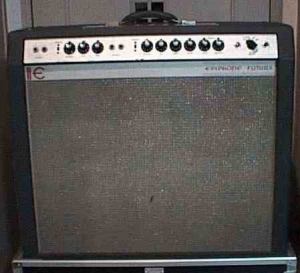
For instance, let’s say you want to evaluate a new amp. It’s easy to twiddle with the knobs in the shop or in someone’s garage to evaluate the sound it produces. But when you gig with it, there are a lot of factors that come into play such as transport weight, the ability to cut through a mix, tonal quality when played in a crowd – lots of things that aren’t apparent when you’re in a controlled environment.

So if you’re evaluating a new piece of gear, ask the person or shop selling it if they lend it to you, or if you can rent the gear so you can try it out before you buy it. That way you can bring it to where you’ll be using it the most – studio, rehearsal, etc. – to see how it performs. Personally, I wish I had done that with my Line 6 Flextone III amp. Once I got it, it was great for studio work, but transporting it was painful (the damn thing weighed a ton), and it sounded horrible when I gigged with it. Had I evaluated it before I made a decision to buy it, I probably wouldn’t have bought it. Oh well, as a friend of mine once said, “You just got levied a learning tax.”

Photo courtesy of Wikipedia

Read Full Post »

PRS Soapbar SE II

Summary: Made in Korea? Who the hell cares! Workmanship is incredible, the paint job is impeccable, and with the two P-90’s, this dog’s got bite! But roll off the volume, and it becomes a sweet, cuddly puppy.

Pros: Real simple controls: Two knobs and a 3-position pickup toggle. Very versatile tones from nice, almost chimey cleans to bright, crunchy breakup.

Cons: Not a whole lot of sustain, but that’s to be expected

Price: $250-$500 Street depending on condition

What better way to chill at the end of a busy work week than to come home, strap on a guitar and let your fingers do the walking. Even better to have a great guitar to play with, as I certainly just did with the PRS SE Soapbar II! My good buddy, Phil, from a local cover band, Phil ‘N The Blanks lent me his SE Soapbar II today to try and perhaps buy. He told me I wouldn’t be disappointed. Aw shucks! Looks like I’m soon gonna be adding to my collection! Ne’er to worry, the sound this guitar produces will more than make up for the money I’ll be shelling out. Let’s get into the details, shall we?

Fit and Finish

First of all, this is one gorgeous guitar! The one I played has a translucent teal finish that beautifully fades into a glossy black lacquer trim; and as a dedicated San Jose Sharks fan, what better than to have a guitar that’s the color of my favorite hockey team!!! The neck is also finished in glossy black lacquer. Very nice. Phil has taken great care of this guitar. There were no scratches on it whatsoever!

As far as the build quality is concerned, I couldn’t see any obvious joints or imperfections on the body. This is one well-made guitar!

The body is solid mahogany with a flame maple top, whose grain is visible through the translucent finish. It’s stunningly gorgeous. The neck is a solid mahogany set neck with a rosewood fretboard. That alone attracts me to the guitar, as I just love a rosewood fretboard and the warmth it adds to your tone.

Playability

When I read other reviews of the SE, I was a little dubious, as most people talked about the wide, C-shaped neck. I have relatively short fingers, so neck diameter is a real important to me. All I can say is that the neck on this guitar is just how I like it. It’s wider than my Strat’s neck, but despite that, it’s just a dream in my hands. The semi-flush heel also allows someone like me with short fingers to comfortably reach notes above the 18th fret with ease.

Phil had the action set on this SE a bit higher than how I usually like it, but despite that minor nit that can be easily remedied, the neck is fast, and the frets are perfectly finished – not too deep and not too shallow, so you can bend and easily articulate nice vibrato without going out of key.

One thing I really like about this guitar was the simple controls: Two knobs and a 3-way toggle. The volume knob is perfectly positioned for rolling up or down volume with your pinky – very convenient. From a playability standpoint, PRS truly made this guitar with a gigging guitarist in mind. Everything it about how you play this guitar speaks of convenience and playability with minimal fuss.

The SE also sports a bit shorter scale length than the Strat – 25″ vs 25 1/2″ – it doesn’t seem like much, but the shorter scale length does help in getting around the neck.

How It Sounds

To test how the SE sounds, I plugged it into my trusty 5 Watt Champ, which I’ve found is a great way to test out guitars as all it has is a volume knob. Tone and sustain all have to come from the guitar when plugged into this amp, and from that perspective, the SE simply shines. It’s truly the first guitar I’ve played in a long time that is SUPER-responsive to volume rolls. With any pickup you can go from clean to dirty simply by rolling the volume knob. The neck pickup produces a nice, hollow clean tone, reminiscent of using the bridge and center pickups on a Strat; but unlike the Strat there’s no ringing. The tone is deep and smooth. Rolling up the volume produces just a tiny bit of grit, that you can increase significantly by attacking the strings more. In fact, in all three settings the guitar responds incredibly well to pick attack. You gotta love it.

My favorite pickup setting was with both pickups engaged. In this position, the tonal quality became a lot more complex, with a noticeable midrange boost (something I prefer), and just as with the neck pickup,
the responsiveness to pick attack was still present – probably even more so in this position.

With the bridge pickup selected, you get that classic P-90 tight, bright honk. I’ve traditionally not been a bridge pickup kind of guy as the highs on most guitars are just too over the top for me. But with the SE, I was pleasantly surprised that this wasn’t the case. Yes, the treble boost was there, but it was quite pleasing to me!

Summing It Up

I saw a video on YouTube with PRS himself with Mike Ault demonstrating the SE, and PRS said the mission of the SE was to be the best value guitar on the market. Frankly, I don’t know how true this is in reality, but I’m willing to bet that that’s not a very far-fetched statement. For the money, you get what amounts to a tone chameleon! You want blues? You got it? Wanna do some classic rock? No prob. High gain? Got it covered. I will warn that this guitar may not appeal to thrash metal guys, but hey! You never know.

So the verdict? I’m going to have to explain to my wife why I need another guitar… 🙂

ROCK ON!!!

Read Full Post »

The big drawback of being a gear freak is that it can be an expensive hobby. But at the same time, it’s a hell of a lot of fun discovering new gear, or discovering little-known vintage gear. I was in a local use gear store the other day, and happened upon this amp. What a classic! It’s all-tube, with 4 – 8″ speakers. As far as tone goes, think Beach Boys and Jan and Dean, and perhaps a little quieter Dick Dale. In other words, this produces pure, clean surf guitar tone.

I tried it out with a number of guitars, and could never get it to break up. Talk about headroom! I do have to say that with a drive pedal, it didn’t sound too good. Actually, it sounded awful with a drive pedal.

Here’s the cool thing about this amp: If you run across one, and you like its sound, you can get it for around $500. For a clean tone vintage amp, that’s a pretty awesome price!

As far as features are concerned, it has two completely independent channels. The first channel only has EQ, while the second channel adds Presence, Reverb and Vibrato. Unfortunately, the vibrato on the amp I tried didn’t work, but the reverb was nice and thick, and reminiscent of old surf music. It sounded best with a semi- or hollow-body axe with the reverb kicked in about halfway.

There aren’t too many of these floating around, but you can find ’em.

Read Full Post »

BOSS CS-3 Compression/Sustainer
Summary: If you’re looking to really squeeze your signal, this box’ll do it.

Pros: 4 knobs provide great flexibility to shape your compression. For the money, it’s a pretty good deal.

Cons: Has probably some of the most severe compression I’ve ever experienced, which results in a loss of tone. Sounds okay with solid state amps, but horrible with tube amps.

Price: $89 Street

Back when I was looking for a compressor to fatten up the tone of my Strat to compensate for the really bright Tex-Mex pickups, I evaluated a bunch of compressor pedals, from the high-end (Maxon, Demeter) to the low-end, one of which was the BOSS CS-3 and MXR DynaComp.

I recently went through my review notebook and saw that I didn’t do a review of the CS-3, so here goes…

To start with, if you don’t want to read the entire article, if you’re a hard-rock/metal player, I think you’ll like this pedal. It’s real squishy, and combined with an amp that produces a tone of low-freq, it will definitely get you that super-compressed distortion. On the other hand, if you’re a jazz/blues or classic rock player, you will not like this pedal as it can really muddy your clean tone.

That said above, the CS-3 is not a bad pedal. It’s well-made, and compared with other BOSS I’ve owned in the past, it is probably just as reliable. But the CS-3 follows in pretty much the same formula as other BOSS pedals: You get decent tone for a relatively cheap price. They’re made for a mass market audience. Not that that is intrinsically bad, but if you’re a real tone freak, it won’t be up to par tonally with what you’ve come to expect. But high expectations aside, as I said, the CS-3 is not a bad pedal, and with the right amount of tweaking you can get a decent tone from this box.

One thing I really liked about this pedal is its configurability. It has four knobs for Level, Tone, Attack, and Sustain. The Tone knob really comes in handy as you increase the sustain, as I found that increased levels muddied the high-freq tones. The Tone knob helps to compensate for that to a point. But dial in too much highs and your tone becomes really “tinny” irrespective of the guitar you use. Having an Attack knob is a pretty cool feature as well, as you can adjust how fast the compression kicks in. Not bad for a $89 pedal.

The unit I tested was a little noisy when engaged, not matter how much I tweaked the knobs. It wasn’t so apparent when tested with a Roland Cube 60, but with a tube amp (tested on a Fender Twin and 65 Super Reverb Reissue), the soft hiss was a bit annoying. But with either type of amp, as I mentioned above, this thing really squeezes your signal to the point that there’s a noticeable difference in tone between the unit being engaged and not engaged. In comparison, my Maxon CP-9 Pro+ when engaged retains my tone even at higher levels of compression, but just “feels” fatter. Very transparent.

All in all, the BOSS CS-3 is a decent pedal. For someone on a budget who wants to add some compression to their signal, as I said above, this will do the job. But if you’re looking for transparency, this isn’t the pedal for you.

Read Full Post »

5 Tone Bones - Gear has stellar performance, value, and quality. This is definitely top of the class, best of breed, and it’s a no-brainer to add this to your gear lineup! Voodoo Lab Micro Vibe

Summary: Looking for that vibey sound? Look no further. The Micro Vibe serves up a range of vibe tone from chimey chorus to thick, soupy psychedelic in nice compact stomp box.

Pros: Incredibly versatile vibe that has multiple personalities depending upon where you set the knobs.

Cons: A little tricky to set up in your chain, and can be finicky with overdrive pedals, and can make your low-end really boomy (not hard to overcome, though).

Price: $149 Street

I wrote a comparison review between the Micro Vibe and the Fulltone Mini Deja Vibe, two excellent ‘vibe pedals out on the market, but since I recently purchased the Micro Vibe, I thought I’d do a full review because my original evaluation was done in a more controlled environment A/B’ing the two pedals.

First off, this pedal is extremely easy to use. Two knobs control intensity and speed, and toggle switch turns the unit on and off. This pedal is true-bypass as well, so when it’s off, it’s really off – very nice to find in a relatively affordable pedal. To get that psychedelic sound, you set intensity about 4 or 5 o’clock, and the speed anywhere between 11 and 2 o’clock. For a more chorus-like effect, I set both Intensity at 12 o’clock and speed at about 1 o’clock. I’m still playing with it, but so far, so good!

Like the Fulltone, the Micro Vibe boasts a faithful reproduction of the original UniVibe’s circuitry. I’m not much of an electrical guy, so I’ll take their word for it. However, in the previous comparison review, I mentioned that the Micro Vibe has a slightly darker tone than the Mini Deja. To me, it has a rich tone that really brings out the lows – though I found through my latest experimentation that you really have to be careful about your EQ. Too much low-end, and you’ll get a really muddy sound. I found that with both the Mini Deja and the Micro Vibe, but a bit more so with the Micro Vibe. It wasn’t too hard to overcome with a little EQ adjustment, though, so that was just a minor problem. All in all though, the two pedals sounded very similar, giving off that ‘vibe sound that I just love.

What the Fulltone has over the Micro Vibe is a Vibrato mode, that gives you the pulse from the photoresistor without the phase effect. It also costs almost twice as much. For me, I wanted a dedicated ‘vibe pedal with no other accoutrements, and the Micro Vibe serves that up just fine!

One thing that I found really nice with the Micro Vibe was how the pedal’s intensity responded to the input gain from my guitar. Higher gain produced higher levels of intensity. That’s very cool because it’s possible to dial back the intensity of the effect from your guitar.

In any case, here are a couple of sound clips I recorded to demonstrate a bit of the Micro Vibe’s capabilities:

TS-808 plus Micro Vibe:

Micro Vibe with a bit of reverb:

Both clips were played with my Strat and output through a Fender Champion 600.

I did find it a bit challenging placing the Micro Vibe in my signal chain. Placed before my overdrive pedals, it was pretty tough to control, and the resultant pulsing drive wasn’t too pleasing to the ear – though it was correctable with some minor tweaks to the OD pedals. I found that it worked the best (at least so far) at the end of my chain, right before my BBE Sonic Maximizer. It’ll stay there for awhile, then I’ll switch its position to see how it compares.

Here’s an interesting thing that I found that I forgot to mention: The Micro Vibe sounds absolutely horrid with a Fulltone OCD. I really wasn’t expecting that. It probably could be the chip that’s used in the OCD. Whether I put the Micro Vibe in front of the OCD, or after it didn’t matter. The combination was UGLY! But it sounds awesome with Tube Screamer-type pedals like my TS-808 and Bad Monkey.

In conclusion, if you’re looking for that vibey sound, the Voodoo Lab Micro Vibe delivers that in spades, and at a very affordable price!

Read Full Post »

5 Tone Bones - Gear has stellar performance, value, and quality. This is definitely top of the class, best of breed, and it’s a no-brainer to add this to your gear lineup! Sennheiser e835 Dynamic Microphone

Summary: A fantastic and versatile, and super-affordable mic with a wide field that is equally at home with vocals, and instrument/amp sound reinforcement.

Pros: Nice, flat response, with built-in presence boost produces very clear sound.

Cons: None

Price: $99 Street

Sennheiser e835

One of the underlying themes in the reviews I write here at GuitarGear.org is that cheap doesn’t necessarily equate to low quality, and as a gear freak, saving money where I can means I have more money to get more gear. I totally dig on finding excellent gear that doesn’t break the bank, and the Sennheiser e835 falls squarely into that camp.

I discovered this mic a few years ago when my trusty, but tired SM-58 stopped working. By chance, Guitar Center was having one of its blowout sales, and the e835 happened to be on sale for $79.00. So I decided to try it out, and am kicking myself for not buy 4 or 5 of these at the sale price. Oh well…

One thing that I couldn’t stand about the SM-58 was its boomy lows. I’m the type of singer that has the mic close to or touching my lips so that I’m right in the capsule. But with the SM-58, I couldn’t do that because the over-abundance of lows would muddy my vocal tone – and forget about using it to mic a cab!

On the other hand, I found that the e835 has a much flatter tonal response, and close-mic’ing anything is pretty easy, with very little EQ tweaking. It has a built-in presence boost that flattens out the EQ compared to the more scooped EQ of the SM-58. With that kind of flat response, the e835 becomes a very versatile tool that’s usable on-stage, in the studio, and can even be great for mic’ing guitar cabs! At $99 street price, you just can’t go wrong with this mic!

To prove how nice the e835 sounds, let me point you to a song I just recorded using e835. In this song, I used the e835 for both guitars and vocals. With the guitars, I wanted to add a little spacial depth to the guitar tone (I was using a Fender Champ 600 amp with only a 6″ speaker, so I needed a bit of depth), so I close-mic’d the amp with the e835, and used a Nady RM-200 ribbon mic placed off-axis about 10″ away. The Nady only adds a bit of depth, as the e835 does the bulk of the tonal work. But regardless of guitar or vocal, from the song, you can tell that the e835 really shines as a super-versatile mic.

Read Full Post »

Fender Hot Rod Deluxe

My Hot Rod started making a bit of a humming sound a couple of weeks ago, and I figured out that it was one of the preamp tubes. So instead of replacing the bad one, I decided to replace all of ’em. Not knowing what was best, I called up The Tube Store because I knew they’d know what would work best in my amp. After a nice, long conversation with Paula, I got two Tung-Sol 12AX7 and one Jan-Phillips 12AY7 – all three for about $49. I put one TS in my first stage, put the JP in the second stage, and the other TS in the phase inverter. What are the results? A lot more clean headroom in my clean channel, and a much smoother distortion in my drive channel. I had already tamed my drive channel a bit by getting THD Yellow Jackets and using EL-84’s in place of the 6L6’s I put in last year. But combined with the JP, we’re talking sweet, beautiful sound!

I’d heard of the virtues of NOS (New Old Stock) tubes, but I’m now a true believer! If you’ve got one of the Hot Rod series amps and are looking to tame your drive channel, and get a sweeter clean sound, do yourself a favor and replace your preamp tubes. You’ll welcome the change!

Read Full Post »

« Newer Posts - Older Posts »