I was looking for some videos of a local band here in Northern California, called Big Rain on YouTube, and they did a cover of Bill Withers’ “Ain’t No Sunshine When She’s Gone” in a reggae style. Not bad at all. But as I’ve been looking to expand my current repertoire, I’ve been looking for different songs to cover. “Ain’t No Sunshine…” is very intriguing to me, so I looked for other covers of the song on YouTube, and ran across this dude, NAUDO, from Brazil. His instrumental version of “Ain’t No Sunshine…” on the classical guitar is beautiful, and not only that, effortlessly done. Check out the video. This guy’s awesome!
Archive for the ‘guitar’ Category
Top Dawg: NAUDO
Posted in guitar, guitarists, Guitars, Music, musicians on March 27, 2008| Leave a Comment »
Spring Cleaning Your Gear = Gear Rotation
Posted in GAS, gear, guitar, guitar gear, guitarists, Guitars, Music on March 20, 2008| 5 Comments »
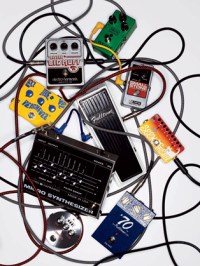 I walked into my garage this morning, which also doubles as my home studio and I looked around and saw several items that I’m not using at all right now. This includes a couple of solid state amps, a few pedals, and a sweet, digital recording workstation that I inherited from my brother that I never use because GarageBand is so much easier. My wife is great about all this, but she recently told me I have to do some spring cleaning. “Look at the big amp,” she said, “You haven’t gigged with that in a couple of years, and I haven’t seen you record with it either. Maybe you ought to get rid of some stuff… Besides, you need to make room for the shelving I want to put in here this spring”
Yikes! Looks like I have to take an inventory of what I can part with, but there is a rub to this. My friend Phil of Phil ‘n the Blanks said to me last week, “Don’t try to hide it, you’ve got GAS. I read your site all the time, and I’m amazed at all the s&*t you buy. Besides, if you get rid of some stuff, you’ll just replace it with other stuff…” OMG!!! How true. I found a place nearby that trades good-condition used gear for store credit. Damn! And on top of that, they’re a G & L guitar dealer! Maybe if I sell enough stuff…
The point? Sure, we gearheads go through periods of spring cleaning, but it’s more like gear rotation, as we rotate in new stuff for the stuff we no longer use.
Why not share your “spring cleaning” story?
Okay… What really makes a guitarist great?
Posted in guitar, guitarists, Guitars, Music, musicians on March 12, 2008| 14 Comments »
Just read a great article in Guitar Jam Daily entitled: Industry Insider: The Cobain Backlash and it got me thinking about what really makes a guitarist great. I know, this is such a subjective thing that if you ask ten different people, you’ll get ten different answers. But I’d like to posit an idea about what makes a guitarist great. The idea hit me because of its simplicity, and it’s simply this: Musicality. I know, rather nebulous but – at least in my opinion – it’s the one word that truly captures the many facets of a guitarist’s greatness. It’s also a term that isn’t limited by style or genre.
 I began thinking about musicality being the key to measuring guitar prowess several months ago after reading an interview in Guitar Player with Ana Vidovic, THE babe of classical guitar. In that piece she talked about really focusing on her musicality, and got me thinking about my own musicality, which then lead me to thinking about musicality being the true measure of a guitarist’s greatness.
 So what’s musicality? To put it simply, musicality is the relationship between instrumental technique and musical expression. Achieving a close relationship between the two requires a certain level of virtuosity in the instrument you’re playing and also a thorough understanding of the music being played: Where volume or rhythmic or expression characteristics can be applied within the body of a song. A truly musical musician will add subtle (and sometimes not so subtle) nuances to the things they’re playing; and while quantifying musicality can be a difficult thing, it’s very easy to discern between a musician with a high degree of musicality and someone who isn’t quite as musical.
Unfortunately, many of the guitar magazines out there seem to focus on shredders, so it has warped a lot of people’s views on who would or could be a great guitarist. In their view, the faster you play the better. But speed doesn’t mean at thing as far as musicality is concerned. But as long as we’re talking about speed, let’s look at a couple of pure, lightspeed-quick shredders: Yngvie Malmstein and Herman Li of Dragonforce. Herman Li is incredibly fast and he has tons of tricks up his sleeve. But listen to a few Dragonforce songs, and you realize that he’s using the same licks in practically every song. Where’s the musicality in that. On the other hand, Yngvie has so much more control not only over his speed and dynamics but also the tonal characteristics of the various phrases within his leads. So where Herman is a super great guitar technician, Yngvie is a true maestro.
But let’s not just look at shredders. Remember, musicality is not genre specific. What’s important is the relationship a guitarist builds between his or her guitar with the songs they play. From that perspective, let me list just a few of my favorite great guitarists:
- James Taylor
- Albert King
- Elliot Smith
- Joaquin Lievano
- Neal Schon
This by no means is a complete list. I listed guitarists from different genres. None of them were the fastest, and in Elliot Smith’s case, not necessarily a real technician per se, but each brought a very definite musicality to the table in all the songs they play(ed).
So next time you want to compare what guitarist is better, you might think about comparing them on a different level other than speed and technique and ask, “Just how musical is this player?”
Plug: The Tube Store
Posted in amps, gear reviews, guitar, guitar gear, tubes on February 29, 2008| 2 Comments »

Want to replace tubes in your amp? Look no further. The Tube Store is THE place to go for tubes. They have great prices, and more importantly, have tons and tons of knowledge about tubes. What’s even more amazing is they also know how a particular tube will sound in a lot of different amps. I’ve purchased tubes from these guys twice so far. Being a bit dense as far as tubes and electronics goes, I need a lot of help in choosing what to buy, and I’ve called them directly. In both cases, they’ve take a lot of time to explain and educate me on how a particular tube or combination of tubes will sound in my amp. We’re talkin’ old skool customer service here, folks! So with their permission, I’m giving them a plug here GuitarGear.org, and will also be displaying their logo on the site!
Great service needs to recognized!
Tone… It’s all in your hands…
Posted in guitar, guitar gear, guitarists, Guitars on February 18, 2008| 3 Comments »
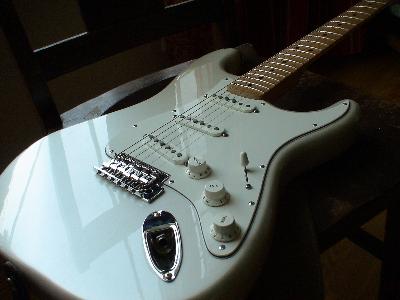
Read an interesting article by GuitarFlame (www.guitarflame.com) called: The science of playing the acoustic guitar where he talked about a very good shredder who picked up an acoustic guitar, and sounded… bad. That made me giggle a bit because I’ve seen the same thing with a lot of shredders. They sound horrible on acoustic guitars; actually I’ve heard several who sound pretty bad playing clean. As GuitarFlame put it, there’s more than meets the eye to playing acoustic. That’s certainly true, but I think it’s even more than that. I think a lot guitarists forget that 90% of their tone comes from their hands. Lots of guitarists, especially young ones, think it’s all in the equipment, but it’s not. Yes, equipment has a lot to do with the quality of the sound that you produce, but your hands and fingers are responsible for making the sound, and thus giving you your tone. How you articulate your fretting hand, where you pick, palm muting, finger picking, all these in their various combinations produce different tones. Pick closer to the bridge, and you get a tinny, chimey tone; closer to the neck and you get a fatter tone because of the larger amplitude of the string vibrations.
I’ve discussed at length with a close friend about this very topic – several times. He’s got the money to buy gear any time. And while he sounds a little better each time he buys a new guitar or amp, it’s only his sound quality that improves. I finally challenged him after this last round of acquisitions to not buy more equipment and work on his tone. I told him that the cheapest way to start sounding better is to simply… practice. Developing tone is free – you just need to take the time to do it.
It’s a Groove Thang…
Posted in guitar, guitarists, Guitars, performing, songwriting on February 16, 2008| 3 Comments »

A couple of months ago, I was having a drink with an old-school, elderly jazz guitarist named Patrick before my weekly gig at the restaurant I play at. To this day, I still don’t know Patrick’s last name, but he’s played with great Black jazz greats like Ellis Marsalis, and that whole “N’ah-lens scene, bruh,” as he calls it, and over the last few years that I’ve known him, I’ve really come to respect his unique wisdom and approach to the guitar. We don’t see each other often, and almost all of it has been via chance encounters at the bar. But when we do meet, we always talk about guitar, and life as a guitarist.
One day, we were talking about comping out chords to provide musical and rhythmic counterpoint against the vocals and bass, and out the blue he tells me (in his thick southern drawl – though I won’t try to write it too phonetically), “I can tell you got some chops, bruh. But you more into the groove thang than playin’ all sorts ‘a licks. I like that. Ain’t a song that’s been written that don’t need a good groove. Don’t let nobody fool ya. Let those mutha-f@#kas go off and do their noodlin’. Lots of them dudes can’t hold down a rhythm no-how!” My obvious response was, “Amen!” followed by a high-five and a triple soul-brother handshake.
I was taken by surprise by his compliment because I always feel I need to improve (I guess that’s why I push myself so hard), but I was even more amazed by what Patrick said after that because it underscored a sentiment that I’ve held for a long time: The groove of a song is where it’s at. Not only does it establish the rhythmic foundation for the song, it also forms the character and emotional framework for the entire piece. Without a foundation, you don’t have a song. Period.
Unfortunately, a lot of beginning guitarists focus almost entirely on learning lead parts, and dismiss playing rhythm guitar as merely executing a repetitious chord progression. They learn the chords as an afterthought, but don’t realize that they’re missing all the expressiveness that goes with a chord in relation to the body of a song. Playing good rhythm guitar isn’t just striking a chord on a specific beat – it’s all the stuff that happens within the duration of a chord that counts.
In my work as a music minister at my Church, I come across a lot of budding guitarists who can play leads like there’s no tomorrow. In fact, I have a 16 year old kid in my band whom I’ve had to make unlearn what he’s learned so he could learn how to play effective – and consistent – rhythm guitar. That kid knows John Mayer’s licks down cold, and a lot of other blues lead licks (which I’ve actually learned from him J ), but he couldn’t read a chord chart when he first started with the band and worse yet, had little sense of the rhythmic quality of playing guitar; in other words, no right hand technique. He’s not alone in this ignorance, and I place a lot of blame on guitar teachers for perpetuating this ignorance.
My message to them is this: Stop teaching leads to your beginning students. Teach your students how to play the damn guitar first. Teach them how to recognize the groove in a song, and teach them the groove!!! If they’ve got the groove down, then they’ve got the canvas to paint the colors of their leads. They’ll have a deeper understanding of their instrument, and how it fits in a song.
How important is groove? Don’t let me try to convince you. A couple of issues ago in Guitar Player, Rudolf Schenker and Matthias Jabs of the Scorpions were interviewed. Jabs is an incredible lead guitarist, but he mentioned in the article that playing good rhythm guitar was more important than playing leads. “After all,” he said (paraphrasing), “I’m playing rhythm guitar 90% of the time. Leads take up 10% of a song.” Then in the latest issue of Guitar World, Lenny Kravitz had some great insights into the importance of the groove of a song and playing good rhythm guitar. “You could have a guy that can play up and down the neck all day long, but playing a rhythm part consistently for four minutes without stopping is another story. It’s amazing to me when I see players that can play a lot of stuff, but they obviously haven’t concentrated on how to groove.”
So how do you learn how to groove? Listen to all sorts of songs from different genres. Forget about leads for the moment, and listen for the groove in each song. Learn the chord progressions, yes, but learn what each guitarist is doing in between chords. Are they scratching? Are they adding colorful motes of a couple of strings? Are they adding alternate shapes or a 2 or 4 sustain to a chord. Take that all in… But after having said all that, don’t copy what they’re doing note for note. Just like with leads, learn the technique, then incorporate it into your own style.
I’ll be the first to admit that learning to be great a rhythm guitarist is hard. In fact, I find it a lot hard to learn rhythm riffs than leads, mainly because with most leads, you can follow a pattern. But with good rhythm, you have to feel what’s going on with the song you’re playing then use different techniques to affect a certain groove. But remember, the groove is what you’re after.
Review: G&L Guitars Comanche
Posted in gear, gear reviews, guitar, guitar gear, Guitars on February 15, 2008| 6 Comments »
 |
G & L Guitars Comanche Solid Body
Review Setup: Solid Swamp Ash Body, Hard Rock Maple Neck with Rosewood fretboard. Z-coil pickups. Price as configured: $1700.00 (custom setups available) Summary: I give this 4.5 Tone Bones! The G&L Comanche is an excellent, hand-made, versatile guitar from the shop Leo Fender and George Fullerton started after Leo sold the Fender company. Incredible playability, and sweet, sweet sound from the Z-coil humbuckers. Not only that, with the flick of a mini-switch, you can engage all three pickups at once for a truly aggressive sound. This is a guitar that is not for the faint of heart. It wants to be played, not babied. Read on! |

I love writing this blog because it forces me to check out gear that I wouldn’t otherwise take a second glance at, and sometimes make new discoveries of gear that I didn’t even know existed. This entry is the result of one of those chance discoveries.
I thought I knew my guitar builders beyond the mainstream and semi-mainstream such as Gibson, Fender, PRS, etc. So it came as a HUGE surprise to walk into a small shop in Sacramento yesterday and see what looked like Stratocaster and Telecaster knock-offs hanging on the walls, only to be informed by the shop owner that the guitars were made by the prototype shop that George Fullerton and Leo Fender (hence, G & L) started after Leo sold the Fender company. Building on the traditional Fender body shapes, their creations extend the lines with solid and semi-hollow versions with various pickup configurations that reach far beyond their corporate counterparts. The results are guitars that push the envelope with design and innovation, while retaining the visual pedigree that made George Fullerton and Leo Fender famous in the first place. Also, all G & L’s are hand made. I know that alone may deter some players from even considering this brand, but amazingly enough, they’re not as expensive as you might think; more on that later. I had the chance to play the solid-body Comanche with tobacco sunburst through a ultra-sweet Rivera Venus 3 (I’ll write a review on that later 🙂 ).
At a distance, when you first the see the Comanche, you recognize the familiar body shape and pickup positioning, and you might say, “Hmmm… nice Strat.” Then, as you move forward, you see that the headstock is slightly different from a Strat, the bridge is really different from a Strat. The body is also a little narrower. Then you notice the absolutely weird-shaped pickups. These are an invention of Leo Fender. They’re actually two, hand-wrapped and offset three-string, single coil pickups with reverse polarity to eliminate hum. They’re almost like hybrid humbucker.
Look and Feel
The Comanche I played had a gorgeous tobacco sunburst finish overlaying a swamp ash body, with a hard rock maple neck and a rosewood fretboard. Surprisingly, this wasn’t a light guitar. In fact, it felt a little heavier than my own Strat, but the feel was luscious. The only ding that I gave the Comanche was that the back of the neck is gloss-lacquered. I personally prefer a silk finish, especially with a maple neck. It might be psychological, but that’s what I like. Speaking of the neck, it was a nice, C-shape, and the rosewood fretboard was a dream to play. I’m a big fan of rosewood fretboards. They provide great tactile feel, plus add warmth to the overall tone.
Sound
The best way to describe the tone of the Comanche is “a bit thicker than a Strat, but thinner than a Les Paul.” It’s this balance that is very appealing about this guitar. Just like the body style, with the sound, you recognize the pedigree, but it’s… different. Since I’ve played it , I’ve read some other reviews and most mentioned that the Comanche has an aggressive tone. It does, but that aggressiveness can be easily tempered by dialing back tone and volume controls; plus, tone also depends on the amp you’re using. I happened to test the Comanche out with a Rivera Venus 3, and the tones it produced were sweet and clean, owing a lot to the high amount of clean headroom available in the Venus 3. In typical Class A fashion, increased input gain produced nice pre-amp clipping, and with all three pickups engaged, this guitar could get as dirty as the best of ’em.
Unlike a Strat, the “hybrid” Z-coil pickups add nice amounts of sustain, which is further helped by the resonant swamp ash body. Bends and slow vibrato created nice, subtle overtones. On top of that, the touch sensitivity, even at lower volume levels, was very, very nice. All in all, I didn’t find the Comanche as aggressive as other reviewers found it; certainly more aggressive-sounding than a Strat, but as I mentioned, not as fat as a LP.
Click here to listen to some audio clips.
The audio clips sound really Texas-twangy, which is actually quite cool, but the clips don’t really show what this versatile guitar can do. The Comanche is capable of showing many faces, depending upon how you adjust it.
Playability
As I mentioned above, this baby wants to be played. The action is just right, and the neck is real fast despite the glossy lacquer finish on the back. The rosewood fretboard is especially nice, providing excellent tactile feedback. As I mentioned above, this guitar is not for the faint of heart. It’s meant to be played and coaxed and caressed to produce its wonderful song. While it’s easy to coax incredible tones from this guitar, its versatility might scare away those who won’t take the time to discover all its virtues.
I recommend this guitar for serious tone freaks who are in search of a “fatter” Strat sound, but want to retain that natural high-end ring. While not cheap, it’s also not unreasonable, especially for a completely hand-made instrument!
Review: THD Yellow Jackets
Posted in amps, gear reviews, guitar, guitar gear, guitarists, Guitars on February 12, 2008| 9 Comments »
 |
The THD web site says of the Yellow Jackets, “It’s like having a new amp…” and that’s an understatement! Pull your old tubes, pop in the converters, then plug in the EL-84’s and listen to your amp sing! Sometimes great things just come real easy! Read on…. |
If you follow this blog, you know that I just recently did a write-up of the THD Yellow Jackets. At the time though, they were just on order, and I hadn’t played with them yet. Well, they arrived today, and of course, I just couldn’t wait to get them installed. I opened up the packing box which revealed a little plastic box floating amidst a packing popcorn. I quickly pulled it out, opened up the box, and pulled out the instructions… er… what little of them there were. They basically just said, pull out your old tubes, plug in the converters, then plug in the EL-84 tubes that come with the converters. Turn your amp on, and play. That’s it. It took me all of three minutes to get the converters and new tubes installed.
In nervous anticipation, I plugged my Epi Explorer into my amp and switched it on, strummed a G chord on my clean channel and… No change. Just the same sweet sound produced by my pre-amp tubes. Then I switched to my drive channel and WAS TOTALLY BLOWN AWAY!!! You see, as much as I love my Hot Rod, the drive channel has been somewhat useless for me. Even with new 6L6GC tubes, the clipping was very rough and gritty. It was okay for some songs, but was just not pleasing to me, so I did the next best thing: I bought a couple of overdrive boxes to get that sweet pre-amp distortion.
But with the Yellow Jackets installed, I finally have a useable drive channel! The distortion is smooth, and it seems like the touch sensitivity has increased ten-fold! Not only that, it sounds like the converters introduce a little compression which really helps define the tone, and all this at bedroom levels!Mind you, installing the Yellow Jackets doesn’t reduce your volume (I think I might have mentioned that they do – my bad – they don’t). What they do is get the amp into breakup a lot earlier, so you can slather on the drive and distortion without having to shake the walls of your house! For home studio musicians, and most of us who play in small venues, being able to get great distortion tone at low volumes is akin to searching for the Holy Grail. I’ve tried all sorts of things from upping the input gain on my DAW to using modelers. In either case, the result is less than desirable. But with the Yellow Jackets, I’ve found the elusive grail, and I’m lovin’ it!
As I mentioned in the previous write-up, I ordered the Triode version of the Yellow Jackets. This essentially reduces my output to 5 Watts. Don’t be fooled – my amp’s still freakin’ loud. But what I’ve found in the last couple of hours playing with my three main electrics is that my amp is much more versatile. I can still crank up the volume, but I can get a lot more varied tones at lower volumes, and that is always a good thing.
By the way, you can’t buy the Yellow Jackets from THD directly, but you can get them for a great price at The Tube Store. I got mine for $99.95 (that includes two converters and two EL-84 tubes).
Introducing a New Gear Rating System!
Posted in buying gear, Effects, gear, gear reviews, guitar, guitar gear, guitarists, Guitars on February 12, 2008| 1 Comment »
After I wrote my last review on the DigiTech Bad Monkey, I realized that I needed to change the format of my reviews, so readers could get an at-a-glance impression of the review, and choose to read the full review. As a professional web developer, “stickiness” is always a big issue, and especially with reviews, some people just don’t want to take time to read a full review. But studies have shown that if they’re intrigued by some quick summary information, they’ll read on. So, starting now, all the reviews on GuitarGear.org will start out with a 1-5 rating called “Tone Bones,” plus a quick summary of the review. Here are the descriptions for each rating:
|
Gear has stellar performance, value, and quality. This is definitely top of the class, best of breed, and it’s a no-brainer to add this to your gear lineup! |
 |
Excellent gear, that exceeds expectations of its performance, value, and quality. Strongly consider purchasing this. |
 |
Satisfactory performance, value, and quality, and meets most expectations, but doesn’t have many standout features or qualities. |
 |
Sub-par performance, value, or quality. Gear may have some standout features, but they’re outweighed by negative qualities, or the application of this gear is so narrow that you’d only use it in very rare circumstances. Take a lot of time to evaluate whether or not you want this gear! Caveat emptor! |
 |
Poor performance, value, and/or quality. Don’t even consider getting this! |
Mind you, any rating system is going to be subjective, but I try to be as fair as possible, and for the most part, a lot of the gear I review I test in real-life situations. As I said above, what I want to accomplish with the rating system is to provide an at-a-glance summary of what I think of the gear in question!
Now on to reviewing!
GoofyDawg
On Yoda, the Force, and Playing Guitar
Posted in guitar, guitarists, Guitars, Music, musicians on February 11, 2008| 4 Comments »
If you’re a fan of Star Wars like I am, I’m sure you’ll remember the following clip from the “Empire Strikes Back:”
Try not… Do or Do Not… There is no try…
I tell you, Yoda had it right. Of all the sayings I’ve heard in the hundreds of movies I’ve seen over the years, these words have always struck a chord with me (excuse the pun). They’re powerful words, and have been somewhat of a guiding force in my life. As a former youth minister, I used to use these words often to help kids learn about the true nature of commitment. Let me explain a bit…
How we approach life has much to do with the language we use. If we think a certain way, we talk a certain way, then act along the same lines. With respect to the word “try,” I believe that it’s one of the worst words to use in our language. Why? Simply because it leaves us a way out. “Try” means “to attempt to do or accomplish;” the operative word being “attempt.” To me, success is all about commitment, and it’s black and white: You’re either in or you’re out; you either do it, or you don’t do it. There’s no middle ground, THERE IS NO TRY. “Try” indicates a lack of full commitment, of not being completely committed to what you’re doing, and that’s a huge problem for me.
To drive the point home further, what’s even worse is that the word “try” is passed off as an action (it’s a passive verb “to try”), and that’s the biggest farce of all! If you’re game, let’s take a test, shall we? Grab a pen and place it in front of you. Now, TRY to pick up the pen. If the pen is in your hand now, I didn’t say to pick it up. I said TRY to pick up the pen. Replace the pen and repeat, and only stop when you’ve successfully TRIED to pick up the pen. Remember, don’t pick up the pen. TRY to pick up the pen. As you can see, it can’t be done…
To realize the true nature of the Force, you have to be committed – 100%. This is true for anything in life. If you want to achieve any kind of success in life, you have to be committed to achieving success. You don’t just try – you have to do it. Of course, I realize that “success” is purely subjective. Far be it from me to tell you success from my personal point of view. But irrespective of how we might measure success, we have to DO the things that are necessary to achieve success in anything that we do.
So what does this have to do with playing guitar? Everything. If you want to be good at playing guitar, you can’t just try it out. You have to learn, practice, play, then repeat the steps – constantly. Playing guitar is a voluntary and deliberate action that requires knowledge and practice to gain proficiency. To me, “trying” to play guitar is like a monkey humping a football. It’s the right idea, but the wrong execution.
I wrote this latest entry in response to a couple of my kids wanting to “try” the guitar. Mind you I’m not really an intense, Type A personality. But I wanted to drive the point home that if they wanted to shred like Herman Li of Dragonforce (which is why they brought up playing guitar), they’d have to put in the time. It wouldn’t happen overnight. But I also added that everyone has their own pace of learning. Some take a shorter time than others; others take awhile. But whatever pace they go at, if they want to achieve that level of proficiency of technique, they’ve got to stick with it. We’ll see how it goes… 🙂

 Guitar Gear