Feeds:
Posts
Comments

Archive for the ‘guitar’ Category

For those of you who’ve known me for a long time, I’ve been a PC devotee for as long as I can remember, and used to scoff at the Mac as being a toy. But a few months ago, I decided to try out a MacBook Pro at my previous job, and what I thought would never happen happened. I fell in love with the Mac. I have to say that it really boils down to falling in love with OSX, which is an incredibly usable operating system. Anything before that, I’d still be scoffing at the Mac as being a toy. There were lots problems with OS9, and I just didn’t like the interface. But with the new version of the OS, it’s just incredible! But I digress…

To make a long story short, my former company closed its doors 3 months after I arrived – yikes! But the fortunate thing for me was that I had to opportunity to get some equipment in the company’s fire sale. I ended up with two G5 iMacs, and real nice Dell laser printer.  Included with my iMacs is a nice little music composition program called Garage Band. I’ve been playing around with it for a couple of days, and I just love it! It doesn’t have the features of my ProTools, but for spec’ing out songs, it is incredible!

Central to Garage Band is the ability to drag and drop loops onto the workspace to create the foundation for a song. It’s a very easy process. You can drop guitar loops, organ loops, percussion and bass loops – there’s lots to choose from, and within minutes you can have a full song constructed on your workspace. Then you can add your own instruments by plugging direct into your Mac, or using the built-in microphone (not really recommended as it’s a very sensitive condenser mic and it picks up EVERYTHING).

For instance, this evening, I got an idea for a new song. I browsed around the loops till I found an acoustic guitar, bass, and percussion loops that I liked, dropped them onto my workspace, and arranged pitch and tempo as needed. Then I plugged my ES-335 directly into my iMac using a 1/4″ to 1/8″ adapter cable. Now here’s the cool thing about plugging directly into your Mac: Garage Band comes with built-in amp modelers and effects such as a noise gate, reverb and even delay. There’s even two manual slots available to add distortion and specific types of amp models. As to the amp models, they’re not all that good, but they get the general idea across. I wanted to get kind of a Tube Screamer effect on top of a clean amp, and with a couple of clicks, I had it.

The great thing about Garage Band for me is that I now spend less time getting the foundations of a song laid down, and can concentrate on my compositional ideas. Looks like I’m going to have lots of late night dates with my iMac… 🙂
Read Full Post »

If you’re looking for the ultimate in clean tone, go no further. Fender is the clean standard, bar none, and the Twin Reverb is the definitive clean amp. Like the original, it is a no-frills, no fuss amp, providing 85 watts of beautiful clean tone. There is no drive channel with this amp, folks. You get a normal mode and a reverb/vibrato mode. That’s it. But the clean tone that comes out of this amp is absolutely heavenly! I played two guitars with it: Custom Shop Strat, and a Les Paul Standard Double Cutaway.

With either guitar, I couldn’t get the amp to break up unless I cranked the volume on the guitars and amp to max – then it got really ugly. So when I say this is the definitive clean amp, I really mean it. For those of you who want distortion coming from saturated tubes, you’re out of luck here, but that’s not bad. One of the reasons this amp has had such success is that it takes pedals very easily. In fact, you might consider it to be a “tone canvas” that provides the base clean tone which you can color in a variety of ways using pedals.

The big difference between the Reissue and the original is that the reissue uses a solid state rectifier as opposed to using a tube rectifier. This might turn off tube amp purists, but I can see the logic of using a solid state rectifier: It keeps the cost of the amp way down, and you know what? I doubt that you could actually notice a difference.

Another thing… typical of Fender amps, the Twin Reverb is LOUD! The 2 X 12’s move a lot of air, so be forewarned! All in all, the Twin Reverb is a great, tone-shapeable amp, definitely worth a look!

Read Full Post »

I read this great article by Tom Hess at Modern Guitars (thanks go to IG at igblog for turning me on to this online mag!) about the “little voices in your head” that talk to you when you’re playing, and it prompted me to write on something that I’ve never covered in any of my blogs; at least in a dedicated entry…

Tom pointed out some really good things to keep in mind, but I wanted to extend it even further; especially for those who play in much smaller venues than Tom, like myself who plays in restaurants and at corporate events and parties. So here are a few more points to add to Tom’s list:

  1. When you’re playing in smaller venues such as providing music for an event or party where you’re not the focus, don’t take it personally if you perceive that people aren’t paying attention to you. Remind yourself that you’re not the focus of the event, and are playing a more supporting role; however, that doesn’t mean that you play any less toned-down. What I’ve found is that if you continue to play at the standards you know you can play at, you’ll be pleasantly surprised at the results. I’ve gotten a bunch of extra gigs merely by playing background music, and singing and playing my heart out. People may not seem to give you the time of day during the event, but believe me, they notice when you’re putting your heart into it.A good example is when I play at my weekly gig at a local restaurant. Diners want to eat their meals and converse with each other, and pretty much consider me to be an added treat (though over the last few years, I’ve gained a loyal following). They don’t look at me, or will only occasionally make glances, but all in all, I’m not their primary focus. But time and time again, at the end of the evening, my tip jar is filled with bills, and I’ve given out several business cards. So the point of this is that people may not give you their direct attention, but your music remains in the periphery of their consciousness, and that’s very powerful.
  2. Always pay attention to the energy of your audience, and perform your music that will work with that energy. I no longer use a set list when I’m gigging at parties and restaurants, and let the energy of my audience dictate what songs I play. The same goes when I’m gigging with my band. We may have a plan in place, but we can also turn on a dime if any of us detect that what we’re playing isn’t working.
  3. Many years ago, my dad once told me, “People don’t really respond if you’ve shined your shoes, but they certainly notice if you walk around in shabby-lookin’ ones.” I didn’t really think too much of it at the time (though I do keep my shoes polished now 🙂 ), but my dad was trying to teach me about “excellence” and doing your best; not thinking about doing your best, but doing your best. I’ve taken that little saying with me, and applied it to everything that I do. Don’t settle for less than excellent, and at least for me, never give your audience less than your very best. They’ll appreciate it. Does that mean play flawlessly? Not at all. We all make mistakes, but it’s the total package that counts, not little mistakes that occur. Tom covers this well in his article.

So there are three extra points to add. Keep on playin’, and rock till you drop!

Read Full Post »

Posted the lyrics here the other day, and worked out the chords to the original version of the song. You can listen/see to how it goes here. If you want to listen to the actual original version, go to iTunes and search on “Miss Misery.” You’ll find “Miss Misery (Early version).”
Capo IV or V

Am   G       F           C

I'll fake it through the day

F/C                     Dm

with some help from Johnny Walker Red

C    Em

and the cold pain

F       C

behind my eyes that shoots

Esus-E

that through my head

Am  G       F       C

Two tickets torn in half

F/C               Dm

and a lot of nothin' to do

C   G/B

but it's all right

Am     G       D/F#

some enchanted night

F       C

I'll be with youEb    Gm            C           AbM7

Tarot cards and the lines in my hand

Eb        G/B       Am

tell me I'm wrong but they're untrue

G         F       C

I got plans for both of us

F/C                 Dm

that involve a trip out of town

C         Em        F   C

to a place I'd seen in a magazine

Esus-E

that you left lyin' around

Am      G       F      C

I can't hold my liquor but

F/C             Dm

I keep a good attitude
C   G/B
'cause it's all right
Am     G       D/F#
some enchanted night
F       C
I'll be with you

A                          F
I know you'd rather see me gone
C                 D/F#
than to see the, come the day
F           G      E/G#
I'll be waiting for you anyway
Am   G        F    C
Next door the TV's flashing
F/C                Dm
blue frames on the wall
C          Em          F    C
It's a comedy from the seventies
                     Esus-E
with a lead no one recalls

Am G F C
To vanish into oblivion
Dm
it’s easy to do
C G/B
and I cried to sleep
Am G
when you talked to me
D/F# F C
the day you said we were through

C G/B
but it’s all right
Am G D/F#
some enchanted night
F C
I’ll be with you

Read Full Post »

Have a Jam Session

This past weekend, I invited my band mates and their families over to my house for a barbeque. After we had all eaten our share of the feast, those who brought their guitars got them out, and we all sat around my patio table playing songs and jamming. We played for an hour and a half straight, going through a couple of gig books. At the end, I commented, “You know, you can tell we’ve been playing together for a long time because we all play off each other. There’s no egos, just an incredible comfort with playing together.” Smiles and nods of agreement followed. The memory of this past Saturday afternoon got me to thinking about what makes jammin’ with your buds so special.

  1. As I said to the guys, there’s no ego when you’re jamming. You play songs, do solos, sing harmonies, etc., spontaneously.
  2. There are no rules when you’re jammin’. You do what you do, and it’s all right.
  3. You also learn riffs that you didn’t know before. For instance, my bassist is not only a great bassist, but also an accomplished acoustic guitarist, and he taught me some riffs to songs that I never knew, and vice-versa.

Those are just a few things that make jammin’ special. But there’s one thing that I took away from that and that is during our jam session, I took the route of comping against what the other guys were playing. That was incredibly valuable to me because it allowed me to play with different chord shapes up and down the neck; taking a minimalistic approach – perhaps playing a simple triad or adding an 11th or 13th where appropriate. It was VERY cool.

So next time you get the chance to jam with your buds, try to comp and see where it takes you.

Read Full Post »

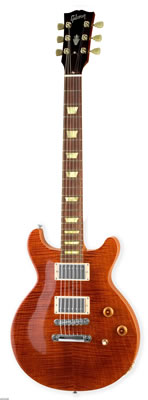
lpdc.jpgYou ever come across an instrument that just speaks to you? It whispers to your soul, “Hold me, play me, make me sing.” I’ve only had that happen to me three times before, and I own all three guitars. The Les Paul Double Cutaway (“DC”) is yet another one of those guitars that does that. After playing several of these over the past few months, I’m determined to get one by year end.
The DC is a simply a great-sounding guitar, with a much smoother sound than an LP standard, which can probably be attributed to its chambered body as opposed to the LP’s solid body. The chambered body also makes it much, much lighter than an LP. Also, it only has two knobs: Volume and Tone to control both pickups and a 3-position switch.

Tonally, I place this guitar smack dab between the ES-335 and the Les Paul. It’s not as smooth as the ES, but it’s also not as “big” in tone as an LP. For me, it’s the perfect balance.

Read Full Post »

Not many people know of Elliot Smith, and will never know more than what’s already known because he sadly passed away from an apparent suicide in 2003. I actually didn’t know about him until a couple of years ago when my eldest son, who’s into indie music, was playing one of Elliot’s songs on the computer. I knew of his music though because two of his songs were in two movies that I love: “Good Will Hunting” and “Keeping the Faith.” Elliot’s song “Miss Misery” was featured in “Good Will Hunting,” and that’s the song I wanted to share with you.

Through his life, Elliot Smith suffered from depression and drug abuse. His music both musically and lyrically reflect an inner turmoil that spoke volumes of the depth of his personal horror. In interviews, he’s withdrawn and quiet, and he looks as if he’s about to burst. It’s tragic that such a talent had to go through so much personal struggle. Anyway, back to the song…

I was listening to the “Good Will Hunting” version of “Miss Misery” on my iPod the other day, and I thought that it would be a good idea to learn the song. So I did a search for Miss Misery chords and lyrics and found some. Being on a new computer that didn’t have my iPod library, I decided to do a search on iTunes to download the song so I’d have it handy while I plunked out the chords on my guitar. I only found one version of the song and it was an early version that was purely acoustic guitar with no backing instruments. Since I would be performing the song on my acoustic, I downloaded the song to my computer.

Once the download completed, I was surprised that the key was completely different than what was recorded for the movie, and the lyrics were some of the darkest lyrics I had ever heard. Where the “Good Will Hunting” version’s lyrics leaned towards a guy trying to figure out his relationship, the early version, which I suspect was the original version bordered on suicidal. But they were so much more powerful than the movie version, and revealed a very dark side of Elliot Smith. Here are the lyrics to the movie version first:

Ill fake it through the day
With some help from johnny walker red
Send the poison rain down the drain
To put bad thoughts in my head
Two tickets torn in half
And a lot of nothing to do
Do you miss me, miss misery
Like you say you do?

A man in the park
Read the lines in my hand
Told me Im strong
Hardly ever wrong I said man you mean

You had plans for both of us
That involved a trip out of town
To a place Ive seen in a magazine
That you left lying around
I dont have you with me but
I keep a good attitude
Do you miss me, miss misery
Like you say you do?

I know youd rather see me gone
Than to see me the way that I am
But I am in the life anyway

Next door the tvs flashing
Blue frames on the wall
Its a comedy of errors, you see
Its about taking a fall
To vanish into oblivion
Is easy to do
And I try to be but you know me
I come back when you want me to
Do you miss me miss misery
Like you say you do?

Now here are the lyrics to the original version of the song:

I’ll fake it through the day
with some help from Johnny Walker Red
and the cold pain behind my eyes that shoots
that through my head
(note: He might be saying “death” instead of “that”, it was a bit garbled)
Two tickets torn in half
and a lot of nothin’ to do
but it’s all right
some enchanted night
I’ll be with you

Tarot cards and the lines in my hand
tell me I’m wrong but they’re untrue

I got plans for both of us
that involve a trip out of town
to a place I’d seen in a magazine
that you left lyin’ around
I can’t hold my hold my liquor
but I keep a good attitude
’cause it’s all right
some enchanted night
I’ll be with you

I know you’d rather see me gone
than to see the, come the day I’ll be waiting for you anyway

Next door the TV’s flashing
blue frames on the wall
It’s a comedy from the seventies
with a lead no one recalls
To vanish into oblivion
it’s easy to do
and cry to sleep when you talked to me
the day you said we were through
but it’s all right
some enchanted night
I’ll be with you
As I mentioned, these lyrics are so much darker and raw than the movie version.  I was so moved by these lyrics that I wept. This is the version I’ll be performing as a tribute to a guy who couldn’t take life but had so much to offer. Here’s a real good memorial video that features “Miss Misery.”

Read Full Post »

…that makes you sound good. It helps to have great gear, but it’s the player that counts. Don’t believe me? Check this out…

I saw this street musician playing in San Francisco a couple of weeks ago playing a crappy Fender Squire Telecaster, and a beat up amp that also doubled as his vocal PA. Guess what? He sounded amazing! The tiny amp was really tinny sounding, and his voice wasn’t always on key, but his guitar technique was nothing short of incredible. How could I tell this? Not just by watching, but by listening to how he squeezed out every bit of sustain from each note he played; how he transferred his passion from his heart into his guitar. The raw emotion in his playing was almost palpable. That got me thinking about my own playing…

Several months ago, I wrote an article called, “I’ve got GAS and I’ve got it bad!” At the time, I was on a buying binge, getting a new guitar, some effect pedals… just gearing up in general. Then a couple of months ago, I just up and stopped using more than half the pedals I bought. I attributed a lot of this to my Hot Rod Deluxe finally breaking in, but when I saw that guy playing on the street, it got me to thinking that it might’ve been something more; something inside of me that stopped me from buying more gear, and hooking up a bunch of pedals to my rig.

Now, I think that what happened was that I returned to a place that I forgot about: My heart. When I first made the move from primarily acoustic to primarily electric guitar, I was a bit uncomfortable playing. There was a lot more to think about in shaping my tone than before, and I was admittedly self-conscious about my technique. But I eventually reached a level of comfort. That’s when the seas parted, the skies opened, and a voice from Heaven burst forth proclaiming, “Now go forth and PLAY your guitar!”

There’s a big difference between just playing chords and notes, and playing with your heart. It’s not just how you approach your instrument, it’s how you FEEL your instrument and adjust to the subtle nuances within a song. It’s the difference between simply being musically mechanical and being truly musical. I forgot that, or rather, I was distracted from that for awhile, and the thing is, to be truly musical, you don’t need effects or great gear. Yes, that stuff provides added enhancement, but no one or no thing can give you musicality. That comes from you.

I’ve returned to that place where I can really feel what I’m playing, and I’m really loving what I’m hearing – and a bit surprised that I’m actually pleased with how I’m sounding now. And though I’ll most probably buy more gear in the future, it will be with the intent of enhancing my music. I’ll take a much more utilitarian approach and not get trapped into having a piece of equipment because it’s considered by others to be top-of-the-line. I fell into that trap once. I won’t do it again.

So you don’t have to spend a lot of money to sound good. Just look at that guy on the street. He knocked my socks off. But to bring even more legitimacy to this argument, let’s look at some great players who took average or less than average gear and did incredible things with them:

There are two guys I think about immediately: Willie Nelson and Eric Clapton. Willie played this old classical guitar that had an “extra hole” in it that his “Daddy bought me.” Clapton bought three second-hand Strats for $100 each, mixed and matched necks and bodies and produced “Blackie,” his signature guitar that sold for over $1 Million at auction. In each case, these guys took marginal equipment and built careers on them. So tell me it’s not the player… 🙂

I’d love to hear your thoughts…

Read Full Post »

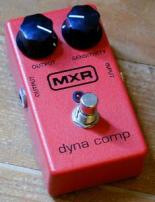
379_image_med_mxr-dynacomp.jpgI’ve been searching for a decent compression/sustainer for a long time, and I’ve tried out a bunch over the last year. Surprisingly enough, it wasn’t until recently that I decided to check out the MXR DynaComp. The DynaComp has been around for a long time, and has several faithful followers. Unfortunately, I’m not one of them. It’s not that this is a bad pedal – it’s pretty rugged, very simple to use, but it just doesn’t have what I need for the type of music that I play, which at the moment is bluesy and I use minimal overdrive. But I digress. This won’t be a long review. I’ll just give you my assessment…
I tried this out with a LP Double Cutaway and an American Standard Strat. For amps, I used a Fender Twin Reverb and a Marshal JCM 600 combo. Here’s what I found:

For clean playing, if you want a transparent box, this is not the box for you. It colors your tone quite a bit, even at lower compression levels. This is okay, if that’s your aim, but for me, since I prefer a bright sound, the amount of squeeze with this box was just too much for my tastes (though my dad who was with me liked how it sounded with the LP DC running clean through the Fender Twin). On the positive side, there was lots of headroom with this pedal, and no noticeable signal noise unless I cranked the intensity.

Where this box did shine was with the JCM in the high gain stage. The DynaComp really added a nice level of definition when used with heavy distortion (Note: my dad’s 75 year old ears couldn’t take the loud distortion so he waited outside the sound room :)). That was something I really dug about this box. The JCM 600 is one of those Marshall classics that has lots of crunch. The DynaComp smoothed that out a bit, but didn’t ruin the tone in the process. Nice.

Overall, this is a nice pedal if you regularly play in overdrive mode. But as I said, if you’re looking for a transparent compressor to use in your clean channel, I’d look elsewhere.

Read Full Post »

I just noticed something: This blog is called Guitar Gear, but I haven’t reviewed much gear! That’s going to change right now! The first piece of equipment I’m going to introduce is the BBE Sonic Stomp.

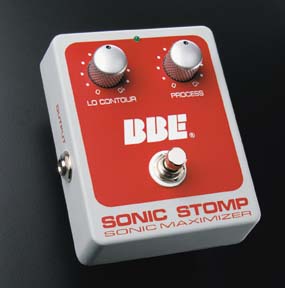
sonic_stomp_4in.jpgBased upon BBE’s very successful line of “Sonic Maximizers” – the Sonic Stomp actually uses the same technology from its 482i rack mount unit – this is a very unique pedal, and I’m going to go as far as saying this: YOU MUST HAVE THIS PEDAL. It’ll be the best $99 you’ve ever spent. So what makes it so special?
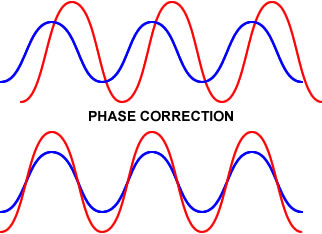
Without going into technical details, the Sonic Stomp corrects phase differences that occur between low and high frequencies coming out of an amp’s speakers; technically called “envelope distortion;” the net effect being that dramatic phase differences between low and high frequencies can produce what we perceive as a “muddy” or in some cases a “muted” sound. By time-aligning the frequencies, the signal is restored to a more accurate state, thus producing a much clearer, cleaner tone, and this is the gist of what the BBE Sonic Stomp does.

Now here’s the catch to this box. Unlike other pedals that either add drive or modulation to your signal, this pedal does signal correction, and in most cases you won’t even notice that it’s on! However, you’ll miss it when it’s off. It’s hard to articulate what that difference is. Let’s just say that with this pedal on, your already good tone just sounds that much better.

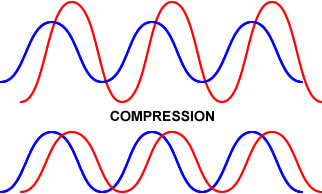
Now don’t confuse what this pedal does with a compressor. A compressor flattens gain, limiting the louder sounds and loudening the quieter ones (with makeup gain), thus creating a perceptibly fatter tone. This is very different than phase correction. See the figures below:

phase.jpg comp.jpg

I realize this is a fairly simplistic perspective, but as you can see, phase correction aligns the waves without acting on their amplitudes, whereas compression corrects amplitude but doesn’t work on phase.

So why might people confuse the two? Simply because when you correct phase, tonal qualities that you didn’t realize existed suddenly come to life. For instance, before I got this box, my amp had a real big, boomy tone. When I introduced the Sonic Stomp into my chain, my amp lost some of its boominess, which resulted in a much richer tone. It’s easy to mistake this as tone fattening as the lows got smoothed out and there seemed to be much more midrange, but I wouldn’t call it fattening – it’s more tone clarification – and this box it great at that!

So if you’re thinking about getting a tone shaping box, give the BBE Sonic Stomp a good look.

Read Full Post »

« Newer Posts - Older Posts »