Check this kid out… Only eight years old! Incredible. Thanks to GG reader Pablo Levinas for pointing me in this kid’s direction. Just like Sungha Jung, Lucciano is a musical prodigy. Can you imaging how he’ll be playing once he’s a grown-up? It’s scary to imagine. Hopefully he’ll not be exploited and turn into burned out child star. But for now, just check out what this kid can do.
Archive for the ‘Guitars’ Category
Top Dawg: Lucciano Pizzichini
Posted in guitar, guitarists, Guitars, Music on May 20, 2008| 1 Comment »
So You Wanna Be a Rock Star Guitarist…
Posted in guitar, guitarists, Guitars, musicians, rock star, tagged rock star on May 19, 2008| 5 Comments »
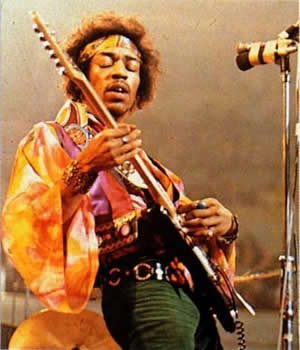
A while back, one of my kids asked me, “Dad, what makes a rock star a rock star?” Being a dad who is also a performer, I didn’t want to give him the trite response and tell him to look up rock star on Google or make comparisons between rock guitarists. I wanted to provide a certain level of intellectualism to my answer, so I told him to hold on a bit, and I’d let him know what I came up with…
So after a lot of thought, I came up with what I think could be a reasonable explanation of what makes a guitarist a rock star. I call it the “Three E’s.” Here goes:
Excellence, Exuberance, and Entertaining
Excellence – A rock star guitarist excels at playing and musicality. Don’t confuse this with speed. Speed can be acquired. You need excellence in musicality as well as technique. Case in point? Neil Young. Okay, not necessarily that good technique-wise, but more than makes up for it with his musicality.
Exuberance – …and passion. You have to be exuberant and passionate about playing your guitar – and it has to be genuine. Audiences can read right through false passion or a boring disposition, or just plain fakery. Look at someone like Steve Vai when he plays. That’s a dude that just exudes passion and exuberance for his instrument. Others that come to mind are Santana, Frampton, Satch, Stevie Ray, etc…
Entertaining – Finally, a rock star guitarist is far from boring. It’s not that they have to jump around on stage. But by their very nature, they engage their audiences, and draw them into what they’re playing. Look at BB King. Damn! What an entertainer! The same would go for Michael Shenker. People might say that he just stands there, but there’s something about him that just completely draws you in when he’s playing.
So to me, a true rock star guitarist possesses a combination of the three E’s in various balances, but they always possess all three characteristics.
Note that I used a picture of Jimi. He was one of the rare guitarists that had enormous quantities of all three rock star guitarist characteristics. There are few that I’ve seen in my lifetime that were huge on all three. Another would be Prince.
Care to share more?
Review: BOSS CS-3 Compressor/Sustainer
Posted in Effects, gear, gear reviews, guitar, guitar gear, Guitars, Music on May 15, 2008| 9 Comments »
 |
BOSS CS-3 Compression/Sustainer Summary: If you’re looking to really squeeze your signal, this box’ll do it. Pros: 4 knobs provide great flexibility to shape your compression. For the money, it’s a pretty good deal. Cons: Has probably some of the most severe compression I’ve ever experienced, which results in a loss of tone. Sounds okay with solid state amps, but horrible with tube amps. Price: $89 Street |
 Back when I was looking for a compressor to fatten up the tone of my Strat to compensate for the really bright Tex-Mex pickups, I evaluated a bunch of compressor pedals, from the high-end (Maxon, Demeter) to the low-end, one of which was the BOSS CS-3 and MXR DynaComp.
I recently went through my review notebook and saw that I didn’t do a review of the CS-3, so here goes…
To start with, if you don’t want to read the entire article, if you’re a hard-rock/metal player, I think you’ll like this pedal. It’s real squishy, and combined with an amp that produces a tone of low-freq, it will definitely get you that super-compressed distortion. On the other hand, if you’re a jazz/blues or classic rock player, you will not like this pedal as it can really muddy your clean tone.
That said above, the CS-3 is not a bad pedal. It’s well-made, and compared with other BOSS I’ve owned in the past, it is probably just as reliable. But the CS-3 follows in pretty much the same formula as other BOSS pedals: You get decent tone for a relatively cheap price. They’re made for a mass market audience. Not that that is intrinsically bad, but if you’re a real tone freak, it won’t be up to par tonally with what you’ve come to expect. But high expectations aside, as I said, the CS-3 is not a bad pedal, and with the right amount of tweaking you can get a decent tone from this box.
One thing I really liked about this pedal is its configurability. It has four knobs for Level, Tone, Attack, and Sustain. The Tone knob really comes in handy as you increase the sustain, as I found that increased levels muddied the high-freq tones. The Tone knob helps to compensate for that to a point. But dial in too much highs and your tone becomes really “tinny” irrespective of the guitar you use. Having an Attack knob is a pretty cool feature as well, as you can adjust how fast the compression kicks in. Not bad for a $89 pedal.
The unit I tested was a little noisy when engaged, not matter how much I tweaked the knobs. It wasn’t so apparent when tested with a Roland Cube 60, but with a tube amp (tested on a Fender Twin and 65 Super Reverb Reissue), the soft hiss was a bit annoying. But with either type of amp, as I mentioned above, this thing really squeezes your signal to the point that there’s a noticeable difference in tone between the unit being engaged and not engaged. In comparison, my Maxon CP-9 Pro+ when engaged retains my tone even at higher levels of compression, but just “feels” fatter. Very transparent.
All in all, the BOSS CS-3 is a decent pedal. For someone on a budget who wants to add some compression to their signal, as I said above, this will do the job. But if you’re looking for transparency, this isn’t the pedal for you.
New Book: Heaven and Hell by Don Felder
Posted in guitar, guitarists, Guitars, Music on May 13, 2008| 6 Comments »
 On our local classic rock station, KFOX, we are lucky to have Greg Kihn as the morning DJ because he frequently has fellow classic rock celebs on his show either on the phone or in the studio. The cool thing is that most of his guests are guitarists, so I listen to his morning show a lot. This morning, he had Don Felder, former lead guitarist for the Eagles, talking to him about how he did his leads, and what his experience was like being in the Eagles. It was a very insightful interview. During the course of the interview, Greg pumped Don’s book, “Heaven and Hell” that chronicles his 26 year involvement in the band, from its heyday to his dismissal.
Personally, I’ve been waiting a long time to hear his side of the story behind his being fired. I originally became curious about the back story when the Eagle announced their last tour and that Felder would be a “contractor.” I don’t know if anyone saw the show in person or on TV, but it was clear that he was an outsider to the band. Very weird. But now that the book is out, it’ll be good to hear the other side.
Product Announcement: The Vox Virage
Posted in Guitars on May 12, 2008| 9 Comments »
 After reading hundreds of new guitar announcements, I’m normally not too intrigued when someone comes out with a new one, unless they’re really special. The last time I got really excited about a new guitar announcement was the PRS DGT, but the latest guitar from Vox is VERY intriguing to me for a couple of reasons.
First, it’s a Vox, much more known for their amps, but over 30 years ago they did build guitars. Secondly, the features in this guitar make it seem incredibly versatile.
I need to find a place to play it! If you have any information on this guitar, please post it!
You Can Never Get Enough…
Posted in Guitars on May 6, 2008| 2 Comments »
…of BB King. Check out this video on YouTube of him playing “The Thrill Is Gone” with Gary Moore, another blues great.
The way those two play off each other is incredible!
Anyway, the video inspired me to put together a jam track based upon “The Thrill Is Gone.” It’s not exactly the same chord progression, but has a similar vibe. The progression goes: Am Dm Fmaj7 Em7 Am in a 12-bar blues.
You can play the clip here:
Or click here to download it and loop it on your computer.
In any case, have fun! I must’ve played with this for an hour straight! 🙂
A “New” Practice Technique…
Posted in guitar, guitarists, Guitars, Music on May 5, 2008| 1 Comment »
 Just read an interesting article in the new issue of Guitar Player, where guitar great Wayne Krantz described a different kind of lead practice technique that eschews the use of scales and modes, and instead focuses on how the lead sounds irrespective of chords or fingerings. Wayne describes this practice technique as playing in a “zone.” A zone is only 4 frets wide, and you have stay within that zone, and pick only the notes that fall within that zone while you’re practicing – and importantly, you have to be disciplined to not venture out of the zone.
The idea behind this technique is that it forces you to let go of the patterns and scales you’ve learned and/or memorized, and makes you explore the tonal possibilities from within a zone.
In the article he uses something like a Abmb5b7 chord structure to start out with then, sets his zone from the 5th to the 8th fret, essentially in an “A” position. But because the base chord is a half step down, you really have to think about what you can pick within that zone.
I tried it out, and it’s a lot harder than it appears. Without thinking about it, I went to my tried and true pentatonic minor scale, and it TOTALLY SUCKED against this chord! HA! So I just started playing around with the notes and was able to come up with some interesting – to say the least – leads. Here’s an example. The chord progression is Abmb5b7 / Gbm / Cbm7 / Gbm / Abmb5b7 / F#m / Cbm7 / Dbm7 / Gbm7. The lead’s pretty rough, but the cool thing is that it’s all spontaneous.
The fallout of this practice technique is that it really helps you be spontaneous with your leads. Once you figure out what works and what doesn’t in a “zone,” you can really start exploring. For instance, in the example I gave above, I just let GarageBand record in loop mode several times while I essentially just messed around. The result is a bit rough, but this exercise taught me a completely different way of exploring the fretboard.
Another cool thing is that you can move your zones around. I used the 5-8 zone, but I’m going to experiment and try something like the 13-17 zone to see where that takes me. Very cool indeed!
Monumental Things Are Happening!
Posted in GarageBand, guitar, guitar gear, Guitars, Music, recording, tagged GarageBand on May 2, 2008| 3 Comments »

As some might know, I’ve spent the last year working on my first album, “You Stir My Soul,” which is a collection of contemporary religious songs I wrote for the Catholic Mass. About three weeks ago, I finished the album and submitted it to a digital distribution company to place on iTunes. They indicated that it would take about 8-10 weeks before it was available, but last night, I noticed that it had already become available!
This is a huge milestone in my life! I don’t have any illusions that it will elevate me to superstardom. But I’ve accomplished what has been a lifelong dream for me.
Admittedly, a couple of the songs really aren’t production quality, but I learned a lot about the music production process since then. The ones that have a much clearer sound to them are the songs I recorded later in the process. Oh well, first album, lesson learned.
Recording Your Guitar At Home: Lessons Learned
Posted in amps, guitar, guitarists, Guitars, Music, musicians, recording on April 28, 2008| 4 Comments »

Getting a good guitar sound on a recording can be a real challenge when recording at home. It’s not that it’s difficult mechanically, it’s difficult because of the environment. Working around the limitations of the environment is really the challenge. For instance:
- Most of us don’t have a dedicated sound-proof room; thus, we get a lot of sound leakage that translates to neighbors (and family) screaming to turn down the volume.
- Furthermore, most home recording areas aren’t optimized for a “flat” acoustic response. You can do some dampening to reduce room reverb, but you can’t eliminate it entirely.
- Finally, most of us don’t have expensive recording gear.
But despite all that, it’s still possible to record great, high-quality guitar tracks. I’ve done a lot of recording at home in the past year and thought I might share some of the things I’ve learned in capturing good guitar sounds. Mind you, I’m no audio expert. Everything I’ve learned comes from pure trial and error.
- First of all, invest in a decent tube pre-amp. PreSonus makes a great one called the TUBEPre. You can read my review on it here. Even if you use a dynamic mic that will draw power from your line, a pre-amp will boost your mic signal, and at low-volume levels, this is absolutely essential. Also, a pre-amp will add a lot of warmth to your mic signal. In my mind, it’s an essential piece of gear.
- Ribbon mics are great for adding depth to your sound, or for recording two amps at once. Unlike unidirectional or cardioid mics that have a reception field that’s in one direction, ribbon mics record in a figure eight pattern in two directions. What this means is that it’ll pick up the ambient sound behind the mic as well. I typically place my ribbon mic about a foot away from my amp cab, then place a 3/4″ thick piece of plywood about a foot behind the mic. This helps reflect the sound back to the rear of the mic. And as long as you keep the volume low on your amp, you won’t get feedback.I also have used my ribbon mic to record two amps at once. For instance, in this song, in the overdriven guitar part, I ran a dry signal out to one amp, then used the other signal to run through my board into the other amp. The net result was it sound like I was employing a lot more output than I actually was. In fact, you could speak (with just a tiny bit of effort 🙂 ) over the combined volume of the amps.
- Use two mics to record an acoustic guitar. I read somewhere that using an “X” pattern aimed at the sound hole is really effective. Personally, I use my ribbon mic pointed at about a 30″ angle at the center of my guitar’s body, then use a dynamic mic pointed straight at it. The ribbon mic is about 6-8″ away from my strings, and the dynamic is placed about 10″ inches. The result is a very deep, very natural sound that captures the natural tones from your acoustic guitar.
- Because we’re talking low-volume here, there are pedals that you should have that will help quite a bit in getting a good sound:
a. First, get a decent compressor pedal. I’ve got the Maxon CP-9 Pro+, and just love it. This will help fatten your signal, and give the impression that you have a bit more amp than you actually have.
b. Invest in a couple of decent overdrive pedals. Personally, I use three: a DigiTech Bad Monkey, an Ibanez TS-808 and a Fulltone OCD. I will either use these individually, or “stack” them in a signal to produce varying levels of overdrive. I know, many purists want to get that power tube saturation sound, but at low volume levels, that’s not practical. Besides combined with a compressor, you can get pretty close. - As far as reverb is concerned, I tend to use very light spring reverb, then layer reverb on top of that in my recording program. It makes it much easier to control on the recording. Some folks use dedicated pedals, which is fine, but I prefer to capture as much of the raw signal as possible, then layer reverb or other effects on top of that raw, dry signal. However, this doesn’t necessarily apply to time-based effects like chorus, flange, vibe, delay or phase. I’ve never been satisfied with the sound quality of software based time-based effects.
- There’s nothing like the sound of a tube amp. Unfortunately, with larger tube amps, they just don’t sound good unless they’re cranked. But there are a number of low wattage “practice” amps that actually produce incredibly good sound if you close-mic them. The one I use in particular is the Fender Champion 600. Epiphone also makes the Valve Junior, which has gotten some great reviews. Another low-wattage amp that I’ve been considering is the Blackheart Little Giant BH5-112, which is a switchable 3W/5W amp with a 12″ Eminence speaker. Very cool. Blackheart also makes a 7W/15W version called the “Handsome Devil,” that is also worth a look.
As I mentioned above, I’m not a professional sound guy, and I certainly wouldn’t call myself a recording engineer. But I recorded my first album over the past year entirely at home, under less than ideal recording conditions. It’s entirely possible to do. You just have to find ways to work out, work around and work with the limitations of your environment.
Got any other tips? I’d love to hear ’em!
Customer Service – When It Comes to Gear, It Really Does Matter
Posted in gear, guitar, guitar gear, guitarists, Guitars on April 25, 2008| 1 Comment »
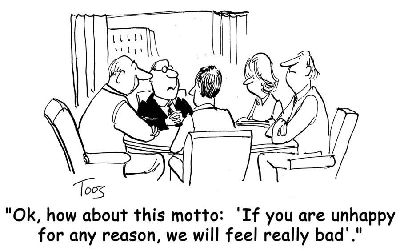
If you’re like me, you dread calling up any company’s customer service center. Nowadays you never know if the person on the other end of the line is even in the same country as you. But when customer service is good; that is, the rep listens attentively to your problem, and can offer a solution, or short of that, does his or her best to solve your problem, you come away feeling good. Perhaps more importantly, the “feel-good” image you get about the company will most likely make you a repeat customer.
About a week ago, I called up the Jim Dunlop company in search of some parts. I stupidly misplaced the extra wires that came with my Dunlop DC-Brick, and needed to get replacements (and some extras just in case). I got routed to a tech support guy who helped me get the right part numbers, and he transferred me to a sales rep who promptly took my order – all in the space of about 3 minutes. Very quick, very efficient. I was impressed.
A couple of days ago, the wires arrived. I excitedly opened the box, and my heart sank as I realized that they were the wrong wires! I didn’t get mad mainly because I thought that I might have not provided a good enough description for the tech to get the right part. But I resolved to call the company and make a new order for the right wires.
I called them up yesterday, and mentioned to the tech that I probably ordered the wrong wires, and said, “What I need are the wires with the 1/8″ male on one end, and the center-negative female on the other. The part number for the ones I ordered were […].” The tech replied, “Hmmm…. that’s actually part number for those wires, but you got 1/8″ males on both ends. Our mistake. In that case, I’m going to take your information down right now and we’ll ship you 4 of the correct parts free of charge.”
Wow! I was so impressed with that level of customer service that I offered to pay the shipping, but he insisted that since it was Dunlop’s mistake, they needed to rectify the situation. Now that’s great customer service, and even though I hadn’t been a Dunlop customer prior to this, they’ve moved to the top of my list for companies that I know will provide great customer service should I have a problem.
Customer care is important, folks. Since I’ve become a real gear addict, it is one of the things that I consider before purchasing anything. Especially if I’m going to buy something that’s expensive, I call up a company’s customer service to ask questions and see how they respond. If I don’t feel comfortable with their customer care, I don’t feel as comfortable with buying the gear. Take, for instance, this review about the PRS DGT. A reader, Jimi Ray Clapton, had been waiting 9 months for his new DGT, and it still hadn’t come. He even spoke to PRS himself at a show with no results. Every time he called, there were further delays with very little action or follow-up. Consider that if you spend a few thousand dollars on a piece of gear, you want some attentive customer service! I would at least…
I know it’s a bit of a pain, but do yourself a favor and include customer service as part of your buying decision. You’ll want to know that the company you’re dealing with is going to be responsive to your needs.
 Guitar Gear