Feeds:
Posts
Comments

Archive for the ‘Guitars’ Category

THD Yellow JacketOne of my first posts on GuitarGear.org was entitled, “Turn that F&%kin’ Thing Down!!!.” In that post, I introduced the Dr Z. Air Brake attenuator. Yes, I’m still using it, but I continued to search for that volume sweet spot. Even with an attenuator, my volume’s still pretty loud, but it’s much more controllable now than when I didn’t have the attenuator. However, an attenuator can only take you so far, because it is essentially a power resistor. It doesn’t reduce your power in any way. But all that’s changed…

Introducing the THD Yellow Jacket

I discovered this in the latest issue of Premier Guitar in the DIY amp column (don’t remember the original column title, sorry). Essentially, the Yellow Jacket is a combination adapter/tube replacement for 6V6, 6L6, EL34, and 7591 tube amps. Using lower-output EL34’s the output wattage of your amp is significantly reduced, thus lowering your amp’s volume. The following comes right off the THD web site:

What are Yellow Jackets®?
Yellow Jackets® Converters are a type of specialized adapters which permit the use of EL84/6BQ5 power tubes in place of 6V6, 6L6, EL34, and 7591 types.

How do they work?
They give you simple Class-A operation from any amp.Yellow Jacket® Converters not only rearrange the pin locations of the tubes, but also provide the necessary current limiting on the screens and cathode as well as blocking the amplifier’s grid bias voltage, while configuring the EL84 in a Class-A, Self-adjusting cathode-bias circuit. In other words, there are no adjustments to make and no modifications necessary, you simply plug the Yellow Jackets® into the amp’s output tube sockets, (in cathode-bias amplifiers) screw the ground wires under one of the output tube socket mounting screws, plug the provided EL84’s into the Yellow Jackets®, turn on the amp and play.

How will they change my amplifier?
It’s like getting a whole new amplifier! In Champ and Deluxe type amplifiers, the Yellow Jackets® output is smooth, strong and more even than with the stock 6V6s. When the Yellow jackets® Converters are installed in larger amplifiers intended for 6L6s or EL34 output tubes, the high plate and screen voltages are reduced as well as current limited to protect the EL84 and to drop output power. When a pair of Yellow Jackets® are used in a Marshall 50 watt or similar amplifier, the overall power drops to about 20 watts and takes on more of the character of an old Vox AC30. The distortion is smoother and more even and the output is both substantially reduced and more compressed due to the Class-A nature of the Yellow Jackets®. In a 100 watt amp like a Twin Reverb or Marshall 100, either two or four Yellow Jackets® can be used. If only two are used and the other two sockets are left empy, the output is dropped to about 20 watts. With four in place, the amp puts out about 40 watts and takes on a whole new warmth and richness.

In the cases of the YJ7591 converters, the overall ouput power remains the same, but the sound becomes fuller and the extinct 7591 are replaced with common and inexpensive EL84 tubes. In old Ampeg Reverb Rockets and the like, you experience a warmth and sweetness that you could never get with the now unavailable 7591 tubes.

Will they hurt my amp?
No! Yellow Jacket® converters are safe for all amplifiers and transformers. As all Yellow Jacket® Converters internally limit voltage and current they put no extra strain on amplifiers’ power and output transformers or internal components. Using the Yellow Jackets® in higher powered amplifiers actually reduces the strain on the transformers and internal components because it reduces the overall wattage of the system. Furthermore, the heater (or filament) current of the EL84 is lower than that of the 6L6, EL34 or 7591, so the Yellow Jacket® will reduce the strain on the filament windings of the power transformer as well.

I called THD about the Yellow Jacket to find out what was appropriate for my amp. Most Yellow Jackets come in two flavors: a Standard that lowers your output by 50-70%, and a Triode version that lowers your output by 70%-90%. I went with the Triode version for my Hot Rod so I could essentially have a 5Watt amp. According to the guy at THD, the great thing about the Yellow Jacket is that you don’t lose your tone. Just reduce your power. The Triode version also has a smoother distortion and earlier breakup – at lower volumes, which is what I want for my home recording, and playing Church.

So if you’re in search of lowering your volume but not having to invest in a smaller amp, look no further! The THD Yellow Jacket is it!

Read Full Post »

If you’ve watched shows and/or videos of the birth of rock and roll, you’ll know that the pundits say it was the Brits who embraced the blues, then later morphed it into what we now know as Rock and Roll, invading the US with the fresh sound of The Beatles, Led Zeppelin, The Who, The Yardbirds, and many other Rock greats. But despite that, the blues lives on in Britain, and I’ve come across an absolutely excellent blues guitarist named Aynsley Lister. This guy does the blues – and it’s real good! Check out this video below:

Kind of reminiscent of SRV for sure, but that’s not necessarily a bad thing – especially if you can pull it off, and man, does this dude pull it off! Enjoy!

Read Full Post »

image-250.jpgI mentioned in a previous post that I played for an audience of 750+ folks. What a rush! Anyway, there was a great photographer flitting about the place, and he happened to get some shots of the The Dawg playing, so I thought I’d share them to put a face to the name. Based upon the capo position, I think I was playing “Something in the Way She Moves” by James Taylor.

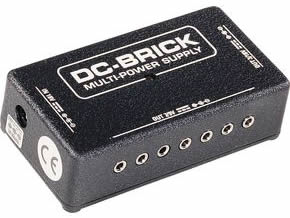
image-251.jpg

Read Full Post »

Okay, I admit it: I have a slightly obsessive personality. I completely lost track of time, and realized that I’d been practicing over three hours, trying out various riffs that have been running through my head for the past few days. Both my hands are numb, and the tip of the middle finger on my left hand is bleeding. I didn’t notice that until I started typing an e-mail and saw that my computer keyboard had little red fingerprints on the “e” and “d” keys. Yuck! But hey! I don’t mind. It was worth getting the licks down.

So what drove me to this single-minded, totally focused state where I lost all track of time? Simple: Developing vibrato and sustain using as little distortion as possible, or none at all; in other words working the strings with my fingers to achieve sustain and expressiveness. After listening to some of my favorite guitarists the past few days while on vacation, I realized that even though they use distortion, it’s very, very light; a lot lighter than what you’d think at first blush. But what makes them sound so expressive, even though they might be shredding is the subtle nuances they add to their solos employing several types of vibrato to eek out every bit of tone from their strings. It’s not easy! Not easy at all! And I’ve got the bloody finger and aching hands to prove it.

That’s not to say that I haven’t done this at all. But in all my years of playing, this was really the first time that I really focused on it. I’ve been a big promoter of playing as few notes as possible to get my point across, partly because I can’t really play all that fast, but also because some of the best solos I’ve ever heard don’t have a lot of notes – they’re just entirely expressive. Horn players know the value of a long-sustained note. It may start out as a plain old Bb – whatever – but as you apply vibrato to sustain the note, it changes color over time. Just listen to some Miles Davis, and you’ll see what I mean.

I’m now a true believer that 90% of your tone comes from your fingers.

Read Full Post »

Digitech Vocalist Live 4

I know what you’re thinking… this isn’t really guitar gear… BUT it only works by analyzing guitar chords, so it falls squarely in the guitarist’s tool bag. So… what is it? Put simply, the Vocalist Live is a vocal harmonizer. It’s unique in that the processor doesn’t analyze only the notes you sing, it analyzes the chords you play. This makes for much more accurate harmonization. For instance, harmonizing to a Bb in F major, is going to be a lot different from Bb when sung with a G minor.

I do a lot of solo gigs with just me and my guitar. I sing a wide range of songs from all sorts of genres, and a lot of the songs (like songs from the Beatles) sound a lot better with harmony. Now, with a press of switch, I can insert harmonies – live – without backup singers!

The Vocalist Live comes in two versions: Vocalist Live 2 and Vocalist Live 4. I picked the Vocalist Live 4 because it can do 3- and 4-part harmonies, whereas the Vocalist Live 2 does two-part harmonies. In addition, the Vocalist Live 4 can act as a mixer, which eliminates a piece of equipment, which is also a good thing for a solo musician. Not that the 2 isn’t good; it is, and would be appropriate in a band situation. But I myself prefer the more full-featured Vocalist Live 4. Plus, you can interactively activate more or less harmony parts on the fly. Oh so cool..

The vocalist live also has built-in vocal and guitar effects, plus a tuner. The guitar effects will never replace dedicated boxes, but they’re adequate for what they do, and hey, you can always output the guitar dry and still hook up your pedal board (which is what I do).

So if you’re a gigging musician in search of good harmonies, and whether or not you’re solo, the Vocalist Live 4 could be a solution for you!

View the demo!

Read Full Post »

New Song: Que Cosa

I wrote this song in my head yesterday while I was driving home from work. Amazing how stuff just gets into your head. I named it “Que Cosa” because of my wife asking me, “What’s wrong?” while I was working out the arrangement. She said I had this concerned expression on my face. Anyway, give it a listen and let me know what you think!

http://www.icompositions.com/music/song.php?sid=80200

BTW, the drums and bass were all loops in GarageBand, and I used “Rusty,” my beloved ES-335 for the guitars.

Read Full Post »

Top Dawg: Frank Marino

Read Full Post »

Before the days of the Internet, the world of “known” guitarists was limited to what you heard on the radio or saw on MTV or by word of mouth. But today, we’ve got all sorts of sources for discovering great musicians. The Dawg often trolls the Internet in search of guitarists, and he’s found some great talent. In an effort to help spread the word about these guys and gals, I’ve decided to create a new section on the site to showcase some of the incredible guitar work that I’ve discovered.

The first guitarist I want to showcase is a guy from Mexico, named Cesar Huesca. I found him on YouTube when I was looking for Steve Vai videos, and this guy covered one of Vai’s songs. His technique is nothing short of incredible, and he’s got great expressiveness on the fretboard. I would call his style “melodic shred,” similar to Vai and Satch and Vinnie Moore. This dude absolutely ROCKS!!! Here are a couple of videos:

Cover of Steve Vai’s Tender Surrender

One of Cesar’s Own Songs – Rockin’ Red Carpet (This Totally Rocks!)

Read Full Post »

Talk about putting a product through its paces! My Mac fatally crashed yet again! Yikes! When that happened, I didn’t panic because based upon Boyd Jarvis’ input in my previous article on my Mac crashing, I went down to my local Apple store, and purchased a copy of Disk Warrior. I also talked to a few of the folks about Disk Warrior, and they said that’s the utility to get, so I also wasn’t bothered by spending the $99 I spent on it (it would also come in handy as I have another Mac at home that I purchased used with a corrupted drive).

Anyway, I got home all excited to repair my disk and be up and running. I opened up the box, inserted the disk in the drive, and patiently watched it do its thing. I watched in horror as Disk Warrior report that my drive was so messed up, it couldn’t be fully recovered. Looks like I have a real bad sector on my disk. So with a shrug, I opened up disk utility, re-partitioned my drive; this time making two: One really small one to isolate the bad sectors at the beginning of the drive, and another large partition. But I still wasn’t too worried because I had my data backed up with Time Machine.

To make a long story short, near the end of the installation, Installer asked me if I wanted to transfer information from a variety of sources. One source was Time Machine. Cool! I though to myself, I’ll have my data ready to go and not have to worry about finding it in the vault! That was a plus, though I was dreading having to install my applications again. Was I in for a surprise!

I let out a huge WHOOP when the restoration process not only restored my data, but also restored all my applications!!! I just simply had to let it do its thing! Now I’m back in business. No smell. No mess. No spending hours installing, and I didn’t lose any of the latest songs I recently recorded in GarageBand! YIPEE!!!

Now that I think about it, it’s a bit creepy that my last article turned out to be self-fulfilling prophecy…  Well, at least I know now that with Time Machine, I can replace my drive and get everything back. Talk about being stoked!!!

Read Full Post »

Dunlop DCB10 Brick A power supply? I know, kind of mundane, but if you’re still using 9V batteries, you might want to rethink your power supply needs. Here’s a common situation: You’re in the middle of a set, and your beautifully clean tone starts getting kind of fuzzy. It’s not too bad at first, but worsens as the gig progresses. You look down at your effect pedals, and one pedal’s light seems to be a bit dimmer than it normally is. You realize the battery is going dead. So after the song, you go back to your gig bag to get another 9V. You’re shocked to find that you don’t have a spare!

That situation happened to me this past weekend. I recently added a couple of pedals to my chain, but because my 1-Spot only had 5 connectors, I had to use batteries in my new pedals. The batteries were only a couple of weeks old, so I thought I was safe. Was I ever wrong. I had to rewire my signal chain to bypass those pedals. It wasn’t so bad, but it was a pain in the ass because I was in the middle of a set. After this experience, I decided to look into getting a more robust power supply that could power all my pedals.

So why the DCB10? Simply because as far as power supplies are concerned, I think it’s the best one I’ve ever had! It has 7 9V connections, and 3 18V connections – plenty to power up most boards. What really excites me about this pedal are the 18V connections. I have a Fulltone OCD that can take 9V or 18V power. At 18V, the headroom on the pedal just soars! But I digress… In addition to all the connections, the unit doesn’t introduce any hum. My 1 Spot could get a little noisy, and was a bit of frustration point for me. But the brick makes my chain as quiet as can be. A lot of this has to do with the fact that in addition to being a power supply, the Brick is also a power regulator/conditioner, so you get a consistent current going to your pedals at all times. This also means that you have built-in surge protection, which could be fatal to your pedals.

The Brick is also built like a tank, with a heavy-duty metal casing, so it is definitely a road-worthy power supply. Finally, the Brick can be used with any power source, from 110 to 240 (you’ll have to get an adapter for 240), which means you could gig anywhere in the world and not have to worry about swapping out your pedal board’s power supply.

Price: $190 retail / $99 – $109 street

A note about pricing: If you look for this on EBay, make sure you figure the shipping costs into the total price you pay. A lot of EBay vendors list the Brick for $99, but charge $19.95 for shipping. I bought mine from a local shop for $109 flat. Caveat Emptor!

Read Full Post »

« Newer Posts - Older Posts »