I was perusing Solid Cables site this morning, and couldn’t find any pricing, so I surfed their dealer list to see how much I could get a 10′-12′ cord for. I found this site that had one of their Dynamic Arc Ultra cables listed for $135.95! OMG! I think the most I’ve ever paid for a cable was $80, and I still have that cable – it’s great; well-made with solid construction. People have raved about real high-end cables in the past, and I’m wondering how big of a difference they make. In any case, I put together a poll to see what people would pay for a cable. Here it is:
Posts Tagged ‘GAS’
So just how much would you pay for a cable?
Posted in Guitars, tagged cables, GAS, gear, gear reviews, guitar, guitar cables, guitar gear, guitar gear reviews, guitarists, Guitars, instrument cables, Music, musicians on January 13, 2010| 3 Comments »
Moving Up in the World…
Posted in Guitars, tagged GarageBand, GAS, gear, guitar, guitar gear, guitar recording, guitarists, Guitars, Home Studio, Logic Express, Logic Express 9, Music, musicians, recording on December 26, 2009| 3 Comments »
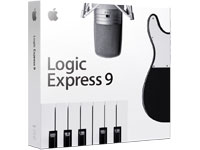 I’ve been an avid GarageBand user for quite some time, having shied away from moving to a more sophisticated recording solution because of how easy GarageBand makes it to record the demo songs and sound clips I produce. Geez! How easy could it get? To create a sound clip, it’s as easy as opening the app, setting the song’s tempo, choosing a drum loop to play to, creating a new track to capture my guitar, and recording.
Of course, GarageBand comes with its own shortcoming, not the least of which is the ability to change tempo mid-song, editing the timing and tempo of an audio region, and doing more sophisticated fader automation. For years, these shortcomings were okay for me. I was able to produce an entire album with GarageBand – even with its shortcomings. But admittedly, a lot of my best songs didn’t make it to the album because GarageBand couldn’t do things I needed for those songs; especially varying the tempo mid-song, which I’ve written into several of my pieces for dramatic effect.
My wife has been bugging me for a long time to record some of her favorite pieces that I’ve written for church service. One in particular is based upon the second movement in Beethoven’s Moonlight Sonata. While that song is not structurally complex, it requires three different tempo changes. Moving from 52 bps for the intro (the original tempo), to 58 bps for the verses, then 62 bps for the refrain, back down to 58 bps, then back down to 52 for the outro. I tried recording the song in GarageBand several times, but just couldn’t get it down.
Enter Logic Express 9. With its tempo and wave editing features, I can now record my songs the way they were meant to be recorded. I can’t even begin to tell you how incredible that is to me! I’ve the application less than 24 hours – and only used it for a couple of hours – but I can already tell that it’s going to be a HUGE boon to my music production. I’m really excited. I’ve already played around with the tempo changing features, but there is just so much to this application that I have yet to discover; not the least of which is the mix-down capability and throwing tracks onto different busses to apply different effects.
No, it’s not a full-blown recording solution like ProTools or it’s bigger sibling Logic Pro. But for the home studio recording enthusiast like myself, it has everything I need to create great recordings. At $199, it’s a real bargain. Besides that, if I ever need to upgrade to the Pro version, it’s a $99 upgrade. Not bad. Not bad at all.
If you’re currently using GarageBand, and want to expand your recording capabilities, I highly recommend Logic Express! I will say this: it’s not a simple slam-dunk to move from GarageBand to Logic Express. Yes, there are similarities, but the mix-down and mastering stuff that GarageBand does for you by default you now have to do yourself. However, one thing I tried was creating a project in GarageBand, applying mastering, then importing the song into Logic Express. Lo and behold, the Master got imported with all the buss settings – which you then can edit. Nice.
For more information on the feature set, please visit the Logic Express site!
Just for fun… Tell us how much gear you have
Posted in Guitars, tagged amp, amplification, amplifiers, amps, effect pedals, Effects, GAS, gear, guitar, guitar effects, guitar gear, guitar pedals, guitarists, Guitars, Music, musicians on December 23, 2009| 3 Comments »
Quirks are good… Quirks make you better…
Posted in Guitars, tagged GAS, gear, guitar, guitar instruction, guitarists, Guitars, learn guitar, Music, musicians on December 21, 2009| Leave a Comment »
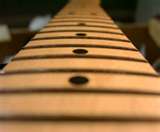 Like many gear sluts, I’ve got several guitars and each guitar, no matter how much I’ve spent on it, has its own little quirk or quirks. One might not have much natural sustain, another might have tiny frets, yet another may have wide neck profile. But no matter the quirk, in the end, if I can work through a guitar’s particular quirk or quirks, it’s the sound that comes out of my amp that counts. But the cool thing that I’ve found is that these very quirks have also served to help me become a better guitar player. Mind you, these aren’t flaws in the gear. They’re simply, well, quirks that make either consciously or sub-consciously make me compensate for a particular quirk in some way.
For instance, my Squier Classic Vibe Tele has pretty little frets, making vibrato a challenge; especially the violin type of rolling vibrato. But what it has taught me is to get much better at bending vibrato to coax sustaining tones out of that guitar. The net result is if I take the time to make a note sing, I’m rewarded with this beautiful bloom as the string vibrations resonate through its pine body. The reward of that is priceless, and what I’ve found while playing that guitar is that I actually try to play slower and express whatever idea I’ve got in as few notes as possible. That has affected my entire playing style.
Building on that, the other night I played guitar in the band at my kids’ school’s Christmas pageant. This is a cool production in that unlike most pageants, it’s presented as a theatrical production, replete with story line. The various classes then sing a song as part of a scene of the play. For the first time, the show was done with a simple rock combo in addition to the standard keyboard to fill up the music. And even cooler was the fact that this particular production had very rock and roll flavor. I originally rehearsed the play with my Tele, but I wasn’t satisfied with the overall drive sound, so I switched to my LP copy, a Prestige Guitars Heritage Elite.
Remember I mentioned my Tele forcing me to get better at bending vibrato, well, from repeatedly practicing that on my Tele, once I picked up my Heritage Elite, it was game over! I really felt my expressiveness go through the roof! Now that guitar just sustains forever, but add some technique, and I couldn’t believe how good that guitar sounded! It was as if I was playing a completely different guitar.
The same kind of thing goes for Goldie. Now she has jumbo frets that are both wide and tall, so that it takes a minimal amount of pressure to articulate a note. What that guitar has taught me is to relax my left hand. The net result is that I’m much quicker over the strings. But that lightness of touch has extended to my other guitars as well.
So the net of all this is that quirks in your gear aren’t necessarily bad, and oftentimes can help you improve your playing.
Got GAS because you’re not happy with your amp’s tone? Before you sell it…
Posted in amplifiers, amps, Amps/Amplification, aracom amps, EL84, GAS, gear, guitar, guitarists, Guitars, instruction, NOS, tagged amp, amplification, amplifiers, amps, aracom, aracom amps, GAS, gear, guitarists, Guitars, Music, musicians on December 16, 2009| 1 Comment »
There are two things you should consider doing before you decide to get rid of it. I’ve done this on two amps, and have ended up keeping them both.
1. Change your speaker(s)
Let’s state the obvious: An amp’s speaker produces the sound, but it is amazing how many people I’ve come across who don’t look at replacing this vital component first when they’re not happy with their tone. I know, evaluating speakers is tough, and a lot of the time, you can only rely on people’s words and frequency response charts. I actually find frequency response charts useful in making a decision on a new speaker. If I want more mid-range and presence, I’ll look at speakers whose frequency response charts are big in the mids and high-mids, with a much more smooth bass response curve, like the Jensen P12N. If I’m looking for more bottom end, and a slightly scooped tone, I’ll look for a speaker that has those kinds of characteristics, such as the Fane Medusa 150. Of course, you have to hear the speakers in the end to decide if they work for you, but the frequency response chart is a good place to start.
2. Change your pre-amp tubes
I’m a NOS tube fanatic. To me, there’s nothing like the build and tonal quality of a good NOS tube. The ones I’ve chosen tend to have a bit less gain than newer tubes, and they break up so much more smoothly. But that’s just me. I want a smoother overdrive tone, whereas someone else may want a harsher tone. To each their own on this. However, changing tubes – especially pre-amp tubes – can have a profound effect on your tone. Like speakers, you have to try several before you find ones that fit your tastes, but it’s worth it once you do. And note, with respect to tubes, you get the most bang for your buck by replacing the pre-amp tubes as opposed to the power tubes. I use JJ power tubes for practically all my amps, and you know what? I’ve never replaced any of them because I just haven’t seen that much tone improvement by replacing them.
Where I have seen LOTS of improvements is in replacing the pre-amp tubes, as you’ll see below…
As I stated above, I saved two of my amps from the chopping block. Yeah, I had to spend a bit of money to save them, but save them I did. My most recent “save” experience was with my Aracom PLX18 BB. This amp is based upon the classic Marshall 18 Watt Plexi “Bluesbreaker.” When I first got it, I loved it, but one thing that I didn’t quite bond with was the fizz that the amp naturally produced. I really dug the mild distorted tone of the amp, but there was just something that wasn’t quite “right” when I’d crank the amp all the way.
So the first thing I did to bleed off some of the highs was to replace the stock speaker. The Red Coat Red Fang is a nice, bright speaker, but brand new, it’s pretty harsh, and I didn’t want spend a lot of time breaking it in. But even still, the amp was naturally bright, and with a bright speaker, I just didn’t feel it was a good fit. As luck would have it, I had another speaker on hand, a Fane Medusa 150. The thing about this speaker is that it has a real strong, tight bass response. Once I had it installed, I couldn’t believe my ears! It really balanced out the brightness of the amp, and curbed a lot of the fizz.
But there was still some fizz left. Knowing that there were JJ’s in the pre-amps, which have a lot of gain, my thought was that they were throwing a lot of gain at the EL84 power tubes, which can get fizzy when driven hard. So I swapped them out for a set of NOS circa 1959 GE and RCA long plate 12AX7’s, which are oh-so-smooth and a have a bit less gain than the JJ’s. The result was simply magnificent!
That clip was recorded with the Aracom PLX18 BB, and using my LP copy Prestige Heritage Elite. Sorry, I don’t have a “before” clip, but before I did those two simple modifications, the amp produced a ton of fizz that I just couldn’t connect with, even though I loved the dynamics when it was fully cranked. Now, I can crank that puppy up, and get those rich tones with no fizz.
It Feels Great to Play Naked!
Posted in Guitars, tagged effect pedals, Effects, GAS, gear, guitar, guitar effects, guitar gear, guitar pedals, guitarists, Guitars, Music, musicians, pedals on December 6, 2009| 5 Comments »
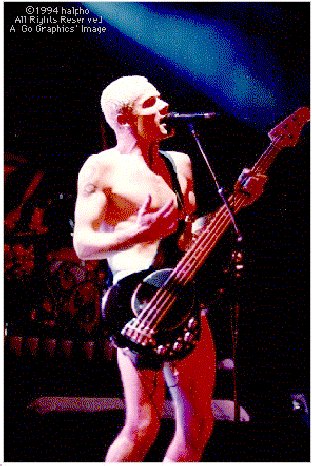 O thou with such dirty little minds! I’m not talking about some Red Hot Chili Peppers-style playing with a tube sock around my member. I’m talking about playing with zero effects! So there!
For the past few weeks, I’ve recorded and gigged several times with no effects at all, and the only pedal I use is my trusty BOSS TU-2. The first time I did it, I was being lazy and didn’t want to break down my rig from my studio – especially since I was in the middle of laying down some tracks and didn’t want to lose my settings. But that first time turned into a second, then a third, and so on.
I’ve found it to be refreshing on a number of fronts; not the least of which is the much lighter load I have to lug around. But more importantly, I think it has really helped my playing as I can’t rely on pedals to fill in the gaps. For instance, I’m a lot more aware of how I’m sustaining notes, and trying to hold them as long as possible before I have to move on.
I know of lots of players who don’t use pedals at all, and for quite awhile, I couldn’t imagine life without pedals. But “playing naked” has really helped me to not rely on them. I used to always use overdrive pedals as my main source of drive, but I now use them as accents. I used to slather on the reverb but now, I rarely use it, except in the studio and even there, I use it sparingly.
Don’t get me wrong, I’m not going to put my board away. There are times when I need a pedal for a particular song, but for the most part, I can do without them, or just use them to provide tonal accents. In a way, I feel liberated…
Studio Test: Squier Classic Vibe Telecaster 50’s
Posted in gear, gear reviews, guitar, guitar gear, guitar gear reviews, guitar reviews, guitarists, Guitars, Music, musicians, new gear, squier classic vibe telecaster, telecaster, tagged aracom, aracom amps, GAS, gear, gear reviews, guitar, guitar gear, guitar gear reviews, guitar reviews, guitarists, Guitars, Music, musicians, new gear, squier classic vibe telecaster, Squier Classic Vibe Telecaster 50's, telecaster, telecaster review on December 6, 2009| 3 Comments »
 When I first talked to a guy at a shop about this guitar (it’s someone whose word I’ve learned to trust over the years) about the Squier Classic Vibe Tele, one of the first things he said was, “For the guys who know tone, this is one of the best kept secrets in the industry.” That, from a guy who pedals high-end Fender custom shop axes. His only nit about the guitar was the same as mine: The frets seemed a little small. But other than that, the guitar was a player in his opinion; and so it was with my own estimation of this wonderful little guitar.
Squier is supposed to be the budget line for Fender, and traditionally have been tagged as beginner guitars. But the way this guitar looks, feels, plays and sounds, there’s nothing beginner or budget about it. The build quality is excellent. There are no split or jagged joints or uneven painting. This guitar looks and feels solid. And it’s light, weighing no more than 7 pounds with its pine body and maple neck.
I was excited about this guitar when I first played it, as evidenced by the high marks it got on my original review. I couldn’t believe that a guitar with a street price of $349 could actually be this good. But the one thing that struck me about it was not just its looks, but its tone. This ain’t your typical, thin Tele twang machine. This guitar has balls. The pine body resonates – a lot – and that adds a fatness to the tone that is completely unexpected! Even in the bridge pickup that really brings out the twang, the Classic Vibe Tele sounds like a bridge humbucker with just a touch of twang!
Since I was able to bring one into my studio, I decided to record a couple of clips to demonstrate how fat this guitar sounds…
The first clip features the Tele clean in the neck pickup for both rhythm and lead, though I dirtied up the lead part just a tad.
This next clip demonstrates how the guitar sounds through a fully cranked up amp (Aracom VRX22 with 6V6’s). The three parts feature the neck, middle, and bridge positions of the same chord progression, respectively:
Finally, here’s my new song Strutter again with the Tele played in the bridge position through my Aracom VRX22:
As you can tell from the clips, “thin” is just not part of this guitar’s modus operandi. It’s actually unsettling at first because when I’ve played Tele’s in the past, they were pretty bright and thin. But this guitar just sings and resonates all day long! Must be the pine body. But who cares! It’s a player, and for the money, you just can’t go wrong.
Quick Review: StageTrix Pedal Fasteners
Posted in Guitars, tagged effect pedals, Effects, GAS, gear, gear reviews, guitar, guitar accessories, guitar effects, guitar gear, guitar gear reviews, guitar pedals, guitarists, pedal fasteners, StageTrix, StageTrix Pedal Fasteners on December 4, 2009| 1 Comment »

Click for full size view
What do you get when you have a group of product development consultants who are avid guitar players who want to find a way to stop “workin’ for the man,” but not create a bunch of “me too” products? You get StageTrix Products. These guys are brand-new, and from what I can gather, their approach to creating guitar gear centers around what you might call convenience products for guitar players.
Take, for instance, their pedal risers that I reviewed back in October. These gadgets that raise the back row of your pedal board may not make music, but they sure make the making of music a helluva lot easier. Here’s proof: The solo part of my latest song, Strutter, was recorded in a single take, with one punch-in at the very end of the song after I was done. In between sections, I was activating/deactivating effect pedals on the fly – something I’ve never done in a recording. I usually stop the recording, activate the pedals, then continue on. Granted, I had enough time between sections to do the switch on the fly, but I will submit that I couldn’t have done without the back row of my board being raised; in other words, how my board used to be. The point here is that that little convenience made a world of difference for me in my recording.
Enter the Pedal Fasteners. For $9.99, you get a pack of three, pre-cut hook-and-loop strips that are dimensioned to fit standard-size pedals. You might say, “So what? I can just get some Velcro from my local crafts store and be done with it.” You certainly can, but my experience with that stuff is that the glue used with these cannot withstand higher temperatures. They get all gooey, and once the glue has melted, the glue must change chemically, because its sticking power is lost. You ever get that stuff on your hands? I rest my case… 🙂 Pedal Fasteners, on the other hand, have a glue that can withstand up to 200 degrees Fahrenheit; more than enough for even a hot car interior, and the mere fact that you don’t have to cut them to size is killer!
I recently replaced the velcro strips on all the pedals on the front-row on my board with Pedal Fasteners. No cutting, (except for the center section (which you could conceivably push out, but I wanted clean edges and didn’t want to risk tearing, so I used a sharp utility knife). They work great, and even stick to rubber! I’d recommend removing the rubber though… I’ve had mixed results with that, but I did it to test it out – it’s sticking just fine so far.
So if you’re tired of having to cut fasteners to size, and even more tired of that messy goo once the glue has melted, you owe it to yourself to get a couple of pack of these!

For more information, please visit the StageTrix Products site!
Where have all the overdrives gone?
Posted in Guitars, tagged effect pedals, Effects, GAS, gear, gear reviews, guitar gear, guitar gear reviews, guitar pedals, Guitars, Music, musicians, new gear, overdrive on December 2, 2009| 2 Comments »
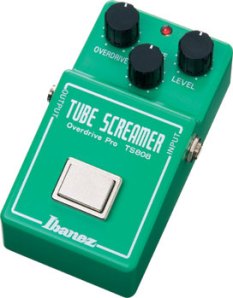
For the last couple of years, there has seemingly been a glut of new overdrives that enter the market on a weekly basis. I’ve been like a kid in a candy store as overdrive pedals are my favorite pedals. Though I’ve played through tons of ’em, I haven’t written about many mainly because there’s just so much gear out there, and I’ve got a limited amount of time I can spend reviewing and writing.
But I’ve noticed that in the past few weeks, there have been just a couple of new overdrives to enter the market; one of which I purchased (the KASHA Overdrive), and the Skull Crusher overdrive, both made by the same company. Since then, I haven’t seen anything new come out – at least no one is putting out press releases…
Are we at a saturation point now? Has all the overdrive territory been covered? Perhaps it is, or perhaps people are just waiting to release their pedals. One thing’s for sure, the overdrive tap has dried up.
Gear Review: Aracom Amps PLX18 BB Combo
Posted in amplifier reviews, amplifiers, amps, Amps/Amplification, aracom amps, EL84, GAS, gear, guitar gear, guitar gear reviews, Guitars, Music, musicians, PLX18 BB, PRX150-Pro, tagged amp, amplification, amplifier reviews, amplifiers, amps, aracom, aracom amps, GAS, gear, gear reviews, guitar gear, guitar gear reviews, guitarists, Guitars, Music, musicians, PLX18 BB on November 23, 2009| 3 Comments »
  Click on the picture for a larger view. Click on the picture for a larger view. |
Aracom Amps PLX BB 18
Summary: Reminiscent of John Mayall and the Bluesbreakers, the PLX18 BB is a tribute to the classic Marshall Plexi’s of yesteryear. Pros: Looking for classic EL84 classic rock/blues tone? Look no further. This amp has tons of mojo that’s just waiting to be tapped, with two independent channels and a subtle, tube-driven tremolo that’s to die for! Cons: Tiny nit, but the stock speaker – Eminence Red Coat Red Fang – is voiced way to brightly for this amp. For cleans, it’s great, but creates a bit of fizz when you’ve got it cranked. Features: General (from the Aracom site) – On/Off Switch Tremolo Channel – Single Knob Tone Control Normal Channel – Single Knob Tone Control Price: ~$1750 Direct Tone Bone Score: 4.75 – If it weren’t for the speaker, this would get 5 Tone Bones, but I remedied that very easily by running it through either a Jensen P12N or a Red Coat “The Governor.” I dig that Governor speaker! It really brings out the best in that amp by taming the highs and adding a nice and smooth bottom end. |
When you live less than half an hour from a boutique amp maker, you get to try out lots of GREAT gear. It’s so convenient to drop by Jeff’s shop or have Jeff over. He’s someone I love spending time with because we both share a passion for vintage and vintage style gear (Jeff is a passionate Les Paul collector), and we spend lots of time just talking about different kinds of gear, and especially his approach to amp building. As of late, Jeff Aragaki and Aracom Amps have gained a lot of attention in the guitar world for his incredible PRX150-Pro attenuator. And while I love what that attenuator does (it really has made my home recording late at night so much more convenient), it was his amps I fell in love with, and to date, I have three of them, having added the PLX BB 18 to my growing collection of low-wattage amps.
In Jeff’s words, the PLX BB 18 “ …is our tribute to the Marshall 18 watt Tremolo amp that was originally introduced in 1967. The term “Bluesbreaker” originated from the Marshall JTM 45 Tremolo Combo amp that Eric Clapton made famous when he was with John Mayall and the Bluesbreakers. While the JTM 45 Tremolo is the original “Bluesbreaker”, many people also refer to the early 50 watt and 18 watt Marshall amps with Tremolo as Bluesbreaker amps.”
This amp is the elder statesman in the Aracom lineup, and while lots of attention has been paid to his latest VRX line, it was the PLX that gave Jeff his start. Unfortunately, because there are lots of classic Marshall Plexi 18 remakes on the market, the PLX BB 18 is probably his least known amp. That’s too bad because the tweaks Jeff made to the classic Marshall circuit has produced a very distinctive amp that has a mojo that’s almost visceral in its appeal.
Based upon a pair of EL84 power tubes, and an EZ81 rectifier, the PLX produces a very three-dimensional tone that’s at once in your face, but also fills the space you’re playing; and mind you, this is at fairly low levels – maybe loud conversation levels – due to squelching the output volume with the PRX150-Pro. Strike a chord or bend a note, and you can feel the tone! It’s that way with my VRX amps as well. There’s something that Jeff has discovered in building his amps that make them ooze a certain mojo.
Like all Aracom amps, the PLX18 BB is packed full of character. It’s amazing how it responds to volume knob changes and pick attack. But one thing that really strikes me about this amp is how smooth the distortion is when I crank the amp. When pushed hard, it has tons of gain and oodles of dynamics, but they’re very well-mannered. Notes are well-defined, and especially played with humbuckers, bloom nicely when you attack a string. F-in A!
How It Sounds
I got the amp this past Saturday, and I’ve been playing with it since. I spent Saturday evening and most of Sunday just getting used to it, and experimenting with different speakers. As I said, the stock speaker is a little bright (admittedly, I’m experimenting with it), but it’s also brand new, so that probably accounts for the abundance of highs. With time, that speaker will mellow out. But as I wanted to use the amp right away, I ran it through my custom 1 X 12 cab with a Jensen P12N and also my Fender Hot Rod’s cab that has the Governor in it. Amazingly enough, this amp LOVES the Governor. The P12N sounds awesome (and I’m a huge fan of Alinico speakers), but the Governor seems to bring out the best qualities of this amp. Anyway, here are some clips I recorded:
- This clip features the stock Red Fang. I’m playing my Prestige Heritage Elite (an LP copy) for the lead with the Treble pickup engaged. This is a clip from a song I’m working on called “Strutter.” I normally don’t EQ my guitar parts, but I did bleed off some of the real high-frequencies to cut down on the natural fizz.
- This next song is called “Plexi Lullaby” because it reminded me of a lullaby. The base rhythm track was recorded on the tremolo channel with my Heritage, then I created a second rhythm track with my Strat. The Lead is also played with my Strat. You’ll notice that you really have to listen for the trem. The tube-driven trem is killer. It’s very subtle and oh so smooth! Almost forgot! The base rhythm track was played through the stock speaker, while the Strat parts were recorded through a P12N, and no EQ was applied to any of the parts.
- Finally, here’s a simple track I recorded just with my Strat for both parts, running the PLX18 BB through the Governor. This in the drive or “normal” channel of the amp with it cranked up to about 3pm, which is almost full out. To achieve the cleans, I just used a light touch, and played it finger style. I picked the Lead so I could get some occasional grind sneaking in:
I really love the tone on the last clip. The cleans it produces just make me close my eyes and play; which is pretty much what I did when recording the lead part. Just hearing how the chords just rang was so inspiring! The amp the entire time was just on the edge of breakup – it’s so expressive! I just added a touch of room reverb in the mix, but the guitars were all recorded completely raw. I didn’t do any adjustments.
Overall Impressions
I know, I say this quite a bit about Aracom amps, but I LOVE THIS AMP! As you can hear from the clips, it has an abundance of character. Jeff has recommended a few times that I try some NOS tubes with it, as all the pre-amp and power tubes are all JJ’s. But I’ve resisted because it just sounds great with the stock tubes. As I told him, “I know, I’ve got some NOS tubes on hand, but there’s no reason to put them in there. It sounds great with the JJ’s.” I may eventually do that, but for now, I won’t replace the tubes until they start getting dull.
The PLX18 BB yet another one hit out of the ballpark by the humble genius, Jeff Aragaki!
 Guitar Gear