Feeds:
Posts
Comments

Posts Tagged ‘gear reviews’

As many might know, one of the first places I test out new gear is at my weekly church gig. Church services are especially great for testing gear that you normally use clean or with just a little grit, and it proved to be a great venue for testing out the Time Machine.

All I can say about the Time Machine is, “Wow!” It really was made for being run in front of an amp! I know that some people don’t like it because it can’t be used in an effects loop, but in front of an amp, it works great! Don’t know how VOX did it, but it doesn’t seem vary the output gain – at least as far as I could tell – so it didn’t give me pulsing grind when I set my amp at just the edge of breakup. That really blew me away because I was concerned about that happening as I always set my amp on the edge of breakup, so increases in gain, whether due to volume knob or attack will give me some light dirt. Amazingly enough, the Time Machine didn’t push my amp over the edge at all.

That gave me tons of confidence to really experiment with the pedal. As with most church services with contemporary christian music, the flavors of songs change throughout the service. This provides ample opportunity to test gear. Whether used in smooth ballads or rockin’ with some slapback, the Time Machine delivered on all fronts. I was particularly impressed with using the Time Machine on slow songs where I could dial in a real long delay (it can get a delay time of up to 5800 seconds). Setting the feedback to about noon and the level to around 11am, I was able to get this great ambient, ethereal tone with an approximate metronome setting around 58-62 bpm by using the tap tempo toggle.

I dig the tap tempo on the Time Machine. It’s always on, so making midstream tempo adjustments is simply a breeze. In one of our songs this evening, the group sped up for some reason, and it really threw off my delay tone. But a quick tempo adjustment – while I was still playing, mind you – got my delay back in sync. That was so incredible!

As I mentioned in my review of the Time Machine, I’ve been waiting for a couple of years to get a new delay after I gave my old DD-5 away. I’m glad I took the time to wait. The Time Machine is the bomb!

Read Full Post »

Click on the picture to see an enlarged view.

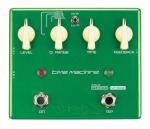
VOX Time Machine Delay Pedal


Summary: If you’re looking for a super-quiet, dynamic and versatile delay that will cover a lot of territory, look no further. The Time Machine rocks!

Pros: Absolutely quiet, with no line noise at all. It is so easy to dial in great delay sounds with the Time Machine, it’s almost scary. I like the fact that it has more features than a basic delay pedal, but not so many that you spend all your time tweaking. Oh yeah… It sounds absolutely fantastic!

Cons:None.

Features:

  • Controls:  Level, Delay Range, Time, Feedback, ON SW, Tap & Modern/Vintage SW, Hi-Fi/Lo-Fi SW
  • In/Outputs: 1 x  INPUT, 1 x OUTPUT, 1 x DRY OUT, 1 x DC9V
  • Max Delay Time: 5800 milliseconds via Tap-Tempo, 1000 milliseconds via Delay control
  • Input Impedance: 1M-ohms
  • Output Impedance : 1k-ohms
  • Power Supply:  9V alkaline battery(6LF22/6LR61) or AC adapter(sold separately)
  • Current Consumption: 60mA
  • Dimensions: 143(W) x 121(D) x 58(H) mm / 5.63”(W) x 4.76”(D) x 2.28”(H)
  • Weight: 600g /1.32 lbs (without batteries)
  • Included Items: 9V alkaline battery (included)
  • Options: 9V AC adapter (not included)

Price: $199 street

Tone Bone Score: 5.0 ~ This pedal has ended my search for a delay. It really is as good as it’s advertised.

I tend to be a little wary of “signature” pedals because I’m really not one who wants to sound like someone else; besides, I’m not nearly as capable on the guitar as said artists. But now and then, I come across signature gear that forces me to take a good, long look: Not just because of the name behind it, but simply because it’s just a great piece of gear! Such was the case with the VOX Time Machine. When it first came to market, I have to admit that I was excited because I know that Joe Satriani is a real tone freak, and I figured that any kind of gear in which he has design input is bound to be pretty good. But the flip side of that is that I’ve had experience with other signature pedals that were really geared towards the artist and their playing style specifically, and frankly, that stuff has left me frowning. Not so with the Time Machine, which took me completely by surprise!

I’ve been in the market for a delay for almost a couple of years, when I gave away my crappy Boss DD-5 that had such perfect and precise delay that it just felt processed. It was nothing like my former DD-3 that actually sounded pretty good, but I lost that pedal after playing in an orchestra for a musical theatre gig (I didn’t have a board at the time, and only carried a couple of pedals). Needless to say, during that time, I’ve evaluated several delays, but none have really caught my fancy. They were either too dark sounding, as in the case of most analog delays, or they sucked tone, as in the case of many digital delays I’ve tried. My surprise with the Time Machine is that in either mode, modern or vintage, my basic tone was retained! But I’m getting a bit ahead of myself.

In my search, I came up with some criteria that had to be fufilled 100% before I’d even consider buying one. Here they are:

  • First, I wanted Tap Tempo. I’ve always hated having to bend over to tweak knobs; but moreover, I wanted to be able to match tempos with my drummer on the fly.
  • Secondly – and I know this is purely subjective – I wanted a good balance between tweakable settings and ease-of use. In other words, I wanted to have the flexibility to dial in a number of delay settings but not have so many that I’d be spending all my time tweaking knobs.
  • Thirdly, I didn’t want to ever have to refer to a reference manual to make sure I was using the pedal correctly. The “don’t make me think” rule had to apply. I should be able to dial in great tones in a matter of a few minutes, if not earlier.
  • Finally, and most importantly, the pedal could not suck tone, and had to be reasonably transparent. In most cases, I don’t mind a pedal putting an emphasis on a particular EQ range (like my Kasha overdrive does), but it should never remove a range or “feel” like it narrows the bandwidth of the signal.

There are lots of delay pedals I’ve evaluated that were particularly good in most areas, but none until I played the Time Machine ever fulfilled all four criteria. That’s how great this pedal is!

It’s Mean When It’s Green

I love the shiny, green apple finish of the Time Machine. Of course, the paint job doesn’t make the pedal. But the Time Machine is built like a tank, and is certainly gig-worthy. I imagine that JS had that in mind when providing his design input. The chicken head knobs give the pedal a cool vintage vibe, but not only that make it very easy to see where you’re at with your settings. The stomp switches are nice and smooth, and the pedal engages without producing any noise.

How I Did My Evaluation

I didn’t just test the Time Machine in isolation. I’ve learned that one of the best ways to evaluate pedals is to do A/B tests against other pedals of like kind to make a comparison. So I compared the Time Machine against a Way Huge Aqua Puss and a TC Electronic Nova Repeater at my favorite shop, Gelb Music in Redwood City, CA. My thought was to compare it against an analog and another digital delay. Sorry, but no clips because I was in a shop.

All my tests in the shop were done with a Fender Custom Shop Tele, plugged into the pedals (hooked together so I could quickly make a comparison without swapping), and into an absolutely superb-sounding and -looking Dr. Z Maz 38 with draped in blonde tolex. Mm mm good. 🙂 I chose a midrange wattage amp because I wasn’t interested in creating grind. I’ve never been one to use delay with overdrive – maybe a little. But in this case, I wanted to have an ample amount of clean headroom to work with, and the Maz 38 worked perfectly for that (for the record I REALLY want a Dr. Z Remedy).

Aqua Puss and Nova Repeater

I will most likely have reviews on the Way Huge Aqua Puss and TC Electronic Nova Repeater in the near future, but I’ll give you a quick run-down of the pedals. If you’re looking for a dark, swampy, blues delay. The Aqua Puss delivers that in spades. It has this certain ethereal quality that made me think of drifting on a boat in the middle of the Everglades. I actually really liked the pedal, but I was after something else entirely with my delay search – much more versatility – and the Aqua Puss was a one-trick pony. It does what it does exceptionally well, but don’t ask for much in terms of usability in a variety of styles.

I was very sadly disappointed with the Nova Repeater. It packs a TON of features in its box, but for me, I was a little concerned that were just too many features. But despite that, it was easy to get a usable delay tone almost right away. The folks at TC Group certainly know how to pack in features, but they make them readily accessible, and very easy to understand. I actually had my heart set on getting this pedal after reading many reviews and listening to clips and watching video; and I almost purchased it a couple weeks ago. But I’m glad I compared it head-to-head with the Time Machine.

The Time Machine may not have all the features as the Nova Repeater, but out of the box, it wins hands-down in the tone department. The Nova Repeater sounded bland and dry – processed – when played in an A/B test between it and the Time Machine. And I detected a distinct loss in both highs and lows; in other words, bandwidth narrowing. That was not at all pleasing. That said though, the Repeater is still a great pedal, and apparently there’s an internal pot to calibrate the tone to your rig, so that’s a plus. But frankly, I’m not one to tweak that deeply. I probably would’ve still bought it if I didn’t do the A/B test. The tone is usable and really not as bad as I may have painted it, but it’s not as good as the Time Machine’s tone in my opinion.

Playability

If it’s any area where the Time Machine simply shined above the other pedals was how absolutely responsive it was to picking dynamics. Play lightly, and the delay is super-subtle; you almost feel as if it’s not there. Dig in a bit, and the pedal responds. I did a few lead lines to experiment with this, and was totally blown away. I set the Level control so I’d really have to dig in to get the delay effect, but for most runs, picked or legato, what I got was a more ambient effect – almost like reverb. Wow! That kind of pick response is probably what sold me the most.

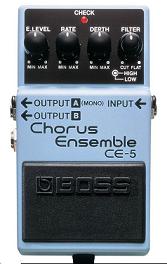
In addition to dynamics, I just loved how easy it was to dial in various settings. The knobs are very nicely NOT over-sensitive, so moving a knob doesn’t result in dramatic changes in the effect. The net result is that you can get into a general area on the sweep of a particular knob, and make a couple of slight changes to zero in. How many pedals have we played where just turning a knob ever-so-slightly drastically changed the effect? It’s probably why I’ve liked my Boss CE-5 chorus for so long, and even though I’m currently bidding on a CE-2 on EBay, if I don’t win the auction, all won’t be lost because the CE-5 has a nice, consistent sweep on its knobs.

How It Sounds

Like I mentioned, the Time Machine is simply transparent. The Modern mode is truly transparent – at least to my ears – while the Vintage mode darkens the tone ever so slightly and adds some subtle modulation (it’s chorus-like) like you’d expect with an analog delay. But unlike many analog delays that I’ve played, the darkening with the Time Machine does more of a lower-mids EQ emphasis, whereas I’ve felt that analog delays cut highs. The Aqua Puss certainly felt like it was cutting highs, though it definitely compensated for it with some overall great tone. Back to the Time Machine, the net result is that in vintage mode, the tone becomes slightly more rich and lush.

I liked both modes equally well, though I’d probably tend to use the Vintage mode when playing absolutely clean, as it also adds a tiny bit of hair to the signal. It’s almost imperceptible, but it’s there. I loved doing some simple chord comps up on the neck in Vintage mode.

Modern mode, on the other hand, is like the Swiss Army Knife of the Time Machine, making it capable of fitting into any style of playing, from syncopated rhythms ala The Edge, to heavy chunk where you want to have a bit of slap-back.

The Time Machine also has a toggle switch for Lo-Fi and Hi-Fi modes, in addition to the Modern and Vintage modes. Hi-Fi apparently maintains tonal transparency, whereas Lo-Fi includes High- and Lo-cut filters. The difference between the two fidelity modes was subtle at best. I didn’t detect much of a cut in either highs or lows when engaging Lo-Fi; the EQ changes ever so slightly, but the bandwidth didn’t change at all. Again, I feel like it’s more of an EQ emphasis rather than a removal of portions.

Overall Impressions

I’m glad I took so much time to find a new delay pedal. As you can tell from my review, I love the Time Machine. It fulfilled all my criteria for what I wanted in a delay pedal. To me, it has enough adjustable settings to keep any tweaker happy, but it’s also super-easy to quickly dial in the right amount of effect. But not only that, it just sounds damn good!

Read Full Post »

Awhile back, I wrote a fairly quick review of this pedal. That was back in October of 2007. I bought it because I was tired of using modelers and software chorus in my recordings, and also wanted to use a chorus live, which I hadn’t done much of since I had sold my Line 6 Flextone III which has it built in.

At the time, I figured it couldn’t be a bad investment, especially since I paid something like $79 for it. So, after a couple of years, what’s the verdict? It’s a solid pedal, and there’s a reason I haven’t removed it from my board yet (I’m currently looking to get a vintage CE-2): I love the Roland chorus sound!

I suppose you use what you’re used to. For me, using chorus started with the old Roland JC-120. What a great amp, and the stereo chorus was to die for! It was thick and lush, yet ringy and vibrant. Since I didn’t have access to that amp all the time (it was my brother’s), I settled on the CE-2, which I kept into the mid-90’s when I traded it for a DigiTech multifunction pedal – big mistake. Oh well…

In any case, after awhile I needed to get a chorus pedal for my Fender Hot Rod Deluxe. I didn’t even think about it what pedal I’d get. I knew it had to be a Boss. My thought was: How different could it be compared to my trusty old CE-2 which, after all, was a pretty cheap pedal when I bought it, and besides that, Roland chorus was the standard for me. I’d heard some great chorus sounds, but to me, the Roland chorus was where it was at, so I went to my local music store and purchased a CE-5

Well, to make a long story short, once I played around with the pedal, I realized that while it had that Roland chorus tone, the digital version was almost too perfect, and not nearly as warm as I remembered the CE-2 being. It seemed a little sterile. But I kept at the tweaking and was finally able to dial in some very nice, rich tones that came close to what I remembered. After all this time, here’s what I’ve come to observe about the CE-5:

  • The CE-5 doesn’t do extreme settings very well. In fact, they can be downright ugly; especially if you crank up the rate and depth knobs. But as they say, do things in moderation, and with moderate settings, the CE-5 can produce wonderful tones! The best operating range I’ve found for Level, Rate and Depth are no less than 9am and no greater than 2:30. At the high-end, you can get some very cool leslie effects by upping the depth, reducing the rate and upping the level. In general though, I don’t tend to stray too far away from 10 to 2 on the sweep.
  • All the knobs interact well with each other – almost too well – as minute changes on one knob really effect the others, making you have to compensate to keep the tone under control.
  • The Hi/Lo cut combo knob is killer – something I wish the CE-2 had. What they do is subtle, but very useful.
  • Even for as simple as it is, you really have to play with the settings before you find the right tones. I’ve had a few years with this pedal now, so I know where to set the knobs for the effect I want. But it did take time.

Given all that, don’t take it as a negative. My feeling is that hard work is rewarded, if you’re willing to do it. I took the time, and now that I’ve got the tones dialed in, I really like the pedal, which is why I’m not in a real big rush to replace it.

Here’s a clip I recorded with different settings. There are three sets of recordings, starting with my dry signal, then activating the chorus. The chorus sounds go from moderate-heavy to moderate to light in the final chord progression. I used my Gibson Nighthawk 2009 into an Aracom VRX22 amp. Here’s the clip:

I recorded the guitar completely dry, with the mic (e609) about 1/2″ from the grille cloth.

Granted, the Roland chorus sound isn’t for everyone. There are so many great ones out there, but for me, I’ll stick to the familiar. Rock on!

Read Full Post »

How gear performs in the studio is one thing, how it performs in a public venue is an entirely different matter. Unless it’s just not practical, I almost always take gear I’m testing to a gig because to me at least, that’s the best test of gear as gigs are so unpredictable – you never know what might happen, and good gear will almost always be adaptable to the changing environment of a gig.

So how did the Nighthawk perform? In a word, spectacular!

In my recent review of the Nighthawk, the word that came to mind for me to describe the guitar was “comfortable,” and that was completely evident when I played it at my church gig this evening. The Nighthawk is comfortable in every way imaginable; from its light weight to its playability, and its ability to fit into any genre of music.

Now before you poo-poo that a church gig is not a “real” gig, guess again. I’ve played in a variety of venues over they years, and playing at church is one of the most challenging venues to play.

The reason for this is that the music at a church service isn’t the same style from song to song. Since I do kind of a “rock” service, we usually start and end with rockin’ songs with copious amounts of overdrive. But in the middle or meat of the service, we have to back it off a bit. Sometimes it’s bluesy, softer, classic rock with a bit of overdrive, but a lot of the songs are much softer: ballads and slower tunes that require playing clean. So versatility is absolutely crucial with the gear that I use for the service, and the Nighthawk delivers the versatility I require in spades.

For this particular service, I kept my rig very simple. For my amp, I used my trusty Aracom VRX22 hooked up to my Aracom PRX150-Pro attenuator, then out to my custom Aracom 1 X 12 cab with a Jensen P12N. In front of the amp, I used just one pedal: my Boss TU-2. 🙂 I normally bring my entire board that has a variety of drives and modulation effects, but this time I wanted to capture the raw tone of the guitar, and all I could say after the service was, “WOW!”

The Nighthawk can produce some very nice grind with the P-90 and Burstbucker 3, but it can also produce rich and pristine cleans; cleans that’ll just make you close your eyes and soak up all the tonal goodness. The P-90 produces lush, fat cleans, while the BB 3 – as expected – produces bright cleans. But engaging the middle selector position allows you mix the two in varying quantities and this lets you dial in all sorts of clean tones, from super fat to ringing. The thin body of the Nighthawk is exceptionally resonant, providing great sustain and tonal complexity, producing an almost reverb-like effect. I was absolutely floored by the gorgeous clean tones I was able to dial in. It was purely inspiring!

For more overdriven tones, the middle pickup again makes this guitar so versatile. In fact, I played most of the service in this position, and simply varied the amount of neck and bridge pickup volumes to get the overdrive tones I wanted. For our more rockin’ tunes, I switched the amp to the drive channel. On the Nighthawk, I dimed the treble pickup, and when I wanted more heavy crunch, would just dial in more P-90. It was so cool! Dialing in more P-90 didn’t result in significantly more volume; a slight amount, but nothing significant. When I got to a lead break, it was a simple flick of the toggle to the treble pickup, and I could get that classic Les Paul treble pickup tone! F$%kin-A!

Interestingly enough, the Nighthawk isn’t a bright guitar. In fact, its tone is the deepest of any guitar I’ve gigged with, save my old ES-333, which was both darker and boomy. But that darker tone isn’t a bad thing at all because the Nighthawk has BIG HAIRY BALLS. There is nothing subtle about its tone. It’s incredibly expressive and in your face, whether you’re playing clean or dirty, and it forces you to engage in a never-ending musical conversation while you play it. You can’t be timid with this guitar. It won’t let you. There were times when I was playing where I would normally hold back, but with the Nighthawk in my hands, it seemed to coax me to go outside my comfort zone and do things I wouldn’t normally do. Damn! If I were single and the Nighthawk was a woman… no, I better not go there. 🙂

As you can tell, I quite simply dig this guitar. I know, I say that about a lot of gear, and it’s genuine. But there’s gear that I dig and there’s gear that I REALLY DIG, like Blondie, my Squier CV Tele, and all my Aracom equipment. The Nighthawk definitely falls into that REALLY DIG camp!

By the way, not that it really matters a lot to me because I didn’t even think about what number guitar I got in the limited run of 350, but to my very pleasant surprise, I discovered that I have #29 in the lot. Like I said, I didn’t even think to check this, but a member on the My Les Paul forum asked me what number I got – it was first time I looked. Not sure if this really means anything because I’m not really a collector – I’ll never sell this guitar. But it’s still kind of cool to get a low number.

There’s a certain magic about the Nighthawk that harkens me back to the first Harry Potter movie when he went to the wand shop. The shopkeeper told Harry (paraphrasing), “The wizard doesn’t choose the wand. The wand chooses the wizard.” And in the case of this guitar, despite the fact that I was going to pull the trigger on an R9 Les Paul, this guitar reached out and chose me. I have absolutely no regrets about passing over the LP in this case, and I’m looking forward to the magic the Nighthawk and I can create!

Read Full Post »

Click on the picture to see an enlarged view.

Gibson Limited Run Nighthawk 2009


Summary: After a 10 year hiatus, Gibson returns the Nighthawk to market, with a slightly different look and electronics. Make no bones about it; this guitar is SWEET!

Pros:Looking for a super-light but versatile guitar? Look no further. The Nighthawk has it all, and can do it all from swampy blues to all out RAWK! Its thinline body makes it absolutely comfortable to play, and the neck is perfect!

Cons:None.

Features:

  • Style: Contoured single-cutaway
  • Top: AAA Maple
  • Body: Bound mahogany
  • Neck: Set mahogany
  • Scale length: 24-3/4″
  • Neck profile: ’60s thin
  • Fingerboard: Rosewood
  • Fingerboard radius: 12″
  • No. of frets: 22
  • Nut width: 1.69″
  • Neck pickup: P-90 single-coil
  • Bridge pickup: BurstBucker 3 humbucker
  • Controls: Volume, Volume, Tone, 3-way toggle pickup selector
  • Hardware: Chrome
  • Tuners: Kluson
  • Bridge: Tune-O-Matic
  • Tailpiece: Stopbar
  • Finish: Lacquer
  • Case: Hardshell
  • Other: Certificate of Authenticity.

Price: $1400-$1700 street

Tone Bone Score: 5.0 ~ Talk about love at first strum! The Nighthawk is like a cross between an SG and a Les Paul, and I can’t say enough about how great this guitar plays and sounds!

When I have enough time to go to my favorite shop near work, like any gear freak, I’m like a kid in a candy store; especially this little place in Redwood City, CA called Gelb Music. I’ve known the guys there for a number of years, and they’ve always steered me in the right direction. Unfortunately for me, they also know that I have a HUGE weak spot for non-mainstream gear. Such was the case when I walked into the shop today to ogle some Les Pauls. They’ve known that I’ve been jonesing for one for awhile, but they must have a sense about what appeals to me, because one of ’em will say, “Dude, those Pauls are nice, but you gotta check out this…” And in “checking it out,” I’ve since ended up with a MIM Strat, a Roland Cube 60, a Squire Classic Vibe Tele, an Ibanez GSR200 Bass and numerous pedals.

So here I was, minding my own business, admiring the Les Pauls hanging from the ceiling, when Tommy did the “dude you gotta check this out,” I told him, “Tommy, don’t do this to me. You know what happens when you do that.”

“I know, man,” he replied, “And I know you’ve been looking at the Pauls, but you gotta check this out [pulling down this gorgeous honey-colored Gibby from the hanger]. It’s the most playable f-in guitar in the shop, and dude! The tone this thing produces is incredible. Here. Check out the neck!” Handing me the guitar in the process.

I was immediately overtaken by the light weight of the guitar. If that axe weighed 6 lbs, I’d be surprised (a look at the Gibson Nighthawk site lists the average weight at 4.6 lbs). Then as I moved the guitar into a playing position, I noticed how absolutely perfect the neck is. I love that 60’s thin neck! It’s a shallow “C” with a slightly wider profile. It’s faster than all get-out, and oh so comfortable to play! But I’m getting a bit ahead of myself…

Fit and Finish

This is one beautiful guitar! The bookmatched figured maple top is absolutely stunning, and the transparent amber lacquer brings out the three-dimensionality of the wood grain. The high gloss of the lacquer further enhances the effect – it’s like liquid sunshine. To provide definition both body and neck are bound with a white binding.

Speaking of wood, the light mahogany is flawless and all the joints and seams are perfect.

The Nighthawk 2009 is quite a bit different from the original that came out in 1993, even though it retains the same body shape. The original seemed to be Gibson’s answer to the HSS Strat, and had a 5-way pickup selector. With this version, Gibson has gone with a BFG setup with a P-90 in the neck and an awesome BurstBucker 3 in the bridge. The pickup selector switch is now a 3-way toggle and has been moved to the upper bout like a Les Paul (which I love). The neck sports a solid mahogany base with a rosewood fretboard and medium-jumbo frets with a scale length of 24 3/4 inches – just like a Les Paul.

The hardware provides an added touch of vintage feel to the look of the guitar, from the Kluson tuners and chrome Tune-o-matic bridge and stop tail piece, to the gold top hat volume and tone knobs. Even though the Nighthawk 2009 is a limited run guitar, it’s clear that Gibson didn’t just want this to be novelty guitar where they could get away with using cheap materials. Everything about this guitar screams high-quality down to the little details. I’m impressed!

In fact, at a distance, you might easily mistake this guitar for a different Les Paul model. I certainly did when I saw Billy Joel in concert. His guitarist was slinging this gorgeous Gibson that looked like a Les Paul. But it kind of confused me with its body shape and three knob setup. I kept on wondering, “Did Gibson create a new model Les Paul?” I’ve since been corrected.

Playability

There’s one word that comes to mind when I play this guitar: Comfortable. My favorite guitars have always been those that sound, play, and feel comfortable, and the Nighthawk is all about comfort. The 60’s thinline neck with wide profile is so easy to play. I found myself not worrying at all about where my fingers were and just playing. The action is low and fretting notes is so easy. But with the medium-jumbo frets, wiggling your fingers creates some very nice vibrato without even bending the strings! The pickups are in the perfect place for where I strum, which is right between them, so no chance of banging my finger on a pickup in a hard strum as well.

To me, this is a player’s guitar. I know that some people have complained that it doesn’t faithfully reproduce the original. But I believe that the original was just too quirky and didn’t really have player ergonomics in mind. For instance, the pickup selector switch. I dig that it’s in the classic Gibson position. It is so much more accessible – I don’t even have to look to switch pickups.

The Les Paul scale length on the Nighthawk makes bending – even the slightly brittle shop strings which I will replace today – a breeze. The setup is perfect and there’s nary a string that frets out or dulls. Like I said, this is a player’s guitar.

How It Sounds

Gibson states, “Today’s version is still all about a guitarist keeping his options open. With two volume controls, a master tone knob and two heavy-duty pickups, guitarists can experiment with endless sounds.” In other words, the Nighthawk is all about tonal diversity, capable of producing super-smooth and sexy cleans to all out snarling dog drive. I’ve played the guitar a little less than a couple of hours, and I’m absolutely blown away by the tones this guitar produces.

The big surprise is the P-90 in the neck. I was expecting it to be bright, but it’s thick and ballsy, with a real emphasis on the lower mids. It might get lost in the mix when played dirty, but the cleans is where this pickup really stands out. The voicing is creamy smooth, and very acoustic sounding.

The treble pickup is classic Les Paul, but just a tad darker which I absolutely love! The Burstbucker 3 produces a rich tone that’s full of harmonics and overtones, without being overly bright.

But the real magic comes in mixing the two pickups in the middle position. Holy crap!!! Talk about tonal complexity! The guys at the shop said that the middle position was their favorite, and I now see why. I immediately fell in love using this setting.

As far as volume balance is concerned, both pickups put out about the same volume, so there’s not this big gain boost when you switch to the treble pickup like you’d get from a Les Paul. I’m thinking Gibson did this to emphasize using the middle position, and blending the pickups together. Nice.

In any case, I got ambitious and put some sound clips together:

Neck Pickup

Clean

Dirty Lead

Rock Rhythm

Both Pickups

Clean

Dirty Lead

Rock Rhythm

Treble Pickup

Clean

Dirty Lead

Rock Rhythm

All clips were played with the Nighthawk (with both volume knobs set at about 7 and tone at 10) plugged straight into my Aracom VRX22 which then ran into my Aracom PRX150-Pro attenuator then out to a 1 X 12 cab with a Jensen P12N. I used a Sennheiser e609 instrument mic, and recorded directly into GarageBand with no volume leveling.

Overall Impressions

I’m still getting acquainted with this axe, but with all the tones that it can produce, I can easily see it becoming my go-to axe, and it isn’t just initial infatuation speaking. This guitar – at least to me – is so sexy from its looks to its sounds! If you get a chance to play one, you’ll see what I mean.

As a limited run, there are not many out there. In fact, some online stores no longer carry them. But you can still find some at online retailers, and if you’re lucky, your local shop will have one. Give it a try!

For more information, please check out the Nighthawk site!

Read Full Post »

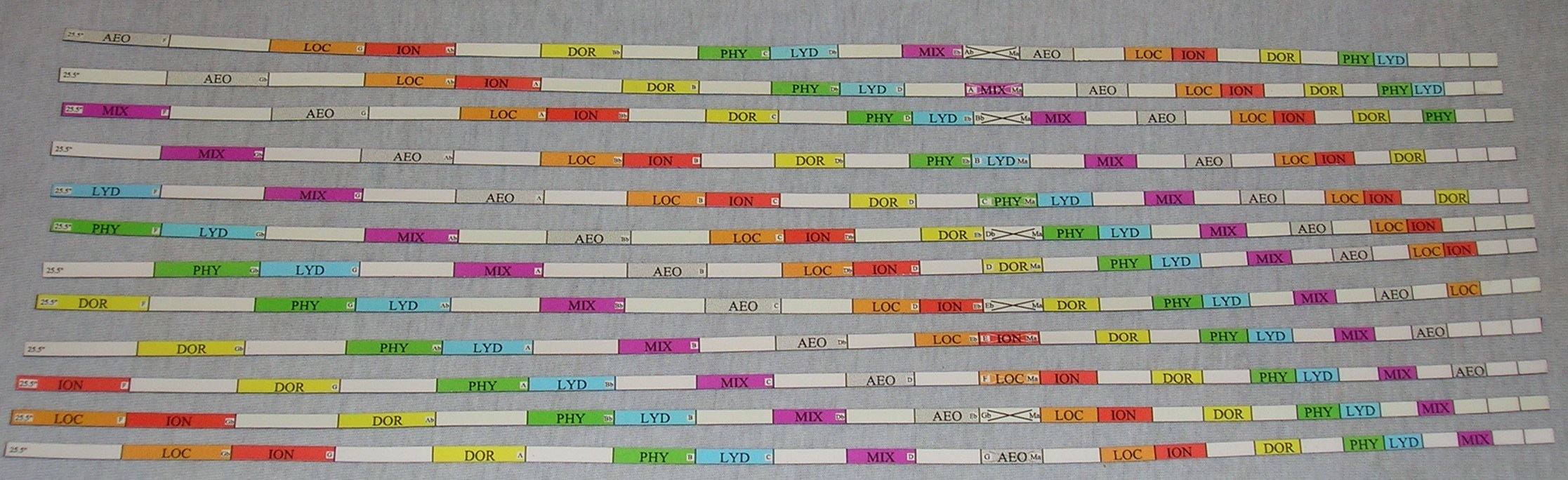
Click on the picture to see the magnets.

Guitar Scale Magnets – Major Scale Strips
Summary: Great “cheat sheet” for learning where the various major scale modes start on the fretboard. Very convenient, and very easy to install!

Pros: Magnetic base strip attaches easily to the side of your fretboard. The strips provide a superb way to visualize the starting point of the major scale boxes.

Cons: Just a nit, but only available for 25.5″ scale guitars. Not a really big deal as that’s pretty much a standard. Of course, I have different scale lengths, but they fit my Tele perfectly!

Features:

  • Base strip has a very weak adhesive that sticks to the side of the neck, but will not peel varnish.
  • Magnetic strips are made of the same material as those “refrigerator stickers.” They’re pliable and very easy to use.
  • Major scale strips include all keys from C to B.
  • Includes scale charts for all modes. Very handy.
  • Comes with a convenient storage tube for storing the strips when you’re not using them.
  • Great way to visualize the modal starting points in any key.

Price: ~$19.99 plus $5.00 S&H

Tone Bone Score: 5.0 ~ I’m a very visual learner, and having visual cues helps me learn much more effectively.

I’m not much of a guitar theoretician, not because of not wanting to be, but simply because with my busy lifestyle, having the time for academic pursuits is limited. So for my learning, I rely on tools and videos that will help me learn concepts quickly as opposed to traditional step-by-step methods that dissect the concepts into chunks. It may not be the best method of learning, but it’s all I have. But besides that, I’m also a very visual learner, and definitely a learn-by-doing type of guy. So if I can get my hands on something that will give me visual cues, my learning experience is much more valuable to me.

Enter Guitar Scale Magnets. One of the things I’ve been wanting to learn for awhile is modal theory. It has always interested me, but I’ve never seemed to have the time to really sit down to learn it – nor did I have the funds to take lessons (I spend it all on gear). So when I found out about Guitar Scale Magnets, I was immediately intrigued, and asked Jason Ellestad, the inventor of the guitar scale magnets to send me a set of major scale magnets to review.

In a word, these things are awesome! Made of the same magnetic material as those flexible “fridge” magnets – but not at thick – the magnets provide a very convenient way to learn the major scale modes by giving you visual cues of the starting points. Of course, you still have to learn the patterns, but you get the patterns on a couple of 8.5 X 11 sheets that you can tape to your wall for reference. Not bad for $19.99.

To attach magnets to the side of your fretboard, Jason provides step-by-step instructions. But you don’t even need the instructions. The base strip, of course, has no markings on it, so it’s easy figure out that it’s the base. It also has a weak adhesive that’s tacky enough to stick to your fretboard, and stay in place as you play, but not strong enough that it’ll peel your varnish. Once you have it in place, it’s just a simple matter of finding the key you want to practice, and laying it on top of the base strip. Each key is color-coded to show you the starting points for each mode. Click on the picture above to see an enlarged version of what they look like.

I won’t belabor how useful I’ve found these to be. I’m just going to recommend that you try them out. Jason has three types of strips available: Major Scale, Pentatonic Scale, and Learn the Fretboard/Tab strips. So if you need some visual cues for learning your scales, Magnetic Scale Strips are a great tool! For you teachers out there, I think these would be invaluable to give to your students to help them learn and practice in conjunction with your curricula.

For more information, go to the Guitar Scale Magnets site!

Read Full Post »

I know, I know… I talk about this pedal A LOT, and I’ve already reviewed it a few times… (here’s the original) But I keep on discovering so many great things about this pedal that makes me want to talk about it. Just when I think I’ve got it dialed in, I find yet another thing that it does that just completely turns me on!

Tonight, I was screwing around with my song Strutter yet again. I’m done writing it, but I wanted to practice, and that song is really fun to practice to; I just mute the lead tracks and have at it. Mind you, all I wanted to do was practice and play “Blondie,” my Squier CV Tele – I didn’t have anything else in mind.

So I hooked up my Aracom PLX18 BB and started playing over the rhythm track. Folks, this amp just oozes classic Marshall “Bluesbreaker” tone as is, but just for shits and giggles, I decided to switch on my KASHA Overdrive to add a little flavor to my tone because I was working on a new song recently where I loved what this pedal did – especially with the PLX18 BB! For that song (which I’m still writing) I didn’t want to add too much gain. All I wanted to do was add some texture. So I thought it might just sound good while I practiced over Strutter. Man, was that a good call!

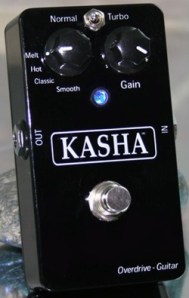
Here’s an A/B clip of sorts of the first two verses of the song. In verse 1, I’m playing the PLX18BB with nothing added – just a touch of room reverb as an insert in the mix. In the second verse, I switch on the KASHA overdrive (still with some reverb in the mix). The pedal is in the “Hot” channel, and I set the gain knob at 12 o’clock, which just provides a bit of a gain boost (it’s capable of adding up to 15dB of boost in this channel), but this channel also sustains for days, adding a touch of high-end sparkle. Here’s the clip:

Please excuse the little playing mistakes I made… 🙂 It’s nothing really egregious. In any case, when you compare the two verses, the difference in tone is actually subtle, at least to my ears. But from a playing standpoint, the amount of touch-sensitivity and sustain that was added made the second verse so much more musical and so much more inspiring to play. And speaking of subtlety, I think that is yet another mark of a great overdrive pedal. To me, overdrives should be transparent, they should never alter your tone – that’s what fuzz and distortion are for. At the most, they should simply add EQ emphasis, and that’s it. And that’s why I love the overdrives I play through: Tone Freak Abunai 2, GeekMacDaddy Geek Driver, Creation Audio Labs Holy Fire, the KASHA overdrive, TubeScreamer, and believe it or not, a Bad Monkey. They all bring to the table their own little voicings, but none of these alter your basic tone.

Great gear evokes a sense of inspiration – at least in me – that makes me want to keep playing and playing and playing. I just can’t say enough about this pedal. At around $200, it is worth every penny I paid for it. Thanks, John Kasha for coming up with such a fantastic pedal! Now back to playing!

Read Full Post »

or… Doc Brown in Back to the Future saying, “I finally invented something that works!” Speaking in reference to the Flux Capacitor. Nah, it’s nothing of the sort, but it is by no means less cool. The Flux Density Modulation Speakers are a new approach to attenuation where the attenuation happens right at the speaker! Giving you up to -9 dB attenuation, while keeping your tone, that is what I call cool, and something I must check out! You know me, I’m an attenuator fan, and something like this has me absolutely GAS-ing! From what I could tell from the videos below, the tone is really preserved. Now, mind you that -9 dB of attenuation won’t get you down to conversation levels, but it’ll sure provide enough attenuation to take the bite off the volume. If you need to go lower, hell! Get an Aracom attenuator, and get it down REAL LOW! Check out the NAMM vids!

and from GuitarWorld…

Read Full Post »

I’ve been using the Aracom PLX18 BB Trem in my studio for the past couple of months, and it is simply a great amp. As I’ve written in the past about this amp, I’ve made some modifications to it such as replacing all the stock pre-amps with NOS (the JJ EL84’s are killer in this amp, so no need to even look for NOS for these), and replacing the stock speaker with a Fane Medusa 150.

As most GuitarGear readers know, my go-to gigging amp is my beloved, customized Aracom VRX22. But every now and then, I like to take my other amps out for a spin. For this evening’s church gig, I took the PLX18. Based upon tonight’s experience, it looks like I’m going to gig with this amp a lot more.

One thing that I’ve come to love about Jeff Aragaki’s amp designs, is that he has got the vintage Marshall mojo down. Mind you, he doesn’t make clones. He takes the original circuit designs and innovates on top of them. The PLX18 BB started out as a classic “Bluesbreaker” design, but with improvements to the circuit to make it much more efficient. The result is a real smooth-sounding amp that – like the amp it is modeled after – has tons of clean headroom, and needs to be absolutely cranked to get grind. But when it grinds, it’s so rich and smooth and dynamic, you just close your eyes and let your fingers do the talking!

Such was the case tonight. About a year ago, I re-arranged a classic Catholic hymn and gave it a bluesy, folk-punk vibe (think a cross between Death Cab and Clapton). I know, it sounds like a weird mix, but amazingly enough, it works. People know the song really well, but this arrangement gets them nodding their head in time – it’s cool to see! In any case, I also arranged it so that there was plenty of room in between verses for little solos. It’s a somewhat slow song, so you can’t go overboard, but the phrasing really lends itself to a lead played with an amp just at the edge of breakup, with lots of bends and vibrato.

And it helps to have an amp that has a lot of natural sustain. The PLX is just so damn good at that! I played the amp in the “clean” channel that I had almost cranked up all the way, since that’s where a vintage Marshall sounds great, and of course, it was plugged into my attenuator so I could crank it and still have a manageable volume level. The PLX is so responsive to attack and volume knob adjustments that it makes playing just a dream. Throughout the song, I just closed my eyes and got into pure expression mode. It was one of those occasional experiences where the tone just takes you right into the Zone! When you’re in the Zone, you just can’t do wrong. Hearing the PLX sing with my Squier CV Tele – I just floated away in absolute bliss.

For our closing song, I actually didn’t play, and gave “Blondie” over to my guitar cohort Dave so I could thump out on bass. For that song, I activated the wonderful Kasha overdrive pedal, in the Hot channel to really slam the amp with gain. The great thing about the Kasha overdrive is that it’s a really transparent overdrive pedal, and allows you amp to do it’s magic. With the OD engaged, the PLX took on this incredible character. It’s a bright amp by nature, but the tone became really jangly and ringy, with just a touch of compression coming from the EL84’s. It helps that I replaced the original JJ pre-amps with the NOS ones. In any case, talk about creamy smooth but articulate overdrive! Listening to that just got me thumpin’ out on the bass! We had a lot of fun with that song. Kind of felt like the White Stripes as we only had two instrumentalists (though it was two guitars, or a bass and guitar – no drums). It was raw and edgy, but oh so cool! You gotta just dig moments like this!

As I’ve mentioned, the PLX18 BB Trem is Jeff’s oldest amp design and unfortunately, his least-known amp. It’s tough to compete in the market when there are so many boutique, vintage Marshall-style amps on the market. I’ve played many, but the PLX18 BB is special. Others who own one of these will attest to just how special this amp sounds. Even though it’s not quite as versatile as the VRX22 that can get me over-the-top gain, for what it does, I can’t think of a better amp. Mind you, this ain’t just a one-trick pony. For blues, classic rock, and country, it’s simply killer. So if you’re looking for that classic “Bluesbreaker” tone at a price that won’t break you at the same time (the head is $1345, and the combo – which I have is $1750), I encourage you to check this amp out! And if you do get it, you won’t regret it in the slightest!

As far as equipping it, pay the extra for NOS pre-amps (the JJ EL84’s are just fine – I actually prefer them), and even though Jeff recommends an Eminence Red Fang Alnico to be paired with the PLX18 BB, for my personal tastes, I prefer something with a bit tighter bottom end; hence, the Fane Medusa that I swapped in. If you still want bright tone, then an Eminence Governor works insanely well, and will give you nice mids and high-mids, and I hear the Celestion Gold sounds killer in the the combo! YMMV…

For more information on this wonderful amp, check out the Aracom Amps site!

Read Full Post »

Toadworks AjaxBeing sick sometimes has its advantages because even though I’m half brain-dead with a head cold, I can take some time to surf the web in search of gear. This morning, I read a press release on Harmony Central about the new Toadworks Fat City Dual Overdrive. Being a big fan of overdrive pedals, I went to the Toadworks site to read about this new pedal.

I had tried a Mr. Ed distortion awhile back – it was okay – but I wasn’t thrilled – but I’ve always dug dual overdrives and stacking, so this looked promising. I read about the pedal, and it sounds really cool. All hand-wired with high-quality components. Also, a little out of my price range at around $300. Still, it looks like it’s worth checking out just to see how it sounds.

While I was on the site, I started looking at all the other pedals Toadworks offers, and the one that REALLY caught my eye was the Toadworks Ajax. Rather than try to explain it (since I’ve never even used one), here’s the product summary from the Toadworks site

Ajax is essentially a 2-channel line mixer, combined with a buffered Y-splitter, with the ability to invert (180°) the phase of one input signal, as well as one of the output signals.

Ajax has a wide range of uses, including:

– Two-channel mixer – With independent input level controls, Ajax can act as a simple 2-channel mixer.
– Multi-guitar interface – Ajax has two buffered inputs, allowing you to connect (and play) two different instruments at the same time.
– Input phase correction – When combining two signals, there is always the possibility that the signals may be out of phase with each other. Ajax can invert the phase of one input to eliminate unwanted frequency cancellation.
– Multi-amp interface – Ajax has two output jacks, allowing you to send the signal to two different amplifiers simultaneously.
– Output phase correction – When connecting the two output jacks to two separate amplifiers, you may find that the amplifier outputs are out of phase with each other. Ajax can invert the phase of one output to eliminate unwanted frequency cancellation.
– Stereo expander – when using two amplifiers (or recording direct to a stereo interface), it can be desirable to invert the phase of one of the amplifiers, creating an ‘expanded’ sound – this is especially useful with modulation effects such as chorus, flanger, etc. The output phase inversion is performed using the stomp switch, so this can be done on the fly.
– Effect Combination – If you are lucky enough to have two Ajax devices, you can split the output signal of the first unit, applying varying amounts of effects to each signal indepentently, and recombining the signal using the second Ajax. Using this method, you will have access to new sounds and effect combinations that are otherwise impossible.
– Simple buffer – Putting Ajax first in your signal chain will provide a simple buffer, eliminating concerns about signal loss in true-bypass effect chains.
– Clean boost – Both the input and output Level controls are capable of linear boost, making Ajax a simple clean boost with no frequency attenuation.

This pedal is very intriguing to me, as I’ve recently been experimenting with playing two amps simultaneously. I know, you can do that with an ABY pedal, and I do that, but I really like the phase inversion and the input and output boost. This has lots of possibilities. Funny though, this pedal has been out for a year, and there is very little information or reviews on it.

Read Full Post »

« Newer Posts - Older Posts »