Feeds:
Posts
Comments

Posts Tagged ‘guitar gear reviews’

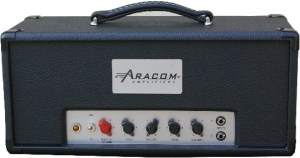
Just put in a re-labeled 1960’s-era Mullard ECC83 into my Aracom VRX22 this afternoon. I had a JJ 12AX7 in there, and make no bones about it; that’s a great pre-amp tube. But the difference in tone between the two is immense. Where my JJ had a great tone, one thing that I noticed was that the highs tended to be rather harsh when the tube was overdrive, and I found myself turning my Tone knob left of center – a lot – to bleed off some of the highs.

But after I installed the Mullard, I was absolutely blown away! The overdrive seemed so much more focused, with zero high-end harshness. It was some of the smoothest overdrive I’ve heard, and definitely the smoothest the VRX22 has sounded since I got it. That’s saying quite a bit because I love the tone of this amp immensely, even without the NOS Mullard. Which brings me to the crux of this entry…

As a tube amp aficionado, I’ve gone through lots of pre-amp tubes, and almost invariably, I’ve gravitated towards NOS tubes to get the tone I like. Some people I’ve spoken to say it’s all hype but, at least to me, it’s not. I suppose for some types of tubes, there’s not much of a difference. For instance, I almost invariably use JJ’s for power tubes because they just sound great to me. They’re well-made, and run pretty hot, and they break up nicely.

But with respect to pre-amp tubes, I’ve found a marked difference between NOS and new tubes. I love Mullard and JAN Phillips tubes for pre-amp tubes. They’re just so smooth sounding, smoother than all the new make tubes I’ve played. Plus, they were made during a time when most electronic devices were run with tubes, so the build expertise, equipment and materials for making tubes was abundant. According to my friend Jeff Aragaki of Aracom Amps, the alloys used in NOS tubes are not as readily available nowadays, and that could account for the difference in tone. Not sure if this is true, but it certainly makes sense. The only drawback is the price. That Mullard sells for $129 retail, and that is by no means inexpensive.

But I look at buying NOS tubes very much like buying a great pair of shoes. For instance, I spend almost $200 a pair for my everyday shoes. These are absolutely comfortable, and not only that they last a long time because they’re constructed so well. In fact, it takes me about 4-5 years to really wear them out. This in contrast to lower priced shoes that I’ve worn out within a few months. After a long period of time, I’ll spend more on the cheap shoes. A better case is my father. His shoes cost at least $500. But they last almost 20 years! He just gets them resoled every few years until the shoe repair guy says that it’s not worth it.

NOS tubes are similar. I’ve had the same NOS tubes in my Hot Rod Deluxe for almost five years, and they still sound great! I play that amp a lot. On the other hand, the new Tung-Sol tubes I put in another amp lasted all of two months before they started to lose their character, with one becoming microphonic. Granted, they’re fairly inexpensive tubes and they sound great, but if I have to shell out $25 every couple of months, that starts to add up. NOS tubes, especially the mil-spec tubes that I prefer were made for military usage, which means they had to be well-built and durable. That’s a huge advantage NOS tubes have over newer tubes.

Jeff also shared a story with me today about a friend of his who used to be stationed on an aircraft carrier. He was telling Jeff that when the ship replaced electronic components, they’d dump boxes of tubes – good ones, mind you – over the side of the ship. So the ocean has NOS tubes littering its bottom.

In any case, please do not just take me at my word! 🙂 This is simply my perception based upon my experience. In the end, as I am often apt to mention, you’re judge of what sounds pleasing to you. So only buy what makes sense to you!
Read Full Post »

For a long time, I’ve had this thing for getting a big guitar sound in my recordings. I’ve done a bunch of different things like doubling, overdubbing, signal splitting between two amps, and the like. But recently, I got a couple of pieces of gear that is allowing me to explore yet another way to get a big guitar sound: Re-amping. Re-amping is essentially taking an already amplified guitar signal, and running it through another amplifier. This is not like adding a gain stage because that usually involves multiple pre-amp sections. With re-amping, you’re building on a fully amplified signal that has passed through the power tubes. The result is VERY different in tonal character from just moving the signal through another gain stage.

There are lots of ways to re-amp, so I won’t go into a lot of detail. But I will share how I do it. Ever since I got my Aracom PRX15-Pro, I’ve been contemplating this very thing because of its line out which could be used in a variety of ways; such as running the signal into a PA (since it’s unbalanced, you need a DI box), or taking that line level, and running it into another amp to re-amplify the signal yet again. The cool thing about the PRX150-Pro is that I can simultaneously run an output to a speaker, then the amp that’s doing the re-amping can also have it’s own audio output.

Now here’s something even more cool! I have a Reason Bambino, which also has a line out. It’s a balanced line out, so it can go directly into a board, and doesn’t need to be hooked up to an external cab. The tone coming from the line out of the Bambino is very nice. I suppose that I could’ve miked the Bambino from another cabinet, but I did want to test the line out.

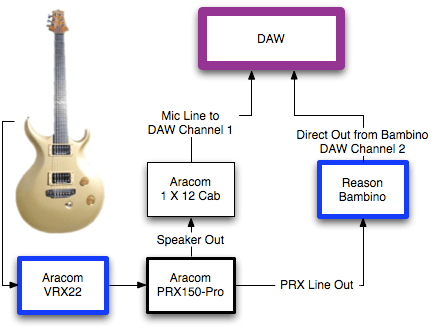
In any case, here’s a diagram of how I had everything hooked up:

VRX22-ReAmp

In a nutshell, I plugged my guitar directly into my Aracom VRX22, which ran into the PRX150-Pro. I hooked up an external cab to the attenuator, placed a mic in front of the cabinet that ran into Channel 1 of my audio interface. Then, I ran the line out of the attenuator to the input of the Reason Bambino. From there, I went directly from the Bambino into Channel 2 of my audio interface.

I set up a clip from a song I wrote and added two tracks that took input from the two channels. I also panned Channel 1 full left and Channel 2 full right. Once I had the levels worked out, I recorded a solo over the existing music. Once the recording was finished, I took the Bambino’s signal slightly out of phase with Channel 1, to make it sound like two guitars are playing simultaneously. The effect is totally cool, and it creates a very in-your-face, big guitar sound! Here’s the clip:

Note that this is a kind of a different way to employ re-amping, which basically runs two amps in a series then out a single output. The way I employed it, the re-amped signal is a component of the overall package.

Read Full Post »

Aracom Amps VRX18 18 Watt Head

Aracom Amps VRX18 18 Watt Head

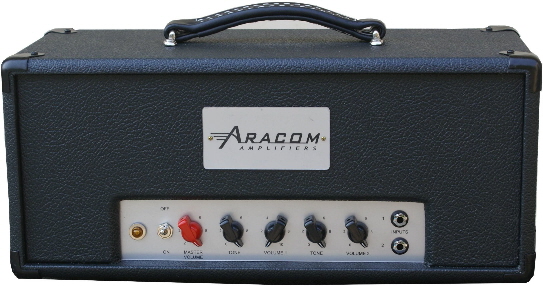
I’m falling in love again with my Aracom VRX18. This was the amp that first got me introduced to Aracom and my good friend Jeff Aragaki. My amp is actually a tweaked version of the stock VRX18 as it sports an EZ81 tube rectifier, plus a tweaked circuit that adds a bit more sag and sustain. The result is just a gorgeous overdriven tone that really brings out the best of the EL84 power tubes.

One thing about EL84 amps is that if they’re done right, they have a distinctive overdrive tone that creates a subtle top-end fizz when they’re overdriven. I’ve played others that drive the power tubes too much, and they sound very harsh and incredibly compressed. Jeff did this amp right, and while the power tubes do indeed compress a bit, the overdrive tone retains its open character, while adding that nice top-end fizziness that EL84 amp lovers have come to appreciate.

The clip below is an excerpt from a slow blues song I wrote. It features my beloved Goldie plugged straight into the Aracom VRX18, and it also features the insane Aracom PRX150-Pro attenuator! Believe it or not, the amp was recorded at just above loud conversation levels! We’re talking less than 1/10 of a Watt, and the amp still retains its tone and dynamics! Anyway, here’s the clip:

Read Full Post »

4.75 Tone Bones - Almost perfect but not quitevoxac4tv VOX AC4TV Amplifier


Summary: For what it brings to the table, this is a great little amp. While it’s mainly touted as a practice amp, you can easily gig with this at small venues, or attach an external cab to it, and you could easily keep up with a drummer!

Pros: Classic VOX ACx cleans, and nice, warm overdrive via the Class A EL4 power section.

Cons: 1/4 Watt setting really narrows the bandwidth. The amp sounds pretty lifeless at this level, but that’s why I have a great attenuator. I would play this at 4 Watts all the time. No need to ever use the built-in attenuator.

Features:

  • Controls: Tone, Volume, OP Level (4W, 1W, ¼ W)
  • In/Out Jacks: Input, External Speaker Jack (¼’)
  • Output: 4 Watt RMS 16-Ohm
  • Speakers: AC4TV – 1 x 10″ 16-Ohm Celestion VX10 custom speaker;
  • Valve/Tube Complement: 1 x 12AX7 (pre) / 1 x EL84 (power)
  • AC4TV Dimensions: 13.78″ (W) x 8.46″ (D) x 14.76″ (H);
  • AC4TV Weight: 19.84 lbs.;
  • Power cable included

Price: ~$249 street

Tone Bone Score: 4.75 – I was very surprised by this little amp. The 10″ Celestion speaker really packs a nice punch, and the controls are dead simple. I would easily add this to my growing stable of amps!

I’ve been on this low wattage amp craze for awhile, and it’s wonderful to see all these great low wattage amps entering the market! Orange has the Tiny Terror, and VOX also has the Night Train. Those amps just mentioned are all pretty much modern styling, but I should qualify my craze. I love the old vintage styled low wattage amps.

It all started out with the Fender Champ 600, which I reviewed awhile ago here. I was looking for a low wattage tube amp that I could get some serious overdrive tone from without making my ears bleed. I immediately fell in love with that amp, and since I’ve had it have only made some minor changes, like putting in NOS tubes. But other than that, this amp has served me quite well, both in the studio and even in small venue gigs (using a 1 X 12 of course).

So it was a very nice surprise to encounter the VOX AC4TV in a store yesterday. This is a sweet looking little amp, with the classic TV type of box harkening back to yesteryear. The blonde vinyl is a very nice touch!

How it sounds…

The AC4TV is little tone monster. This single-ended amp packs quite a punch, despite its diminutive size and 10″ speaker. Surprisingly great tones are to be had with this amp, from your classic VOX EL84 cleans to some very nice crunch and grind when you push it. As a single-ended amp, it’s simple as expected, just a volume and tone knob, plus a selector switch for choosing 4, 1 and 1/4 watt output.

At 4 Watts, the amp puts out a great clean tone. With a Strat it starts mildly breaking up at about noon on the volume knob, and at about 10 o’clock with a humbucker – for that, I used a gorgeous sunburst finish Gibby ES-335 – damn I wish I hadn’t sold mine! Cleans with the ES-335 were incredibly lush as expected from that semi-hollowbody, yet they were also very chimey due to the natural character of the EL84 power tubes. It was a very good combination!

Going into grind, you get that classic EL84 crunch, but it’s obvious VOX must’ve installed a filter cap to prevent the power tubes from over-saturating and creating a compressed, squishy mush. The overdrive remains nice and open, with great dynamics and touch sensitivity.

At 1 Watt, the amp still retains a very nice tone, though the tone bandwidth is slightly narrowed. It’s not bad at all, and at this power setting you can crank the amp up (but keep in mind that sonically, 1 Watt is still pretty loud), but the volume will be fairly reasonable.

The 1/4 Watt setting was not really pleasing at all, though in a pinch, if you really have to be quiet, it’ll do as a reference point for practicing. At this setting, the tone gets muddy and the dynamics are abysmal. Were I to get one of these, I’d get the head and cabinet version so I could use a proper attenuator with this, and keep the amp in its 4 Watt mode to get all the gorgeous tones that the full power setting has to offer.

I any case folks, this is classic VOX tone. The EL84 are bright and chimey as expected, and when pushed, the amp doesn’t produce over-the-top overdrive. It’s nicely controlled and surprisingly smooth.

Overall Impressions

The rating says it all. I love the tones that this amp produces, and I love that classic blonde look. At a street price of $249, it’s a very nicely priced amp to boot! You can use this for practice or, with an external cab, there’s no reason it will not fit right in at a small venue gig. The custom power transformer has a lot to do with the power handling here, and it helps the amp produce a big voice for such a small package. Definitely a thumbs up for the VOX AC4TV!

Here’s a great demo video of the AC4TV from VOX:

Read Full Post »

Aracom Amps VRX18 18 Watt Head

This morning, the guy who’s painting my house came into my garage/studio to ask me a question, and being a guitar player himself said, “Dude… you have a great setup.” So the conversation turned to my favorite topic, and of course, that involves talking about guitar gear. 🙂 During the course of our discussion he talked about how he loves Vox amps, and so I demonstrated my Aracom VRX18, which is actually based upon a classic Marshall 18 Plexi, but it had EL84’s. I wanted to give him a reference tone. He just smiled and said, “That’s yummy.”

He had to get back to work, but after not playing that amp for awhile (probably a couple of months), I forgot how much I love its tone. My VRX18 is quite special in that it’s a custom VRX18 that has a tube rectifier, which is an option when you get one of the VRX series amps. Jeff has it tweaked quite nicely, and the amp has tons of sustain, and gorgeous sag without getting mushy and compressed when driven. That’s probably a reason why I haven’t really used EL84 amps that much. My experience has been that they compress a lot when they’re driven hard.

But not this one… Jeff also adjusted the extra gain channel so it wouldn’t compress the power tubes too much. You get lots of dirt, but you maintain the clarity of your notes. This is a great little amp! In any case, I recorded a clip where I have the Master at 3 o’clock, and the Volume at 2 o’clock. That produces some serious grind, but as you’ll hear in the clip, there’s very little compression.

The drive tone the VRX18 produces is absolutely magnificent! When I recorded the clip, I couldn’t believe all the overtones and subtle harmonics that the amp was producing! Jeff really got the tone nailed with this amp!

In addition to the amp, I played through Goldie, running her straight into the amp, then through the insanely transparent PRX150-Pro attenuator set at variable attenuation mode at about 3 o’clock, then into a custom Aracom 1 X 12. Output volume was just yelling level. 🙂

Here’s a list of the Aracom VRX18’s features as a review:

– Channel 1: Volume and Tone Controls
– Channel 2: Volume and Tone Controls
– Master Volume Control (PPIMV)
– On/Off Switch
– Indicator Lamp
– Hi/Low B+ voltage switch (18/9 watts)
– (2) EL84 Power Tubes
– (2) 12AX7 & (1) 12AT7 Preamp Tubes
– Cathode Biased Power Tubes
– S.S. Rectifier with “sag” circuit
* EZ81 Tube Rectifier – Optional
– Custom Heavy Duty Aluminum Chassis
– Custom “Black” Plexi Front and Back Panels
– ARACOM Power Transformer: hand-wound and interleaved
– ARACOM Output Transformer: hand-wound, interleaved on a paper bobbin
– 4, 8, 16 ohm Speaker Jacks
– Detachable Power Cord (IEC320-C13 Socket)
– External Fuse Holder
– Custom Turret Board (G-10/FR4 Flame Resistant)
– Handwired and Handcrafted in the USA.

This little tone beast is such a value as well! At $895 for the head, it’s an absolute steal, and a real hidden gem in the boutique market, as is the VRX22, which is based on 6V6’s.

For more information, go to the Aracom VRX18 page!

Read Full Post »

Catalinbread Dirty Little SecretI always love being able to get great tone at a bargain. It’s not that I’m cheap. I’ll pay top-dollar for great gear, but when potentially great gear comes at an incredibly affordable price, the Dawg’s ears perk up, and his nose starts sniffing around to see where he can play some gear.

Such was the case when I first came across this little pedal company located in Portland, Oregon called Catalinbread. I had run across the name on a couple of gear forums, but didn’t get a chance to check out their site until today when I read their press release in Harmony Central Effects News. After I read the press release, I had to check out Catalinbread’s site, and much to my pleasure, Catalinbread offers several, very cool pedals.

One thing that makes them stand apart is their diminutive size. As noted in ProGuitarShop’s Catalinbread company page, “One of the defining features of Catalinbread effects pedals is the size. Catalinbread pedals are half the size of your standard MXR. That’s right, take a Phase 90 and cut it in half vertically and you’ve got the basic size of Catalinbread’s pint-sized pedals.” But, as they say, size isn’t everything. Apparently Catalinbread’s pedals pack a lot of sonic punch.

The other thing that makes Catalinbread pedals stand apart is their price. Their most expensive pedal that I found was US$179.95. Several of their pedals are under US$120.00! Mind you, these are handmade pedals! That’s so awesome! Catalinbread is definitely taking the stand of selling gear at lower prices to get it into players’ hands. Creation Audio Labs does this with their awesome pedals, and Aracom Amps does it with their VRX line. This ain’t trivial stuff, either. This is great, handmade gear at a great price!

Can you keep a secret?

The Dirty Little Secret could be construed as another “amp in a box” pedal. But from what I’ve heard from sound clips, it’s far from that. Catalinbread claims to have built into the box amp-like touch sensitivity that accurately respond to your playing dynamics and volume input; so much so that you feel like you’re playing in front of an amp, and not through a pedal. But there are several videos on the DLS product page that bears this out. Check out that page here.

Of course, only a live test will reveal if that is true, but I’m intrigued enough to go try one out if I can. The only problem with that is there are none to be found. This pedal’s so scarce that you can’t even order one on the Catalinbread’s web site! I have a feeling they’re being sucked up as fast as the company can produce them. Even retailers who were hawking the pedals awhile ago have either removed their sale pages or replaced their “buy now” link with ‘Email us about ordering.”

Well… my brother lives up in Portland. Maybe I’ll have him look these guys up!

Read Full Post »

4.75 Tone Bones - Almost perfect but not quite

Blackheart BH5-112 Little Giant 5 Watt Combo

Blackheart BH5-112 Little Giant 5 Watt Combo

Blackheart BH5-112 Little Giant 5Watt Combo

Summary: Nice, simple, and versatile studio/practice/small venue amp with sporting happening EL-84 tones.

Pros: Sweet and chimey EL-84 tones with Class A circuitry; simple and straightforward to use. Switchable between 5Watts and 3Watts, ensuring usability in just about any smaller venue. 3W mode kicks ass for getting power tube saturation at a reasonable volume.

Cons: I wish it had a Master Volume, but that’s just a nit.

Price: $349 street (used to be $249 when it first came out! Damn! Shoulda gotten one then.)

Specs:

• Single-ended Class A circuit
• All tube signal path
• One 12AX7/ECC83 dual-triode preamp tube and one EL84/6BQ5 pentode output tube
• Pentode (5W rms) Triode (3W rms) switch
• Solid-state rectifier
• DC filament power supply for all tubes
• 3-band EQ
• 16-gauge (1.5 mm) thick, folded and spot welded steel chassis
• Double-sided custom color PCB with 2 oz. copper
• 15-ply, 18 mm thick, void-free birch plywood construction
• Custom-designed 12″ Eminence Blackheart speaker
• 16 ohm, 8 ohm, and 4 ohm speaker outputs

Tone Bone Rating: 4.75 – Very musical and expressive amp. Nice cleans, with a decent amount of headroom.

I first heard about Blackheart amps back in 2007. They were so new that very few people knew about them. And while a local shop was listed as a dealer, only the owner knew about the amps, and they didn’t carry them in stock! Blackheart Engineering is sort of an overseas spinoff from Crate which produces cool, yet affordable tube amps. As a home studio enthusiast, I keep my ear to the ground about low-cost, low-wattage combo amps. When I first heard about the BH5-112, I was excited. I thought it was a bold move for Crate, and a smart one, considering Crate is a huge manufacturer with huge lineup of gear; adding even something cool like the Blackheart line would just get lost in the mix. But Blackheart was pretty low-key. No ads, spotty coverage on the Internet.

So it was a very pleasant surprise to see a few Blackhearts at a local shop yesterday, and among them, the Little Giant. I was actually there to play that G & L Tribute Comanche I wrote about last week; the last time I was at the shop, they didn’t have any Blackhearts, so I wasn’t expecting to see them at all. But with them there, I naturally had to try one out, and luckily they had the Little Giant.

Fit and Finish

This little amp has a real cool vibe going on. I really like the cabinet that Blackheart uses. It’s a closed back cab, and for an amp made overseas, it’s appears to be very well constructed. There were no apparent flaws in the tolex layering, and Blackheart logo on the front is killer. I dig the white vinyl trim used on the front around the grille cloth. Real boutique styling at a pretty affordable price!

The control layout is simple: An input jack on the left, volume and three-band eq knobs, an indicator light and an on/off switch, making it simple to plug in, dial in your tone, and start rockin’.

How It Sounds

I’ve really come to love the EL-84 tones, especially when they’re saturated, and the Little Giant doesn’t disappoint when delivering its sound. With the EQ knobs at 12 o’clock, the natural tone of the amp leans toward a slightly scooped tone with a bright voicing. Even with the specially-made Eminence 1 X 12, it’s bright, but it does retain a taut low-end that really smooths out the tone. Quite pleasing. I only tested the amp with that Tribute Comanche, but it didn’t matter. When I test an amp, I play it clean for a lot of my tests to see if it will deliver the natural tonal character of the guitar, and the Blackheart Little Giant fulfills its mission.

The amp is very responsive to volume knob and pick attack. With the volume set at about halfway, and cranking the guitar volume, I was able to get that AC30-like response: Clean and shimmery, with just the slightest bit of breakup when you dig in. Very pleasing to the ears.

Amazingly enough, even though its power rating is a minuscule 5 Watts, with the 12″ speaker, this amp can put out some volume! Hence its name “Little Giant.” It probably couldn’t keep up with a drum set and a band going all out, but it can pack a good enough punch to work well in a small venue where lower volume is critical, and it definitely could be put to great use in a studio!

Overall Impressions

What can I say? I dig this amp, much like I dig the Fender Champ 600. But unlike its Fender cousin, the 12″ speaker really lets the amp breath. And speaking of volume, I was quite impressed with the volume control. Unlike many amps that practically max out by 6, the sweep covered by the Little Giant’s volume knob is nice, even and more importantly, wide. Two thumbs up!s

Here’s a video (excuse the dude’s misinformation about Class A amps – damn! That’s even worse than my faux pas about modes 🙂

Read Full Post »

5 Tone Bones - Gear has stellar performance, value, and quality. This is definitely top of the class, best of breed, and it's a no-brainer to add this to your gear lineup!

Creation Audio Labs Holy Fire Overdrive/Distortion Pedal

Creation Audio Labs Holy Fire Overdrive/Distortion Pedal

Creation Audio Labs Holy Fire Overdrive/Distortion


Summary: Overdrive and Distortion and tons of gain in one box that will NOT alter your tone. Has built-in wave shaping that responds to attack and input gain that simulates overdriving the front end of an amp.

Pros: Possible to achieve all sorts of clipping from swampy grind to searing distortion rife with harmonics, overtones and feedback, and it can do all this at ANY volume – freakin’ amazing!

Cons: Operationally, none. But its circuitry is so special that it requires a special 48V DC adapter – it will not run from a standard 9V or 18V power supply like Dunlop DC Brick. But for what it brings to the table, that’s a small price to pay.

Price: $195 direct

Knobs:

– “G” Gain
– “O” Overdrive – Soft clipping circuit – has built-in wave-shaping to react to input gain much like the front-end of a tube amp. Higher levels evoke increased wave-shaping ensuring even distortion throughout the EQ spectrum.
– “D” Distortion – Square wave form distortion
– Hi-cut (variable sweep hi-cut, fully open gives you all the tone, dialed back scales back the hi-freqs)

Tone Bone Rating: 5 This stuff is magic.

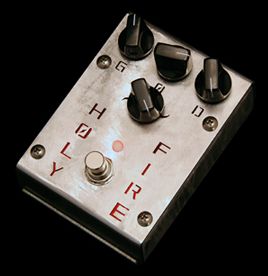
The guys at Creation Audio Labs must be wizards – or at least half wizard – because they’ve created what I consider to be the only overdrive/distortion pedal that does what it’s supposed to do, and doesn’t alter the tone of your amp! Mind you, there are times when you want that. For instance, to me, the classic overdriven mid-range hump of a Tube Screamer is an incomparable sound, and something I will always have on my board because I like the way it changes my tone. But in a lot of other circumstances, all I want is grind or all out distortion, and I don’t want my tone changed. That’s where the Holy Fire overdrive/distortion comes into play.

This is truly a magical pedal. Not only does it look awesome with that brushed metal exterior, and glowing red “Holy Fire” letters, it kicks the freakin’ pants off pretty much anything that’s out there that claims tone transparency in my opinion. And I don’t say this lightly. Remember, if you’re a regular reader of this column, I’ve got a real penchant for overdrive and distortion boxes – especially overdrive boxes. So when I say a pedal totally kicks ass, I mean it! You might not see too many reviews on them here, only because I only take the time to write about gear I love and would put in my chain. This is a pedal that will be taking up space on my board! And at $195 direct from Creation Audio Labs, this is a must-have box!

What’s so special about it? Actually, the question should be: What’s not to like? You get the best of both worlds here: Completely transparent overdrive or beautifully compressed distortion. Playing just with the overdrive and the distortion completely rolled off, you can get that classic, mildly crunchy, gritty grind to rip-roaring rattle that’ll make you think your amp’s bottles will shake off. Conversely with the overdrive turned all the way down and sweeping the Distortion knob, you can go from sweet and mild distortion, to heavily compressed gut-wrenching distortion replete with harmonics and overtones that’ll make you feel you’re getting scalped! But the best settings combine certain amounts of both. When you find your sweet spot, it’s epiphany time!

Imagine all this in one little stomp box! And the kicker is that your amp will still sound like your amp! Mind you, I didn’t read any reviews of this pedal before I got one for review. I didn’t want to taint my assessment of the pedal. The VERY first thing I noticed as I twiddled with the knobs is that my test amps never lost their voicing (I used three amps: An Aracom RoxBox combo, a Reason SM25, and my trusty Fender Hot Rod Deluxe). In all cases, the amp I was playing still sounded like my amp except it had grind and/or distortion. And no matter what output volume I had, the pedal operated the SAME WAY!!! So imagine the versatility this pedal brings to the table! I’m going to do a test later on with my Fender Champ 600, and see what wonders the Holy Fire will conjure when I lay down some tracks. It should be interesting as well as rewarding. So whether you’re on stage or in the studio. If you need breakup in your sound, this pedal will do it.

But wait there’s more!

On top of all I discussed, the pedal is sensitive to input gain, and has what’s called “wave shaping” that responds to higher input gain and acts like you’re overdriving the front-end of a tube amp. When you hit the pedal hard with either a booster or diming your guitar’s volume, or just picking hard, the pedal’s LED changes to a yellow color indicating that you’re overdriving the pedal. The magic behind this is that wave shaping evenly distorts the input signal across the EQ spectrum, so all your input tone is completely retained. The damn thing works too! It ain’t no marketing gimmick! So just as you’d expect when you do the same things with an amp, the Holy Fire will do it as well. Like I said, it’s magic.

I should make mention to a very cool effect that happens when you turn the distortion knob past 2 o’clock. The circuit actually starts compressing the signal, so you lose a little volume, but you get a very fat signal. In my opinion, that’s where the magic occurs with the distortion. After playing around with lots of combinations, I ended up just diming the distortion knob altogether, then just layering in varying amounts of overdrive and gain. Truly candy for the ears here, folks. With that, I’m going to post a couple of YouTube vids here so you can see and hear for yourself.

January 12, 2009

I’ve written a follow-up on this pedal. In a nutshell, I got my first chance gig with the Holy Fire this past weekend, and it was a true revelation. Talk about being on cloud nine while playing the guitar! Read the follow-up here.

Read Full Post »

« Newer Posts