Feeds:
Posts
Comments

Posts Tagged ‘guitar’

Debuted at Musikmesse 2010, the Ice 9 is the newest member of the VOX Joe Satriani line of pedals, named after a song with the same title on Joe’s “Surfin’ with the Alien” album. While it uses the same box and layout as the Satchurator, this is a completely different animal. The Satchurator is a distortion box, while the Ice 9 is an overdrive. Okay… so it’s yet another overdrive pedal entry into the already – excuse the pun – saturated overdrive pedal market. But the Ice 9 has some interesting features that are worth noting.

First of all, it has a Vintage/Modern switch. This switch provides different overdrive voicings. According to VOX, the Vintage circuitry models the classic Tube Screamer tones, while the Modern circuitry adds a bit more top-end bit and a bit of compression. In addition to the Vintage/Modern switch, the Ice 9 features a Bass knob for dialing in more bass response; perfect for getting really scooped, modern drive tones. Finally, like the Satchurator, the Ice 9 has the JS line’s signature “More” toggle, which adds a 10dB clean boost when engaged.

Pretty cool features, IMO. The Ice 9 is slated to be shipped in June. I don’t have any pricing information on it yet, but I don’t doubt that it’ll be reasonably priced if the rest of the JS line is any indication. Here are a some videos:

VOX Ice 9 Introduction Video

VOX Musikmess Demo

Musikmesse Demo from PremierGuitar

Read Full Post »

Writing GuitarGear.org has always been a labor of love for me. When I first started the blog, I didn’t know how well it would do at all; in fact, I didn’t even envision it to be widely read. I put what I wrote out there and just shared it; first with just a small group of WordPress bloggers and a fairly narrow set of people outside of the WordPress community. In the past three years, GuitarGear.org’s readership has really expanded, and it’s great to meet some of the wonderful personalities that come to visit!

Now and then though, a visitor comes along who’d like to contribute to the blog. It hasn’t happened that often, but I’m always open to and excited at the prospect of having others contribute because heaven knows I can’t cover everything, and widening the scope of what GuitarGear.org has to offer is always a good thing! So without further ado, I’d like to introduce a new author to GuitarGear.org, Brett McQueen.

Brett contacted me last week to see if he could contribute to GuitarGear.org to help drive traffic his own site: Guitar Friendly, where he provides free guitar lessons and other insights on playing guitar, and of course, acquiring gear. So not only does GuitarGear.org now have a new author, we’ve got a new sister site! I’m really excited by this partnership between us, and I think it’ll help both of our sites grow!

The most amazing thing about Brett is that he’s a full-time music student, and even cooler still, his degree is in worship ministry. As you know, I’ve never made it a secret that I play at church service. It’s a great venue for playing, and also one of the most challenging places to play. Plus, for the gigging musician in me, it’s a regular gig, and I’m all about playing as much as I can. With Brett, we share a passion for music as well as a passion for playing music in a church setting. Talk about alignment!

In any case, get set for some great material! Brett’s first article will be about buying your first electric guitar, and for those new to electric, it provides great insight on the process of evaluating and ultimately choosing your first axe.

Read Full Post »


Click on the picture to see an enlarged view.

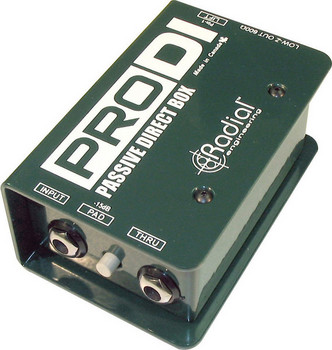
Radial Engineering ProDI Direct Box

Summary: Need to plug your acoustic guitar or bass directly into your mixer or DAW? Don’t do it without one of these units.

Pros: Completely passive DI, requires no internal or external power sources. Super-transparent, the ProDI adds no artifacts to your tone. Used with an acoustic guitar, it makes your guitar come alive!

Cons: None

Features (from the Radial web site):

  • Full range passive direct boxes
  • Isolation transformer eliminates noise
  • Very low harmonic and phase distortion
  • Compact and rugged design
  • Ideal for live sound and studio
  • Mono (ProDI) or stereo (ProD2) models

Price: $99 street

Tone Bone Score: 5.0 ~ Talk about having my acoustic guitar just come alive! If you’re not using a DI when plugging into a board, you need to get this!

For my solo acoustic gigs, I’ve been using my DigiTech Vocalist Live 4 for the last couple of years, and it has been terrific. But back when my Ovation got damaged (which I’ve since fixed with a little wood glue), I’ve been using my Fender Stratacoustic with the Vocalist. Unfortunately, the Vocalist doesn’t like input gain of the Stratacoustic, and driving hard on the strings would cause the Vocalist to overdrive, and cause a pop in the PA system. Not good. Luckily, the Vocalist Live has a Guitar Thru jack, so I could route the signal to another channel on the board.

But that meant that I was going to be plugging direct, and I knew that plugging an acoustic directly into a board doesn’t sound very good at all. Not only is the sound muddy with way too much midrange “goop,” there’s also a huge loss in dynamics, ultimately making the guitar tone flat and lifeless. While I don’t completely understand the electronics, the problem apparently lies in the impedance mismatch between guitar and board; and if I’ve learned anything impedance mismatches from working with attenuators, impedance mismatch is a big culprit for loss of tone and transparency. Enter the DI, or direct input box.

The main purpose of a DI box is to take one type of electronic signal, convert it to a magnetic signal, then convert it back to an electronic signal again. The  device used for this is a transformer. With a DI, the unbalanced, high-impedance signal coming from the guitar goes into the transformer, which “transforms” the signal into a balanced, low-impedance signal on the other end. The net result is that impedances are properly matched on both ends, theoretically retaining your tone. Now, enter the Radial ProDI.

I knew I had to get a DI, but wasn’t sure about which one to get, as there are many to choose from. But a quick call to Jordan at Gelb Music got me on track right away. I’ve been buying gear from him for years, and he knows my rig. So when I explained what I wanted to do, he had an immediate recommendation: The Radial Engineering ProDI.

Jordan told me, “I just recorded some acoustic tracks directly into a board, and used the ProDI. I was blown away by the tone. It totally made my guitar come to life – even plugged in! And at $99, it’s totally worth it.”

That was enough of an endorsement for me. Yeah, you could say it’s just another sales guy trying to make a sale, but I’ve been dealing with Jordan for awhile, and not only is he knowledgeable, everything he recommends, he plays. That’s Gelb’s shtick. They have an unsaid policy that their sales guys can’t make recommendations on anything they haven’t played, so you can be assured that their recommendations are reliable. I’ve been buying gear from them for years, so I’ve experienced that first-hand, AND benefited from that policy!

How It Sounds

I put together a couple of quick audio clips to demonstrate the difference between going direct into my DAW vs going through the ProDI.

Guitar straight into the DAW

Guitar into the ProID then into the DAW

One of the reasons I chose the Stratacoustic was because of the fantastic Fishman pre-amp and dual pickup system it uses. Plugged in, it sounds incredible. But even plugged in, there’s a detectable (at least to my ears) muffling of the tone, whereas with the ProDI, the guitar sounds richer.

I realize that with these recordings the differences are subtle at best. However, the difference was far greater plugged into the board at the restaurant I played at on Friday. I did an A/B test during sound check, and I couldn’t believe the difference in clarity between going direct into the board, and going through the ProDI first.

Overall Impressions

This is yet another piece of gear that I cannot live without for going direct. It’s a simple box for sure, but at $99, what it brings to the table is so much! For more information, check out the Radial Engineering ProDI page!

Read Full Post »

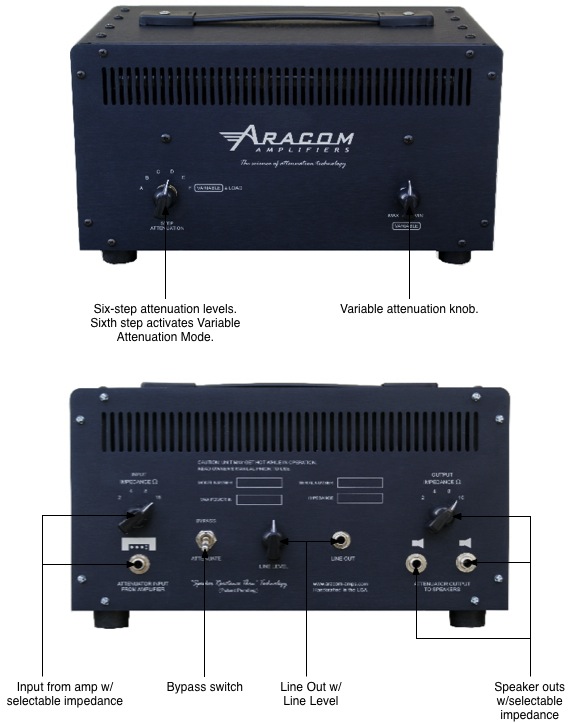
The Aracom PRX150-Pro to be exact. I’ve actually known about this for awhile, but Jeff Aragaki, owner of Aracom Amps asked me not to say anything until someone else had mentioned it. Jeff told me the news right after Joe purchased it, but I respected Jeff’s wishes to wait to mention it. So I did. And none other than Doug Doppler, guitarist extraordinaire and author of “Get Killer Tone,” happened to mention it in a thread on the The Gear Page recently about how Joe had told him about the unit. So the cat’s out of the bag! Joe Satriani is a proud owner of a PRX150-Pro, and his words to Jeff were “Great unit. I like it a lot.”

That’s about all the information I know other than how he raved about it to Doug who, in turn, contacted Jeff to get a unit; and since he got it, Doug has been raving about it on The Gear Page, and will be featuring it in his DVD.

This is not so much a plug for the PRX150-Pro as it is meant to underscore that even guitar heroes like Satch see the virtues of using an attenuator. Speaker breakup aside, some amps just don’t hit their sweet spot until they’re cranked up and played wide open. Unfortunately, the volume level at that point is too high to be comfortable for most human ears. With an attenuator – and a great one in the PRX150-Pro – players can crank their amps to their sweet spot, and not worry that their ears are going to bleed.

I know, there are several people who eschew attenuators as being tone suckers. But the new breed of attenuators such as the Aracom PRX150-Pro are so much more transparent than the older attenuators on the market; and yes, they are particularly more expensive than their older counterparts, but how much is great tone worth? We gear sluts think nothing about spending a few hundred bucks on a pedal. For what a great attenuator gives you, it’s totally worth the investment.

For more information on the Aracom PRX150-Pro, go to the PRX150-Pro product page!

Read Full Post »

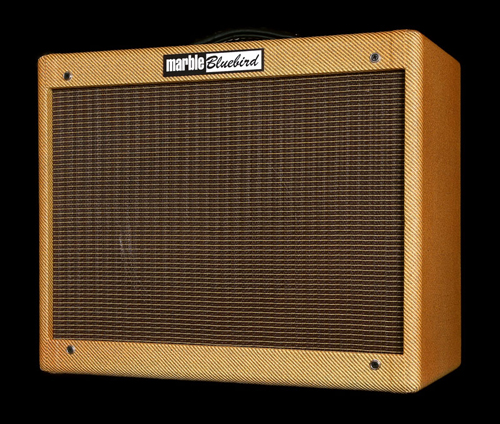
I was perusing The Gear Page today, and while in a thread, happened upon a post where a guy mentioned he had recently purchased an amp made by a company called Marble Amps. He said they specialized in Fender-style reproductions with tweed covering, all hand-wired for a reasonable price. He wasn’t kidding. He got a used head for $800! Oh well… we all can’t be that lucky.

However, I did a little digging and found their web site. Talk about oozing classic Fender mojo! They apparently have a US distributor, the Alternative Guitar and Amp Company in Southern California, but they don’t have any information on them (although I left them a message).

Very cool stuff!

Read Full Post »

In a word, lots. Admittedly, I’m a recent Marshall convert, having been primarily a Fender guy for years. I blame Jeff Aragaki, owner of Aracom Amps for this. His amps, that are steeped in Marshall mojo got me craving for that type of sound. BUT, it wasn’t until I got the PLX18 BB, a Plexi “Bluesbreaker” replica that I “got” that Plexi vibe.

At least to me, the response I get is visceral. When I hear a cranked up Plexi, there’s something that just sparks within me. I literally sink into the tone! A bit dramatic? Probably, but to me, there’s nothing that defines classic rock more than a cranked Plexi. Here’s a video I found of some classic Cream with Eric Clapton, playing “Sunshine of Your Love:”

Mm, mm, good….

Read Full Post »


Click on the picture to see an enlarged view.

Yamaha APX900 Thinline Acoustic-Electric Guitar

Summary: Yamaha got it right with its Acoustic Resonance Technology (ART) pickup system. Plugged in, the tone shaping possibilities are amazing. If you’re looking for a mid-range performance guitar, this is a guitar you have to consider.

Pros: ART pickup system rocks the house! Incredibly playable guitar with a great-feeling neck. Action out of the box was just right.

Cons: A little bright and thin-sounding unplugged, but this is a thinline, so that’s expected. But despite that, it has a nice, rich tone.

Features (from the Yamaha web site):

Top Solid Spruce
Back & Sides Flamed Maple
Neck Nato
Fingerboard Rosewood
Bridge Rosewood
Tuners Die-cast Gold
Body Style Thinline with Cutaway
String Scale 25 9/16″
Body Depth 3 1/8″ – 3 9/16″
Nut Width 1 11/16″
Colors Natural, Mocha Black, Ultramarine, Crimson Red Burst
Finish Hi-Gloss
Preamp System57 (3-way A.R.T.)

Price: $699 street

Tone Bone Score: 5.0 ~ This guitar offers the best of both worlds: Fantastic plugged in tone, and rich (though bright) unplugged tone.

My very first brand-new guitar was an old Yamaha FG335 that my dad gave me for my birthday. Up to that point,  I had been playing hand-me-downs from my cousins. Not complaining about those old guitars, but getting a brand-new guitar is always special. That FG served me well for 15 years before it had a bit of an accident, and I had to retire her (I had named her “Betsy”).Since owning “Betsy,” I’ve always been partial to Yamaha acoustics, though the FG was the only one I’ve ever owned. They make great-sounding and -playing guitars at an affordable price. What’s to complain about that? 🙂

As you may know, I just purchased a BOSS RV-5 Digital Reverb that I recently reviewed. At the shop where I did my evaluation, I just happened to do the evaluation with an APX900; hence, this review that you’re reading. But before I continue with the review, this is my next acoustic guitar! For what you get for the retail price, you just can’t beat it!

Fit and Finish

Even with the “cheap” product lines, I’ve always been impressed with Yamaha’s build quality. No errant coating, nice and straight joints, and well-dressed frets. The APX900 was no exception in this department. The frets ends were rounded off nicely, the action was perfect – not too low, not too high. I dig the “bookend” triangular mother-of-pearl inlays on the neck. It’s a real nice touch; and the binding about the sound hole and body add nice definition to the look of the guitar.

Playability

With a nice “C” shape neck, the APX is a very comfortable guitar to play. Cutouts are must for me to play high up on the neck and the action is such that high notes are easy to fret. I detected no buzz at all anywhere on the neck, and the intonation was perfect – at least from what I could tell. The neck is a bit on a narrow side, much like an electric guitar, but that’s the way I personally like it, so whether playing chords or picking individual notes, the key word with the APX900’s playability is “comfort.”

How It Sounds

As I mentioned above, as a thinline guitar, its natural, unplugged tone is a bit thin. But that doesn’t mean it’s tinny. It just happens to sit a bit higher up in the mids, which could actually be very useful when playing with larger acoustics. And despite its thinner body, the solid spruce top really helps to project the sound out, so it produces more natural volume than you’d expect.

Plugged in is a completely different matter, and this is where the ART pickup system comes into play. As I understand it, the ART system isn’t your traditional EQ. It is a system of three individual pickups placed at specific points in the body that produce or emphasize different EQ frequencies. Unlike traditional tone controls that act as frequency cut or boost, each slider for low, mid and high is a volume control, and your output signal is a mix of the three pickups.

How does it work? In a word, AWESOME! I took several minutes to play around with the controls, and just fell in love with the system! Where traditional EQ controls may muffle or muzzle the tone if you turn down, this doesn’t happen with the ART system. Clarity is retained, no matter what you do because after all, all you’re doing is adjusting a volume control. I have to admit that it was a little unsettling at first because I was expecting the tone to muffle, especially as I bled off some highs. But that didn’t happen at all. For instance, when I first started playing, I thought the tone had a bit too much high-end. So I adjusted it down. The cool thing was that the high-end was still there, it just wasn’t as prominent as it was before I made the adjustment. I found that to be incredibly cool! I also set up the ART so I could play an arrangement of Sting’s “It’s Probably Me” where I play sort of a bass line on the 5th and 6th strings. With that, I brought down the mid and high, and turned up the bass. I was rewarded with a rich, bassy tone that was not boomy at all.

Overall Impressions

The ART system makes this guitar a winner in my opinion. If it worked this well with the APX line, I can only imagine how well it works with the top-of-the-line LX series. I’m duly impressed!

Read Full Post »

That’s BS of course, because throughout history there have been several formidable female guitarists. But one that isn’t mentioned much is Sister Rosetta Tharpe. I learned of her a long time ago, but was recently reminded of her when a friend posted a video of her on Facebook. Folks, this lady had chops! I wouldn’t be surprised at all to see her listed as a musical influence on blues and rock musicians the world over.  Check out this video of her playing the song “Up Above My Head.”

Damn! Her rhythm chops in that song were incredible. She had a great since of playing just the right thing at the right time.

Here’s the video that served as a reminder… She’s playing a Gibson SG in this clip!

Read Full Post »


Click on the picture to see an enlarged view.

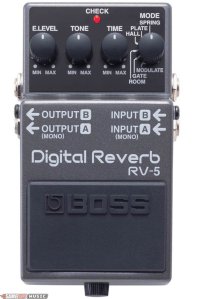
BOSS RV-5 Digital Reverb

Summary: No, it isn’t the be-all end-all in reverb pedals, but for what it offers as a nice, subtle reverb to add some spaciousness to your sound, then the RV-5 really excels.

Pros: Plate reverb is excellent on this pedal – especially with an acoustic guitar. Amazingly enough, the RV-5 is transparent to my ears and doesn’t suck tone. The RV-5 is also super-quiet, and makes no line noise at all; pleasantly surprising qualities.

Cons: The Spring reverb is a little funky on this pedal. At higher Decay settings, there’s a bit of an intended artifact in the tail of the signal. Not too pleasing to my ears.

Features (from the BOSS web site):

  • Stereo input/output for compatibility with other stereo pedals
  • 6 high-quality reverb modes on par with rackmount processors
  • First-of-its-kind Modulate mode detunes the reverb sound for added spaciousness
  • New spring reverb emulation offers realistic spring reverb sounds
  • New gate reverb taken from high-end Roland studio gear

Price: $149 street

Tone Bone Score: 4.5 ~ As I mentioned above, for what this pedal offers, it’s great! To me, its strong suit is to use it as a subtle effect to add some spaciousness to your sound. As long as you don’t overdo it, this pedal will work great. The Plate reverb is particularly fantastic with acoustic.

With all the great boutique pedals out there, BOSS tends to be a bit too run-of-the-mill for many tone connoisseurs. Even I’ve thought of BOSS as somewhat of an afterthought considering some of the great boutique pedals I have, and from my participation in various online forums. Like, “Oh yeah… BOSS has “xxx” pedal. But it’s BOSS, and that means cheap, production line stuff.” But after I purchased the BOSS RV-5, one of my first thoughts was: “Have I become such a boutique gear snob that I can so easily dismiss production line pedals like BOSS because they’re not hand-made, boutique, and cost far less than boutique stuff that’s SUPPOSED to be better. ‘Cause here I am walking out the store with a BOSS pedal!”

Admittedly, it was a sobering thought. It wasn’t that I was experiencing buyer’s remorse. I truly like this pedal. But I founded this blog to share gear I’ve either purchased or come across, and most importantly, with the premise that it’s tone that matters and not the price or who made it; that is, if it sounds good, who the hell cares who made it or how much it costs? The BOSS RV-5 is a perfect example of this. Yeah, it’s made by a company that is generally equated with “cheap” pedals. But who the hell cares? I like how it sounds. If it wasn’t for the Spring Reverb, which I don’t particularly like on this pedal, it would’ve gotten a higher rating.

My intent with getting yet another reverb pedal was to get a journeyman pedal that would just do the job for my solo acoustic gigs. I wasn’t looking for a reverb where I’d layer on tons of the effect; just something subtle. After all, I was plugging into a PA board, and just wanted a touch of spaciousness, not have the reverb be the primary tone. In my experience, at low levels, even “cheap” stuff works pretty well, so I took the RV-5 for a spin, and was rewarded with a very nice-sounding reverb. As with any digital reverb that I’ve used, using them judiciously and in moderation is the key, and that was how I did my evaluation in the shop.

The net result is that I purchased the pedal. It does the job of providing a subtle, background reverb VERY well. Someone commented in my Gig Report that they’d take the RV-3 over this. I think this was motivated by the fact that the RV-3 is great for ambient stuff, as it is both reverb AND delay. But the RV-5 is really a different animal. Heavy, ambient reverb is not its strong suit. But for adding a slight spacious texture to your tone, it clearly excels in my opinion.

How It Sounds

For what it provides for me, I think this reverb sounds great. It’s not the be-all, end-all in reverbs, and it’s definitely not something I’d use for ambient stuff, but frankly, I never use a reverb pedal for that anyway, which is why I have a delay pedal. I put together samples of the same chord progression to give you an idea of what it sounds like in its various modes. The pedal is set with Level and Tone at noon, and Decay at 2pm. All clips were played with my Gibson Nighthawk, and running into the reverb pedal and into my Aracom VRX22.

Modulate

This mode adds an ever-so-slight slight chorus modulation to the tone. It’s nice.

Gate

Gate is interesting. Both pre-delay and decay are very short. This is actually kind of cool when you want a reverb tone that doesn’t tail.

Room

This setting really started growing on me when I was doing my tests. This is really a small-room type of reverb.

Hall

Nice, expansive tone with this mode.

Plate

Probably the most subtle of the modes, it really shines with acoustic guitar, but is very useful with electric.

Spring

BOSS claims to have added real spring reverb effects to this mode. Well, it didn’t succeed. The little motes of slightly buzzing spring are absolutely annoying to me, and I would never use this mode. You can hear it a little in the clip. I wasn’t expecting it at all, so it’s out as far as I’m concerned.

Overall Impressions

Sans the Spring mode, I like the reverb this produces. Plate and Room are definitely my favorite modes on this pedal, and Modulate comes in a close third. All in all, if you’re looking for journeyman reverb where you just want to lay on some spacious texture, this is a great pedal to consider!

Read Full Post »

What? No formal review? Well, being that the pedal is less than 24 hours old, and I gigged with it before doing a full review, I thought that I’d share how it performed first before giving it a rating.

First the back story…

I do a solo acoustic gig at  local restaurant every Friday. Rig-wise, my rig has been very simple: An acoustic/electric and a DigiTech Vocalist Live 4. I’ve brought amps in the past, but usually err on the side of convenience to keep things as simple as possible. The Vocalist Live has worked fine for several years, and it’s easy to hook up to the PA and go. Unfortunately, it’s showing its age and wear and tear from using it so much (I do at least two gigs a week where I use it). Lately, the guitar input has been crackling a little, so I’ve had to use the “Thru” jack to go out to the PA. That’s not a problem, but typically a raw signal into a PA can be a bit muddy and harshly so.

So yesterday, knowing that I would have to go direct to the PA, I went down to my local music store and got a great passive DI box from Radial Engineering called the “ProDI.” I’ll have a review of that in a bit. But since the PA at the restaurant doesn’t have any effect inserts or a loop, I decided to get a reverb pedal specifically for this gig. Enter the RV-5

BOSS may be considered a bit too mainstream for most people’s tastes, but I have to hand it to them. They’ve created some wonderful pedals in the past that have served to define certain tonal genres; for instance, the CE-2 Chorus. Now, I’m not saying the RV-5 is a standard by any stretch of the imagination. But considering how long BOSS (Roland) has been around, they do know how to get some great sounds. And the fact that almost everything they make is pretty affordable, that’s not a bad thing at all!

Add to the fact that BOSS pedals seem to last forever, and that is a testament to their build quality. My thought is that BOSS has always been able to produce “giggable” tones at a great price that may not be absolutely perfect or the ideal I may be after with a particular tone, but they’re well-built, reliable, and I can get my tones “close enough” so that most folks would never notice. Hell! I had my all-digital CE-5 on my board for years, and no one was the wiser (though, of course, it’s no match to the liquid, smooth tones of the CE-2).

I wasn’t expecting much out of the RV-5. After all, despite BOSS’s longevity in the marketplace, most of their new stuff is simply okay. But when I auditioned the pedal at the shop, going through a PA system, I was really impressed with its tone – especially with the “Plate” setting, which provides a nice, warm and snappy reverb that’s ideal for acoustic guitar. I didn’t play too much with the other reverb settings at the time, but I was really pleased with the Plate just the same. On that voicing alone, I knew I had a winner for my gig yesterday.

The other thing that REALLY stuck out for me was that the RV-5 is dead quiet. No errant hiss or artifacts at all, and that is a real delight, not having to deal with line noise.

So last night, I ran my guitar into the Vocalist Live, went out the “Thru” jack, into the RV-5, into the Radial ProDI, then straight into the board. I was crossing my fingers that it would work, and it work it did! I was pleasantly surprised about how transparent the pedal was! My Stratacoustic Deluxe has this quirky, but pleasing jangle from the Tele lipstick pickup in the neck that I absolutely love, and I was actually concerned that I’d lose that with the RV-5. But my concerns were all waylaid as that jangle was retained.

What I discovered through tweaking the pedal last night was that I actually like the “Hall” setting quite a bit, and switched back and forth between “Plate” and “Hall” all night. I really didn’t get into the “Spring” setting that much, and frankly, I’ve never really liked digitally modeled spring reverbs – even the Lexicon spring that’s on my Hardwire RV-7. But that’s just a nit. It’s not bad, but it’s not really my cup of tea. I tend to like a more spacious-sounding reverb.

So all in all, I really dig the Boss RV-5. I’ll do a full review in the next couple of days!

Read Full Post »

« Newer Posts - Older Posts »