Feeds:
Posts
Comments

Posts Tagged ‘guitar’

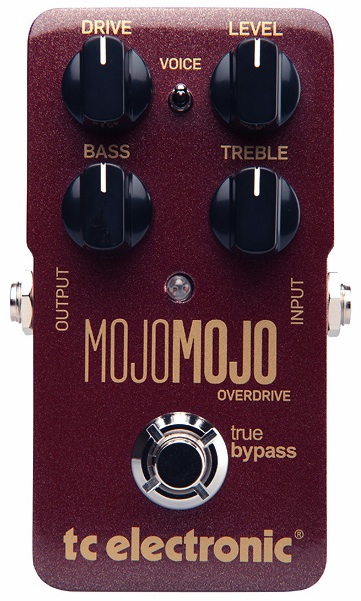
TC Electronic MojoMojo OverdriveSummary: This is a no-frills dirt pedal, and that’s a good thing. With toggle-switchable voicing and very responsive EQ controls, dialing in the pedal to work with your amp is a cinch! This overdrive will add an ever-so-slight dark coloring to your tone when active, but that’s a good thing as well.

Pros: Amp-like dynamic response. Works great as a dirt enhancer, and was obviously made for stacking. Nice, open distortion, and sags nicely at higher gain settings with minimal compression.

Cons: Can sound a bit compressed and mushy if EQ is not dialed in correctly, and finding the sweet spot can take a bit of time.

Price: $129.00 Street

Features:

  • Active Bass and Treble EQ controls
  • Drive and Level controls
  • Voice Toggle (up = flat response, down = slight treble boost for thicker-sounding guitars)
  • True Bypass

Tone Bone Rating: 4.75 ~ Yet another winner from the TC Electronic compact pedal line! As sort of a “mainstream” kind of overdrive, I really didn’t want to like this pedal. But after I got it dialed in with my amp and guitar, I found that I REALLY like this pedal!

Maintaining my objectivity is the hallmark of this blog. And when manufacturers send me gear, I am extremely careful to be honest with my reviews; not just in my writing but also honest with my tests; always doing my best to give the gear a fair shot. I want to exhaust all possibilities before I render a verdict – especially if I don’t like something, though that is certainly not the case with the TC Electronic MojoMojo Overdrive. As I mentioned above, I REALLY like this pedal and am impressed with it for a variety of reasons. Here are a few:

  • First off, this pedal is absolutely no-frills. One of the slogans that TC Electronic has used in the past is “No frills with a sound that kills.” That’s a very apt description of the MojoMojo. With this pedal, you set the voicing and EQ to match your guitar and amp, then set the level and drive where you want, and well… play.
  • Also, unlike a high-end overdrive like the Keeley Luna Overdrive that I recently reviewed that employs a fairly sophisticated Baxandall EQ that can drastically affect the voicing of the pedal to produce different overdrive sounds, the MojoMojo produces one type of overdrive. Once you dial in the EQ, you just adjust the drive and level to how much you need at a particular time.
  • I found that treating the pedal as if it was another gain stage in front of my amp worked best, as the pedal was designed explicitly to act with tube amp-like dynamics. Like high-end pedals, it’s super-responsive to pick attack and volume knob adjustments just like you’d expect with a tube amp. Very nice.
  • Though relatively inexpensive compared to other TC Electronic pedals – it’s $100 less than the Nova Drive – the quality that obviously went into the pedal from both a tonal and mechanical perspective is apparent. Tone-wise, the overdrive is open and smooth, with great note separation. Physically, the pedal is simply very well made. The knobs move smoothly but with good tension, and the on/off switch seems rock-solid. This is the type of quality that I’ve come to expect out of TC products.

I’ve known about this pedal for over year, and have read feedback on forums. From what I was able to gather, it’s a split-decision with how people feel about this. The people who like it, love it; there wasn’t much negative feedback that I found, but more tepid responses along the lines of “I couldn’t dial in a good sound with this pedal.” That actually puzzled me because even though I recorded playing through my DV Mark Little 40, I tested the pedal with four different amps and was able to get a great sound out of all of them.

What I came to realize is that more than any other pedal I’ve tested and reviewed, overdrive pedals are the most challenging to get to work in a rig. Dialing in EQ is usually pretty easy for me  (there are exceptions, like the Keeley’s Baxandall tone stack that took me awhile to dial in because that was unfamiliar territory, EQ-wise). Where overdrives are challenging is balancing the distortion and level gain to fit with the amp. This is where I take a lot of time because I have to make a decision: Where do I want the distortion to come from? With some pedals, it’s better to get most or even all of the distortion from the pedal, with level set to unity gain. With others, I might want just a touch of distortion from the pedal, and add more level gain so that my pre-amp tubes do most of the work. Still, with others both amp and pedal may share equal duty.

With each different amp I tried the pedal with this evening, I had to go through the process of finding where I wanted the distortion to come from. With my DV Mark Little 40 (with 6L6’s), I found the best result was to let the pedal do a lot of the heavy lifting, and I set the level to just past unity gain so I could get a little volume boost, plus push my pre-amp tubes just over the edge to slightly break them up. Then I could vary the amount of drive to my heart’s content. On the other hand, with my Aracom VRX22, it was a more balanced affair, with the amp and pedal taking equal responsibility for the overdrive.

I think this is where a lot of people who didn’t really like the pedal – many claiming the tones to be too thick and harsh – may have strayed a bit in their evaluations. Quite simply, dialing in overdrive takes time because not only are you dealing with a clipping section, you’re also dealing with level gain. Add getting EQ dialed in, and it can get a bit hairy. Looking back, I’ve perhaps panned a lot of overdrives simply because I didn’t take enough time.

As for the MojoMojo, getting the pedal dialed in took less than a 1/2 hour. At first, I had everything at noon, but at that setting with my Les Paul and my DV Mark that outputs into a speaker that has a pretty big bottom end, the tone was a little muffled. Thank goodness for the voicing switch on the pedal. That cleared things up a bit almost immediately, then rolling off the Bass to about 11 o’clock and boosting up the Treble to about 2 o’clock added all sorts of clarity. With the EQ set, I was able to vary the Drive and Level, and maintain clarity, no matter where I set those controls.

How It Sounds

To me, the MojoMojo sounds killer. It’s mostly transparent, but it does have a bit of a darker color to it. There’s lots of midrange on tap, but apparently TC Electronic designed the pedal to retain lows. What has really sold me on the pedal though is its amp-like dynamics, which are superb. Here are some clips that I did:

The first clip, I wanted to demonstrate the response to volume knob adjustments. The first part is my amp with my Les Paul in the middle position with both volume knobs at 5. In the second part, I switch on the pedal, and you can hear how well the pedal’s breakup blends with the amp breakup. In the final part, I do a simple lead line with the pedal engaged, then crank up my bridge pickup. The pedal really responds!

In the next clip, I cover more dynamics; basically following the same pattern as the first: Amp only, guitar volumes at 5, then pedal enaged, then bridge pickup cranked:

The thing that’s very noticeable in the clips above is that the pedal loves a lot of input gain, and like a tube amp, with more input gain, reveals more sonic content in the form of harmonics and overtones. By the way, the pedal was set in both clips with Level at just above unity, and Drive at about 2 o’clock.

Finally, I thought that I’d try it out within the context of an actual song. In this clip, it’s the bridge section from a song that’s going to be on my next album that’s actually played underneath the vocals, which I muted here. For this, I had the Level at about 3 o’clock and the Drive at 11 o’clock, which slams the front end of my amp, plus adds a healthy amount of distortion. The result is a very touch-sensitve, singing overdrive distortion.

The original track is actually a bit on the brighter side. But what I love about this particular track is the darkness of the tone. I feels so much richer, and though there’s a LOT of gain with the combination of the pedal and amp overdriving, there is a distinct smoothness to the tone. To me, it’s very magical.

Overall Impression

It shouldn’t be too hard to deduce that I dig this pedal! I’m a huge fan of open-sounding overdrives, of which the MojoMojo produces. But that slight darkness is absolutely killer! I think this is a pedal that I intend to keep for awhile. Can’t wait to bring it to a gig!

Read Full Post »


Keeley Luna Overdrive

Summary: Two-and-a-half years in the making and combining what Robert Keeley feels are the best in overdrive pedals, tube amps, and tone stacks. The Luna overdrive is the result. This pedal covers a wide range of overdrive possibilities, from light grit to fuzz-like, square-wave distortion.

Pros: The Baxandall tone stack is KILLER and totally sells me on the pedal. On top of that though, the pedal reacts to attack and guitar volume adjustments just like a tube amp, so you’ll be right at home.

Cons: It’s pricey for one, and the tight interplay between the EQ, Drive and Master controls makes it difficult to dial in just the right amount of overdrive. But these aren’t big enough cons to give it a lower score.

Features:

  • Hand-made in the USA
  • Op-amp clipping and JFET gain stages
  • Baxandall tone stack
  • Drive and Master controls
  • Classic and Modded overdrive modes

Price: ~$219 Street

Tone Bone Score: 4.75 ~ This is a great pedal. I’d give it a 5 on tone alone, but I knocked off just a bit for making it difficult to get a decent tone out of my amp. I suppose that’s part of the fun in playing around and discovering what a pedal can do, but I have to be fair. It got a little frustrating as the Drive knob is pretty sensitive.

After my beloved Timmy pedal, I thought I was done with overdrive pedals! 🙂 I should know better because I’ve been a slut for overdrive pedals, and I guess there’s really no cure for that. Playing around with the Keeley Luna Overdrive has been a joy, though I will admit I did briefly get frustrated while trying to dial in the pedal. It simply took a bit of time to get used to the active Baxandall EQ. Unlike other EQ’s, it’s not a cut type of EQ, where the EQ knobs turned all the way up give you flat response. With a Baxandall EQ, the 12 o’clock position is flat response. Turn up an EQ knob and you get a boost, turn it down, and you get a cut. But the midrange is left alone. That means that if you turn both knobs fully counter-clockwise, you get a midrange hump; fully clockwise, and you get a scooped tone.

This is a totally different animal from other EQ’s, and it takes awhile getting used to. However, despite the learning curve, this type of EQ provides a much better way of dialing in your tone to fit your guitar, amp, and cabinet. For instance, for my test, I played the pedal in front of my DV Mark Little 40, which goes out to a 1 X 12 cabinet that has a Jensen Jet Falcon speaker, which has a pretty big bottom end. Putting the pedal in flat response made my tone sound really muffled because of the lows (I had my amp’s EQ completely flat). But after playing around, I found that placing the bass at 11 o’clock and the treble at 1 o’clock brightened up the tone just the right amount, then it was all about getting the Master and Drive knobs set.

About the Drive knob… it’s super-sensitive, and you’ll start getting breakup as soon as you start turning the knob clockwise from its minimum position, which is about 7-8 o’clock. I found that the sweet spot for me was the Drive just past 9 o’clock and the Master set between 2 and 3 o’clock. With my amp set at just the edge of breakup, the boost from the Master got the tubes overdriving, and the combination of distortion from both the pedal and the amp was quite pleasing to my ears.

How It Sounds

In my First Impressions article that I wrote earlier today, I said that the pedal adds some color. I’m going to retract that now because depending upon where you set the EQ’s, you can have a transparent tone, or add as much color as you want. I like to err on the side of transparency with most overdrives, and when it came down to it, this pedal was no different. I originally had a nice treble boost, but when I did some test recordings, found that I didn’t like how I had set the EQ’s because of the color. Here are a couple of test clips. Note that both of these were done in the Classic mode, and I was using my Gibson Les Paul ’58 Historic Reissue.

In the first clip, I do a quick clean rhythm riff with an almost imperceptible grit, then do the same riff with the pedal to add some dirt.

With the next clip, I decided to do a dark rhythm track then play a lead alongside it. In both rhythm and lead, the pedal was set the same way, and I vary the amount of overdrive simply by adding more guitar volume or hitting my strings harder. This clip was made purely to demonstrate the pedal’s dynamic response. I also added just a touch of reverb to grease the sound a bit,.

I absolutely love the tone of the lead track. I started out with my LP in the middle position, with the neck pickup at 5 and the bridge pickup at 6. Then when I started driving it harder, I switched to the bridge pickup entirely and dimed it. From there I just closed my eyes. The sonic content that the pedal produces is amazing. There are lots of little harmonics and overtones in the signal, and the note separation is awesome. The note separation takes a little getting used to as well. But this is a good thing because this pedal does not produce mush – even at high gain settings.

In this third clip, I just do a few seconds of a Journey riff. here the tone is scooped with both the EQ knobs at about 2 pm, the Master cranked wide open and the Drive at about 10 o’oclock. Unfortunately, my mic didn’t pick up all the little harmonics and overtones, but the point to this one was that even pushing my amp hard, and with much more gain, the note separation is still maintained.

I know, I only have a couple of clips, but admittedly, I’m still playing around with the pedal. I want to try it front of one my Plexi-style amps to see how it performs.

I did take it through its paces with the Modded mode, and that mode with my amp just past the edge of breakup created some real aggressive overdrive; not over the top, but I have to play around more with this mode and cranking up the gain to experience the upper limits of the pedal.

Overall Impression

As I said above, this is a great pedal. It’s a little steep in price at $219; Keeley pedals have never come cheap. But that said, I’d totally add this to my board to stack with my Timmy (hmm… going to have to try that out). It has been a long time since I’ve been jazzed about an overdrive, and I’m really jazzed about this one.

Interestingly enough, besides a few video reviews out there (that do nothing but blues licks), and one that I saw done by Musicians Friend staff member, there’s not much in the way of reviews, which is surprising. Some of the feedback I saw on a couple of forums said it didn’t work well with people’s amps. I think that has more to do with not playing around with the pedal enough. That Baxandall EQ takes some getting used to, but once you “get it,” this pedal rocks!

For more information, visit Keeley Luna Overdrive product page!

Read Full Post »

I’ve admittedly had my eye on a Fender Jaguar for years. I played one a few years ago at a local shop and fell in love with its tone. It kind of sounds like a Strat, or is it a Tele… It certainly has a variety of tones that it can produce, all coming from its various switches. And that’s sort of the rub for me. There are six switches on the guitar, and each affects a different thing.
What got me first interested in this guitar was that I first noticed it back in the 90’s when the Tom Hanks-directed movie “That Thing You Do” featured one, played by the lead guitarist, Lenny, played by Steve Zahn. He probably wasn’t playing the guitar, but it sure looked pretty cool just the same.

It’s actually VERY cool, but it’s one of those guitars that would take a lot of time for me to dial in. I was able to get some great tones almost immediately, if memory serves, but I do remember that I spent more time trying to figure out what switch combinations worked for me than actually playing the guitar, so that was a bit counter-productive.

But still, there’s a certain appeal about the guitar. For one, it looks very cool. I dig the body shape, with its rounded lines. The neck is only 24″ long, so it’s an easy player. The C-shape neck is very comfortable. And on top of that, it weighs less than 9 lbs.; not super-light, but not as heavy as a Les Paul. The American Vintage Series like the one in the picture can be had for around $1600. Not really too cheap, but not bad. And you can get one on sale for a few hundred bucks less because these guitars just don’t move that quickly. For instance, the one I checked out was on sale for something like $1200, but I got my Gibson Nighthawk instead – and I no longer have it, either. 🙂 I’m pretty sure I’d hold on to this one if I got.

In the vintage market, original ’62’s (the first year they came out) can be had for about $6000 on eBay. Again, probably out of my reach right now, but certainly not a bad price for a vintage guitar – and certainly not a bad price for a first production year guitar.

Maybe one day… I do have a few guitars on my “to get” list that are ahead of it, like a Les Paul Supreme, but this is definitely a “getter.”

Here’s a pretty good video demo of a vintage Jaguar:

Read Full Post »

Maybe it’s the recording… but just watching/listening to this demo video has me GAS-ing for this pedal!!!

Yowza!!! I loved that first sequence with the Strat!

Some quick info: This is an all-analog drive pedal, folks, and I’m digging what it does! And at $139, it’s a bargain!!!

From the web site:

Pigtronix FAT Drive is an all analog tube sound overdrive. The FAT Drive’s multiple cascaded gain stages enable you to nail sounds ranging from bluesy overdrive to rich saturation, all while retaining musical dynamics and the original character of your instrument.

FAT Drive takes a futuristic analog approach to create complex crunch tones using CMOS clipping and a variable low pass filter for tone shaping. Bringing the tone control all the way clockwise takes this filter completely out of the circuit for total transparency and robust low end. Rolling the tone control back smooths out the highs, leaving ample mid-range bloom and bottom end punch.

A Hi / Lo toggle switch brings additional versatility to the FAT Drive’s wide-ranging palette of overdrive tones, altering the gain structure for enhanced crunch and soaring leads. The FAT Drive features true bypass switching and runs fine on standard 9-volt power but ships with an 18-volt adapter for superior headroom, clarity and overall output.

For more information, check out the product page!

Read Full Post »

How to Pick a Speaker

Unless you’re a dealer or a distributor of speakers, there are only a couple of ways to pick out a speaker:

  1. Go down to a dealer or distributor of speakers and listen to a bunch, then go and buy the one you like -or-
  2. Buy some speakers, listen to them, and pick the one you like. Oh wait! There’s a third way of choosing a speaker!
  3. Go on the forums, ask people what speaker they’d recommend, buy all the recommendations, listen to them, then pick the one you like.

I know, I know… It all sounds flip. But think about it. How the hell do you choose a speaker? The plain fact of the matter is that you have to listen to it to determine if it works for you. Descriptions, conversations, and recommendations are helpful indeed, but in the end, it’s the sound that the speaker produces that vibrates your eardrums that will be the ultimate deciding factor.

Of all the parts of the signal chain, I’ve found that in comparison with other parts of my signal chain, I’ve probably spent the most research time on speakers; much of it anguishing over having purchased a speaker I thought might work, only to find that it sucked! Let’s face it: A speaker is the endpoint of your signal chain, and produces the sound from everything in the chain before it. If it doesn’t sound good to you, it doesn’t matter how good everything else is in front of it.

There’s no “pat” advice I can give. You just have to listen to a lot of speakers, or take a chance on buying one and hope you get lucky. I’ve been lucky so far with my Fane Medusa 150 and with an evaluation Jensen Jet Electric Lightning that I got from Jensen that I decided to buy because it sounded so good. But there are lots of speakers that I’ve tried that I’ve never written about because they just didn’t work with my rig.

There is sort of a fourth way, and that is to listen to the recommendations from someone who knows your tone. My friend and amp builder Jeff Aragaki of Aracom Amps is that guy for me. Since he personally built and customized to my specs most of the amps I play, he knows what I like, so when he has recommends speakers, I listen. It was that way with the Jensen Jet Falcon 12″ speakers I have in three of my cabinets. He got one to try out from a distributor, and called me up, asking if I’d test it since he didn’t time. We met a few days later for me to get the speaker from him, and once I installed it in my cab, I loved it so much, I kept it, then bought two more since then to go into other cabinets. Mind you, this replaced a Celestion Blue – which is a GREAT speaker – that costs three times as much!

Oops… got a bit side-tracked. So while it ultimately takes listening to speakers to see if they will work, there are some preparatory things you can do to at least narrow your search:

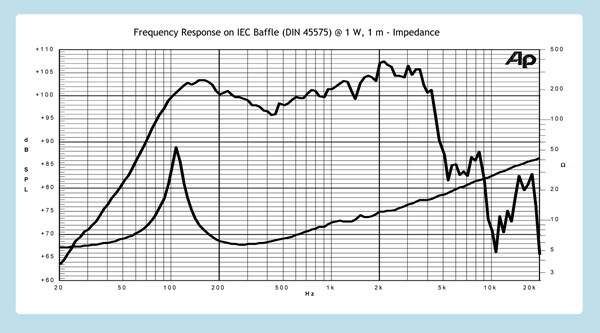
  1. Go to the manufacturer’s site and look at the frequency response charts. For instance, check out this chart for the Jensen Jet Falcon 12″:
    This told me to expect a bit of a scooped tone as the lows and mids had peaks. Or check out this one for the Celestion Gold:

    This shows a more moderate low- and midrange response, with slight emphasis on higher freqs.
  2. Once you see a pattern that you’d like to explore, start listening to clips, taking note of the gear used.
  3. Finally, see how you can try one out or hear one in person.

As I mentioned, there is no “pat” way of deciding on what speaker to buy. But with a bit of research, you can narrow the field down significantly.

Read Full Post »


Sebago Sound PrototypeSummary: I don’t know what an original Steel String Singer sounds like, but if Sebago’s take on that amp is any indication, we have a winner here! This is an incredibly versatile amp that can fit any genre of music. This is my next amp.Pros: Versatility is the key with this amp. The notch High and Low notch filters let you dial in your tone to fit the genre or help fine tune the amp to your guitar.

Cons: None. But not a 5.0? I’ll explain below…

  • 100-150 Watts (150 with 6550’s) from 4 power tubes
  • Reverb “loop” with send and receive knobs (send is signal gain into tank, receive is similar to mix)
  • Single input with switchable FET circuit
  • Gain control
  • Three-band EQ
  • Bright, Mid, Rock/Jazz mini toggles
  • Master control
  • Presence control
  • Individual High and Low notch filter knobs.
  • Power and Standby switches

Price: TBD, but will probably be somewhere between $2500 and $3000

Tone Bone Score: 4.75 ~ The only reason I took off a quarter point is because the reverb receive circuit was a bit noisy. I was able to dial back the hum by upping the send gain and dialing down the receive signal, but this is a prototype, so it’s understandable that there would be some tiny issues, and believe me, this is tiny.


My First Impressions article pretty much said everything that I had to say about this amp. My opinion hasn’t changed. This is an absolutely SUPERB amp that has me GAS-ing VERY BADLY. And after playing with this amp for the last few days, I’m in a dream state from the hypnotic tone that this amp produces – with all my guitars.

One thing I will add is that Bill Dunham emphasized that the amp is a great pedal platform. I still agree with that assessment, but frankly, this amp produces almost all the tones that I need, so I haven’t hooked my pedal board once this past week. The reverb is fantastic, and when I’ve taken the amp into overdrive, I just haven’t seen the need to use a pedal. The only exception to that is with the last clip I recorded where I ran my Strat through my Timmy overdrive before going into the amp, which was not quite at the breakup level; just slightly below.

Granted, at 100 Watts, I couldn’t take the amp into breakup without an attenuator. But luckily, my trusty Aracom PRX150-Pro comes to the rescue yet again in that department. A quick note on the distortion. I wasn’t really liking the fully cranked up tone of the amp with my Strat. It’s an entirely different matter with my Les Paul. The lead tone – which you’ll hear shortly – is just incredible. With the FET activated, and both Gain and Master cranked up (Gain at 9, Master at 10), the sustain, harmonics and overtones create this absolutely gorgeous lead tone. Now by itself, this amp won’t do metal. It’s not made for that, and I don’t think it was ever intended to do that. But crank it up and throw a distortion pedal in front of it, and I believe you could easily do metal.

Fit and Finish

I really won’t comment on this much because the final face plate is being produced so Bill modified a Double Trouble face plate. That’s also why I didn’t take pictures. It’s not finished, and I don’t want people to get the wrong idea that the amp will be in the condition in which it was tested. It looks great, but I’d rather get pictures of the finished product.

How It Sounds

Bill kept on saying when he dropped off the amp that it’s real strong point was clean. After playing with it, I heartily disagree. 🙂 Clean, dirty, it don’t matter. I dug the sound. In any case, I’ve recorded three clips to give you a general idea of the amp’s tonal possibilities. Mind you, I don’t have a mild breakup clip with a Strat. Once I get the real thing, I’ll share lots more clips. For now, you check out the ones I’ve recorded thus far. Note that these tracks are raw tracks. I used no EQ nor compression because I wanted to ensure that I’d capture all the dynamics of the amp.

Clean, Gretsch Electromatic (thin body)

Clean, Les Paul

Rock, Crunchy Rhythm (left), Solo (right)

Clip from an SRV tribute song I wrote called “In The Vibe”

All the clips were recorded using an Avatar  1 X 12 closed back cabinet with the fantastic Fane Medusa 150 speaker. I used a single mic – a Sennheiser e609 – positioned about 18″ from the cabinet pointed directly at the center of the cone. Part of why you might hear a little static is the ambient room noise from my garage. Barely detectable, but it’s there.

With the rock clip, one thing I had to get used to was the note separation in touch sensitivity of the amp when I’ve got it cranked; actually, even in heavy overdrive. I didn’t really have to change the way I play, I just had to make sure that if I was chording, then I needed to be smooth with my strums, otherwise you’d hear every dang string being plucked. 🙂 It was a pretty easy adjustment.

With the SRV tribute song, as with the other clips, I didn’t EQ the guitars at all, though with the lead, I did add some reverb and a touch of delay to give the tone some air. I also ran the guitar through my Timmy overdrive in front of the amp. Other than that, what you hear is what the amp and the Strat are producing naturally though the final recording has a touch of compression. With the first part of the clip, I’m playing through the neck pickup, then switch to the bridge pickup and turn the volume of the guitar up a couple of notches.

In any case, to me, the clips I’ve provided tell a good story of what this amp is capable of. As I mentioned, in a clips, what I’ve laid down is the raw amp sound, completely unprocessed except for the SRV tribute. The tones are absolutely gorgeous!

Overall Impression

I suppose you can pretty much guess what my impression is of this amp. Once Bill gets this into production, it’ll be my next amp. Better start saving my pennies. 🙂

Read Full Post »

Just this email from Fender this morning. Usually I take my time with manufacturer ad emails, and this particular one was no exception. So I waited until a few minutes ago to read the email, and my mind stopped dead in its tracks. For on my screen in front of me was a Strat that has finally blown me away. Don’t get me wrong, I love my American Deluxe Strat. For single-coil work and especially the Kinman pickups it has, I get some freakin’ awesome tones.

But I was always thinking that I would love a Strat that had two humbuckers as opposed to the HSS; in fact, my wish was to have an HSH. My thought was that I would love a Strat that always had the fat tones of a humbucker, while still retaining that Strat vibe, and lo and behold, here was a picture of a brand-new American Standard Hand Stained Ash Stratocaster® HSH!!!

Talk about getting some serious GAS! Not only does it have the HSH pickup configuration, it has an alder body, a maple neck, and a rosewood fretboard: Exactly how I like my Strats! Fender lists it at $1569 MSRP, but I’ve seen some stores online advertising it pre-order for $1149.

You can read details on the Fender product page.

Damn! Just when I was over my latest GAS attack with my DV Mark Little 30 L34, here comes more gear that’s seriously – and I mean seriously – giving me GAS.

I’ll take the Wine Red one, please!

Read Full Post »

Aracom Amps VRX18 Tweed ComboSummary: No… Surprisingly enough, I didn’t buy this one, as I already have the VRX18 head. But my good friend and bandmate just bought this, and I tested it out for him so he could listen while he was making his decision. Anyway, this is classic Marshall 18 Watt Plexi tone, but with Jeff Aragaki’s tweaks and modifications. It’s such a sweet-sounding amp, clean or dirty.

Pros: Handmade, and hand-wired on turret board. The VRX18 brings out the best of what I love about EL84-powered amps, and combined with the custom Weber speaker that’s in the cabinet to balance out the natural highs of the amp, this amp is capable of producing some of the most gorgeous clean tones I’ve heard, plus some incredible vintage overdrive.

Cons: None.

Features

– Channel 1: Volume and Tone Controls
– Channel 2: Volume and Tone Controls
– Master Volume Control (PPIMV)
– On/Off Switch
– Indicator Lamp
– (2) EL84 Power Tubes
– (2) 12AX7 & (1) 12AT7 Preamp Tubes
– Cathode Biased Power Tubes
– S.S. Rectifier with “sag” circuit
– Custom Heavy Duty Aluminum Chassis
– ARACOM Power Transformer: hand-wound and interleaved
– ARACOM Output Transformer: hand-wound, interleaved on a paper bobbin
– 4, 8, 16 ohm Speaker Jacks
– Detachable Power Cord (IEC320-C13 Socket)
– External Fuse Holder
– Custom Turret Board (G-10/FR4 Flame Resistant)
– Handwired and Handcrafted in the USA.

Price: $1095 for Combo (see Pricing Schedule for complete options)

Tone Bone Score: 5.0 ~ Yeah, I’m biased towards Aracom Amps as I am a faithful customer, but this amp is yet another example and an affirmation of why I love Aracom amps so much!

As most know who read this blog with any regularity, I’m a faithful Aracom Amps customer. I play three of them: VRX22 (6V6), VRX18 (EL84), and the PLX18 (EL84); plus I have the venerable PRX150-Pro Attenuator. Can’t believe I’ve been playing Aracom equipment for almost four years now, but I can’t think of any other amp to play, except for, perhaps, the DV Mark Little 40, which I still intend to get eventually.

In any case, my bandmates have known my passion for Aracom equipment, but have purchased other amps in lieu of the fact that I’ve been raving about Aracom for years, and in lieu of them commenting on how great the Aracom tone is. It always puzzled me, but hey! To each, their own.

A few of weeks ago, my right-hand and cohort in the band Dave started looking into getting a new amp, and to my pleasant surprise started taking a look at the Aracom site and listening to the clips. He was actually considering buying a Carr Viceroy, but held back until he took some time to evaluate amps. Now he’s glad he did.

In any case, he contacted Jeff and set up a meeting to go out to Jeff’s shop, and asked if I wanted to tag along. Never one to turn down an invitation to hang out with Jeff if I can help it, I accepted and a couple of days later, we made the short trek out to Jeff’s shop.

The wonderful thing about working with a builder like Jeff is that because he’s a small operation, he can be fairly agile in the combinations of equipment that he offers. So on that day, we took a couple of hours to play through different cabinet/speaker combinations to find a combo that “fit.” After playing through the tweed cabinet with a custom Weber 1 X 12, it was clear that that combination was the best for the style that Dave plays, which is mostly clean.

Jeff told Dave that he should take the amp with him and play around with it before he made the decision, so we loaded the amp in Dave’s car. On the way home, I mentioned to Dave that he will probably not want to return the amp and left it that while we talked about other stuff.

A few hours after I had returned home, Dave called me. He wasn’t returning the amp. 🙂 I knew that would happen. That amp was magical. Earlier, I shared with Dave on the way home that he’d know if he found the right amp if he lost track of time. He did. Now he is the proud owner of the best amp he’s ever played.

Fit and Finish

I love the classic tweed finish of this amp. Jeff personally built the enclosure and covered it with tweed. It’s really beautiful to look at. He also used 1/2-inch ply to construct the cabinet, which is something I look for in cabinets. With 1/2-inch ply, I believe the wood provides a lot more resonance as opposed to cabs built with thicker boards. Compared side-by-side with my Avatar 1 X 12, which uses thicker wood, the Aracom cab sounds so much more deep and lush (I’m not knocking my Avatar – that cab is perfect for more aggressive tones).

How It Sounds

Unfortunately, I don’t have any clips to demonstrate, but Dave’s VRX18 sounds absolutely KILLER! I’ve played three of Dave’s guitars through the amp, which include a custom Carvin acoustic/electric, a custom Rick Turner Renaissance, and a Gibson ES-335. All three guitars sound absolutely gorgeous through the amp which, with the custom Weber and dynamite cabinet produce a very lush and deep clean tone, while retaining great note separation and definition. Note separation and definition are especially important with an amp that produces such deep cleans because it could become extremely muddy. Not so with the Aracom VRX18 combo.

It’s important to note also that in addition to such great cleans, the amp really projects the sound well, with a very three-dimensional quality about it that makes it sound as if it has a reverb tank. Jeff attributes a lot of this quality to the sag simulation circuit that he built into the amp. It provides just a touch of sustain to add depth to the sound.

Playing right next to Dave is another guitarist (another Dave) who has a Carr Mercury. Maybe the “higher end” Carr models sound better, but the Mercury’s tone pales in comparison to the VRX18. Where the VRX18 sounds three-dimensional, the Carr sounds brittle and hollow. I don’t like the tone of that amp at all, and constantly have to help the other Dave dial in his EQ to make it sound even halfway decent. Also, the reverb on that amp is horrible, and I always have him turning it WAY down. Amazing that that amp costs more than twice as much as the VRX18. Anyway, I don’t want to make this a Carr amp smack-down. Suffice it to say that the Aracom VRX18 simply outperforms the Carr hands-down.

Overall Impression

Jeff Aragaki makes killer amps. He’s not building near the amount of amps at this point in time as he has in the past because his attenuator business is so good. But when he does get amp orders, he takes extra-special care that it’s right; and that’s exactly what he did with this particular amp. In fact, this particular model of the VRX18 is much more simple than his other models in that it doesn’t have the 1/2 power switch, nor does it have a tube rectifier. But it sounds incredible as it is. And as I mentioned above, this amp is yet another example of why I will remain a faithful Aracom customer!

For more information, go to the Aracom Amps web site!

Read Full Post »

One of the guitarists in my church band recently got a Carr Mercury, which is a great little amp. In addition to sporting vintage styling, it has some great power scaling from 8 Watts down to 1/10 Watt, a three-position boost to vary the drive to the single EL34 power tube, and a very nice and liquid reverb. All in all, it sounds pretty killer. Add my bandmate’s Barron Wesley custom guitar, and it’s a great tone combo!

But as he plays next to my rig, which consists of a Les Paul going into an Aracom PLX18BB Trem (“PLX”) which is a clone of the very simple Marshall 18 Watt Plexi, I felt the Carr’s tone paled in comparison to the tone my rig produces. Mind  you, the Carr sounds  killer. But in comparison to the PLX, its attack is much faster, and there’s noticeably less sag from rectifier than the PLX, so my perception is that there’s not much sustain with the amp..

Granted, I realize this is purely subjective, but there is something very special about the PLX. Perhaps it’s due to that classic “Bluebreaker” tone – hence the BB designation of the amp – that Clapton made so popular while with John Mayall and the Bluesbreakers. The Les Paul/Plexi combination is absolutely magical. Perhaps it’s also due in part to the absolute simplicity of the 18 Watt Plexi’s circuitry. Or perhaps it’s due to how the amp sags that gives it this almost reverb-like tone. Whatever it is, it’s a tone with which I completely identify.

I realize that I probably mention the PLX in this blog more than any amp that I have or have tested. But it has become my “go-to” amp. As the title of this article says, some rig combinations just never get old.

In front of the PLX, I have just a few pedals because I like to keep things simple. Here’s the complete chain:

Les Paul R8 -> Timmy Overdrive -> TC Electronic Corona Chorus -> Mad Professor Deep Blue Delay (handwired) -> DigiTech RV-7 Reverb -> Aracom PLX18 BB Trem -> Aracom PRX150 Attenuator -> Fane Medusa 150 12″ speaker.

I typically only use the  delay and reverb when playing clean, which is actually quite a bit.  But when I’m  playing driven, either with the Timmy or with the amp cranked, I just let the amp speak for itself. 🙂

I mentioned the sag of the PLX. It’s not so saggy that you get a lot of crosstones. But Jeff Aragaki (amp builder) did find a sweet spot in setting up the rectifier that balanced the classic responsiveness of the original Plexi with enough sag in the rectifier to make the amp absolutely expressive.

I made some modifications of my own in the way of tubes. I have gorgeous 1959 RCA grey glass pre-amp tubes in it to drive the pre-amp. I actually kept the original JJ EL84 power tubes in the amp because they compress quite nicely when driven without over-compressing into mush. Then to add fatness, I dropped in the gorgeous, super-sensitive (103 dB) Fane Medusa 150 12″ speaker. Combine that with a large 1 X 12 combo cabinet, and you’ve got a nice resonating chamber for the speaker which adds further depth to the tone.

Upon writing the above, I think a huge reason why I love the tone of this amp so much as compared to the Carr probably has a lot to do with the size of the cabinet, which can also easily house 2 10″ speakers.  That extra room for the sound to bounce around creates a lot of complexity.


In any case, that particular combination of gear never gets old to me. Even though I have lott of other guitars and amps, when I gig, I go to that setup. Now if only Jeff will build me my FlexPlex 50… 🙂


Read Full Post »

As an actively gigging musician, I’m always looking for the most efficient and safe ways to transport my gear. But I do have to admit that I value efficiency a bit more than safety. My thought behind this is that treating my gear with care is a given, so I want to make as few trips from my car to get my gear set up for a gig.

So I have always kept an eye on transport containers or even systems that can keep me as efficient as possible. For instance, a big reason that I got my Fishman SoloAmp was because the speaker array, stand, and cable could all be transported together in the provided transport case; the whole thing weighing only 25 lbs., and case has wheels! I would not have gotten it if it sounded bad, but not having to take multiple trips to the car was really key.

I also have a few different bags that I use depending upon the gig I’m playing. For my solo gigs, I use a heavy-duty laptop bag that has tons of space to hold my harmonizer unit, microphones, cables, and even music books. Again, only a single trip.

Enter MONO. These folks make bags and cases specifically tailored to DJs and guitarists. They have some nice, padded guitar and bass gig bags, and even make guitar straps. But I really dig their gear bags, such as The Producer, which has lots of room to carry all sorts of gig accessories. This will probably be my next accessory bag as it was purpose-built with the DJ or gigging musician in mind.

Check out this video review of The Producer:

Lots of space and pockets. Love it!

Read Full Post »

« Newer Posts - Older Posts »