Feeds:
Posts
Comments

Posts Tagged ‘Guitars’

I was talking to a friend one day who noted something that the great Carlos Santana once said: “I can pick up pretty much any guitar and sound like me.” It wasn’t said with any arrogance. It was just a matter of fact. That statement spurred the thought that maybe there was something to the statement: Your tone is in your fingers. I’ve leaned towards that line of thinking for a long time, and have gotten into numerous debates between those who say your tone is in your gear versus the fingers camp.

My personal belief is that your gear gets you your baseline tone, then it’s your fingers articulating the strings that layer on the expression. Yeah, yeah, I can just hear the nitpickers who’ll come along and say, It’s not your fingers, but your heart and mind. That’s true as well. But they are the driving mechanisms. Your fingers produce the sound. But I digress…

Over the years I’ve been writing this blog, I’ve come across many people who’ve asked the same question over and over again: What kind of gear can I get to sound like ____________? It’s probably obvious who the person is whom is asked about the most – Van Halen and the “Brown Sound.” In the past, my answer to this question has usually been, “You’ll have to do your research, and get the exact specs of the signal chain of that particular artist,” in an effort to avoid directly answering the question; or sometimes, I’ll be rhetorical and ask my own dismissive question back, “Why do you want to sound like __________?”

But after lots of thought on this, I feel compelled to qualify the motivations behind my reluctance to answer the question directly. Think back to the top of this article and what Santana was noted saying. The reason I’ve avoided getting into a discussion/instruction of how to sound like someone is because one thing I’ve realized in all the years I’ve been playing is that no matter what gear I have, I’m going to sound like me. Different kinds of gear will make my tone brighter or fatter or richer – whatever – but ultimately, when it comes to actually expressing my musical thoughts I’m going to sound like me. And that goes for every other guitarist or musician out there.

And it really is unavoidable that we sound like ourselves because each of us has our own unique approach to the guitar, affected by several factors (including, but not necessarily limited by how we think, how we feel; and ultimately, in how we express those thoughts and feelings. I’m not sure this is really just a “tone” thing, either. For instance, listen to old Van Halen with the brown sound, then listen to the Sammy Hagar years, or even Eddie playing on Jacko’s “Beat It.” EVH’s guitar tone is significantly different in all those settings, but it’s unmistakably EVH. The same can be said of Santana. Listen to early Santana and more recent stuff. The sound of the guitars are different, but there’s no mistaking who’s playing the guitar. These guys just sound like themselves!

And that’s the point of this entry. Your gear gets you your tone, your fingers create the sound, but it’s your expression that identifies you.

Read Full Post »

…if I’m getting too jaded. I’ve reviewed so much gear that I don’t seem so easily impressed as of late.

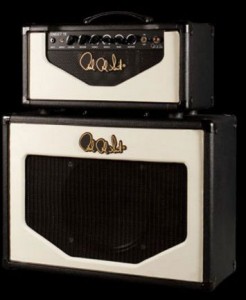
What got me thinking about this was my latest review of the PRS Sweet 16 amplifier. I played it. It sounded great, but I wasn’t overly impressed. I suppose from a pure tone perspective, I could give it pretty high marks, and my 4.5 Tone Bones rating reflects the overall quality of the amp. But at around $1700, even though PRS calls the Sweet 16 a “mid-priced” amp, there are lots of other amps in that power class that cost far less and sound just as good, if not better.

What’s in a name?

Or maybe I’m not falling into the hype trap. It seems that every time PRS comes out with something, people rave about it and assume it kicks ass without really even trying it. That’s great for PRS to have built up that kind of reputation, and probably a reason PRS gear can still command such high prices: People are willing to pay based upon the name because they know there is a certain level of quality of which they can assume will be in the gear they buy – even sight unseen.

I also suppose that when I factored in the price, it kept me from giving the Sweet 16 higher marks; and that’s the practical side of me speaking. For me, I don’t give a shit about the name or the model; I only care if it sounds good. If some gear’s tone or playability simply blow me away, I’ll pay a higher price. For instance, I’m looking for vintage or vintage re-issue Les Paul. My buddy has a number of them, and I just have to get one to add to my rig. I won’t mind paying a premium for that guitar when I find one not just because it’s an LP, but because I’m blown away by the tone. But with the exception of Goldie, none of my other guitars have cost over $1000, and half of them cost under $500. Furthermore, all my amps with the exception of the Aracom PLX18 cost under $1000 as well, and the PLX18 with its vintage-style circuitry sounds way better than the Sweet 16 and still costs less.

I guess the point I’m trying to make is that I don’t see the point in paying a high price for just “good” tone, as in the case of the Sweet 16. I’ll pay for great tone, but as I stated, there are lots of different gear out there that have great tone and a great price. The Dr. Z Remedy amp is a great example of that: GREAT tone at a great price. By the way, the street price of $1499 makes it a much sweeter deal than the Sweet 16.

I’m probably going to get jumped on for posting this, but so be it. I know what I like, and I know what I’d pay for some gear. It all boils down to tonal preference in the end. I’ll pay for tone that inspires me, but I’ll never pay for a name.

Read Full Post »

Ever since Paul Reed Smith came out with amplifiers, I’ve been a little dubious about them mostly because anything carrying the PRS logo will invariably cost an arm and a leg. Don’t get me wrong PRS makes freakin’ incredible gear, but said gear also has a relatively large barrier to entry. So it came as a nice surprise that the PRS Sweet 16 is much more reasonably priced than one might expect of a PRS. For a hand-wired amp at just under $1700, that’s getting into Dr. Z territory, and that’s a GREAT thing!

During my latest sojourn to Guitar Center, my wanderings took me to the “quiet room” where GC has a few amps and guitars for people to play, isolated from the rest of the store. I like going in there because usually they have nicer gear like Custom Shop Strats, and high-end Gibsons. For amps, there’s always nice ones like classic Fenders (they’ve had the same silverface Twin in there for awhile now), and this time, they had the PRS Sweet 16 with its matching 1 X 12 cab.

Features (from PRS)

  • Hand-wired in Stevensville, Maryland
  • 16 Clean Watts (Smooth Overdrive at Max)
  • 2x 6V6 Output Tubes
  • Cathode Bias
  • Master Volume (Exits the Circuit at Max)
  • Reverb
  • Volume, Bass, Treble, Mid, Reverb, Master, and Bright Controls
  • Vintage-style Black and White Tolex Look

Fit and Finish

What can I say that hasn’t been said of PRS gear? It’s invariably lovely stuff! The black and white tolex and black grille cloth give the amp a very cool vintage look. As expected, there’s nary a blemish or seam out of place with this amp, and as expected, both amp and cab are super-sturdy. But that’s a given with pretty much any PRS gear.

How It Sounds

Here’s where we get into a bit of murky territory, primarily because even in an isolation room in a store, it’s not an optimal place to test – at least for me because I almost invariably don’t have my own guitars available when I do “random” tests. But that’s okay, I just spend a bit of time getting guitars that are close to what I have or had. With this test, I used a Strat and a very nice ES-335.

The Sweet 16 must have a pretty hefty output transformer because this puppy puts out some volume, even with a single 1 X 12. It has TONS of clean headroom, which made me turn down the Master and crank up the volume to get even a little grind, which indicated to me that to really get this amp to get into serious breakup, the master has to be dimed as well. The predominantly pre-amp distortion just seemed a little flat-sounding to me; it wasn’t bad, but it was nothing special. I did crank up the Master for just a little while, and even with it dimed, the breakup was  lot like a classic Marshall JTM; tons of clean headroom, with a modest amount of distortion when cranked. Definitely an amp suited for classic rock/blues.

Clean was another story. Really nice cleans with this amp, especially with a Strat. The CS Strat I played produced a smooth and complex tone with a chimey top-end. Quite nice. And the ES-335 sounded gorgeous through the Sweet 16. Adding a touch of reverb, really helped fill out the sound, and it was great playing fingerstyle with both axes.

For EQ settings, I just moved everything to 12 o’clock and didn’t have to tweak at all, though I did switch on the bright control to get some top-end shimmer; especially when playing the ES-335. The Strat didn’t need it, and the fuller sound really helped bolster the natural thin tone of the Strat.

Regarding the reverb, I do have to say that I’ve heard better. It’s not that it’s bad-sounding. I just wasn’t really impressed with it. I certainly wouldn’t use it to provide a sustaining effect with this amp. The sag is enough with the amp that I can get my sustain with my fingers. The reverb is not as pronounced as a Fender reverb, and it’s not very springy. I liken it to an Aracom reverb that isn’t very intense. It’s there, but it’s a heck of a lot more subtle than a Fender. But like I said, it’s not bad, but for me, I probably wouldn’t use it. For recording, I’d record the amp dry and layer a reverb as an insert or side-chain effect. That said, that amp sounds great without a reverb.

Overall Impressions

My gut impression is that it’s a great-looking and great-sounding amp, and it’s a good start for PRS’s entry into the low-wattage amp arena, but there are a lot better-sounding amps in that price range and below.Good examples of this are the Reason Bambino, the Aracom VRX series, and the Dr. Z Remedy. Don’t get me wrong, I’m not knocking the Sweet 16. I really liked it, but it’s not an amp that blew me away with its tone.

Despite my rather contrarian comments, the Sweet 16 gets a 4.5 Tone Bones rating. It’s well-made and great-sounding. If I ever get one into my studio, I’ll do a full review, and perhaps my rating will change. But it’s a solid performer nonetheless, and you could do a lot worse.

Read Full Post »

Actually, I don’t really hate Guitar Center. I actually hate the fact that I have no self-control when I go there. It’s dangerous for me to go to Guitar Center. Why? It’s like shopping at Costco. I go in the store with a specific thing to buy, and end up with more than I planned for. Ah, the life of a gear slut. Luckily my bankroll isn’t limitless, otherwise I’d be buying things left and right. But on top of that Guitar Center is set up a like a grocery store in that you have to wander through the store to find what you’re REALLY looking for; along the way, you’ll pass some things that will catch your eye. They’re counting on that!

Wow! A Squier Bass for $169 – what a deal! An Epiphone Les Paul for only $599. It’s like that chick in that Deuce Bigalow Male Gigolo with Turette’s Syndrome – always on the verge of blurting out some obscenity – always struggling to contain herself. In the case of a gear slut like me and countless others, it’s always on the verge of uncontrollably pulling out the wallet. But as I said, the limiting factor is the amount of money I have at any time, so luckily really major purchases are rare.

On my recent trip to GC, I was going there to simply pick up an extension speaker cable for my cab. I misplaced my old one at a recent gig, so I needed a new one. I went with only the intention of getting that cord. But of course, being in the pro audio section, I just had to pass by the microphone case. Then my GAS reason took over, and said, “You’re really not happy with how your guitars are sounding with the ribbon mic which is much better for vocals. Why not get a decent instrument mic that can handle high SPLs.” Dammit! GAS reason is so… reasonable… 🙂

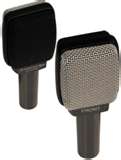
Long story short, I ended up getting a Sennheiser e609. It was a great purchase, and my guitars haven’t sounded this good recorded – ever. Was it a good purchase? Yes. Did I REALLY need it? Kind of… and that’s the problem with GAS. That “kind of…” almost always turns into a “yes.”

Oh well, at least I sound great now… 🙂

Read Full Post »

Wow! Two days in a row, and yet another e-mail received from a reader, and yet another pretty cool idea. This time, it’s from Guitar Scale Magnets located in Houston, TX. These help players learn scales by attaching a magnetic strip to the bass side of the fretboard. The premise is that learning guitar is a visual as well as tactile and aural experience, and having a visual cue as to where you should place your fingers in relationship to a particular scale will help you learn faster. Interesting indeed. Here’s a picture of the pentatonic scale strips:

There are 12 strips representing each note in an octave, so you can learn the five pentatonic box shapes in any key! Cool! Each strip is attached to the guitar via a “base” strip of magnetically receptive material (not metal) tape. The tape has a weak adhesive, to stick enough to stay in place, but not damage your finish. In any case,  very ingenious idea!

At this point, only 25 1/2″ scale length strips are available, but according to the manufacturer, slight variations won’t throw the strip off much.

Personally, I wish I had these strips for when I was learning guitar. I just memorized the box shapes, then learned how to connect them through osmosis. But if I had to do it all over again, I would’ve invested in stuff like this to help get me started! For you teachers out there, you might consider getting a few sets of these – you can pass the cost of them to your students. But then again, that might shorten the time it takes to teach your students to play the guitar. 🙂 Seriously though, if my teacher provided me with stuff like this, it would make learning a helluva lot easier!

For more information, go to the Guitar Scale Magnets web site!

Read Full Post »

As GuitarGear.org has gotten more of following, from time to time, I get random e-mails from folks who share gear and what-not. It’s cool. If it’s interesting stuff, I share it here, and like in the case of Jeff Aragaki of Aracom Amps, their contact initiates a close friendship.

Anyway, I got a notification from YouTube that someone sent me a private message – I’ve gotten those before and they’ve been from users with names like “PoleRider69” or something to that effect, telling me to go to their adult porn site – but this one was different because the person who sent it was sharing a video about a glass guitar pick. Ah-ha! Gear! Now, you know me, gear slut that I am, I just can’t resist checking out stuff related to gear; especially picks!

So without further ado, I’ll share the video. It’s very short, but how this pick was used really compelled me to share it and find out more about the pick.

Read Full Post »

Sennheiser e609 Silver Instrument Microphone

Summary: Need a great mic to close-mic your amp? Look no further! The e609 delivers on all fronts, able to withstand high SPL’s, and still accurately reproduce your tone.

Pros: Flat-face design makes placing the mic a breeze, but more importantly, placed correctly (as you should with any mic), it’ll capture your tone beautifully!

Cons: None

Features (from the web site):

  • Hum compensating coil reduces electrical interference (I can attest to this – it’s super quiet)
  • Neodynum ferrous magnet with boron keeps mic stable regardless of climate
  • Metal construction—rugged and reliable
  • Super-cardioid pick-up pattern provides isolation from other on-stage signals

Price: ~$95 streetTone Bone Score: 5.0 ~ Going back to my “using the right tool for the job,” I don’t know why I didn’t pick up one of these earlier. I have some good mics, but now that I’ve got the e609 that was made explicitly for micking instruments, I kicking myself a bit. Lesson learned yet again!

I told myself that all I would get was a speaker cable for my cab when I walked into my local Guitar Center today. Unfortunately for me, the cables were located in the Pro Audio area where GC has a big case of very nice mics. And, gear slut that I am, I couldn’t resist a look. Granted, most of those mics were completely out of the ballpark for me, costing several hundreds of dollars. But it did get me thinking that I really should be using a dedicated instrument mic for my home studio when recording my clips and songs.

Fortunately, they didn’t have any instrument mics in the case, but silly me, I just had to ask the guy behind the counter if he had an e609 (I had researched this and other instrument mics several months ago). “Oh yeah,” said another sales clerk, “We got those. They rock, and they’re cheap.” Damn! Words that a gear slut should never hear in one sentence: ROCK and CHEAP! That will instantly elicit a fidgety, twitchy response as the pragmatic half of the psyche wrestles with the GAS half. And usually the GAS half wins, as it did today.

So now I am the very proud owner of a Sennheiser e609. And I do have to say that it does rock, and it costs far less than what one would normally expect to pay for a great mic. At less than $100, how can you argue with that?

How It Sounds

I recorded a little blues solo over a standard GarageBand backing track to demonstrate. Give it a listen:

For the solo, I used “Blondie” my Squier Classic Vibe Tele, the insane-sounding Aracom VRX18 amp (it’s customized with an EZ81 rectifier), and my custom Aracom 1 X 12 cab with a Jensen P12N speaker. The e609 was placed about halfway between the dome and the speaker edge about an inch away from the grille cloth.

I added a touch of reverb to the dry clip in GarageBand, but that’s it. No EQ (I don’t like to EQ my guitar parts anyway). What you hear on the clip is what I heard in my studio. Freakin’ amazing! Like I mentioned above, after recording this clip, I should’ve gotten one of these a long time ago. It’s a great mic!

Mixed Reviews

I re-read some reviews today, and interestingly enough, they come back mixed. Harmony Central user reviews rate it at about 7.5 on average. People other love it or hate it. But in reply to the negative experiences, I have to call into question mic placement. If it’s one thing I’ve learned from years of home studio recording, placing your mic correctly is critical to getting a good tone. Maybe they weren’t experimenting enough with mic placement. Who knows?

With the e609, I first went with the recommended placement in the user manual (yes, I am one of those anal people who do indeed RTFM), then moved it maybe half an inch more towards the speaker edge to reduce the highs just a tad. That made all the difference in the world because my amp is pretty bright micked up close, and I didn’t want that to dominate the recording, especially since the mic was only an inch away from the grille cloth.

Overall Impressions

The Tone Bones score says it all. I’m hooked! Frankly, it didn’t take me long at all to dial this puppy in. It’s a truly great mic!

Read Full Post »

The other day, I was surfing around the web to find some pricing on Solid Cables, and stumbled upon Moser Custom Shop, a dealer for Solid Cables. Of course, as the name implies, cables aren’t their primary business. So, curious, I poked around the site to see Neal’s wares, then I gave him a call to talk to him about his guitars and his build process.

Such a BICH

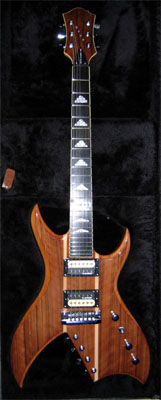
If you’re at all familiar with BC Rich guitars, then you may know that Neal Moser is the designer of BC Rich’s Rich Bich guitar; an eclectic 10-string that looks like a Vulcan lute from Star Trek – or at least something Spock might play. I’m not really into pointy guitars myself, but I actually dig the look of that guitar. There’s something about it that – at least to me – oozes a cool mojo.

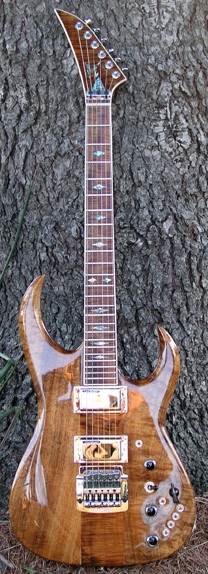
And based upon the Bich, you have an idea of the style of guitars Neal designs. Most are pointy, very aggressive-looking guitars. Even his more traditionally-styled guitars have a decidedly edgy look to them. But that’s not a bad thing at all. In fact, Neal’s guitars have a very pleasing vibe about them. I look at Neal’s guitars, and the first thing I think of is that these guitars are meant to be played through a fully cranked amp. You’d be doing a disservice to the guitar if you didn’t let it breathe fire. 🙂

As the name implies, Moser Custom Shop specializes in custom-made guitars, and one thing I dig about his process is that everything is done by hand. Neal uses custom jigs and templates, and hand-shapes everything. No wonder I like these guitars. Just like Saint Guitars, which are made in the same fashion, each custom guitar Neal builds has its own character. There’s nothing production line about these guitars!

Here’s an interesting factoid: BC Rich and Moser Custom Shop have an agreement that allows him to  to continue to build Bich’s, though he has to call them his 10/6 model. Unlike the production line stuff from BC Rich, if you want a custom Bich, you can specify everything on a 10/6! How cool is that?!!!

Moser Custom Shop also has a line of Korean imports, much along the same vein as PRS, contracting out the manufacturing to a Korean builder. I think that’s totally cool because if a buyer really wants a Moser design but can’t afford the cost of a fully custom guitar, the imports cost a fraction of the price. For instance, the Korean MMI-T, which is based upon the MCS Scimitar model, costs $649 and comes with a case. That’s a steal! You don’t get all the electronic bells and whistles of the Scimitar, but you get a nice design and a capable guitar at a great price!

A little about Neal

Neal has been around quite awhile. He started working with guitars in 1964, first as a guitar repairman, and over the course of his career, has worked on guitars of some very famous cats, including Jimi Hendrix, Stephen Stills, and David Crosby. He formed Moser Custom Shop after a long stint with GMW Guitar Works, coming out of retirement to start the company with his wife Earlleen.

Neal is one of those personable guys that you just love to talk to. In fact, he’s one of the nicest people I’ve met in a long time. He’s got a very friendly and inviting demeanor, and he speaks his mind. Even after almost 50 years working with guitars, you can tell he has a passion for what he does, and that comes through in how he talks about how he makes them. Passion is what it’s all about to last this long in ANY industry, and Neal’s got tons of it!

For more information about Moser Custom Shop, visit their site! While there, give Neal a call.

Read Full Post »

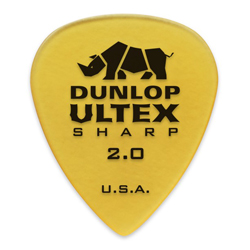
Dunlop Ultex Sharp 2.0 mm

Summary: It’s sharp alright; nice and pointy, and it feels great in your hand!

Pros: Like any sharp pick, this pick is accurate. It’s super lightweight, and made of a material takes a lot of pressure to even slightly bend. The pointy end makes pick harmonics a breeze!

Cons: It’s a small nit, but I wish the butt-end were just a bit wider.

Features (from the web site):

Based off of a coveted vintage tortoiseshell pick in our collection, the Ultex Sharp delivers a pick with a rigid body tapering into a thinner and sculpted tip for intense control and speed. The seamless contoured edge surrounds the pick for more playing surfaces and tones. Engineered of Ultex—the Ultex Sharp is virtually indestructible and delivers a crisp tone and quick release attack. Available in .73, .90, 1.0, 1.14, 1.40, and 2.0mm gauges.Price: 50 cents street

Tone Bone Score: 4.75 – Real nice-sounding and nice-playing pick. If you want to step up to a thicker, more rigid pick, but don’t want to shell out for high-end picks, this is a winner!

Okay, I’ll admit it: I’m a bit of pick snob. Ever since I started playing with V-Picks and Red Bear picks, I’ve mildly eschewed mainstream picks in favor of the insanely awesome picks those two companies produce. But I have to tell you that I was taken by complete surprise by the Dunlop Ultex Sharp pick! I wasn’t really looking to explore new picks, but a buddy of mine was looking for some Ultex picks at a local store, and offered to buy me a couple. Hell! They were only 50 cents apiece! I carried them around for a couple of days before I actually got to try them; not because I was dubious of them, I just couldn’t find time until this evening to sit down with an axe. Life happens, you know?

Anyway, I slung “Blondie” my trusty Squier Classic Vibe Tele, dug an Ultex out of my pocket, and started to play. Admittedly, I had a bit of trouble playing with the pick at first. Even though it’s slightly thicker than the thinnest pick I play – a Red Bear Tuff-Tone – it’s decidedly narrower in shape; something to which I’m no longer accustomed. But being the hard-headed type, and because I wanted to give the pick a fair shake, as it were, I kept at it, playing scales and riffs to get used to it.

I have to say that I’m really impressed by this pick! First of all, the material feels great in your hand, and like any real good pick, you forget about it. I love the rigidity of the material as well. Contrary to what you might think, a rigid pick actually makes you relax your hand. I know, it’s counterinuitive, but any player that plays a rigid pick will attest to this.

I spent quite a bit of time playing with this pick, and it’s a fast pick, though what I really missed was how my high-end picks really glide over the strings, like they’re lubricated. The Ultex material is pretty smooth, but there is a difference. Mind you, I’m not saying it’s bad in the slightest; it just has a different feel on the strings.

Most importantly though, the Ultex Sharp produces a nice, bright tone. That’s what I really dig about this pick! Part of it is due to it being rigid, but the other part is because of the pointy end. It really makes the strings snap in a very nice way!

Will the Ultex supplant my V-Picks and Red Bear picks? Probably not, but I will be using it for sure. It’s not even a small wonder why these picks are so popular among guitarists. They’re great playing and sounding picks at an insanely cheap price. I’m sold! Buy a few, and you’ll see for yourself!

Read Full Post »

I was perusing Solid Cables site this morning, and couldn’t find any pricing, so I surfed their dealer list to see how much I could get a 10′-12′ cord for. I found this site that had one of their Dynamic Arc Ultra cables listed for $135.95! OMG! I think the most I’ve ever paid for a cable was $80, and I still have that cable – it’s great; well-made with solid construction. People have raved about real high-end cables in the past, and I’m wondering how big of a difference they make. In any case, I put together a poll to see what people would pay for a cable. Here it is:

Read Full Post »

« Newer Posts - Older Posts »