Feeds:
Posts
Comments

Posts Tagged ‘Guitars’

O thou with such dirty little minds! I’m not talking about some Red Hot Chili Peppers-style playing with a tube sock around my member. I’m talking about playing with zero effects! So there!

For the past few weeks, I’ve recorded and gigged several times with no effects at all, and the only pedal I use is my trusty BOSS TU-2. The first time I did it, I was being lazy and didn’t want to break down my rig from my studio – especially since I was in the middle of laying down some tracks and didn’t want to lose my settings. But that first time turned into a second, then a third, and so on.

I’ve found it to be refreshing on a number of fronts; not the least of which is the much lighter load I have to lug around. But more importantly, I think it has really helped my playing as I can’t rely on pedals to fill in the gaps. For instance, I’m a lot more aware of how I’m sustaining notes, and trying to hold them as long as possible before I have to move on.

I know of lots of players who don’t use pedals at all, and for quite awhile, I couldn’t imagine life without pedals. But “playing naked” has really helped me to not rely on them. I used to always use overdrive pedals as my main source of drive, but I now use them as accents. I used to slather on the reverb but now, I rarely use it, except in the studio and even there, I use it sparingly.

Don’t get me wrong, I’m not going to put my board away. There are times when I need a pedal for a particular song, but for the most part, I can do without them, or just use them to provide tonal accents. In a way, I feel liberated…

Read Full Post »

When I first talked to a guy at a shop about this guitar (it’s someone whose word I’ve learned to trust over the years) about the Squier Classic Vibe Tele, one of the first things he said was, “For the guys who know tone, this is one of the best kept secrets in the industry.” That, from a guy who pedals high-end Fender custom shop axes. His only nit about the guitar was the same as mine: The frets seemed a little small. But other than that, the guitar was a player in his opinion; and so it was with my own estimation of this wonderful little guitar.

Squier is supposed to be the budget line for Fender, and traditionally have been tagged as beginner guitars. But the way this guitar looks, feels, plays and sounds, there’s nothing beginner or budget about it. The build quality is excellent. There are no split or jagged joints or uneven painting. This guitar looks and feels solid. And it’s light, weighing no more than 7 pounds with its pine body and maple neck.

I was excited about this guitar when I first played it, as evidenced by the high marks it got on my original review. I couldn’t believe that a guitar with a street price of $349 could actually be this good. But the one thing that struck me about it was not just its looks, but its tone. This ain’t your typical, thin Tele twang machine. This guitar has balls. The pine body resonates – a lot – and that adds a fatness to the tone that is completely unexpected! Even in the bridge pickup that really brings out the twang, the Classic Vibe Tele sounds like a bridge humbucker with just a touch of twang!

Since I was able to bring one into my studio, I decided to record a couple of clips to demonstrate how fat this guitar sounds…

The first clip features the Tele clean in the neck pickup for both rhythm and lead, though I dirtied up the lead part just a tad.

This next clip demonstrates how the guitar sounds through a fully cranked up amp (Aracom VRX22 with 6V6’s). The three parts feature the neck, middle, and bridge positions of the same chord progression, respectively:

Finally, here’s my new song Strutter again with the Tele played in the bridge position through my Aracom VRX22:

As you can tell from the clips, “thin” is just not part of this guitar’s modus operandi. It’s actually unsettling at first because when I’ve played Tele’s in the past, they were pretty bright and thin. But this guitar just sings and resonates all day long! Must be the pine body. But who cares! It’s a player, and for the money, you just can’t go wrong.

Read Full Post »

Song Information

Title: Strutter

Guitars: Rhythm – Strat, Lead/Melody – Saint Guitars Messenger (Goldie)

Amps: Rhythm – Aracom VRX22, Lead/Melody – Aracom PLX18 BB Trem

Guitars were recorded at conversation levels using the Aracom PRX150-Pro attenuator.

Effects: KASHA Overdrive, GeekMacDaddy Geek Driver

Audio

About the song

I wrote “Strutter” a couple of weeks ago. Like many of my instrumentals, it started out as a backing track that I could practice over. I was simply experimenting with doing leads over a dominant 7th chord progression after watching more of Chuck D’Aloia’s “Blues with Brains” instructional video and wanted to try out some of the stuff he talked about. Well, one thing led to another, and I started getting ideas that I started running with. So I laid them down.

I actually completed the recording several times using different guitars and amps for the lead, but every time I listened to it, I just wasn’t satisfied with the lead. I knew I wanted a bright sound tone, either from a Strat or from a bridge humbucker, but I wanted the lead to have some hair as well. My Strat just didn’t work here because of the vintage-style low power single coils I have in it. And the PLX18 BB was just a bit too fizzy with the stock speaker. So I sat on the song for awhile, though I did keep on refining the phrasing. As far as amps are concerned, I have several to pick from, but their tones are very vintage smooth. Even my go-to amp, the VRX22, was just too “nice-sounding” for what I wanted.

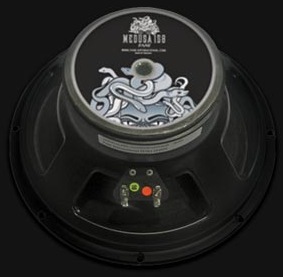
The PLX18 BB got me right into the ballpark. It doesn’t have loads of gain, and while the breakup is smooth and expansive – very 3D – it also has lots of balls for which Plexi-style circuits are known. But even then, the speaker I had in it was just too harsh in the highs, with an overabundance of fizz. In earlier recordings with the amp, I had to bleed off highs. I really didn’t like doing that because I don’t like to EQ my guitar parts. So it wasn’t until last night when I swapped out the stock speaker (Eminence Red Coat Red Fang) with a Fane Medusa 150 where everything came together.

Previous versions of the lead track included wah, but I removed the wah and re-recorded that portion of the song mainly because I just wanted a slightly fatter tone. The amp was already dimed, so I just added a couple of stacked overdrives using my KASHA overdrive and Geek Driver. This resulted in a bit brighter, but fatter tone.

Finally, the cool thing was that I recorded the song in two takes. The second take was the ending. I think my hand was getting tired from all the bending, and I made a couple of mistakes. 🙂 It’s amazing how your playing flows when your tone inspires you!

Read Full Post »


When I first reviewed the Fane Medusa 150, though I gave it a pretty good rating at 4.5 Tone Bones, I wasn’t really blown away by its tone because of its big bottom end, and recommended that the speaker be put into a 2 X 12 balanced out by a speaker with more top-end sparkle. What I didn’t consider was how it could be used to balance out the tone of a naturally bright amp.

Take, for instance, my review on the Aracom PLX18 BB Trem. One of the nits I had with the combo was that the Eminence Red Coat Red Fang was way too bright for the already naturally bright amp, causing me to bleed off highs when I was mixing the song. FYI, EQ’ing my guitars in my recordings is usually a real no-no with me because I like the pure sound of my guitars and amps on a recording. The only things I’ll add in production are reverb or a touch of delay if necessary. I love the tone of the PLX18, but that speaker just didn’t work for me.

Enter the Fane Medusa 150. That speaker is actually on loan from Tonic Amps. I’ve actually had it for a few months now, and I keep on forgetting to drop it off at Darin’s new place. Well, it looks like I’m probably going to buy it off him after all because I swapped out the Red Fang for the Medusa 150 in the PLX18, and suddenly the seas parted and a way was made clear! The PLX18 tone was completely transformed! Instead of being a purely bright amp, the PLX18’s tone became much more balanced. The highs and high-mids were still present but were much more tame. This resulted in a much richer tone.

As you may know, I’ve been working on a new song called “Strutter.” I actually had the song completely recorded, but I hadn’t finished it because I just haven’t been completely satisfied with the lead guitar tone. When I got the PLX18, I knew it would be the amp I’d use to record the song. But with the stock speaker, and even with my Jensen P12N, it still wasn’t cutting it for me. I even mentioned that the amp loves the Red Coat “The Governor,” and it does, but I still wasn’t completely satisfied. Now, with the Medusa 150 in the cabinet, I’ll be completing the song. Let’s compare, shall we?

Here’s the original, recorded with the PLX18 BB with the stock Red Coat. I’m playing my LP copy, Prestige Guitars Heritage Elite:

Now, here’s a clip of the song with the Fane Medusa 150. I’m playing Goldie in her bridge pickup:

Sorry for the differences in volume levels. But where the Red Fang has much more presence, and an in-your-face presentation, the Medusa’s tone is so much more three-dimensional and more refined. The mids and highs are still present and incredibly articulate, but they’re so much less piercing! And one thing that I noticed immediately with the Medusa is the clarity of the notes through the entire EQ spectrum, whereas the Red Fang seemed to lose a bit of clarity at high-gain settings – especially when I play those transition chords. Note that the amp and mix settings stayed completely the same between the two recordings, and both guitars were played through the Trem channel which was completely dimed. I also removed the wah from the second clip because I didn’t feel the need to mix it up. For that part, I did stack my KASHA Overdrive and Geek Driver overdrive pedals, but set to unity gain, and to add just a touch of compression and sustain. Not much, but just a touch.

So what’s the moral of the story? Simple: Amp and speaker combinations are critical to good tone. Some speakers, like my P12N work with a bunch of different amps. But some speakers, like the Medusa, work much better at balancing out certain amp characteristics. I’ve learned a good lesson here: You have to try out gear in different configurations and situations. Had I not tried to experiment with the Medusa, I probably would’ve just passed it off as a good speaker that belongs in a 2 X 12 cabinet with a bright speaker.

For more information on Fane speakers, talk to Darin at Tonic Amps! Tonic is the North American distributor for Fane speakers.

For more information about the incredible Aracom PLX18 BB Trem, please go to Aracom Amplifiers.

By the way, both clips were recorded at conversation levels using the fantastic Aracom PRX150-Pro attenuator, by far the best attenuator on the planet, from my perspective. I just couldn’t live without this device!

Now, both amp and speaker get:

Read Full Post »


For the last couple of years, there has seemingly been a glut of new overdrives that enter the market on a weekly basis. I’ve been like a kid in a candy store as overdrive pedals are my favorite pedals. Though I’ve played through tons of ’em, I haven’t written about many mainly because there’s just so much gear out there, and I’ve got a limited amount of time I can spend reviewing and writing.

But I’ve noticed that in the past few weeks, there have been just a couple of new overdrives to enter the market; one of which I purchased (the KASHA Overdrive), and the Skull Crusher overdrive, both made by the same company. Since then, I haven’t seen anything new come out – at least no one is putting out press releases…

Are we at a saturation point now? Has all the overdrive territory been covered? Perhaps it is, or perhaps people are just waiting to release their pedals. One thing’s for sure, the overdrive tap has dried up.

Read Full Post »

Over the past few weeks, I’ve been really getting into Chuck D’Aloia’s “Blues with Brains.” and I’ve extolled the matter-of-fact and easy way Chuck makes learning how to play the blues. With just a few sentences, he reveals some incredible things that I’ve inherently known, but could never really articulate or understand.

The other day, a buddy of mine sent me an e-mail that contained a link to one of Doug Seven’s free videos. For those who aren’t familiar with him, Doug Seven is a chicken-pickin’ master, and he teaches this stuff online. Like Chuck D’Aloia, his stuff isn’t meant for the rank beginner, but if you have some experience in playing, what he presents will boost your technique.

I’ve got one of his courses, though I haven’t spent much time with it – it was mostly learning chicken-pickin’ licks, but this video that my buddy sent me falls right into line with Chuck D’Aloia’s approach; that is, it’s not necessarily technique, but it covers an important aspect to soloing. The cool thing is that a guitarist of any level can benefit from this.

Before I give you the link, I’ll give you the crux of what he talks about. Essentially, when you’re playing over a minor blues progression, let’s say an Am progression – Am Dm E7, for instance – you can play a major scale against it. Doug talks bout experimenting and finding what that major scale is against the root chord, and he shows you how to find it on the fretboard in a single step, without knowing what the major scale is. The assumption is that since scales fall into a pattern, once you’ve got the root note, you just follow the pattern. Very cool.

For a more theoretical answer, what you play is the scale of the relative major to the root minor chord for the minor blues progression. So for Am, the relative major is C. Basically, the notes of the scale of a relative major and minor are the same. They just have different starting points. In any case, check out the video.

Here’s the link: http://moderncountryguitar.com/play-blues-guitar-riffs-blues-licks-solo-blues-guitar.html

Admittedly, this was a bit of a review for me, but I don’t want to discount its value. Yeah, yeah, experienced soloists may scoff a little at this, but I think it’s incredibly powerful. Why? Simply because there are times when you’re gigging where you can’t come up with an idea, and something like this gives you a great fallback position to perhaps stumble upon an idea. And it works both ways! If you’re playing in a major key, you can use the relative minor scale – remember, same scale notes as the major, but different starting point, so it’ll give you a different “color.”

I once was playing a ceremony where the band had to play an instrumental in D for something like 20 minutes – half of which I had to quietly solo over. I did some exploration for about 5 minutes, and was coming up with some great ideas, then suddenly, I hit the wall. Just drew a blank. So, I did a couple of standard licks that I know, then just started noodling a little in Bm. After about thirty seconds, I was able to stumble upon an idea, and used that idea for the rest of my solo time!

I love coming across stuff like this, even if I know it already, because I love sharing it.

Read Full Post »

Click on the picture for a larger view. Aracom Amps PLX BB 18

Summary: Reminiscent of John Mayall and the Bluesbreakers, the PLX18 BB is a tribute to the classic Marshall Plexi’s of yesteryear.

Pros: Looking for classic EL84 classic rock/blues tone? Look no further. This amp has tons of mojo that’s just waiting to be tapped, with two independent channels and a subtle, tube-driven tremolo that’s to die for!

Cons: Tiny nit, but the stock speaker – Eminence Red Coat Red Fang – is voiced way to brightly for this amp. For cleans, it’s great, but creates a bit of fizz when you’ve got it cranked.

Features:

General (from the Aracom site)

– On/Off Switch
– Standby Switch
– Indicator Lamp
– Custom Heavy Duty
Aluminum Chassis
– Impedance Switch:
4, 8, 16 ohm
– (2) Speaker Jacks
– Custom Handcrafted
Turret Board
– Handwired
– Gold Plexi Front and
Back Panels

Tremolo Channel

– Single Knob Tone Control
– Single Volume Control
– Tremolo Intensity Control
– Tremolo Speed Control
– High/Low Input Jacks
– Tremolo/Reverb Remote
– On/Off Footswitch Jack
– Reverb: Available with
optional Tube Driven
Reverb in the Combo 1×12
and 2×12 configurations.

Normal Channel

– Single Knob Tone Control
– Single Volume Control
– High/Low Input Jacks

Price: ~$1750 Direct

Tone Bone Score: 4.75 – If it weren’t for the speaker, this would get 5 Tone Bones, but I remedied that very easily by running it through either a Jensen P12N or a Red Coat “The Governor.” I dig that Governor speaker! It really brings out the best in that amp by taming the highs and adding a nice and smooth bottom end.

When you live less than half an hour from a boutique amp maker, you get to try out lots of GREAT gear. It’s so convenient to drop by Jeff’s shop or have Jeff over. He’s someone I love spending time with because we both share a passion for vintage and vintage style gear (Jeff is a passionate Les Paul collector), and we spend lots of time just talking about different kinds of gear, and especially his approach to amp building. As of late, Jeff Aragaki and Aracom Amps have gained a lot of attention in the guitar world for his incredible PRX150-Pro attenuator. And while I love what that attenuator does (it really has made my home recording late at night so much more convenient), it was his amps I fell in love with, and to date, I have three of them, having added the PLX BB 18 to my growing collection of low-wattage amps.

In Jeff’s words, the PLX BB 18 “ …is our tribute to the Marshall 18 watt Tremolo amp that was originally introduced in 1967. The term “Bluesbreaker” originated from the Marshall JTM 45 Tremolo Combo amp that Eric Clapton made famous when he was with John Mayall and the Bluesbreakers. While the JTM 45 Tremolo is the original “Bluesbreaker”, many people also refer to the early 50 watt and 18 watt Marshall amps with Tremolo as Bluesbreaker amps.

This amp is the elder statesman in the Aracom lineup, and while lots of attention has been paid to his latest VRX line, it was the PLX that gave Jeff his start. Unfortunately, because there are lots of classic Marshall Plexi 18 remakes on the market, the PLX BB 18 is probably his least known amp. That’s too bad because the tweaks Jeff made to the classic Marshall circuit has produced a very distinctive amp that has a mojo that’s almost visceral in its appeal.

Based upon a pair of EL84 power tubes, and an EZ81 rectifier, the PLX produces a very three-dimensional tone that’s at once in your face, but also fills the space you’re playing; and mind you, this is at fairly low levels – maybe loud conversation levels – due to squelching the output volume with the PRX150-Pro. Strike a chord or bend a note, and you can feel the tone! It’s that way with my VRX amps as well. There’s something that Jeff has discovered in building his amps that make them ooze a certain mojo.

Like all Aracom amps, the PLX18 BB is packed full of character. It’s amazing how it responds to volume knob changes and pick attack. But one thing that really strikes me about this amp is how smooth the distortion is when I crank the amp. When pushed hard, it has tons of gain and oodles of dynamics, but they’re very well-mannered. Notes are well-defined, and especially played with humbuckers, bloom nicely when you attack a string. F-in A!

How It Sounds

I got the amp this past Saturday, and I’ve been playing with it since. I spent Saturday evening and most of Sunday just getting used to it, and experimenting with different speakers. As I said, the stock speaker is a little bright (admittedly, I’m experimenting with it), but it’s also brand new, so that probably accounts for the abundance of highs. With time, that speaker will mellow out. But as I wanted to use the amp right away, I ran it through my custom 1 X 12 cab with a Jensen P12N and also my Fender Hot Rod’s cab that has the Governor in it. Amazingly enough, this amp LOVES the Governor. The P12N sounds awesome (and I’m a huge fan of Alinico speakers), but the Governor seems to bring out the best qualities of this amp. Anyway, here are some clips I recorded:

  • This clip features the stock Red Fang. I’m playing my Prestige Heritage Elite (an LP copy) for the lead with the Treble pickup engaged. This is a clip from a song I’m working on called “Strutter.” I normally don’t EQ my guitar parts, but I did bleed off some of the real high-frequencies to cut down on the natural fizz.
  • This next song is called “Plexi Lullaby” because it reminded me of a lullaby. The base rhythm track was recorded on the tremolo channel with my Heritage, then I created a second rhythm track with my Strat. The Lead is also played with my Strat. You’ll notice that you really have to listen for the trem. The tube-driven trem is killer. It’s very subtle and oh so smooth! Almost forgot! The base rhythm track was played through the stock speaker, while the Strat parts were recorded through a P12N, and no EQ was applied to any of the parts.
  • Finally, here’s a simple track I recorded just with my Strat for both parts, running the PLX18 BB through the Governor. This in the drive or “normal” channel of the amp with it cranked up to about 3pm, which is almost full out. To achieve the cleans, I just used a light touch, and played it finger style. I picked the Lead so I could get some occasional grind sneaking in:

I really love the tone on the last clip. The cleans it produces just make me close my eyes and play; which is pretty much what I did when recording the lead part. Just hearing how the chords just rang was so inspiring! The amp the entire time was just on the edge of breakup – it’s so expressive! I just added a touch of room reverb in the mix, but the guitars were all recorded completely raw. I didn’t do any adjustments.

Overall Impressions

I know, I say this quite a bit about Aracom amps, but I LOVE THIS AMP! As you can hear from the clips, it has an abundance of character. Jeff has recommended a few times that I try some NOS tubes with it, as all the pre-amp and power tubes are all JJ’s. But I’ve resisted because it just sounds great with the stock tubes. As I told him, “I know, I’ve got some NOS tubes on hand, but there’s no reason to put them in there. It sounds great with the JJ’s.” I may eventually do that, but for now, I won’t replace the tubes until they start getting dull.

The PLX18 BB yet another one hit out of the ballpark by the humble genius, Jeff Aragaki!

Read Full Post »

I just finished cooking my lunch of Potatoes O’Brien which consists of diced potato, onions and red and green peppers. You fry up the mixture in hot pan with a bit of oil, seasoning to taste until the potatoes turn golden brown. When they’re done, I like to sprinkle a bit of shredded cheese, and I also like to add some chopped bacon for a nice contrast. Very tasty indeed!

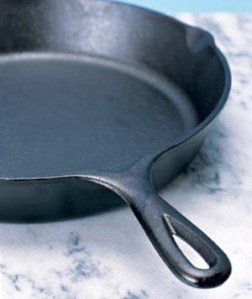
If you’ve ever cooked with potatoes in a regular frying pan (not the non-stick kind), it can be a painful process because potatoes have a proclivity to stick. But I have a great cast iron skillet that has been seasoned from years of frequent use, and sticking is not part of its modus operandi. It has taken years of care and cooking, and keeping the pan lubricated to where the oils and the fats from the food have worked into the pores of the metal. It is now a masterpiece of cooking utility, and I’d be heartbroken if it got ruined.

The same thing can be said of a guitar. When you first get it, it’s all shiny and new – though I suppose that doesn’t count for relicked guitars, as they’re supposed to already be broken in… But even if they’re vintage-ized, out of the box, they’re still new, the new gear “feels” new, and thus needs time to season through use. Woods take time to settle. Oils have to work into the neck and fretboard, etc., etc..

Especially with a fretboard, it takes time to work the oils from your fingers into the pores of the wood and fret metal. Ever wonder why new fretboards feel “sticky?” They need lubrication. I read in an interview with Neal Schon of Journey fame that he actually rubs a piece of salami on a fretboard to help break it in! Now THAT’S about seasoning! Ha!

Moreover, I just don’t feel a guitar will actually sound right until it has really broken in through regular use and exposure to all sorts of environments. When I first got my MIM Strat, “Pearl,” I loved her tone, but after playing her for over five years now, her tone to me is so much more mellow than when I first got her, and the frets and neck are nicely broken in from regular use. She’s just a dream to play.

One of my kids once asked me why I get so attached to my guitars that I give them names. I told them that I give my guitars names because I’ve spent so much time seasoning them, like I do with my “special” pan. They all know that my cast iron skillet is “Daddy’s special pan” so when I gave them the reason, they immediately understood.

It doesn’t end with just a guitar, though I focused on that. Amps – and especially speakers – take a long time to truly season. But that’s another discussion altogether. 🙂

Read Full Post »

A friend of mine asked me to recommend a pedal that would push his amp into overdrive so it would just be his amp distorting. Naturally, I recommended a transparent clean boost that would slam the front-end of his amp and make his pre-amp tubes clip. So I lent him my Creation Audio Labs Mk.4.23 clean boost (best I’ve ever used, btw). He hooked it up, turned on his amp, slung his axe, strummed a chord, immediately muted and turned to me saying, “Dude, this doesn’t sound right.”

“What do you mean?” I replied,  “It sounds fine to me.”

“It’s too bright!” he exclaimed.

“Dude,” I replied, “That’s how your amp sounds when you overdrive the tubes. Actually, that sounds killer. Lemme try…”

So I took his guitar, and did a couple of riffs, and bent and held a note to get some feedback. The tone was rockin’!

“That was cool, dude, but it’s still really bright,” he said.

“Oh brother, bleed off some highs from your tone knob, for chrissake,” I said, obviously getting a little exasperated.

He did, I played a bit more, then gave the guitar back to him.

“That was better,” he said, “but it doesn’t sound quite right.”

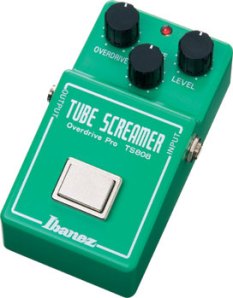
“Ha! That’s because you’ve been using a Tube Screamer for so f$&kin’ long for your overdrive sound, that you’ve never really known what your amp really sounds like when it’s overdriving without any help,” I quipped.

“You know, you’re probably right,” he said, “but it’s what I like, so I think I’ll stick with it. Sorry dude…”

“Hey! Not a problem, you just gave me the material for my next article! Thanks!” I exclaimed.

The point of that story is that for some, transparency isn’t pleasing to them at all. With my friend above, he was used to the Tube Screamer’s mid-range hump, and when he heard his amp overdriving with the full spectrum of the EQ, he didn’t like it all. I also met a dude who uses a compressor that’s always on to fatten his tone and punch through the crowd noise when he’s playing (he plays a lot of open, public spaces). In either of these cases, it’s all good because as the old saying goes, beauty is in the eyes of the beholder.

The reason why I brought this is up is because there’s a lot of talk among gear freaks about transparency; that is, the natural sound of our guitar(s) and amp(s) without any coloration. By convention, transparent tone sets the baseline for our sound, which we then color with effect pedals. That seems to be the convention. For some however, that baseline includes some coloration; like my friend who always has his Tube Screamer on. Again, beauty is in the eyes of the beholder.

Admittedly, for myself, before I started using attenuators to get the natural cranked tone of my amps, I was someone who used a Tube Screamer or OCD to get my grind. Once I started using attenuators, it actually took me awhile to get used to not only the transparent, natural, cranked sound of my amp but also the dynamics as the pedals I used added sustain and compression. But now, and for the last few years, transparency is where it’s at for me, and it has really opened up a whole world of tone for me. More importantly, it has helped me understand how different types of amps, especially tube amps, sound in their natural states.

Please don’t get me wrong, there is absolutely nothing wrong with using pedals to form your baseline at all! But if you do turn on a dime, as it were, and decide to go for transparency, be prepared for a little surprise. When you suddenly experience the full spectrum of EQ from your gear – especially with the case of a great attenuator like the Aracom PRX150-Pro that enables you to get the cranked tone of your amp at reasonable volume levels, you may not like it as your ears are used to the altered tone from your pedals or other devices you’ve had in your signal chain to achieve your baseline tone.

But I will say this: I do argue for creating your baseline tone as transparent as possible. As celebrity chef Emeril Legacie says about cooking, “It’s very easy to add ingredients, but it’s a lot more difficult to take them away.” With respect to your rig, if you build on a good base of transparent tone, it’ll have some very good effects on how you approach your tone. I’ll share with you a few points of what I discovered:

  • I’ve come to appreciate the natural character of my amps. I use four amps (though I normally gig with only two of them). These are all based on different power tubes: 6L6, 6V6, EL84, and 6AQ5. These all have different characters when cranked. When I’m recording, I can pick an amp that fits the type of response I’m after.
  • A fallout of the the first point is that I’ve found that I’m using effect pedals a lot less; especially overdrives, which I still love, but I use only to provide a different character. For instance, while I totally dig the sound of my main gigging amps, Aracom VRX22 and VRX18, the drive channels are on the  bright side when pushed. But if I want a little low-end oomph for some rhythms, I switch to the rich clean channels of these amps, and get my grind from one of my overdrives, like my Tone Freak Effects Abunai2, that has a clipping circuit, plus adds both compression and sustain (this pedal rocks, by the way).
  • Going more barebones in my approach has also made me a better player – especially with respect to sustain and vibrato. Where I used lean on my pedals as a bit of crutch to get sustain, I’ve had to learn how to eek out as much sustain from my guitar using just my fingers. Once I started getting that down, it was a whole new ballgame for me.

Whew! I didn’t mean to write an entire treatise! 🙂 But to close this out, if you’ve never really experienced the natural tone of your gear, I encourage you to do so. It might just blow you away. Then again, you might not like what you hear, and that may give you pause to research getting another amp – that’s never a bad thing…

Read Full Post »
bwb
As I’ve mentioned in the past, I purchased Chuck D’Aloia’s “Blues with Brains” series. After a month, I still haven’t moved past Volume 1, but that’s only because I’m going slowly and methodically with the process. Besides, the one thing that I found is that Chuck throws A LOT of stuff at you in a very short period of time, and I’m one of those types of learners that has to let information soak in before I can move on.

There aren’t any step-by-step lessons in this series. It’s very free-form, which I find is totally cool. But as I mentioned above, there are several places where Chuck throws in lots of material in a short span of time, so I’ve found myself going back and forth and listening and practicing for a couple of days before moving on. This is a real change of approach for me because I’ve operated by this little saying for quite awhile: “If patience were a virtue, I’d be a slut.” 🙂 But this time ’round, I made a conscious decision to not move on until I could execute on what the teacher was talking about proficiently.

What about the fruits of my labor? Well… I know I’ve used this clip before, but it’s a good example of applying what I’ve learned:

Excuse the obvious mistakes, the song’s not really in a finished state (can’t decide what guitar/amp combo I want to use). But here’s what I’ve learned so far that I’ve applied to this song:

  • I now pay lots of attention to the current chord being played and playing notes that “fit.” I used to be a real pattern player – especially the minor pentatonic – but I’m learning to break free of those patterns.
  • I’ve lately put a lot of emphasis on learning various triad shapes up and down the neck. This not only helps with getting the proper fingering at a particular place, but it also helps in coloring.
  • I’m also learning to let my solos breathe. One thing that I haven’t heard Chuck mention yet – though he’ll probably share it – is taking some time to let my idea sink in, then playing to build on it. Yeah, that song is somewhat composed, but it came about through playing over the rhythm track underneath. The themes you hear are ideas that I came up with while just playing around!

Regarding that last point, that is probably the salient point that I’m getting out of the lessons thus far, and that is taking an idea, then developing it and building upon it. It’s incredibly freeing!


Read Full Post »

« Newer Posts - Older Posts »