Feeds:
Posts
Comments

Posts Tagged ‘new gear’

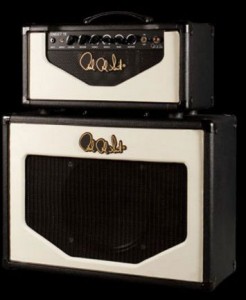
Ever since Paul Reed Smith came out with amplifiers, I’ve been a little dubious about them mostly because anything carrying the PRS logo will invariably cost an arm and a leg. Don’t get me wrong PRS makes freakin’ incredible gear, but said gear also has a relatively large barrier to entry. So it came as a nice surprise that the PRS Sweet 16 is much more reasonably priced than one might expect of a PRS. For a hand-wired amp at just under $1700, that’s getting into Dr. Z territory, and that’s a GREAT thing!

During my latest sojourn to Guitar Center, my wanderings took me to the “quiet room” where GC has a few amps and guitars for people to play, isolated from the rest of the store. I like going in there because usually they have nicer gear like Custom Shop Strats, and high-end Gibsons. For amps, there’s always nice ones like classic Fenders (they’ve had the same silverface Twin in there for awhile now), and this time, they had the PRS Sweet 16 with its matching 1 X 12 cab.

Features (from PRS)

  • Hand-wired in Stevensville, Maryland
  • 16 Clean Watts (Smooth Overdrive at Max)
  • 2x 6V6 Output Tubes
  • Cathode Bias
  • Master Volume (Exits the Circuit at Max)
  • Reverb
  • Volume, Bass, Treble, Mid, Reverb, Master, and Bright Controls
  • Vintage-style Black and White Tolex Look

Fit and Finish

What can I say that hasn’t been said of PRS gear? It’s invariably lovely stuff! The black and white tolex and black grille cloth give the amp a very cool vintage look. As expected, there’s nary a blemish or seam out of place with this amp, and as expected, both amp and cab are super-sturdy. But that’s a given with pretty much any PRS gear.

How It Sounds

Here’s where we get into a bit of murky territory, primarily because even in an isolation room in a store, it’s not an optimal place to test – at least for me because I almost invariably don’t have my own guitars available when I do “random” tests. But that’s okay, I just spend a bit of time getting guitars that are close to what I have or had. With this test, I used a Strat and a very nice ES-335.

The Sweet 16 must have a pretty hefty output transformer because this puppy puts out some volume, even with a single 1 X 12. It has TONS of clean headroom, which made me turn down the Master and crank up the volume to get even a little grind, which indicated to me that to really get this amp to get into serious breakup, the master has to be dimed as well. The predominantly pre-amp distortion just seemed a little flat-sounding to me; it wasn’t bad, but it was nothing special. I did crank up the Master for just a little while, and even with it dimed, the breakup was  lot like a classic Marshall JTM; tons of clean headroom, with a modest amount of distortion when cranked. Definitely an amp suited for classic rock/blues.

Clean was another story. Really nice cleans with this amp, especially with a Strat. The CS Strat I played produced a smooth and complex tone with a chimey top-end. Quite nice. And the ES-335 sounded gorgeous through the Sweet 16. Adding a touch of reverb, really helped fill out the sound, and it was great playing fingerstyle with both axes.

For EQ settings, I just moved everything to 12 o’clock and didn’t have to tweak at all, though I did switch on the bright control to get some top-end shimmer; especially when playing the ES-335. The Strat didn’t need it, and the fuller sound really helped bolster the natural thin tone of the Strat.

Regarding the reverb, I do have to say that I’ve heard better. It’s not that it’s bad-sounding. I just wasn’t really impressed with it. I certainly wouldn’t use it to provide a sustaining effect with this amp. The sag is enough with the amp that I can get my sustain with my fingers. The reverb is not as pronounced as a Fender reverb, and it’s not very springy. I liken it to an Aracom reverb that isn’t very intense. It’s there, but it’s a heck of a lot more subtle than a Fender. But like I said, it’s not bad, but for me, I probably wouldn’t use it. For recording, I’d record the amp dry and layer a reverb as an insert or side-chain effect. That said, that amp sounds great without a reverb.

Overall Impressions

My gut impression is that it’s a great-looking and great-sounding amp, and it’s a good start for PRS’s entry into the low-wattage amp arena, but there are a lot better-sounding amps in that price range and below.Good examples of this are the Reason Bambino, the Aracom VRX series, and the Dr. Z Remedy. Don’t get me wrong, I’m not knocking the Sweet 16. I really liked it, but it’s not an amp that blew me away with its tone.

Despite my rather contrarian comments, the Sweet 16 gets a 4.5 Tone Bones rating. It’s well-made and great-sounding. If I ever get one into my studio, I’ll do a full review, and perhaps my rating will change. But it’s a solid performer nonetheless, and you could do a lot worse.

Read Full Post »

Wow! Two days in a row, and yet another e-mail received from a reader, and yet another pretty cool idea. This time, it’s from Guitar Scale Magnets located in Houston, TX. These help players learn scales by attaching a magnetic strip to the bass side of the fretboard. The premise is that learning guitar is a visual as well as tactile and aural experience, and having a visual cue as to where you should place your fingers in relationship to a particular scale will help you learn faster. Interesting indeed. Here’s a picture of the pentatonic scale strips:

There are 12 strips representing each note in an octave, so you can learn the five pentatonic box shapes in any key! Cool! Each strip is attached to the guitar via a “base” strip of magnetically receptive material (not metal) tape. The tape has a weak adhesive, to stick enough to stay in place, but not damage your finish. In any case,  very ingenious idea!

At this point, only 25 1/2″ scale length strips are available, but according to the manufacturer, slight variations won’t throw the strip off much.

Personally, I wish I had these strips for when I was learning guitar. I just memorized the box shapes, then learned how to connect them through osmosis. But if I had to do it all over again, I would’ve invested in stuff like this to help get me started! For you teachers out there, you might consider getting a few sets of these – you can pass the cost of them to your students. But then again, that might shorten the time it takes to teach your students to play the guitar. 🙂 Seriously though, if my teacher provided me with stuff like this, it would make learning a helluva lot easier!

For more information, go to the Guitar Scale Magnets web site!

Read Full Post »

As GuitarGear.org has gotten more of following, from time to time, I get random e-mails from folks who share gear and what-not. It’s cool. If it’s interesting stuff, I share it here, and like in the case of Jeff Aragaki of Aracom Amps, their contact initiates a close friendship.

Anyway, I got a notification from YouTube that someone sent me a private message – I’ve gotten those before and they’ve been from users with names like “PoleRider69” or something to that effect, telling me to go to their adult porn site – but this one was different because the person who sent it was sharing a video about a glass guitar pick. Ah-ha! Gear! Now, you know me, gear slut that I am, I just can’t resist checking out stuff related to gear; especially picks!

So without further ado, I’ll share the video. It’s very short, but how this pick was used really compelled me to share it and find out more about the pick.

Read Full Post »

When I first talked to a guy at a shop about this guitar (it’s someone whose word I’ve learned to trust over the years) about the Squier Classic Vibe Tele, one of the first things he said was, “For the guys who know tone, this is one of the best kept secrets in the industry.” That, from a guy who pedals high-end Fender custom shop axes. His only nit about the guitar was the same as mine: The frets seemed a little small. But other than that, the guitar was a player in his opinion; and so it was with my own estimation of this wonderful little guitar.
Squier is supposed to be the budget line for Fender, and traditionally have been tagged as beginner guitars. But the way this guitar looks, feels, plays and sounds, there’s nothing beginner or budget about it. The build quality is excellent. There are no split or jagged joints or uneven painting. This guitar looks and feels solid. And it’s light, weighing no more than 7 pounds with its pine body and maple neck.

I was excited about this guitar when I first played it, as evidenced by the high marks it got on my original review. I couldn’t believe that a guitar with a street price of $349 could actually be this good. But the one thing that struck me about it was not just its looks, but its tone. This ain’t your typical, thin Tele twang machine. This guitar has balls. The pine body resonates – a lot – and that adds a fatness to the tone that is completely unexpected! Even in the bridge pickup that really brings out the twang, the Classic Vibe Tele sounds like a bridge humbucker with just a touch of twang!

Since I was able to bring one into my studio, I decided to record a couple of clips to demonstrate how fat this guitar sounds…

The first clip features the Tele clean in the neck pickup for both rhythm and lead, though I dirtied up the lead part just a tad.

This next clip demonstrates how the guitar sounds through a fully cranked up amp (Aracom VRX22 with 6V6’s). The three parts feature the neck, middle, and bridge positions of the same chord progression, respectively:

Finally, here’s my new song Strutter again with the Tele played in the bridge position through my Aracom VRX22:

As you can tell from the clips, “thin” is just not part of this guitar’s modus operandi. It’s actually unsettling at first because when I’ve played Tele’s in the past, they were pretty bright and thin. But this guitar just sings and resonates all day long! Must be the pine body. But who cares! It’s a player, and for the money, you just can’t go wrong.

Read Full Post »


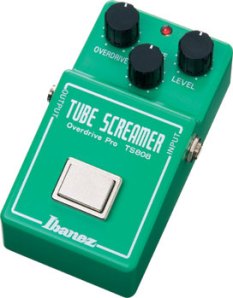
For the last couple of years, there has seemingly been a glut of new overdrives that enter the market on a weekly basis. I’ve been like a kid in a candy store as overdrive pedals are my favorite pedals. Though I’ve played through tons of ’em, I haven’t written about many mainly because there’s just so much gear out there, and I’ve got a limited amount of time I can spend reviewing and writing.

But I’ve noticed that in the past few weeks, there have been just a couple of new overdrives to enter the market; one of which I purchased (the KASHA Overdrive), and the Skull Crusher overdrive, both made by the same company. Since then, I haven’t seen anything new come out – at least no one is putting out press releases…

Are we at a saturation point now? Has all the overdrive territory been covered? Perhaps it is, or perhaps people are just waiting to release their pedals. One thing’s for sure, the overdrive tap has dried up.

Read Full Post »

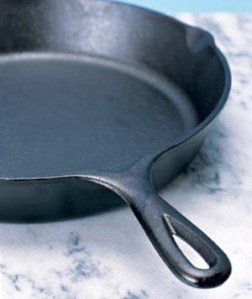
I just finished cooking my lunch of Potatoes O’Brien which consists of diced potato, onions and red and green peppers. You fry up the mixture in hot pan with a bit of oil, seasoning to taste until the potatoes turn golden brown. When they’re done, I like to sprinkle a bit of shredded cheese, and I also like to add some chopped bacon for a nice contrast. Very tasty indeed!

If you’ve ever cooked with potatoes in a regular frying pan (not the non-stick kind), it can be a painful process because potatoes have a proclivity to stick. But I have a great cast iron skillet that has been seasoned from years of frequent use, and sticking is not part of its modus operandi. It has taken years of care and cooking, and keeping the pan lubricated to where the oils and the fats from the food have worked into the pores of the metal. It is now a masterpiece of cooking utility, and I’d be heartbroken if it got ruined.

The same thing can be said of a guitar. When you first get it, it’s all shiny and new – though I suppose that doesn’t count for relicked guitars, as they’re supposed to already be broken in… But even if they’re vintage-ized, out of the box, they’re still new, the new gear “feels” new, and thus needs time to season through use. Woods take time to settle. Oils have to work into the neck and fretboard, etc., etc..

Especially with a fretboard, it takes time to work the oils from your fingers into the pores of the wood and fret metal. Ever wonder why new fretboards feel “sticky?” They need lubrication. I read in an interview with Neal Schon of Journey fame that he actually rubs a piece of salami on a fretboard to help break it in! Now THAT’S about seasoning! Ha!

Moreover, I just don’t feel a guitar will actually sound right until it has really broken in through regular use and exposure to all sorts of environments. When I first got my MIM Strat, “Pearl,” I loved her tone, but after playing her for over five years now, her tone to me is so much more mellow than when I first got her, and the frets and neck are nicely broken in from regular use. She’s just a dream to play.

One of my kids once asked me why I get so attached to my guitars that I give them names. I told them that I give my guitars names because I’ve spent so much time seasoning them, like I do with my “special” pan. They all know that my cast iron skillet is “Daddy’s special pan” so when I gave them the reason, they immediately understood.

It doesn’t end with just a guitar, though I focused on that. Amps – and especially speakers – take a long time to truly season. But that’s another discussion altogether. 🙂

Read Full Post »

stagetrix-pedalfastener

Click for full size view

I wrote about StageTrix Pedal Risers awhile ago, and how they elevate the back row of your board to make your pedals more accessible. I’ve been using them since, and they really are a godsend! I did mention that they already came with the fastener already installed, so all you have to do is place the riser.

I really like the fastener they’re using. For one, the material is thinner than most kinds you buy at a store, which means it shapes well to contours. Another thing – and more importantly, in fact – is that the glue StageTrix uses on the fastener can withstand up to 200 degrees Fahrenheit. That’s the best thing. We’ve all had the experience of getting velcro glue on our fingers. It’s a gooey mess! Well, that’s solved with the Pedal Fasteners.

For $9.95, you get a pack of three (click on the picture to get a full size view). You can install a fastener with the middle, or you can remove the middle part, and only use the fastener on the edge of  your pedal. Very cool stuff!

For more information, check out the StageTrix Products site!

Read Full Post »

5 Tone Bones - Gear has stellar performance, value, and quality. This is definitely top of the class, best of breed, and it's a no-brainer to add this to your gear lineup!

cb_tele

Squier By Fender Classic Vibe Telecaster 50’s

Summary: Finally! An inexpensive guitar that isn’t just a pretty face like many cheapo guitars. This guitar backs up its great looks with great sound and playability!

Pros: Spectacular, lush cleans from the neck pickup. Nothing twangy about this guitar. The bridge pickup is nicely “trebly,” but not piercing at all! The thin, 50’s-style C-shape neck is to die for!

Cons: This is just a minor nit, and nothing to give points off, but the frets are a little small, and with heavy use, they’ll wear down. But hell! At this price, you can buy two and be way ahead of the game!

Features:

  • Body: Pine (very cool)
  • Neck: 9.5″ Radius, Solid Maple
  • 21 Frets
  • Pickups: 2 Custom-Style Vintage Tele Pickups with Alnico 3 magnets
  • Controls: Volume and Tone
  • Tuners: Vintage-style tuners

Price: ~$349 street

Tone Bone Score: 5.0 – Not sure if I’ve ever rated a Fender product my highest rating, but that’s how good this guitar is!

Being the eternal optimist, I’m always looking for ways to turn a negative into a positive. As I’ve gotten older, my back has started to get a bit sensitive, and gigging with heavy guitars can sometimes be – literally – a real pain!  So I’ve been looking for a lighter alternative that would give me a good range of sounds, from great cleans to hot grind when I need it, and something that I could comfortably gig with and not worry about throwing out my back. I’ve found the guitar: It’s the Squier Classic Vibe Tele! If you don’t look at the headstock, you could swear you’re playing a regular Fender Tele! But this one has a great sound all its own. After last year’s price hike, I had lost hope that Fender would be able to produce anything that was inexpensive that had decent quality and sound, but I stand completely corrected, especially after the price drop of the Champ 600 down to $149, and now, this little secret, the Squier Classic Vibe Tele.

Fit and Finish

The guitar I played today was so well-made, I could’ve sworn that it was an American Tele. The blonde, vintage finish was luscious, and the 9.5″ radius vintage C-shape neck, with its gloss finish was perfect. No air bubbles, no uneven finish. The frets were well-dressed, if a little small, and I could detect nary a burr or sharp edge. It was obvious that despite this being a “bargain” brand, great care was put into building this instrument. Of course, only time will tell how well this instrument holds up, but from what I can tell from this brand-new specimen, it appears it’ll be be a long-lived instrument.

I also love that black pick guard that provides a very cool contrast to the blonde body finish! Nice!

How It Sounds

I’ve played a lot of guitars – especially “budget” guitars, but one thing that seems to be a common theme among the bargain guitars is that lots of them look great, but plug them in, and they’re less than – ahem – inspiring. This is where the Classic Vibe Tele stands head and shoulder above the rest. If I didn’t know better, I’d swear this was an American Tele based upon the quality of tones it produces. But unlike its American cousin, this Classic Vibe Tele has a slightly different tone, and that is not a bad thing at all. A lot of this can probably be attributed to the solid pine body. It’s very resonant, and it is not a bright-sounding wood, which probably accounts for the lack of “Tele” twang. It’s there, but it is definitely not as pronounced as I was expecting. Granted, I was playing through a Fender Hot Rod DeVille 2 X 12, which is known for its ample bottom, so that probably could account for the lack of twang. But hey! That is definitely not a bad thing at all!

The neck pickup, when played clean, has a very Strat-like neck pickup vibe. I love that! It’s smooth, and deep, and when slathered with some gorgeous Fender reverb, has a gorgeous, almost ethereal quality where the notes seem to just hang in the air. The bridge pickup adds top-end sparkle, as expected but surprisingly not so much that it sounds thin and tinny. It’s a slightly brighter version of the neck, which makes sense since the two pickups are the same. But quite frankly, I liked playing in the middle selector position where both pickups are engaged. The tone and gain balance between the two pickups in that position is fantastic.

“Balance” is a great way to describe the tone of the Classic Vibe Tele. It sounds and feels balanced; not bright, not deep. Balanced. And the sustain is absolutely breathtaking! I played a song where I comp chords up and down the fretboard with lots of sliding, bending and vibrato, and the sustain and ring that the guitar produced just made me close my eyes and smile. The guitar guy at the store even chided me with, “Aw Brendan, you play so sweetly!” That got a laugh out of me, but luckily he followed it up with, “That sounds so awesome. That guitar… for guys who are in the know with tone, is the one they’re getting. It’s a great guitar at any price” I’ve known this guy for years, and for him to say something like that is pretty profound.

I didn’t get a chance to really get into high gain, as I was in a store and wanted to be considerate of the other customers, but getting into the Drive channel of the DeVille was a real treat, especially with the bridge pickup engaged. I could tell that this guitar, even though it has that vintage vibe, would produce some singing overdrive. Even with the preponderance of pre-amp overdrive I was using, this guitar was a winner for me!

Overall Impressions

It is absolutely no surprise to me why Guitar Player Magazine gave this guitar an Editor’s Pick in this month’s issue. I first played the guitar at the GP offices a couple of weeks ago, and they told me it had gotten an Editor’s Pick. I didn’t get a chance to really play with it then, but based upon that conversation, I had to try one out. Looks like I’m GAS-ing again, dammit! This is one great guitar! Don’t let the price fool you; instead, let the price guide you. This is truly one of the deals of the century!

Read Full Post »

Mullard Zaerix 12AX7Conventional tube-amp wisdom states that you get the most bang for your buck by replacing your pre-amp tubes. I’ve been a believer of this for quite awhile, and have tried out all sorts of pre-amp tubes in my amps over the years. A couple of days ago, I wrote that I had installed a new Mullard ECC83 (12AX7) into my Aracom VRX22. This particular Mullard is a Zaerix-labled ECC83 that probably came from the GDR (I didn’t look at the numbers – I really don’t care, for that matter). All I know is that it made a HUGE difference in the way my amp sounds. The overdrive instantly became smoother and more focused without top-end artifacts, and the notes are still very defined even at high overdrive settings on my amp.
The clip below says it all. I recorded this clip playing in the bridge pick up of Goldie, plugged straight into the VRX22, which then fed into the ever-so-awesome Aracom PRX15-Pro attenuator. The amp’s master, tone, and volume knobs were all set at 6 (about 2pm on the amp), and the clip was recorded at bedroom level!

To my ears, the VRX22 sounds like a much bigger amp than its 22 Watts! I’m really in tonal heaven right now!

Read Full Post »

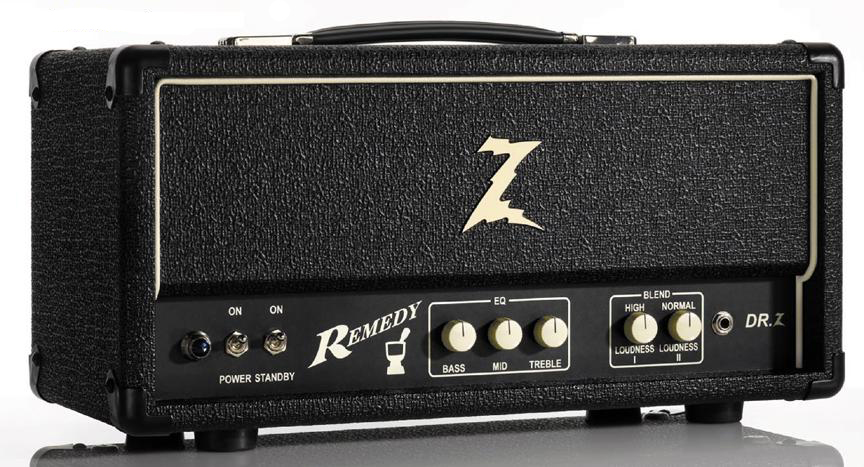
REMIn yesterday’s little adventure at Guitar Player Magazine, I got a chance to play the new Dr. Z Remedy amplifier. This amp is based upon a classic Marshall JTM circuit design, but with a twist: Instead of 4 inputs that allow you to jumper the two channels, the Remedy has a single input and the channels are already jumpered. You then have the ability to blend the amount of high and normal channel amounts via the two loudness knobs.

This amp is a lesson in simplicity. It has a three-band EQ, and the volume knobs for the High and Normal channels, plus Power On/Off and Standby toggles. That’s it. With this amp, you dial in your tone and sound levels, and play!

The amp is powered by a quad set of 6V6’s, and man they sound sweet! The power tubes are JJ’s which have kind of a “hybrid” 6V6 tone – I use these myself, and I love them. They’re brighter-sounding than the classic 6V6, and they’re extremely durable. I’ve never had one of these fail on any of my 6V6 amps, so it’s not a surprise Dr. Z uses the JJ’s for their reliability.

How It Sounds…

In a word, it sounds “big.” A lot bigger than I expected from just a 40 Watt amp. I played a Gibson ’59 Les Paul Special Re-issue through it and was really taken by the big sound that the Remedy produces. For classic rock and blues tones, this is an ideal amp. It responds incredibly well to picking dynamics and volume knob adjustments as well, which is why I mentioned you set your EQ and volume where you want it, then play. You can then adjust the cleanliness or dirtiness with your volume knob or attack. Very cool. You might dismiss the Remedy as another JTM clone as the circuitry is based upon that. But it has a sound all its own. The cleans are lush and defined, and the overdrive is nice and crunchy, and very little to no top-end raspiness. I think that’s an earmark of the 6V6’s. They just don’t get fizzy.

A Great Half-Power Mode

I played around with the half-power switch a couple of times, and it works as expected. But I wanted to find out more about how Dr. Z does his half power mode, so I gave him a call this morning, and found out some interesting things about how he does his half-power mode – very interesting things, indeed. There are a couple of ways I’m familiar with that amp manufacturers introduce half-power modes in their amps. A common way is to shut down half a tube, essentially going from pentode to triode. According to amp builders I’ve spoken with, this is the easiest, but it also changes the tone significantly between the two modes.

The second common way is to adjust the B+ voltage down, then provide some compensation so the correct heater voltages are maintained. This is what Jeff Aragaki does with his amps, and this technique is very transparent.

Dr Z. takes a completely different approach and leaves the front-end alone entirely, and works his magic from the power transformer, something he worked with the late Ken Fisher to produce. I won’t go into details – and Dr. Z didn’t go into a great deal of depth – but he effectively bypasses the power from two of the power tubes then does some other stuff to compensate for the impedance mismatch to half the power. The end result is a very tonally transparent switch from full power to half power, using a method no one else is using; at least according to Dr. Z.

I love stuff like this! I’m no electronics guy, but I love it when people think out of the box to handle common problems, and come up with approaches that no one else thought of, or didn’t try because they thought it was too hard! Kudos to Dr. Z for doing something like this!

I truly wish I had more time to spend with it so I could explore the amp’s capabilities more. Perhaps in the near future I’ll get that chance.

Read Full Post »

« Newer Posts - Older Posts »