Feeds:
Posts
Comments

Archive for December, 2013

Hmm… Did My Son Give Me a Gem?

pbassAs I mentioned in a previous post, my son gave me a Squier P Bass for Christmas. To say I was blown away when I received this would be an understatement. I knew that he had to use a few paychecks (he’s in high school and works at a sandwich shop) to get this present for me. I gotta tell you, that’s a lot of love!

In any case, when I first got it, I thought it was just a normal cheapo Squier P Bass, along the lines of Fender’s Squier Affinity product line which sell for less than $200. But this morning, I took a look at the headstock and noticed a “Made in Japan” sticker under the “Precision Bass” sticker. I know a thing or two about Fender instruments, and the MIJ stuff isn’t cheap, even if it isn’t the top-of-the-line.

So I did a bit of digging on serial numbers, and it turns out that this particular MIJ P Bass was constructed somewhere between 1984 and 1987 – assuming I read the serial number lookup correctly. Then in searching for a value for the instrument, I found that people are paying up to $500 for 80’s Squier’s; $2-300 alone for a neck in excellent condition.

Look, value aside, this bass sounds killer. Check this out:

It naturally has tons of thump, and its passive pickups are nice and clear. But not only does it sound great, the rosewood fretboard feels incredible and the C-shape neck is absolutely comfortable. I don’t care that it’s a Squier at all. This is a superior instrument, so I’m blown away even more by the enormity of the gift.

But now that my research has revealed an approximate value for the bass, I’m feeling a little guilty. I know that my son bought it off one of his good friends who needed the money to pay rent, and he purchased it from him for only $200 with a Gator hard shell case. The case alone sells for $100 online. I know about having to sell gear due to financial duress, and my son’s friend certainly had to do this. And I also know how shitty that made me feel at the time. I swore that after I sold my first ES-335 to get some cash to help pay my mortgage, I would never do that again because I never wanted to feel that way ever again.

So I communicated feeling bad for my son’s friend for having to sell his gear, and my son told me to not feel bad and that his friend had a few guitars and basses, but apparently they’re all in Spain with the kid’s folks – the operative word here is “apparently…” So I talked it over with my wife, and I’m going to give the kid a couple of hundred bucks extra so he gets the value for the instrument that he deserves. I certainly have the means to get a bass like this for full price, and after playing it pretty much all day today, I know that it’s definitely worth it.

Read Full Post »

A Merry Christmas Indeed!

https://i0.wp.com/www.musiciansbuy.com/mmMBCOM/Images/SQUIER_0310400.jpgBecause I have such a large family, we have to do gift-0pening in two stages. We open family gifts to each other on Christmas Eve, and do “Santa” gifts Christmas morning.

I never expect anything substantial from the kids, and they usually pool their money together to buy something for both my wife and me. So imagine my surprise when one of my sons walks out with a very large wrapped package that looks like a guitar case.

I thought to myself, “How cool is that? Bennie got me a hardshell case,” and I commented to that effect. But Bennie said, “Open the case, Dad.” And sitting in the case was a MIJ Fender P Bass. No, not the best bass in the world, but I didn’t care. No one in my family; not even my wife had ever bought me a guitar before.

Needless to say, I was absolutely speechless.

After everyone finished opening gifts and we cleaned up, I proceeded to my man-cave and ended up playing the bass till around midnight when I had to play Santa and lay out gifts.

So what do I think of it? It’s totally basic, but that’s the beauty of it, and though it has a relatively short scale (which is great for my small hands), it can thump! I totally dig it!

So yes. It is a Merry Christmas indeed!

In any case, here’s wishing all my readers to have a blessed and happy holiday season!

Read Full Post »

roadie_tunerI don’t know how my name got out there with the crowd-funding crowd, but oh well, it’s out there, and I’ve been contacted by several folks over the last several months. Like press releases, I take a glance at most of them, and usually send them to the trash. Most of the announcements are for crowd-funded recording projects, but sometimes, as in the case of the BeatBuddy and now, The Roadie Tuner, something drops in my inbox that makes me think, “You know, I could use something like that at my solo gigs.”

So here I am making a plug for the Roadie Tuner. From the picture, it kind of looks like a handheld drill, which indicates that it’ll do the tuning for you. It does that, but there’s a lot more to it than just the tuning apparatus. You see, it connects to your smartphone or tablet (iOS is the only platform supported right now, but Android will be following soon after) via a Blue Tooth connection. It’s the app that’s included that actually does the tuning calculations. The apparatus is there to do the physical tuning.

In case you’re wondering, accuracy is to 2 cents. Not bad at all. It’s not as accurate as the Turbo Tuner which is .02 cent accurate, but it’s more accurate than a TU-3. Besides, it’s mechanically precise, so you don’t have to fumble as you would manually.

roadie_tuner_appSpeaking of winding, the Roadie Tuner can be used to wind and unwind strings. Now THIS is a cool feature. I hate winding up new strings. It takes a long time. But with the Roadie Tuner, you just hold the apparatus in place, and it’ll do it for you! Awesome!

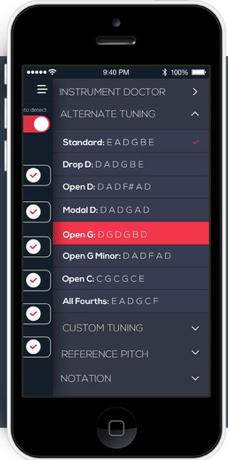
Admittedly, when I first got a message from the creators of this device/app combo, I was a little skeptical. But as I read through the information on their KickStarter page, I became more and more intrigued. I occasionally use alternate tunings, and getting them right can be a bit tricky. But the Roadie Tuner apparently isn’t just a passive device. The more you use it, the more it learns about your instrument, so it will learn about the quirks to make tuning more accurate in different tunings.

I’m not yet clear if the app will support different guitar profiles, because each guitar will have its own “personality” so to say, and if the app only assumes a single guitar, then would it get confused? I’ve put the question out to the maker. I’m hoping he has an answer.

Update 12/24: I just got an answer back from the creator of the Roadie Tuner. He confirmed that the app will include multiple profiles. Apparently, you’ll calibrate the app for each guitar, and the learning starts from there. This is very cool!

In any case, this is definitely something I’m going to look into further. For now, check out this video to see how it works.

http://www.youtube.com/watch?v=YJ5-uqNlW7M

Read Full Post »

I just read a great article on the first 3D-printed loudspeaker. Give it a read and come back.

This stuff is straight out of Neal Stephenson’s “Diamond Age,” probably one of the greatest science fiction novels I’ve ever read. Not only does it immerse you into a world of possible future technology, it also makes a commentary on social issues such as race and ethnicity, class, and education. It’s a heavy and deep read, and written at a much higher reading level than most books. But it’s a great read, and something I highly recommend.

But back to the 3D-printing; this, to me is an example of the direction fabrication is going. The thing that immediately occurred to me after reading the article and watching the accompanying video was what if in the future, instead of going down to a store to buy an amp, we purchased the printing design online, then sent it to our 3D printer? But let’s take it a step further. Let’s say you don’t like the amp. What if there was a way then to recycle the materials? You could try out tons of different amps, and not have to worry about them taking up a lot of space.

Yeah, far-fetched for sure; and maybe we won’t see this coming to fruition in our lifetime. But with the advancements in technology that occurring right before our eyes, stuff like this is coming.

Read Full Post »

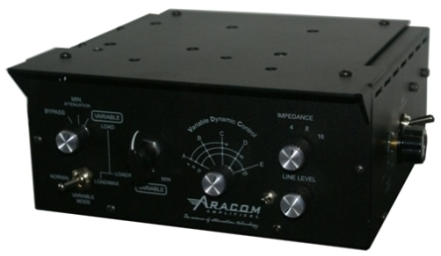
DualRoxI’ve been using an Aracom DRX attenuator in the studio for the past couple of weeks and I have been absolutely blown away by its ability to tame my volume just as well as my now-retired PRX150-Pro. But this past Friday, Jeff delivered my own DRX that I had him build based upon my tests, and I just had to gig with it to try it out in a live-audience situation.

I do have to admit that the DRX is a little less convenient than the PRX150-Pro in that I have to hook up a couple of more things: The foot switch and power supply (for the footswitch). But that inconvenience becomes negligible when the DRX is in action!

First of all, the boost feature is an absolute god-send! With all other attenuators – and this includes my venerable PRX150-Pro – once you hit the volume limit, that’s it. You can’t go louder. But with the DRX, that’s no longer an issue. It was great to use this feature to boost my volume when I was doing leads and not have to worry if I had hit the limit (or set up my volume so that I stayed under the limit). With the boost feature, which is essentially an attenuation reducer, I can add a few or maybe even several dB of volume with the flick of a switch. It’s absolutely amazing!

But it doesn’t stop there. The Variable Dynamic Control, which varies the reactance between the attenuator and speaker, helps dial in my tone so I have the right amount of highs. While not an EQ, the VDC adjusts the reactance and acts like a very subtle high-cut filter. Fully right is full reactance, and as you move through the next four positions, the reactance is slightly reduced, resulting in more highs being cut. For my particular setup of an R8 Les Paul through my Aracom VRX18, I felt that the sound was just a tad bright, so I went down one position on the VDC, and my world was absolutely right. My tone was still bright and had plenty of bite, but not so bright that it was like icepicks in my ears.

For purely clean work, I completely defeated the attenuation, which was possible from the front panel. On previous versions, the bypass was on the back, and in tight spaces, wasn’t practical to reach around. But with it on the front panel, defeating the attenuation is a simple matter of turning a dial.

All in all, everything about this attenuator is a huge improvement over earlier generations of attenuators; Aracom and others. It comes at a premium, but we spend thousands upon thousand of dollars on guitars, amps and pedals, so I see no problem justifying the cost of this unit. It makes it possible for me to play an overdriven amp in ANY venue. Yeah, yeah, you can argue all you want that you can do the same with a clean amp and overdrive pedals. But diode or a even tube overdrive pedal will never be the same as the overdrive from a cranked amp.

To say I’m happy with this latest acquisition is an understatement. For the last few years, I played the best attenuator on the market. But it pales in comparison to what the DRX brings to the table. The funny thing though is that unlike other gear that makes a sound, this doesn’t produce any sound, so it’s difficult to put into words what it actually can do beyond helping me control my volume. But it controls volume better than anything else on the market, and provides versatility that none other can. And as far as “transparency” goes, well, arguments abound, but with the Aracom attenuation technology, you can rest assured that the tone and the dynamics that you expect from your gear won’t be lost. I can’t say that about any other attenuator I’ve tested.

This is the real deal, folks, and this is the future of attenuation!

For more information, check out the DRX product page!

Read Full Post »

When Biting Is Good…

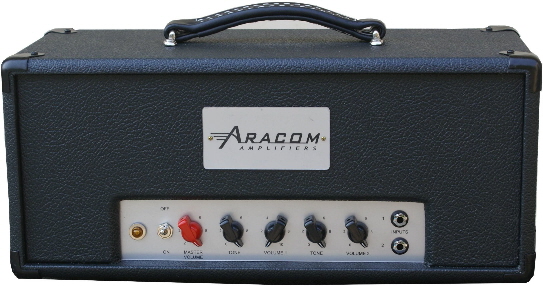
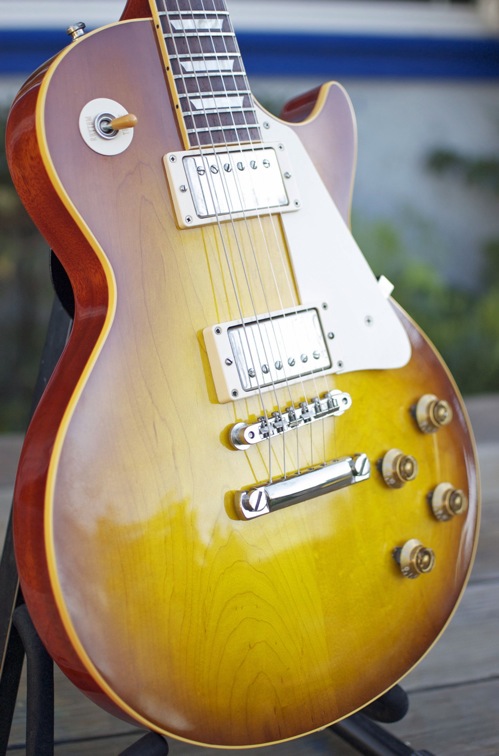
At this past Sunday night’s Mass, I got the rare opportunity to crank my Aracom VRX18 AND play it loud. This only happens if the church is packed (which it was), and we break out the full trap set (which only happens when both our drummer and bassist are present). So, knowing that both were going to be there, I planned out a much more lively set than usual. Based upon the plan, I decided to go with a classic Plexi/Les Paul combination; specifically my Aracom VRX18 Plexi clone and “Amber,” my R8 Les Paul.

Invariably, I use this particular combination because it has “bite.” At least, that’s what I call it. “Bite” to me is a bright tonal character when overdriving an amp; the highs are certainly present, but not so over the top that they’re like icepicks. They’re at that level where they provide the clarity and note separation yet are still balanced with the overall sound. But on top of that, “bite” ensures you break through the mix. There’s nothing like muddy tone to get you lost in a mix. With bite, you’ll never get lost in the mix.

AmberI can achieve that bite with just about any guitar I have, but there’s a certain magic that happens when I crank the VRX18 and play a Les Paul through it. And while that amp/guitar combination sounds fantastic, when you throw the incredible Jensen Jet Falcon speaker into the fray and combine its breakup characteristics into the output, the result is absolutely magical.

So in this case, biting is good!

Read Full Post »

The BeatBuddy Campaign Is Live

BeatBuddyI’m excited to announce that the BeatBuddy team launched their IndieGogo campaign at midnight this morning, and it has gotten a great response. The most exciting thing about this crowd-funding campaign is that the first 500 people have the opportunity to get a BeatBuddy for only $179! That’s about half the price of what the BeatBuddy will be when it is released to the public!

When I last checked, as of 9:30 PST, they already had 216 people fund at this level, so chances are that this level will fill up soon.

BTW, no, I’m not affiliated with them, but you know me, when the Dawg sniffs out cool, new gear, he just keeps barkin’ about it. So if you can swing it, head on over to the BeatBuddy IndieGoGo site!

Read Full Post »

BeatBuddyYesterday, I introduced the BeatBuddy, a new “drum machine in a pedal” pedal. I’m still excited about this new offering, and have been chomping at the bit to share more information with you.

Well… I just received an email from David Packouz, the BeatBuddy’s inventor, and he said he just released his IndieGoGo promo video. Once you watch it, you’ll be able to see for yourself why I’m so excited about this new and upcoming product. Check it out:

Here are some major features of the BeatBuddy:

  • Produces 24-bit sound
  • Has a MIDI-sync port! This is huge if you use a looper that has MIDI-sync.(I’m in the market for one right now)
  • 10 drumsets and over 200 preset songs
  • Fully customizable via USB port
  • SD card port for extra storage

That’s just a few of the features that have gotten me so excited. I see lots of gear released every year, but most of it doesn’t really move me mainly because they’re vamps on the same or similar theme. Or, even if they are totally cool, lots of times I don’t have a particular application for them. A good example of this are envelope filters. I dig them, but I’ve never had the chance to apply one. On the other hand, the BeatBuddy is something I can use for my solo gigs – of which I do at least 100-150 a year. For me, it’s the one thing that I have been missing, and have been trying to figure out how best to employ some rhythm.

As you will have seen in the video, they’re campaigning for some financial support to get their production off the ground. I don’t know the details for what you get for a particular funding amount, but for me, this is something I’m definitely going to try to contribute to.

Read Full Post »

BeatBuddyThe pedal you see to the left is called the BeatBuddy, and it ain’t even out yet! But the damn thing’s so cool that I couldn’t keep my mouth shut about it. This is a drum machine with over 200 beat patterns built in. But at the press of the switch and/or an optional footswitch, you can add fills, change to a chorus beat, and even do an ending fill!

I have to admit that when I first saw the email from the maker, David Packouz, I treated it like many of the gear announcements I get on a regular basis. I put it aside until I could have some time to take a good look at the materials they sent thinking, “Ho-hum, more gear…” 99% of the time, it’s nothing special. But when I took the time to view their promotional video (sorry, it was a draft, and they asked me not to repost it), by the end of the video, I knew that this was something I needed to have.

They will be launching a campaign to help finance production on IndieGoGo on December 16 at 11:00 am EST. That’s when you’ll get the full rundown of what this thing can do.

For me, after watching the promotional video, I was thinking that as a solo artist, this is exactly what I’ve been missing. I could get plenty of mileage out of something like this! One thing I was thinking was that I’d have to practice with this enough so I could use it with my looper as well. That way I could play this along with my looper and play leads over a loop AND a beat! That would be freakin’ awesome! But I’m probably getting ahead of myself. First these guys have to get funded… I’m game. I’ll probably contribute!

Anyway, I’ll be posting more as I know. Stay tuned!

Read Full Post »

SONY DSC
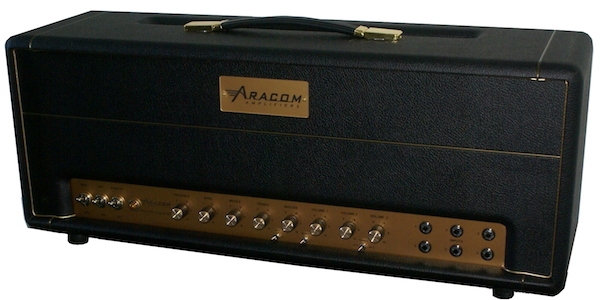
Aracom PLX100

Summary: Based upon the PLX amp “platform” that Jeff Aragaki has created for creating customer-specific amps, this 100-watt beast is actually 3 classic Marshall amps in 1: Plexi 100 SuperLead (JMP), Plexi PA, and JCM800 (high gain).

Features

  • Three channels (Plexi SuperLead, Plexi PA, JCM800)
  • “Bite” Switch (mild mid boost)
  • Master Volume Control with Bypass Switch
  • Presence, Treble, Middle, B ass Tone Controls
  • Solid State/Tube Rectifier Simulation Switch
  • Channel Disable Switch
  • Bias Test Points with user accessible bias pot
  • Handwired turret board construction
  • “M” style large box head cabinet

Price: ~$2900

Tone Bone Score: 5.0 ~ Talk about high-gain versatility. This is no gimmick. Each different channel has voicing that you’d expect out of that particular model. The SuperLead is classic, bright Plexi, while the JCM800 has a darker, much more aggressive tone, and the SuperPA is all about clean headroom. While the amp in an of itself is special; the PLX platform is what make all this possible. If I’ve said it once, I’ll say it to the grave: Jeff Aragaki is genius!

About three years ago, Jeff Aragaki and I were talking about a new amp design. I told him that I would love to have a high-gain amp either in a 50 or 100 Watt version, but gave me the flexibility to voice it in various ways to fit the particular sound I wanted. We affectionately called this a “FlexPlex” because for me in particular, I wanted that Plexi sound, but wanted to be able to tweak it. Jeff actually built it, and I saw the prototype for it a couple of weeks ago.

But in the process of building the FlexPlex, you might say he “stumbled” upon a completely new way to build his amps; and that was basing his builds upon a platform. This wasn’t trivial, and no, I’m not just bandying about some buzzword. The platform that Jeff discovered has allowed him to create all sorts of different amps; starting with a common construct. I’m not sure about all the details, but the proof is in the pudding. Here Jeff’s words that describe this particular amp:

“The ARACOM PLX100 amplifier is a platform that allows us to build customer specific amplifiers with the features and specifications they desire.   For this custom build, our customer wanted a 100 watt amplifier with the vintage Marshall Super PA look.   The Super PA head cabinet has a “wide mouth” front panel opening, allowing access to four separate P.A. channels.    The model designation for this custom ARACOM amplifier is” Super H.T”.,  H.T. representing the initials of our customer.  However, instead of having 4 identical channels like a standard Super PA amplifier, the Super H.T. has 3 different channels, allowing for a highly versatile amplifier. 

“The JMP channel offers clean and overdriven tones as expected with a Plexi SuperLead amplifier.  It has two separate Bright switches that allow the channel to go from a Plexi Normal (Dark) channel tone to Plexi Bright channel tone, or something in between.   The Super PA channel provides slightly less gain than the JMP channel, with a fuller bass response.   The JCM channel is the high gain channel, designated for overdriven/distorted tones.   The JCM’s Bright switch allows for the standard JCM800 bright tone or a slightly darker tone.   The Master Volume control with a true bypass switch, allows for cranked up tone at lower volume levels.   The rear panel Bias Test points, allows for quick and easy tube biasing.”

Fit and Finish

It sure looks like a Marshall… 🙂 But in all seriousness, it’s an Aracom Amp, and that means quality. Jeff doesn’t skimp on components, and he takes a lot of pride in making sure everything that leaves his shop looks absolutely professional, and the PLX100 is no exception. The tolex is perfect, and all the knobs are snug and turn smoothly. And since this amp was going overseas, you can bet that Jeff made sure that everything was sturdy to eliminate or severely reduce the risk of breakage.

Ease of Use

I normally don’t have this section in my reviews, but I thought it necessary in this case. While I absolutely love the amp, with all the switches and the push-pull knobs, I have to admit that I’d have to take a lot of time getting familiar with it. I don’t call that really a negative mark on the amp. For goodness’ sake! How else do you pack in all those features? But despite that, the knob and switch layout is pretty clear. It would take me awhile to find the sweet spot in each channel for all the guitars I’d play through it. But that’s the beauty of discovery and experimentation, wouldn’t you say?

How It Sounds

This amp sounds amazing! Jeff explained each channel as I would have, so I’ll just reiterate and say that his descriptions of each channel reflect my own experience with it. When I was in his shop testing the amp, we must’ve played around with it for at least an hour as he twiddled knobs and flipped switches to demonstrate the amazing number of voices that could come from this amp. The permutations of settings make this amp able to tackle practically any style of music. Oh! We did all the testing through a huge 4 X 12 at gig volumes, so it was LOUD! 🙂 I played a Les Paul, a Gene Baker prototype (it was a hybrid that is VERY cool), and a Strat through the amp, and each guitar sounded killer through it. My favorite channel by far was the SuperLead channel, which had lots of gain on tap, but wasn’t at all over the top. Next was the JCM channel – especially its dark mode which produced thumping overdrive. I wasn’t too wild about the SuperPA with a Les Paul, but with single coils, that channel was absolutely SWEET! It would be a perfect channel to use with overdrive pedals because of its clean headroom.

Overall Impression

What strikes me the most about the PLX100 is that you literally have three amps in one. If you had all three, you’d probably be close to $10,000. That this amp is only $2900 is pretty amazing to me. But that’s Jeff. He doesn’t make a huge profit on the gear he builds – that’s a personal choice. He just wants to build great amps. This is like my friend Perry Riggs of Slash L Guitars. He makes absolutely awesome guitars but sells them at a price-point that’s rather incredible. Both of these gentlemen are true artisans of their trade, and I’m glad there are folks like this.

With respect to the PLX100, I sure wish I played in venues where I really open up an amp like this and really do it justice. For my particular uses, this is way too much amp. But if I ever get the chance to regularly play large venues, you can bet that I’ll be calling Jeff Aragaki to build me an amp on the PLX100 platform. Or… maybe he has a 50 Watt version. 🙂

For more information, visit the Aracom PLX100 product page!

Read Full Post »

Older Posts »