Feeds:
Posts
Comments

Archive for the ‘amplifiers’ Category

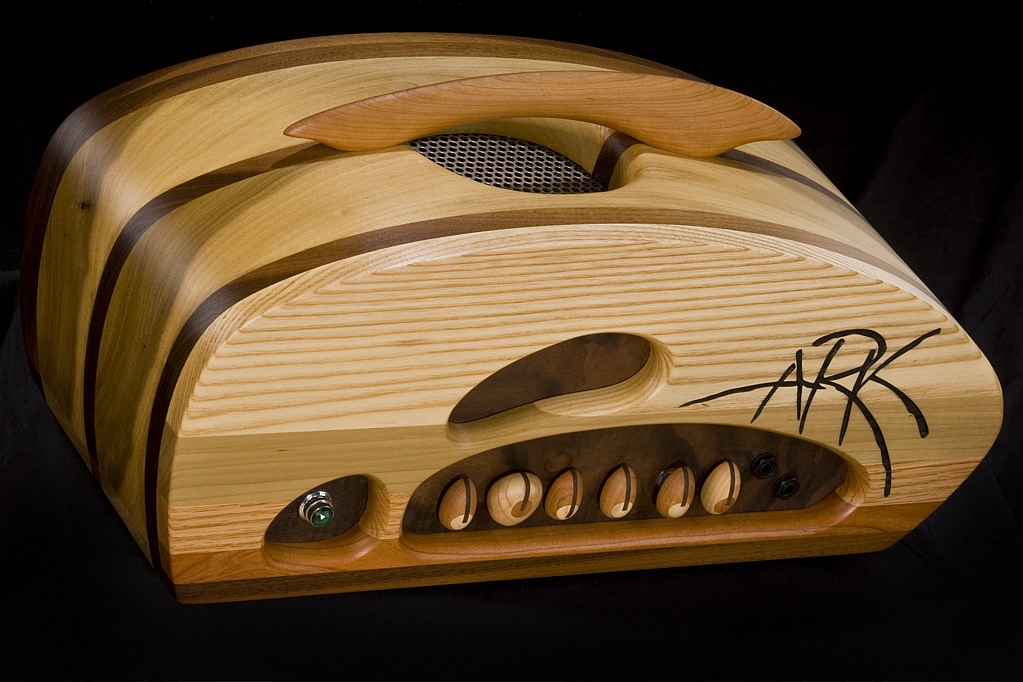
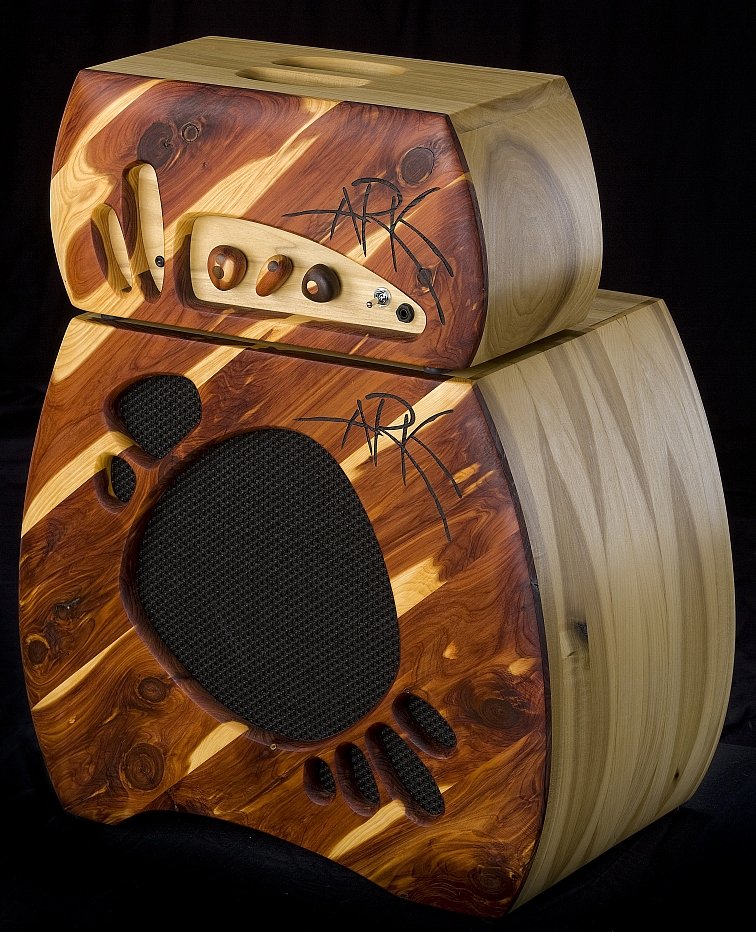
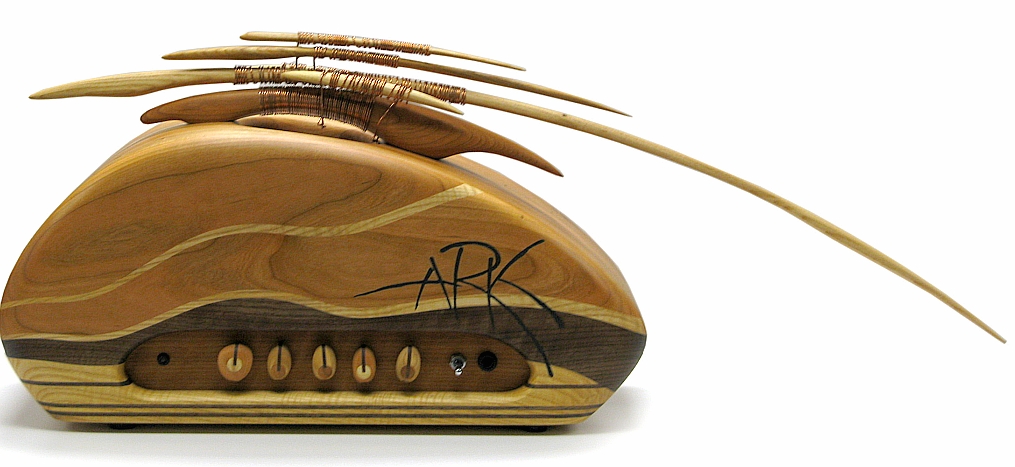
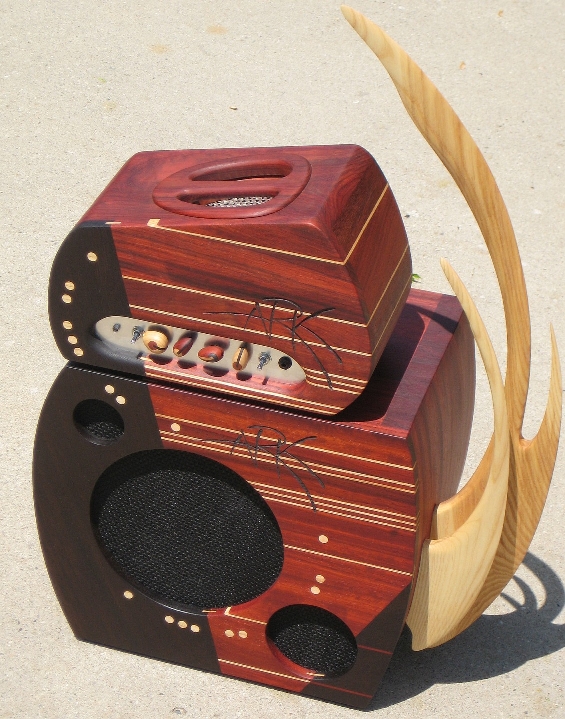
arkDid I ever say, “I love my job?” Well… GuitarGear.org isn’t exactly a job, but even it were, I’d still love it because I get to sniff around the Internet for different kinds of gear. Recently, through The Gear Page forums, I ran across this great amp company called Ark Amps. I had heard the name in passing but didn’t know much about them. Still don’t, but they make some gorgeous amps! The designs are really out of this world with incredible woodwork! And from what I can gather from the audio clips, these are nice-sounding amps as well.

To give you an idea of just how awesome these designs are check out these pictures! Talk about combining art with function! I’ve never seen amp cabinet designs like this – ever! Check ’em out for yourself at Ark Amps!

Read Full Post »

I’ve often extolled the virtues of a cranked amp here at GuitarGear.org and elsewhere. My belief is that when you’ve got both your pre-amp and power tubes working, you get the real character out of your amp. There’s something that happens to your tone once you get juice into your power tubes that adds a certain dynamicism and complexity that you just can’t get with just your pre-amp tubes. Unfortunately, most mere mortals, like myself, don’t normally play venues that that will allow us to crank our amps to the point where the power tubes of our amp come into play.

Take, for instance, my good buddy Phil. He’s the lead singer of a bar band called Phil ‘N The Blanks. Up until recently he was playing through a Marshall DSL100 JCM2000 100 Watt head into a Marshall 1936 2 X 12 cab. Talk about too much amp for his gigs! I ran sound for him at a gig a couple of months ago, and could only turn his volume and gain controls to about 3 each before he stepped on the band entirely; not to mention peeling faces off! Since he’d owned the DSL100, he’d never played above 5 because it was way too loud.

Recently, I lent him my Aracom PRX150-Pro attenuator so he could squelched down the volume but crank up his amp. He couldn’t believe his ears! He was finally able to get the gain up in his amp where his power tubes would break up. It was like a completely different amp once he heard the cranked up tone. I had been telling him for months that there’s really nothing quite like a cranked up amp, and for the first time since he owned the amp he was able to hear for himself what I had been talking about. Before that, he was on tonal training wheels! 🙂

Ultimately, he decided against going with an attenuator, but he did a very smart thing: He purchased a low-wattage amp, the Marshall Haze MHZ15 15 Watt amp. It hasn’t arrived yet, but I’m excited for him because he’ll be able to crank that amp at a reasonable volume level, as the lower wattage amp will break up a lot earlier, and he’ll be able to reap the benefits of the response of his cranked amp!

1 Watt is LOUD!

But here’s the funny thing: 15 Watts can still be freakin’ loud when cranked! The following chart shows SPL at 1 meter vs. Wattage (I got this from the Aracom site where Jeff discusses understanding attenuation).

POWER VS. LOUDNESS CHART

Watts

SPL (db)

Loudness

0.0078

79

Passenger car at 10 (60-80dB)

0.0156

82

0.0312

85

Vacuum cleaner

0.0625

88

Major Road Noise (80-90dB)

0.125

91

Noisy factory

0.25

94

0.5

97

1

100

Jack hammer at 1m

2

103

4

106

8

109

Accelerating motorcycle at 5m

16

112

32

115

Hearing Damage (short term exposure)

64

118

Rock concert

128

121

256

124

512

127

Jet at 100 meters (110-140 dB)

1024

130

Threshold of pain

What’s amazing from the table is how loud 1 Watt is at 1 meter! It’s as loud as a jack hammer! And 0.0312 Watt is as loud a vacuum cleaner! Jeff got this information from a well-known study done in 1933 by Harvey Fletcher and W A Munson about human hearing response. For those people who say, “P-shah” to low wattage amps, just reference this chart.

Granted, there is a certain mojo about a 100 Watt amp cranked up – even a 50 Watt amp. But most people other than those playing large venues can crank their amps to experience that mojo. But in spite of that, there’s been a movement in the industry these past few years towards lower wattage amps. I think a big part of the reason for this is the improvement in PA gear over the years. Want to get your sound out there? Mic your amp. After all, all you need is stage volume so you can hear yourself. Let the sound guys project your sound out.

My buddy Vinni Smith of V-Picks does exactly that. As amazing as he is with a guitar, he gigs with a Roland Cube 30! He just gets his stage volume, then has his amp miked to get his guitar out to the audience. This dude gigs alot, and he’s living proof that you don’t need a lot of power to get perform. As long as you can get your tone, you’re golden!

Circling back to the title of this article, there really isn’t anything like the sound and feeling of a cranked amp. Especially with tube amps, when the power tubes have juice, they add all sorts of things to your tone such as compression, a different kind of breakup and even more touch sensitivity. You can get that in a couple of ways:

  1. Get an attenuator. There are several on the market, including the increasingly popular Faustine Phantom, but my bet is on the Aracom PRX150-Pro, as it takes a completely different approach to attenuation than all others. I’ve never played an attenuator as transparent is this.
  2. Get a lower wattage amp. I’m not even going to list what amps to buy as there are tons of fantastic amps – both boutique and mainstream – on the market. Just make sure you give them a listen.

Read Full Post »

Ladies and Gentlemen! Welcome to the bout of the century! A truly momentous occasion in the vein of David versus Goliath! In the red corner we have a Goliath, the reigning King of Attenuators, the Ultimate Attenuator; self-proclaimed King of Transparency – Guaranteed! In the blue corner is the Aracom Power Rox PRX150-Pro, a virtual David, armed with only a transparency sling ! And here’s the opening bell!

The Ultimate Attenuator strikes first, tongue lolling, with bombastic claims of pure transparency. The agile Power Rox ducks, and moves away, its sling of true transparency whirring rapidly. Wait! It launches! It strikes the Ultimate Attenuator square in the head. It’s going down! Oh the humanity! Oh the humanity! The match was over before it was even begun!

I had the great opportunity this evening of testing the Aracom Power Rox and the Ultimate Attenuator in a head-to-head shootout to determine which was the most transparent attenuator. As you can tell from the somewhat facetious and fictitious pseudo-boxing match, you know who won: The Aracom Power Rox PRX150-Pro. Folks, it wasn’t even a contest. Even at the lowest attenuation levels, the Power Rox swept the floor with the Ultimate Attenuator!

My Test Procedures

Equipment: My test was conducted using a Replica JTM45 equipped with original Mustard Caps and a pair of  KT-66’s, into a 4 X 12 cabinet equipped with (2) Original 55Hz Greenbacks and (2) Custom Weber (75Hz) Greenbacks, with a ‘Gibson 57 Les Paul Historic Goldtop as my test guitar.

Clean Test

First, I started with the amp totally clean. I strummed a simple chord progression to get my base tone. Setting the Ultimate Attenuator at about half “volume,” I activated it. I immediately noticed a distinct loss in both highs and lows, as even at minimal attenuation, the bandwidth of my tone was severely narrowed. The full bottom-end and sparkly top-end of my clean tone were significantly reduced. The tone wasn’t that bad, mind you, but it certainly lacked the richness of my base tone – it sounded flat.

One thing that really bugged me was activating the UA, which required a strumming the guitar, then switching on the UA, as if the UA needed a signal to pass through it to even start working. What a pain! It’s amazing that users would even tolerate this.

I repeated the same test with the Power Rox, setting it at half attenuation on the 6-way switch. The result was a reduced volume, but no loss of bottom- or top-end at all.

Clean Test – Bedroom Mode

Same test as above with both attenuators. With the Ultimate Attenuator, can you say “tone sucker?” The tone was not at all pleasing! Even more narrow bandwidth, and non-existent dynamics. There was nothing even remotely good to like at this level with the UA. How the UA website can claim to be “the most transparent and safest tube amplifier attenuator on the market in the world. Guaranteed” is beyond me. Even my old Dr. Z Airbrake sounded better than the UA. So again, at this level, the Power Rox just kicked ass. Lower volume, but full retention of bandwidth and dynamics.

Dirty Tests

In my dirty tests, I ran the amp in its drive channel cranked up fully. 40 Watts through a 4 X 12 is LOUD!!! Especially when you’re standing right in front of the cab! Actually there’s nothing like feeling the SPL’s with an amp full-out! I ran the same tests as I did with the clean channel with both attenuators, and as expected got the same results: The Ultimate Attenuator really sucked my tone, while the PRX150-Pro retained tone and dynamics at all levels. The Plexi switch just made the tone even worse, acting like a treble booster, which made an already horrid tone even worse by just upping the highs. The tone was akin to an old transistor radio played at the volume of a loud TV. Not pleasing at all, and actually, it was a bit annoying, like cats screeching! YUCK!

The Power Rox, on the other hand, again just reduced the volume. The tone remained rich and full, and all the overtones and harmonics came through. It’s amazing what those subtleties do for your tone. You really miss them when they’re not there, as they provide depth.

It’s evident that the Power Rox’s Speaker Reactance Thru technology is far superior at any application. For me, the Ultimate Attenuator company can make all the claims it wants about transparency, but that’s all they are: claims. And while it doesn’t sound all that bad at low attenuation levels, the marked difference in tone between the UA and Power Rox at any attenuation level relegates the UA – at least to me – to the junk heap. You couldn’t get me to put this in my rig if you paid me.

I realize that the UA was the best game in town for quite awhile, and I am sure that at the time it came out, it outperformed the THD HotPlate, which I have also tested, and didn’t like. I also realize that I’m being fairly harsh – much more harsh than I’ve ever been with a product – but all the claims of the UA being truly transparent are mere exaggerations, and not backed up by any discussion of its technology. In fact, all the hyperbole surrounding the UA is quite irritating!

If you knew what went into a UA, you’d have serious concerns, not the least of which is the 32 ohm fixed resistor, which essentially flattens out your impedance, and creates a mismatch so high that you could fry your amp! Adding insult to injury, the solid-state amplifier is what is really running your speaker. Transparent? Hell no! Not electronically, and definitely not audibly.

And mind you, I’m not the only person who feels this way. One new PRX150-Pro user, who is also a former UA user was so impressed with the Power Rox and disgusted by the UA’s tone compared to the Power Rox, that he bought two Power Rox’s! That says quite a bit.

For more information about the Aracom Power Rox PRX150-Pro, visit the Aracom Amps PRX150-Pro product page!

Read Full Post »

5 Tone Bones - Gear has stellar performance, value, and quality. This is definitely top of the class, best of breed, and it's a no-brainer to add this to your gear lineup!
Aracom Amps PRX150-Pro Attenuator
Aracom Power Rox PRX150-Pro Attenuator

Summary: This is hands-down the best attenuator on the market! I’ve played a lot of attenuators, and no other has been able to retain tone and dynamics at high attenuation levels as the Power Rox!

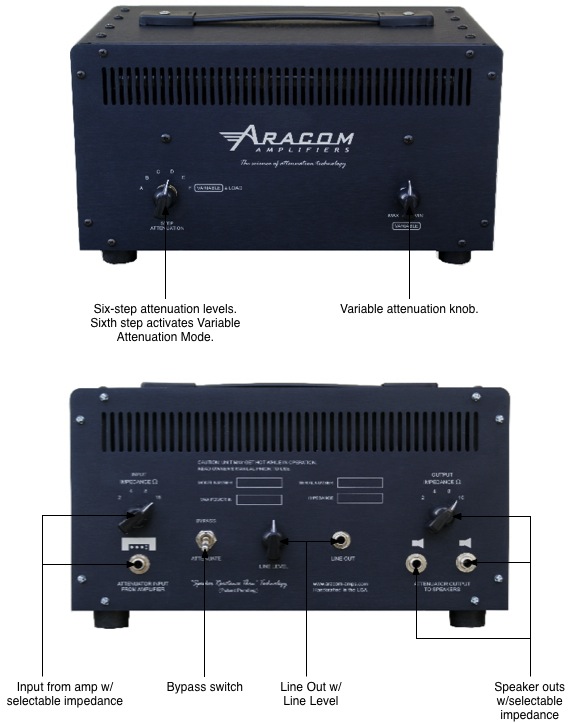
Pros: The Power Rox isn’t just an attenuator. It packs extra features that’ll just blow you away, making a it versatile part of your stage or studio rig!

Cons: None.

Features:

  • Rotary Switch provides (6) Step Attenuation Levels, plus
    the Variable Mode allows continuous variable control of “bedroom” level adjustment
  • 33dB attenuation range
    * Attenuates 100 watts down to well under 1 watt (0.05 watt).
  • 150 watt (continuous average) power rating
  • Independent Input Impedance Switch: 2, 4, 8, 16 ohm
  • Independent Output Impedance Switch: 2, 4, 8, 16 ohm
    * Uniquely allows mismatched amplifier and speaker impedances to be used.
  • Attenuator Bypass Switch
  • Load Mode
  • Line Out with Level Control
  • 2 Speaker Jacks (wired in parallel)
  • Passive design, does not require AC power
  • Rugged, black anodized aluminum housing
  • Heavy duty, steel reinforced handle
  • Handwired and Handcrafted in the USA.

Price: $649 direct

Tone Bone Score: 5.0. Jeff Aragaki of Aracom Amps never ceases to amaze me with the stuff he comes up with! This time, it’s an attenuator invention that blows away the competition in safety and tone and dynamics with its patent-pending Speaker Reactance Thru (SRT) technology, plus extra features that make it unmatched in versatility and usability.

I’ll admit it: As much of gear nut that I am, I’m also a huge techno-geek. I dig new technologies and the engineering behind them; and when someone comes up with some new approach to something, with completely awesome engineering, it’s hard to control my GAS. I just have to have it.

I recently took delivery of a brand new attenuator invented by Jeff Aragaki of Aracom Amps, called the Power Rox PRX150-Pro. This, by far, is the best attenuator I have ever used, and will be a fixture in my rig for years to come. That’s right. This will always be in my chain. But not just because of its ability to transparently attenuate an amp signal. This attenuator has features that no other attenuator has such as two speaker outs, and a Line Out that you can use to go direct into a DAW, or even another amp! Talk about versatility. Not only that, because you can match impedance in both the input AND the output, combined with Jeff’s patent-pending Speaker Reactance Thru (SRT) technology, you can squelch down the power of your amp and not worry about ever blowing our your tubes and ruining your amp. The SRT technology just kicks ass!

Talking the Talk AND Walking the Walk: Speaker Reactance Thru Technology

Jeff is a very humble man, so he’d never say anything like this, but I’m not nearly as humble, so I will say it: There’s not a better attenuator than the PRX150-Pro. Even if Jeff didn’t include all the extra features you get with the Power Rox, this attenuator simply kicks the shit out of all the attenuators I’ve ever tried – and I’ve tested several, including the Ultimate Attenuator that seems to be the most popular attenuator; and with respect to safety, tone and dynamics, all others simply pale by comparison.

Where other manufacturers make bold claims (read: brag) about their attenuators’ transparency, not only can Jeff Aragaki make the claim (in his quiet and humble way), he backs it up with detailed discussions of his SRT technology and the engineering behind it and what makes it so transparent. Jeff’s SRT technology is absolutely incredible. At any level of attenuation, the Power Rox retains your tone and dynamics. This is because instead of just dealing with amp power reduction through a series of resistors or a dummy load, which also have the added effect of flattening out the impedance curve and changing tone, the SRT technology ensures that reactance between the amp is maintained throughout the entire spectrum of attenuation; hence, the name “Speaker Reactance Thru.” This means that the impedance curve is kept intact so that the continuity of reactance between the speaker and the amp are maintained. Jeff discusses this in a detailed article about the advantages of the PRX150-Pro.

Let’s talk a bit about safety…

As I mentioned, the PRX150-Pro will not burn out your amp. You can crank your amp up all the way, getting that wonderful power tube drive, and not worry about your amp blowing a tube, or worse yet, frying some circuits from flyback voltage. We’ve all heard the horror stories about people using attenuators, cranking their amps, and blowing power tubes. A lot of this has to do with impedance mismatching. Some manufacturers have added options to match impedance from one direction, but the Power Rox has impedance matching in both the input and output jacks! But the point of this is that with impedance matching on both sides, you don’t have to deal with any type of mismatch. That is very comforting to know.

I’ve actually been playing with the Power Rox for the last couple of months regularly before it hit the shelves, and to date, I haven’t had any power tube problems. And we’re talking running my amps down to less than a watt for a few hours straight. I could never do that even with my Dr. Z, which is one of the more safe products out there. I’ve burned out power tubes using my Dr. Z by cranking power too much. It’s not pretty, and I’ve been lucky so far that only my tubes got burned out. It could’ve been a lot worse.

This ain’t yer Daddy’s Buick…

When Jeff first spoke to me about the Power Rox, I thought, “Okay, it’s another attenuator. I’m sure it’ll be great considering what a whiz Jeff is…” But when he delivered the unit, I couldn’t believe what he had added! I was already impressed that it had both input and output impedance matching. That was simply awesome. But he added some awesome features that I was not at all prepared for:

  • Bypass Switch – This is a mechanical bypass that completely bypasses the attenuation circuit.
  • Line Out – This one thing is just so cool! I used it to go both direct into my DAW, and also used it to re-amp into my Hot Rod Deluxe! Talk about versatility! For a test, I ran a cable to my 1 X 12 cab, then ran another cable to my Hot Rod. I could’ve easily just run direct into my Hot Rod without going out to another speaker as well, but you can see how useful this is. I could get my amp’s tone and combine it with the Hot Rod’s tone. So cool!
  • Two Speaker Outs – This is yet another cool thing. You have multiple cabs that you want to drive with a single amp? This makes it easy.
  • Input AND Output Impedance Matching – No other attenuator matches impedance in both input and output, but the Power Rox has it. It’s all part of the package to ensure continuous reactance between the amp and the speaker.

So as you can see, the added features make this oh so much more than just an attenuator, and it’s a testament to Jeff’s creativity!

The proof is in the pudding…

Unfortunately, doing sound clips of an attenuator’s effect is fruitless, because it is difficult to hear the changes, and moreover, it is difficult to describe the change in dynamics on a recording. However, the Power Rox was tested side-by-side to a number of popular attenuators, and even at low levels of attenuation, compared to Power Rox, all the other attenuators had an effect on tone and dynamics. To date, several people have performed head-to-head comparisons between different attenuators and the Power Rox, and they all come to the same conclusion: The Power Rox is truly transparent; not just the most transparent of the lot, but truly transparent. To me, this box sets the standard by which all others must be measured now.

I used my own transparency test procedure to compare attenuators, but Jeff has also provided a very detailed, and in-depth transparency test that you can view on his site.

I know, I must sound like a twitterpated schoolgirl with how I’m raving about this product, but for the very first time, I’ve been able to record my amps fully cranked without pissing off my family and neighbors, and more importantly, without having to worry that I’m going to blow a tube. Even with my Dr. Z, I’ve had to settle with less drive on my recordings for fear of burning out my amps. But with the Power Rox, I can crank my amps and get that wonderful power tube drive! And even better yet: I can trust that my tone and dynamics will not change, no matter the volume!

For more information on the Power Rox PRX150-Pro attenuator, go the Power Rox Product Page!

Read Full Post »

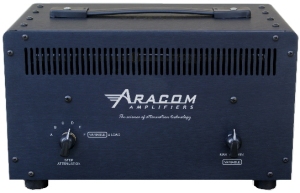
PRX-front-543You ever have an itch you can’t scratch? Well, it has been like that keeping my mouth shut about the Power Rox PRX150-Pro. Ever since I played with the early prototypes, I’ve been completely blown away by this attenuator! This is a totally new take on attenuator technology, folks, and I’m hoping it takes the industry by storm. Why? Simply because what we’re talking about with the Power Rox is true transparency in tone when this is in your signal chain; not “almost” transparent, but truly transparent.


Check out the Power Rox PRX150-Pro page at Aracom Amps!

Most comparisons between attenuators revolve around what’s the “most transparent” attenuator, indicating that really none of them are transparent, so people pick the best of the lot. And frankly, I’ve tested out several attenuators and ended up with the Dr. Z Airbrake, as I felt it was the most transparent out of the ones I tested. But nothing could have prepared me for the transparency of the Power Rox.

I could go on and on, but I won’t. In fact, I had already written a significant amount of text, but decided to just point you in the right direction. Go to the product page. Read through the product description, but more importantly, read the supplementary documentation behind the links at the bottom of the page. Jeff Aragaki has graciously provided some very in-depth articles on how attenuators work, and also provides a high-level explanation of the technology behind the PRX150-Pro.

Other manufacturers may brag about the safety and transparency of their attenuators, but none is willing to back up their claims with the engineering behind their attenuators (and if you knew what some were doing, believe me, if you care about your tone and the safety of your amp, you’d get worried). If you’re interested in or even use an attenuator, you owe it to yourself – and your tone – to check this unit out!

Read Full Post »

Tonic AmpsFane

I love living in the Silicon Valley. While it might not be considered a “destination” for music and culture like San Francisco, New York, Nashville, and Saint Louis, it is a destination for technology, and for decades has led the world in many of the technological advancements we enjoy today. Having lived in the Silicon Valley all my life, and watching it transform from a largely agrarian economy to the mecca of high-tech and venture capital, one thing has remained the same: The Silicon Valley has a certain magic about it that inspires innovation and invention.

So it is no surprise that there are several boutique amp manufacturers in the area. I’ve written about a couple in the past, namely Aracom Amps and King Amplification, but recently, I hooked up with Tonic Amps, located in Mountain View; less than 10 minutes from my home!

Darin Ellingson contacted me  last week, and invited me to come to his shop. While I knew he built amps, what I didn’t know until I did a bit of research is that Darin is Fane International’s North American distributor for Fane speakers! That got me really interested in Tonic – especially Darin’s cabs. Over the years, I’ve heard so much about Fane speakers, but have never had the chance to hear how they sound. And what great fortune that the North American distributor is 10 minutes away from my house!

In a nutshell, I played through three types of Fanes in 2 X 12 and 4 X 14 cabs: Studio 12L, AXA12, and Medusa 150. Plus, I got a sneak peak at some prototype Fanes Darin is having specially made. Through Tonic cabs, the Fanes sound drop-dead gorgeous! I hooked up three different amps to various Tonic Amps: A Reason Bambino, Aracom VRX18 (tube rectified), and a Tonic Torpedo. No matter what amp I played through, the Fanes sounded crisp, articulate and incredibly dynamic. Folks, this is the way to evaluate speakers. Frequency response charts are useful, but until you’ve got the speakers loaded into a cab, you will never know how they truly perform. Tonic cabinets are absolutely top-notch, and if you’re in the market for a great cabinet, you can’t go wrong with these. They’re all solid wood (no pressboard here), and the dimensions Darin has specified really bring out the best character of the Fane speakers.

What was my favorite? It’s a toss-up between the Medusa 150 and Darin’s prototype that he will hopefully bring into production soon. I love the scooped tones of the Medusa and the mid-ranginess of the prototype. Hmmm… can you say 2 X 12 cab with these in it? HAHAHAHAHAHA!!! Dammit! Gave myself GAS again! It’s probably a good thing I can’t afford them right now – I will have to save my pennies. The speakers and cabinets don’t come cheap, but for this tonal quality, it’s worth every penny. You wouldn’t put a great speaker in a cheap cabinet… maybe… No, I won’t even get into that debate… 🙂

Torpedoes Away

Based upon the classic Trainwreck circuitry, the Torpedo is a pedal lover’s wet dream! I played the 50 Watt version, which is powered by a pair of EL-34’s! Folks, we’re talking clean headroom with this amp, with minimal breakup at the top end of the volume sweep. The tone is thick and rich and very well-balanced. I didn’t notice an overabundance in any part of the EQ range… well… it did have just the slightest amount of midrange, but that’s good though, because this amp’s tone will play nicely in a mix.

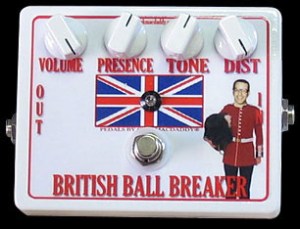
At any volume level, the amp sounds great, but its true character comes out when you dime the volume and play it through a 4 X 12 cabinet. Throw a couple of pedals in front of it (we used the British Ball Breaker and a prototype GeekDriver/GeekRanger pedal in front of the amp), and the amp’s tone combined with the 4 X 12 will knock you across the fuckin’ room! Can you say wicked overdrive that makes the hairs on the back of your neck stand up? It was amazing to witness!!!

The “Torpedo” moniker is totally appropriate for this amp. It is meant to fire out a shot of gorgeous tone, blow you out of the water, and knock you into tone heaven! Even at the volumes we were playing at, this tone isn’t a face-peeling raucous. Granted, a lot of that quality had to do with the Fane speakers we were playing through, but just as with you not putting great speakers in a shitty cabinet well, you don’t play a great amp with shitty speakers either.

If you live in the Silicon Valley, I encourage you to contact Darin and check out his workshop. It’s set up for jamming, so bring an axe or two! Darin’s even got beer! Though next time I go to his shop, I’ll bring a 12 pack. BTW, he like Tecate. 🙂  For more information, check out the Tonic Amps web site! To get a reference for how great Tonic Amps sound, check out Darin’s YouTube site at: http://www.youtube.com/user/MrTonicAmps.

Read Full Post »

GeekMacDaddy British Ball Breaker

I had such a great evening tonight! Darin from Tonic Amps invited me over to his shop to try some amps through his excellent speaker cabinets (be on the lookout for a review in the next day or so). He has a very cool workshop that he also shares with “GeekMacDaddy,” who makes some absolutely KICK-ASS pedals! I got to try out a few of them tonight, and absolutely fell in love with the British Ball Breaker, which GeekMacDaddy touts as a classic Marshall Plexi in a box. He’s not kidding, either. This is a helluva pedal, with rich, thick, overdriven Marshall tone. Just set your amp on clean, crank the master volume, engage the British Ball Breaker, and you’ll be rewarded with gorgeous Marshall-esque overdrive!!! YOWEE!!!

You gotta check out these pedals! They just rock! In addition, GeekMacDaddy is just about to release another freakin’ fantastic pedal called the GeekDriver that is a totally awesome take on a drive pedal. It sounds awesome by itself, but this pedal was built to be stacked, providing the foundation tone, then driving another fuzz or overdrive pedal. Rockin’!!!

Damn! Two freakin’ awesome pedals that I will have to get – as if I need more! But hey! You know me and overdrive pedals! I just can’t get enough of them!

Here’s a great demo video of both the British Ball Breaker and the GeekDriver from PremierGuitar:

Notice that GeekMacDaddy’s playing through a Tonic Amp! Those amps just rock as well! However, I’m getting ahead of myself!

For more information, go to the GeekMacDaddy site!

Read Full Post »

Tonic Amps

As you know, the Dawg spends a lot of time sniffing around to find gear, but sometimes, manufacturers find me. Recently Tonic Amps contacted me, and I checked out their offerings. Tonic builds some nice reissue amps with their own twists, but they are also the North American distributor for Fane Speakers, the noted UK amp speaker manufacturer.

As you’d expect, if they sell speakers, Tonic probably builds cabs as well, and that is definitely the case. Darin (owner/builder of Tonic), has some very nice custom cabs in a variety of configurations and woods, all solid board cabinets: no pressed sawdust here, my friends. Tonic also offers custom cabs in a variety of hardwoods (though of course, you’re going to pay a premium for these, but hey! they’re available).

In any case, Premier Guitar has run a couple of videos that demonstrate Tonic Amps. You can check them out below:

From the 2009 New York Amp Show:

From the LA Amp Show:

These are some nice-sounding amps with some nice features! One thing that’s totally awesome for me is that Tonic Amps is literally ten minutes away from where I live! I can’t wait to try out Tonic’s amps and cabs!

Another cool thing is that Darin shares a shop with GeekMacDaddy, who makes a line of very cool pedals. Maybe I’ll get a chance to give ’em a whirl, in particular, his British Ball Breaker, which is touted as a Marshal stack-in-a-box. Yummy!

Read Full Post »

I was perusing The Gear Page this morning, and saw one of Anthony’s postings of the colors the Bambino comes in. CHECK IT OUT!!!

bambino_colors

I have the blue tolex model shown at the bottom right. It is SO cool looking.

BTW, if you missed the sound clips, here they are again:

Clean fingerstyle in neck position of my Strat:

Clean, blues progression, with Strat in neck/middle position with just a minute amount of breakup:

All out, wide open with channels 1 and 2 dimed and StackMode volume at 3pm. I’m playing my Prestige Heritage Elite with ‘buckers in the bridge position:

This little amp has created quite a buzz on the forums, and at $699, it’s a deal. It has been so popular, that they haven’t been able to keep up with the demand, and that’s a good thing! To place an order or to get some information, contact the guys directly at info@reasonamps.com.

Read Full Post »

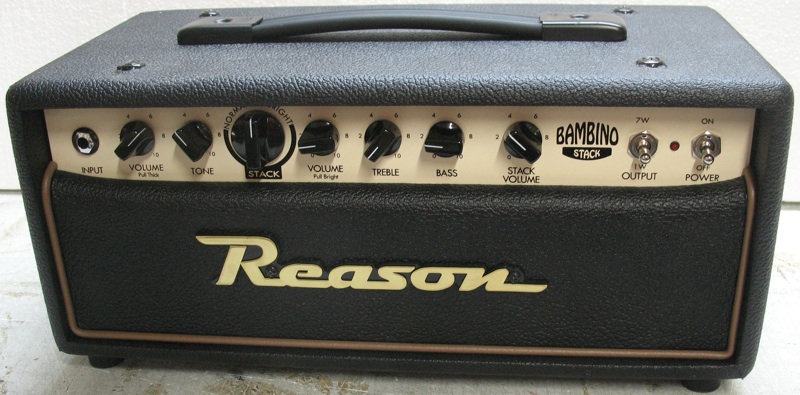
bambinoDid my weekly church gig this evening and took the Reason Bambino along. Didn’t bring a pedalboard; just a 1 X 12 cabinet and a couple of cables. I wanted to test out the amp in its pristine state, with no added accoutrements. I also wanted to test the balanced line out to see how it worked with the building’s PA.

I have to tell you, Obeid Kahn being a noted Strat guy, even though the Bambino sounds killer with a guitar with ‘buckers, this amp seems to just love a Strat. It really makes it come alive. Whether I played fingerstyle or funky, the Bambino really made my Strat sing. Well… nothing helps to inspire me to play better than great tone. Like I mentioned in my review, the tone of the 6AQ5 sits right between an EL-84 and a 6V6, and that tone seemed to bring out the best of my Strat. The cleans were classic Strat, and the drive, oh yeah, the overdrive was open and bright, and just floated in the air. I may have been in worship, but I was also in tone heaven!!!

As for the balanced line out, oh man! The tone coming through my church’s PA was great! We have a pretty nice PA system, and the tone, whether clean or dirty, didn’t sound any different than what was coming through my cab. That was a concern for me because I’ve played through amps with line outs that just didn’t sound like the amp. The Bambino’s line out is very transparent, and that’s especially important with this amp because it’ll give you plenty of volume to monitor your tone on stage, but the line out going into your PA will ensure that it’ll get out faithfully to the audience. Make no mistake. This amp may only have 8 Watts, but it has plenty of volume to be used as a stage amp. I suppose it’s another way to approach performance. Especially in a church setting where lower stage volume is critical, having the ability to keep your stage volume down but knowing that it’ll get out to your audience is just so awesome. The Bambino rocks in this department!

***Quick Update*** I just spoke with Anthony this morning and he nor Obeid didn’t anticipate the DI to be plugged directly into a PA, so he was pleasantly surprised to hear my application of it. Note that I went direct out and into my cab at the same time! This amp has versatility written all over it!

And if ever the 8 watts isn’t enough, the Bambino can be used as a reference amp to define your tone, and with the line out, you can re-amp into another amp or a power amp to boost your output power. I’ve tried this, and it works great. I can’t wait until I get to try this at a real gig!

So what’s the verdict? The Bambino rocks – plain and simple.

To get a Bambino…

I don’t think Anthony and Obeid anticipated the popularity of the Bambino, and the positive response has been enormous. If you’re interested in getting this $699 tone monster, contact the guys directly either through e-mail at info@reasonamps.com. They also hang out at the Gear Page (http://www.thegearpage.net/board). Search for “bambino” or find the users “Reason” or “OKahn” and send a private message. There will probably be a bit of a wait time to get the amp as it has create quite a buzz and they’re already getting orders. The amp is just out of prototype and review for goodness’ sake! It’s amazing!

Read Full Post »

« Newer Posts - Older Posts »