Feeds:
Posts
Comments

Archive for the ‘Effects’ Category

pedal_tote.jpgOkay, yet another product review on a fairly mundane piece of gear, but hey, sometimes you have to be practical!

A few years ago, I was pretty spoiled when it came toting guitar gear around. I was using a Line 6 Flextone III as my amp, and as a modeling amp with all sorts of effects built in, the only thing I needed to hook up to my amp was my floorboard and guitar. That all changed when I moved to a tube amp for performance. All the things that I used to do to tweak my sound were no longer built into the amp! I had to get effect pedals to get the types of sounds I wanted.

At first, I only had a couple of pedals, so just putting them into my guitar’s gig bag wasn’t a problem. Then I got a couple of more pedals, so I started carrying my pedals and cables in an unused large camera bag. Still, it wasn’t a problem. Once I got to seven pedals, it became a problem. At every gig, I’d have to hook up the pedals to each other, not to mention having to hook up my 1 Spot power cable. What once was a five minute affair was now taking up to 20 minutes to get everything set up and dailed in. So I broke down and bought a pedal board.

There are lots of boards on the market. You can get them custom made, or go with fully powered units. For me, my needs were simple. I wanted a board that could carry up to 8 pedals, and I didn’t want a powered board. The reason was that most powered boards only provide 9V power for all the connections, and I have a couple of pedals that can take18V. Also, powered boards run pretty expensive (for an 8 to 10 pedal board, expect to pay close to $200). There are other powered boards that take 6 pedals, but that wasn’t a real option for me. Enter the Gator Pedal Tote.

The Pedal Tote is a non-powered, inclined pedal board made of 8-ply plywood. It’s covered in black tolex, and topped with small loop carpet. It comes with two 1-inch strips of velcro (about 2 1/2 feet all in all) to stick to the bottom of your pedals. I love the sturdiness of this board. The only beef I have with it is that Gator doesn’t come enough velcro for eight pedals. I had to go down to an arts and crafts store to buy more sticky-back velcro in order to attach all my pedals to the board. Not a big deal, just a minor inconvenience.

So how do I like it? I love it! It’s built like a tank, and has made my life a lot easier. Set up and strike are simple, five-minute affairs now.

Read Full Post »

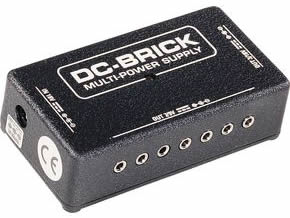
Dunlop DCB10 Brick A power supply? I know, kind of mundane, but if you’re still using 9V batteries, you might want to rethink your power supply needs. Here’s a common situation: You’re in the middle of a set, and your beautifully clean tone starts getting kind of fuzzy. It’s not too bad at first, but worsens as the gig progresses. You look down at your effect pedals, and one pedal’s light seems to be a bit dimmer than it normally is. You realize the battery is going dead. So after the song, you go back to your gig bag to get another 9V. You’re shocked to find that you don’t have a spare!

That situation happened to me this past weekend. I recently added a couple of pedals to my chain, but because my 1-Spot only had 5 connectors, I had to use batteries in my new pedals. The batteries were only a couple of weeks old, so I thought I was safe. Was I ever wrong. I had to rewire my signal chain to bypass those pedals. It wasn’t so bad, but it was a pain in the ass because I was in the middle of a set. After this experience, I decided to look into getting a more robust power supply that could power all my pedals.

So why the DCB10? Simply because as far as power supplies are concerned, I think it’s the best one I’ve ever had! It has 7 9V connections, and 3 18V connections – plenty to power up most boards. What really excites me about this pedal are the 18V connections. I have a Fulltone OCD that can take 9V or 18V power. At 18V, the headroom on the pedal just soars! But I digress… In addition to all the connections, the unit doesn’t introduce any hum. My 1 Spot could get a little noisy, and was a bit of frustration point for me. But the brick makes my chain as quiet as can be. A lot of this has to do with the fact that in addition to being a power supply, the Brick is also a power regulator/conditioner, so you get a consistent current going to your pedals at all times. This also means that you have built-in surge protection, which could be fatal to your pedals.

The Brick is also built like a tank, with a heavy-duty metal casing, so it is definitely a road-worthy power supply. Finally, the Brick can be used with any power source, from 110 to 240 (you’ll have to get an adapter for 240), which means you could gig anywhere in the world and not have to worry about swapping out your pedal board’s power supply.

Price: $190 retail / $99 – $109 street

A note about pricing: If you look for this on EBay, make sure you figure the shipping costs into the total price you pay. A lot of EBay vendors list the Brick for $99, but charge $19.95 for shipping. I bought mine from a local shop for $109 flat. Caveat Emptor!

Read Full Post »

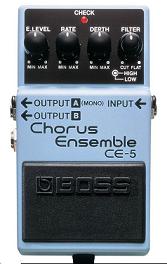
BOSS CE-5 Chorus EnsembleWhen it comes to chorus sounds, Roland/BOSS is pretty much the standard for the last twenty or so years. The CE-2 has especially been very sought-after used pedal 1) for its simplicity and; 2) for it’s analog design. I owned a CE-2 back in the 80’s, and have since kicked myself since I traded it for other hardware – that I don’t use at all anymore! Since then, BOSS has gone through a couple of renditions with the Chorus Ensemble line, and now offers the CE-5 Chorus Ensemble. A pedal that even though digital, sounds pretty darn good.

The CE-2 was a simple affair: Just two knobs for rate and depth, and a single output. With the CE-3, Boss introduced a “stereo-like” affair with two outputs, and three knobs, introducing a “Stereo Mode” knob to control how the outputs generated their sound. The CE-5 does away with the Stereo Mode knob and replaces it with an Effect Level knob, and a dual knob used for Hi- and Lo-cut filters.

In my opinion, the Hi/Lo Cut knob is what makes this pedal special. With it you can really shape your chorus sound from bright and smooth to dripping wet. All in all, you can’t go wrong with this pedal; and for less than $80, it’s a deal.

Starting with this review, I’m going to start giving summary ratings at the bottom of each review, similar to what you’d see in one of the trade rags.

BOSS CE-5 Chorus

  • Price: $129 (<$80 street)
  • Pros: Very versatile. Can produce a wide range of sounds
  • Cons: Can take awhile to dial in the sound you want
  • Summary: Great sounding chorus at a great price

Read Full Post »

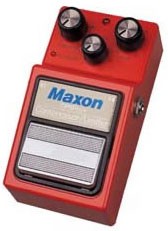
Maxon CP-9 Pro+ CompressorThe last review I wrote was on the Demeter Opto Compulator, a great compressor that I had the chance to A/B a couple of weeks ago. In the review, I said that that was the comp I was going to buy, but that was until I did a side-by-side comparison with the Maxon CP-9 Pro+ today. Now it looks like the winner of my search for a good, transparent compressor is the Maxon CP-9 Pro+. But I’ll have to admit, I’m very torn between the two.

When I heard Buford play through the Demeter, I loved its transparency. The compression is so subtle, you hardly notice that it’s there. But my side-by-side comparison with the CP-9 really got me hooked on it instead of the Demeter – for now (I’ll explain in a bit). Let’s look at the features, shall we?

Like the Demeter, the Maxon CP-9 Pro Plus is fairly straight-forward to use. It has three knobs to the Demeter’s two, adding a threshold knob to the ratio and makeup gain knobs, and this is what got me hooked on this pedal. I really liked having that threshold knob to control when the compressor kicked in – that made this pedal much more versatile in my eyes. I set it to about 10-11 o’clock, set about 2.5 to 1 ratio, then set the gain to match the uncompressed signal volume as closely as possible. What this pedal did for the Strat’s sound that I was playing was very sweet. The tone stayed the same, it was just fatter. And for low-volume applications, this is EXACTLY the effect I was looking for. It’s not as subtle as the Demeter, but it’s still transparent as all get out.

Since the shop I tried the CP-9 at also had a Demeter as well, I decided to try out the Compulator for myself, since I didn’t get to play Buford’s guitar that night at the casino. So here’s my feedback. The Demeter is incredibly subtle in its compression. It squeezes your signal just right, but in the quiet environment where I was testing, I noticed a distinct, but very pleasing high-end shimmer that was produced by the Compulator that I couldn’t hear in the crowded environment in which I first heard the Compulator. Talk about ear candy! Unfortunately, what I’ve been looking for is a compressor that doesn’t add any artifacts. It just squeezes. So I was faced with a bit of a dilemma: Go with the Maxon’s versatility, or go with the Demeter’s subtlety and beautiful high-end shimmer. I’ve decided to go with versatility for now.

Mind you, these two compressors are very different beasts. The Demeter employs an optical circuit for compression, while the CP-9 uses a Voltage Controlled Amplifier (VCA) and a RMS sensor. Click here for a great article covering that various electronic approaches to compression. The reason I mention this is because the different approaches yield different sonic results. Optical comps tend to be the most subtle of the compressors, while the VCA type compressors offer the most versatility and highest attack response. That said, it’s possible to use different types of compressors to achieve specific types of tone. Oy Vay!

I’m not sure if I’ll ever get the Demeter, though it will always remain in the back of my mind. And even though I was totally blown away by that high-end shimmer, my practical side made me err on the side of versatility.

Read Full Post »

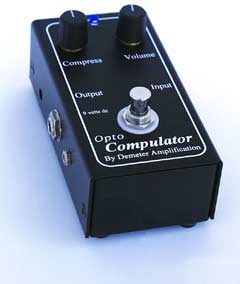
Demeter Opto CompulatorI was at a casino last weekend, sitting in a bar with a couple of friends and listening to this great duo play classic rock hits. During one of their breaks between sets, I went to the stage to talk to the guitarist (he had a cool name: Buford) and checked out his gear. He had a fairly simple setup: Just two effect boxes going into a Vox amp modeler that then went straight into his mixing console. What caught my eye though were his two effect pedals, both by Demeter (pronounced Deh’ meh tur) Amplification. One was Demeter’s FUZ-1 Fuzzulator drive box, and the other was the Opto Compulator. I knew a bit about the Fuzzulator, but I wanted to know more about the Compulator, as I’ve been considering purchasing a compression pedal for some time. So I asked him a few questions about the box. Here’s how the conversation went:

What’s your main application for the compressor?
Even though this is a pretty small stage, we’re playing in a fairly open environment at low volume. When I need to play distorted, I’ve got to fatten up my signal a bit, so I can cut through the crowd noise. Distortion always thins out your tone a bit, so this helps me compensate for that.

Doesn’t a compressor affect your overall tone?
In general, yeah. But this has got to be the most transparent compressor I’ve ever used. With this box, I maintain my tone, but just give it a slightly fatter delivery. And like I said before, in this environment, I need a fatter signal to cut through the crowd noise. I’ve played with a bunch, and this one is the absolute best I’ve ever had.

So what’s so special about the Compulator?
Like I said, it’s really transparent, and the compression effect is so subtle, most people wouldn’t even notice – I hardly notice it myself, but I know when it’s not on. And maybe there’s a bit of me being used to the sound. Other than that, it’s real easy to use. You have two knobs: The left-hand knob controls the amount of compression you want to dial in, and the other knob controls the gain. You also have a little trim dial on the side that you can adjust with a small screwdriver to trim the volume up or down – but I’ve never had to use it.

Can I do an A/B comparison from a slight distance away?
Sure thing. Step back about 20 feet, and I’ll show ya.

So I stepped back, and he played some chords and riffs with it on, and with it off. I’ll be damned! He was right. His tone was the same, but had just a tad fatter quality! Now that’s transparency! And that demonstration convinced me on the spot that the Compulator is the box I’m going to buy.

About compression…

For a good article discussing the general concepts of audio compression, click here. It doesn’t go into into the heavy technical details of compression, but it definitely helps to demystify how it works. For a more comprehensive and technical discussion, click here.

COMP-1 Opto Compulator Features

  • Compress Knob – controls amount of gain reduction up to 30dB.
  • Volume Knob – increases/decreases the output volume (aka “makeup gain”).
  • Trim Pot – very nice feature to adjust the unit’s preamp gain. If you plug a hot instrument into the unit, you could get distortion. You can knock down the input gain to avoid that.
  • Powered by a 9 volt battery, but also has a standard 9V jack.
  • Street Price: Generally around $199.00 (do a Google search)

My prospective usage

I normally play in very small, low-ceiling venues, so compression has not been a big issue for me. However, when I play with my band at my church, I have to play at fairly low volumes, which makes playing in distortion a huge challenge, because in order to hear the effect, I have to turn up my volume. That usually makes me stomp on the mix. With a fatter signal, I should be able to punch through the mix much more effectively without having to pump up my volume too much (or as much as I have been 🙂 ).

After hearing this unit, I’m convinced this is the right pedal. And getting input directly from a guy who swears by it and was willing to demonstrate how it worked had me sold.

Read Full Post »

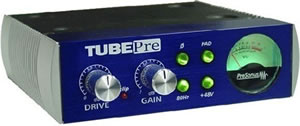
Presonus TUBEPre

Why use a pre-amp? Quite simply, a pre-amp greatly aids in either bolstering the signal of either a mic or line-level device, but it also can add some very helpful signal conditioning that will add “warmth” to the tone a device produces. I use the Presonus TUBEPre not only for microphone applications, but also for adding a touch of warmth to the signal of my acoustic guitar. The difference that it makes in the overall tonal quality that my guitar produces while plugged into an amp is so immense that it has become an essential piece of hardware when I gig or record.

Among the “lower cost,” sub-$100 pre-amps on the market, I believe that the TUBEPre offers the best value. With its standard features, it surpasses many tube-based pre-amps in this price range. Most tube pre-amps just provide drive and gain knobs and perhaps a phantom power switch, but the TUBEPre also includes four extra features that definitely add to its value.

As the name implies, the Presonus TUBEPre is a vacuum tube-driven device. Specifically, the tube used is a fairly standard 12AX7 tube. Here are the extra features that accompany the pre-amp:

  • Phase Inverter Switch – I’ve never had to use this, but pressing this switch reverse the polarity of the XLR connection to avoid phase cancellation when two mics operate in close proximity.
  • -20db Pad – This is incredibly useful when mic’ing a high output device like an amp so you don’t drive the input signal into distortion.
  • 80Hz Rumble Filter – This is very nice feature that will eliminate low frequency background noise such as wind or air conditioners. Since I use mine in my garage, it’s great for filtering out the low frequency drone of my freezer.
  • +48V Phantom Power – For those devices that require a constant power source, such as a condenser mic, getting enough power is just a button press away.

Gripes

I only have one gripe about the TUBEPre, and that is that the meter is completely useless. In my case, once I hit about 9 o’clock on the gain (with Drive set to 11-12 o’clock), the meter becomes incredibly erratic, and tends to peak way too easily. So I tend to rely on my ears, and the clipping alert LED between the drive and gain knobs (which works). Other than this single gripe, it’s all good, and really it’s about the sound anyway.

How it sounds…

Out of the box, the TUBEPre sounds great, adding a very pleasing warmth to your tone, but it sounds even better with a different 12AX7 tube than the cheapo stock tube that comes with the unit. I replaced my 12AX7 with a Mesa Boogie 12AX7 tube, and the already great sound that came out of the TUBEPre sounded even better!

I use the TUBEPre for both microphone and for warming up the signal from my acoustic/electric. In both cases, the resultant sound is very warm and full of texture. My vocals are very clear-sounding, especially when I’m using a heavy-duty cardioid mic, which tends to project a lot of bottom end and at times sound a bit muddy. With that mic hooked up to the TUBEPre, I get a rich, full tone that brings out the subtleties in my voice (though it does pick up those little vocal mistakes 🙂 ). With my acoustic/electric hooked up to the TUBEPre, it actually helps to brighten out the sound of my guitar, and gives the output much more dynamic range. The net result is that my performance can be a lot more expressive.

As far as driving the tube into clipping, that’s not something that I use it for, but I have done it, and it creates a very interesting effect. The sound is very much pre-amp distortion, but it’s a bit thinner. But as I said, this is not something that I’d do with this unit in any case. Driving the tube into clipping too often and for too long will reduce its life. Tubes ain’t cheap, so I tend to baby this unit as much as possible…

To sum it up, the Presonus TUBEPre is a great addition to your gear if you’re looking to warm up your tone.

Read Full Post »

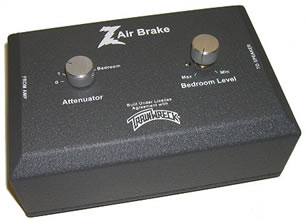
Dr. Z Air Brake

About six months ago, I wrote a little ditty about the Dr. Z Air Brake, but I thought I’d revisit this essential piece of equipment once again. The Air Brake is a power attenuator; in other words, it reduces the amount of signal from your amp that reaches the speaker, thus reducing your audible output. Before I go any further, the big question is: Why would you want to reduce the amount of signal going to your speaker from your amp. There’s actually a very good reason: Overdrive.

With tube amps, especially those with multiple-stage gain, you can’t achieve that warm clipping (read: creamy distortion) without upping the drive to your power tubes. Unfortunately, that also means you have to crank your amp, as achieving those nice distortion characteristics is a function of both drive and gain. The net result in turn can shatter your eardrums in an enclosed space, or worse yet, have your family or neighbors scream at you for playing too loud in your garage. A power attenuator allows you to drive your power tubes into clipping but do so at a significantly reduced volume. For home studio enthusiasts like myself that usually record late into the night, this means you can work on recording projects without the fear of waking up my family or pissing off the next door neighbors (which I have done many times).

There’s a good FAQ about power attenuators and how they work here. I won’t go into the technical details, but suffice it to say that with a power attenuator, you can play at acceptable volume levels while still being able to drive your amp. With that let’s get into the Dr. Z Air Brake features.

The Dr. Z Air Brake is incredibly easy to use, though in addition to the unit, you’ll need a couple of good-quality audio cables with 1/4″ plugs. If your amp’s output goes straight to your speaker and is then soldered to the speaker leads, you’ll have to do some splicing and soldering, though most tube amps today use a 1/4″ output jack. Once you’ve got the unit hooked up, you have five levels of attenuation: 0 through 4 and Bedroom. The “0” setting is total bypass, while the 1-4 settings impose approximately -2.5dB attenuation with each position by default. If you open the unit up, you can actually increase or decrease the amount of attenuation at each position by moving the leads along the resistors (this is explained in the accompanying manual – it’s a single sheet of paper). The “Bedroom” setting is what sold me on the unit. When you have the Attenuator knob set to “Bedroom,” the “Bedroom Level” knob comes into play. This provides variable signal attenuation down to 1 Watt (for sub-100 Watt amps) at the maximum level, though at this amount of attenuation, your tone really changes because the speaker cone doesn’t move enough air, thus producing a VERY thin (read: ugly) tone. I usually set my Bedroom Level knob to about 10-11 o’clock, the play with my drive and volume knobs on my amp until I’ve dialed in a good tone. Frankly, it doesn’t get much easier than this.

In addition to the variable bedroom level control, I chose the Dr. Z Air Brake after evaluating and reading various reviews, and speaking with other folks who have one. The most popular attenuator at the time I was reviewing attenuators was the THD Hot Plate. I tried one out at a shop, but didn’t like the sound that came out of it all. It literally changed my tone. The Dr. Z Air Brake, on the other hand is much more transparent, even at bedroom levels. As far as gigging is concerned, since I play a lot of small venues, it’s a real helpful piece of equipment because it allows me to drive my amp when I play with my band without stepping on the band’s overall output.

CAVEAT EMPTOR

Many people buy attenuators thinking that once they’ve attenuated their signal, they can drive their power tubes to their highest levels. It’s true, you can do this. But you’ll also burn through your tubes pretty quickly, or worse yet, you’ll damage your amp’s electronics. I’ve heard about this happening especially with resistive attenuators. People crank their drive, and after a few minutes start smelling something burning as their amp’s internal electronics fry. Also, driving your power tubes into super saturation doesn’t do anything but cause a lot of ugly distortion. When you drive your power tubes, the tone you should expect is a smooth distortion, as the intermixing sound waves weave together beautifully. Adding even more power creates a much larger contrast between the peaks and valleys of the distorted wave, and what you end up getting is a very “dirty” sounding distortion that is not in any way pleasing to the ears. So beware if you’re in the market for an attenuator!

In closing, if you’re like me, and play in a variety of small- to medium-sized venues, a power attenuator can be your friend. For me, mine is always hooked up. It has saved me from a lot of headaches and eliminated complaints!

ROCK ON!

Read Full Post »

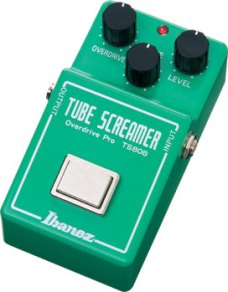
Ibanez TS808 Tube ScreamerSince I recently did a review on the Fulltone OCD, I thought that I’d do a review on the much-revered TS808. As many in the know, this is the pedal that defined Stevie Ray Vaughn’s sound. But it’s not the reason why this pedal is so special. The Tube Screamer has a unique, transparent tone; the keyword being “transparent.” Want to add drive and breakup to your tone – just switch it on. What you’ll get is a warm-sounding overdrive that is like candy for the ears.

Like the OCD, this is not a distortion box. It’s an overdrive box. The difference between overdrive and distortion are important, because they involve different approaches to the electronics. Click here for a good discussion. Overdrive boxes are known as “soft clipping” devices where gain is inversely proportional to input signal. Usually the boost is in the midrange with the high and low ends slightly cut off. The Tube Screamer is a pure midrange booster, and produces a beautiful, warm tone. The OCD on the other hand also boosts in the middle, but has added electronics that add sustain and boost harmonics and overtones. With the OCD, you can get a FAT, almost compressed tone. With the TS, you just get a boost – but that’s not a failing in the least!

As with the previous review, neither pedal is better than the other. They both have their uses. When I want lots of sustain – especially with solos – I’ll use the OCD. But for general broken-up rhythm, I’ll use the TS, but that’s not necessarily a de facto standard…  In any case, let’s discuss some features…

Note to metal players: This is not the pedal for you, if you’re looking for a real hairy kind of distortion. Think of this box as a driver to achieve pre-amp distortion. That tends to be on the brighter side. This box will not produce a fat tone, so buyer beware!

But if you’re looking for warm type of pre-amp breakup, this box is for you! It couldn’t be easier to use, either. Just three knobs: Overdrive, Tone, and Level. To get the tone you like, just fiddle with the knobs until it sounds right to you. Generally, I set the tone knob to 12 o’clock, which is pretty neutral (though the tone knob really doesn’t have that much dynamic range), set the overdrive to 10 – 12 o’clock, then set the level to slightly louder than the volume of my amp with the box switched off.

As far as build quality is concerned, it’s an all-metal casing. I gig with this box a lot so its hefty weight and solid build is a boon to gigging. And unlike the normal toggle switch you find on most boxes, the TS is (de)activated with a square switch. It’s not only aesthetically pleasing, it’s also really functional. The only beef I have with the box is that the light source of the LED is set kind of deep, so you have to be practically right over the box to see if it’s switched on or off.

Finally, the Tube Screamer is not cheap. A “Re-issue” like mine will set you back ~$169.00, while vintage boxes run up to $450.00. All I can say is that the money you spend is entirely worth it!

Read Full Post »

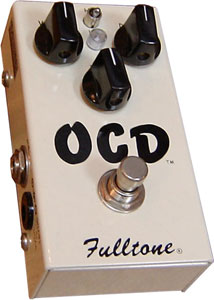
Fulltone OCD Drive Pedal
There have only been a few times in all the years that I’ve been playing guitar that I’ve had an epiphany with a pedal, where after just playing a few notes, a light bulb would go off in my head, and I’d exclaim, “That’s the sound I’m after!” The Fulltone OCD did that to me this afternoon. I just love when that happens! Here are some of the features of this little beast:

  • First off, it has a true bypass switch, so when it’s off, it’s off, and you don’t have to remove the battery if you’ve got it plugged into a 9 volt power source.
  • Volume knob – speaks for itself. But here’s a real treat: The volume knob can give you up to 30dB of boost!!! Need a clean booster? Here it is, plus you can get that sexy, smooth distortion out of it as well. Special note for my friend IG over at igblog: Here’s your clean booster, and you get a freakin’ amazing distortion box to boot!!!
  • Tone knob – according to the manual (and I confirmed this as well), the tone knob only affects the high frequencies, but you can use it to sweeten up a lead or get a more squishy, punchier sound – very cool.
  • Drive knob – again self-explanatory. It’ll give you more or less distortion depending up on the position you set it to.
  • HP/LP switch. This is unique to this pedal. Set it to (H)igh (P)eak and you get glorious sounding bottom end and increased dynamic range, plus more distortion throughout various volume levels. Set it to LP, turn down the drive, and the pedal acts as a clean booster with the volume knob.

How it sounds

  • Whether you’re in HP or LP mode, the thing that I noticed the most was the amount of sustain it added to the notes I was playing. One thing that can be a bit of a frustration for me when playing my Strat is when I bend a high note (above the 12th fret), there’s just not much sustain in the guitar itself (of course, unless I crank my amp). But the OCD adds a lot of sustain with hardly any tonal interference (that makes your sound really muddy).
  • As far as distortion is concerned, the OCD will not muddy your tone – especially at lower volumes, and you get all the juicy, complex harmonics that you get out of a cranked amp. With the OCD, your tonal clarity is retained, even with heavy distortion, AND you get those overtones and harmonics – EVEN AT BEDROOM LEVELS!!! Think of the OCD’s distortion as an extension and enhancement of your tone. It’s very much in character with a box like the Ibanez TS-808, another overdrive box that I have that I love for its transparency.
  • With the OCD, you also get the touch sensitivity you’d expect out of a cranked amp. That’s yet another amazing thing about the OCD, it’s sensitive as all get-out even at lower volumes.
  • I haven’t confirmed this, but from other reviews I’ve read, and from the dude that sold me the pedal (I trust him mightily), the more voltage you run through the OCD, the better it sounds. I only have a 9 volt power supply, but it’ll take up 18 volts, though I’ve read that 12 volts is probably the best.

In a nutshell, if you’re looking for a distortion box that will make your good tone sound even better, this box is for you. That said, before Mike Fuller released this box, there was A LOT of hype surrounding it. Once it was released, a lot of players were disappointed, thinking that this would be the be-all, end-all of distortion boxes. It’s not. It has a different character; actually, a VERY unique character, that will endear it to some, and ward off others, especially those who are expecting a real low-end oomph. The OCD has that, but that’s not its strength. As I mentioned, it’s a tone enhancer, that will break up your signal as much or as little as you want. It won’t pour on oodles of low-end, especially if your setup is on the thin side.

An important note: The OCD works best with a single channel Class A amp, or on the clean channel of a multiple gain stage amp. It does not sound good when used in the drive channel, which already breaks up your tone. That said, if you do use it with a drive channel, either let it do the driving, and turn your amp’s boost down, or turn down the OCD’s distortion, and pump up the volume knob on the box. Otherwise you’ll get a very rough (read: ugly) distortion. A lot of folks have complained about this pedal clipping too much with their amps. Most likely, they’ve tried to use it in the way I described above.

Comparisons? Well, I’m never one to say this box is better than this box, unless the tonal quality is perceptibly that much better. The closest box I can think of to compare the OCD to off the top of my head would be the box I mentioned above: The TS-808 Tube Screamer. But where the Tube Screamer is more of a midrange booster, and it produces a much more crunchy tone, the OCD has much smoother distortion characteristics, and has way more inherent sustain than the Tube Screamer. Which one is better? Neither. For me, they both have their uses, though I’ll have to admit that the Tube Screamer will most likely be my go-to box for crunchy rhythms, and the OCD will be used for leads and more funky rhythm parts played high on the neck.

Sometimes, it’s just in the stars…
I stayed home from work today to take care of my toddler who has an ear infection. He’s been cranky all day with a fever, and of course, the incessant annoyance of the inner ear infection. So to calm him down, and help him take a nap, I took him for a drive. I wasn’t actually intending to go to my local guitar gear shop but I ended up exiting the freeway on the street that the shop was on, and just happened to drive in the direction of the shop (I really wasn’t meaning to go there, dammit! 🙂 ) Anyway, as I was driving, I noticed the “Guitar Showcase” sign, and turned into the parking lot. I figured I could browse around in the nice, air-conditioned space, which would be great for my little boy with a fever. So I put the baby in the stroller and entered the store.

Once I entered the store, I noticed that Peter, who sold me my Fender Hot Rod Deluxe was working behind the counter, so I struck up a conversation with him. He’s a touring musician, so I asked him how the gigging was going, and we swapped stories. Then it occurred to me to ask him about a good drive/distortion pedal that I could use in conjunction with my TS-808 (which he also sold me and also plays through). He said, “Man, here it is: The Fulltone OCD. This’ll do the job for you. You can use it as a clean boost, but you’ll get the sweetest, creamiest distortion you’ve ever heard. Other pedals, can sometimes make your tone turn muddy, but this will break up your signal and retain your clarity.” Peter knows what I play through, and the guitars that I have, so he knows how important my tone is. With that, I replied, “You know, I wasn’t banking on buying any gear today, but based on what you’re saying, I’ve got to try this pedal out.”

So Peter hooked me up to a Hot Rod Deluxe. I played one simple phrase: An ascending minor scale in E. Actually it was more like 4 notes with a bend and vibrato at the end, and my jaw just dropped!!! I couldn’t believe the sexy tones that came out of this little box! It was like the sea had parted and the way was made clear! Then Peter twiddled the knobs a bit, then told me to play some funky rhythm line, and it’s like the song just came to life! I swear, within a minute of playing through the OCD, I just turned to Peter and said, “Sold. I’m gonna play a bit more, but you can start writing up the order. I’m not leavin’ the store without one.” So, I am now the proud owner of a Fulltone OCD.

Read Full Post »

…that makes you sound good. It helps to have great gear, but it’s the player that counts. Don’t believe me? Check this out…

I saw this street musician playing in San Francisco a couple of weeks ago playing a crappy Fender Squire Telecaster, and a beat up amp that also doubled as his vocal PA. Guess what? He sounded amazing! The tiny amp was really tinny sounding, and his voice wasn’t always on key, but his guitar technique was nothing short of incredible. How could I tell this? Not just by watching, but by listening to how he squeezed out every bit of sustain from each note he played; how he transferred his passion from his heart into his guitar. The raw emotion in his playing was almost palpable. That got me thinking about my own playing…

Several months ago, I wrote an article called, “I’ve got GAS and I’ve got it bad!” At the time, I was on a buying binge, getting a new guitar, some effect pedals… just gearing up in general. Then a couple of months ago, I just up and stopped using more than half the pedals I bought. I attributed a lot of this to my Hot Rod Deluxe finally breaking in, but when I saw that guy playing on the street, it got me to thinking that it might’ve been something more; something inside of me that stopped me from buying more gear, and hooking up a bunch of pedals to my rig.

Now, I think that what happened was that I returned to a place that I forgot about: My heart. When I first made the move from primarily acoustic to primarily electric guitar, I was a bit uncomfortable playing. There was a lot more to think about in shaping my tone than before, and I was admittedly self-conscious about my technique. But I eventually reached a level of comfort. That’s when the seas parted, the skies opened, and a voice from Heaven burst forth proclaiming, “Now go forth and PLAY your guitar!”

There’s a big difference between just playing chords and notes, and playing with your heart. It’s not just how you approach your instrument, it’s how you FEEL your instrument and adjust to the subtle nuances within a song. It’s the difference between simply being musically mechanical and being truly musical. I forgot that, or rather, I was distracted from that for awhile, and the thing is, to be truly musical, you don’t need effects or great gear. Yes, that stuff provides added enhancement, but no one or no thing can give you musicality. That comes from you.

I’ve returned to that place where I can really feel what I’m playing, and I’m really loving what I’m hearing – and a bit surprised that I’m actually pleased with how I’m sounding now. And though I’ll most probably buy more gear in the future, it will be with the intent of enhancing my music. I’ll take a much more utilitarian approach and not get trapped into having a piece of equipment because it’s considered by others to be top-of-the-line. I fell into that trap once. I won’t do it again.

So you don’t have to spend a lot of money to sound good. Just look at that guy on the street. He knocked my socks off. But to bring even more legitimacy to this argument, let’s look at some great players who took average or less than average gear and did incredible things with them:

There are two guys I think about immediately: Willie Nelson and Eric Clapton. Willie played this old classical guitar that had an “extra hole” in it that his “Daddy bought me.” Clapton bought three second-hand Strats for $100 each, mixed and matched necks and bodies and produced “Blackie,” his signature guitar that sold for over $1 Million at auction. In each case, these guys took marginal equipment and built careers on them. So tell me it’s not the player… 🙂

I’d love to hear your thoughts…

Read Full Post »

« Newer Posts - Older Posts »