Feeds:
Posts
Comments

Archive for the ‘Effects’ Category

While I did a “mini review” of the Mad Professor Deep Blue Delay a couple of months ago, that was in a shop in a controlled environment, and though I played it for almost an hour, there’s no better test of gear than using it at a gig where nothing is predictable.

After I originally auditioned the pedal, I anguished for the last couple of months about getting it. Why? Simply because of its price: It is NOT a cheap pedal by any means (I got it for $335), and it was always easy for me to reason why not to get the pedal. However, I’ve been a bit disappointed with my VOX Time Machine when using it with my acoustic rig. I thought that since it performed so well with my electric rig, that it would translate well to my acoustic rig. That couldn’t be further from the truth. Truth be told, while the Time Machine simply kicks ass with my electric rig, my tone feels and sounds “processed” with my acoustic rig. The net result is that I stopped using it for my acoustic gigs.

I knew I had to get a good delay that would work well with my acoustic rig, and I also knew that after auditioning quite a few digital and analog delays at the shop, it was the Deep Blue Delay that spoke to me. But the price of the pedal made me shudder, so I put off the purchase for the last couple of months.

Then yesterday, in a moment of weakness, I purchased the pedal on my lunch break at work. Jordan, the sales guy I’ve been buying gear from at Gelb Music for years, swears by this pedal, and he just said, “Dude, I know the price is steep, but there’s none better than the the Deep Blue Delay. It’s always on my board, and it’s almost always on. The VOX Time Machine is a killer pedal (he sold me that one as well), but you know how the Deep Blue sounded with the APX900 (Yamaha – I bought that one from him too – though he didn’t make a recommendation that time 🙂 ) when you tested it a couple of months ago. Believe me, you won’t be disappointed.” Mind you, I trust Jordan’s advice implicitly. I’ve been buying gear from him for years, and have learned that when he raves about some gear, it’s not bullshit because he owns it or has gigged with it. And with the Deep Blue Delay, I’ve never witnessed him rave so much about a pedal!

So I am now the proud owner of the Mad Professor Deep Blue Delay, and like Jordan, I can’t rave enough about it! What about my Time Machine? It goes back on my electric rig board. I love that pedal because it has such a great sound with whatever electric guitar I use on it. But for acoustic, it’ll be the Deep Blue from now on.

Fit and Finish

With a gorgeous, shiny, blue powder coat finish, this is simply the most gorgeous pedal I have. I’m partial to blue, but the gloss is like a mirror, as the photos below show. If I have one nit, the blue LED is a bit difficult to see in bright lighting conditions, but that’s just small nit. Other than that, the pedal is solidly built. The knobs have good resistance without being tight, and the toggle switch is heavy duty. I’m not sure what kind of jacks were used but connectors snap into place nicely, so I’m assuming they’re fairly high-quality jacks.

Taking the back off the pedal, there are LOTS of wires connected to a foam-wrapped circuit board (that I didn’t want remove), so it’s clear that the Deep Blue Delay is completely hand-wired, save for the circuit board. The wires are all fairly heavy-gauge with thick shielding, which speaks to the quality of components used in the pedal. I didn’t want to lift the foam pad because the wires were so heavy and I didn’t want to have to deal with putting them back into place. 🙂 Mad Professor could’ve easily used thin-gauge wires for this pedal, but I like the fact that they opted for the heavier gauge.

This slideshow requires JavaScript.

How It Sounds

I know that I use the words “awesome” and “incredible” on this blog. After all, this is a “best of breed” type of site. So let’s just assume that the pedal can be described with those words, and I’ll take a different tack and describe what that sound does to me.

I know a piece of gear is incredible when it just makes me close my eyes and soak up the sound it produces. That’s the effect the Deep Blue Delay has on me. The delay effect, even at high levels is always smooth, and amazingly enough sounds so natural. There is nothing processed about this sound. And unlike other analog pedals I’ve played, the Deep Blue Delay doesn’t get dark, which is what has kept me from getting analog delays in the past.

At last night’s gig, I turned a disaster into a way to fully evaluate the Deep Blue Delay. With my acoustic rig, since I don’t have too many pedals, I use my BOSS TU-2 to power up the rest of my pedals. But last night, I had forgotten that I removed the TU-2 to use at a gig last week, so when I opened up my pedal bag, I was shocked to see my TU-2 missing. Luckily, I had left my 9V plug in the bag, so I figured that it was a great way to use the Deep Blue. So I plugged my guitar into the pedal, and it went straight into my Fishman SoloAmp.

I set up the pedal with the Delay and Repeat knobs at about 2pm, and the Level at 9am so I could get a nice, ambient sound that didn’t dominate. That created a hall-like effect that was simply delicious. I kept it at that setting for several songs. Then just as an experiment, I upped the level to 11, and then the skies parted and a voice rang from the heavens, “You have found s a sacred tone!” 🙂 Seriously though, I was completely blown away by what the pedal produced. The repeats were on the speedy side and the decay was a nice tail without being overbearing, and at that level, the wet/dry mix was just perfect!

The wonderful thing about the Deep Blue is that it seems like there’s a pre-delay built into the pedal. The one thing that sets this apart from other delays I’ve used is that at anything greater than low level settings, you get delay going right away. But even at 11am, whatever I was playing, whether finger picked or strummed, didn’t start repeating until there was space – or at least that was what it seemed like. Of course, at higher levels, the delay kicks in right away, but despite that, what you’re playing is invariably clear and doesn’t get washed out by the repeats.

Overall Impression

In other words, this truly is an incredible pedal. I’m still smarting just a little from the price, but as I haven’t played a delay for my acoustic as good as this – ever – it is well worth the price! I originally gave the Deep Blue pedal a 4.75 Tone Bones rating because of its cost. But my thinking now is that if that’s what it costs to get this kind of delay, then that’s what it costs, and I’m so much happier playing with this pedal in my signal chain. I’ve re-rated it as a 5 Tone Bones pedal. If you can afford it, this pedal will not disappoint; in fact, I’ll wager that it’ll make you practically squeal with joy!

About the Photos

Another hobby of mine – and no, I don’t sleep all that much – is photography. With this hobby, I don’t aspire to be a professional photographer, but I do like to take good photos. These photos were taken with a Nikon D40 with a f1.8 35mm fixed-length lens. All shots were taken in manual mode. I don’t remember the settings, but I shot about 60 photos and picked what I felt were the best shots. Then I used Adobe PhotoShop Elements to crop the photos and did a minimal amount of color correction on a couple of them. I believe that unless you’re going to make artistic enhancements to photos, you should set up your shots so you can “print” them immediately without color manipulation; that is, set up your camera so you don’t have to compensate later.

I know, this is a guitar gear blog, but going forward, I will be doing my own photos of gear. What I love about this particular set is that my camera caught the wonderful reflections off the shiny powder coating of the Deep Blue Delay. I find that marketing photos tend to be a bit too sterile. This is the best-looking pedal in my collection, and I wanted to do its look justice.

Read Full Post »

Click on the picture to see an enlarged view.

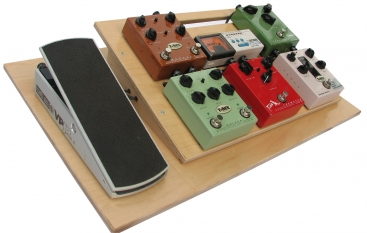
Wicked Woody “Original” Pedal Board

Summary: Handmade with carpentry-grade wood, this is one gorgeous pedal board. Nothing like making something so utilitarian a virtual work of art!

Pros: Completely handmade with high-grade wood that doesn’t only look great, it’s lightweight as well! Platform is reversible so you can configure the board to have your volume or wah pedal on either right or left sides. Lots of space under the platform to fit a power brick and stow your plug, and the routing on the top makes it easy to run your cables.

Cons: Could use some rubber or silicon feet to protect the bottom from scratching and elevate it above possible spills (think bar gig).

Features:

  • Elevated pedal platform. With an elevated platform, it is both easier to see, and easier to reach all of your pedals.
  • Handmade, of the highest quality certified hardwood plywood. Durable finish that will protect your woody for life.
  • Easy cable management, with the cable chanels routed into the platform it is a cinch to place your pedals in any configuration you desire, and wire them however you would like.
  • Alternative storage, under the platform for your power supply or other storage needs.
  • Measurement: 24″ X 15″

Price: $80 direct

Tone Bone Score: 4.75 ~ I’ve never seen a pedal board that looked so nice. Despite its looks though, I really would’ve liked to see some “feet” on the bottom for some extra protection. Something that looks this good should be really protected. That said, it’s easy to get some hardware that’ll do the job with minimal effort. But if it had that right off the bat, I’d give this puppy a 5.0!

For Goodness’ Sake! It’s Just a Pedal Board!

I would venture to guess that most players don’t really put to much thought into the “look” of their pedal board other than if the cables are nicely arranged and out of the way. But lots of players obsess over the look of everything in their rig; even down to their pedals’ paint jobs. So why not put them on a platform that really shows them off, as well as being useful? Aesthetics are a good thing. Myself, I tend to be far more practical to even consider something like this, but hey! Cool is cool in my book, and although I may not normally consider having a board like this, that doesn’t take away from the fact that this is one gorgeous piece of functional hardware!

From my point of view the Wicked Woody pedal board is like a nicely shined pair of shoes. Most people wouldn’t normally notice them, but they do notice that there’s something “nicer” when you wear them. Such is the case with the Wicked Woody. It’s not a showy and sparkly, but it just looks well, nice. Besides, there’s nothing sweeter-looking to me than nicely grained wood, and all Wicked Woody pedal boards are made of high-grade woods, with a nice, smooth finish. In other words, the provide a sweet presentation platform for your pedals!

Setting Up the Board

When I received my evaluation board today, I was amazed by how lightweight it was, but it was absolutely solid. The plywood used would not bend or give at all! But in addition, it looked fantastic! I know, it’s kind of hard to be excited by something so utilitarian, but this board looks so good – it kicks ass!

Luckily, my evaluation board also included some velcro strips, so it was a simple matter of attaching them to the board. I got a fairly long length, so I just cut it in two and laid the strips straight across the board. If I were to actually keep the board, I’d be a lot more meticulous and place strips so the they don’t show at all. But for my evaluation, I just wanted to be able to easily arrange my pedals.

I have to say that I’ve never seen my pedals look so good. 🙂 Here’s a picture:

A very cool thing that I liked immediately was that the platform fits my back line of pedal risers perfectly! Four pedal risers fit exactly flush to the edges of the platform. The folks at Wicked Woody say you might not need pedal risers, and based upon the space between the front and back lines and the nice angle of the platform, I’d tend to agree with that. But with my clumsy, double-E feet, I need every advantage I can get, so it’s very convenient that the platform fits the pedal risers so perfectly.

You can clearly see the route in the center. There are actually two routes, but the upper one is obscured by my pedal risers. But both are very conveniently placed. The platform has a round hole on each side to run cables through as well. That is very convenient as I was able to run the power and connector cables underneath the wah. Then to connect the wah to my next pedal, I ran the connector through one side hole, then out the other side hole to connect to my CE-2. When all was said and done, I was impressed by the arrangement. Plus, the big base board really creates a nice spacious effect.

Now I know there’s a lot of debate with the placement of a wah pedal. Should it be before or after the drive pedals? I happen to prefer mine to be placed after my drive pedals, so the default arrangement, with the wah pedal on the left was perfect for me. However, for those who prefer it to be on the other side, the platform is reversible. You just have to unscrew the platform from the bottom of the board, turn it around, and you can place your wah (or volume or expression pedal) on the right side.

I didn’t take a picture of the back of the platform, but there’s plenty of room underneath. I placed a fuzzy strip underneath the platform, and put my Dunlop DC Brick there then ran the power connectors to the pedals through the routes. Having those routes is a real nice feature because it keeps your power cable runs nice and neat – and hidden from view. There’s also plenty of room underneath to place a spare pedal or two (as long as they have a low profile), and of course, you can stow your plug underneath during transport.

The eval board didn’t come with a case, so I’m not sure if there is one available. Hopefully there is one available because I’d definitely want one to transport the board to and from gigs if I owned one of these beauties.

So… overall impression? I dig this board. It looks fantastic, but it has some very nice features that make setting up your pedals a breeze. It literally took me less than 10 minutes to get everything hooked up. Granted, if I owned one of these, I’d take a bit more time to make everything perfect, but one could do a lot worse.

Update: April 1, 2010

Just got a message from the folks at Wicked Woody. They don’t have a case for their boards yet, but should have one as an option within the next couple of weeks. This is great news!

For more information, go to the Wicked Woody site!

Read Full Post »

So you’re thinking about taking the leap and buying your first electric guitar? Choosing a guitar, amp, and pedals doesn’t have to be as intimidating as it might seem. There are a few things you’ll want to consider and keep in mind though.

What are your goals?

In other words, what types of music do you want to play? The type of guitar and amp you get will largely depend on the type of music you want to play. If you can identify, the types of music you’ll be playing, this can help you narrow down what types of guitars you might buy.

For example, if country is your thing, you might want to get a more twangy type of sound, so you would look at something like a Telecaster. If you’re a rocker, to get a really fat and dark type of sound, you’ll want to look at a Les Paul or an SG with some humbucker pickups. If you’re into metal, you’re going to want to be focusing more on your amp and effects pedals to get a hi-gain distorted sound. And then, if jazz is more your thing, you might want to look at a semi-hollow body guitar like an Epiphone Dot to get that darker, warmer sound you’d except from jazz.

In all reality, one electric guitar is not just limited to play one style of music, but guitars generally have different tonal characteristics, so identifying the sound you’re going for can help narrow down your options too.

What’s your budget?

Before you even start looking at buying guitars, it’s really important you set some sort of budget. What can you afford? When it comes to buying guitar gear, the sky is the limit, so having a budget gives you a bit more focus in what you’re looking at and eliminates a bunch of options.

It’s been my experience with guitars that more often than not, like most things, you generally get what you pay for when you consider the quality (there are always exceptions). A $100 dollar guitar is most likely going to play, sound, and feel much different than a $500 guitar. Generally, the cheaper you go, the quality tends to be poorer (e.g. doesn’t stay in tune, poor action, fret buzz, poor electronics, etc.). You don’t need to shell out a ton for your first electric guitar, but you also want something that will be inspiring to play and won’t give a lot of trouble down the road either.

You’ll not only want to consider the guitar in your budget, but you’ll also want to consider your amp and effects pedals (e.g. distortion, delay, reverb, etc.) as well.

It’s important that you see your first electric guitar purchase as an investment. I think one of the fears is, “What if I shell out all this money and then end up not sticking to it?” Even if you do end up finding out that guitar is not really for you, if you’ve made a good investment, you can always make a good part of that money back in resale. You might want to consider buying used too. Check eBay, Craigslist, and your local newspaper’s classifieds.

All to say, what can you afford? Set your budget and stick with it.

Gear Recommendations

So you’ve thought about your goals and have set a budget. Now what? It’s time to start looking at some gear. You have to keep in mind there are literally hundreds of options for a beginner’s set up, so recommendations are going to vary person to person. For my recommendations, I hesitate to suggest you something so dirt cheap that it’s going to cause you grief later down the road, but I also realize you don’t need to break the bank either.

I’ve divided these recommendations up into three categories depending on the type of music you want to play: country/pop/blues, rock/metal, and jazz. And then, within those categories I’ve given a couple different price categories depending on your budget. Also, keep in mind that a lot of these guitars aren’t restricted to play only the music in their category. For example, I know a lot of guys who will play an Epiphone Dot in a rock setting.

Country/Pop/Blues

  • Epiphone Special-II GT ($199.99)
  • Epiphone Les Paul 100 ($299.99)
  • Fender Standard Telecaster ($499.99)
  • Fender Standard Stratocaster ($499.99)
  • Gretsch Electromatic ($699.99)

Rock/Metal

  • Dean Vendetta XMT ($159.00)
  • Epiphone Explorer-GT ($199.99)
  • Epiphone G-310 SG ($249.99)
  • B.C. Rich Metal Master Warlock ($299.99)
  • Epiphone Les Paul Studio Deluxe ($399.99)

Jazz

  • Epiphone Dot ($399.99)
  • Ibanez Artcore AF75 ($399.99)
  • Gretsch Electromatic ($699.99)

Now, choosing an electric guitar is only half the battle. You’re going to need an amp or a multi-effects processor. Some amps are “combo amps” which means they have some effects built in to them (e.g. distortion, reverb, chorus, delay, etc.). These are definitely worth looking at for a beginner.

Another thing to keep in mind is that a lot of country, blues, and rockers can often use a amps built in overdrive and gain channel to get a distorted sound, but if you are playing metal, you probably need to look at some sort of hi-gain distortion pedal in addition to your amp.

Amps

  • Fender 25R Frontman Series II Combo Amp ($99.99)
  • Vox Valvetronix VT15 Combo Amp ($169.99)
  • Line 6 Spider IV 75W Combo Amp ($299.99)
  • Vox Valvetronix VT50 Combo Amp ($379.99)
  • Peavey Classic 30 Tube Amp ($599.99)

Sometimes players will opt out of getting an amp and just getting a multi-effects processor unit that has amp models and effects built in to one box. This might be a great option for your first guitar.

Multi-effects Processor Units

  • DigiTech RP255 ($149.99)
  • Line 6 Floor POD Plus ($199.99)
  • DigiTech RP355 ($199.99)
  • Line 6 POD X3 ($399.99)

This is just a starting point. The best thing to do is to go into the store and play as many different guitars and play through as many different amps as you can, or if you can’t play very well, bring someone along who can or knows a lot about guitars so you can get their opinion and hear what it sounds like.

So let’s recap. It’s important to think through your goals and your budget. Thinking through these things really eliminates a lot of your options. You don’t have to spend a ton on your first guitar, but do think of it like an investment. Your guitar is only half of the equation so don’t forget about an amp or a multi-effects unit. And lastly, there’s nothing like going into a store with a friend and trying out as many different pieces of gear as you can.

All of you guitar veterans out there… what would you recommend to a beginner player getting their first electric guitar?

Brett McQueen is a full-time music student, guitar player, songwriter, and blogs in his spare time. Brett is passionate about teaching free guitar lessons for beginners so other guitar players can take their playing to the next level and reach their goals.

Read Full Post »


Click on the picture to see an enlarged view.

BOSS RV-5 Digital Reverb

Summary: No, it isn’t the be-all end-all in reverb pedals, but for what it offers as a nice, subtle reverb to add some spaciousness to your sound, then the RV-5 really excels.

Pros: Plate reverb is excellent on this pedal – especially with an acoustic guitar. Amazingly enough, the RV-5 is transparent to my ears and doesn’t suck tone. The RV-5 is also super-quiet, and makes no line noise at all; pleasantly surprising qualities.

Cons: The Spring reverb is a little funky on this pedal. At higher Decay settings, there’s a bit of an intended artifact in the tail of the signal. Not too pleasing to my ears.

Features (from the BOSS web site):

  • Stereo input/output for compatibility with other stereo pedals
  • 6 high-quality reverb modes on par with rackmount processors
  • First-of-its-kind Modulate mode detunes the reverb sound for added spaciousness
  • New spring reverb emulation offers realistic spring reverb sounds
  • New gate reverb taken from high-end Roland studio gear

Price: $149 street

Tone Bone Score: 4.5 ~ As I mentioned above, for what this pedal offers, it’s great! To me, its strong suit is to use it as a subtle effect to add some spaciousness to your sound. As long as you don’t overdo it, this pedal will work great. The Plate reverb is particularly fantastic with acoustic.

With all the great boutique pedals out there, BOSS tends to be a bit too run-of-the-mill for many tone connoisseurs. Even I’ve thought of BOSS as somewhat of an afterthought considering some of the great boutique pedals I have, and from my participation in various online forums. Like, “Oh yeah… BOSS has “xxx” pedal. But it’s BOSS, and that means cheap, production line stuff.” But after I purchased the BOSS RV-5, one of my first thoughts was: “Have I become such a boutique gear snob that I can so easily dismiss production line pedals like BOSS because they’re not hand-made, boutique, and cost far less than boutique stuff that’s SUPPOSED to be better. ‘Cause here I am walking out the store with a BOSS pedal!”

Admittedly, it was a sobering thought. It wasn’t that I was experiencing buyer’s remorse. I truly like this pedal. But I founded this blog to share gear I’ve either purchased or come across, and most importantly, with the premise that it’s tone that matters and not the price or who made it; that is, if it sounds good, who the hell cares who made it or how much it costs? The BOSS RV-5 is a perfect example of this. Yeah, it’s made by a company that is generally equated with “cheap” pedals. But who the hell cares? I like how it sounds. If it wasn’t for the Spring Reverb, which I don’t particularly like on this pedal, it would’ve gotten a higher rating.

My intent with getting yet another reverb pedal was to get a journeyman pedal that would just do the job for my solo acoustic gigs. I wasn’t looking for a reverb where I’d layer on tons of the effect; just something subtle. After all, I was plugging into a PA board, and just wanted a touch of spaciousness, not have the reverb be the primary tone. In my experience, at low levels, even “cheap” stuff works pretty well, so I took the RV-5 for a spin, and was rewarded with a very nice-sounding reverb. As with any digital reverb that I’ve used, using them judiciously and in moderation is the key, and that was how I did my evaluation in the shop.

The net result is that I purchased the pedal. It does the job of providing a subtle, background reverb VERY well. Someone commented in my Gig Report that they’d take the RV-3 over this. I think this was motivated by the fact that the RV-3 is great for ambient stuff, as it is both reverb AND delay. But the RV-5 is really a different animal. Heavy, ambient reverb is not its strong suit. But for adding a slight spacious texture to your tone, it clearly excels in my opinion.

How It Sounds

For what it provides for me, I think this reverb sounds great. It’s not the be-all, end-all in reverbs, and it’s definitely not something I’d use for ambient stuff, but frankly, I never use a reverb pedal for that anyway, which is why I have a delay pedal. I put together samples of the same chord progression to give you an idea of what it sounds like in its various modes. The pedal is set with Level and Tone at noon, and Decay at 2pm. All clips were played with my Gibson Nighthawk, and running into the reverb pedal and into my Aracom VRX22.

Modulate

This mode adds an ever-so-slight slight chorus modulation to the tone. It’s nice.

Gate

Gate is interesting. Both pre-delay and decay are very short. This is actually kind of cool when you want a reverb tone that doesn’t tail.

Room

This setting really started growing on me when I was doing my tests. This is really a small-room type of reverb.

Hall

Nice, expansive tone with this mode.

Plate

Probably the most subtle of the modes, it really shines with acoustic guitar, but is very useful with electric.

Spring

BOSS claims to have added real spring reverb effects to this mode. Well, it didn’t succeed. The little motes of slightly buzzing spring are absolutely annoying to me, and I would never use this mode. You can hear it a little in the clip. I wasn’t expecting it at all, so it’s out as far as I’m concerned.

Overall Impressions

Sans the Spring mode, I like the reverb this produces. Plate and Room are definitely my favorite modes on this pedal, and Modulate comes in a close third. All in all, if you’re looking for journeyman reverb where you just want to lay on some spacious texture, this is a great pedal to consider!

Read Full Post »

Click on the picture to see an enlarged view.

VOX Time Machine Delay Pedal


Summary: If you’re looking for a super-quiet, dynamic and versatile delay that will cover a lot of territory, look no further. The Time Machine rocks!

Pros: Absolutely quiet, with no line noise at all. It is so easy to dial in great delay sounds with the Time Machine, it’s almost scary. I like the fact that it has more features than a basic delay pedal, but not so many that you spend all your time tweaking. Oh yeah… It sounds absolutely fantastic!

Cons:None.

Features:

  • Controls:  Level, Delay Range, Time, Feedback, ON SW, Tap & Modern/Vintage SW, Hi-Fi/Lo-Fi SW
  • In/Outputs: 1 x  INPUT, 1 x OUTPUT, 1 x DRY OUT, 1 x DC9V
  • Max Delay Time: 5800 milliseconds via Tap-Tempo, 1000 milliseconds via Delay control
  • Input Impedance: 1M-ohms
  • Output Impedance : 1k-ohms
  • Power Supply:  9V alkaline battery(6LF22/6LR61) or AC adapter(sold separately)
  • Current Consumption: 60mA
  • Dimensions: 143(W) x 121(D) x 58(H) mm / 5.63”(W) x 4.76”(D) x 2.28”(H)
  • Weight: 600g /1.32 lbs (without batteries)
  • Included Items: 9V alkaline battery (included)
  • Options: 9V AC adapter (not included)

Price: $199 street

Tone Bone Score: 5.0 ~ This pedal has ended my search for a delay. It really is as good as it’s advertised.

I tend to be a little wary of “signature” pedals because I’m really not one who wants to sound like someone else; besides, I’m not nearly as capable on the guitar as said artists. But now and then, I come across signature gear that forces me to take a good, long look: Not just because of the name behind it, but simply because it’s just a great piece of gear! Such was the case with the VOX Time Machine. When it first came to market, I have to admit that I was excited because I know that Joe Satriani is a real tone freak, and I figured that any kind of gear in which he has design input is bound to be pretty good. But the flip side of that is that I’ve had experience with other signature pedals that were really geared towards the artist and their playing style specifically, and frankly, that stuff has left me frowning. Not so with the Time Machine, which took me completely by surprise!

I’ve been in the market for a delay for almost a couple of years, when I gave away my crappy Boss DD-5 that had such perfect and precise delay that it just felt processed. It was nothing like my former DD-3 that actually sounded pretty good, but I lost that pedal after playing in an orchestra for a musical theatre gig (I didn’t have a board at the time, and only carried a couple of pedals). Needless to say, during that time, I’ve evaluated several delays, but none have really caught my fancy. They were either too dark sounding, as in the case of most analog delays, or they sucked tone, as in the case of many digital delays I’ve tried. My surprise with the Time Machine is that in either mode, modern or vintage, my basic tone was retained! But I’m getting a bit ahead of myself.

In my search, I came up with some criteria that had to be fufilled 100% before I’d even consider buying one. Here they are:

  • First, I wanted Tap Tempo. I’ve always hated having to bend over to tweak knobs; but moreover, I wanted to be able to match tempos with my drummer on the fly.
  • Secondly – and I know this is purely subjective – I wanted a good balance between tweakable settings and ease-of use. In other words, I wanted to have the flexibility to dial in a number of delay settings but not have so many that I’d be spending all my time tweaking knobs.
  • Thirdly, I didn’t want to ever have to refer to a reference manual to make sure I was using the pedal correctly. The “don’t make me think” rule had to apply. I should be able to dial in great tones in a matter of a few minutes, if not earlier.
  • Finally, and most importantly, the pedal could not suck tone, and had to be reasonably transparent. In most cases, I don’t mind a pedal putting an emphasis on a particular EQ range (like my Kasha overdrive does), but it should never remove a range or “feel” like it narrows the bandwidth of the signal.

There are lots of delay pedals I’ve evaluated that were particularly good in most areas, but none until I played the Time Machine ever fulfilled all four criteria. That’s how great this pedal is!

It’s Mean When It’s Green

I love the shiny, green apple finish of the Time Machine. Of course, the paint job doesn’t make the pedal. But the Time Machine is built like a tank, and is certainly gig-worthy. I imagine that JS had that in mind when providing his design input. The chicken head knobs give the pedal a cool vintage vibe, but not only that make it very easy to see where you’re at with your settings. The stomp switches are nice and smooth, and the pedal engages without producing any noise.

How I Did My Evaluation

I didn’t just test the Time Machine in isolation. I’ve learned that one of the best ways to evaluate pedals is to do A/B tests against other pedals of like kind to make a comparison. So I compared the Time Machine against a Way Huge Aqua Puss and a TC Electronic Nova Repeater at my favorite shop, Gelb Music in Redwood City, CA. My thought was to compare it against an analog and another digital delay. Sorry, but no clips because I was in a shop.

All my tests in the shop were done with a Fender Custom Shop Tele, plugged into the pedals (hooked together so I could quickly make a comparison without swapping), and into an absolutely superb-sounding and -looking Dr. Z Maz 38 with draped in blonde tolex. Mm mm good. 🙂 I chose a midrange wattage amp because I wasn’t interested in creating grind. I’ve never been one to use delay with overdrive – maybe a little. But in this case, I wanted to have an ample amount of clean headroom to work with, and the Maz 38 worked perfectly for that (for the record I REALLY want a Dr. Z Remedy).

Aqua Puss and Nova Repeater

I will most likely have reviews on the Way Huge Aqua Puss and TC Electronic Nova Repeater in the near future, but I’ll give you a quick run-down of the pedals. If you’re looking for a dark, swampy, blues delay. The Aqua Puss delivers that in spades. It has this certain ethereal quality that made me think of drifting on a boat in the middle of the Everglades. I actually really liked the pedal, but I was after something else entirely with my delay search – much more versatility – and the Aqua Puss was a one-trick pony. It does what it does exceptionally well, but don’t ask for much in terms of usability in a variety of styles.

I was very sadly disappointed with the Nova Repeater. It packs a TON of features in its box, but for me, I was a little concerned that were just too many features. But despite that, it was easy to get a usable delay tone almost right away. The folks at TC Group certainly know how to pack in features, but they make them readily accessible, and very easy to understand. I actually had my heart set on getting this pedal after reading many reviews and listening to clips and watching video; and I almost purchased it a couple weeks ago. But I’m glad I compared it head-to-head with the Time Machine.

The Time Machine may not have all the features as the Nova Repeater, but out of the box, it wins hands-down in the tone department. The Nova Repeater sounded bland and dry – processed – when played in an A/B test between it and the Time Machine. And I detected a distinct loss in both highs and lows; in other words, bandwidth narrowing. That was not at all pleasing. That said though, the Repeater is still a great pedal, and apparently there’s an internal pot to calibrate the tone to your rig, so that’s a plus. But frankly, I’m not one to tweak that deeply. I probably would’ve still bought it if I didn’t do the A/B test. The tone is usable and really not as bad as I may have painted it, but it’s not as good as the Time Machine’s tone in my opinion.

Playability

If it’s any area where the Time Machine simply shined above the other pedals was how absolutely responsive it was to picking dynamics. Play lightly, and the delay is super-subtle; you almost feel as if it’s not there. Dig in a bit, and the pedal responds. I did a few lead lines to experiment with this, and was totally blown away. I set the Level control so I’d really have to dig in to get the delay effect, but for most runs, picked or legato, what I got was a more ambient effect – almost like reverb. Wow! That kind of pick response is probably what sold me the most.

In addition to dynamics, I just loved how easy it was to dial in various settings. The knobs are very nicely NOT over-sensitive, so moving a knob doesn’t result in dramatic changes in the effect. The net result is that you can get into a general area on the sweep of a particular knob, and make a couple of slight changes to zero in. How many pedals have we played where just turning a knob ever-so-slightly drastically changed the effect? It’s probably why I’ve liked my Boss CE-5 chorus for so long, and even though I’m currently bidding on a CE-2 on EBay, if I don’t win the auction, all won’t be lost because the CE-5 has a nice, consistent sweep on its knobs.

How It Sounds

Like I mentioned, the Time Machine is simply transparent. The Modern mode is truly transparent – at least to my ears – while the Vintage mode darkens the tone ever so slightly and adds some subtle modulation (it’s chorus-like) like you’d expect with an analog delay. But unlike many analog delays that I’ve played, the darkening with the Time Machine does more of a lower-mids EQ emphasis, whereas I’ve felt that analog delays cut highs. The Aqua Puss certainly felt like it was cutting highs, though it definitely compensated for it with some overall great tone. Back to the Time Machine, the net result is that in vintage mode, the tone becomes slightly more rich and lush.

I liked both modes equally well, though I’d probably tend to use the Vintage mode when playing absolutely clean, as it also adds a tiny bit of hair to the signal. It’s almost imperceptible, but it’s there. I loved doing some simple chord comps up on the neck in Vintage mode.

Modern mode, on the other hand, is like the Swiss Army Knife of the Time Machine, making it capable of fitting into any style of playing, from syncopated rhythms ala The Edge, to heavy chunk where you want to have a bit of slap-back.

The Time Machine also has a toggle switch for Lo-Fi and Hi-Fi modes, in addition to the Modern and Vintage modes. Hi-Fi apparently maintains tonal transparency, whereas Lo-Fi includes High- and Lo-cut filters. The difference between the two fidelity modes was subtle at best. I didn’t detect much of a cut in either highs or lows when engaging Lo-Fi; the EQ changes ever so slightly, but the bandwidth didn’t change at all. Again, I feel like it’s more of an EQ emphasis rather than a removal of portions.

Overall Impressions

I’m glad I took so much time to find a new delay pedal. As you can tell from my review, I love the Time Machine. It fulfilled all my criteria for what I wanted in a delay pedal. To me, it has enough adjustable settings to keep any tweaker happy, but it’s also super-easy to quickly dial in the right amount of effect. But not only that, it just sounds damn good!

Read Full Post »

I know, I know… I talk about this pedal A LOT, and I’ve already reviewed it a few times… (here’s the original) But I keep on discovering so many great things about this pedal that makes me want to talk about it. Just when I think I’ve got it dialed in, I find yet another thing that it does that just completely turns me on!
Tonight, I was screwing around with my song Strutter yet again. I’m done writing it, but I wanted to practice, and that song is really fun to practice to; I just mute the lead tracks and have at it. Mind you, all I wanted to do was practice and play “Blondie,” my Squier CV Tele – I didn’t have anything else in mind.

So I hooked up my Aracom PLX18 BB and started playing over the rhythm track. Folks, this amp just oozes classic Marshall “Bluesbreaker” tone as is, but just for shits and giggles, I decided to switch on my KASHA Overdrive to add a little flavor to my tone because I was working on a new song recently where I loved what this pedal did – especially with the PLX18 BB! For that song (which I’m still writing) I didn’t want to add too much gain. All I wanted to do was add some texture. So I thought it might just sound good while I practiced over Strutter. Man, was that a good call!

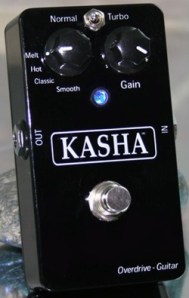
Here’s an A/B clip of sorts of the first two verses of the song. In verse 1, I’m playing the PLX18BB with nothing added – just a touch of room reverb as an insert in the mix. In the second verse, I switch on the KASHA overdrive (still with some reverb in the mix). The pedal is in the “Hot” channel, and I set the gain knob at 12 o’clock, which just provides a bit of a gain boost (it’s capable of adding up to 15dB of boost in this channel), but this channel also sustains for days, adding a touch of high-end sparkle. Here’s the clip:

Please excuse the little playing mistakes I made… 🙂 It’s nothing really egregious. In any case, when you compare the two verses, the difference in tone is actually subtle, at least to my ears. But from a playing standpoint, the amount of touch-sensitivity and sustain that was added made the second verse so much more musical and so much more inspiring to play. And speaking of subtlety, I think that is yet another mark of a great overdrive pedal. To me, overdrives should be transparent, they should never alter your tone – that’s what fuzz and distortion are for. At the most, they should simply add EQ emphasis, and that’s it. And that’s why I love the overdrives I play through: Tone Freak Abunai 2, GeekMacDaddy Geek Driver, Creation Audio Labs Holy Fire, the KASHA overdrive, TubeScreamer, and believe it or not, a Bad Monkey. They all bring to the table their own little voicings, but none of these alter your basic tone.

Great gear evokes a sense of inspiration – at least in me – that makes me want to keep playing and playing and playing. I just can’t say enough about this pedal. At around $200, it is worth every penny I paid for it. Thanks, John Kasha for coming up with such a fantastic pedal! Now back to playing!

Read Full Post »

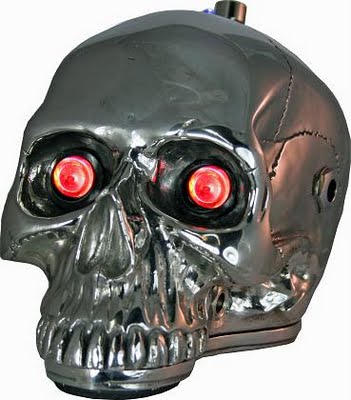
I announced the Skull Crusher back in September when it first came out. Based upon the KASHA overdrive (but with some upgraded wiring and electronics), it has since gotten the attention of several prominent guitarists. Now George Lynch is playing through it, and HE LOVES IT! Check out this video:

How’s that for an endorsement. I’ve said all along that the KASHA overdrive is just about the best overdrive I’ve ever played, and I’m not alone in saying that. With guys like George Lynch touting how good the Skull Crusher is, you owe it to yourself to check it out! I know, some people don’t go for the look, but it’s the tone that matters.

For more information, go to The Tone Box site!

Read Full Post »

Could this be the last tuner pedal you’ll ever need?

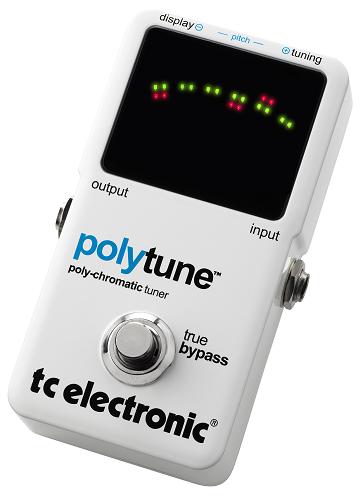
I don’t see how I missed this! I scour the ‘net daily for new stuff, especially from companies that are known to create really high-quality stuff – like TC Electronic. These Scandinavians are incredible inventors, and I haven’t seen or played one one thing of theirs that I didn’t like – though I could rarely afford it. But they’ve come out with a new tuner – yes, a tuner, of all things – that is completely different from any other tuner on the market. It’s called the “Polytune.” As its name implies, it is a polyphonic tuner; that is, the tuner can detect all your strings at once, and you can see which ones aren’t in tune at the click of a foot switch. Unlike traditional tuners that require you to check each string individually, with the Polytune, you strum your open strings. The LED’s will show you which strings are in tune and which aren’t.

In my experience, more likely than not, at any given time only one or two will be out of tune. So imagine the time you save by NOT having to check and tune each string – only the ones that need it! Check out this video to see how it works!

And at $99 bucks… SOLD!!!

Here are some features:

  • 0.5 cent accuracy
  • Standard size box
  • Tune by strumming
  • Can automatically switch between chromatic and polyphonic tuning (it will detect if you’re hitting a single string)
  • Customizable preference settings
  • Has a 9V output jack for powering other pedals
  • True bypass
  • Adjustable reference pitch from 435Hz to 445Hz
  • Supports drop tuning all the way down to B!
  • Works with 4 and 5 string basses as well

It may not have the accuracy of a TurboTuner, but who the hell gives a flying f$%k! .5 cent accuracy is nothing to shake a stick at, and the fact that you can see the tuning of all your strings at once is incredible! Can  you say KICK ASS!!! I’ve never even seen this thing and I want to give it 5 Tone Bones! Check out the TC Electronic web site for some detailed information!

Could this be the last tuner I’ll ever want? Until someone comes out with something better – and at a better price, for that matter, probably not. I want to get one right now. Unfortunately, they’re only available for pre-order. Hmm… oh well, I supposed I can wait. 🙂

Read Full Post »

I love my Strat. It’s a cheapo MIM version, but it has a great sound. But ever since I started using it with the KASHA Overdrive pedal, it sounds even more like a Strat to me! I know, that sounds a little cuckoo, but that Classic channel on the KASHA Overdrive really brings out that jangly tone that defines the Strat tone; that’s to my ears, at least…

The other day, I was messing around with a dominant seventh ditty in A as I was trying to pick up some improv techniques from Chuck D’Aloia’s Blues with Brains video. I originally just recorded my Strat running through a reverb, then into my amp. It sounded pretty good, but I wanted to get a bit more top-end bite, but not a lot of drive. So I switched my KASHA Overdrive on and my jaw dropped! Here’s what I came up with…

That pedal just brings out the best in a Strat. I swear, now that I’ve been using it with my Strat for the last couple of days, I think it’ll always be on when I perform with my Strat. It really sounds great!

BTW, both rhythm and lead parts were played with the Kasha overdrive pedal. For the rhythm part, I was in the Classic channel to get that jangly Strat sound from position 2, while I was in the Hot channel for the lead in the neck pickup. So sweet sounding!

Read Full Post »

To date, this is the most popular article on this site, having held the top hits spot for the past several years now. My feeling is that it addresses the murkiness of the debate between overdrive vs. distortion. And despite many people like myself who constantly say they’re two, mutually exclusive things, it remains a subject that needs clarification. I’m glad this has been a -hopefully good – resource for people! 

Remember: Distortion Is What You Hear! Overdrive Produces It!

I had an interesting conversation with a friend today regarding the difference between overdrive and distortion. Talk about two terms that are bandied about interchangeably in the guitar world! If you ask ten different guitarists the difference between them you’ll get ten different answers. But a common theme you’ll hear is what each sounds like; in other words, you’ll get a much more qualitative description as opposed to a quantitative description. What I’ve been after is a much more objective, quantitative description of each, but not necessarily too technical. So after talking about one versus the other, I decided to write down what we discussed, and throw my two-cents into the mix.

First, let’s look at the two terms, but from the perspective of an amplifier. The simplest explanation I could come up with is that overdrive, or in audiophile terms, over-powering, occurs when input gain exceeds the capacity of a device to handle the amount of gain thrown at it; in our case, a tube. What happens is that the smooth waveform that goes into the device gets “clipped” because the device’s input capacity is less than what is being thrown at it. Sonically, we perceive the result of this clipping as distortion. The higher the amplitude of the wave, the greater amount of distortion we hear.

But what about pedals? I’ll get to that in a bit, but I wanted to take the time to clarify these terms. There’s been a lot of confusion about these two terms because they’re used so loosely, and oftentimes interchangeably. For me, I’ll stick with the audiophile’s perspective of overdrive in that distortion is the result of overdrive or over-powering an amplification device. A way to think about overdrive vs. distortion is that overdrive happens in the front-end (what you put in), while distortion happens on the back-end (what you hear).


Related Articles


But here’s where we get into a bit of murky territory, especially with pedals. Strictly speaking, if we’re talking about overdrive as simply overpowering the front-end of an amp to make the tubes clip, the only pedal that is technically an overdrive is a boost pedal that takes your guitar’s signal and ups its voltage. But lots of manufacturers call their pedals overdrive pedals. In reality, all of those are distortion pedals as they include an internal clipping circuit which is overdriven into distortion – this includes the venerable Tube Screamer. OMG! Sacrilege!

So how do you tell the difference? That’s why I said we get into murky territory with respect to pedals. But as a rule of thumb, a distortion pedal will create a distorted sound irrespective of the amp. In other words, it’ll clip on its own. Put it front of the clean channel of an amp, switch it on, and it’ll create distortion. However, many, if not most, “distortion” pedals also provide a bit of gain boost to overdrive an amp. That’s where it gets murky, as most of the pedals termed “overdrive pedal” function as a combination of both overdrive AND distortion.

There are no real hard and fast rules, but in general, pedals that are commonly known as overdrive pedals (Tube Screamer, etc.) employ what’s called a “soft-clipping” circuit or transistor, where only a small portion of the input signal is clipped. Most distortion pedals employ a “hard-clipping” device to severely clip the input signal to get that “square wave” tone. But as I said, there are no hard and fast rules. Here’s an image that nicely describes the differences in the waveforms between soft-clipping and hard-clipping devices:

Picture courtesy of GM Arts

Sonic Differences Between Overdrive and Distortion Pedals

Many people have asked me over the years if there is a sonic difference between overdrive and distortion pedals. Having tested several of these pedals over the years, I hate to sound ambiguous, but from a practical standpoint, in some cases, it’s simply too hard to tell. For instance, if I crank up my Timmy’s gain then add a bunch of volume to slam the front-end of my amp, I get a lot of crunchy distortion out of my speaker as the signal squares off. Moreover, I get a bit of compression and sustain and it “feels” like I’m playing through a distortion box. On the other hand, if I take my EWS Little Brute Drive and turn the gain knob to about 10 am, I get a similar sounding distortion with a similar feel – even though it’s a hard clipping device! They’re tonally a little different as the EWS adds a bit of low-end punch, but nevertheless, sonically and feel-wise, they’re extremely close.

But there does exist a difference, and that is in output volume. When I do what I do with my Timmy to get that hard distortion sound, I have to use an attenuator because all the input gain creates A LOT of volume, so I attenuate the output so I can keep the volume at a manageable level. But with my EWS Little Brute Drive, because it’s a distortion pedal, it will clip irrespective of the amp, plus I set its output volume to unity. I can set my amp to any volume, then switch the pedal on to get my overdrive-like sound.  I actually do this with the Little Brute Drive a lot when I don’t want to lug my attenuator to a gig.

So yes, you can set up an overdrive or a distortion pedal to make it difficult to tell the difference, but in general terms, with a hard-clipping device, you’ll experience a lot more compression than with a soft-clipping device. The tone will feel “squishy” with very little dynamics. That’s not a bad thing, mind you, because sometimes that’s what you want. Overdrive pedals, on the other hand, because they don’t produce a square wave, will feel a lot more “open” and dynamic. There will be a bit of compression at higher gain levels, but rarely will you get to the order of compression that a distortion box will make.

Gain vs. Volume

Image courtesy of Sweetwater.com

Unfortunately, this is yet another area where we get into murky territory, and where a lot of people confuse the two. So to start out, let’s just put it simply: Gain is input; volume is output.

To provide a bit more clarity, think about the function of an amp as a two-stage device. The first stage takes the relatively weak signal from your instrument, then passes it on to the second stage and amplifies the signal to produce the sound.

The first stage of an amp is called the preamp. The signal passed through the preamp is called Gain. The level of gain will have a direct effect on the volume of your amp. Typically, the more gain you introduce, the higher your volume. BUT, that said, higher and higher levels of gain will have a lesser and lesser effect on volume, as the pre-amp reaches its capacity to handle the amount of signal passed to it (commonly called saturation) and will max out sending all it can handle to the second stage or power amp.

Think of the power amp as the stage that controls the output strength of your sound, or volume, if you will. It works similarly to the pre-amp in that the more signal you throw at it, the louder your volume. Some amps come with a Master Volume. Think of it as a valve mechanism that controls the amount of signal that is allowed to pass into the power amp. When it’s wide open, all the preamp signal will pass through to the power amp. For amps without a master volume, the amount of preamp signal allowed to pass to the power amp is set by the builder.

So what does this have to do with pedals? If you look at the picture above, whether labeled or not, all come equipped with both a Gain (or Drive) and a Volume (or Level) knob. These work pretty much the same way as Gain and Master knobs on an amp. The Volume knob controls how much pedal signal will be sent to your amp’s preamp. That could be enough signal to saturate your preamp which will overdrive it into clipping and create distortion. Combined with a distorted sound from the pedal, this could – and in many cases does – create a very pleasing mix of distortion sounds.

So which kind of pedal to choose?

The pat answer is it depends on what you’re after with respect to your distorted tone. I know that this is a rather ambiguous statement, but again, there are no hard and fast rules. In the end, you should choose a pedal based on what sounds good to you. But here are a couple of guidelines:

  • If you have a tube amp and just want distortion purely from overdriving the tubes, then a booster makes sense. There are several kinds of boosters. Some boost only a certain frequency range, like a Fat boost that boosts the lower frequencies. I personally prefer a clean, transparent boost that has a flat frequency response so that the distortion that occurs is my amp’s tone. I typically use a booster in conjunction with my amp set just at the edge of breakup, so when I switch it on, not only will I get a volume boost, I’ll overdrive the pre-amp tubes; and depending on how much gain I throw at the amp, I’ll get the power tubes working as well. Here’s a trick to try: If you have an effects loop, place the booster as the last pedal in your effects loop. When switched on, it will boost the gain going into your power tubes to saturate them. You don’t get a huge volume boost, especially if the power tubes are close to saturation, but you do get a bit of a kick. I learned that from Gene Baker, who does that in his rig.
  • If you want to add a bit of color and overdrive your amp, then a soft-clipping pedal like a Tube Screamer works quite well. Tube Screamer-type pedals typically give you a mid-range boost that results in a much warmer and smoother distortion. Many also add sustain and a bit of compression to simulate power tube saturation at any volume. My Tone Freak Effects Abunai 2 is exceptional in this department. Then there are others, like the EHX Soul Food that add a bit color but interact well with the front-end of an amp. But that said, there are some like my beloved Timmy Overdrive that are transparent. They’ll give you the gain and boost but will not color your sound (Note: that you’ll still have to set up the pedal’s EQ). I will add though, that in general, an overdrive pedal sounds and performs best when the amp is already clipping a bit. The mixture of the two creates a more complex signal that is quite pleasing to the ears.
  • If you want to get a distorted tone at any volume, then a distortion pedal is the way to go. There are lots of these on the market. My personal favorite (and the one I own) is the EWS Little Brute Drive. It’s a half-size pedal with a single knob, but it will give you TONS of distortion at any volume. I normally use it for leads, as it gives just a few dB of gain, but gives me all the distortion I need to get a great screaming tone! It also colors with a fat bottom end which makes leads sound beefy. Typically, you’ll use a distortion pedal against a clean amp. But then again, there are no hard and fast rules.
  • Then if a distortion pedal still doesn’t provide enough gain for you and you need to get a hard-clipped, super-squishy, compressed distortion, then the fuzz will get you there. I call fuzz “ugly dog” distortion. To me it’s like an ugly dog that you look at and say, “holy s$%t,” but it has personality, so you can’t help but love it. Can’t say I’ve ever been into fuzz, but I’ve spoken to lots of players who use it all the time, and they love it!

You can also chain overdrive and distortion effects to great success (aka “stacking”). I do this quite a bit because you get colors that you can’t get with just your amp. One thing that I do regularly is to use an overdrive pedal to push my amp hard, then when I want to get more tube compression and sustain, I slam the front-end with a booster (which is the last pedal in my chain). This doesn’t result in a volume boost because the tubes are already saturated, but you do get much more high-gain sound, and that can really work with solos.

Again, there are no hard and fast rules. You have to play a lot of them to find your sweet spot. But that’s half the fun of it!

More Overdrive Murkiness…

I referred to my Timmy above as a “transparent” overdrive. There’s a lot of debate about transparency, but suffice it to say that while technically distortion is color, transparent overdrives are those that once their EQ is set up to match the EQ setting on your amp, they will not add any other “color” than distortion. On the other hand, once you set up a non-transparent pedal’s EQ, it will still add its own tonal characteristics to color your tone. In practical terms though, transparent overdrives fall more into the booster arena, but it’s the EQ and internal soft-clipping circuits that still define it as an overdrive.

But further exacerbating the overdrive murkiness is that many overdrive pedals are actually purpose-built to mimic the sound of a specific overdriven amplifier. These are meant to be played through a clean channel with lots of headroom. A good example of this is the Caitlinbread Dirty Little Secret that produces classic Marshall Plexi to Super Lead tones. With a pedal like that, you just set your clean channel to purely clean and let the pedal do the overdrive work.

Note: Several articles I’ve read on this topic use the generic “overdriven amp” explanation to describe all overdrive pedals. It would be okay if they described them with respect to how the pedal responds, but more often than not, they use the term to describe the sound. Unfortunately, they completely miss the pedals that are built to be transparent. I’m not saying they’re entirely wrong, but just a little narrow in scope when you consider the overall landscape of overdrive pedals available.

Now… let’s add even more murkiness to the overdrive issue, shall we? There are some overdrives like the EHX Soul Food, which is a Klon Centaur clone, that at first blush, fall into the transparent overdrive category. So one would think that you’d set your amp at the edge of breakup, then use the pedal to push it over the edge and add its own clipping. This is a common way of using an overdrive, and it’s exactly how I use my Timmy. But even though the Soul Food wasn’t purpose-built to mimic a particular amp, I use it almost exclusively as a standalone soft-clipping device played through a clean channel. Its distortion sound is so damn sweet that I don’t want to taint it by adding clipping from my amp.

So… what you choose will be wholly dependent upon what pleases you.

Update: November 26, 2012

I ended the article three years ago with the statement that you have to play a lot of pedals for find your sweet spot. Three years later, that statement remains true. You see, in a recent article where I asked if new overdrives are relevant with so many on the market, there are some pedals that work with certain rig configurations, and some that just do not. There are also some rig configurations that work great on stage that sound absolutely horrible in the studio. I’ve been in the studio for the last few weeks (grabbing studio time where I can), and when we worked on a song where I needed some high-gain sounds, my rig just did not work! I was using my trusty DV Mark Little 40 clean, with my Timmy and the Little Brute Drive for distortion. Sounded like crap when recorded. I ended up bringing in my VHT Special 6, cranking it up all the way, and slamming it with a booster! Worked like a charm, with all the high-gain character that I wanted out of that tone. So I learned a valuable lesson there.

Read Full Post »

« Newer Posts - Older Posts »