Feeds:
Posts
Comments

Archive for the ‘gear’ Category

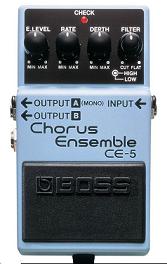
BOSS CE-5 Chorus EnsembleWhen it comes to chorus sounds, Roland/BOSS is pretty much the standard for the last twenty or so years. The CE-2 has especially been very sought-after used pedal 1) for its simplicity and; 2) for it’s analog design. I owned a CE-2 back in the 80’s, and have since kicked myself since I traded it for other hardware – that I don’t use at all anymore! Since then, BOSS has gone through a couple of renditions with the Chorus Ensemble line, and now offers the CE-5 Chorus Ensemble. A pedal that even though digital, sounds pretty darn good.

The CE-2 was a simple affair: Just two knobs for rate and depth, and a single output. With the CE-3, Boss introduced a “stereo-like” affair with two outputs, and three knobs, introducing a “Stereo Mode” knob to control how the outputs generated their sound. The CE-5 does away with the Stereo Mode knob and replaces it with an Effect Level knob, and a dual knob used for Hi- and Lo-cut filters.

In my opinion, the Hi/Lo Cut knob is what makes this pedal special. With it you can really shape your chorus sound from bright and smooth to dripping wet. All in all, you can’t go wrong with this pedal; and for less than $80, it’s a deal.

Starting with this review, I’m going to start giving summary ratings at the bottom of each review, similar to what you’d see in one of the trade rags.

BOSS CE-5 Chorus

  • Price: $129 (<$80 street)
  • Pros: Very versatile. Can produce a wide range of sounds
  • Cons: Can take awhile to dial in the sound you want
  • Summary: Great sounding chorus at a great price

Read Full Post »

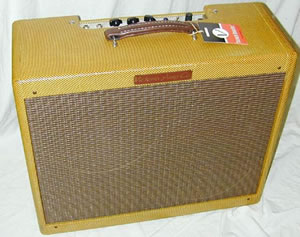
Victoria Amplification Double DeluxeTalk about getting a “clean” tone, and invariably, some Fender amp will be mentioned, especially the models from the 50’s like the Twin. By far, “Fender clean” is the clean tone that has been emulated for decades by amp manufacturers the world over. Unfortunately, if you want that clean tone from the 50’s, you’ll have to get a used Fender amp from a vintage shop – and they’re not cheap. Enter Victoria Amplification. As Mark Baier (owner of Victoria Amps) says on the company site’s “About Us” page:

In 1993, I set out to faithfully recreate the crown jewels among the many classic amplifiers developed by Leo Fender. The tweed amps of the late ’50s defined the sound of rock and blues on vinyl and on stage, but they had also become increasingly scarce, and well beyond the reach of most working musicians.”

And recreate the sounds of those amps he has! So much so, that one might be inclined to say that his amps are even more “Fender than Fender,” as each amp is meticulously hand-wired point-to-point. Most Fender amps today rely significantly on solid state technology, especially for amps in the 40+ Watt range; for instance, using solid-state rectifiers to convert AC-DC current. Granted, solid state rectifiers are considered to be more “reliable” and don’t suffer from voltage sag like a tube rectifier. However, that voltage sag can actually be a real plus when using a tube rectifier as the sag can act like a compressor/sustainer as the voltage builds in the rectifier when you strike a note on your guitar. Thus, amps with tube rectifiers tend to sound “warmer” than their solid-state brethren.

I recently had the chance to plug into a “Double Deluxe,” and I have to say that I am now in love! In testing, I played the Double Deluxe with a Fender Custom Shop ’57 Re-issue Strat (I didn’t have enough time on my lunch break to plug other guitars into it). The first thing I noticed was the touch sensitivity of the amp, even at low volumes. Cranking the volume knob on the guitar produced a singing clean tone, with just the hint of breakup. With my own Fender Hot Rod Deluxe, to achieve this at lower volumes means I have to use a drive pedal. But this little amp, responds well to input gain; I think the tube rectifier has a lot to do with this, though it doesn’t matter. It just sounds great!

The Double Deluxe also responds well to attack. Light finger picking produces beautiful ringing tones, while a heavier, driven attack produces a pleasing, even-toned crunch that is like candy for the ears. Unlike a lot of newer Fender models, the Double Deluxe responded very well to tone settings (there’s just a single knob), which was very impressive, as I could dial in the tone for fatter, thinner, or balanced tone presentation. No matter how you set the tone or attack the guitar, the Double Deluxe retains note definition, and doesn’t muddy up at all.

The 2 – 12″ Jensen P12Q vintage speaker re-issues also have a lot to do with how great this amp sounds. These are generally very warm speakers that don’t squeak with lots of high-frequency harmonics when pushed. Rather, what you get is a very complex sound that you can tweak with the tone knob; and here’s an interesting thing: This amp has no reverb, but you could swear that there’s reverb built in! That’s a testament to the beautiful complexity of sound that this amp generates.

Operating the Double Deluxe is pure simplicity. Plug into one of the inputs (normal or bright – the amp has four inputs so you can jumper between the two “channels;” hence the “Double” in “Double Deluxe”), set the volume according to the input you’re using, then dial in the tone with the single knob. How much easier could it get? You might be thinking that you need individual control over lows, mids, and highs, but this amp just doesn’t need it. Just set the tone knob to what’s pleasing to you and play.

Here are some specs (taken off the web site):

  • Completely hand-wired point-to-point
  • 5E3-type circuit. Class A cathode bias push-pull operation. (40 Watts by default)
  • Tube complement:1-5AR4, 4-6V6GT, 1-12AX7, 1-12AY7
  • 2-Jensen P12Q speakers
  • Cabinet Dimensions (HxWxD, Inches) 20.5 x 24.5 x 11
  • List Price: $2695.00 / ~$1900-2000 (street)

Note that you can swap the 5AR4 rectifier with 5Y3 rectifier to reduce the amp’s output to 30Watts. Very cool.

When I first saw the list price of this amp on the Victoria Amplification web site, I gulped. I thought these amps were accessible. But I looked around, and you can get one for less than 2 grand, so I was calmed immediately. And for the price, what you get is a lot of amp that you can use for all sorts of applications.

Over the past couple of years, I’ve played lots of different amps from big manufacturers to small boutique shops. And among the tweed amps I’ve tested, Victoria Amps Double Deluxe is at the top of my list. If you’ve got a distributor near you, I suggest taking a trip there as soon as you can. You won’t be disappointed!

Read Full Post »
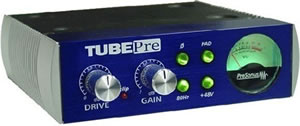
Presonus TUBEPre

Why use a pre-amp? Quite simply, a pre-amp greatly aids in either bolstering the signal of either a mic or line-level device, but it also can add some very helpful signal conditioning that will add “warmth” to the tone a device produces. I use the Presonus TUBEPre not only for microphone applications, but also for adding a touch of warmth to the signal of my acoustic guitar. The difference that it makes in the overall tonal quality that my guitar produces while plugged into an amp is so immense that it has become an essential piece of hardware when I gig or record.

Among the “lower cost,” sub-$100 pre-amps on the market, I believe that the TUBEPre offers the best value. With its standard features, it surpasses many tube-based pre-amps in this price range. Most tube pre-amps just provide drive and gain knobs and perhaps a phantom power switch, but the TUBEPre also includes four extra features that definitely add to its value.

As the name implies, the Presonus TUBEPre is a vacuum tube-driven device. Specifically, the tube used is a fairly standard 12AX7 tube. Here are the extra features that accompany the pre-amp:

  • Phase Inverter Switch – I’ve never had to use this, but pressing this switch reverse the polarity of the XLR connection to avoid phase cancellation when two mics operate in close proximity.
  • -20db Pad – This is incredibly useful when mic’ing a high output device like an amp so you don’t drive the input signal into distortion.
  • 80Hz Rumble Filter – This is very nice feature that will eliminate low frequency background noise such as wind or air conditioners. Since I use mine in my garage, it’s great for filtering out the low frequency drone of my freezer.
  • +48V Phantom Power – For those devices that require a constant power source, such as a condenser mic, getting enough power is just a button press away.

Gripes

I only have one gripe about the TUBEPre, and that is that the meter is completely useless. In my case, once I hit about 9 o’clock on the gain (with Drive set to 11-12 o’clock), the meter becomes incredibly erratic, and tends to peak way too easily. So I tend to rely on my ears, and the clipping alert LED between the drive and gain knobs (which works). Other than this single gripe, it’s all good, and really it’s about the sound anyway.

How it sounds…

Out of the box, the TUBEPre sounds great, adding a very pleasing warmth to your tone, but it sounds even better with a different 12AX7 tube than the cheapo stock tube that comes with the unit. I replaced my 12AX7 with a Mesa Boogie 12AX7 tube, and the already great sound that came out of the TUBEPre sounded even better!

I use the TUBEPre for both microphone and for warming up the signal from my acoustic/electric. In both cases, the resultant sound is very warm and full of texture. My vocals are very clear-sounding, especially when I’m using a heavy-duty cardioid mic, which tends to project a lot of bottom end and at times sound a bit muddy. With that mic hooked up to the TUBEPre, I get a rich, full tone that brings out the subtleties in my voice (though it does pick up those little vocal mistakes 🙂 ). With my acoustic/electric hooked up to the TUBEPre, it actually helps to brighten out the sound of my guitar, and gives the output much more dynamic range. The net result is that my performance can be a lot more expressive.

As far as driving the tube into clipping, that’s not something that I use it for, but I have done it, and it creates a very interesting effect. The sound is very much pre-amp distortion, but it’s a bit thinner. But as I said, this is not something that I’d do with this unit in any case. Driving the tube into clipping too often and for too long will reduce its life. Tubes ain’t cheap, so I tend to baby this unit as much as possible…

To sum it up, the Presonus TUBEPre is a great addition to your gear if you’re looking to warm up your tone.

Read Full Post »

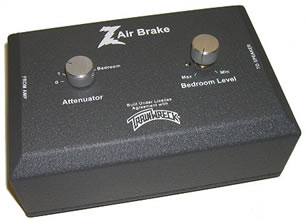
Dr. Z Air Brake

About six months ago, I wrote a little ditty about the Dr. Z Air Brake, but I thought I’d revisit this essential piece of equipment once again. The Air Brake is a power attenuator; in other words, it reduces the amount of signal from your amp that reaches the speaker, thus reducing your audible output. Before I go any further, the big question is: Why would you want to reduce the amount of signal going to your speaker from your amp. There’s actually a very good reason: Overdrive.

With tube amps, especially those with multiple-stage gain, you can’t achieve that warm clipping (read: creamy distortion) without upping the drive to your power tubes. Unfortunately, that also means you have to crank your amp, as achieving those nice distortion characteristics is a function of both drive and gain. The net result in turn can shatter your eardrums in an enclosed space, or worse yet, have your family or neighbors scream at you for playing too loud in your garage. A power attenuator allows you to drive your power tubes into clipping but do so at a significantly reduced volume. For home studio enthusiasts like myself that usually record late into the night, this means you can work on recording projects without the fear of waking up my family or pissing off the next door neighbors (which I have done many times).

There’s a good FAQ about power attenuators and how they work here. I won’t go into the technical details, but suffice it to say that with a power attenuator, you can play at acceptable volume levels while still being able to drive your amp. With that let’s get into the Dr. Z Air Brake features.

The Dr. Z Air Brake is incredibly easy to use, though in addition to the unit, you’ll need a couple of good-quality audio cables with 1/4″ plugs. If your amp’s output goes straight to your speaker and is then soldered to the speaker leads, you’ll have to do some splicing and soldering, though most tube amps today use a 1/4″ output jack. Once you’ve got the unit hooked up, you have five levels of attenuation: 0 through 4 and Bedroom. The “0” setting is total bypass, while the 1-4 settings impose approximately -2.5dB attenuation with each position by default. If you open the unit up, you can actually increase or decrease the amount of attenuation at each position by moving the leads along the resistors (this is explained in the accompanying manual – it’s a single sheet of paper). The “Bedroom” setting is what sold me on the unit. When you have the Attenuator knob set to “Bedroom,” the “Bedroom Level” knob comes into play. This provides variable signal attenuation down to 1 Watt (for sub-100 Watt amps) at the maximum level, though at this amount of attenuation, your tone really changes because the speaker cone doesn’t move enough air, thus producing a VERY thin (read: ugly) tone. I usually set my Bedroom Level knob to about 10-11 o’clock, the play with my drive and volume knobs on my amp until I’ve dialed in a good tone. Frankly, it doesn’t get much easier than this.

In addition to the variable bedroom level control, I chose the Dr. Z Air Brake after evaluating and reading various reviews, and speaking with other folks who have one. The most popular attenuator at the time I was reviewing attenuators was the THD Hot Plate. I tried one out at a shop, but didn’t like the sound that came out of it all. It literally changed my tone. The Dr. Z Air Brake, on the other hand is much more transparent, even at bedroom levels. As far as gigging is concerned, since I play a lot of small venues, it’s a real helpful piece of equipment because it allows me to drive my amp when I play with my band without stepping on the band’s overall output.

CAVEAT EMPTOR

Many people buy attenuators thinking that once they’ve attenuated their signal, they can drive their power tubes to their highest levels. It’s true, you can do this. But you’ll also burn through your tubes pretty quickly, or worse yet, you’ll damage your amp’s electronics. I’ve heard about this happening especially with resistive attenuators. People crank their drive, and after a few minutes start smelling something burning as their amp’s internal electronics fry. Also, driving your power tubes into super saturation doesn’t do anything but cause a lot of ugly distortion. When you drive your power tubes, the tone you should expect is a smooth distortion, as the intermixing sound waves weave together beautifully. Adding even more power creates a much larger contrast between the peaks and valleys of the distorted wave, and what you end up getting is a very “dirty” sounding distortion that is not in any way pleasing to the ears. So beware if you’re in the market for an attenuator!

In closing, if you’re like me, and play in a variety of small- to medium-sized venues, a power attenuator can be your friend. For me, mine is always hooked up. It has saved me from a lot of headaches and eliminated complaints!

ROCK ON!

Read Full Post »

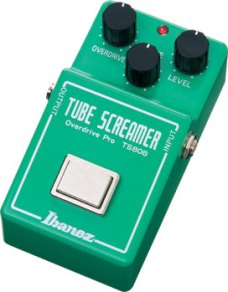
Ibanez TS808 Tube ScreamerSince I recently did a review on the Fulltone OCD, I thought that I’d do a review on the much-revered TS808. As many in the know, this is the pedal that defined Stevie Ray Vaughn’s sound. But it’s not the reason why this pedal is so special. The Tube Screamer has a unique, transparent tone; the keyword being “transparent.” Want to add drive and breakup to your tone – just switch it on. What you’ll get is a warm-sounding overdrive that is like candy for the ears.

Like the OCD, this is not a distortion box. It’s an overdrive box. The difference between overdrive and distortion are important, because they involve different approaches to the electronics. Click here for a good discussion. Overdrive boxes are known as “soft clipping” devices where gain is inversely proportional to input signal. Usually the boost is in the midrange with the high and low ends slightly cut off. The Tube Screamer is a pure midrange booster, and produces a beautiful, warm tone. The OCD on the other hand also boosts in the middle, but has added electronics that add sustain and boost harmonics and overtones. With the OCD, you can get a FAT, almost compressed tone. With the TS, you just get a boost – but that’s not a failing in the least!

As with the previous review, neither pedal is better than the other. They both have their uses. When I want lots of sustain – especially with solos – I’ll use the OCD. But for general broken-up rhythm, I’ll use the TS, but that’s not necessarily a de facto standard…  In any case, let’s discuss some features…

Note to metal players: This is not the pedal for you, if you’re looking for a real hairy kind of distortion. Think of this box as a driver to achieve pre-amp distortion. That tends to be on the brighter side. This box will not produce a fat tone, so buyer beware!

But if you’re looking for warm type of pre-amp breakup, this box is for you! It couldn’t be easier to use, either. Just three knobs: Overdrive, Tone, and Level. To get the tone you like, just fiddle with the knobs until it sounds right to you. Generally, I set the tone knob to 12 o’clock, which is pretty neutral (though the tone knob really doesn’t have that much dynamic range), set the overdrive to 10 – 12 o’clock, then set the level to slightly louder than the volume of my amp with the box switched off.

As far as build quality is concerned, it’s an all-metal casing. I gig with this box a lot so its hefty weight and solid build is a boon to gigging. And unlike the normal toggle switch you find on most boxes, the TS is (de)activated with a square switch. It’s not only aesthetically pleasing, it’s also really functional. The only beef I have with the box is that the light source of the LED is set kind of deep, so you have to be practically right over the box to see if it’s switched on or off.

Finally, the Tube Screamer is not cheap. A “Re-issue” like mine will set you back ~$169.00, while vintage boxes run up to $450.00. All I can say is that the money you spend is entirely worth it!

Read Full Post »

If you’re looking for the ultimate in clean tone, go no further. Fender is the clean standard, bar none, and the Twin Reverb is the definitive clean amp. Like the original, it is a no-frills, no fuss amp, providing 85 watts of beautiful clean tone. There is no drive channel with this amp, folks. You get a normal mode and a reverb/vibrato mode. That’s it. But the clean tone that comes out of this amp is absolutely heavenly! I played two guitars with it: Custom Shop Strat, and a Les Paul Standard Double Cutaway.

With either guitar, I couldn’t get the amp to break up unless I cranked the volume on the guitars and amp to max – then it got really ugly. So when I say this is the definitive clean amp, I really mean it. For those of you who want distortion coming from saturated tubes, you’re out of luck here, but that’s not bad. One of the reasons this amp has had such success is that it takes pedals very easily. In fact, you might consider it to be a “tone canvas” that provides the base clean tone which you can color in a variety of ways using pedals.

The big difference between the Reissue and the original is that the reissue uses a solid state rectifier as opposed to using a tube rectifier. This might turn off tube amp purists, but I can see the logic of using a solid state rectifier: It keeps the cost of the amp way down, and you know what? I doubt that you could actually notice a difference.

Another thing… typical of Fender amps, the Twin Reverb is LOUD! The 2 X 12’s move a lot of air, so be forewarned! All in all, the Twin Reverb is a great, tone-shapeable amp, definitely worth a look!

Read Full Post »

« Newer Posts