Feeds:
Posts
Comments

Archive for the ‘pedals’ Category

I love my Strat. It’s a cheapo MIM version, but it has a great sound. But ever since I started using it with the KASHA Overdrive pedal, it sounds even more like a Strat to me! I know, that sounds a little cuckoo, but that Classic channel on the KASHA Overdrive really brings out that jangly tone that defines the Strat tone; that’s to my ears, at least…

The other day, I was messing around with a dominant seventh ditty in A as I was trying to pick up some improv techniques from Chuck D’Aloia’s Blues with Brains video. I originally just recorded my Strat running through a reverb, then into my amp. It sounded pretty good, but I wanted to get a bit more top-end bite, but not a lot of drive. So I switched my KASHA Overdrive on and my jaw dropped! Here’s what I came up with…

That pedal just brings out the best in a Strat. I swear, now that I’ve been using it with my Strat for the last couple of days, I think it’ll always be on when I perform with my Strat. It really sounds great!

BTW, both rhythm and lead parts were played with the Kasha overdrive pedal. For the rhythm part, I was in the Classic channel to get that jangly Strat sound from position 2, while I was in the Hot channel for the lead in the neck pickup. So sweet sounding!

Read Full Post »

To date, this is the most popular article on this site, having held the top hits spot for the past several years now. My feeling is that it addresses the murkiness of the debate between overdrive vs. distortion. And despite many people like myself who constantly say they’re two, mutually exclusive things, it remains a subject that needs clarification. I’m glad this has been a -hopefully good – resource for people! 

Remember: Distortion Is What You Hear! Overdrive Produces It!

I had an interesting conversation with a friend today regarding the difference between overdrive and distortion. Talk about two terms that are bandied about interchangeably in the guitar world! If you ask ten different guitarists the difference between them you’ll get ten different answers. But a common theme you’ll hear is what each sounds like; in other words, you’ll get a much more qualitative description as opposed to a quantitative description. What I’ve been after is a much more objective, quantitative description of each, but not necessarily too technical. So after talking about one versus the other, I decided to write down what we discussed, and throw my two-cents into the mix.

First, let’s look at the two terms, but from the perspective of an amplifier. The simplest explanation I could come up with is that overdrive, or in audiophile terms, over-powering, occurs when input gain exceeds the capacity of a device to handle the amount of gain thrown at it; in our case, a tube. What happens is that the smooth waveform that goes into the device gets “clipped” because the device’s input capacity is less than what is being thrown at it. Sonically, we perceive the result of this clipping as distortion. The higher the amplitude of the wave, the greater amount of distortion we hear.

But what about pedals? I’ll get to that in a bit, but I wanted to take the time to clarify these terms. There’s been a lot of confusion about these two terms because they’re used so loosely, and oftentimes interchangeably. For me, I’ll stick with the audiophile’s perspective of overdrive in that distortion is the result of overdrive or over-powering an amplification device. A way to think about overdrive vs. distortion is that overdrive happens in the front-end (what you put in), while distortion happens on the back-end (what you hear).


Related Articles


But here’s where we get into a bit of murky territory, especially with pedals. Strictly speaking, if we’re talking about overdrive as simply overpowering the front-end of an amp to make the tubes clip, the only pedal that is technically an overdrive is a boost pedal that takes your guitar’s signal and ups its voltage. But lots of manufacturers call their pedals overdrive pedals. In reality, all of those are distortion pedals as they include an internal clipping circuit which is overdriven into distortion – this includes the venerable Tube Screamer. OMG! Sacrilege!

So how do you tell the difference? That’s why I said we get into murky territory with respect to pedals. But as a rule of thumb, a distortion pedal will create a distorted sound irrespective of the amp. In other words, it’ll clip on its own. Put it front of the clean channel of an amp, switch it on, and it’ll create distortion. However, many, if not most, “distortion” pedals also provide a bit of gain boost to overdrive an amp. That’s where it gets murky, as most of the pedals termed “overdrive pedal” function as a combination of both overdrive AND distortion.

There are no real hard and fast rules, but in general, pedals that are commonly known as overdrive pedals (Tube Screamer, etc.) employ what’s called a “soft-clipping” circuit or transistor, where only a small portion of the input signal is clipped. Most distortion pedals employ a “hard-clipping” device to severely clip the input signal to get that “square wave” tone. But as I said, there are no hard and fast rules. Here’s an image that nicely describes the differences in the waveforms between soft-clipping and hard-clipping devices:

Picture courtesy of GM Arts

Sonic Differences Between Overdrive and Distortion Pedals

Many people have asked me over the years if there is a sonic difference between overdrive and distortion pedals. Having tested several of these pedals over the years, I hate to sound ambiguous, but from a practical standpoint, in some cases, it’s simply too hard to tell. For instance, if I crank up my Timmy’s gain then add a bunch of volume to slam the front-end of my amp, I get a lot of crunchy distortion out of my speaker as the signal squares off. Moreover, I get a bit of compression and sustain and it “feels” like I’m playing through a distortion box. On the other hand, if I take my EWS Little Brute Drive and turn the gain knob to about 10 am, I get a similar sounding distortion with a similar feel – even though it’s a hard clipping device! They’re tonally a little different as the EWS adds a bit of low-end punch, but nevertheless, sonically and feel-wise, they’re extremely close.

But there does exist a difference, and that is in output volume. When I do what I do with my Timmy to get that hard distortion sound, I have to use an attenuator because all the input gain creates A LOT of volume, so I attenuate the output so I can keep the volume at a manageable level. But with my EWS Little Brute Drive, because it’s a distortion pedal, it will clip irrespective of the amp, plus I set its output volume to unity. I can set my amp to any volume, then switch the pedal on to get my overdrive-like sound.  I actually do this with the Little Brute Drive a lot when I don’t want to lug my attenuator to a gig.

So yes, you can set up an overdrive or a distortion pedal to make it difficult to tell the difference, but in general terms, with a hard-clipping device, you’ll experience a lot more compression than with a soft-clipping device. The tone will feel “squishy” with very little dynamics. That’s not a bad thing, mind you, because sometimes that’s what you want. Overdrive pedals, on the other hand, because they don’t produce a square wave, will feel a lot more “open” and dynamic. There will be a bit of compression at higher gain levels, but rarely will you get to the order of compression that a distortion box will make.

Gain vs. Volume
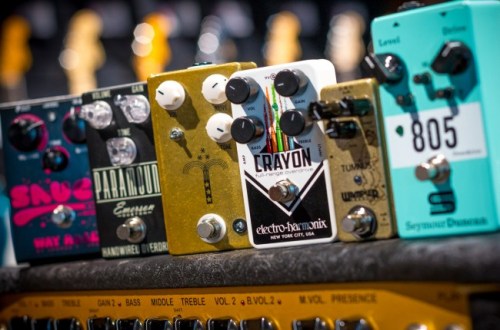
Image courtesy of Sweetwater.com

Unfortunately, this is yet another area where we get into murky territory, and where a lot of people confuse the two. So to start out, let’s just put it simply: Gain is input; volume is output.

To provide a bit more clarity, think about the function of an amp as a two-stage device. The first stage takes the relatively weak signal from your instrument, then passes it on to the second stage and amplifies the signal to produce the sound.

The first stage of an amp is called the preamp. The signal passed through the preamp is called Gain. The level of gain will have a direct effect on the volume of your amp. Typically, the more gain you introduce, the higher your volume. BUT, that said, higher and higher levels of gain will have a lesser and lesser effect on volume, as the pre-amp reaches its capacity to handle the amount of signal passed to it (commonly called saturation) and will max out sending all it can handle to the second stage or power amp.

Think of the power amp as the stage that controls the output strength of your sound, or volume, if you will. It works similarly to the pre-amp in that the more signal you throw at it, the louder your volume. Some amps come with a Master Volume. Think of it as a valve mechanism that controls the amount of signal that is allowed to pass into the power amp. When it’s wide open, all the preamp signal will pass through to the power amp. For amps without a master volume, the amount of preamp signal allowed to pass to the power amp is set by the builder.

So what does this have to do with pedals? If you look at the picture above, whether labeled or not, all come equipped with both a Gain (or Drive) and a Volume (or Level) knob. These work pretty much the same way as Gain and Master knobs on an amp. The Volume knob controls how much pedal signal will be sent to your amp’s preamp. That could be enough signal to saturate your preamp which will overdrive it into clipping and create distortion. Combined with a distorted sound from the pedal, this could – and in many cases does – create a very pleasing mix of distortion sounds.

So which kind of pedal to choose?

The pat answer is it depends on what you’re after with respect to your distorted tone. I know that this is a rather ambiguous statement, but again, there are no hard and fast rules. In the end, you should choose a pedal based on what sounds good to you. But here are a couple of guidelines:

  • If you have a tube amp and just want distortion purely from overdriving the tubes, then a booster makes sense. There are several kinds of boosters. Some boost only a certain frequency range, like a Fat boost that boosts the lower frequencies. I personally prefer a clean, transparent boost that has a flat frequency response so that the distortion that occurs is my amp’s tone. I typically use a booster in conjunction with my amp set just at the edge of breakup, so when I switch it on, not only will I get a volume boost, I’ll overdrive the pre-amp tubes; and depending on how much gain I throw at the amp, I’ll get the power tubes working as well. Here’s a trick to try: If you have an effects loop, place the booster as the last pedal in your effects loop. When switched on, it will boost the gain going into your power tubes to saturate them. You don’t get a huge volume boost, especially if the power tubes are close to saturation, but you do get a bit of a kick. I learned that from Gene Baker, who does that in his rig.
  • If you want to add a bit of color and overdrive your amp, then a soft-clipping pedal like a Tube Screamer works quite well. Tube Screamer-type pedals typically give you a mid-range boost that results in a much warmer and smoother distortion. Many also add sustain and a bit of compression to simulate power tube saturation at any volume. My Tone Freak Effects Abunai 2 is exceptional in this department. Then there are others, like the EHX Soul Food that add a bit color but interact well with the front-end of an amp. But that said, there are some like my beloved Timmy Overdrive that are transparent. They’ll give you the gain and boost but will not color your sound (Note: that you’ll still have to set up the pedal’s EQ). I will add though, that in general, an overdrive pedal sounds and performs best when the amp is already clipping a bit. The mixture of the two creates a more complex signal that is quite pleasing to the ears.
  • If you want to get a distorted tone at any volume, then a distortion pedal is the way to go. There are lots of these on the market. My personal favorite (and the one I own) is the EWS Little Brute Drive. It’s a half-size pedal with a single knob, but it will give you TONS of distortion at any volume. I normally use it for leads, as it gives just a few dB of gain, but gives me all the distortion I need to get a great screaming tone! It also colors with a fat bottom end which makes leads sound beefy. Typically, you’ll use a distortion pedal against a clean amp. But then again, there are no hard and fast rules.
  • Then if a distortion pedal still doesn’t provide enough gain for you and you need to get a hard-clipped, super-squishy, compressed distortion, then the fuzz will get you there. I call fuzz “ugly dog” distortion. To me it’s like an ugly dog that you look at and say, “holy s$%t,” but it has personality, so you can’t help but love it. Can’t say I’ve ever been into fuzz, but I’ve spoken to lots of players who use it all the time, and they love it!

You can also chain overdrive and distortion effects to great success (aka “stacking”). I do this quite a bit because you get colors that you can’t get with just your amp. One thing that I do regularly is to use an overdrive pedal to push my amp hard, then when I want to get more tube compression and sustain, I slam the front-end with a booster (which is the last pedal in my chain). This doesn’t result in a volume boost because the tubes are already saturated, but you do get much more high-gain sound, and that can really work with solos.

Again, there are no hard and fast rules. You have to play a lot of them to find your sweet spot. But that’s half the fun of it!

More Overdrive Murkiness…

I referred to my Timmy above as a “transparent” overdrive. There’s a lot of debate about transparency, but suffice it to say that while technically distortion is color, transparent overdrives are those that once their EQ is set up to match the EQ setting on your amp, they will not add any other “color” than distortion. On the other hand, once you set up a non-transparent pedal’s EQ, it will still add its own tonal characteristics to color your tone. In practical terms though, transparent overdrives fall more into the booster arena, but it’s the EQ and internal soft-clipping circuits that still define it as an overdrive.

But further exacerbating the overdrive murkiness is that many overdrive pedals are actually purpose-built to mimic the sound of a specific overdriven amplifier. These are meant to be played through a clean channel with lots of headroom. A good example of this is the Caitlinbread Dirty Little Secret that produces classic Marshall Plexi to Super Lead tones. With a pedal like that, you just set your clean channel to purely clean and let the pedal do the overdrive work.

Note: Several articles I’ve read on this topic use the generic “overdriven amp” explanation to describe all overdrive pedals. It would be okay if they described them with respect to how the pedal responds, but more often than not, they use the term to describe the sound. Unfortunately, they completely miss the pedals that are built to be transparent. I’m not saying they’re entirely wrong, but just a little narrow in scope when you consider the overall landscape of overdrive pedals available.

Now… let’s add even more murkiness to the overdrive issue, shall we? There are some overdrives like the EHX Soul Food, which is a Klon Centaur clone, that at first blush, fall into the transparent overdrive category. So one would think that you’d set your amp at the edge of breakup, then use the pedal to push it over the edge and add its own clipping. This is a common way of using an overdrive, and it’s exactly how I use my Timmy. But even though the Soul Food wasn’t purpose-built to mimic a particular amp, I use it almost exclusively as a standalone soft-clipping device played through a clean channel. Its distortion sound is so damn sweet that I don’t want to taint it by adding clipping from my amp.

So… what you choose will be wholly dependent upon what pleases you.

Update: November 26, 2012

I ended the article three years ago with the statement that you have to play a lot of pedals for find your sweet spot. Three years later, that statement remains true. You see, in a recent article where I asked if new overdrives are relevant with so many on the market, there are some pedals that work with certain rig configurations, and some that just do not. There are also some rig configurations that work great on stage that sound absolutely horrible in the studio. I’ve been in the studio for the last few weeks (grabbing studio time where I can), and when we worked on a song where I needed some high-gain sounds, my rig just did not work! I was using my trusty DV Mark Little 40 clean, with my Timmy and the Little Brute Drive for distortion. Sounded like crap when recorded. I ended up bringing in my VHT Special 6, cranking it up all the way, and slamming it with a booster! Worked like a charm, with all the high-gain character that I wanted out of that tone. So I learned a valuable lesson there.

Read Full Post »
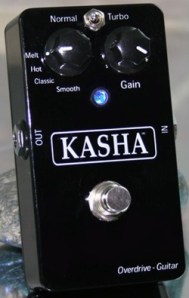
KASHA KA-ODP-A
I finally got some time to record a couple of clips of the absolutely wonderful KASHA Overdrive tonight, and I am just so blown away by how it sounds! This little box is like having 4 differently voiced amps in a little box! I’m not going to spend too much time praising it because I’ve already done that a couple of time here, so let’s get into the clips, shall we?

The first clip is slow, slow blues clip in Am. The chord progression is actually adapted from one of Chuck D’Aloia’s “Blues With Brains” video lessons. If you’re looking to get more into the blues, I highly recommend this set of lessons. It’s the best $40 bucks you’ll ever spend! In any case, I used the chord progression to test out the KASHA Overdrive, and to practice some of the concepts I learned tonight.

Anyway, there are two parts to the clip. The rhythm part was recorded with the KASHA Overdrive in Smooth with the gain set at 12 o’clock. This acts just like a clean boost, and at 12 o’clock it’s at unity gain. The first part features the Classic “channel,” and the second part features the Hot channel. Give it a listen:

The second clip has no backing track, and features the Melt channel with a simple chord riff. Excuse the sloppy playing, but instead, focus on the articulation of the notes. I had the Gain pushed up to about 3pm, which is almost all the way up. But even at a really high gain setting, you can still hear the individual notes. THIS IS AMAZING! And man, the touch sensitivity in this channel is to die for!

By the way, both clips were played through the clean channel of my Aracom VRX22, and recorded at conversation levels using the incredible Aracom PRX150-Pro attenuator. To me, this is the absolute king of attenuators. Oh! Almost forgot that I used my beloved Goldie to record the clips.

Read Full Post »

KASHA KA-ODP-A

OMG!!! Just gigged with my brand-new KASHA Overdrive last night, and I was in tonal heaven! Even though I’d done a pretty good test on it in my original review, there’s nothing like using gear in a live situation. So here are my observations:

  • Incredible Dynamics – The one thing that is readily apparent is how this pedal responds to pick attack and volume knob changes. It is so amp-like, it’s uncanny! I set the pedal up in unity gain with just normal strums on my guitar. But if I dug in a bit more, the pedal responded just like an amp with a bit more punch and volume. Frankly, the volume swell surprised the hell out of me. It’s not huge, mind you, but the response is so amp-like, it really does take you by surprise. I totally dug that while gigging last night!
  • Plays Well With Other Overdrive Pedals – I love stacking overdrives, and the KASHA OD performs beautifully in this role. I set it up as a based OD pedal, then stack it with my Tone Freak Effects Abunai 2. Those two together are an awesome combination!
  • Lots of Tonal Variety – While my favorite channel on this is the Classic channel that adds a chimey mote to your tone, I also played in the Hot channel as well, and the grit and grind was super-sweet. But add to that the dynamic response of the pedal, and what you’ve got is a pedal that has a lot of inherent tonal variety. Last night, I ran it mostly through the clean channel of my amp. But later, I screwed around with it a bit more in my studio, with my amp set at the very edge of breakup. This is where the pedal just warms my heart! With its touch sensitivity, when my amp is set up at the edge of breakup, I can take my tone from gritty and grimy to sweet and chimey with just a touch of dirt simply by modifying my attack or adjusting my volume knob.
  • Open Distortion Characteristics – No matter what channel you use with the KASHA Overdrive, the overdrive never gets compressed. It just gets dirtier. The cool thing about that is that any kind of compression will then come from your power tubes. I’ve rarely liked that compression in pedals, save for my Abunai 2, which compresses in a very pleasing way, but for most overdrive pedals, I don’t want that at all, and thankfully, the KASHA Overdrive remains very open, no matter how hot you go on the channels.
  • Simple Design – Probably one of the best features of this pedal that I appreciate is its straight-forward design. Notice that it doesn’t have an EQ control. It doesn’t need it. It takes your signal, adds a voice to it, and that’s it! Set your EQ on your guitar and/or amp to where you want it, then set the gain knob on the pedal, and just play. What could be more simple?

All in all, I’m pretty much done with my search for an overdrive pedal. I knew it from the first time I played this; and combined with my other OD’s, I can pretty much say – at least for quite awhile – I’m set in the overdrive department!

I’m an overdrive pedal freak, and I can safely say that this is the best overdrive pedal that I have ever played! It’s hard to believe that this little black monster does what it does. I’m totally blown away by it, and I’ve only gigged with it once! I can’t wait to really start using it in all its modes!

For more information, go to the KASHA web site!

Read Full Post »

Wanna slam the front-end of your amp with up to 50dB of gain, then be able to add some distortion? Then look no further than the Way Huge Angry Troll. I don’t have much information on it yet, but it’s a simple two knob affair. The left-hand knob controls the variable boost, while the right-hand knob provides 6 positions of “Anger” from no anger (clean boost) to a full fist. Here’s ProGuitarShop.com’s video demo.

Read Full Post »

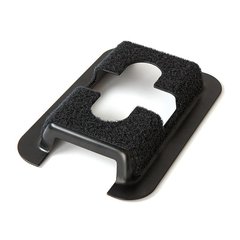
stagetrix_riserOne of the things that completely pisses me off when I’m gigging is when I reach my foot out to activate a pedal in the back row of my board, and I end up also activating a pedal in the front row. Aiiiyeeee!!! This happened to me recently at a church gig. I was playing a nice, sweet, clean solo, and want to texture my sound a bit by adding some reverb.

To give some background, my reverb pedal (Hardwire RV-7) is the last pedal in my chain and it sits right above my Holy Fire overdrive. Instead of a toggle switch, the RV-7 has a switch plate, and the travel before it actually activates is enough so that I have to really point my toe so I don’t brush my Holy Fire’s knobs or accidentally activate it. Well, in this instance, I did both: I somehow completely dimed the overdrive knob AND activated the pedal. The next note I struck not only startled me, but also startled the prayerful assembly – enough so that some people actually squeaked! Yikes! No doubt, it was a bit embarrassing…

Then today, I got a Twitter alert that a new user called StageTrix was following me, so I went to Twitter to do an exchange follow, and on StageTrix’s site, I saw a Twitter reply from Premiere Guitar. Intrigued, I checked out their site, and was greeted with a solution to my problem: An 18-gauge steel pedal riser that you can use to prop up the second row of your board to make your back row of pedals more easily accessible! What a great freakin’ idea! It’s one of those ideas where you slap your forehead and say, “Now why didn’t I think of that?” 🙂

I had the opportunity to chat with one of the StageTrix guys a few minutes ago to discuss StageTrix’s invention. They’ve apparently been developing it for about a year and a half, and doing prototypes with various musicians. And their reason for building it? Exactly for what I was lamenting just above!

Here are some details from their site:

  • Raises the second row of pedals to the perfect height.
  • Front, back and side openings enable effective cable routing.
  • Premium 18-gauge steel.
  • Attaches to board via heavy duty hook-and-loop fastener on base, which holds firm up to 200°F.
  • Designed to withstand temperatures of up to 200F without melting, so leaving your pedal board in your vehicle on a summer day won’t result in a gooey mess with all the Velcro peeling off.
  • Works with most pedalboards. To be sure, check that you have an extra 1″ of clearance when case is closed. The vast majority do.

If you go to their site, they’re doing a promotion by putting several of these units up for bid on EBay, with a starting bid at a $1.00. These pedals list for $23.99 on their site, so it’s possible that if you get the winning bid, you could get one for significantly less…

Right now, they’re only available through StageTrix, but they should soon be available in stores. I will be getting a review unit within the next week or so, and will do a review.

Check out the StageTrix site now!

Read Full Post »

large-relay-2

large-relay-1

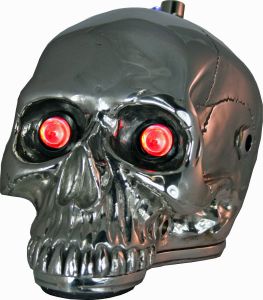
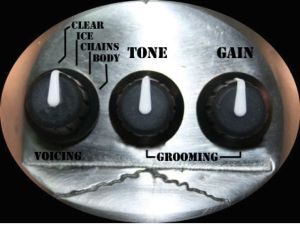
How ’bout a completely different take on an overdrive pedal? Well KASHA is at it yet again, teaming up with Tone Box, Inc., with the brand-new Skull Crusher Drive! Utilizing KASHA’s RockMod technology, the Skull Crusher sports four voicings and a tone and gain knob. Plus with a 10db boost, you have 8 different analog overdrive possibilities in a single pedal!

Sounds hauntingly similar to the KASHA overdrive pedal I just tested last week. It is a bit different, as it has a Tone knob, which is different from the KASHA overdrive. But I can personally attest to the quality of the tone of the KASHA overdrive, so you can bet the Skull Crusher will have that same sweet tone itself!

BTW, my KASHA OD is in production and on its way. I got lucky, and will be getting one of the signed models with a handwritten serial number… Oh goody! Might be able to sell one of these for a grand in 30 years! HA!

In any case, I’ve never seen a pedal like the Skull Crusher before! This is a totally new approach to pedals, adding a visual as well as tonal touch to an effect. The pedal will be distributed by Tone Box, Inc. and will retail for $399.

As for the physical appearance of the box, each pedal is hand-sculpted stainless steel, and comes in four finishes: gun metal, stainless steel, aged and ancient. According to KASHA, there will also be 24K gold and Sterling Silver models as well. Damn! Imagine having a stomp box that’s worth more than your guitar! HAHAHAHAHA!!! I LOVE IT!

Read Full Post »

5 Tone Bones - Gear has stellar performance, value, and quality. This is definitely top of the class, best of breed, and it's a no-brainer to add this to your gear lineup!Kasha KA-ODP-A KASHA Overdrive

Summary: Just about the most amazing overdrive pedal I’ve ever had the privilege to play!

Pros: 4 “channels” provide different and amazing overdrive voices that add “spice” to your tone. No line noise from this pedal at all! Super simple operation.

Cons: None.

Features:

  • 4 channels with separate voicing and gain structure
  • Analog design
  • 10 dB clear boost
  • True bypass switching
  • Very low power consumption (3mA and runs on a single 9V battery)
  • No tone change, only enhances sound
  • Compact standard aluminum chassis (4 3/8″x2 1/4″ x 1 1/4″)
  • AC power jack (uses standard Boss DC power supplies)
  • High gloss mirror black powder coat
  • Hand made in the USA
  • Low noise
  • Crystal Blue LED (high intensity)
  • Weight: 1.5lb

Price: $200 direct from KASHA Amplifiers

Tone Bone Score: 5.0 – I’ve played through enough overdrive pedals to fill a large trunk, and the KASHA Overdrive is simply one of the best I’ve every played!

If you’ve read this blog with any regularity – and I know I’ve said this in the past – I just can’t get enough of overdrive pedals. I just love ’em! But over time, and as there are so many overdrive pedals being released on a regular basis, I’ve started to limit what I take a deep dive into researching. Lately, I’ve only focused on overdrive pedals that offer a “twist” on the overdrive, and not clones. One such pedal that I recently discovered (and now has a permanent place on my board) was the GeekDriver, that while based upon the classic ColorSound Overdriver, has a sound all its own!

And wouldn’t you know it, I came across the KASHA Overdrive, and its simplicity intrigued me so much that I just had to check it out! Here was an overdrive pedal that required no EQ control! For me, that’s a HUGE thing because the implication is that the pedal’s circuit doesn’t require you to compensate for tonal changes that often get introduced with other pedals.

In any case, if you don’t want to read any further, let me just say this, and have it done with:

The KASHA Overdrive kicks ass, and I will be adding it to my pedal board! Even if you’re not in the market for a new overdrive, you owe it to yourself to give this pedal a serious look!

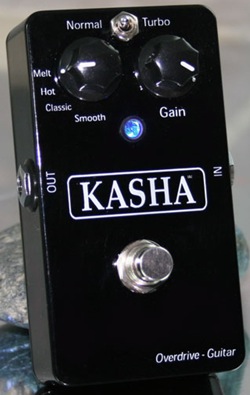
Four channels, Two Knobs, One Switch and a TON of Ways to Enhance Your Tone

Notice I didn’t say, “tweak” or something similar that would imply that your tone changes once the KASHA OD is engaged. The reason for this is that KASHA built the pedal from the perspective of “voicing” much like an amplifier. Each “channel” on the pedal represents a different “voice.” It’s almost as if you have four amps in a box. In light of that, your input EQ remains the same; but just like plugging into different amps, the KASHA OD offers different kinds of “voicings.”

But it doesn’t just end there with the channels. The gain knob is incredibly expressive and just like an amplifier, provides different characteristics depending upon where you set the sweep. It’s f-in incredible! It’s also really difficult to verbally describe the effect. The closest I can get to an explanation of turning up the gain knob is that it is very similar to turning up the master volume on your amp and the effect that has as more juice is fed into the power tubes. Like I said, it’s hard to articulate…

And then if you didn’t think that the standard gain profile is enough, the “Turbo” switch will kick your amp’s ass even more by giving you a 10dB boost! 10dB may not seem like much, but sonically, it’s HUGE!

How It Sounds

So how does the pedal sound? In a word AMAZING, even when it’s on and you’re not playing anything, because unlike a lot of overdrive pedals, the KASHA Overdrive is dead quiet electronically. No hums, no buzzes, not a single electronic tick. The only noise it makes is when you play your axe through it.

I’ll let you read the documentation on the KASHA web site that describes the different channels – it’s pretty accurate. In lieu of that, I’ll write about my own perceptions of each channel as I experienced them. By the way, I played the pedal through a Fender DRRI and a Fender Princeton Studio, using my Saint Guitars Goldtop Messenger.

Smooth Channel

This channel is a simple boost stage, which ups your gain about 3dB. It’s an ideal channel to use if your amp is already at the edge of breakup, and you want to push it just over the edge to get a little extra bite. Of course, if you add the Turbo, then you get a full 13dB to start really working your pre-amp tubes. The impressive thing about this channel is that it demonstrates the pedal’s transparency. Setting the gain to unity, and switching the pedal on and off, there is absolutely no tonal change whatsoever. Quite nice.

Classic Channel

I loved this channel most of all, and as soon as I made my first strum on this channel, I was completely sold on the pedal. I didn’t have to hear any more. This channel is voiced brightly, and sounds like a friggin’ low-wattage EL-84 amp with all the chimey goodness that kind of amp has to offer. But at the same time, you don’t lose your lows. In fact, the full spectrum of your EQ is retained, but you get this incredibly dreamy, top-end chime that just works its way through your entire body! When I was playing through this channel, I just closed my eyes to listen to that sweet chime.

Hot Channel

Need even more grind? Now you have it. This channel slams your front-end with 11dB of gain, and gives you an added bass shelf. The tone from this channel is absolutely HUGE! And even with the big bass, you never lose any clarity at any time. Do a big power chord, and you’ll rip right through any mix. Pluck a single note and dig in, and that note will sustain – like Santana sustain, baby! And the cool thing is that at no time does your signal compress as often happens with other pedals, and we’re talking starting to get into some serious-ass gain when you’ve got the gain knob and guitar volume completely cranked! Then you hit the Turbo button, and WHOA! Singing sustain that just floats in the air and doesn’t come down!

Melt Channel

Here we’re getting into metal territory as the voicing gets a big, but tight bottom end plus a few more dB’s of gain. And just as with the Hot channel, you don’t lose any tonal clarity at all – you hear every single note, which is all the more amazing in this channel because you’re absolutely slamming the front-end of your amp! You just get a beefy, hairy balls sound that’ll shake the rafters when you’ve got it cranked up! Yeah, “melt” is an appropriate term to be used here because the thick, liquid metal tone in this channel will certainly melt you; of course, in a very good way!

Overall Impressions

Dammit! I wish I had more time to play with the pedal to really take it through its paces, but the store was closing up, and we were playing a bit too loud for the tender ears of the senior citizen sales people, though gracious as they were to let us bring in our own gear. What amazed me the most was how absolutely HUGE the Fender Princeton sounded with this pedal. This is a little 15 watt amp that combined with the KASHA overdrive could be used in a club. No problem cutting through with the KASHA overdrive engaged!

Yeah, I was sold on the Classic channel alone, but I’m just completely twitterpated and ga-ga over this pedal. KASHA claims that not a single person to date has had a bad opinion or offered “improvements” to it, and this includes some very big names in the music business (sorry, not allowed to mention them yet by request of KASHA). Based on even my brief experience with the KASHA Overdrive, I totally believe the claim. THE KASHA OVERDRIVE WILL KICK YOUR ASS!

By the way, I hate KASHA Amplifiers!!! I thought I was temporarily cured of my recent case of GAS, and now the KASHA Overdrive has me salivating, slobbering, and frothing at the mouth with an f-in’ GAS attack!

Read Full Post »

guitars3

Right now, it is an absolutely AWESOME time to be a guitarist! There is so much great gear out there nowadays, that it’s hard to choose what to get. But the great thing is that there is SO MUCH to choose from! For example, look at all the great overdrive pedals that are out there right now. It is freaking amazing, I tell ya!

Some might think that there’s too much gear out there right now. That may be, but it also means that if you spend the time evaluating gear, you’ll most probably find exactly what you’re looking for – at least for now. 🙂

I say “at least for now” because if you’re a gear freak like me, it’s not too long that you want to add something to your rig to enhance your tonal palette. It’s a bad disease, this gear addiction, but it is oh-so-incredible.

But back to the topic at hand, with this much gear, you might think that the likelihood of making a bad choice is also fairly large. But the interesting thing that I’ve found is that most of the gear out there is really high quality, and not only that, at great prices.

Take, for instance, handmade, hand-wired boutique amps. Traditionally, boutique amps have sold for thousands of dollars. But there are some boutique manufacturers out there that are creating great-sounding, high-quality, hand-wired amps for a reasonable price. Most of these are “entry-level” amps meant to establish the manufacturer’s sound and quality, and to provide inroads to their flagship products. A good example of this is the recently released Reason Bambino, an 8/2 Watt tone machine. Priced at $699 and packed with tons of features, this is one of those must-have amps for the studio, and for small venues; not to mention that the tone this amp produces is simply to die for!

Then there are manufacturers like Valve Train Amps and Aracom Amps who simply make reasonably priced, hand-wired amps. Period. Their philosophy is that great tone doesn’t have to cost a lot. And while they’d probably admit that their margins are lower compared to their more expensive brethren, they’ll be the first to say that they want to get their gear into as many players’ hands as possible. With Aracom’s VRX series, that has been the case. Jeff has found a real magical tone with the VRX series (they come in 18 and 22 Watts EL84/6V6 respectively). The heads are $895, and they sound absolutely KILLER! He has been selling these things as fast as he can create them!

But I believe the greatest stuff is coming from the pedal makers. There are absolutely killer pedals out there! And it seems each week brings yet another promising pedal to the industry. There are so many, I can’t keep up with them! Off the top of my head, here are some stellar pedals that have recently come out that are worth a look: TC Electronic Nova Repeater, The Original Geek GeekDriver, Kasha Amps Overdrive, Effectrode Tube Driver, Catalinbread Dirty Little Secret, Tone Freak Effects Abunai 2. Yeah, yeah, I’ve mentioned OD pedals. Well, you know how much I love ’em. 🙂 My personal favorite right now is the GeekDriver, and it will always be on my board. It’s not really an overdrive, and it’s not completely a booster. It’s something in between, and it’s freakin’ awesome, especially when it’s used to drive my Abunai 2, or Creation Audio Labs Holy Fire. As Geek explained to me, the GeekDriver was meant to be stacked. Very cool! And at $205, it is not out of this world.

Even things such as strings and picks are out there for us to enjoy! As far accessories are concerned, they actually start getting a bit more pricey at the “boutique” level, but they are so worth it! I swear by Wyres Strings and V-Picks and Red Bear Picks. Especially with the picks, I’ve paid up to $30 for a single pick, but they last a long time with care, and not only that, they feel so good in your hand that you don’t even notice that they’re there. And that’s what a great pick will do for you.

I could go on talking about great gear that out there, but I’ll just say this one more time: It’s a great time to be a guitarist!

Read Full Post »


Kasha KA-ODP-A

Awhile ago, I was perusing a forum where one of the members mentioned in a reply that it’s a good time to be a guitarist. There’s so much varied gear out there that guitarists have all sorts of options to choose from. One area of guitar gear that certainly seems to get regular entries is the overdrive pedal.

The OD pedal is something of which I never tire. There are so many great ones out there – I just can’t get enough of ’em. One such pedal that has just recently caught my eye is the KA-ODP-A 4-Channel Overdrive Pedal from Kasha amps. This pedal promises to be something special. Check out its features:

– 4 channels with separate voicing and gain structure
– Analog design
– 10 dB clear boost
– True bypass switching
– Very low power consumption (3mA and runs on a single 9V battery)
– No tone change, only enhances sound
– Compact standard aluminum chassis (4 3/8″x2 1/4″ x 1 1/4″)
– AC power jack (uses standard Boss DC power supplies)
– High gloss mirror black powder coat
– Hand made in the USA
– Low noise
– Crystal Blue LED (high intensity)
– Weight: 1.5lb

Built By an Amp Builder

There’s something about gear that’s built by an amp builder, especially when it comes to pedals or other peripheral devices. Amp builders have an innate understanding of the electronics behind tone, and how peripheral devices interact with their amps. A great example of this is Jeff Aragaki from Aracom Amps and his brand-new attenuatore, the Power Rox PRX150-Pro. Jeff totally gets it with how an amp interacts with a speaker, and the Power Rox is a testament to that. The same may be said of the Kasha overdrive in front of an amp. I had a chance to speak with John (Kasha’s owner and builder) this afternoon about the pedal, and it was clear from our conversation that this guy really understands the interplay between effects and an amp – especially with respect to overdrive.

Kasha has been around awhile, having been building the famous ROCKMOD line of amps since the 80’s, so they know something about amps, and their tone is well-known. Guitarists such as George Lynch and Davey Johnstone (Elton John), and tons of session guitarists have been playing ROCKMODS for years. So when John decided to build an overdrive pedal, he didn’t want to model it off of traditional circuits, so he created his own. The result is the 4-Channel Kasha Overdrive.

What’s very intriguing about this pedal is that it doesn’t have an EQ. John designed the pedal in such a way that it preserves the tone going in and outputs it with some OD “flavor” as John puts it. The thinking is that you don’t need an EQ if you’re not doing anything to the EQ of the signal. Smart.

The Kasha overdrive is a lesson in simplicity, having only two knobs: An overdrive selection knob to choose from one of the four different overdrives, and a gain knob. Very simple. But it also sports a “Turbo” switch at the top which will add a 10db clean boost to slam your pre-amp tubes with even more gain. But despite all that, this thing operates on 3 milliamps and only requires a standard 9V power source! That is incredible! My beloved Holy Fire requires a special 48V power supply! So what John has created is definitely special.

I’m going to be trying this pedal out in the next coming weeks, and I’m excited! I’ll keep you posted!

For more information, go to the Kasha product page (scroll down to the end to see the overdrive)

Read Full Post »

« Newer Posts - Older Posts »