Feeds:
Posts
Comments

Archive for the ‘Saint Guitar Company’ Category

5 Tone Bones - Gear has stellar performance, value, and quality. This is definitely top of the class, best of breed, and it's a no-brainer to add this to your gear lineup!

V-Picks "The Snake" Pick

V-Picks "The Snake" Pick

V-Picks “The Snake” Pick

Summary: Thick at 4.1 mm, this is the beefiest pick I’ve ever played. But it’s uncanny just how fast and accurate you can be with this pick! Comes in both Rounded and Pointed corners, and Vinni also makes a hybrid that has both types of corners.

Pros: The bevel on this pick is perfect, and totally different than the other V-Picks I’ve played. Whether you go with the rounded or the pointed version, you’re gonna love playing this pick.

Cons: None.

Price: $10.00 ea

Specs:

  • 4.1 millimeters thick
  • Hand-ground
  • Flame buffed
  • Sharp, almost triangular bevel

Tone Bone Rating: 5.0 – I REALLY love these picks for playing electric guitar!

In my previous review of the V-Picks Medium Rounded and Pointed, I shared how the tone that they produce just make my heart sing! But with “The Snake” Vinni just blew those out of the water! Within minutes of playing both the Rounded and Pointed versions, I knew I’d never go back to the medium rounded and pointed again. Damn, Vinni! You just keep on inventing great picks!

The big difference between “The Snake” and the standard picks other than the beefy 4.1 mm thickness is the bevel. It’s sharper than the standard picks, with a noticeable burm-like edge. When I initially took a close look at the edges of these picks, I have to admit that I was a little dubious. After all, Vinni had just told me the other day that The Snake was his “most outrageous pick ever.” That coming from a man who makes picks that are half and inch thick, for cryin’ out loud!

But as they say, the proof is in the pudding, and I picked up a Saint Guitars Goldtop Benchmark, took the rounded Snake in hand, and started playing a riff. My expectation was that this pick would produce a sound similar to my beloved Medium Rounded. To say that I was completely taken by surprise by the tone that ensued from my amp would be an understatement. I stopped, picked up my Medium Rounded, and played the same riff. But it didn’t have quite the punchiness and roundness that the Snake Rounded produced. I just shook my head, and literally said, “That f#$kin’ awesome!”

Then I picked up the Snake Pointed, and started playing the same riff. Again, my preconception was that the pointed would play similarly to the medium pointed: A sharp, crisp attack that was great for playing leads, but not very enjoyable for strumming. From the first strum, my jaw just dropped. Unlike the medium pointed, this pick just glided over the strings! There was a little more resistance  than the rounded Snake, and I expected that, but I didn’t expect how well the pointed Snake would move over the strings. It’s truly uncanny! And unlike the sharp attack of the regular medium pointed, what this pick produces is an absolutely gorgeous ring. I could use this pick for both rhythm and leads – and that’s what I’m intending to do at my gig this weekend!

I believe the bevel on these picks make all the difference in the world, and what sets them apart from Vinni’s other picks! This bevel is special, and really the secret sauce behind the tone these picks produce. The thickness of these picks just add to the awesome vibe they evoke. I didn’t think a 4.1 mm pick would be very comfortable, but I love it even more than the regular mediums! By the way, these picks are about the same size as the regular mediums, so it was a good comparison. The funny thing is that I hold these thicker picks even lighter than the regular mediums. The Snake seems to grip you, as opposed the converse. I guess that’s why Vinni named the pick “The Snake.” It really feels like it’s holding me while I’m playing.

Okay Vinni, I have to agree. These really are your most outrageous picks! For more information, go to http://www.v-picks.com

Read Full Post »

When I first discovered Saint Guitar Company through a faithful reader of GG, “Crash,” I found their site, and kind of snickered at its design. But all I had to do was look at the pictures of the guitars, and I thought to myself, “Who cares about the site? Look at those beautiful guitars!” Well, that curiosity led me to contact Adam Hernandez, owner and luthier of Saint Guitar Company, and thus, we began a friendship that is evolving into a trusting partnership in our passion for his guitars.

In any case, I am proud to announce that Saint Guitars has just released its new web site! It’s not fully complete just yet, but the one thing that I want to point out that is the most special thing about the site that will be complete in the next couple of days is the “Your Dream Guitar” link. On this page, you’ll be able to spec your own guitar by filling out an online form! Once you fill out the form and submit it, Adam will contact you to discuss the guitar in greater depth. What a cool concept!

By the way, I wrote “The Back Story” mini article in the About Us area. I gotta tell ya, what this kid is doing is special!

Check out the new site at: http://www.stguitars.com!

Read Full Post »

Saint Guitar Company Goldtop Benchmark

Saint Guitar Company Goldtop Benchmark

You ever pick up a guitar and just can’t seem to put it down? For the past few years, that has been “Pearl” my Blizzard Pearl Strat. I just love the way she sings, and she sings oh so sweetly. But ever since I got “Goldie,” a Saint Guitars Goldtop Benchmark to test out, I just can’t seem to put her down. It’s tough because ever since she arrived, I’ve been splitting my time between the two… Wish I had the problem with women when I was single. 🙂 <sigh> Oh well…

“Goldie” is a very special guitar, with a mahogany body, maple top, and solid rosewood neck. I know, I’ve already reviewed her, but she’s absolutely the perfect guitar – at least to me. The tone from the woods are so balanced and warm that when you play her, you have to just close your eyes and let her take you for a ride. And her neck… ah, her neck! What a thing of grace and beauty. The open-pore finish of the rosewood is so wonderful to the touch, you just want to run your hands up and down the fretboard and feel the sensuousness of her gentle curves. I know, I’m sounding kind of weird, but it’s the best I can come up with to draw a metaphor of how it feels to play this guitar!

Tonight, after I returned home from a quiet date for a cup of tea with the love of my life for Valentine’s Day, I retired to my studio to play around with Goldie. I was just noodling when I played a phrase that just begged to be laid down. So I figured out the chord progression that would go with the phrase, and here’s what I came up with:

Goldie has a bright, big voice, and true to all Saint guitars that I’ve had the priviledge to play, she has an even, dynamic range in all strings, up and down the fretboard. Unlike other guitars where you pluck the top two strings, and you get a loss in volume, forcing you to dig in when you play those strings, especially about the 12th fret, not so with any Saint guitar – it’s uncanny, and a mark of the care Adam Hernandez has put into his designs to ensure his guitars are resonant in any frequency!

Having a great amp to bring out the best in a guitar doesn’t hurt either. The amp I used is a soon-to-be-released prototype Aracom Amp, based upon the RoxBox 18 Watt, but with different tubes, and slightly different power handling. Sorry, I can’t be more descriptive at Jeff Aragaki’s request. You can be assured that once Jeff gives me the go-ahead, I’ll be writing a review of it, and it will be good. 🙂 This amp in particular is very pedal friendly, and I used a Tube Screamer to give me some grit on the lead, plus my new Hardwire Reverb.

In any case, I just wanted to share my excitement about this guitar. It simpy kicks ass, and paired with a dynamite amp, I’ve got a winning combination on my hands!!!

Read Full Post »

5 Tone Bones - Gear has stellar performance, value, and quality. This is definitely top of the class, best of breed, and it's a no-brainer to add this to your gear lineup!

Saint Guitar Company Goldtop Benchmark

Saint Guitar Company Goldtop Benchmark

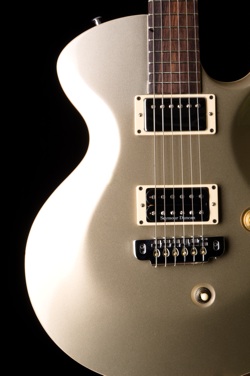
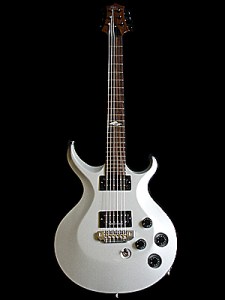
Saint Guitars Goldtop Benchmark

Summary: I never ceased to be amazed at the guitars Adam Hernandez builds. Here is yet another incredible tone machine but with classic looks and even better sounds.

Pros: This guitar oozes both visual and tonal bliss. The rosewood neck, mahogany body, and maple top combine to create thick but bright resonance that just stirs the inspiration juices.

Cons: None. None at all.

Price: $5000

Specs:

  • Mahogany Body
  • Maple Top
  • Brazilian Rosewood Neck
  • Rosewood Fretboard
  • Seymour Duncan SH-TB-PG1b Pearly Gates Humbucker (Neck)
  • Seymour Duncan SH-14 Custom 5 Humbucker (Bridge)
  • 25-1/4″ Scale
  • Wide, C-shape neck
  • Dual-action truss rod
  • Wide/Pyramid fret wire
  • Blind Dovetail neck joint
  • Gotoh bridge and tuners
  • Volume and Tone Control
  • Cleverly placed pickup switch

Tone Bone Rating: 5.0 – There is literally nothing not to like on this guitar. It truly rocks the house!

Like a lot of folks, I love vintage and vintage-style gear. There’s a certain, je ne sais quoi, perhaps mojo (I know, it’s an overused term) about vintage gear that seems to harken back to the “good ol’ days” when things were handmade and sturdy. But when that style is expressed in a modern way, at least for me, something stirs in my soul, and I’m totally inspired. It has been this way with every Saint guitar I’ve had the priviledge to play, and that continues with the Goldtop Benchmark.

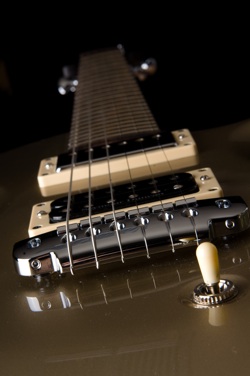
The Goldtop's Bridge

The Goldtop's Bridge

When I did my first Saint Guitars review of the Faded Blue Jeans model, I couldn’t believe how perfect the guitar was. The walnut body and neck, combined with the quilted maple top produced a bright and resonant tone that just begged to be explored to eek out all the possible tonal variations. With the Goldtop, the experience is still the same, but with that absolutely gorgeous finish, I’m experiencing a bliss that’s coming from both visual and aural sources.

Fit and Finish

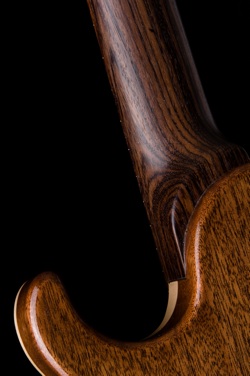
The Goldtop's Body and Neck

The Goldtop's Body and Neck

I’ve come to realize that there are some things in life that you can’t avoid describing with the heavy use of grandiose phrases, and the Goldtop definitely falls within this category with respect to how it looks. It’s perfect in every way. The creamy gold finish that almost looks white under light is a wonder to behold, but that’s just part of the equation. The gloss-finished mahogany body and open-pore rosewood neck add a certain sensuousness to the look of the guitar. I love that Adam had the foresight to keep the rosewood in as natural and organic state as possible. It feels absolutely wonderful when you grip the neck.

If I were to come up with a metaphor for how this guitar looks, it’s like admiring a beautiful woman that’s nicely dressed, but doesn’t need any makeup or other adornments to enhance her beauty. She’s self-aware and confident in how she looks, but doesn’t come across as aloof or unapproachable. In other words, this is a woman that has a purely natural and organic magnetism, and someone to whom I’d want to be close. That’s the response I have to this guitar.

Playability

I love the feel of natural grain, which is probably why I love my Strat so much with its maple neck. Again, for me there’s a certain sensousness in feeling the wood’s grain in my hand, and the Goldtop doesn’t disappoint in this department. When I first held the guitar, I was surprised and a little worried about the neck profile, which is wide by design, but add to that the C-shape, and I didn’t know if my relatively short fingers could reach all the frets, especially in the upper registers to hit the 6th string. But to my very pleasant surprise, I could get to those notes with ease.

As with all Saint’s that I’ve played, the Goldtop has a fast neck. The frets are just how I like them: Not too deep, but really lending themselves to a nice vibrato when you dig in a bit. And moving up and down the fretboard is a pure joy. The fret spacing is just right. As a guitar player himself, Adam really took great pains to get this part of the guitar right. For me, as I’ve said in the past, I’m not a really great improv guy, but I do play chords up and down the fretboard, and being able to move and nail the chords is very important. It’s as if precision was built into this guitar!

Adding to the playability is the arrangement of the neck and body. It’s very Les Paul-like, and that’s a good thing, which means that the higher frets are very easy to reach when the guitar hangs naturally from the straps. With my Strat, to get to the high frets, I have to physically shift the guitar to the left a couple of inches. Of course, part of that has to do with my gut 🙂 and it’s not really a problem, but I don’t have to shift the Goldtop at all.

How It Sounds

This is one of the best pickup combinations I’ve ever heard. The Pearly Gates in the neck has a nice, sweet, and smooth vintage tone. I liken it to a sip of a 25 year old Scotch. It’s warm and sweet and totally comforting. The Custom 5 is bright, but with a nice, taut low-end. When you turn up the gain on this pickup, you get the expected bright bridge tone, but because of the solid bottom-end, there is absolutely no “tinniness.” It’s just brighter sounding. This is a trait I’ve become accostomed to with all Saint Guitars. They’re the only guitars I’ve ever played that at least to me, have a usable bridge pickup. Combine the two in the middle switch position, and it’s pure heavenly tone. I could keep the guitar in this setting for practically everything I play, unless I wanted to get a super-smooth tone (neck), or need a bright tone to cut through the mix for a lead (bridge).

To me, the mark of a truly great guitar is balance in the dynamic response; more pointedly, that when you play high notes, the guitars volume doesn’t suddenly dive down. I don’t know how many guitars I’ve played that when I get above the 12th fret, the first three strings’ volumes literally sink, forcing you to really dig in with your pick to make them sound louder. That makes for a much more difficult playing approach, and is one thing that bugs me about my PRS SE II Soapbar. With that guitar, the first three strings are quite a bit lower in volume than string four through six. I’ve learned to compensate with my volume knob which thankfully is in a good position for on-the-fly tweaking. But with the Goldtop, and all the Saint’s I’ve played, this is not a problem. The dynamic response is balanced through all strings. It’s a testament to the resonance of the guitar. It picks up all the frequencies!

One thing I’ve learned about testing guitars is that the really important tonal properties are exposed when you play the guitar clean. I’ve played a lot of guitars that sound great when they distort, but just sound weak and hollow when you play them clean. Remember the beautiful woman I described above? This is her speaking voice: It’s rich and sensuous, and something you can listen to and never tire of it. Here’s a clip to prove the point:

I used an Aracom Amps Custom 45R that was re-tubed with 6L6’s from the stock KT-66 tubes, and Jeff kindly installed a Jensen Alnico speaker, replacing the Governor that I was testing with it. Both served to really open up the tone quite a bit with much more midrange – it started out very low-end focused.

What was amazing about this clip was that I wrote it earlier in the day, then recorded it 15 minutes before I had to leave to take my son to his lacrosse game, and just saved the audio file. When I finally sat down to listen to it, I couldn’t believe what I was hearing. Mind you, the clip is not EQ’d or mastered in any way. That’s the natural sound of the guitar out of the Custom 45R. I added just a touch of reverb on the amp, but other than that, it’s just the guitar, and the tone is – at least to me – amazing! It almost gives off a chorus effect. I thought it was due to the reverb at first, but when I came home, I played the song without any effects, and that chorusy tone was still there! I was blown away!

Overall Impressions

I didn’t think you could improve upon perfection, but the Goldtop is now my standard of perfection. As I wrote in a previous article, I’ve been in a bit of rut with writing music as of late, but with the Goldtop, I’m getting inspired again. It’s a marvelous guitar!

Read Full Post »

I just dig it when I find a great guitar and amp combo! Featured in this Jam Track are the Saint Guitar Company Messenger Baritone and the Aracom Amps Custom 45R, both of which I’ve reviewed previously. (Messenger Review | Custom 45R Review). The Custom 45 has a really beefy low-end and a slight scooped tone, and the Messenger, while a baritone, has this incredibly bright-sounding voice. The two complement each other particularly well! Here’s the Jam Track:

You have just over 6 minutes to play around with this one. For the rhythm part, I used a fairly basic rock beat, but I also added some Latin drums underneath to take the edge off the heavy downbeat. And by the way, there’s no bass in this track at all. All of that is provided by the Messenger!

Read Full Post »

saint_msgr_brown

Imagine, if you will, that guitar to the left, in a glossy, goldtop finish. That will be the guitar that Adam Hernandez of Saint Guitars will be building for me. It was by no means an easy decision to make. As a tester for Saint Guitars, and ostensibly a rep for Saint Guitars (I’ve been careful about keeping that separate from this site – though news about it will be out within the next few weeks), I love every single guitar I’ve gotten my hands on. I dig Adam’s approach to guitar-building, and of course, I simply love his designs.

But despite the relationship, I was a little wary of actually purchasing one. Why? There are lots of factors, which I’m going to share here. But first, the juicy back story…

As some of you may know, I’m a huge fan of G & L Guitars, especially the Comanche line. Yngwie Malmsteen calls the Strat a perfect guitar, but I believe the Comanche improves on it even further, especially with its Z-coil pickups that still offer that gorgeous single-coil feel, but with much more output.

For the last few months, I had been saving my pennies to purchase a Comanche from my local G & L dealer. I’ve been skrimping and scraping every extra buck I could because I just had to have one. It’s an incredible guitar that just speaks to my soul. And about a month ago, I had enough to get my beloved guitar. Then Adam contacted me via e-mail a few days before I was all set to buy the guitar and said he wanted to construct a guitar for me based upon this “dream” goldtop I had described to him a month before that when he asked me what I think would be my dream guitar.

Now you might think I just up and dropped all my plans to get a Comanche. I didn’t. I’ve been very drawn to the Comanche for a long time, but as I’ve shared, I also love Saint guitars. In fact, though I received the e-mail early in the morning, I sat on it for the whole day, and didn’t reply until late that night. In short, I was seriously conflicted, and for several good reasons, which is why I’m sharing this experience. And perhaps by sharing this experience, I can shed some light on helping you make your own choice in whether or not to go with a custom-made boutique guitar.

Most people who come to GuitarGear.org have a serious and virtually incurable case of GAS. Several have custom guitars – a few even have a few Saint guitars to their name. So there is no doubt that what you ultimately get is high-quality, and tailored to your specific tonal requirements. But the conflict in my mind was something entirely different than cost, quality, build, tone, etc.. I know what Saint Guitars sound like, and they’re some of the most gorgeous-sound guitars I’ve ever played; cost would be an issue, but if I made the decision, I’d make it happen; rather, it was dealing with the “known” versus the “unknown.”

So, to boutique or not to boutique? That is the question I posed as the title of this article. If it wasn’t cost or quality or tone that was the issue, what do I mean by the “known” versus the “unknown.” I’m going to bullet-point the known issues first:

  • First off, the Comanche was a known quantity to me. I have played several over the last couple of years, and while each is slightly different – after all you’re dealing with wood which is by no means uniform from instrument to instrument – they’ve all generally fallen within the same range of playability and tone.
  • And because I’ve spent a lot of time playing that model of guitar, I knew how I’d fit it into my stable and what it could do for my tone, and how I’d use it in my compositions and performances.
  • The Z-coil pickup is what I believe to be Leo Fender’s finest achievement. Even though Leo was known for creating the Strat, what a lot of people don’t know is that he didn’t play guitar – at all. He didn’t even tune them until late in life! He was all about the pickup, and he built the Strat around his pickup invention. So there’s a bit of history behind the Comanche.

So what about the “unknowns?”

  • Being that a custom-made is a unique creation, I don’t have a precedent from which to follow. There aren’t any previous guitars made with the EXACT specs my guitar would have. In other words, I don’t have any similar models from which to reference.
  • I suppose there are reasonable facsimiles, and since I’ve had the fortune to test Saint guitars, I know how well they’re made, but the guitar I have in mind isn’t made of walnut, which is Adam’s choice of wood. It’s a solid mahogany body with a maple neck – similar to a Charvelle I played a few days ago – very nice playing guitar.
  • Also, with a custom guitar, what I found was that I really had to think and on top of that do research on tone woods and pickups and hardware. That’s something that I wouldn’t have to do with a Comanche. I’ve just had to play a bunch to find the one that I like. That kind of leads back to the first point that there are no previous guitars with my exact specs from which to reference.

But despite all that, I’m still going to have Adam build me my guitar. The uniqueness certainly plays into it, but I’ve been playing long enough now that I have a good idea of how a guitar sounds with a particular type of tone wood, so tone is not quite as unknown as I might have originally thought. But I think the thing that probably was the scariest thing for me was having to specify the different pieces. In other words, all the effort I’d have to put into getting the guitar created. And even though it’s a bit of a moving target, here are the specs I so far:

Finish: Glossy Goldtop

Body: Double-cut Mahogany
Neck: Maple
Fretboard: Ebony
Headstock: Maple

Hardware: Gotoh wraparound bridge, Gotoh 510 tuners (locking)

Pickups (still kind of deciding): Either Seymour Duncan ’59 in neck, Alnico Pro II bridge or 2 ’59’s or 2 Alnico Pro II’s. Both coil-tapped.

Let me know what you think!

Read Full Post »

4.5 Tone Bones - Very solid performer, and has almost everything but just missing a couple of things

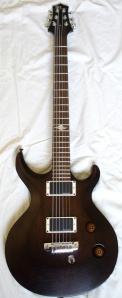
Saint Guitar Company Baritone Messenger

Saint Guitar Company Baritone Messenger

Saint Guitars Baritone Messenger

Summary: An aggressive guitar that wants to growl! This baritone is well-suited to de-tuned, low-freq, hard-driving metal, yet can be tamed to produce sweet, ringing cleans.

Pros: Very playable guitar, with a fast neck despite the wider frets. The hot, high-gain, active pickups practically eliminate the need for distortion pedals. Will hit the front-end of amp with tons of oomph! Bright tone will cut right through any mix.

Cons: Not really suited for a cleaner style of playing.

Price: $2300

Specs:

  • Solid walnut body and neck
  • Rosewood fretboard
  • Seymour Duncan Blackouts in Neck and Bridge
  • Master Volume and Tone
  • Gorgeous, dark-brown open-pore finish

Tone Bone Rating: 4.5 – Metalheads will love this guitar! I dug its playability, but would probably swap out the active pickups for a pair of ’59’s or Alnico Pro II’s to give the tone a fuller sound. But as with any Saint Guitars instrument, it’s really playable!

I’m very blessed. I have great friends who share my passion for guitar, and several of them make equipment. And I feel extremely grateful that I get to play the stuff they create. Such is the case with Adam Hernandez, whiz-kid owner and luthier of Saint Guitar Company. Adam and I struck up a friendship in the middle of last year, and I get to test (and sometimes spec) guitars he’s adding to his inventory. He doesn’t carry many in inventory as his business is fairly dedicated to creating custom works of functional art. But it’s cool that he lets me play with them. On the flip side, I’m more than willing to do writeups of his excellent guitars.

And while the guitars Adam creates are nothing short of amazing, what really turns me on about the guitars is Adam’s fearless approach to guitar making. For instance, Adam’s tone wood of choice is walnut. Walnut is usually considered bright and dead. But Adam has somehow found a way to shape and construct guitars made from walnut that are incredibly resonant and rich in tone. A guitar player himself, his designs reflect a sensitivity to the working guitarist, with easy-to-reach controls, and beautifully shaped bodies and necks that are more than just pleasing to the eye, they’re meant to be played!

When Adam contacted me and told me he wanted to swap the Faded Blue Jean Benchmark that I had been testing, I have to admit that I experienced a bit of trepidation in making the trade. For one thing, I kind of got attached to the “Baby Blue” as I came to call it, and more importantly, I had never played a baritone guitar, and didn’t know what to expect. But far be it from me to let those things get in the way. It’s not every day that you get to play custom, hand-made guitars. So a couple of weeks after he called me, we met at my local coffee hangout. That was before Christmas, so I’ve had quite a bit of time to play with the guitar.

Fit and Finish

What can I say that I haven’t said before? Saint Guitars are flawless in look and build. With this Baritone, I really dig the open-pore finish! It really brings out the natural grain of the walnut. As usual, the frets are perfectly shaped, and you’ll never find any rough edges or production burrs on the fret wire. And being that it is a solid stain, it’s just beautiful in its simplicity.

Playability

As I mentioned briefly in the summary, this is a very playable guitar. The action is PERFECT, and the jumbo frets make it easy to achieve vibrato just by wiggling your finger ever so slightly. In fact, since I like to really dig in with my left hand, it took me awhile to adjust to the light touch that’s required to voice a note or chord. But that’s a good thing. I’ve said it before: A good instrument will force you to be a better player because it won’t hide your mistakes or the idiosyncracies in your playing.

Adam is partial to wide, but shallow “D” shape necks. The “D” shape on the baritone is less pronounced on the Messenger than it was on the previous guitar I tested. I myself am partial to narrow “C” shape necks, but irrespective, the neck shape certain didn’t preclude me from playing. It did take a little while to get used to, but once I found a good height and angle, the guitar became a dream to play!

How It Sounds

I’ll let you decide for yourself. Here’s a clip:

And here’s the same clip with my Strat layered on top. I did this to see how well it played tonally with a standard scale guitar.

Okay, I did add a touch of reverb to the guitar in the tracks above, but the natural resonance and sustain even without reverb is astonishing! You can dig into a note, wiggle your finger, and the guitar will happily carry that note into the ethers forever. It’s very pleasant.

Now here’s the rub… and the reason I gave it 4.5 Tone Bones. For my style of playing, which leans towards the blues and classic rock, the Seymour Duncan Blackouts were way too aggressive for my tastes. I could clean them up just fine, but the guitar in this configuration was simply way too aggressive for the styles of music I play. For instance, when I recorded the rhythm track above, the guitar’s volume was set at around 3, the amp’s volume was at 2, and I used the Master to get clean headroom. Any higher on the guitar, and the gain the Blackouts produce would just slam the amp’s front end (BTW, I used an Aracom RoxBox 18 Watt head and a 1 X 12 cabinet with an Eminence Red Coat “The Governer” speaker). It sounds great clean, and if I were to purhase this guitar, I’d have Adam swap out the Blackouts and go with a pair of ’59 humbuckers or Alnico Pro II’s. They’re very vintage sounding, and a lot more full-bodied.

With respect to the natural aggressiveness from the pickups, while I played with the guitar a lot in the past month, I just couldn’t get inspired to write anything that took advantage of the high gain of the pickups. It just wasn’t in me this round, which is a shame because it is such a fine instrument in every other way. What I’d like to do is play the guitar with different pickups.

So what about with high gain? Damn! This guitar simply screams! With the volume knob dimed, it slams the front-end of an amp and causes immediate saturation! I usually have to bolster my Strat with a clean boost or an overdrive pedal to achieve the kind of high-gain this little monster can produce by itself! It’s very cool to hear!

Overall Impression

I think this guitar would be metalhead’s wet dream come true in stock form. In fact, Adam constructed and equipped the guitar with thrash metal in mind, and tried to see if he could get James Hetfield of Metallica to play it. Alas, he couldn’t find a way last time they were in town. But I can attest to what this guitar can do to an amp! But with different pickups, I’m sure I’d give it a perfect score.

Read Full Post »

Saint Guitars Messenger Baritone

Saint Guitars Messenger Bariton

Saint Guitars Messenger Bariton

Just wanted to share some initial sound bites that I created with a couple of new pieces of gear. The first is a Saint Guitars Messenger Baritone. Before now, I had never played a baritone, and really didn’t know what to expect. But after playing around with it for a few days, I have to say that I just love how this thing sounds. Baritones have been getting more and more popular as of late due to their very low, natural tone, and several metal players have started using them because of this. But I truly believe that a good test of a guitar or an amp is how it sounds clean. Played clean, you can’t hide mistakes. So here’s a clip that I created this morning to demonstrate the beautiful, clear tone the Messenger Baritone creates.

The guitar was played through the Normal channel of a Reason SM25 amp. As you can hear, the tone is deep, but surprisingly chimey due to the bright-sounding walnut body and neck, Adam Hernandez’ tone wood of choice. It took awhile to get used to playing the wider frets, but once I got a handle on it, I just started loving how this guitar plays and sounds!

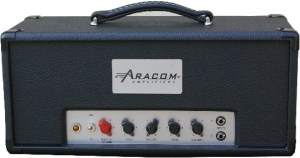
Aracom Amps RoxBox 18 Watt Head

Aracom Amps RoxBox 18 Watt Head

Aracom Amps RoxBox 18 Watt Head


You know me, in addition to just digging on overdrive pedals, I love low-power amps! When Jeff at Aracom initially contacted me, I had never even heard of Aracom amps! And I pride myself on knowing about these things! Yikes! So when I perused his site, I was immediately taken by the RoxBox. And after just a day of using it, I have to say that I LOVE THIS LITTLE AMP!!! First, because it’s a low-wattage amp, which makes it very versatile, and secondly because it comes equipped with EL-84 power tubes! There’s a brightness in the EL-84 tubes that just makes my soul reverberate, and I just dig the sounds that this amp can produce. But just as with the Messenger above, the big test for me is how the amp sounds clean. And baby, it sounds great clean! The sound bite I have here uses the same clip above, but layers on a lead part using just my Strat played through Channel 1 of the RoxBox. Channel 1 has TONS of clean headroom, and even ‘buckers have a hard time making this channel grind. This will definitely score well with the pedal freaks like myself. Anyway give it a listen:

This little amp is nothing short of impressive, and priced at $895 for the head, it’s also an incredible value!!! Kudos to Jeff at Aracom for creating an attainable hand-wired amp! Looks like I’m going to be shelling out bucks for both the Reason SM25 AND the Aracom RoxBox.

Read Full Post »

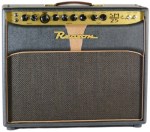
Reason Amps SM25 25 Watt Combo Amp

Reason Amps SM25 25 Watt Combo Amp

Reason SM25 25 Watt Combo Amp

Summary: Incredibly expressive and versatile amp that can deliver a wide range of tones from glassy, sparkly cleans, to lewd, rude, and crude distortion, all in a single cabinet!

Pros: Killer tones in all channels. Amp is voiced bright by design, which makes it great to use in the studio. StackModeTM is the best thing since sliced bread, and is THE secret sauce that makes Reason Amps stand out from the rest.

Cons: No effects loop, which would be handy for placing reverb and other modulation effects after the amplified signal. Just a nit.

Price: $2395

Specs:
• Output: 25 watts RMS @ 5% THD
• 1 X 12 Eminence Red Coat Driver
• (2) 6V6 output tubes, in Class AB Fixed Biased configuration
• (4) 12ax7 preamp tubes
• GZ34 Rectifier tube
• 3 way Stack switch – Normal, Stack, Bright
• Normal channel – Volume, Treble, Middle, Bass
• Bright channel – Volume, Tone
• StackMode™ – Bright & Normal channel controls are active, Stack Volume & Hi-Cut
• Oversized extra capacity power supply
• Power Switch
• Standby Switch
• Independent output jacks for 4,8, 16-Ohm operation
• Footswitch access to all three channels/modes

When I discovered the Reason Amplifier company a few weeks ago, I was so intrigued by what they had to offer that I immediately contacted them. I had the fortune of getting in touch with Anthony Bonadio, one of the founders of Reason to talk to him about his exciting new company and his new line of amps. That conversation led to him sending me an SM25 25 Watt combo to review; and since I’ve had it, I haven’t gotten much sleep from playing with it late into the night. Now you might say that I’m just excited about playing a new amp. Yes, that certainly has a lot to do with it. But what Reason has come up with in their amplifiers is so incredibly brilliant and unique that I’ve been spending all my free time trying to discover the subtle intricacies of this tone machine. There’s a lot to talk about, so let’s get started!

“Dahr-ling, you look mahvelous!”

The Reason founders, Anthony Bonadio and Obeid Kahn, are both vintage gear freak-o-maniacs, and the retro styling of the entire Reason amp line is a testament to that passion. The SM25 sports a black tolex cabinet with light brown trim around the grille cloth, and a thick leather handle with what appears to be brass accoutrements. Between the control surface and grill cloth is a prominent tolex-covered cross board sporting the Reason logo which, by the way, is very cool, very retro as well. The control board looks like burnished brass with black, bold lettering for labels. And to add to that retro vibe, chicken head knobs are used for all the controls. This amp, and all Reason amps for that matter, just ooze vintage mojo. Just looking at the amp, I can’t help but grin that grin you get when you see something so far-out COOL!

It’a hard to discern the actual size of the amp from just a picture. So make no mistake about its size: This is not a diminutive 25 Watt amp. In fact, it’s about as big as a Fender Twin, though not as deep. The shipping weight said 32 pounds, but from feel and comparison to my Fender Hot Rod, it weighs almost as much. But that’s not a bad thing. A beefy cabinet creates a lot of resonance if done correctly, and believe me, it’s done correctly with this amp.

How It Sounds

All Reason amps, including the SM25 are voiced bright. You don’t get beefy lows out of this, and that’s by design. Now before you dismiss that, on stage and in the studio, that bright voicing will ensure your guitar cuts through the mix. I recently played it at one of my regular gigs, and where my amp oftentimes gets lost in the mix, forcing me to pump up my volume, I had no problem cutting through, and mind you, I barely had to push my volume. The bright voicing let my guitar tone sit in the mids and highs. My sound guy even commented on how well he could hear my guitar without me pushing the volume like I usually do during a solo break; though admittedly, like any lead guitarist, I usually don’t mind being louder than everyone else. 🙂

In the studio, using the amp for recording is like being in heaven. The bright voicing combined with the rich tones the amp produces is simply candy for the ears. From a practical perspective, brightly voiced amps also record much better. For home recording I’ve had to stop using my big amp because it’s just too boomy, no matter how I set the EQ. I’ve had to use smaller, brighter amps because they cut through a mix much better. But since I’ve had the SM25, I’ve recorded two songs with it, and like I said, I’m in heaven. I now have a bright voice to cut through the mix, but rich tones as well. It’s the best of both worlds!

The SM25 is also incredibly touch-sensitive and responsive to the subtlest manipulations I made on my guitar. In fact, when I first started playing with it, I was a bit embarrassed by how I sounded. For my all my tests, I played along to some jam tracks I’ve produced for practicing different styles, and recorded what I played through the amp. When I played back what I had recorded, I was appalled at how crappy I sounded! All my mistakes came through! I couldn’t hide whatever bad habits or bad technique I had behind effects, like I normally would. In short, this amp has forced me to play better because it’s so unforgiving when you make a mistake. But hey! It’s never a bad thing to be shown your weaknesses. That’s how you grow and improve!

Multiple channels, lots of tone shaping possibilities…

The SM25 comes with two channels: Normal and Bright. But it also sports a third “channel” called StackModeTM that’s essentially the Normal and Bright channels run in a series with an extra gain stage, while retaining volume and tonal control over the Normal and Bright channels. To me, StackMode is Reason’s secret sauce, but I’ll get into that in a bit. I’ll first describe the independent channels.

The Normal channel sports a volume knob and a three-band EQ. The volume knob is also a push-pull knob, and pulling it out adds some extra high-freq boost to bring out the super high frequencies. The effect is that once you set up your EQ, pulling out the knob adds some extra high-freq shimmer and sparkle. It’s subtle, but absolutely delicious. Comparatively speaking, the Normal channel sounds like your classic, jangly American clean tone, but with the high-freq boost, you get a bit of the sharpness of the British clean – nice.

The Bright channel is well, bright. It too has a push-pull volume knob for extra high-freq boost, and it has a single tone knob to back off some of the brightness. The Bright channel is also the more “ballsy” of the two, and really kicks in some pretty high gain. It’s quite lovely, in my opinion, and it’s perfect for doing the traditional solo break that will cut right through a mix with ease.

Channels? We don’t need no stickin’ channels!

But for me, the real attraction of this amp, and actually any amp from Reason for that matter, is StackModeTM. In all my years of playing, I’ve never come across anything quite like it. On the surface, you might think this is just another channel on a multichannel amp. It is in a way, because of its independent gain stage. But that’s about as close a comparison that you can make to other multichannel amps. Unlike other multichannel amps where all the channels are independent, StackModeTM input doesn’t come directly from the guitar. The guitar’s signal is routed through the Normal and Bright channels first, then fed into the StackMode channel. And the volume and EQ settings on the Normal and Bright channels are still active!

Because volume and EQ are retained in the Normal and Bright channels in StackModeTM, the tone shaping possiblities are incredible. What you adjust in Normal or Bright affects the final output. You can crank up the volumes on the first two channels and achieve uber gain, with thick, rich distortion. Or you can dial it back a bit and take a more balanced approach. The point is that you can do a lot of tone shaping to your needs while in StackModeTM. And here’s the kicker: The amp still retains its touch and guitar volume sensitivity in StackModeTM.

What does this mean? Well, I soon discovered that StackModeTM was the only channel I’d probably ever use, unless I had to go super clean, whereas I’d just switch to the Normal channel. The amp in StackModeTM is so responsive to picking attack and volume knob levels that I found I just didn’t need to do any channel switching at all once I dialed in my settings for the Normal and Bright channels. It’s that good!

One other thing, the volume knob on the StackModeTM channel is a very good Master volume. When I’m playing late at night, I can turn the volume down on the StackModeTM channel, and still retain the characteristics of the settings I made in the first two channels. It’s just softer. How cool is that? So that’s why entitled this section, “Channels? We don’t need no stinkin’ channels.” Once you have your settings dialed into StackModeTM, you’ll never want to get out of it! So for me, the SM25 is effectively a single channel amp with adjustable stages.

My Tests

In any case, for my tests, I used four different guitars: A Strat, a PRS SE Soapbar II with P-90’s, an Epiphone Korina Explorer and a Saint Guitars Benchmark, both with humbuckers. I’ll talk about how each guitar sounds separately below.

Fender Strat

Obeid Kahn is known in the industry as a “Strat man,” and this amp really sounds great with a Strat. I’ve got the vintage re-issue Tex Mex pickups in mine, and slathering on reverb, you can get some awesome Dick Dale-like tones. But it doesn’t necessarily sound like a Fender amp. In fact, the clean tone is like a cross between a Fender and a Marshall. It’s creamy smooth, but bright and sparkly at the same time. The big cabinet adds to the resonance, and the ever so slight voltage sag that you get from the rectifier adds to the sustain and resonance. This is boon when you’re playing with a Strat because they do not sustain well at all. I could get country twang to hard-driving distortion with uber sustain with my Strat.

PRS SE Soapbar II

P-90’s are hot pickups by nature, and it doesn’t take much to push any amp into overdrive, and when it does this, it’s a preamp overdrive lover’s wet dream! With the SM25, the 12AX7’s just sing with sweet, smooth overdrive goodness. There’s nothing harsh about the sound this produces in the SM25, but one thing I did notice with the tone was that unlike other amps I’ve played with my SE Soapbar II, even though the amp is bright, the sound the amp produces with it is big and bold, without being boomy. It’s crystal clear, and doesn’t wash out the higher notes in a barre chord, which often happens with more boomy amps. All in all, I just dug that halfway between single coils and humbucker sound my P-90’s produced with the SM25.

Epiphone Korina Explorer

This is a real rock guitar, with a warm ballsy tone. Plugged into the SM25, I was amazed at how the amp responded to this guitar, and I was able to spew out some thick distortion and singing sustain with the volume knobs on the amp dimed to the hilt. I’m not a metal player, and technically, with the bright voicing of the Reason amps one wouldn’t think they’d be suitable for metal, but the lewd, rude, and crude drive I could produce with the Explorer plugged into the SM25 was scary! But in a good way. And when I scooped the EQ, yikes!

Saint Guitars Benchmark

Of all the guitars I used for testing the SM25, the amp seemed to love the Benchmark the most. This guitar was spec’d with Blues and Classic Rock in mind, and through the SM25, I’ve never heard it sing like this. I could go from deep, dreamy clean to rabid dog distortion, and the whole time, the SM25 maintained a tonal clarity and character; never muddying or washing out. It was other-worldly, to say the least.

Made for the Road and the Studio

Anthony Bonadio cautioned me during a previous conversation that he didn’t want to alienate people from buying the amps when he said, “Our amps are really intended for the gigging and session musician.” In other words, Reason amps aren’t really meant for the bedroom musician. These amps want to move air, and that’s no exception with the SM25. In fact, when cranked, it’s a hell of a lot louder than my 40 Watt Fender Hot Rod Deluxe, and that’s a loud amp! It just wants to project its voice. Premier Guitar even gave its bigger brother, the SM50, its “Loud as Hell” award. But in my opinion, the real test of an amp is how good it sounds throughout its entire range of volume. That’s a mark of versatility, and in spite of what Anthony claims is the focus of Reason’s line of amps, you actually can play these amps at bedroom levels and still produce kick-ass tone!

A lot of amps don’t sound good unless they’re cranked, but at lower volumes they just peter out and lose their character. But at least with my experience with the SM25, it sounds great at ANY volume. Considering that all Reason amps are built around the exact same circuitry, I can safely say that this probably applies to the entire line. So don’t be fooled by the “loud as hell” moniker. These amps are incredibly versatile amps that are comfortable be played in lots of different venues under a variety of conditions.

My Overall Take

I think you can guess that I just love the SM25. For a musician like me who plays small to medium venues, and whose studio is located in a carpeted garage, this amp is a dream come true. It’s expressive with all my guitars, and it’s so versatile that I can use it wherever I play.

As I shared with Anthony recently, StackModeTM is it for me. It’s the secret sauce that sets Reason amplifiers apart from the competition! For more information, go to the Reason Amps web site. And if your local dealer has some in stock, I encourage you to go there and play around with one. You will not be disappointed; in fact, you’ll be blown away!

Read Full Post »

I love getting those intense spurts of creativity when I’m using awesome equipment. I just happened to have a couple of review pieces on hand: A Saint Guitars Benchmark and a Reason SM25 combo amp. This song started out as a simple riff this morning, and grew from there. It’s called Lookin’ for the Good Life. Let me know that you think.

The song showcases the incredible tones the Benchmark and SM25 make together. Just love it!

Read Full Post »

« Newer Posts - Older Posts »