Feeds:
Posts
Comments

Archive for the ‘Tone’ Category

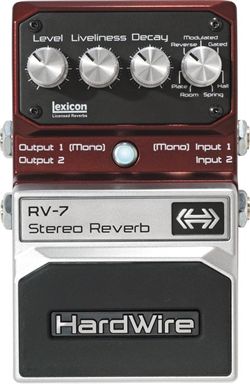
Hardwire RV-7 Stereo Reverb

Hardwire RV-7 Stereo Reverb

Back in September of this year, DigiTech released a line of high-end pedals under the “Hardwire” brand. These are high-quality, true-bypass pedals, and I have to say that I’m very impressed. Traditionally, DigiTech hasn’t been known for really high-end pedals. They’re typically priced at the mid- to low-end, and have always had reasonable quality. Nothing to complain about, but definitely nothing to write home about either.

But with the new Hardwire line, they’ve completely stepped beyond the norm, and have created pedals that have the potential to compete with other high-end pedals. In addition to being true-bypass, the pedals operate with a higher operating voltage which gives them a lot of headroom, making them a lot less susceptible to clipping. The power conditioning within each unit also ensures a constant voltage; a boon when a battery is being used, so you don’t get performance loss as battery power runs down (though I wonder how that affects battery life…).

I’ve been so focused on off-name brands of pedals for awhile that I’ve essentially ignored what the big production houses have been creating. So I apologize for being a bit behind the curve with the timing of this review. But be that as it may, I’m glad I stumbled upon this particular pedal while I was testing the EH #1 Echo at my local Guitar Center.

After I was done testing the #1 Echo, which I really liked, by the way, I asked the helpful, and amazingly knowledgeable sales guy if he had any good reverbs in stock. GC doesn’t really carry much in the way of boutique pedals, so I wasn’t expecting much. But very much to my surprise, he pointed me to the new line of Hardwire pedals, with special emphasis on the RV-7 Stereo Reverb, explaining that Hardwire was a new brand from DigiTech. I raised my eyebrows at that…

Sensing that I wasn’t some schmuck, he didn’t try to do a selling job on me, and just simply said, “Dude, I think you’ll really like this pedal. I wasn’t expecting it to be THIS good. You gotta try it out.” So I did, and the first words that came out of my mouth were “Damn! That’s sweet!” The sales guys just grinned and said, “I told you. Surprising to come from DigiTech, huh?” That was putting it mildly, to say the least.

So what makes this pedal special? DigiTech licensed 7 reverb effects from Lexicon. I’ve worked with Lexicon reverbs for years, and they are top-notch. At my Church gig, we use a Lexicon rack for vocals, and I just DIG that unit. To have them in a pedal for my guitar is even better! Granted, it’s digital modeling, but this pedal really KICKS ASS! In all the voicings, the sound is consistent, and you can dial in as much attack and decay as you need. Attack is controlled via the Liveliness knob which is similar to a pre-delay. For those of you who aren’t familiar with pre-delay, it’s essentially a certain amount of time (usu. in milliseconds) that a reverb unit waits before it kicks in the reverb. It’s very useful to have this kind of control, because those units without it often suffer from being really wet and soupy. Pre-delay allows a certain amount of dry signal to go out first, then tail out with reverb. The net result is that you get much better note articulation.

My favorite setting was the Spring Reverb, though they all sounded dynamite! And with the fine-tuning you can dial in with the Liveliness and Decay knobs, you can get just the right reverb effect for your purposes. I had so much fun playing with this little box! I spent more time with it than the #1 Echo.

Let’s look at the RV-7 features (from the DigiTech web site):

  • Reverb Types
    • Room – Fast decaying reverb; great for a touch of ambience
    • Plate – Renowned studio reverb heard on classic recordings
    • Reverse – Reverb in reverse; gradually crescendos to full volume
    • Modulated – Lush, modulating, reverb ideal for chords
    • Gated – Unique reverb with abrupt decay; good for percussive playing
    • Hall – Large, encompassing reverb with warm decay
    • Spring – Classic “surf” reverb; great for Rockabilly too!
  • Tails On/Off Switch – When on, reverb tails are not cut off in bypass
  • True Bypass circuitry preserves your tone in bypass
  • Constant high-voltage operation for tonal quality and noise reduction
  • HardWire Pedals include the following stage accessories
    • Stomplock™ knob guards lock your tone in place and prevent tampering or accidental knob adjustments onstage
    • Green gaffer tape helps you locate the pedal in adverse stage lighting
    • Custom-cut Velcro® pads attach and lock your pedals to your pedalboard

The features in this pedal, plus the standard features included in all the Hardwire pedals are definitely worth a look. And you’ll actually be blown away by the price: $149.00. While higher than their $100 pedals, that’s not a lot more to ask for that much more quality and features!  And just for shits and giggles, here’s a video review by ProGuitarShops.com:
Finally, I realize that this review isn’t in the format of my regular reviews, and for that, I’m sorry. I just wanted to get this out. In any case, the DigiTech Hardwire RV-7 Stereo Reverb gets:
5 Tone Bones - Gear has stellar performance, value, and quality. This is definitely top of the class, best of breed, and it's a no-brainer to add this to your gear lineup!

Read Full Post »

Pedal Board - Lee Rittenauer

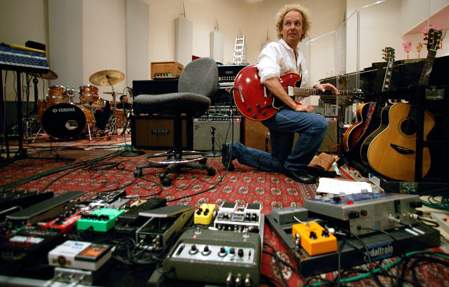
Just read a great article on setting up your pedal board on Guitar Jam Daily. It has great information on planning out your board size and layout – something I wish I had done before I got my board, which is now too small for all my pedals, especially since I’ve gotten a wah pedal! Eek! In any case, check it out!

But the article also raised a question that I get from time to time: In what order should I place my pedals? There is a general model that most people follow, and instead of re-inventing the wheel, I’ll point you to another great article on Harmony Central that covers this very topic.

Photo courtesy of andybrauer.com

Read Full Post »

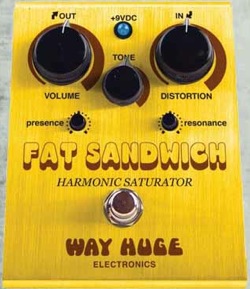
Way Huge Fat Sandwich Harmonic Saturator

Okay, okay already. Another overdrive pedal. Just when you think you’ve seen ’em all, another pops up. But harken back to the early 90’s, and you’ll find Way Huge pedals gracing the boards of many guitar gods. Way Huge closed their doors in 1999, but a recent partnership with Dunlop has revived Way Huge, and the Fat Sandwich is one of the products of the partnership.

This is one special-sounding pedal. Check out the clips here.

Read Full Post »

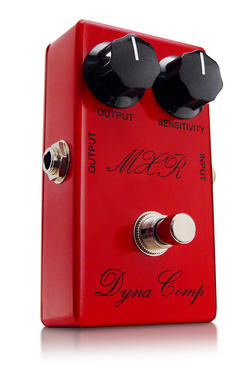
MXR '76 Vintage Dyna Comp Pedal

MXR

Over a year ago when I was looking for a compression pedal, one of the pedals I reviewed was the MXR Dyna Comp, along with the Boss CS-3. I didn’t like either of them. The CS-3 was way too squishy and I thought it significantly altered my tone. The MXR wasn’t quite as bad, but I still thought it did enough tone alteration to pass on it.

As many might know, I ended up going with the Maxon CP9 Pro+, which I felt didn’t alter my tone, no matter how far I squeezed the signal. I love the pedal, and when I play my Strat, it’s almost always on.

But in my search for a compressor back then, I ran across several discussions on the classic Dyna Comp from the 70’s. People raved about its transparency, and how it was a highly sought-after pedal. In fact, a search on eBay revealed that I couldn’t get a vintage one for under $250. Yikes! For a pedal that brand new goes for under $80, the vintage Dyna Comp must’ve been really special.

Well, the folks at the MXR Custom Shop have produced a limited run of the classic Dyna Comp replete with the script lettering, and more importantly, the EXACT same circuitry as the original. According to the article I read, the IC’s used in the original pedal haven’t been produced since the 80’s. But the Custom Shop folks seemed to have found some – at least enough to produce a limited run.

I looked on the Dunlop site for any information about the new pedal, and there was none to be found. No prices either. Count on this baby to hit collectable status real quick. Also count on it being priced a hell of a lot more than its newer sibling, which you can get at Musician’s Friend for $69.99. Now given that I already have a kickass compression pedal, I’m probably won’t be in the market for one, but I sure would love to get my hands on one just to review it.

For those of you who are a bit dubious of using a compression/sustainer, please don’t scoff. I will admit that for high-volume, high-gain situations, a compression sustainer is not really needed. You’ll get a lot of compression from your saturated power tubes. But for those of us who mostly play in low-volume applications, a compression/sustainer is a total life saver.

The restaurants and church that I play at have high ceilings, and of course, there’s the ambient crowd noise to deal with – especially at the restaurants. To help cut through the crowd noise, and to deal with the expansive acoustic environment without turning up too loud, I couldn’t do without a compression pedal. This is especially true when I kick in distortion, which tends to “spread” out your sound a bit. With a compression pedal, you fatten up your tone and produce a more even volume, albeit a tad less dynamic.

You might think that the loss volume dynamics is a bad thing, but before I got my CP-9, I had to fight my volume all the time – it was frustrating.

Apparently, the newer M-102 version with serial numbers starting with ABxxx are true bypass, and sound really nice. Maybe the one I tried at the time was not one of ’em. Oh well… In any case, if you’re interested, you can check it out at Musician’s Friend:

MXR M-102 Dyna Comp Compressor Pedal


You can also check out the Maxon CP-9 Pro+ here:
Maxon Nine Series Compressor Pro+ Pedal

Read Full Post »

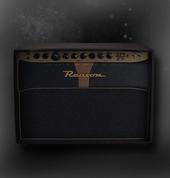
Reason SM25 Combo Amp

Reason SM25 Combo Amp

Need a tube amp? Now you have a Reason. Sorry, couldn’t resist the pun. All right, I know what you’re thinking, “Another amp manufacturer?” That’s what I thought at first until I saw some video clips (I’ll get to those in a sec). But on the flip side of that mild complaint, thank the universe that people have the creativity to come up with different approaches to existing paradigms.

I found out about Reason amps from none other than Mr. Phil Vickman of Fat Tone Guitars just outside of Chicago, Illinois. Being a fellow blog freak, I found Phil’s Fat Tone Blog awhile ago, and signed up for his newsletter. Much to my surprise, his latest newsletter featured an upcoming in-store demo from the guys at Reason Amps on November 12 at 5-7pm. Go to Fat Tone Guitars for address information, or give ’em a call at: 866/512-8663.

So, being curious, I checked out the Reason Amps web site, checked out their sound bites, and much to my surprise, they didn’t have a dealer list, and they didn’t even list MSRP’s for their amps! So, I gave Phil a call, and we had a nice chat. Apparently, Reason Amps is NEW. So new, that not too many people have heard of them. But I have a feeling that their amps are soon going to get some traction.

So what makes Reason amplifiers so special?

Whether you go low wattage or up to their 50W amps, they all come with three modes: Normal, Bright, and Stack. It’s actually two channels, with the third mode being a blend of the two channels that Reason calls “Stackmode.” Stackmode uses a “cascade series connection that sets up the circuit architecture to blend the independent gain stages” of the two channels.

The net result? Yikes! Tones that you wouldn’t expect to find from an amp that is essentially a vintage-style amp. But don’t take my word for it. Check out the YouTube demo:

You can also view all their videos here by clicking here.

Granted, YouTube audio is not the most desirable audio to be heard, but if the amps sound that good over YouTube, you gotta believe they’re going to sound outstanding live. So check out the Reason web site!

A Little Plug for Fat Tone Guitars

Phil Vickman has a nice little business going with Fat Tone Guitars. I go to the Fat Tone site to get on my drool factor for the wonderful gear he sells. Amazingly enough, there’s not a Fender guitar listed on his site, though he does carry Gibson. But make no mistake, Fat Tone sells high-end gear from several boutique guitar makers like Baker, St. Blues, and Ram. From my recent conversation with Phil, he likes unique approaches to guitars. For instance, Ram guitars make Tele-style guitars made from pine! Wow! We spoke at length about Saint Guitars and how Adam Hernandez likes using different kinds of woods like walnut or bloodwood. That’s cool and unique. Adam told me he spoke to Phil, and will be sending him a couple of demo guitars. That’s so awesome! Way to go Adam, and way to go Phil! You won’t be disappointed!

Read Full Post »

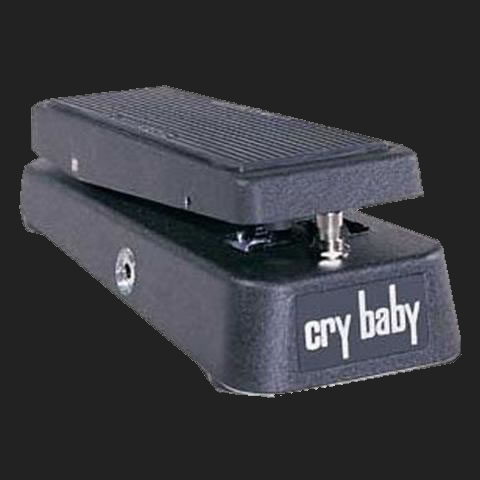
Dunlop Cry Baby GCB-95

Dunlop Cry Baby GCB-95

About a week ago, I wrote an article about getting a wah pedal. I had tried out and listened to several, and actually dug on a lot of them, but I just kept on coming back to the original Cry Baby. There has just been something about the classic sound of the Cry Baby that just makes me close my eyes with a smile of complete satisfaction while I’m playing.

For other players, this classic wah sound may not be their cup of tea, but this is the sound I grew up with. Every cop show on TV in the 70’s had a guitar played through a wah, and of course, let’s not forget Jimi who took it to another dimension. And it’s not like I’m going to try to play like Jimi – frankly, no one can – it’s just a sound that I’m used to, and it puts me in a time warp, back to when I was a kid.

Did nostalgia make me pick the GCB-95? It probably had a lot to do with it, but that’s the thing about tone: It’s what you like that matters. I didn’t get that nostalgic feeling of my youth with a lot of the other pedals. Yeah, I do admit there were some really awesome ones out there that I was ready to buy, but I figured that those could actually wait. I just couldn’t justify making a substantial investment into something that was so new to me. But I could get a Cry Baby at a fraction of the price, and I figured that since I was so new to playing with a wah, it would be best to instead make a minor investment to try out the technology before I spent a couple of hundred on a more expensive model. So, I forked out a reasonable $49 bucks at my local used gear shop for Cry Baby in excellent condition and saved even more money to hedge my bet.

So after a day, what’s my take? Well… I should’ve gotten a wah a long time ago! Don’t know what it is about it, but I’ve taken to it like a fish to water! Not to say that I’ve completely mastered it in a day, but it sure does feel natural. And you know what? The Original Cry Baby may be bordering on the vintage with respect to tone, it may only cost $69 used, and may be considered way too low tech for more modern players’ likings, but it totally does the job for me. I’m very satisfied.

Read Full Post »

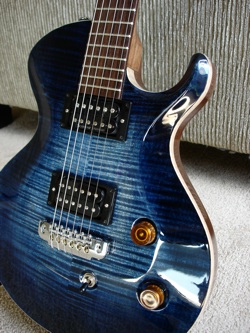
SAINT Guitar Company - Faded Blue Jean Benchmark Guitar

Saint Guitar Company Faded Blue Jean Benchmark Guitar

Saint Guitar Company Benchmark

Summary: Introducing a pure tone machine, with sultry, sexy lines to boot!

Pros: Dense walnut body and maple top give this guitar a natural brightness without sounding “tinny.” Coil tapped humbuckers enable you to serve up a huge tonal palette.

Cons: Nit: Volume and tone knobs are a bit too easy to turn. High-gloss finish on the neck was a little sticky until I got some body oils on it – my personal preference is a satin finish on the neck – this is just a nit as well.

Price: ?

Specs:

  • Reserve Stock Curly Maple Top (“Faded Blue Jean” stain)
  • Walnut Neck and Back (Medium natural stain)
  • High-gloss Finish
  • Koa Headstock Plate
  • High, Wide Frets
  • Handmade Rosewood Nut
  • Rosewood Fretboard
  • Gotoh 510 Tuners
  • Gotoh 510 Bridge
  • Neck Pickup: Seymour Duncan SH-2 Jazz (coil tapped via Volume)
  • Bridge Pickup: Seymour Duncan SH-12 Alnico II Pro (coil tapped via Tone)
  • Master Volume/Tone knobs.
  • 25 1/4″ Scale

Now I know how a guitar made to my specifications plays and sounds! If you’ve read this blog for any length of time, you’ve known about my relationship with Saint Guitar Company, a little manufacturer in Fresno, California. A couple of months back, Adam Hernandez (luthier) contacted me and asked me to spec out a guitar he was making for inventory. The body and neck woods were already picked out, but he said I could spec the rest. I finally got the guitar this past Sunday, and have had a hard time pulling myself away from it!

This is simply a pure tone machine. Unplugged, the resonance and sustain are simply incredible. All the pieces are pressure fit together (Adam claims the fit is so tight, he doesn’t even need glue – though, of course he uses it). 🙂 The net effect is that the sound waves just resonate through the tone woods, and produce a wonderfully rich tone that you can get lost in for days. Then you plug the guitar into an amp, and you have to catch yourself for fear of fainting – the sound is so incredible. But enough flowery phraseology. Let’s get into some particulars!

Playability

Adam likes to make his fretboards wide, but he compensates for this by not making the neck cut too deep. The end result is an extremely fast neck. In fact, when I gigged with it, I was able to move around the neck so easily that I was messing up! Mind you, this was not a bad thing because I was able to relax my left hand a lot, and play with ease. Add to that the tactile feel and feedback of a rosewood fretboard, and you’ve got one playable guitar.

The fretboard also features wider and higher fretwire, with nice, wide frets. Talk about being able to dig in and create ballsy vibrato! OMG! It’s simply insane!

From the standpoint of the right hand, controls are super easy to reach, and I just love the position of the pick selector! Switching pickups was literally as simple as reaching out with my pinkie – the same with the volume knob; though I did mention in the summary the volume knob is a bit too easy to turn. In the middle of a fast riff, volume adjustments are not easy when they’re that easy to turn. You almost always adjust too much!

An interesting thing I discovered with the guitar is that pinch harmonics were extremely easy to generate on any string – even the first and second strings. While I don’t use them much, I was amazed at how easy I was able to generate them.

Finally with respect to playability, I was afraid that with the walnut body and neck that the guitar would weigh a ton. To my overwhelming surprise, this was not the case. It wasn’t as light as my Korina Explorer, but it was way lighter than my Strat. Just a real comfort hanging from my shoulder strap!

Sound

As I mentioned above, this guitar is a pure tone machine. The tone was a bit brighter than I originally expected, but it was bright without being too trebly. The SH-2 Jazz in the neck position produces rich, deep cleans, and amazingly gritty, growly grind, while the APTL-1 Alnico II Pro in the bridge position can produce ringing cleans to gnarly drive. My favorite position is the middle position, which produces a gorgeous, complex, chimey clean tone, and serves up a nice, smooth drive when you have the master volume dimed. Speaking of the volume knob, this guitar is extremely responsive to volume knob changes, cleaning up nicely around 3 or 4, then adding progressively more grit as you turn up.

Interestingly enough, played through my Fender Hot Rod Deluxe, this is the first guitar I’ve played with that amp that really sounded great in my drive channel. Normally, I just keep the amp in its clean section and add grind via my Tube Screamer and OCD. But for some reason, the guitar played through my clean channel sounded kind of hollow. Once I switched over to my drive channel, my power tubes just sang!

As far as pedals are concerned, the guitar produces enough grit so I only had to use my Tube Screamer set to about the 12 o’clock position for the drive once I reached unity gain (around 9 to 10 o’clock). If I chained my OCD, the tone became way too dirty, so I just used my OCD as a booster for when a song went into a lead break.

I mentioned above the copious amounts of sustain the guitar produces. With the Tube Screamer, I was able to achieve practically over-the-top sustain; especially in the upper registers where it really counts. In one lead break, I did a bend/vibrato at the 18th fret, and leaned back with pure joy from how the guitar just sang as I bent and wiggled the string. It really was an ecstatic moment.

October 22, 2008 Follow-up: As Chris pointed out, the bridge pickup is an Alnico II, not a Screamin’ Demon as I originally worte, so I wanted to refine the sound section above. This guitar is definitely NOT a guitar made for heavy metal. When I spec’d the guitar, I had a blues/classic rock guitar in mind, as that is the style of music I write and play. I was a bit surprised when he told me it was Screamin’ Demon, because that is a fairly high-gain pickup, but hey, it’s all about tone, and to my ears, it really didn’t matter what pickup was in there: It sounded GREAT! But I do want to be accurate… In any case, my original description still stands.

As a pickup for doing the style of solos I play, the Alnico II Pro is simply amazing. I have to admit that I’ve never been one to use the bridge pickup by itself for leads because almost all the guitars I’ve had just sounded way too thin for my preferences. And while in the bridge position the Alnico II Pro does register a more trebly sound, it’s not thin sounding; it’s VERY complex, and it sustains for days! I just loved digging in and letting a note wail away!

As for the SH-2 Jazz, it’s hard to describe the sound it produces. The clean tone is simply magnificent; rich and thick and well-balanced between all the frequencies; almost like a cup of pure Kona coffee: Not light, not dark, and not even right in the middle. It’s really a conglomeration of different flavors all served up at the same time. Nice.

Wrapping It Up

Granted, a guitar like this isn’t for everyone – even for me. I just can’t afford the money to pay for something like this. But to have the honor to test it, along with having a guitar that was made to my specifications, what can I say? It looks like I’ve got to mortgage my house to get this friggin’ axe! 🙂 Seriously though, there’s nothing like playing a custom-made guitar, and if you’re in the market for one, Adam Hernandez and the Saint Guitar Company will make your guitar dreams come true.

Read Full Post »

SAINT Guitar Company - Faded Blue Jean Benchmark Guitar

SAINT Guitar Company - Faded Blue Jean Benchmark Guitar

I’m honored. I’m awed. Completely dumbstruck. Adam Hernandez from Saint Guitar Company e-mailed me yesterday with the news that he finished the guitar that I spec’d out for him. It’s not my guitar, but most everything I specified is on there. I’ll have a full update on the guitar, replete with pictures in the next day or so, but I just couldn’t wait to talk about it!

In any case, look at the finish! It’s absolutely gorgeous. Real quick though, this is a solid walnut body with a flame maple top. It has a rosewood fretboard and a koa headstock. Like I said, I’ll have complete specs in the next day or so. I’d list them all out here, but I’ve only got a limited amount of time. For more info on Saint Guitar Company, visit the web site.

BTW, I’m working on a new look for the Saint Guitar Company site. I’d love your feedback!

Read Full Post »

I don’t plug other web sites often, mainly because there are so many out there, it’s difficult to keep up. But a new site, called TonePedia is so interesting in its concept, I just had to share it! The basis of the site is for members to share the tone of their rigs through sound bites they share with the community. Want to know what an LP sounds like through a Crate amp? It’s there on the site.

What a cool idea! Check it out! I’m going to post a few samples myself! Er… Once I find some time… 🙂

Read Full Post »

I just read a great article on Guitar Jam Daily by Carl Verheyen (this dude has a really smooth style!) about the art of layering guitar parts in a song. Essentially, the article covers using a variety of guitars, and approaches when recording a song. For instance, using clean to slightly distorted guitars for rhythm and then distorted guitars for leads. As Carl says,

…I believe the state of the art in guitar playing has more to do with layering and orchestrating and less to do with shredding and the blatant displaying one’s chops.

You may not have a huge collection of guitars at your fingertips, but you can orchestrate the tones and colors of the ones you do have. Getting these elements “on tape” and into a musical tapestry can be a very creative process…

That passage really spoke to me because as a working stiff with limited time and resources, I have to rely on the gear I have, and use them in combination to create the songs I record. From my own perspective and technical abilities on the guitar, I don’t really consider myself a good improv guy, so I try to make up for that by layering different guitars or rhythmic approaches to the guitars I use in my songs. If you listen to the individual guitars, the parts aren’t all that complex or sophisticated, but the result of “stitching” those parts together creates a really interesting tapestry of sound – at least to me. 🙂

From the songwriting standpoint, it’s the components of the song that make the song, not the individual pieces. I highly suggest reading that article. The cool thing is that if you’re in a band, you can also take that approach. Not everyone has to be playing distorted. Myself, I like to be presented with musical complexity and sophistication. To me, the sound is so much richer

Read Full Post »

« Newer Posts - Older Posts »