As much of a gear slut that I am, I’ve realized that I’ve completely overlooked one incredibly important piece of gear at GuitarGear.org that can have a huge effect on your tone: The guitar cable. Actually, I’ve shied away from this subject, much like I shied away from talking about speakers. Why? Because like speakers, there’s really no definitive way to classify cables as “good” or “bad,” no matter what materials are used. It’s a very subjective thing; that is, you have to use your ears to make the determination of what sounds good to you and what doesn’t.
Lots of manufacturers and gearheads will spout off terms regarding cable materials and electronics, and while those things are important, ultimately they’re only contributing factors and not one single thing will make one cable better over another. As I said, use your ears.
What’s in a cable?
A cable consists of four basic, discrete elements: A conductor, a dialectric, a jacket, and the plugs. The conductor is what transports your electrical signal end-to-end through the cable. Most conductors are made of copper, though some are coated with silver. There are pure silver conductor wires that some audiophiles swear by, but they are typically incredibly expensive. A colleague of mine wired his entire home stereo system with pure silver wire, costing him hundreds of dollars. But he swears by the purity of sound that this conductor produces. Regarding copper, the more pure the copper, the better the signal conductance, so in a sense, a cheap wire using cheap copper, will probably not sound as good as one that’s made from more pure copper.
The dialectric is a sheathing around the cable and is an essential component in that as the electrical signal flows down the cable, a large amount of the signal travels along the outside of the conductor. As you might think, some of that signal may “bleed” off, and indeed that is what happens. This is where the dialectric comes into play. It basically absorbs the electrons that break off the flow, then puts them back into the flow. Different materials are used as dialectrics, though teflon tends to be regarded as the best dialetric material.
The jacket is the visible layer of the cable that you see but typically, just underneath the jacket are insulators and shielding, to protect from transmitting signal out or letting external signals in.
Finally, we have the plugs. These are made up of a variety of materials from unplated brass to gold, nickel or silver plating. Each of these materials provide a different tone. Mind you, gold is not necessarily the best conductor, but it does provide excellent protection against corrosion, which will have a serious effect on your signal.
So what’s the big deal about capacitance?
Capacitance is probably the most common term bandied about by alleged pundits of cables. Essentially capacitance is a measurement of how much signal a conductor stores. At first blush, a lower capacitance number should indicate a much more efficient signal. But from what I’ve come to understand, capacitance, while important, is only part of the picture with respect to the overall tone of a cable. Throwing about this term without context is akin to throwing about a frequency response curve for a speaker. In that case, it gives you an idea of where the tone is delivered, but until you put that speaker in a cabinet, you’ll never know how it really performs. It’s a similar thing with capacitance. It’s only part of the whole picture. For me, though I mean no disrespect, I tend to ignore people who bandy about capacitance as something that should affect one’s decision to purchase a cable.
I asked a friend about this, and he said that yes, capacitance is an important consideration, but if a dialetric material is used that’s fairly absorbent and doesn’t return electrons back into the flow, what you’ve gained in capacitance, you’ve lost in the dialectric. I’ll be the first to admit I’m no electronics wizard, but that seems plausible enough to me.
So what do I look for?
Ultimately, for me it boils down to tone. I’ve recently taken a real liking to Monster Standard 100 cables. To my ears, they provide a great balanced tone. No, they don’t have gold plating or any silver, but it’s a good, versatile, all-around cable that I think sounds great. They also have great shielding which is really important in protecting against RF. But that’s me – to my ears they perform great. However, after trying out both the Acoustic and Rock models recently, I’m seriously considering of making an investment in those cables. I know there are others out there. I just have to find a place to try them out.
As much as I have been ranting about Fender gear pricing as of late, and their latest “supposed” price drop (who knows for how long), my Champ 600 has been a tried and true companion in my studio ever since I got it. I’ve even used it at small venue gigs hooked to a 1 X12 cab, and it has performed wonderfully! This is a great amp!
Folks, this is phenomenal! While diminutive in size, this amp packs tone! You want classic Fender tone at a lower volume for home recording or just futzing around, this is the amp to get! And because it’s a low wattage amp, you can push it and not worry that your eardrums will start to bleed.
For my own purposes, this has been one of most pedal-friendly amps I’ve ever owned, so I retubed it with a NOS JAN-Philips 12AT7 and a JJ 6V6 to get maximum clean headroom out of the amp. Now, I have to open up the amp full to get even mild breakup. But that’s why I have my OD pedals. My thought behind this is that I want to get as pure character out of my OD’s as possible, so playing through a really clean amp will accomplish that.
So what’s the point of all this? As I mentioned above, this is a GREAT amp, and at $149, it’s a steal. Go get one at GC today!
Here’s a sample I recorded with the amp hooked up to my 1 X 12 extension cab:
Disclaimer: I’m not in any affiliate program with GC, so I get nothing out of announcing this. 🙂
Sorry, no pics today folks… But I did speak with Adam this afternoon, and he said the guitar is ready to go into color coating. I kind of jumped the gun last time I wrote an entry on this… I thought it was going in for finishing! Actually it was going in for its base coat. When Adam got it back, he had to block sand it down. It took awhile because he had a family emergency that he had to take care of the last couple of weeks. But the guitar’s close to being done now – real close. The color coating will go on, cure for a bit, then the first coat of gloss will be applied to the top, block sanded down, then the final thin coat of gloss will be applied. Hopefully I’ll have the guitar in a couple of weeks! I’m so jazzed!!!
In case you’ve missed the previous pics, either click on the “Goldie” tab above, or just click here.
I’ve had a love/hate relationship with Fender over the years. When I’ve loved Fender, I’ve really loved them, and when I’ve hated them, I’ve really hated them. Right now, I’m really hating them. I’m just aghast at the prices they’re charging for their new gear! This Champ ’57 Reissue from the Fender Custom Shop lists at $1295 with a street price of $999! This for a 5 Watt amp with a diminutive 8″ speaker.
Make no mistake: The parts for this cost less than $400! This pricing is absolutely outrageous. Yeah, I’m familiar with its history, blah, blah, blah. And even though I’m no electronics dude, and couldn’t possibly construct an amp myself, I know a few manufacturers who build hand-wired amps with more power and GREAT sound for even less!
Take for instance, the Aracom VRX22. This is a hand-wired, 22 Watt amp that simply kicks freakin’ ass, and the head sells for $895! Then, there’s the upcoming release of the Reason Bambino. This is an 8 Watt amp that will sport that distinctive Reason sound. This head costs $699! It’s my next amp.
I’m sorry folks, this is the same issue that I had with the Fender Roadworn series of guitars. I’m not really in to reliced guitars, but there’s no way I could justify paying $999 for a freakin’ MIM guitar, especially when I paid less than $400 a couple of years back for my MIM Strat.
MAYBE Fender’s production costs are much higher than the smaller run manufacturers (not likely), which is how they justify the price-point for this amp. But this amp is nothing special from my point of view, and as I mentioned above, the parts for this cost less than $400. Lots of people have built 5F1-based amps. Look at the Valve Train Amps Concord. This is a 6 Watt point-to-point, hand-wired combo with a 10″ speaker. It sells for less than $500.
Go ahead, you can argue all you want about the classic sound and history of the Fender ’57 Champ reissue. But to me, Fender’s just again trying to trade on nostalgia. If that’s what floats your boat, more power to you – and mind you – I’m not questioning the quality or the tone of this classic. It has done much to contribute to the sounds of rock and roll. I just want to make it very clear that there are clear alternatives out there that may not have the name but undoubtedly have great tone, and watt-for-watt, and dollar-for-dollar have A LOT more value.
Note that I have the Champ 600 and it is one of my all-time favorite amps. But it has limited usability outside of my home studio. And that’s another thing that bugs me about the ’57 re-issue. It’s a hefty price to pay for an amp that would see limited if any use outside of my studio.
Like I said, if this floats your boat, and the price of this classic reissue, more power to you. For me, I demand a lot more value for the money I pay.
Recent Update
I’m still not sold on this amp, even though I have indeed played it, and it has some real vintage mojo. The sounds it produces are fantastic, but I still can’t justify buying it for the price Fender wants for it. Besides, I’ve seen some late-50’s originals that sell for the same price on EBay! I would buy one of those before I’d buy the re-issue.
Released in May (how did I miss this?), the Severe is “Tone Freak Effects’ answer to high gain distortion.” Oh man… This looks like a incredibly mean pedal. Set up like the Abunai 2 with a 3-way clipping switch, with level, gain, and tone, the Severe also sports a 3-way bright switch so it can be used with different amps. Very cool.
As Derek Tabata mentions on his site, the Severe will never turn your tone into a compressed mushy mess. The distortion can be laid on thick but, remains open. I can attest to this with the Abunai 2. You can lay on thick overdrive with that pedal, but it’ll never turn super thick.
With the Severe, Derek has taken high-gain distortion to another level! I’m amazed at how it sounds in the sound clips! Check ’em out!
Severe Demo Clip
Les Paul
Les Paul
Tom Anderson
Personally, I’m not a high-gain type of player, however, as I’ve gotten more and more comfortable soloing, I’ve found that I’m pushing more and more into high-gain territory. The only problem is that to achieve that with an amp means it has to be LOUD. That’s why I love pedals like this! You get the effect you need at far lower sound levels.
Back 2003, Rolling Stone published what has become a very controversial list of whom they believe are the top 100 guitarists of all time. I remember the first time I read it. I was a little bothered by the order, but was actually more bothered by who made the list and who didn’t. For instance, Steve Vai and Joe Satriani were nowhere to be seen on the list, and not only did Kurt Cobain make the list, but he was #12! Don’t get me wrong. I really like Nirvana’s music, and I admired Cobain for his poetry and the music he wrote. But no way would I call him a great guitarist. I think the Rolling Stone writer didn’t read about their history or hear some of their really early stuff. I’ve heard accounts of how crappy their playing was in the early days. I guess the struggle earns Cobain the signification. NOT!
So why, six years later am I bringing this up? With the passing of Jacko, my buddies at work got in a discussion about celebrity worship, and how the media twists everything, and how their influence, right or wrong, lead the public in a bad direction. That brought on a discussion of who were the best guitarists, and that sparked the memory of that Rolling Stone list. I joked that the guitarists who made the list were either dead, or must’ve done some serious ass-kissing to Rolling Stone and MTV. Who knows what the thought process was for evaluating who would make the list. My thought is that the list was decided by a twenty-something kid who grew up listening to alternative/grunge and didn’t know any better, and wasn’t a guitarist themselves.
In an amusing turn, Steve Lukather RIPPED on the list back in January. Yeah, Lukather played for Toto, and Toto was typical 80’s pop. But that doesn’t discount the fact that Lukather is about one of greatest guitarists ever. He was one of the guitarists that I looked for.
Oh well, at least we guitarists know who belongs on the list. We can just dismiss the Rolling Stone list as playing to the popular vote.
But even six years later… SHAME ON YOU ROLLING STONE!!!
What’s handmade, black and gold, and has the potential to catapult you into tonal heaven without breaking the bank and more importantly busting your eardrums? Simple: The soon-to-be-released Reason Amps Bambino! This article is the first news glimpse of this brand-new 7 Watt amp from the Reason guys that has all the tonal goodness you expect from a Reason amp but at volume level that won’t make your ears bleed, and almost as importantly, is easily within the financial reach of most cash-strapped gear sluts.
When I first reviewed the Reason SM25 and the Reason SM40, I knew that what I was hearing was something special. These amps weren’t clone designs, and didn’t sound like anything that I had played before. Yes, they were based on classic 6V6 and EL84 power tubes, but the thing with those amps was that the power handling was magic, and either of these amps sounded way louder than you would expect with low to medium wattage amplifiers. Make no bones about it, what Obeid Kahn has figured out in the power transformer section of his amps is totally proprietary and SICK! Even as well as I’ve gotten to know Anthony and Obeid, that’s a subject they hold close to their chests.
So imagine my excitement when they shared with me several months ago that they were coming out with a brand-new low wattage amp. I wasn’t allowed to say anything about it at the time because Obeid was still working out the design, and hadn’t decided on the power tube he was going to use. All they would tell me was that it would be a sub-$700 amp that would have all the tonal goodness you’d expect from a Reason amplifier. Yeah, really definitive… ☺
But as luck would have it, I happened to give the Reason guys a call to see how they were doing, and much to my extreme pleasure, Anthony mentioned that they were almost ready to release the new amp, and that they were calling it the Bambino. After Anthony described the amp’s features, I started salivating. I LOVE LOW-WATTAGE AMPS! And this amp’s features totally kick the shit out of a lot of the low-wattage amps on the market, boutique and production alike. So let’s go over the features, shall we?
Reason Bambino Specs
Preamp Tubes: Three 12AX7’s
Power Tubes : Two 6AQ5’s in a push-pull configuration.
Output Power: 7 Watts, switchable to 1 Watt
Channels:
Normal – British cleans to Vox-like top-end. Includes a “thick” setting via pull-switch to get thick “Beano-like” grind.
Bright – Very American, SoCal type of bright and scooped tone, with smooth overdrive when pushed. Bass knob scoops the mids when you dime it, and the pull switch will add extra shimmer to the top end.
StackModeTM – As with all amps in the Reason Amps family, the Bambino also sports StackMode, which runs Channel 1 into Channel 2 plus an extra gain stage in a series. Want to get over-the-top grind? StackMode is it!
Sounds basic enough, but wait! There’s more!
Built-in Speaker Load Box Simulated Line Output with Level Control – The line output is not just another line output. It starts with a fully inductive speaker impedance simulator, which then goes onto a complex frequency shaping network that simulates the sound of a classic 2×12 speaker cabinet. The fully balanced TRS ¼” connection allows for connection to any recording devices or slave amplifiers. Can you say “re-amp” anyone? ☺ You can also use this output to perform true silent recording. Of course, nothing beats a speaker moving air, but when you need a straight guitar sound to record, now you have it.
Separate Headphone Output – Want to practice and not wake up the significant other? No problem, mahn!
If you’ve followed this blog for awhile, you know how much I love Reason Amps! They don’t pay me anything for telling their story – all you have to do is play a Reason Amp and you’ll be hooked! And at the price-point that the Bambino is coming in at, there is NO reason (excuse the pun) that you shouldn’t seriously consider this amp when it’s ready for shipping!
Not Your Daddy’s Oldsmobile
It would be so easy to dismiss this amp as yet another boutique amp. But you’d be wrong. One of the reasons I dig Reason amps so much is because they have a sound all their own. It’s also the reason I dig Aracom Amps so much. Manufacturers like these don’t settle for making copies of classic designs. They’re true innovators, taking the classic designs, improving on them, and adding their own special touches. The net result is that you get amps that have tones that are uniquely theirs.
And on top of that, Obeid Kahn is one of the leading amp designers around, the meticulous care and innovative spirit he has put into his designs is evident in the amps he has produced over the years, and with Reason Amps, that skill and innovation are at their paramount. These amps are special!
Just announced today, Stage Ninja (http://www.stageninja.net) has just released a line of guitar straps made from 100% recycled material. No, it’s not paper, folks. 🙂 Actually the specific materials are recycled bicycle tubes, racing tires, and hemp. Because the straps are made of rubber, they stretch a little – up to 1/8″ – which is kind of like having built-in shock absorption. That’s kind of cool, and starting at $49.99, that’s not a price that’ll break the bank.
Now the company claims that the natural tackiness of the rubber makes it like having strap locks. But I’ve learned my lesson: Never leave home without strap locks! I don’t care how “sticky” something might be. Unless it’s locked on, it will eventually come off. But that’s just an aside… 🙂
Considering that Stage Ninja is located in Indianapolis, it’s no small surprise that they would take advantage of the used racing tires that must be piled up outside of the Indy speedway. What a way to capitalize on throw-aways! But it’s also responsible manufacturing. On principle I have to get one of these.
Why get so excited about a guitar strap? Simply because I dig product that are the result of thinking out of the box. Yes, it’s just a guitar strap, but made out of material that was never even envisioned to be used this way!
There’s not much information on these as of yet, and retailers do not have them in stock just yet. But they should be arriving soon!
The Nova Repeater news is a tad old, as it started shipping a couple of weeks ago, but retailers are still only taking pre-orders on it. I’ve been waiting for the Nova Repeater to come out for awhile, ever since I heard about it from Winter NAMM news. As TC Electronic puts it, this pedal is “No frills, with a sound that kills.” It truly is no-frills. There’s no programming of the pedal. It has a few features and that’s it. But what it has that I’ve not seen with other pedals is a feature TC calls, “Audio Tapping.” Essentially, you hold the tap tempo button down, then strum your guitar, and the delay is set based upon the strum. I can’t wait to try out this delay pedal! Here’s a demo video:
Nova Drive
Next up is the Nova Drive, which is an analog overdrive and distortion pedal that is controlled with a digital interface. Not sure how that works, but it does sound very cool. This is the same drive/distortion circuit that is in the Nova System, so if you know about that tone, you know it’s very nice. There are a couple of things that stand out about this pedal for me. First, you can change the order of the drive and distortion, making drive first, distortion second; and vice-versa. Second, you can also run the effects in parallel, which is totally – it provides a completely different dimension in the tone this pedal produces. It also has a MIDI input that you can hook up to a G Major system to program it. Not bad. Anyway, here’s another demo video:
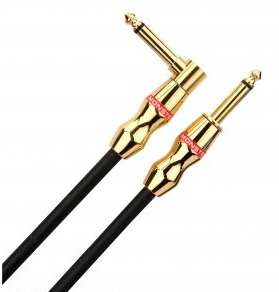 As much of a gear slut that I am, I’ve realized that I’ve completely overlooked one incredibly important piece of gear at GuitarGear.org that can have a huge effect on your tone: The guitar cable. Actually, I’ve shied away from this subject, much like I shied away from talking about speakers. Why? Because like speakers, there’s really no definitive way to classify cables as “good” or “bad,” no matter what materials are used. It’s a very subjective thing; that is, you have to use your ears to make the determination of what sounds good to you and what doesn’t.
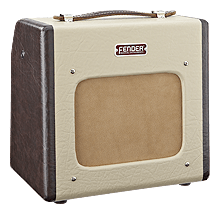 As much as I have been ranting about Fender gear pricing as of late, and their latest “supposed” price drop (who knows for how long), my Champ 600 has been a tried and true companion in my studio ever since I got it. I’ve even used it at small venue gigs hooked to a 1 X12 cab, and it has performed wonderfully! This is a great amp!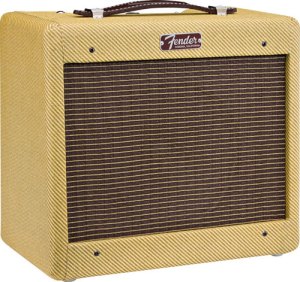
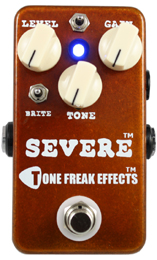 Released in May (how did I miss this?), the Severe is “Tone Freak Effects’ answer to high gain distortion.” Oh man… This looks like a incredibly mean pedal. Set up like the Abunai 2 with a 3-way clipping switch, with level, gain, and tone, the Severe also sports a 3-way bright switch so it can be used with different amps. Very cool.
 Guitar Gear