Feeds:
Posts
Comments

When I read the press release a couple of weeks ago, my initial reaction was “meh.” But in anticipation of NAMM next week, I decided to give the new series a look. I have to admit that while there are – at least to me – some impressive guitars in the lineup, I’m still a little “meh” about the whole thing. That said, the guitars that did impress me were the Telecaster SH and HH models, and the Strat HSS; in other words, the axes with humbuckers. What about the Jazzmasters? Never really been a big fan of those for some reason. It’s not that they’re bad guitars, but they’ve just never appealed to me.

I think also that I’m actually a bit sick and tired of all the demos that do all those blues runs; especially with the Strats. Okay, there are lots of blues players that use Strats, but I’m pretty tired of hearing the same runs over and over and over again. I know that shouldn’t be a mark against the guitar, but when I hear those blues licks now, I sort of tune out. But that’s just personal preference. I’ll let you make your decisions. Check out the product demo:

As far as the whole “select” thing goes, yeah, I can see how the tone woods and figured tops can make a difference. Cosmetically, these are some of the most beautiful Fenders I’ve seen in awhile. But to me, the Select series is simply a product gap filler between the American Series and the Custom Shop models. The price point on these guitars ($2500 range) is not bad at all. But then again, for my own personal taste, I’d probably look to a Les Paul Standard for that kind of money. That’s just me though… To be fair though, I’ll have to play the guitars to see if I change my mind…

I was reading Slash’s apparent “official” fan site called “The Snakepit” today. I say apparent because the site hasn’t been updated since 2004. But it has been around since the mid-1990’s (and looks it), so kudos to the creator of the site for such longevity! In any case, the article on Slash’s equipment mentioned that Slash preferred a now-defunct Nady wireless system. But since I hadn’t heard much about Nady as of late, I went to their site to see what kinds of things they’ve cooked up since I last checked (which was admittedly awhile ago).

Turns out that in September of last year, they came out with a compact wireless system called the MicroMGT-16X.

Nady is known for affordable devices (I have a Nady ribbon mic), and this system is only $199.99. What intrigues me about it is that it truly is compact. As opposed to being a rack-mount or standalone unit. the receiver plugs directly into your amp, or wherever you start your chain – mine would be my board; or to be safe, I’d probably run a male/female 1/4″ cable to put the receiver in a safe place. But in any case,  I love the compact size and the fact that it runs on  a single AA battery with an apparent life of 8 hours. Not bad.

The transmitter, which you can get in either offset/angled or right-angled, is truly convenient: No body pack and no cable, just plug in the transmitter and you’re set.

Now there are a couple of  caveats to this system:

  • It’s not frequency stealthy. You have to set the frequency with DIP switches. That’s not necessarily a deal-breaker if you run into interference.
  • With only 16 channels, it might be an issue to use this unit where there are a lot of other wireless mics or instruments being used. However, if those are frequency stealthy, then it shouldn’t be too much of an issue.

Here are the features from the Nady web site:

  • Miniature, lightweight transmitter plugs directly into guitar, bass (even portable keyboard)  output jack. No cord connection needed.
  • 16 user-selectable UHF frequencies for interference-free operation
  • Unprecedented wireless portability with single AA battery-powered receiver
  • ¼” plug for connecting receiver directly into amp
  • ASC™ (Auto-Sync Channel) infrared wireless download pairs transmitter to selected receiver frequency for quick, easy setup
  • Up to 250 ft. operating range line-of-sight
  • Transmitter powered by single AAA battery

You gotta check this out before I talk about it:

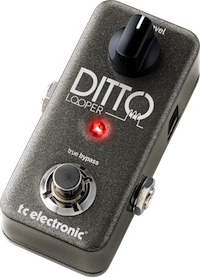
ditto-looper-perspAs Tore Mogensen, product manager for Guitar at TC Electronics was quoted in the press release I just got:

“At TC HQ we really wanted to understand looping before we went to market with Ditto Looper,” says Tore Mogensen, Product Manager for Guitar at TC Electronic, and continues: ”I mean, people do amazing things with looper pedals, but you almost need a degree in rocket science to make sense of all the functionalities. I think Ditto Looper is going to find its way into the heart of guitarists everywhere quickly. It’s non-intimidating, super-simple and intuitive, has a great price, sounds killer and does what you want right out of the box.”

Notice that I bolded “It’s non-intimidating.” That’s exactly what I’ve felt about looper. I got a simple BOSS LoopStation awhile back, which is a really nice looper, and one of the more simple loopers on the market. But even being relatively simple, it still came with a pretty thick users manual! I have a busy life, and I use most of my spare time to gig or record. I don’t have a lot of time to read a manual, and with the thick manual, I was admittedly a little intimidated.

After I read the press release, my first reaction was, “Holy S%&t! That is something that I can use NOW!” One knob? Check. One button? Check. Made just for guitar? PERFECT!

I’ve been wanting to do some looping during my solo gigs, so I could add some instrumental guitar. I tried using the LoopStation for awhile, but I could never get the hang of it because I used a footswitch along with the pedal, and kept on forgetting which one activated which feature. But there’s no guesswork with a single button.

Yup, I’m definitely going to check this one out!

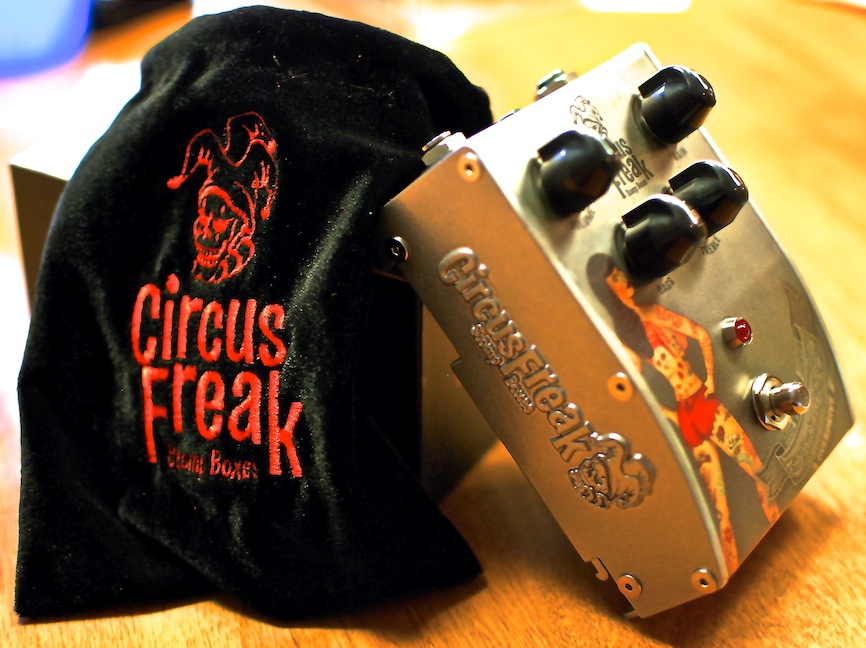
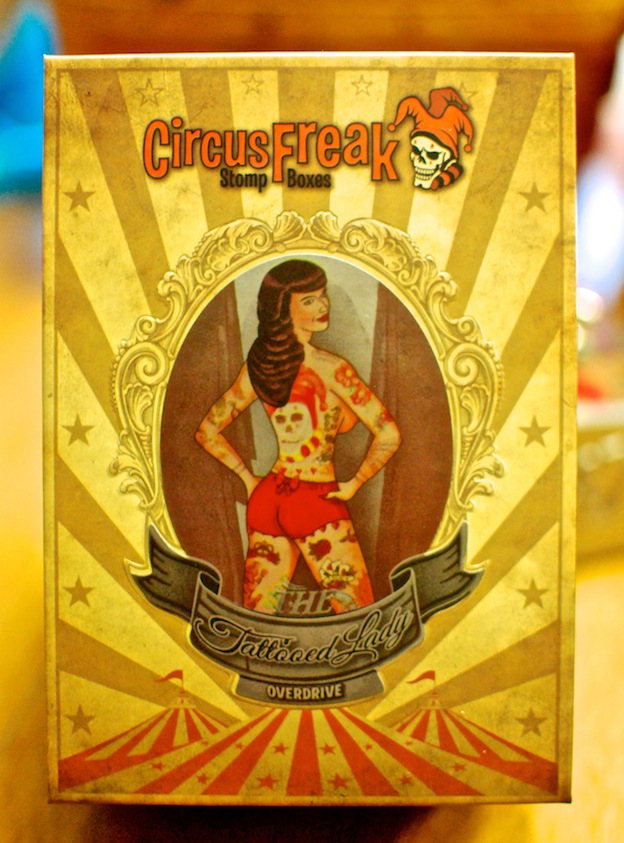
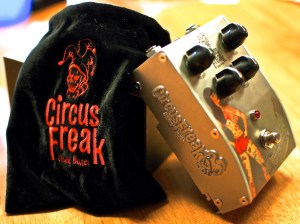
tl_pedal_bagtl_boxWhen I first made contact with Circus Freak Effects in mid-December, I came away from the meeting with the feeling that these guys mean business. It wasn’t enough just to create great pedals, the whole presentation was important from the enclosure all the way to the packaging, then to top it off, the pricing had to be such that the products would be accessible to a wide range of players.

Having been in various startups over the course of my career as a software engineer, this approach is something that has always reverberated with me. In the last few years, I’ve been in one successful startup and am currently in one that I believe will also be quite successful. With either of those companies, it hasn’t just been about the technology, but the whole package. The overshadowing philosophy is simple: Not only does our product have to be good, it has to look good and be priced competitively as well.

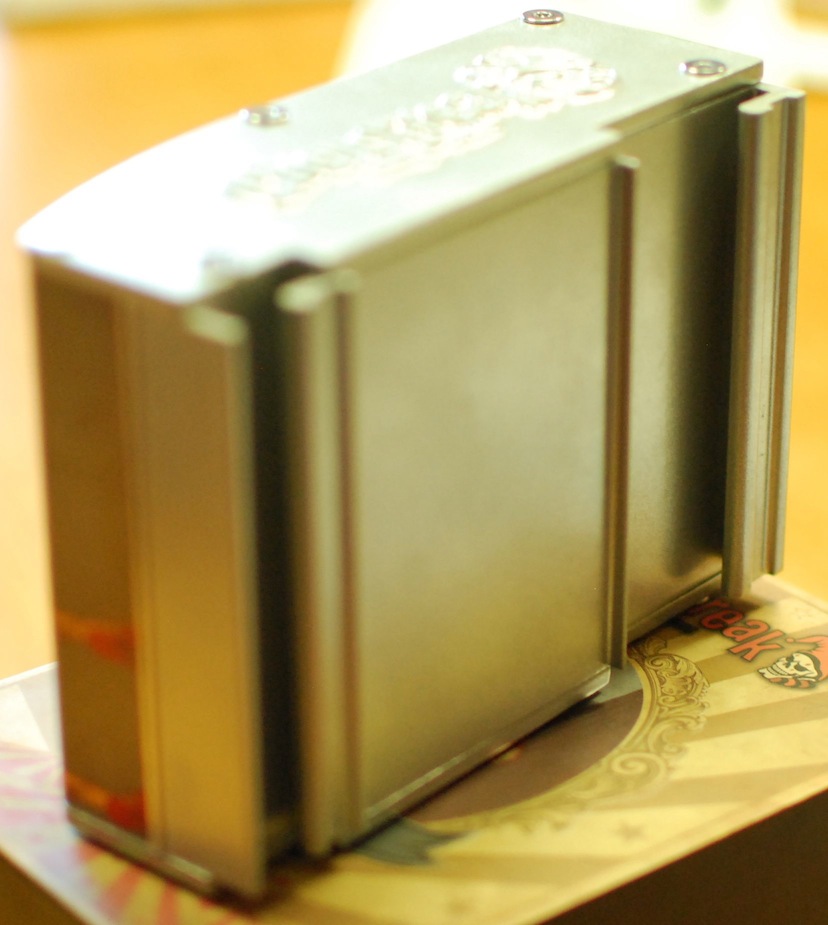
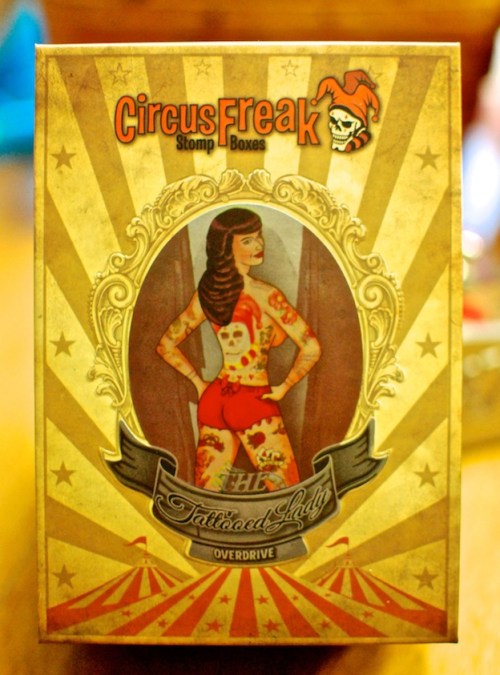
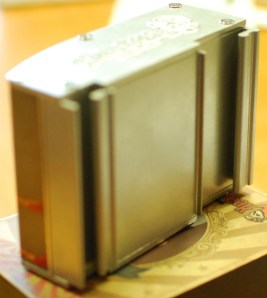
The guys at Circus Freak get that. When I opened the shipping box yesterday and remove wrapping from the Tatooed Lady box, I was blown away by the quality of the packaging. Sliding the cover off the box revealed a velvet-like bag that contained the pedal itself. Taking the pedal out of the bag, I was greeted by an enclosure the likes of which I’d never seen before. This wasn’t your typical Hammond pedal enclosure. This was a fully custom enclosure with a bottom that is obviously meant for something other than just sitting on a standard pedal board (in fact, Circus Freak is working on a board for mounting their pedals). tl_bottomFinally, included in the box was a small Ziploc bag with rubber strips for the bottom and a special Allen wrench-like tool for opening the enclosure (all Circus Freak effects will be tweakable). The point to all this is that the attention to detail that has gone in to every aspect of delivering a product to the customer is evident. Circus Freak means business, and they’re not going to settle on being a pedal company that looks as if it’s run in the garage of one of the guys’ houses. Here’s the kicker: The Tatooed Lady Overdrive is only $149! The packaging alone implies a much higher value, but to have it at that low price point makes it immediately attractive!
But of course, we’re talking about an effect pedal so not only does it have to deliver on appearance, it has to sound good as well. On that front, all I can say is, “WOW!”

That kind of reaction doesn’t happen to me very often. It’s actually unusual that I dig a pedal’s tone when I have everything set to 12 o’clock, but I totally dug this tone. For me, the first thing that I look for in an overdrive pedal is that my sound should “feel” bigger; that it’s my same tone, just more of it, and not necessarily volume. That’s what the Tatooed Lady does; it gives you more of your tone. But that “bigger” feeling is also attributed to what’s obviously a bit of compression being added to the signal. In some overdrives, the compression isn’t quite as evident. But with this pedal, it’s pretty obvious. But that is not at all a bad thing as my fundamental tone doesn’t change with the pedal.

For my initial audition, I plugged the pedal straight into my VHT Special 6. I was in my living room, so I didn’t really need much volume. But the VHT also has a lot of clean headroom on top of using a 10″ Jensen Jet Electric Lightning which gives the amp a lot of bottom end; making it sound A LOT bigger than its 6 Watts would suggest. The clean headroom would let me test the pedal’s drive on its own, and not rely on amp breakup. After playing around with it like that, this pedal could easily stand on its own as a clipping device!

In the time that I spent with it this morning, I found that I loved using the pedal purely as a breakup device. I set the volume at just past unity, cranked up the Gain knob on the pedal almost all the way, then set the Bass and Treble knobs to about 11 am and 1 pm respectively. At that setting, I could get this gorgeous, searing, but open overdrive with my guitar volume dimed, but I could also back off the volume on my guitar and the pedal would “calm down.” The dynamics are incredible, though I would fall short of calling them tube-amp-like dynamics. Suffice it to say that the pedal is very responsive to attack and volume knob adjustments.

The pedal also has some awesome sustain. I was absolutely digging playing long notes because the sustain of the pedal ensured that I’d get lots of overtones and subtle harmonics. Playing those long sustained notes what driving my little dog nuts as she started to howl whenever I played a high, bent note. 🙂

In my initial conversation with the Circus Freak guys, one thing that they kept on telling me was that they wanted to make sure that their pedals had LOTS of volume. They weren’t kidding. This pedal has lots of volume on tap, so whether you want to use the pedal as a standalone clipping device at unity volume, or use it as a booster to slam the front end of your amp, you have that choice. With the volume that this pedal is capable of, you can really get your pre-amp saturated quickly.

On a final note, I was very impressed with how quiet the pedal was when engaged; no line noise whatsoever, which made me think right away that I will probably be using this pedal for recording in my upcoming session.

Initial verdict? I love everything about this pedal so far: The way it looks and the way it sounds. I’ll be using it at my church gig this afternoon, so I’ll be writing up a gig report on it later. I’m so excited to try this out in a real live situation!

Happy New Year!!!

Have a great one! This year promises to be an awesome year! I’m looking forward to playing lots of gigs, checking out lots of new gear, and hopefully finding time to write more.
Taking stock of this past year, I actually slowed down with buying gear and instead concentrated on playing and recording. I finally started learning how to apply modes to my soloing and it has changed EVERYTHING for me! It took 42 years, but hey! Better late than never! 🙂

In performing, I made a huge effort to really “own” the songs I was covering. Not necessarily adding a bunch of vocal modulation that lots of pop singers do (which I think butchers good songs), but really making them my own; giving them my own brand. For the longest time, I tried to stay true to the original, but then after years of performing the songs, I felt I was getting a bit dry. Admittedly, it was pretty nerve wracking at first, but it has been worth it.

As far as res0lutions are concerned, I don’t really make them, though I always resolve to learn something new about guitar each year. So perhaps this year I’ll resolve to study even more about modes.

ROCK ON!!!

One of the challenges of learning new songs is that oftentimes chord charts that you download from the Internet aren’t quite accurate. For myself, I’ve always thought that it would be great if there was an application that could “read” a digital song and give me the chords, plus give me a way to learn riffs and leads. Sure, I’m experienced enough where I can pretty much figure out the chords to a song pretty quickly, but it would sure make my life easier if an application could do that for me, so I wouldn’t have to guess.

Enter Riffstation. This application blows me away! These guys contacted me two days ago with the following explanation:

—-

Riffstation is a really awesome piece of software for guitar players that does some things you wouldn’t imagine possible. Load any MP3 and it automatically calculates and shows you the guitar chords synced with the original music. It does slow down, transposition, guitar isolation and a whole lot more. It’s Guitar hero for real.

Feature list:

  • automatically calculates the chords (maj, min, 7) of basic songs from any mp3,
  • Synchronises the chord diagrams with the music (any mp3)
  • Playback music (and chords) in any key
  • Allows you to easily add other chord types
  • Slow down the audio without affecting pitch,
  • Retune the audio without affecting the tempo
  • Isolate guitar solos or mute the guitar entirely
  • Beat locked phrase looping
  • Build custom jam tracks out of your favourite mp3
  • No additional files or content required…just your own mp3 collection

—–

My first thought was: SERIOUSLY?!!! This is exactly what I’ve been looking for – literally for years! They asked me if I’d review the app, and I naturally said yes.

So early this morning, I downloaded the software (it’s for PC or Mac), opened it up, loaded Warren Haynes’ “Broke Down on the Brazos” into the app, then just started playing around. The damn thing’s so easy to use and the features are so easy to figure out, I didn’t need to look at the help (it’s online) not even once. The Riff Builder took a few minutes to figure out, but again, it was so easy to use that I didn’t need to refer to the manual.

What really amazed me was how it analyzed the song and came up with the chords. The song I loaded was in Eb, but I was able to bring the song up to E (the song is detuned a half step) to learn the song with the right chord shapes. To be fair, the app doesn’t catch everything, but the mere fact that it gets the main chords goes a LONG way towards helping to learn a new song. Plus, it’s WAY better than downloading a chart from the Internet.

Kudos to the guys over at Riffstation! This is an app that for me, goes on my game-changer list! The cost of the app is 39.99 Euros, which is about $53.00. I will say this: It’s totally worth the price of admission, especially if you’re a cover band!

Every year on Christmas Day, my band does the 12:00 Mass at our church. The entire set is Christmas carols, though I add a modern twist to the songs. For instance, I arranged a latin/reggae version of the classic “Do You See What I See.”

It was the first time we ever performed that tune, and it was a real hit. After the service, several people came up to me and commented how they liked the fills that I played in between verses and the long solo I played at the end; we ran out of singing room, so we just vamped on the D – C change, and I soloed on top of it.

What was cool was that it was the very first time in all of my career of playing that I consciously applied modes to my soloing. I’ve lately taken an interest in studying modes yet again, and after reviewing modes with great videos by Vinnie Moore and Rob Chappers, I’m starting to finally “get” them. I’ve known the modes from an intellectual standpoint, but it wasn’t until I saw the two video sets that I really started “hearing” the modes. That’s the problem I’ve had with all the written material about modes. The articles and books I’ve read on musical theory talk about the “spelling” of different modes and what-not. But hearing them makes all the difference in the world, and today I was able to apply what I’ve been reading about for years.

The way I arranged “Do You See What I See” was perfect for the Lydian mode which “sounds” kind of Middle Eastern to me. The song starts out in C then goes to D. With my fills, I did an F Lydian, then when I changed the key, did a G Lydian. I didn’t really think too much about what I was playing, I just made sure to stay in the major scale and keep the “theme” of the mode. I mixed that with a minor pentatonic in places, but always resolved back to the Lydian.

It was a very powerful and moving experience for me. I really had no idea what I could do with modes until today. But you can bet I’ll be expanding my use of them. Now, to be a bit fair to myself, I’ve been inadvertently using Dorian and Mixolydian modes for years. I knew I was using a major scale when I was playing; for instance, when I wanted to have a “darker” feel, I’d use what I now understand to be a Dorian mode. I just didn’t know it at the time.

This is really cool stuff, folks! Imagine after 42 years of playing, I’m finally getting it! 🙂

So have a “Modal” Christmas!

…on the other hand, it may surprise you what you can do with what you have.

Yesterday, I did my set planning for Sunday and Christmas Day. Included in the Christmas Day set was a the song “Do You See What I See.” Last week, I had shown my band how I’d like to play it, but I wanted to lay it down so they’d have a reference for when we performed it. Unfortunately when I went to record it, I realized that since I’ve been going into a real recording studio, my own recording rig was somewhat disassembled. So, I did a scratch recording using my Macbook and the GarageBand app.

The recording was adequate for reference purposes, but since GarageBand comes with some really good filtering plug-ins, I thought I’d see what I could do to make the recording not sound like I was singing and playing into my laptop’s internal mic. After just a bit of tweaking, I was amazed at the result. Check it out:

Technology is so awesome for the creative process! The finished product sounds NOTHING like the original. I even added some simple rhythm using software instruments with my computer keyboard!

Here’s an earlier version where I only messed with the EQ to remove the “tinny” highs.

In total, I probably spent a little over an hour getting it to the final state. So like I said, sometimes you have to use what you have, but it may just surprise you what you can do with what you have!

BTW, I may not make a post for the next couple of days, so have a blessed holiday season, whether you celebrate, Christmas, Hanukkah, Kwanzaa, or whatever!

Can Modes Be THIS Easy?

I keep on running across some great instructional videos at random times. Today, I was actually looking for videos on “the Big Muff” fuzz – specifically on an original Sovtek Red Army Overdrive, which was essentially a Big Muff. I found several videos, but in the sidebar, I saw a video entitled, “Learn Modes in 15 Minutes.” I’ve shared Vinnie Moore’s series on modes from the 80’s. But these two videos show modes in an even easier way; completely simplifying Pitch Axis Theory. Check ’em out.

The dude doing the videos is actually kickin’ guitar player. Damn! Check out all his videos! There’s some pretty tasty stuff to learn!

Yesterday, I finished the last gig of a five-day run of gigs – mostly solo – and after I finished the last one, I was driving in the car and thought about the different gear I used for each gig. For the last couple, I used a bare bones rig: Just my guitar plugged into my VoiceLive GTX vocal processor plugged into my Fishman SoloAmp. I didn’t want to bother with lugging my pedal board, so I just loaded a few cords, my VoiceLive GTX and my mic in a bag. I didn’t even use my gig seat – just used a couple of regular chairs to sit on.

The thought that struck me last night was that I have all this gear to have the freedom to add or subtract what I need from gig to gig. When I’m playing with my church band, my rig can change drastically from week to week. Sometimes I bring a combo, sometimes a head and cab; sometimes I bring multiple guitars. The idea to give myself choices. 🙂 He he… sounds a lot like I’m figuring out a way to justify to the wifey why our garage is half-full of my gear. But that’s not really the case. I like having the choices I have so I can adapt to whatever venue I might play. I use practically all my gear throughout the year (I’m bound to with a 100+ gigs a year).

But in my ruminating over my gear, it also got me thinking about several people I’ve encountered over the years who hoard gear but never gig. Hey man, if that’s your thing, that’s fine with me. But I don’t see the point of getting performance gear and not using it to perform. There was one guy I know of who had a bunch of high-end gear. He died tragically a couple of years ago, but my buddy bought all his gear from his wife – it took up two big, enclosed car trailers! I asked my buddy if the dude gigged, but he said never. He just bought up a bunch of gear, and played it at home. Included were several high-end amps from VOX, Marshall, HiWatt, /13, and others. There were several Strats, a couple of Les Pauls, and a nice collection of Gretsch guitars. I just couldn’t believe how much stuff there was, and that didn’t include all the pedals and accessories! I thought I was a gear slut! This dude’s collection made me look like a freakin’ prude!

I personally can’t fathom not gigging my gear. I have a lot, but pretty much everything gets used at least three or four times a year. I have my “go-to” amps and axes for sure; especially now that I feel that I’ve got my sound. But still, from time to time, I break out a little-used guitar or amp. For instance, my guitar of choice is a Les Paul. But there are some sounds that a Les Paul just can’t do; which is why I have a couple of Strats and a Gretsch and other guitars when I need certain tones. Same goes for pedals. Baseline I always have a chorus, a delay and a reverb. But sometimes I need a vibe. For front-of-amp stuff, I always have a Timmy and my EWS Little Brute Drive distortion, plus my Big Bad Wah. But I’ll add other drive pedals, or even change out my wah for “something else.”

I suppose I just can’t justify buying gear if I don’t use it. I don’t have a lot of disposable income, so when I do buy something it’s with the intention of gigging. But that’s just me…